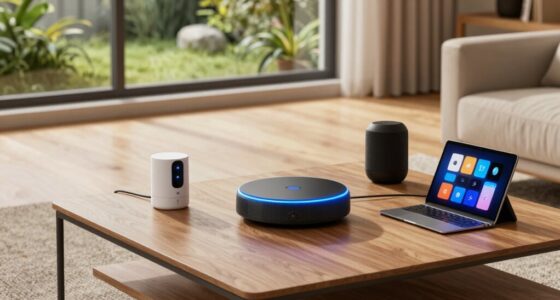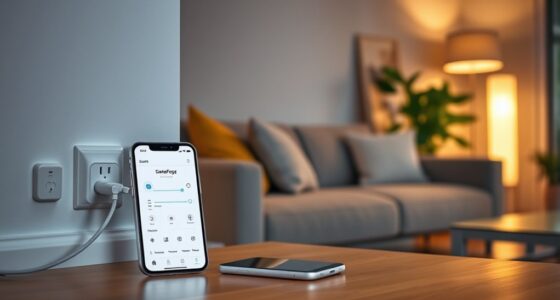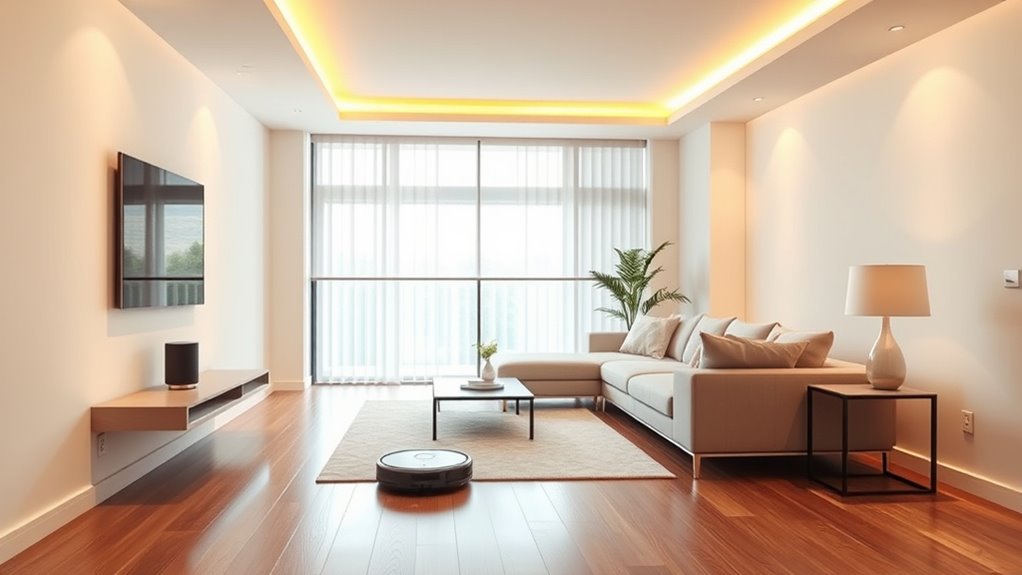

You’ll find that automating your mornings with gentle wake-up routines, smart lighting for cozy evenings, and temperature adjustments based on your schedule make daily life smoother. Voice-activated grocery lists, auto plant care, and smart kitchen appliances save time and hassle. Creating relaxing atmospheres and monitoring energy use help you stay comfortable and efficient. If you want practical ideas that work, keep going—there’s plenty more you can implement effortlessly.
Key Takeaways
- Focus on automations that enhance daily routines, like personalized wake-up and sleep modes for convenience and comfort.
- Use smart lighting and climate control to create relaxing evenings and energy-efficient temperature schedules.
- Implement remote security controls, such as smart locks and garage door management, for peace of mind and easy access.
- Automate plant care and wellness reminders to support healthy habits effortlessly.
- Prioritize automations that improve safety, such as motion-triggered night lights and automatic door locking.
Top picks for "automation actually smart"
Open Amazon search results for this keyword.
As an affiliate, we earn on qualifying purchases.
Automate Your Morning Routine
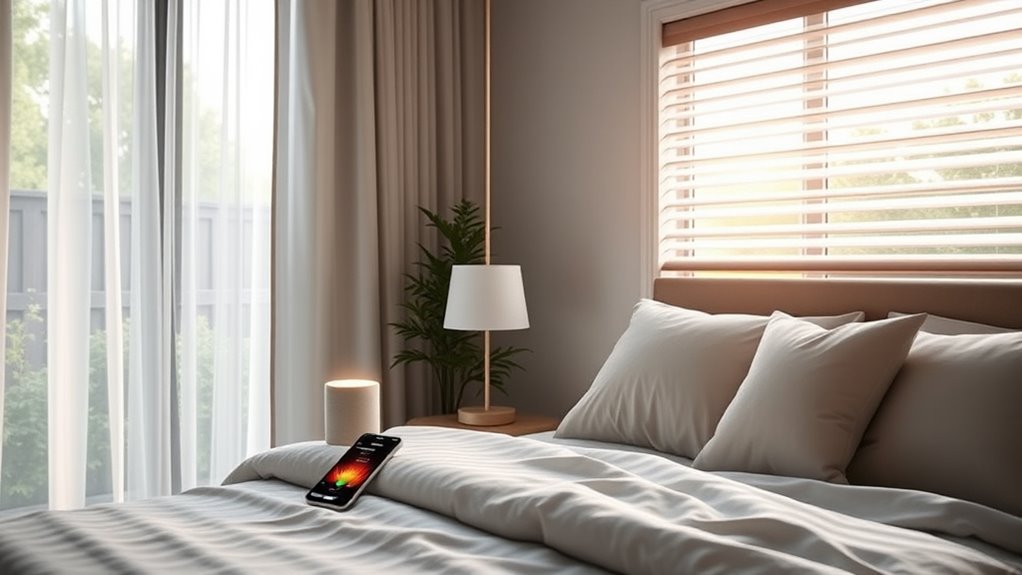
Have you ever wished your mornings started more smoothly? With morning automation, you can create a personalized wake-up experience that sets the tone for your day. By programming your smart home devices, your alarm can trigger gentle lighting, play your favorite music, or even brew coffee as you wake up. This personalized wake-up routine eliminates the jarring sound of traditional alarms and makes mornings more pleasant. You can customize the timing and sequence so everything happens seamlessly, saving you time and stress. Automating your mornings ensures you start each day feeling refreshed and in control. Integrating connected appliances into your routine can further enhance your efficiency and comfort. Additionally, incorporating adaptive lighting that adjusts to circadian rhythms can improve your sleep quality and morning alertness. Using contrast ratio awareness can help optimize your home theater setup for better viewing during your relaxation time. Incorporating smart sensors can help your routine adapt to your specific habits and environment, making your mornings even more tailored to you. Implementing natural light integration can further enhance your waking experience, making it feel more organic and energizing. With just a few simple setups, your smart home becomes an ally in creating a calm, efficient, and personalized start to each day.
Smart Lighting for Cozy Evenings
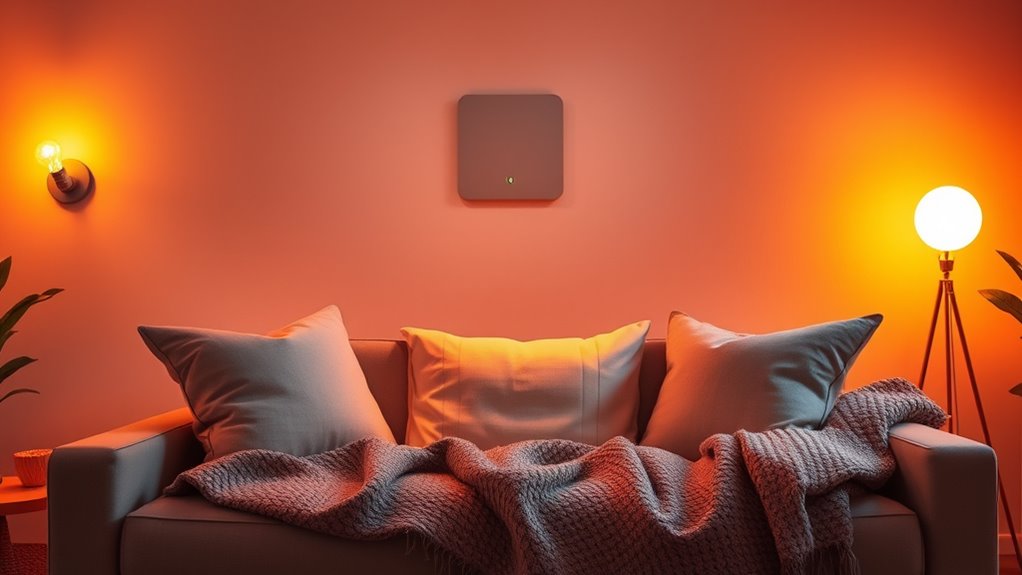
As evening approaches, smart lighting allows you to create a warm and inviting atmosphere with just a few taps or voice commands. Using smart bulbs, you can set the perfect ambient lighting to unwind after a busy day. Adjust the brightness and color temperature to evoke relaxation, whether it’s soft white or warm amber. These customizable lights can be scheduled or controlled remotely, making it easy to switch from bright to cozy in seconds. Enhance your space with different scenes for reading, watching movies, or quiet evenings. Additionally, integrating energy-efficient lighting helps reduce your overall energy consumption while maintaining comfort. Understanding air purifier maintenance dos and don’ts ensures your smart lighting setup complements a healthier home environment. Moreover, selecting compatible lighting systems ensures seamless integration with your existing smart home ecosystem. Below is a quick guide to some popular options:
| Feature | Benefit |
|---|---|
| Smart bulbs | Easy to customize lighting |
| Ambient lighting | Creates cozy, relaxing atmosphere |
| Voice control | Hands-free adjustments |
| Scheduling | Automate evening lighting |
| Adjustable brightness & color | Set the mood effortlessly |
By understanding smart home technology, you can better tailor your lighting to fit your lifestyle and preferences.
Temperature Adjustments Based on Your Schedule
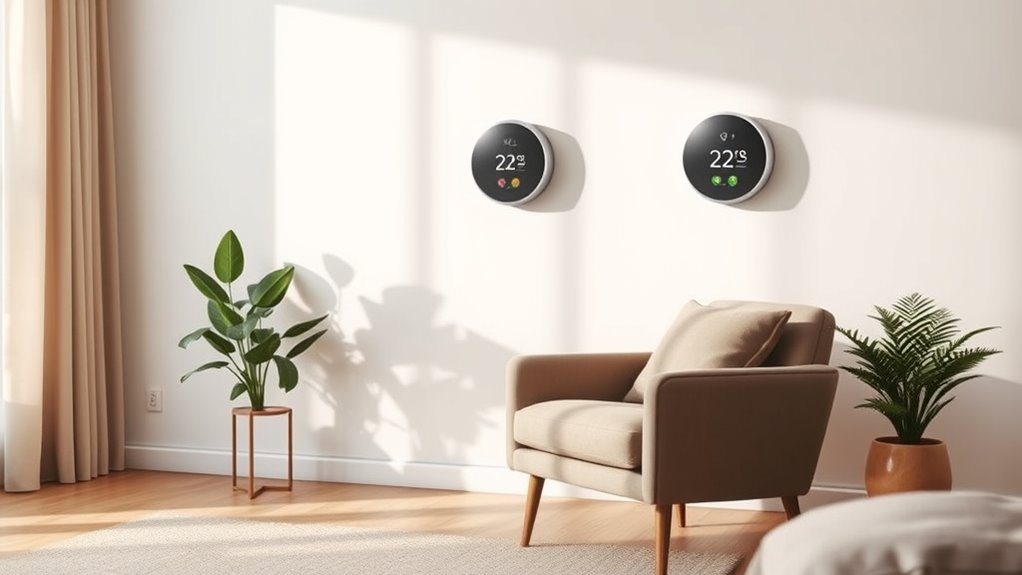
You can set your thermostat to change automatically based on your daily routine, saving energy when you’re away or asleep. Adjusting temperatures for specific rooms depending on usage guarantees comfort where you need it most. By fine-tuning these settings, you’ll optimize energy consumption while maintaining a cozy home environment. Incorporating smart home technology can further streamline your climate control, making it easier to manage your home’s comfort effortlessly. Utilizing automation features allows for seamless adjustments without manual intervention, enhancing both convenience and efficiency. Understanding networking hardware and infrastructure is essential to ensure your smart devices communicate reliably and securely. Properly configuring your home network ensures that your smart thermostats and sensors function without interruptions, maximizing their benefits. Awareness of smart device compatibility can help you select the right components that work seamlessly together for a cohesive system.
Schedule Thermostat Changes
Scheduling thermostat changes allows your home to automatically adjust temperatures based on your daily routine, saving energy and enhancing comfort. With temperature scheduling, you set specific times for your thermostat to increase or decrease, ensuring your climate control aligns with your activities. For example, you can program your system to lower the heat or cooling during work hours and revert to a comfortable setting before you arrive home. This automation not only reduces energy waste but also helps maintain a consistent environment. Additionally, incorporating load calculations into your scheduling ensures your system operates efficiently without overloading your circuits. Properly managing circuit capacity is essential to prevent overloads and optimize system performance. By integrating your schedule with your thermostat, you avoid the hassle of manual adjustments and enjoy a seamless, efficient climate control system. Proper load management can help prevent issues related to electrical overloads, ensuring your system runs smoothly. Overall, scheduling thermostat changes keeps your home comfortable while optimizing energy use effortlessly and can be supported by ventilation considerations to improve overall home climate regulation. Incorporating smart sensors can further enhance the precision of your temperature adjustments.
Adjust for Room Usage
Adjusting for room usage guarantees your home maintains peak comfort by tailoring temperatures to how different spaces are used throughout the day. You can set personalized temperature zones that respond to your routine. For example:
- Assign specific temperatures to bedrooms during sleeping hours for better rest.
- Use room-specific lighting to complement temperature adjustments, creating a cozy environment.
- Lower the heat in rarely used areas to save energy without sacrificing comfort.
- Increase cooling in active spaces during the day to keep everyone comfortable.
- Incorporate simple routines that help you adjust settings easily as your schedule changes, ensuring consistent comfort and efficiency. Implementing automatic scheduling can further streamline these adjustments, making your smart home more responsive to your daily patterns.
- Many smart thermostats utilize navigation and mapping technologies to precisely control climate zones based on occupancy and room layout. Additionally, integrating Polynesian symbols for strength can inspire resilience in your home’s automation system, ensuring it adapts reliably over time.
These automations ensure each room’s climate matches its purpose, making your home more efficient and comfortable. By customizing temperature zones, you optimize comfort based on usage patterns, avoiding unnecessary energy waste.
Optimize Energy Consumption
By aligning temperature settings with your daily routine, you can substantially reduce energy waste without sacrificing comfort. Use smart thermostats to create schedules that match your habits, ensuring heating or cooling runs only when needed. Incorporate smart solar solutions to maximize renewable energy use and lower utility bills. Regular energy audits help identify inefficiencies in your home’s heating and cooling systems, revealing opportunities for improvement. Automations can adjust temperatures automatically when you’re away or asleep, preventing unnecessary energy consumption. By optimizing these settings, you’re not only saving money but also reducing your carbon footprint. Combining smart home automations with insights from energy audits and smart solar options makes your home more efficient and environmentally friendly, all while maintaining a comfortable living space.
Voice-Activated Grocery Lists
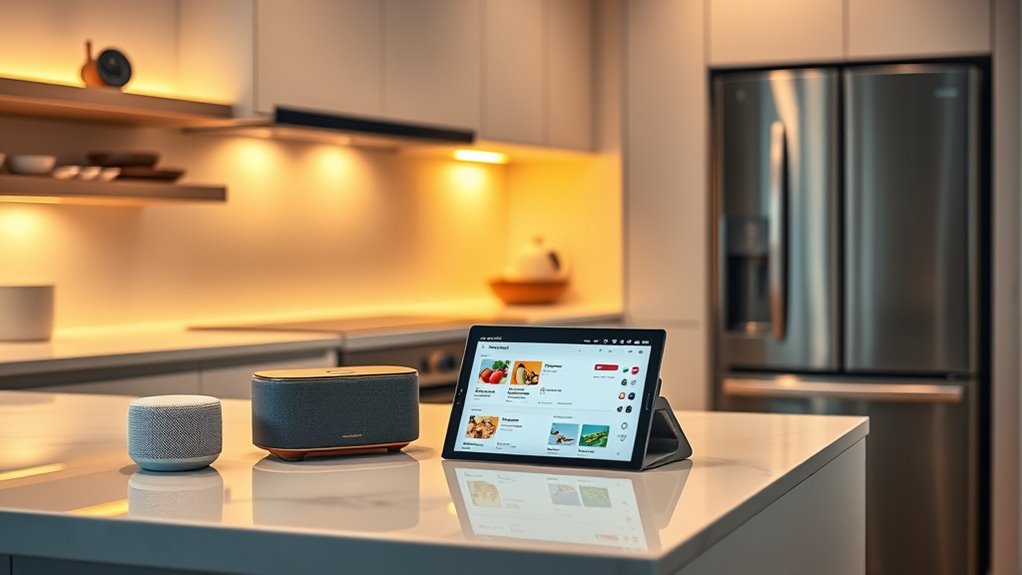
Setting up voice commands for your grocery list is easy and intuitive, letting you add items hands-free. As you update your list in real time, your smart devices stay synchronized across platforms. With seamless integration, you can check your list and make adjustments without missing a beat.
Voice Command Setup
Creating a voice-activated grocery list system streamlines your shopping routine by allowing you to add items hands-free. To do this, start with your voice command setup by connecting your smart speaker to your preferred grocery app. Next, follow these steps:
- Open your smart speaker’s app and access the smart speaker configuration.
- Link your grocery list app or service within the assistant’s settings.
- Create custom voice commands, like “Add milk to my shopping list.”
- Test the setup by saying the command and confirming the item appears.
Real-Time List Updates
Once your voice command system is set up, maintaining an up-to-date grocery list becomes seamless. With real-time list updates, you can add items instantly as you notice them running low, ensuring your list stays current without manual input. This dynamic inventory management means your smart home can track what’s needed and adjust your shopping list on the fly. When you say, “Add milk,” it’s immediately reflected on your digital list, reducing forgotten items. This automation helps avoid last-minute store runs and keeps your shopping organized. You spend less time managing lists manually and more time focusing on other tasks. Real-time updates make grocery planning efficient, accurate, and effortless—keeping your home well-stocked with minimal effort.
Integration With Devices
Integrating your voice-activated grocery list with smart home devices transforms how you manage shopping. To do this smoothly, you need to ensure device compatibility and potential integration challenges. Here are key steps:
- Check that your voice assistant and smart devices support the same platforms.
- Use compatible apps or skills to link your grocery list to your smart home ecosystem.
- Regularly update device firmware to prevent integration issues.
- Test the setup to ensure commands add items correctly and sync across devices.
Automated Plant Care
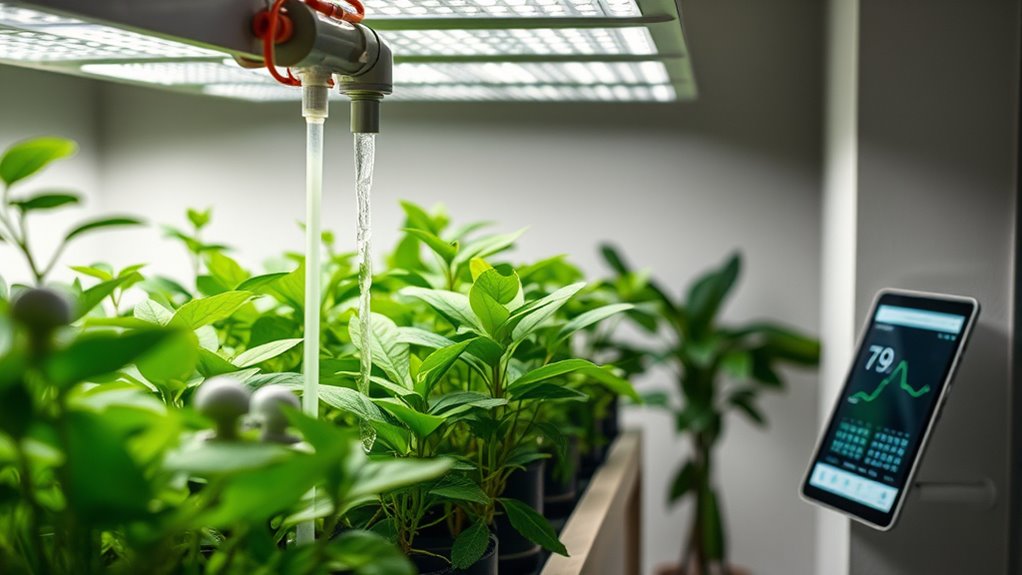
Automated plant care systems use smart sensors and connected devices to monitor and maintain ideal growing conditions. You’ll find plant sensors that track moisture levels, light, and temperature, providing real-time data to optimize plant health. These sensors help you set precise watering schedules, ensuring your plants receive the right amount of water without over- or under-watering. Once connected to your smart home system, the automation can activate watering devices automatically when moisture drops below a set threshold. This reduces guesswork and prevents plant stress. With these tools, you gain peace of mind that your plants are consistently cared for, even when you’re away. Automated plant care makes maintaining a thriving indoor garden simple, efficient, and tailored to each plant’s needs.
Personalized Welcome Home Messages

When you arrive home, personalized welcome messages can make your entry more warm and inviting. With custom welcome messages, you set the tone for a comfortable environment. Here’s how personalized greeting automation works:
- You program your smart home system to recognize your arrival via phone or key fob.
- The system triggers a personalized message on your smart display or speakers.
- You can include details like your name, daily plans, or motivational quotes.
- This creates a seamless, welcoming experience every time you return.
Using personalized greeting automation, you add a personal touch to your home and make each arrival special. It’s simple, effective, and makes your smart home feel even more tailored to you.
Sleep Mode for Better Rest

Establishing a Sleep Mode in your smart home helps you wind down and get better rest every night. When activated, it can adjust your environment to support good sleep hygiene, such as dimming lights and lowering the thermostat. Noise reduction features—like activating white noise machines or soundproofing smart speakers—block out disruptive sounds, creating a peaceful atmosphere. This automation signals your body that it’s time to relax, making it easier to fall asleep and stay asleep. By customizing your Sleep Mode, you guarantee your space promotes restful sleep every night. The smooth transition into this mode helps you develop healthier sleep habits and wake up refreshed, ready to face the day.
Motion-Triggered Night Lights

Motion-triggered night lights provide seamless visibility when you need it most, guiding you safely through dark spaces. They activate only when motion is detected, helping you avoid accidents in the dark. Plus, they’re energy-efficient, so you save power while maintaining convenience.
Seamless Night Visibility
Seamless night visibility becomes effortless with motion-triggered night lights that activate automatically as you move through your home. These lights enhance safety and convenience by providing instant illumination without fumbling for switches. They improve night vision, allowing you to see clearly in dark hallways or bathrooms. Plus, they serve as security lighting, deterring intruders by illuminating potential entry points. To maximize their effectiveness, consider these tips:
- Position lights near entrances, staircases, and dark corners.
- Adjust sensitivity settings for reliable activation.
- Use warm or neutral tones to reduce glare.
- Schedule lights to operate during specific hours for added security.
With these simple steps, your home stays well-lit and secure, ensuring a smooth, safe night-time experience.
Energy Efficient Lighting
By upgrading to motion-triggered night lights that prioritize energy efficiency, you can reduce power consumption without sacrificing safety. Smart bulbs and LED lighting make this possible, turning on only when needed. These night lights automatically activate when motion is detected, providing gentle illumination for stairs, hallways, or bathrooms. Imagine walking into a dark room, and the light softly flicks on, then dims or turns off as you leave. Here’s a visual to help imagine the setup:
| Room Type | Lighting Type | Power Consumption |
|---|---|---|
| Hallway | Motion-activated LED | Very low |
| Bedroom | Smart bulb night light | Energy-efficient |
| Bathroom | Sensor-based LED | Minimal |
| Staircase | Automated LED strip | Cost-effective |
This setup saves energy and enhances safety effortlessly.
Reminders for Medication or Hydration
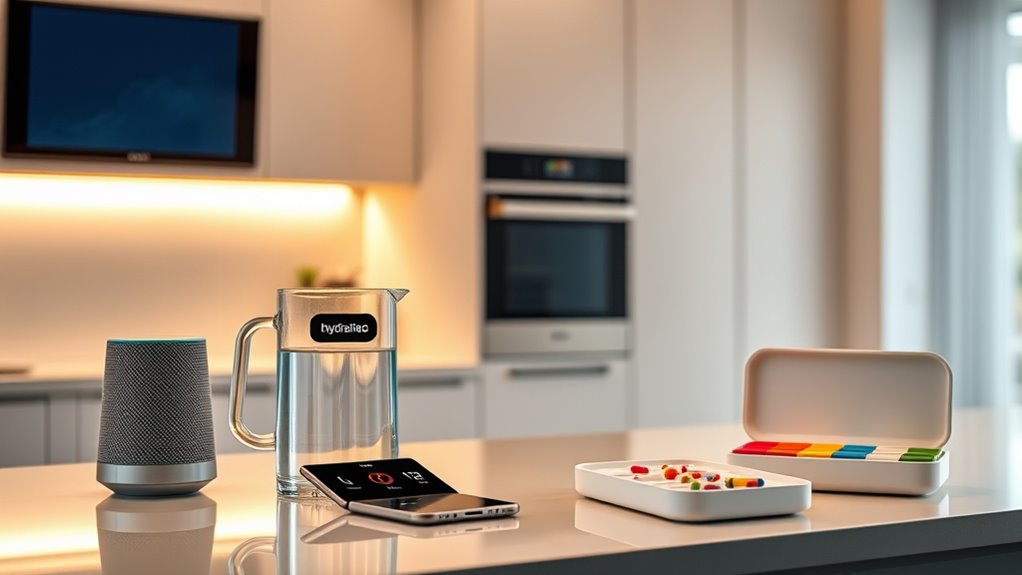
Staying on top of medication schedules and hydration needs can be challenging, especially during busy days. Smart home automations make it easier with personalized reminders. Here’s how you can benefit:
- Set up medication reminders to alert you at specific times, ensuring you never miss a dose.
- Use hydration alerts to prompt you to drink water throughout the day, keeping you refreshed.
- Sync reminders with your voice assistant so you can get notified with a simple voice command.
- Customize alerts to vary based on your daily routine, making sure you stay consistent without hassle.
These automations help you stay healthier by providing timely prompts. With smart medication reminders and hydration alerts, maintaining your wellness becomes effortless and integrated into your daily life.
Secure Your Home When You Leave
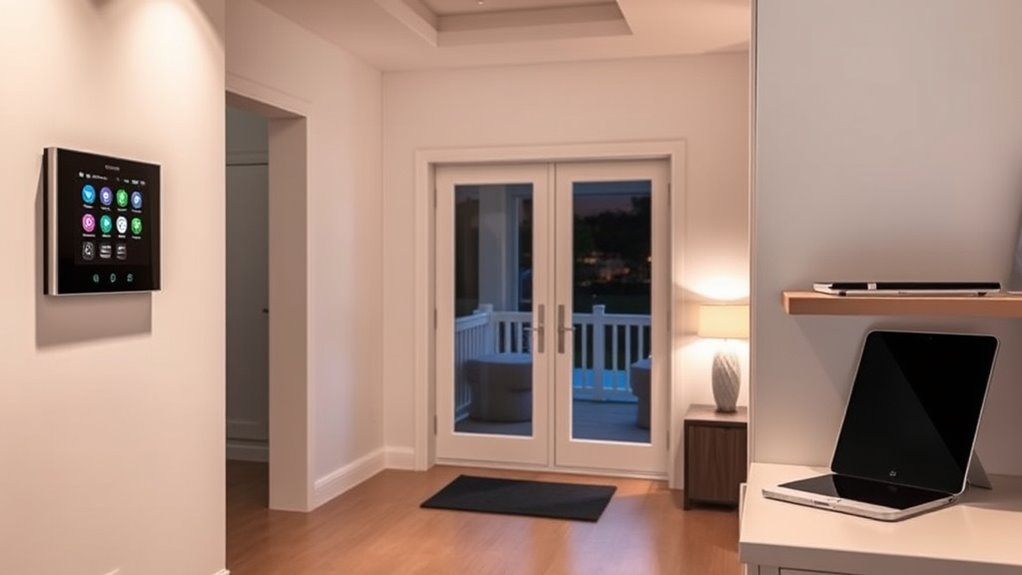
When you leave your home, ensuring it’s secure is essential to prevent theft or damage. Smart lock systems give you control, allowing you to secure or open doors remotely via your smartphone. This means you can double-check that all entries are secure before heading out, even if you forget in a rush. Combining smart locks with remote home monitoring enhances your security by providing real-time alerts and live video feeds of your property. If something unusual happens, you can respond instantly, whether by locking doors or notifying authorities. These automations give you peace of mind, knowing that your home is protected even when you’re away. Focus on seamless security that adapts to your schedule, keeping your home safe at all times.
Automatic Garage Door Control
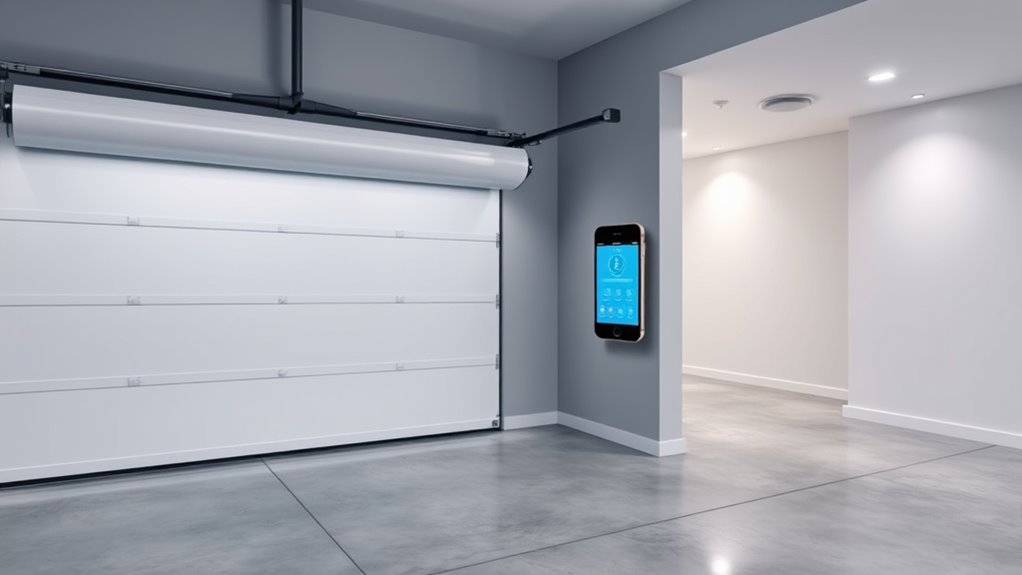
Automatic garage door control lets you open or close your door remotely, so you don’t have to get out of your car. You can also sync it with your security system for added protection. This integration makes your home both more convenient and safer.
Remote Access Convenience
Have you ever arrived home only to wonder if you left the garage door open? With remote access, you can check and control your garage door from anywhere, boosting your home security and convenience. Here’s how it works:
- Use your smartphone to open or close the garage door remotely, ensuring peace of mind.
- Receive real-time alerts if the door is left open unexpectedly.
- Schedule automatic closing times to prevent accidental leave-open situations.
- Grant temporary access to family members or trusted visitors without physical keys.
This automation saves you from unnecessary trips back home and enhances your security. With remote access, you stay in control, no matter where you are, making your home smarter and safer.
Smart Security Integration
Integrating your garage door with smart security systems enhances both safety and convenience by enabling automatic control based on security parameters. When your security cameras detect movement or your alarm system is triggered, your smart garage door can automatically close, preventing unauthorized access. You can also set it to open when your security system disarms, making it easy to arrive home and park without manual intervention. This seamless connection guarantees your garage remains secure without you having to think about it. Plus, real-time alerts notify you if the garage door is left open or if suspicious activity is detected. By linking your garage door to your security cameras and alarm system, you create an integrated safety network that’s both smarter and more reliable.
Smart Kitchen Appliances for Efficiency

Smart kitchen appliances are transforming how you prepare and manage meals by enhancing efficiency and convenience. With a smart oven, you can set timers, adjust temperatures remotely, and receive notifications when your food is ready. An automated coffee maker ensures your morning brew is prepared exactly how you like it, without manual effort. To optimize your kitchen, consider these options:
Smart kitchen appliances boost efficiency with remote control, notifications, and seamless integration for a more convenient cooking experience.
- Use a smart oven to preheat and cook with minimal supervision.
- Program your automated coffee maker to brew on a schedule.
- Integrate these devices with your voice assistant for hands-free control.
- Monitor cooking progress and receive alerts via your smartphone.
These appliances streamline meal prep, save time, and make your kitchen smarter and more functional.
Creating a Relaxing Evening Atmosphere
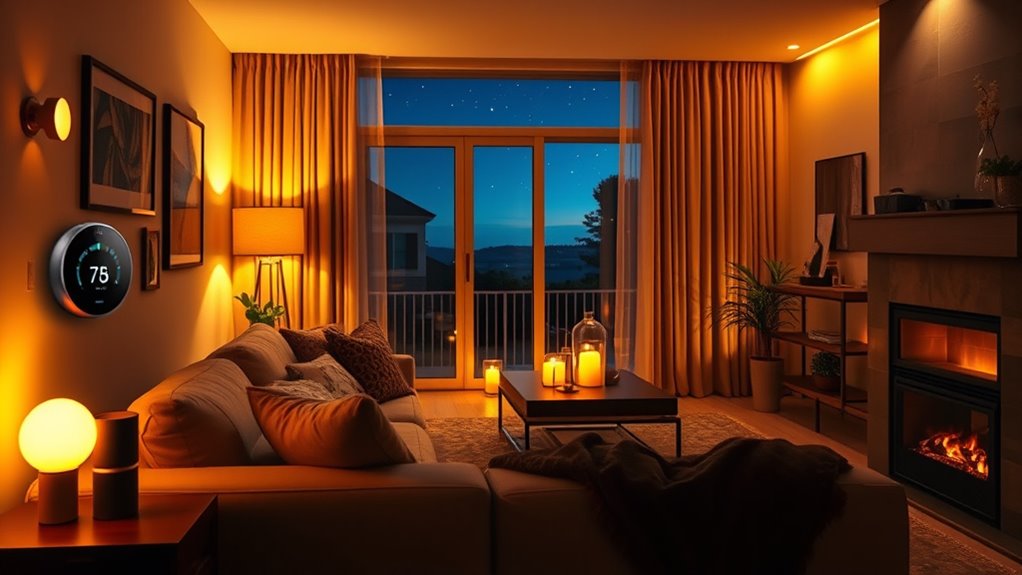
Creating a relaxing evening atmosphere can considerably enhance your overall well-being after a busy day. You can automate your smart home to set the perfect mood with mood enhancing scents released through smart diffusers, creating a calming environment. Pair this with ambient soundscapes that gently play relaxing music or nature sounds, helping you unwind. Program your lights to dim gradually, using warm tones that mimic sunset hues, fostering a cozy vibe. These automations work together seamlessly, so as soon as you activate your evening routine, your space transforms into a peaceful retreat. With just a few taps or voice commands, you create a soothing atmosphere that helps you relax, recharge, and prepare for restful sleep.
Monitoring Energy Consumption
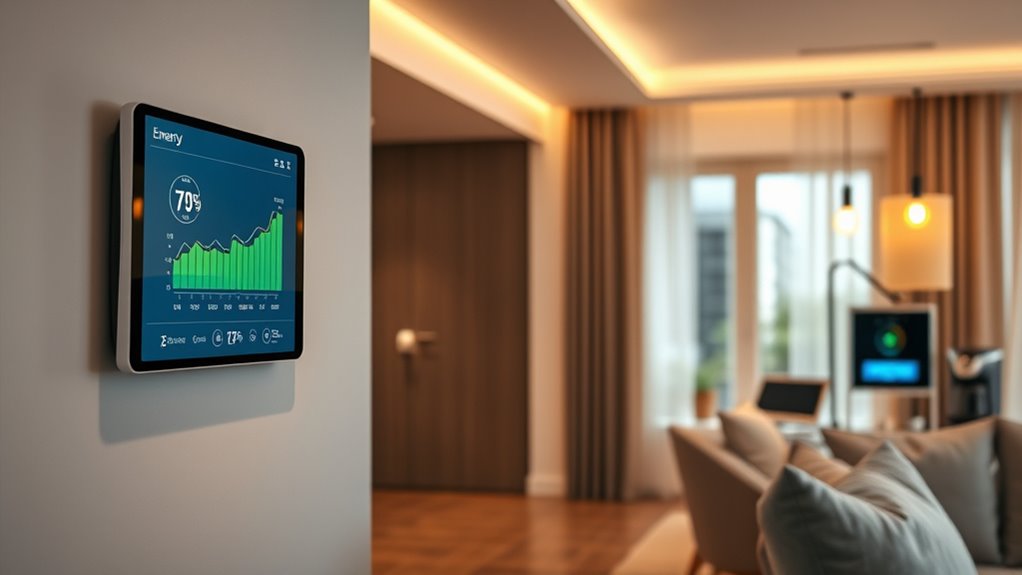
Monitoring energy consumption is essential for identifying how your household uses power and finding ways to reduce waste. With home monitoring, you gain insight into which devices consume the most energy, helping you make smarter choices. To get started:
- Install smart meters or plugs to track real-time energy use.
- Review your energy reports regularly to spot patterns.
- Set alerts for unusual spikes in energy consumption.
- Adjust your habits or automate devices to optimize efficiency.
Simplified Guest Access
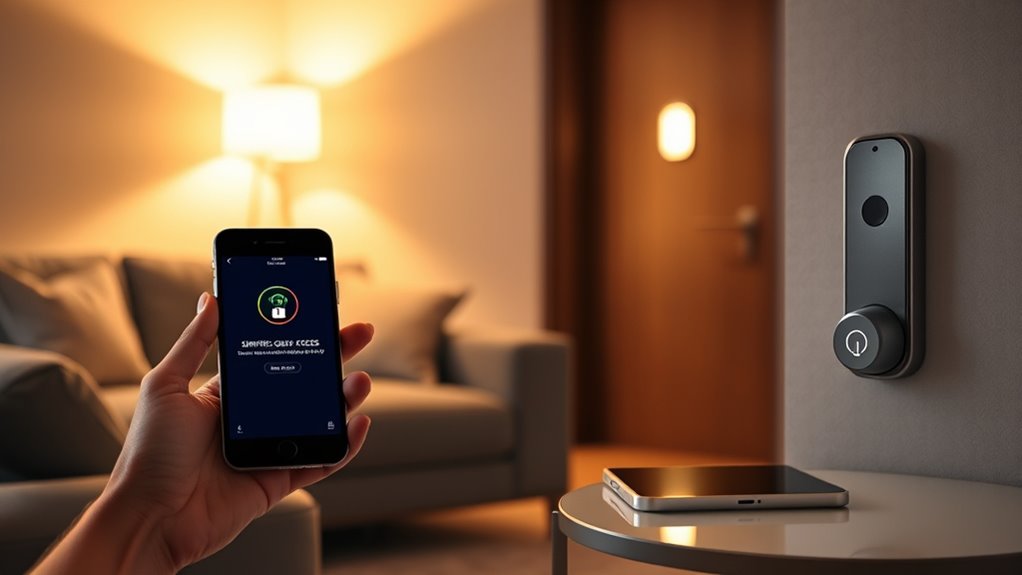
Simplified guest access is key to making your smart home welcoming and hassle-free. With keyless entry, you can give guests temporary access without handing over physical keys, reducing stress and security concerns. Set up smart locks that allow you to generate unique codes or open doors remotely, so your guests can come and go easily. Providing guest Wi Fi ensures they stay connected without compromising your main network’s security. You can create a separate network just for visitors, keeping your devices safe while offering reliable internet. Automating these features means you don’t have to be home to grant access or troubleshoot. Your guests enjoy seamless entry and connectivity, making their stay comfortable and effortless while giving you peace of mind.
Frequently Asked Questions
How Secure Are Smart Home Automations Against Hacking?
Smart home automations can be secure if you take proper precautions, but there are still privacy concerns and hacking vulnerabilities. You should use strong, unique passwords and enable two-factor authentication whenever possible. Regularly update your device firmware and security settings to patch vulnerabilities. Avoid connecting devices to public Wi-Fi networks, and consider setting up a separate network for your smart devices. Staying vigilant helps protect your home from potential hacking threats.
Can Automations Be Customized for Different Family Members?
Sure, automations can be customized for different family members, even if it seems like overkill. You can set personalization options and user-specific settings so everyone gets a tailored experience. Ironically, what’s meant to simplify your life often requires more effort upfront. But once set up, these automations make daily routines smoother, ensuring each person’s preferences are respected—no more fighting over the thermostat or lighting choices.
What Is the Cost Range for Implementing Smart Home Automations?
The cost of implementing smart home automations varies widely, typically ranging from $100 to over $2,000, depending on your setup. You should consider cost considerations and budget planning to determine what fits your needs. Basic systems with smart bulbs and plugs are affordable, while more advanced automation like security and climate control can get pricey. Setting clear priorities helps you stay within your budget while maximizing automation benefits.
How Do Automations Impact Overall Home Energy Savings?
Imagine coming home to a cozy house that automatically adjusts the temperature—smart automations boost your energy efficiency and cut utility bills. By scheduling lights, heating, or cooling based on your routine, you prevent wasteful energy use. This seamless control helps you save money and reduces your carbon footprint, proving that smart automations aren’t just convenient—they’re a smart way to make your home more sustainable and cost-effective in the long run.
Are Smart Automations Compatible With Existing Home Systems?
Yes, smart automations are generally compatible with existing home systems. You’ll find many devices designed with wireless compatibility, making integration seamless. However, legacy systems might require additional hubs or adapters to connect with new automation technology. Before upgrading, check the compatibility details, ensuring your current setup can support the new smart automations without extensive modifications. This way, you enjoy smarter living without replacing your entire home system.
Conclusion
Think of your smart home as a symphony, where each automation plays its part seamlessly. By implementing these 15 ideas, you’ll turn your house into a harmonious haven, making everyday life smoother and more enjoyable. With just a few taps, you’ll orchestrate comfort, convenience, and efficiency—transforming your space into the ultimate sanctuary. Embrace these smart solutions and let your home sync effortlessly to your rhythm, creating a lifestyle that feels truly tailored just for you.