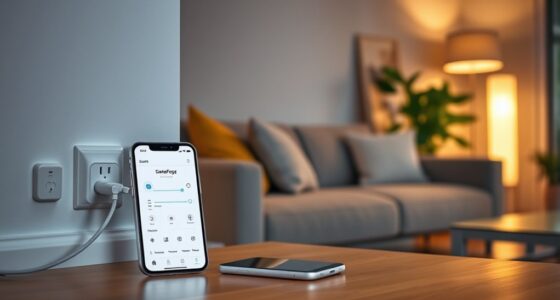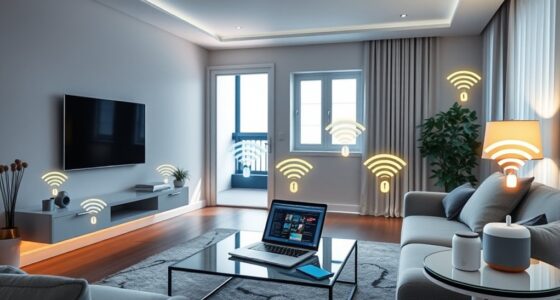
Smart kitchen gadgets like Wi-Fi refrigerators or microwaves offer convenience, energy management, and personalized features, but they aren’t essential for everyone. If you’re tech-savvy and want to streamline routines or monitor energy use remotely, these devices can be worthwhile investments. However, they come with higher costs, security concerns, and compatibility issues. To decide if they’re right for you, consider your lifestyle and priorities—more details are just ahead.
Key Takeaways
- Wi-Fi refrigerators and microwaves offer convenience through remote control and real-time alerts, enhancing kitchen efficiency.
- They can help with inventory management and recipe customization, but may not justify high costs for all users.
- Compatibility and security are crucial; poorly secured devices could pose privacy risks or hacking vulnerabilities.
- Simpler, non-connected appliances or smart plugs can provide similar benefits at lower cost and complexity.
- Assess your specific needs, budget, and tech comfort level before investing in high-tech smart kitchen gadgets.
Top picks for "smart kitchen gadget"
Open Amazon search results for this keyword.
As an affiliate, we earn on qualifying purchases.
Understanding the Features of Wi-Fi-Enabled Appliances

Wi-Fi-enabled appliances let you control and monitor your kitchen gadgets remotely, making cooking more convenient and efficient. These devices often feature sleek designs that enhance your kitchen aesthetics, blending technology seamlessly with your decor. You’ll appreciate how the modern look of smart appliances adds a sophisticated touch to your space. Durability is also a key feature; many Wi-Fi-enabled appliances are built with high-quality materials, ensuring they withstand daily use and last for years. Their robust construction means you won’t have to worry about frequent replacements. Plus, their smart features, like scheduling and remote updates, help you keep everything running smoothly without sacrificing style or longevity. These appliances are designed to complement your kitchen’s visual appeal while providing reliable performance. Additionally, they often include energy management capabilities that can help reduce your utility bills and support eco-friendly living. Many of these appliances also incorporate connectivity standards, ensuring compatibility with various smart home ecosystems for seamless integration. As technology advances, manufacturers are increasingly focusing on sustainable design to minimize environmental impact and promote eco-conscious living. Incorporating user-friendly interfaces further enhances the overall experience, making these smart appliances accessible to everyone. Furthermore, the integration of advanced security features can help protect your home network from potential cyber threats, ensuring safe operation of your connected devices.
The Advantages of Smart Kitchen Devices
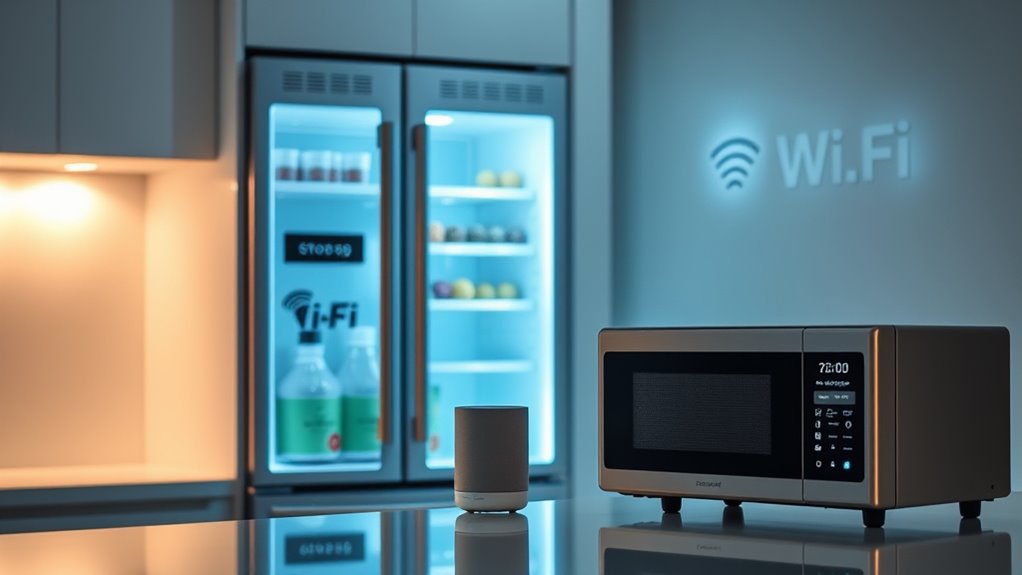
Smart kitchen devices offer numerous advantages that can transform your cooking experience. With remote access, you can control your appliances from anywhere, whether you’re at work or running errands. This means you can start preheating your oven or check the fridge contents without being in the kitchen. Additionally, energy monitoring features help you track your appliance usage, allowing you to identify energy waste and reduce utility bills. These devices provide real-time data that empowers you to make smarter choices about your energy consumption. Furthermore, they often come with alerts and automation options that simplify meal preparation and maintenance. Modern connected cooking techniques enhance convenience, efficiency, and sustainability, making your cooking environment more intelligent and responsive to your needs. Integrating smart technology into your kitchen can also help you adopt more sustainable habits and reduce your environmental footprint, especially when combined with energy-saving features. Incorporating home automation capabilities can further streamline your kitchen routines and optimize resource use.
Potential Drawbacks and Challenges

While smart kitchen gadgets offer many benefits, they also introduce several challenges that can impact your experience. One major concern is increased energy consumption, which can raise utility bills and environmental impact. energy efficiency standards can vary widely among devices, so understanding them can help you choose more sustainable options. Additionally, some devices may have security vulnerabilities that could compromise your data privacy or lead to unauthorized access. Technical malfunctions are another risk, potentially leaving you without essential appliances or causing data privacy issues. You might face frustrations from devices that don’t sync properly or need frequent updates. Additionally, reliance on Wi-Fi connectivity makes your appliances vulnerable to network outages, disrupting your routine. Connectivity issues can also result in intermittent device performance, which might be frustrating. These drawbacks can lead to feelings of inconvenience and worry, especially when technology fails or consumes more energy than expected. Understanding technical specifications and other factors can help you make more informed decisions about integrating smart gadgets into your kitchen.
Cost-Benefit Analysis of Investing in High-Tech Appliances
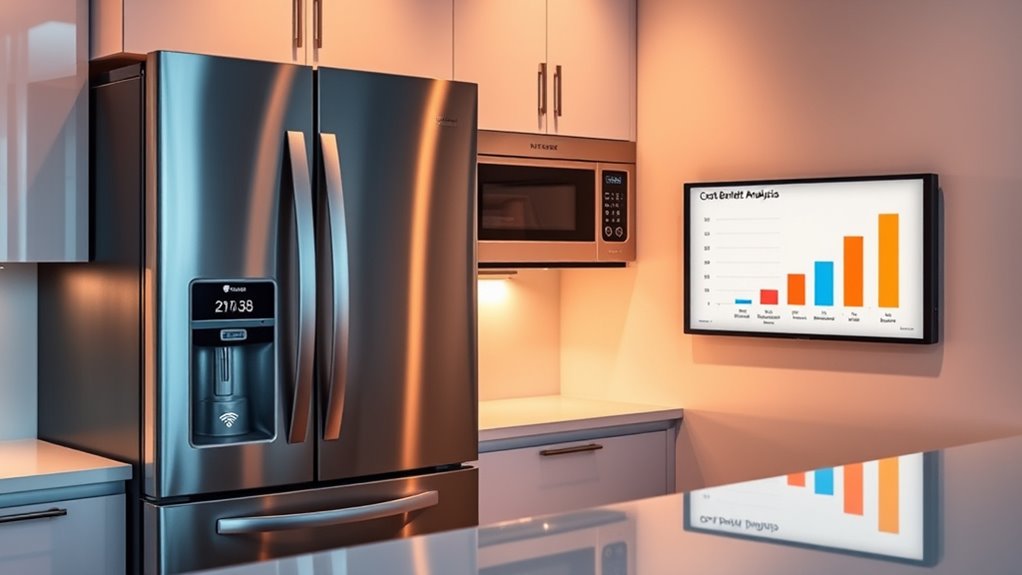
When considering high-tech appliances, you should weigh the upfront costs against the convenience they offer daily. Think about whether the long-term savings and energy efficiency justify the initial investment. It’s also important to assess if their features match your actual needs rather than just their advanced functions. Incorporating smart technology can enhance your home’s efficiency but may also require ongoing maintenance and updates. Additionally, evaluating energy consumption can help determine if these devices will truly reduce your utility bills over time. Conducting a thorough cost-benefit analysis can provide a clearer picture of whether the investment aligns with your financial goals. Understanding net worth of innovative appliances can also provide insight into their value and longevity, ensuring you invest wisely.
Price vs. Convenience
Investing in high-tech kitchen gadgets often involves balancing the upfront costs with the convenience they provide. You should consider the cost comparison carefully, weighing the immediate expense against enhanced user experience. While Wi-Fi fridges and smart microwaves promise convenience, they may not be worth the price if you value simplicity.
Keep in mind:
- The initial investment might feel overwhelming, especially if budgets are tight
- You could miss out on the tactile satisfaction of traditional appliances
- Convenience may come with hidden costs, like subscription fees or updates
- Sometimes, simpler gadgets deliver just as much ease without the hefty price tag
Ultimately, you need to decide if the added convenience justifies the higher price, or if it’s better to stick with more affordable, basic appliances.
Long-term Savings Potential
High-tech kitchen appliances often come with higher upfront costs, but they can save you money over time through increased efficiency and reduced energy consumption. Modern Wi-Fi-enabled fridges and microwaves are designed with energy efficiency in mind, helping lower utility bills. Their advanced user interface allows you to monitor energy use, set ideal settings, and avoid unnecessary operation, maximizing savings. Over the long term, these features can offset initial expenses by cutting down on waste and lowering energy bills. Additionally, smart appliances often come with maintenance alerts and troubleshooting tools that prevent costly repairs. While the investment might seem steep initially, the combination of energy efficiency and intuitive user interfaces can make high-tech appliances a financially sound choice in the long run.
Functionality vs. Necessity
While smart kitchen gadgets offer impressive features, it’s *essential* to weigh their functionality against your actual needs and budget. High-tech appliances like Wi-Fi-enabled fridges and microwaves can boost convenience, but they often come with hefty prices. Consider whether the advanced features truly enhance your cooking experience or if they’re just a flashy addition. If you value a retro design and aesthetic appeal, some gadgets may clash with your kitchen’s style, making their usefulness less relevant. Investing in technology should feel like a smart choice, not an impulse buy. Ask yourself: Will this gadget genuinely save me time or improve my life? Or is it just a luxurious gadget that might sit unused? Your decision should balance practicality with your personal taste and financial comfort. Additionally, understanding the functionality of water-based features in appliances can help you determine if these innovations are worth the investment. Recognizing how smart home integration can streamline your cooking routines may also influence your purchasing decision. Exploring market trends and current offerings can provide further insight into whether these devices are a worthwhile addition to your kitchen. Furthermore, researching energy efficiency benefits can help you assess potential long-term savings. Moreover, evaluating the long-term cost savings can provide insight into whether these devices are truly beneficial over time.
Compatibility and Integration With Existing Kitchen Setups
When choosing smart kitchen gadgets, you want devices that connect easily and work smoothly together. Seamless device connectivity guarantees your appliances communicate without issues, saving you time and frustration. Make sure your gadgets are compatible within the same ecosystem to maximize their benefits and simplify your setup. Additionally, verifying appliance compatibility ensures that your devices can be integrated effectively and function as a cohesive system.
Seamless Device Connectivity
Ensuring that smart kitchen gadgets seamlessly connect with your existing setup is essential for a smooth user experience. When devices work harmoniously, you enjoy effortless control, enhanced energy efficiency, and a sleek aesthetic appeal. Compatibility means your smart microwave, fridge, or other gadgets integrate smoothly without causing frustration or clutter. Imagine waking up to a kitchen where all appliances respond to your voice or app commands without hiccups. Creating a cohesive environment also involves considering how well devices work together within your home’s technology ecosystem.
- Experience the satisfaction of a clutter-free, unified system that simplifies your routine.
- Feel confident knowing your devices optimize energy use, saving costs and the environment.
- Revel in a cohesive look that elevates your kitchen’s aesthetic appeal.
- Trust that connectivity enhances convenience, making smart tech truly worthwhile.
Ecosystem Compatibility
To get the most out of your smart kitchen gadgets, they need to work seamlessly within your existing setup. Ecosystem compatibility guarantees your devices communicate smoothly, preventing frustration and disjointed experiences. Look for gadgets that integrate well with your preferred brand, fostering brand loyalty and simplifying management. A consistent user interface across devices makes controlling your smart kitchen easier, reducing the learning curve and boosting confidence. If your appliances operate on different platforms or require separate apps, you might find yourself juggling multiple interfaces, which can hinder usability. Prioritize products that support common standards or connect through a central hub, so your smart kitchen functions harmoniously. Compatibility isn’t just about tech; it’s about creating a cohesive, user-friendly environment that adapts to your habits. Additionally, understanding field‑of‑view and imaging‑scale examples can help you choose compatible devices that suit your specific needs.
Privacy and Security Concerns With Connected Devices
As smart kitchen gadgets become more integrated into your daily routine, concerns about privacy and security grow. Your data privacy is at risk when devices collect personal information, and hacking risks increase if security isn’t tight. You might not realize that hackers could access your appliances, potentially exposing sensitive details or even controlling your devices remotely. This vulnerability can lead to feelings of helplessness and fear.
Smart kitchen gadgets can expose your data and leave you vulnerable to hacking.
- Losing control over your personal data
- Unauthorized access to your home
- Potential misuse of your information
- Emotional distress from security breaches
These concerns highlight the importance of understanding how connected devices handle your data. While convenience is tempting, safeguarding your privacy should always come first to avoid becoming a target for cyber threats.
Practical Use Cases and Everyday Benefits
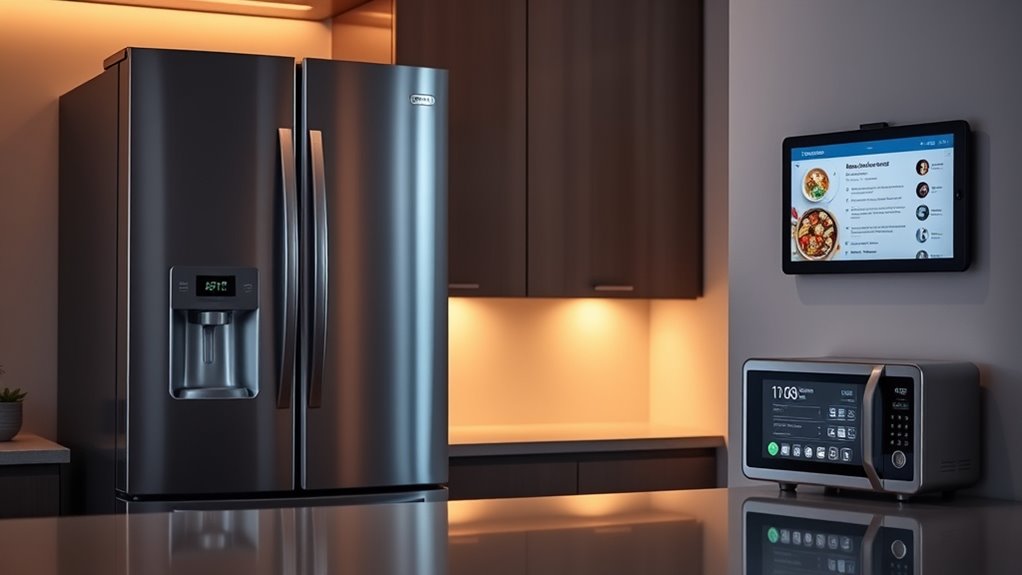
Smart kitchen gadgets offer a range of practical benefits that make everyday cooking and household management more efficient. With features like recipe customization, you can easily adjust meal plans based on available ingredients or dietary preferences, saving time and reducing waste. These devices also enable energy monitoring, helping you track and optimize power use, which can lower utility bills and promote eco-friendly habits. For example, a Wi-Fi-enabled oven can suggest cooking times and temperatures tailored to your recipes, while connected refrigerators can alert you when supplies run low or expire. Overall, these gadgets simplify daily routines, making meal prep more personalized and cost-effective. Embracing these benefits allows you to streamline your kitchen tasks while gaining better control over energy consumption.
Alternatives to Fully Smart Appliances

While fully integrated smart appliances offer advanced features, they aren’t always necessary or practical for every kitchen. You can achieve energy efficiency and convenience without high-tech gadgets. Consider these alternatives:
- Smart plugs: Control traditional appliances remotely and save energy without replacing everything.
- Dedicated digital timers: Simplify cooking and improve user interface clarity.
- Smart sensors: Monitor temperature or humidity with simple devices, avoiding complex setups.
- Manual appliances with digital displays: Enjoy easy-to-use interfaces without full connectivity.
These options help you stay efficient and connected, without the cost or complexity of fully smart appliances. They’re often more affordable, easier to maintain, and still provide the benefits of modern technology. This way, you keep your kitchen smart and practical.
Making an Informed Decision: Are These Gadgets Worth It?
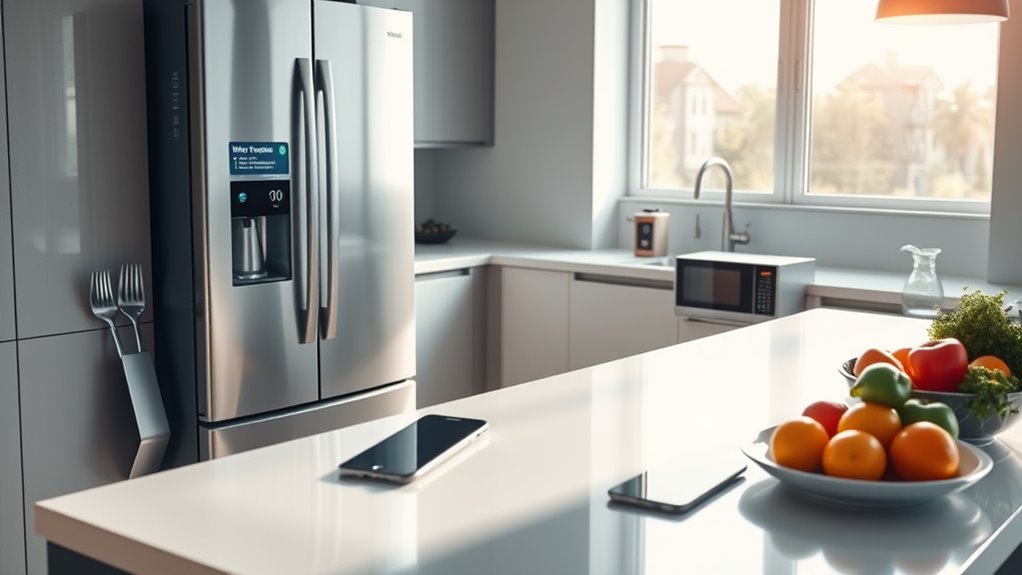
Are these kitchen gadgets truly worth the investment? Consider whether their energy efficiency justifies the cost, as smart appliances often use less power and can save you money long-term. Think about the user interface—if it’s complicated or unintuitive, you might find yourself more frustrated than helped. Ask yourself if the convenience and control offered outweigh the potential hassle of setup and maintenance. Evaluate if the features align with your cooking habits and household needs. Sometimes, basic appliances with straightforward controls work just as well without added technology. Ultimately, making an informed decision means weighing the benefits of energy savings and ease of use against the initial expense and complexity. If these gadgets simplify your life without complicating it, they could be worth it.
Frequently Asked Questions
How Long Do Wi-Fi-Enabled Kitchen Gadgets Typically Last?
Wi-Fi-enabled kitchen gadgets usually last around 5 to 10 years, but durability concerns may affect their lifespan. You should expect some maintenance costs over time, especially if software updates or repairs are needed. Proper care and choosing reputable brands can extend their usability. Keep in mind that technology advances quickly, so these gadgets might become outdated sooner, impacting their overall longevity and functionality.
Are There Eco-Friendly Options for Smart Kitchen Appliances?
Yes, there are eco-friendly options for smart kitchen appliances. You can choose models that prioritize energy savings, reducing your electricity bills and carbon footprint. Look for appliances made with sustainable materials, which are better for the environment and often more durable. These options help you maintain a greener kitchen while enjoying the convenience of smart technology, making it easier to manage energy use and promote sustainability in your home.
Can These Devices Be Easily Repaired or Upgraded?
While smart kitchen gadgets seem like a dream, maintenance challenges and upgradeability concerns can make repairs tricky. You might find that updates or repairs require specialized skills or tools, making the process less straightforward. Though some models boast modular designs, many devices aren’t built for easy upgrades, so you could face limitations over time. Consider these factors before investing, ensuring your kitchen remains both functional and adaptable as technology evolves.
What Are the Most Popular Brands Offering Reliable Smart Kitchen Gadgets?
You’ll find that brands like Samsung, LG, and Whirlpool are among the most popular for reliable smart kitchen gadgets. They offer excellent brand reliability and a wide product variety, ensuring you get the latest features and quality. These brands are trusted by consumers for their durability and innovation, making them a smart choice if you’re looking to upgrade your kitchen with smart technology.
Do Smart Appliances Significantly Increase Energy Consumption?
Smart appliances generally do not substantially increase energy consumption if you choose energy-efficient models. They often include features like automatic shutdown and remote control, helping you monitor and reduce energy use. While some may use a bit more power for Wi-Fi connectivity, their environmental impact remains minimal if used wisely. Overall, smart gadgets can actually promote better energy habits, potentially lowering your overall energy consumption.
Conclusion
Deciding whether smart kitchen gadgets are worth it is like walking a tightrope—you want the benefits without the pitfalls. If the convenience and features align with your lifestyle, they can be a game-changer. But if costs, privacy, or complexity feel overwhelming, it’s okay to hold back. Remember, you don’t have to chase every shiny gadget; sometimes, sticking to basics keeps your kitchen running smoothly without adding unnecessary bells and whistles.