
Wi-Fi 7 offers faster speeds, lower latency, and better spectrum management than Wi-Fi 6 and 6E, making your network more reliable for gaming, streaming, and large device loads. It uses multiple frequency bands plus wider channels, reducing congestion and boosting overall performance. Compatibility requires new hardware and firmware updates, while energy-efficient features extend your device’s battery life. To find out how it can transform your connectivity, keep exploring what Wi-Fi 7 has in store.
Key Takeaways
- Wi-Fi 7 offers faster speeds and increased bandwidth compared to Wi-Fi 6 and 6E, supporting more simultaneous devices.
- It significantly reduces latency and improves connection stability through multi-link operation and advanced spectrum management.
- Wi-Fi 7 utilizes multiple frequency bands and wider channels for better spectrum utilization and less network congestion.
- Compatibility requires device upgrades, with future devices likely to have built-in Wi-Fi 7 support for seamless integration.
- Enhanced power efficiency features in Wi-Fi 7 extend battery life for connected devices through optimized energy management.

TP-Link BE6500 Dual-Band WiFi 7 Router (BE400) – Dual 2.5Gbps Ports, USB 3.0, Covers up to 2,400 sq. ft., 90 Devices, Quad-Core CPU, HomeShield, Private IoT, Free Expert Support
𝐅𝐮𝐭𝐮𝐫𝐞-𝐑𝐞𝐚𝐝𝐲 𝐖𝐢-𝐅𝐢 𝟕 – Designed with the latest Wi-Fi 7 technology, featuring Multi-Link Operation (MLO), Multi-RUs, and 4K-QAM….
As an affiliate, we earn on qualifying purchases.
As an affiliate, we earn on qualifying purchases.
Speed and Bandwidth Improvements
Wi-Fi 7 substantially boosts speed and bandwidth compared to Wi-Fi 6 and 6E, allowing for faster data transfer and more reliable connections. This upgrade enhances mesh networking capabilities, enabling seamless coverage across large homes or offices. With increased bandwidth, multiple devices can stream, game, or work simultaneously without lag. Improved security protocols also come into play, ensuring your data stays protected as speeds increase. This means you’re less likely to experience interruptions or vulnerabilities while enjoying high-performance connections. The enhanced speed and bandwidth make Wi-Fi 7 ideal for supporting demanding applications, smart home devices, and future tech, all while maintaining robust security measures. Additionally, network efficiency is improved, reducing congestion and enhancing overall performance even in crowded environments. The new standards also support energy-efficient operation, which helps reduce power consumption in connected devices. Overall, this advancement sets a new standard for wireless performance, keeping your network fast, secure, and efficient.

TP-Link Deco 7 Pro BE63 Tri-Band WiFi 7 BE10000 Whole Home Mesh System – 6-Stream 10 Gbps, 4×2.5G Ports Wired Backhaul, 4X Smart Internal Antennas, VPN, HomeShield, Free Expert Support (3-Pack)
𝗦𝘂𝗽𝗲𝗿𝗰𝗵𝗮𝗿𝗴𝗲𝗱 𝐃𝐞𝐜𝐨 𝟕 𝐏𝐫𝐨 𝗕𝗘𝟭𝟬𝟬𝟬𝟬 𝗧𝗿𝗶-𝗕𝗮𝗻𝗱 𝗪𝗶-𝗙𝗶 𝟳 𝗦𝗽𝗲𝗲𝗱𝘀: Features cutting-edge Wi-Fi 7 technology, including Multi-Link Operation, Multi-RUs,…
As an affiliate, we earn on qualifying purchases.
As an affiliate, we earn on qualifying purchases.
Latency and Reliability Enhancements
Although previous Wi-Fi standards have struggled with latency and occasional disconnects, Wi-Fi 7 introduces significant improvements to both. It reduces latency through advanced techniques like multi-link operation, allowing devices to send data across multiple channels simultaneously. Interference mitigation gets a boost with smarter spectrum management, minimizing disruptions from nearby signals. Reliability is enhanced via improved beamforming and adaptive channel switching, ensuring stable connections even in crowded environments. Additionally, security enhancements play a role, providing stronger encryption and faster authentication processes that prevent disruptions caused by security breaches. These features work together to deliver a more responsive, dependable Wi-Fi experience, especially in high-demand scenarios like gaming, video streaming, and smart home integrations. Overall, Wi-Fi 7 prioritizes low latency and reliable connections for demanding applications.
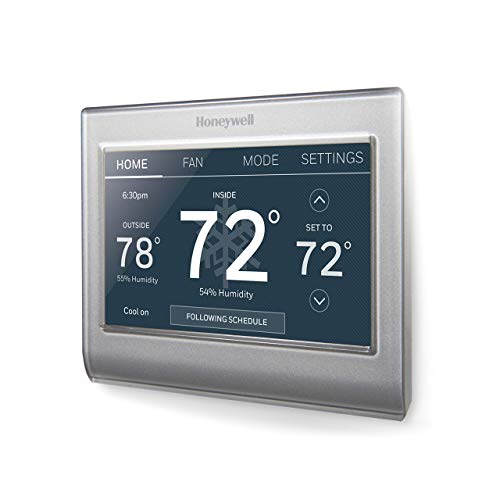
Honeywell Home RTH9585WF1004 Wi-Fi Smart Color Thermostat, 7 Day Programmable, Touch Screen, Energy Star, Alexa Ready, Gray
COMFORT COMES IN YOUR COLOR. Personalize your Wi-Fi Smart Color Programmable Thermostat to fit your décor.
As an affiliate, we earn on qualifying purchases.
As an affiliate, we earn on qualifying purchases.
Frequency Bands and Spectrum Utilization

Wi-Fi 7 makes more efficient use of the radio frequency spectrum by leveraging multiple frequency bands simultaneously. This advancement allows for better spectrum management and improved data throughput. Unlike Wi-Fi 6 and 6E, which primarily operate in the 2.4 GHz, 5 GHz, and 6 GHz bands, Wi-Fi 7 expands the spectrum allocation to include additional channels and wider bandwidths. By utilizing these multiple bands concurrently, you experience less congestion and higher speeds. Spectrum management becomes more sophisticated, enabling dynamic channel switching and optimized frequency allocation based on network demands. This strategic use of wider and more diverse frequency bands guarantees that you get more reliable, faster, and more stable Wi-Fi connections, even in crowded environments. Color accuracy and spectrum utilization both play crucial roles in ensuring a seamless wireless experience.

USB WiFi Adapter for Desktop PC, WAVLINK Tri-Band BE6500 WiFi 7 Adapter with 2.4GHz/5GHz/6GHz High Gain Antennas, Multicolor Status LED, WPA3, MLO, OFDMA, 4K-QAM, Supports Windows 11/10 Only
【Next-Gen Wi-Fi 7 Tri-Band】Experience blazing-fast tri-band speeds of up to 688Mbps on the 2.4GHz band, 2882Mbps on the…
As an affiliate, we earn on qualifying purchases.
As an affiliate, we earn on qualifying purchases.
Compatibility and Device Support
As the newest standard, Wi-Fi 7 offers improved compatibility with a wider range of devices, but it still requires compatible hardware to access its full potential. Upgrading your devices will guarantee you benefit from faster speeds and lower latency. Keep in mind that device compatibility depends on hardware support and software updates, which may take time for existing devices. To stay ahead, look for devices with Wi-Fi 7 support and firmware updates that enable new features.
Wi-Fi 7 boosts device compatibility but needs hardware upgrades for full access and faster speeds.
- Check if your current devices can receive software updates for Wi-Fi 7 compatibility
- Upgrade routers and network hardware supporting the new standard
- Ensure future devices come with built-in Wi-Fi 7 support for seamless experience
Power Efficiency and Battery Life
Wi-Fi 7 introduces significant improvements in power efficiency, helping extend the battery life of compatible devices. By reducing power consumption during data transfer, Wi-Fi 7 enables devices to operate longer between charges. Features like enhanced target wake time (TWT) allow devices to stay in low-power states more effectively, optimizing battery use. These advancements mean your smartphones, laptops, and IoT gadgets can conserve energy without sacrificing performance. Improved energy management also reduces heat generation, further benefiting battery health. Additionally, free floating network architecture in Wi-Fi 7 contributes to more efficient data routing, further enhancing power savings. This architecture also supports dynamic resource allocation, which further optimizes power usage during peak and idle times. Moreover, the integration of energy-efficient protocols ensures that data transmission is optimized for minimal power draw. Overall, Wi-Fi 7’s focus on battery optimization guarantees that connected devices stay powered longer, making it ideal for portable and energy-sensitive applications. You’ll notice less frequent charging and more reliable device operation, even with intensive network usage.
Potential Impact on Future Technologies
With its advanced capabilities, Wi-Fi 7 is poised to considerably influence future technologies across multiple sectors. You’ll see breakthroughs in smart home integration, where faster, more reliable connections enable seamless device coordination. Augmented reality experiences will become more immersive, with lower latency and higher data rates transforming gaming, training, and remote work. Additionally, Wi-Fi 7’s enhanced bandwidth supports innovative applications like real-time 3D streaming and cloud computing. This technology will also accelerate the development of smart cities, autonomous vehicles, and telemedicine by providing consistent, high-speed connectivity. As a result, you’ll notice smarter environments, more interactive experiences, and improved efficiency across daily life and industry. Wi-Fi 7’s potential makes it a catalyst for the next wave of technological innovation, especially in facilitating high-speed data transfer, which is crucial for emerging digital applications. Moreover, its capabilities will significantly benefit smart home technology, enabling more reliable and comprehensive device integration. The integration of Wi-Fi 7 will also foster interoperability between devices, leading to more unified and efficient digital ecosystems. This will enable future-proof connectivity that adapts to evolving technological demands, ensuring longevity and relevance. As these advancements unfold, the importance of wireless network standards will become even more apparent in shaping future connectivity solutions.
Frequently Asked Questions
When Will Wi-Fi 7 Be Available to Consumers?
You can expect Wi-Fi 7 to be available to consumers around 2024 or 2025. However, future adoption might face compatibility challenges, especially with older devices. To benefit from Wi-Fi 7’s improved speeds and efficiency, you’ll need compatible hardware, which could take time to become widespread. Keep an eye out for new routers and devices, as manufacturers gradually release more Wi-Fi 7-enabled products.
Will Wi-Fi 7 Require New Hardware or Firmware Updates?
Wi-Fi 7 will likely require new hardware compatibility, meaning your current devices may not support it without firmware updates. You’ll need compatible routers and devices designed for Wi-Fi 7 to enjoy its benefits. Firmware updates can help improve existing hardware, but they won’t make it fully compatible with Wi-Fi 7. To get the best experience, plan on upgrading your hardware when Wi-Fi 7 becomes available.
How Much Will Wi-Fi 7-Compatible Devices Cost?
You can expect Wi-Fi 7-compatible devices to be a bit of a splurge initially, but market pricing should improve over time. While early models might be pricey, device affordability will become better as manufacturers ramp up production. Keep an eye out, because prices tend to follow the same path as previous upgrades—what’s costly now will eventually become more accessible, making it easier for you to upgrade without breaking the bank.
What Security Features Will Wi-Fi 7 Offer?
Wi-Fi 7 will boost your security with encryption enhancements and improved device authentication. You’ll benefit from stronger encryption protocols, making your data harder to intercept. Plus, enhanced device authentication guarantees only trusted devices can connect, reducing risks of unauthorized access. These features help keep your network safer, giving you peace of mind while enjoying faster, more reliable Wi-Fi connections.
Will Wi-Fi 7 Improve Streaming or Gaming Experiences Significantly?
Imagine streaming a movie or gaming with zero buffering or lag—that’s what Wi-Fi 7 promises. It markedly improves streaming quality and reduces gaming latency, ensuring smoother experiences even with multiple devices. You’ll notice faster downloads and more reliable connections, especially in busy households. Overall, Wi-Fi 7 will elevate your entertainment and gaming, making everything feel seamless and more immersive, just like upgrading from a bicycle to a sports car.
Conclusion
With Wi-Fi 7’s fantastic frequency finesse, faster speeds, and firm reliability, you’ll feel the future of connectivity firsthand. As it advances beyond Wi-Fi 6 and 6E, you’ll enjoy seamless streaming, swift downloads, and smarter devices. Embrace the evolution, enhance your experience, and empower your everyday essentials with this revolutionary wireless wave. Wi-Fi 7 promises powerful performance, promising a brighter, better-connected tomorrow for all your digital delights.