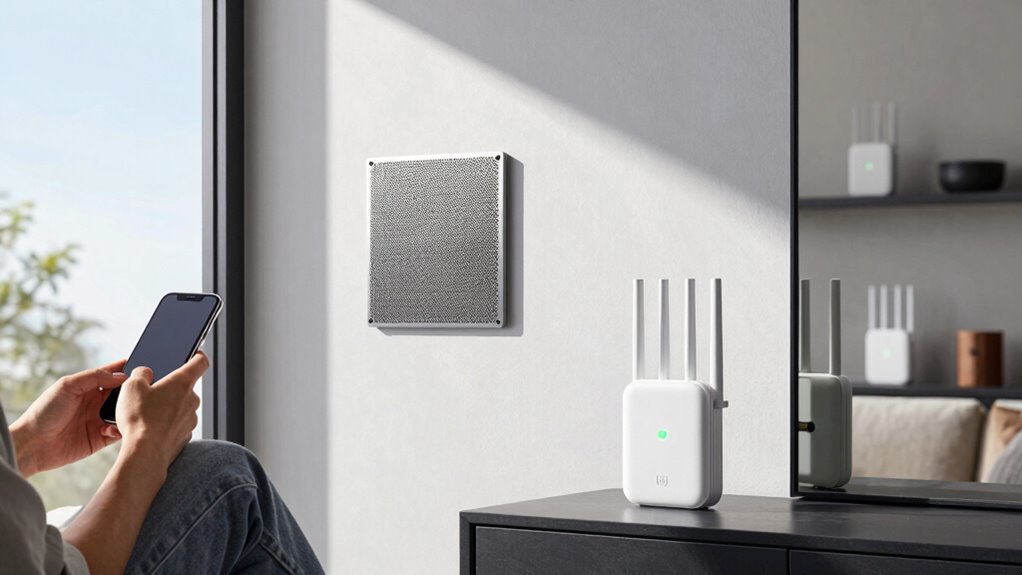

To boost your phone signal indoors, start by finding the best spot in your home or office with the strongest reception, usually near windows or higher floors. Keep your device updated and enable Wi-Fi calling to improve connectivity. Remove obstacles like thick walls or metal objects that block signals, and consider investing in signal boosters or repeaters for better coverage. Switching to a different provider can also help; explore these tactics to enhance your connection even further.
Key Takeaways
- Find a location near windows or higher floors with strong reception, away from interference sources like thick walls and electronics.
- Keep your device and software updated to improve network stability and reception performance.
- Use signal boosters, repeaters, or switch to a provider with better indoor coverage for stronger signals.
- Enable Wi-Fi calling and optimize router settings to enhance indoor connectivity and reduce signal loss.
- Regularly review and adjust your environment and device settings to minimize interference and improve signal strength.
Find the Optimal Spot in Your Home or Office
To improve your phone signal indoors, start by identifying the areas where your device consistently has the strongest reception. Once you find these spots, look for the *best* location in your home or office. Typically, near windows or higher floors provides better signal strength. Avoid placing your phone near devices that cause interference, such as microwaves, cordless phones, or Wi-Fi routers. These can disrupt signals and weaken reception. Keep your device away from thick walls or metal objects that block signals. Experiment by moving around to find the spot with the *most favorable* reception. Additionally, understanding signal interference sources can help you optimize placement and improve overall reception. Being aware of building materials can also help you choose spots that naturally enhance your signal quality. Recognizing signal propagation principles can further assist in selecting the optimal location indoors. Once you’ve located the *most suitable* location, make it your go-to spot for calls and internet use to maximize your signal quality indoors. Monitoring signal strength with your device can help you verify improvements and find the best spot more efficiently, especially in environments with dynamic interference sources.
Keep Your Phone Updated With the Latest Software
Keeping your phone updated guarantees you get the latest software improvements that enhance connection stability. Updates often fix bugs that cause dropped calls or weak signals, making your device more reliable. Make it a habit to check for updates regularly to keep your signal strong indoors. Additionally, ensuring your device has high refresh rates can improve responsiveness and overall performance. To further optimize your signal, consider smart home integration features that can help manage network interference and improve indoor reception. Regularly reviewing your network settings can also help to identify potential issues that may be weakening your signal. Being aware of surrounding interference sources, such as electronic devices or thick walls, can also help you position your device for better reception. Implementing privacy and security features can also protect your connection from unauthorized access that could affect signal quality.
Software Improvements Boost Stability
Updating your phone’s software regularly is one of the simplest ways to improve its indoor signal stability. Manufacturers often release updates that enhance network optimization, which helps your device connect more reliably indoors. These updates also improve app performance, reducing lag and crashes that can interfere with your connection. To guarantee you’re getting the best signal, regularly check for and install updates.
Key steps include:
- Enabling automatic updates for seamless improvements
- Installing firmware updates promptly
- Keeping your network settings current
- Managing app permissions to prevent conflicts
Updates Fix Connectivity Bugs
When your phone runs on outdated software, connectivity bugs are more likely to cause interruptions. Software updates often include fixes for these issues, improving overall signal stability. By keeping your device current, you guarantee it can better handle network fluctuations and reduce dropped calls or slow data. Updates also optimize your phone’s compatibility with cellular towers and Wi-Fi networks, helping to resolve persistent connectivity issues. Skipping updates can leave your device vulnerable to bugs that disrupt reception. Regularly check for and install the latest software to benefit from these improvements. Staying current with updates not only enhances your phone’s performance but also strengthens your connection, making it easier to stay connected indoors. Don’t wait—update your software to fix connectivity bugs today.
Use Wi-Fi Calling When Possible
First, check if your phone supports Wi-Fi calling and make certain your carrier offers it. Then, go into your settings to enable Wi-Fi calling so you can make calls without relying solely on your signal. Turning this feature on can considerably improve your indoor connectivity. Additionally, utilizing local automation features can help optimize your network settings and improve overall reception, especially when integrated with modern smart home technology. For example, adjusting your Wi-Fi network settings or enabling specific protocols can further enhance your signal strength indoors. Implementing signal boosters or mesh networks can also provide a significant boost to your indoor coverage. Understanding the thermal behavior of your devices can help prevent overheating and maintain consistent signal quality indoors.
Wi-Fi Compatibility Checks
Since many smartphones now support Wi-Fi calling, checking your device’s compatibility can substantially improve your indoor signal. Make sure your device supports Wi-Fi calling features and that your router is compatible with this function. Compatibility issues can prevent you from using Wi-Fi calling effectively, even if your phone supports it. Additionally, ensuring your device’s Wi-Fi calling support is properly enabled can help maximize your signal quality. Regularly updating your device’s software can also resolve compatibility issues and improve overall connectivity. Being aware of your network provider’s policies on Wi-Fi calling can also ensure you’re utilizing all available features for better reception. Ensuring that your router firmware is up-to-date can further enhance connection stability and performance, especially since firmware updates often include security patches and performance improvements.
Enable Wi-Fi Calling Settings
Once you’ve confirmed that your device and router support Wi-Fi calling, the next step is to enable this feature on your phone. This allows you to make calls over your Wi-Fi network, improving reception indoors. To activate Wi-Fi calling, go to your phone’s settings, find the Wi-Fi calling option, and turn it on. Keep in mind, Wi-Fi calling supports VoIP integration, making calls clearer and more reliable in weak signal areas. It also enables emergency calling even when cellular signals are poor.
| Benefit | Explanation |
|---|---|
| Better reception | Uses Wi-Fi to improve call quality |
| Emergency calling | Ensures safety even without cellular signal |
| VoIP integration | Provides seamless voice-over-IP communication |
| Easy activation | Simple toggle in your device settings |
Remove Obstacles and Interference Sources

Obstructions like thick walls, metal furniture, and electronic devices can considerably weaken your phone signal indoors. To improve your reception, focus on obstacle removal and interference mitigation. Start by relocating or removing items that block signal paths, such as large metal objects or thick partitions. Keep electronic devices like cordless phones and microwaves away from your phone’s line of sight, as they can cause interference. Also, avoid placing your phone near wireless routers or Bluetooth gadgets that may create signal noise. By reducing physical barriers and minimizing electronic interference, you can markedly boost your indoor signal. Remember, small adjustments like repositioning furniture or unplugging unnecessary gadgets can make a big difference in your overall reception. Prioritize obstacle removal for clearer, stronger signals. Additionally, consider improving your home’s electromagnetic environment by minimizing interference sources and optimizing device placement to further enhance signal strength. Paying attention to signal propagation and understanding how signals travel through your space can also lead to more targeted improvements. Recognizing how material composition of walls impacts signal flow can help you strategize more effective placement of your devices. To further optimize your setup, using a signal booster can significantly enhance coverage in problematic areas.
Invest in Signal Boosters or Repeaters
If your indoor phone signal remains weak despite removing obstacles, investing in signal boosters or repeaters can make a significant difference. These devices amplify your existing signal, providing better reception throughout your home. When choosing signal booster options, consider compatibility with your network and coverage needs. Repeater installation is straightforward and can greatly improve indoor signal strength. Here’s a quick overview:
| Signal Booster Options | Repeater Installation | Coverage Area |
|---|---|---|
| Indoor boosters | Plug-and-play | Small apartments |
| Outdoor boosters | Professional setup | Large homes |
| Multi-band boosters | DIY or professional | Multiple rooms |
| Cellular amplifiers | Signal analysis | Entire house |
Investing in the right device guarantees you stay connected without frustration. Proper sourcing and reliable information are essential when selecting the best equipment for your needs, as emphasized by the importance of well-sourced name coverage. Additionally, understanding signal propagation principles can help optimize your setup and maximize coverage. A good grasp of frequency bands can also influence which booster or repeater will perform best in your environment.
Switch to a Different Network Provider

Switching to a different network provider can often resolve persistent indoor signal issues that other solutions haven’t fixed. If your current provider’s network coverage is weak in your area, exploring other options might give you better reception. Look into provider plans that offer stronger signals indoors and better overall coverage. Before switching, compare plans to guarantee you’re getting the best deal for your needs.
Consider these points:
- Research providers with strong network coverage in your location
- Check customer reviews for indoor signal quality
- Evaluate plan options, including unlimited or enhanced coverage plans
- Confirm coverage maps to see if the new provider has better signals indoors
Making a switch could notably improve your indoor phone signal and overall connection quality.
Adjust Your Phone Settings for Better Connectivity
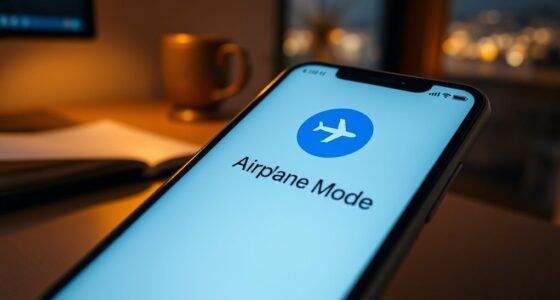
Adjusting your phone settings can markedly improve your indoor signal without needing to change providers or equipment. First, enable airplane mode for a few seconds, then turn it off to refresh your connection. Manually selecting a network can also help; go to your settings and choose a stronger or less congested network. Keep your device’s software up to date to enhance network security and stability. Additionally, disable Wi-Fi calling if it’s causing interference, and turn off unnecessary features that drain battery, like Bluetooth or location services, to optimize battery life and signal performance. Lowering screen brightness and closing background apps can further conserve power and improve reception. These simple adjustments can lead to a more reliable indoor connection while maintaining your device’s security and efficiency.
Frequently Asked Questions
How Do I Test My Phone’s Signal Strength Accurately?
You can test your phone’s signal strength accurately by using a signal meter or reception apps. Open a reliable reception app and check the signal bars or dBm readings, which indicate your signal quality. For precise results, use a signal meter device if available, and test in different areas of your home. Comparing these readings helps you identify weak spots and optimize your phone’s reception indoors.
What Are the Best Types of Signal Boosters for Indoor Use?
Looking for a clever way to improve your indoor signal? Wi-Fi extenders and mobile repeater options are your best bets. Wi-Fi extenders boost your internet connection, making streaming smoother, while mobile repeaters amplify cellular signals directly to your device. Both are easy to install and highly effective, transforming your space into a signal-friendly zone. Choose the right device based on your needs, and enjoy seamless connectivity throughout your home.
Can Changing My Phone’s Network Mode Improve Reception?
Yes, changing your phone’s network mode can improve reception. Switch to modes like LTE or 4G if you’re on 3G, or 5G if available, because newer modes often offer better signal quality and faster data. You can do this in your phone’s settings under Mobile Networks. This simple adjustment can lead to noticeable reception improvement, especially if your current mode isn’t ideal for your location or carrier.
How Does Weather Affect Indoor Cell Signal Quality?
Weather interference, much like a stubborn fog, can dampen your indoor cell signal. Atmospheric conditions such as rain, snow, or storms disrupt the signal waves, causing weaker reception or dropped calls. When the weather turns bad, your phone struggles to connect clearly through thick clouds of moisture or electrical activity. To keep your signal strong, try moving closer to windows or avoid indoor areas heavily affected by stormy weather.
Are There Legal Restrictions on Using Certain Signal Amplifiers?
Yes, there are legal restrictions on using certain signal amplifiers. You need to make certain your amplifier complies with regulations to avoid penalties. Check for legal compliance and avoid unauthorized or unlicensed devices, as some amplifiers can interfere with network operations. Always choose certified amplifiers and follow your local rules on amplifier restrictions to keep your device usage within legal boundaries and prevent potential issues.
Conclusion
By trying these tips, you’ll notice better indoor phone reception in no time. For example, imagine rearranging your furniture to find that perfect spot near a window—suddenly, calls become clearer and data faster. Whether updating your software or investing in a signal booster, small changes can make a big difference. Don’t let poor reception hold you back—act now, and enjoy seamless connectivity wherever you are in your home or office.