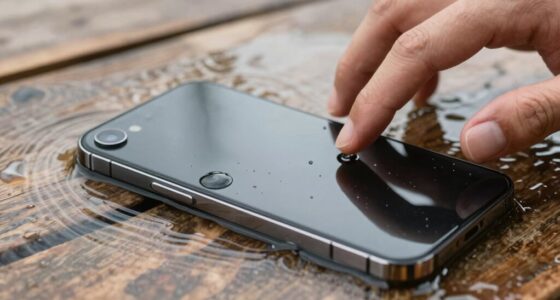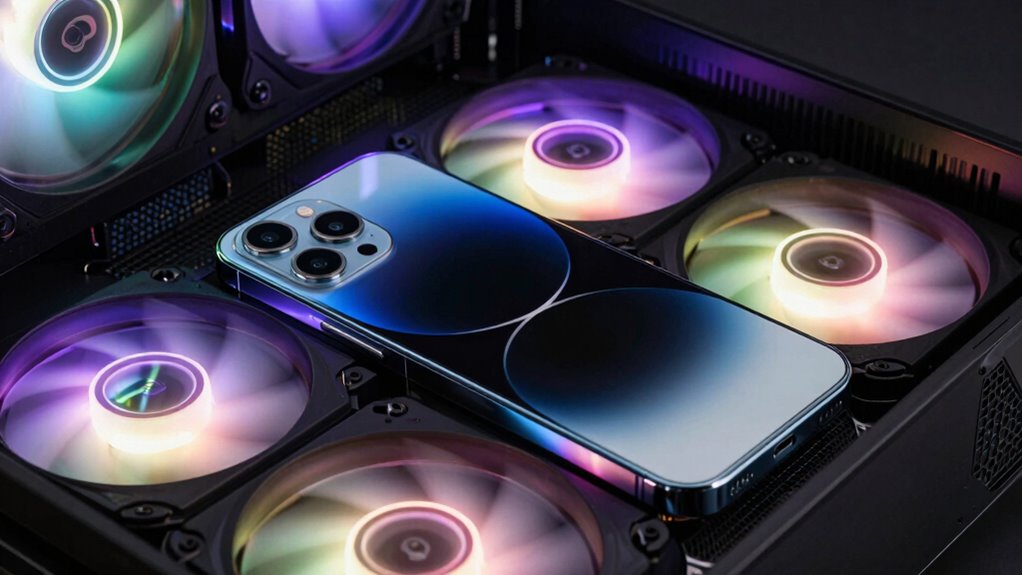

Cooling fans and ventilated cases can definitely help your phone stay cooler by increasing airflow and speeding up heat dissipation. External fans improve cooling especially during intensive use, while specially designed cases with vents or breathable materials aid heat escape. However, their effectiveness depends on proper placement and case design. If you want to discover more ways to keep your device from overheating and maximize these tools, there’s plenty to explore below.
Key Takeaways
- External fans increase airflow around the phone, aiding in faster heat dissipation when used correctly.
- Ventilated or breathable cases improve heat escape, helping maintain lower device temperatures.
- Thick or insulative cases can trap heat, reducing the effectiveness of passive cooling methods.
- Active cooling accessories like fans can provide immediate temperature relief during intensive use.
- Proper placement and design are essential; ineffective use limits the cooling benefits of fans and cases.

Phone Cooler for Gaming, 27W iPhone Cooling Fan with RGB LED Semiconductor Heatsink Cooling Case Enfriador para Celular, for iPhone/Android Phone Gaming, Live Streaming, AI Smartphone Temperature
【27W Extremely Fast Cooling】 This phone cooler for gaming adoption semiconductor refrigeration, 60 centrifugal fins for rapid heat…
As an affiliate, we earn on qualifying purchases.
As an affiliate, we earn on qualifying purchases.
How Smartphones Generate Heat During Use
Smartphones generate heat during use primarily because of the energy they consume to power various components. When you run apps or stream videos, your phone’s processor works harder, producing processor heat. This heat results from electrical resistance within the chip, which increases with higher processing demands. Additionally, battery efficiency plays a role; as your battery discharges, it releases heat, especially if it’s older or not optimized. When your phone’s processor runs intensively, it draws more power, causing the device to heat up. Over time, continuous use of demanding apps or games can lead to elevated temperatures. Understanding these factors helps you recognize why your phone gets warm and highlights the importance of managing processor heat and optimizing battery efficiency for better device performance. Effective cooling methods can also assist in maintaining optimal temperatures during heavy usage.
Furthermore, improper ventilation or using your phone in hot environments can exacerbate heating issues, making temperature regulation even more critical.

ZHOGTNEG for Magnetic Heat Dissipatio case for iPhone 17 Pro, for MagSafe, Cooling Drop Protection, Adjustable Kickstand case, Ice Armour Cool Matte Material – Silver
Strong drop protection: After rigorous drop tests, this iPhone 17 Pro magsafe case has excellent shock and drop…
As an affiliate, we earn on qualifying purchases.
As an affiliate, we earn on qualifying purchases.
The Principles Behind Cooling Solutions for Phones

To keep your phone cool during intensive use, understanding how cooling solutions work is key. Cooling methods rely on principles like heat transfer and insulation. Thermal insulators slow heat flow away from hot components, preventing heat buildup. Heat sinks, on the other hand, absorb heat from your phone’s internal parts and dissipate it more efficiently, often with fins or enhanced surface areas. Some cooling solutions use passive methods, like thermal insulators or heat sinks, while others incorporate active elements, such as fans. The goal is to manage heat by either blocking it from spreading or by increasing heat dissipation. Additionally, thermal management techniques play a crucial role in maintaining optimal device temperatures. These techniques often involve heat dissipation methods to enhance cooling efficiency. Proper thermal regulation is essential to prevent overheating and maintain device performance over time, especially when considering active cooling options. Employing airflow dynamics can further improve the effectiveness of cooling solutions by directing heat away from critical components efficiently.

Magnetic Phone Cooler with Battery,Rechargeable Wireless Cooling Fan for iPhone/iPad,Phone Cooling Case Radiator Heatsink with RGB LED for iPhone MagSafe Series/Samsung/Android
【With External detachable Battery】Featuring a larger 2500mAh external battery provides 2 hours of continuous use on a full…
As an affiliate, we earn on qualifying purchases.
As an affiliate, we earn on qualifying purchases.
Do External Fans Effectively Lower Phone Temperatures?

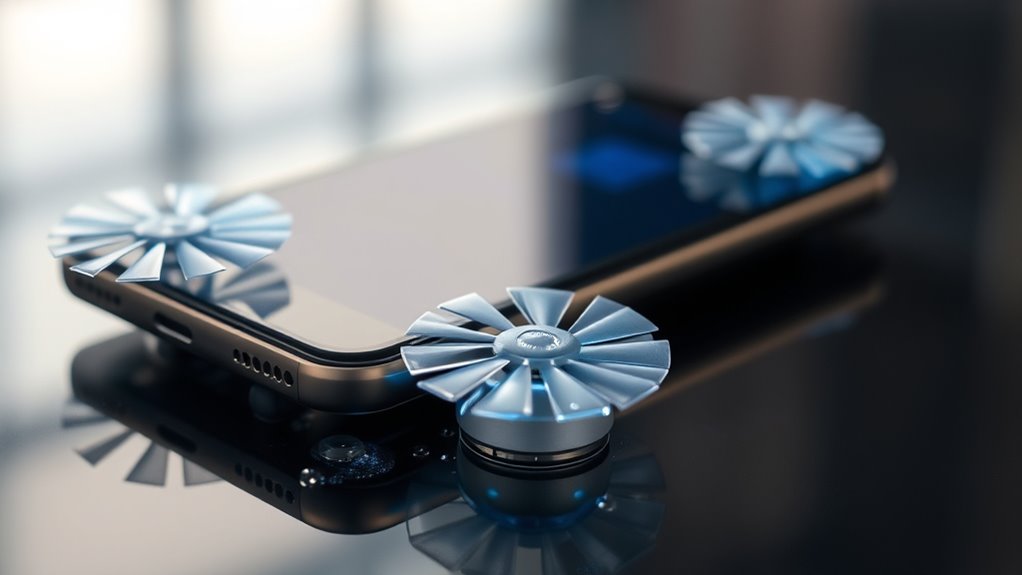
External fans can help lower your phone’s temperature by actively increasing airflow around it, which speeds up heat dissipation. By improving air circulation, these fans directly target heat buildup, making them more effective than passive cooling methods. External modifications like attaching a small fan or using a cooling pad can enhance cooling performance. Keep in mind that the effectiveness depends on placement and airflow direction. Proper air circulation ensures heat is moved away from the phone’s surface quickly. Additionally, the effective airflow management around your device plays a crucial role in maximizing cooling efficiency. Proper airflow is essential to ensure heat is dispersed efficiently, especially during intensive usage. To optimize cooling, understanding the heat transfer process helps in selecting the most effective cooling strategies. However, external fans may not be a one-size-fits-all solution; their impact varies based on device design and environment. Consider these factors when choosing to use external cooling aids. They can make a difference, but their success depends on how well they promote air circulation around your phone.

Mixneer Heat Dissipation Phone Case for iPhone 14, Breathable Hollow Cellular Hole Ultra Slim Cooling TPU Cover with Full Back Camera Lens Protection (Black, for iPhone 14)
Innovative Cooling Design: Unique cellular hole pattern on this Phone case promotes effective heat dissipation, keeping your phone…
As an affiliate, we earn on qualifying purchases.
As an affiliate, we earn on qualifying purchases.
The Role of Phone Cases in Heat Management
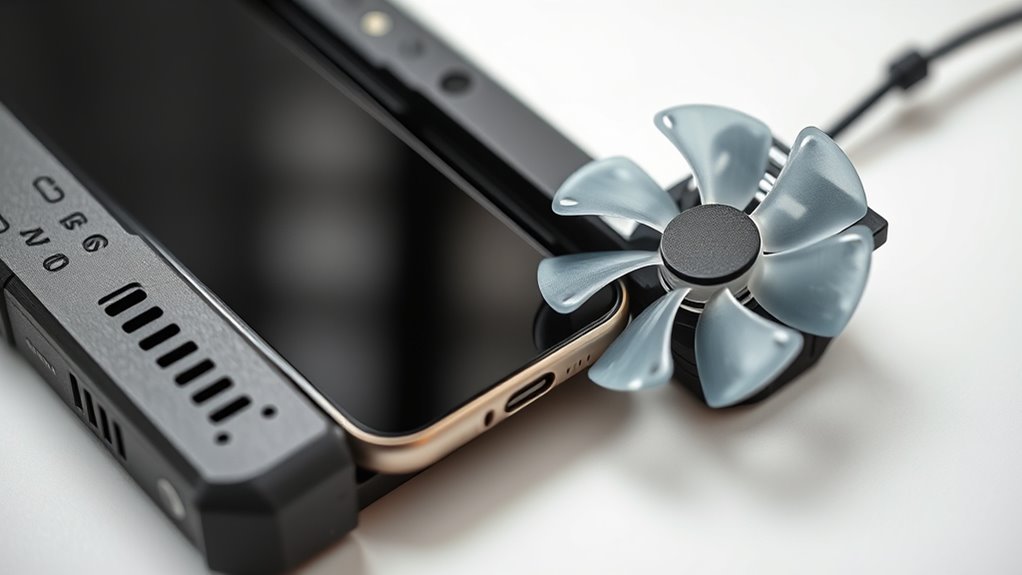
Your phone case affects heat buildup through its material’s ability to conduct heat, with some materials dispersing warmth better than others. The design and ventilation features also influence how well heat escapes, especially during intensive use. Additionally, the thickness and fit of the case can trap heat or allow better airflow, impacting your phone’s temperature. Using essential oils for respiratory health, such as eucalyptus or peppermint, can help soothe symptoms if your phone overheats and causes discomfort. Incorporating heat dissipation features into case design can further enhance cooling efficiency and prevent overheating during demanding tasks. Selecting cases made from heat-conductive materials can significantly improve the overall heat management of your device, especially when combined with ventilation strategies that promote airflow and heat escape. Considering thermal management solutions alongside your case choice can also contribute to maintaining optimal device temperatures.
Material’s Heat Conductivity
The material of a phone case considerably affects how heat is transferred away from your device. It determines the case’s material efficiency in conducting heat and influences overall heat dissipation. Materials with high thermal conductivity, like metals, transfer heat quickly, helping your phone stay cooler. Conversely, insulative materials like silicone or rubber slow heat transfer, which can trap heat inside. Your choice impacts how effectively heat escapes, especially during intensive use. Consider these factors:
- Metal cases offer superior heat conduction but may feel cold or cause scratches.
- Plastic and polycarbonate cases provide moderate heat dissipation.
- Rubber and silicone cases act as insulators, trapping heat.
- Hybrid designs combine materials to balance protection and heat transfer.
Selecting the right material ensures ideal heat management, preventing overheating while providing protection. Understanding the Heat Conductivity of different case materials can help you make an informed decision for optimal device performance. Additionally, the thermal properties of a case can influence how well it dissipates heat under various conditions, making it an important aspect to consider.
Design and Ventilation
Design and ventilation play crucial roles in how effectively a phone case manages heat. A well-designed case can improve airflow around your device, helping dissipate heat more efficiently. This not only supports battery longevity but also prevents overheating that could damage internal components. Ventilation features like strategic cutouts or vents can enhance heat escape without compromising protection. Additionally, a case’s aesthetic appeal matters; sleek designs that incorporate ventilation elements can blend style with functionality. When your phone stays cooler, it performs better and lasts longer. Proper design ensures heat isn’t trapped inside, reducing the risk of thermal throttling. Incorporating Ventilation features into case design can further improve airflow and heat dissipation. The use of proper materials can also influence heat management by aiding in heat conduction away from critical components. Overall, thoughtful design and ventilation are key to balancing protection, appearance, and effective heat management.
Thickness and Fit
Thicker phone cases may seem like they offer better protection, but they can also trap heat and hinder airflow around your device. The fit and material of your case influence heat dissipation considerably. Larger, bulkier cases can insulate heat, making it harder for your phone to cool down during intensive use. The choice of phone case materials affects heat transfer—silicone and rubber tend to trap more heat, while metal or thin plastic can help dissipate it. Compatibility with fan size is also vital; a case that’s too tight can block airflow or interfere with cooling accessories. Consider these factors:
- Material’s thermal conductivity
- Case thickness and overall bulk
- Fit tightness around the device
- Compatibility with cooling fans or accessories
- Passive voice detection can help identify awkward phrasing and improve clarity in your writing.
- Using a vented or breathable case design can further enhance airflow and cooling efficiency.
- Selecting a heat-dissipating material for your case can improve overall heat management and prevent overheating during heavy usage.
- Choosing a case with adequate ventilation can significantly improve heat dissipation and keep your device cooler.
Are Thermal Management Technologies in Phones Sufficient?
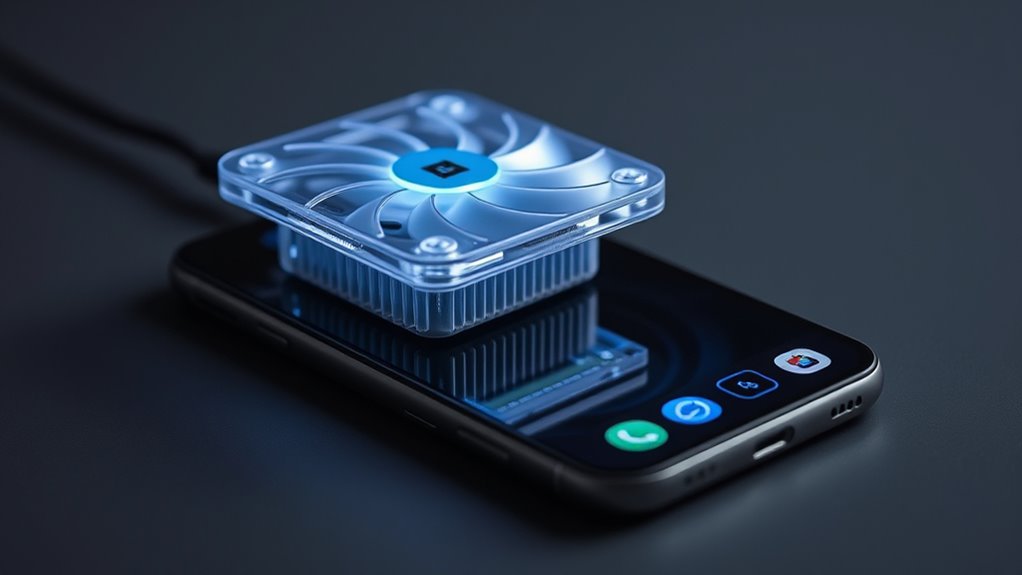
While thermal management technologies in smartphones have advanced considerably, questions remain about whether they are truly sufficient to prevent overheating during intensive use. Modern devices use heat pipes, graphite pads, and software controls, but these solutions can still struggle under heavy workloads. Overheating can shorten your battery lifespan and reduce user comfort. To illustrate this, consider the following:
| Effect | Impact |
|---|---|
| Battery health | Accelerates deterioration |
| User comfort | Causes discomfort and lag |
| Device longevity | Risks damaging internal components |
| Performance | May throttle or slow down |
Despite these innovations, thermal limits can still be reached, especially during gaming or prolonged use, suggesting that current technologies aren’t always enough to keep your phone cool and functioning at the most suitable level. Additionally, understanding thermal dissipation is key to appreciating how effectively your device manages heat during demanding tasks. Recognizing the importance of heat flow can help you better understand why some devices still overheat despite advanced cooling technologies. Moreover, heat transfer mechanisms play a crucial role in distributing heat away from critical components, yet they are often limited by the device’s design constraints.
Comparing Different Cooling Accessories and Their Effectiveness
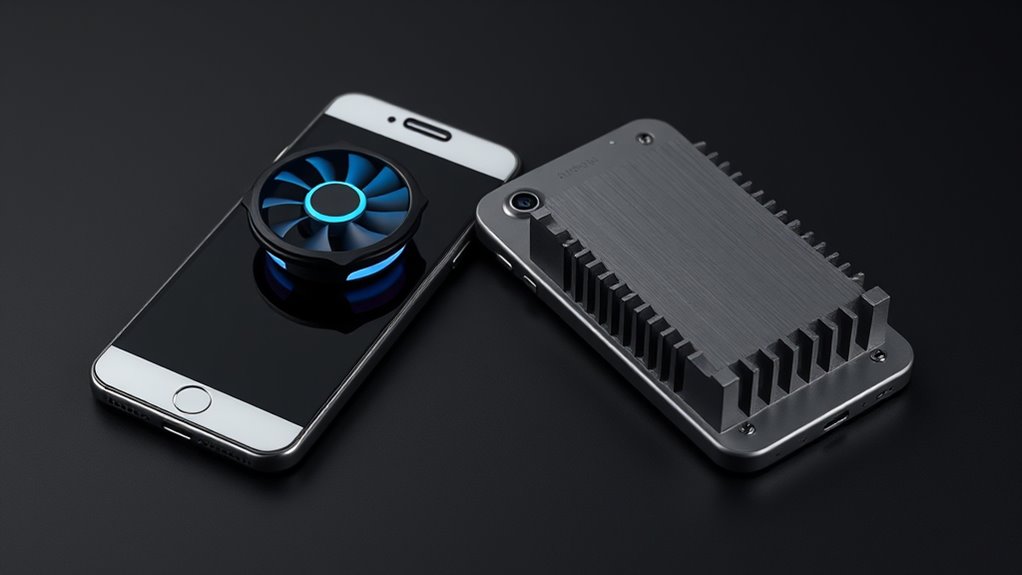
When comparing cooling accessories, you’ll want to contemplate whether active solutions like fans or passive options like cases are more effective for your needs. Active cooling typically offers faster heat reduction but can impact device performance and battery life, while passive methods are quieter but might not cool as efficiently. Understanding their performance differences helps you choose the right accessory to keep your phone cooler during intensive use.
Active vs. Passive Cooling
Active cooling accessories, like external fans and cooling cases, actively draw heat away from your phone, often providing noticeable temperature drops during intensive use. They work by enhancing airflow optimization, which helps dissipate heat more efficiently. In contrast, passive cooling relies on thermal insulation and design features like heat sinks or textured surfaces to slow heat buildup. Passive methods don’t require power but are limited in their cooling capacity. When comparing the two, active cooling usually offers faster, more significant temperature reductions, especially during gaming or prolonged use. However, passive cooling is quieter, more portable, and energy-efficient. Your choice depends on whether you prioritize maximum cooling performance or simplicity and convenience. Both methods can help keep your phone cooler, but they serve different needs.
Performance Impact Analysis
Different cooling accessories vary markedly in their ability to lower your phone’s temperature, and choosing the right one depends on how much cooling you need. Fans tend to provide more immediate temperature drops but can introduce noise and power drain, potentially impacting battery life. Cases with built-in cooling features offer passive heat dissipation, which helps prevent overheating during extended use. However, excessive cooling may hinder performance optimization, causing your device to throttle speeds or increase battery degradation over time. When evaluating these options, consider how software optimization can complement cooling efforts by managing processes to reduce heat buildup. Ultimately, a combination of effective cooling accessories and smart software adjustments ensures your phone stays cooler without sacrificing performance or risking long-term damage.
Practical Tips for Keeping Your Phone Cooler Naturally
To keep your phone cooler naturally, simple habits can make a significant difference. Managing your device’s temperature helps maintain battery longevity and ensures smooth performance. You can:
- Close unused apps to reduce processor load and heat generation
- Enable software updates that enhance performance and energy use
- Avoid direct sunlight and hot environments when using your phone
- Use power-saving modes to decrease background activity and heat output
These practices help your phone run efficiently without extra cooling accessories. By reducing unnecessary strain, you prolong battery health and prevent overheating. Regularly cleaning vents or ports also ensures proper airflow. Incorporating these habits makes a noticeable impact on your device’s temperature, extending its lifespan and maintaining excellent functionality naturally.
When to Consider Advanced Cooling Options
While natural cooling methods work for everyday use, there are times when you should consider advanced cooling options. If your phone consistently overheats during intense gaming or prolonged video editing, upgrading cooling becomes necessary. Using thermal paste improves heat transfer between components, while heat pipes efficiently channel heat away from hotspots. Consider these options when thermal management is critical to performance and longevity.
| Situation | Recommended Solution |
|---|---|
| Extended gaming sessions | Heat pipes with thermal paste application |
| Intensive data processing or recording | External cooling cases with heat sinks |
| Persistent overheating issues | Custom cooling systems or liquid cooling |
Frequently Asked Questions
Can Overuse of Cooling Devices Harm My Phone?
Overusing cooling devices can harm your phone by disrupting its natural thermal regulation, potentially causing hardware issues. Constant reliance on external cooling might make your phone’s internal temperature fluctuate unpredictably, which can reduce hardware longevity. It’s best to use cooling aids sparingly and guarantee proper ventilation. This way, you help maintain ideal thermal regulation without risking damage, ultimately extending your phone’s lifespan and keeping it functioning smoothly.
Do Internal Cooling Systems Impact Phone Performance?
Yes, internal cooling systems can improve your phone’s performance by managing thermal conductivity and airflow enhancement. They help disperse heat more effectively, preventing overheating that can slow down your device. By maintaining ideal temperatures, your phone runs smoothly and avoids thermal throttling. Proper internal cooling encourages consistent performance, especially during intensive tasks, ensuring your device stays cooler and functions efficiently without sacrificing speed or responsiveness.
Are There Risks Associated With External Cooling Fans?
They say “better safe than sorry,” and that applies to external fan risks. Using external cooling fans can pose safety issues like overheating, damage, or accidental disconnection. Cooling case safety is also a concern if the case doesn’t fit well or blocks vents, potentially trapping heat. Always choose reputable products, follow manufacturer instructions, and regularly check your device to avoid risks and keep your phone cool safely.
How Do Cooling Cases Differ From Regular Phone Cases?
Cooling cases differ from regular phone cases mainly in material differences and design variations. They often incorporate heat-dissipating materials like aluminum or gel pads to enhance cooling. Unlike standard cases that focus on protection and style, cooling cases are engineered to improve airflow and reduce heat buildup. This functional design helps keep your phone cooler during intensive use, making them a practical choice if overheating is a concern.
Can Software Updates Improve Phone Heat Management?
Yes, software updates can improve your phone’s heat management. They often optimize battery health, reducing excessive power draw that causes overheating. Updates also help prevent thermal throttling by better managing processor performance, which keeps your device cooler during heavy use. By installing these updates promptly, you help maintain your phone’s temperature, prolong its lifespan, and ensure smoother performance without overheating issues.
Conclusion
Think of your phone as a busy traveler carrying a backpack of heat. Cooling fans and cases act like shady trees along the road, offering brief relief but not stopping the journey’s heat buildup. To keep your phone running smoothly, you’re the seasoned guide—using smart habits and choosing the right tools. With a little care, you’ll help your device stay cool and perform at its best, no matter how long the adventure lasts.