To turn your smartphone into a webcam for your PC, choose a compatible device and download a trusted webcam app from official stores. Connect your phone to your PC via Wi-Fi or USB, follow app setup instructions, and adjust video settings for clarity and smoothness. Make sure your lighting is good and your mount is stable to enhance quality. If you want detailed steps and tips to optimize your setup, you’ll find everything you need here.
Key Takeaways
- Select a compatible webcam app on your smartphone and PC, then install and grant necessary permissions.
- Connect your smartphone to your PC via USB, Wi-Fi, or Bluetooth, following specific setup instructions.
- Adjust video settings such as resolution and frame rate for optimal quality and smoothness.
- Use proper lighting and stable mounts to improve video clarity and reduce shakiness during calls.
- Test your setup with a quick call, troubleshoot connection issues, and keep apps and devices updated for best performance.

NEEWER Continuity Camera Mount for Desktop Monitor, Magnetic Tri Fold Desk Phone Webcam Holder with Arca Type Base, Compatible with MagSafe iPhone iMac Apple TV 4K Desktop Mac Laptop Samsung, SP08
【Phone Camera Mount for Desktop Monitor】 Use this continuity camera mount to attach your smartphone to the desktop…
As an affiliate, we earn on qualifying purchases.
As an affiliate, we earn on qualifying purchases.
Choosing the Right Smartphone and PC Compatibility
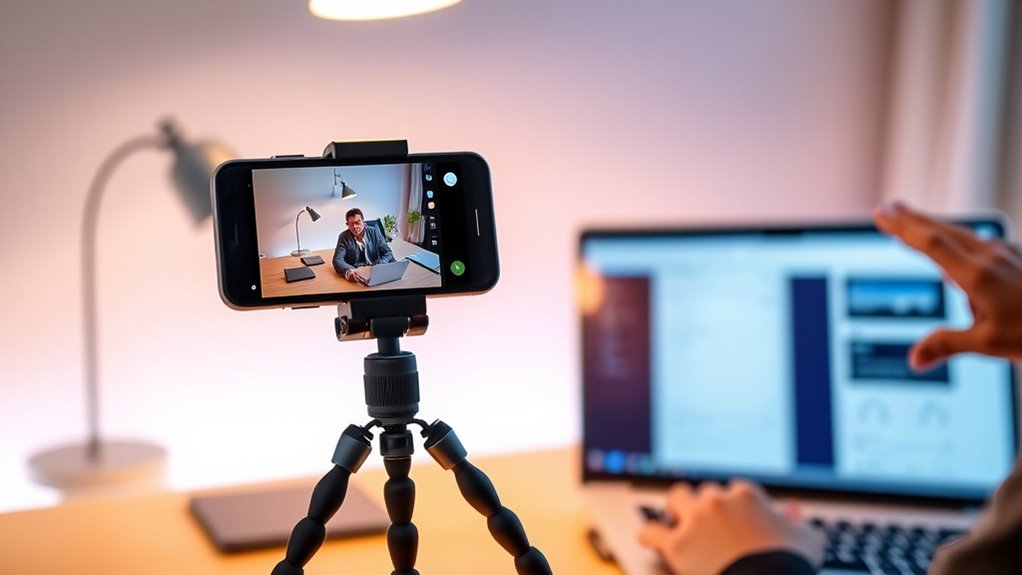
To guarantee a smooth setup when using your smartphone as a webcam, you need to choose a device that’s compatible with your PC. Start by checking device compatibility; not all smartphones work seamlessly with every computer. Confirm that your phone meets the necessary operating system requirements—some apps or solutions work only with specific OS versions. For example, if you’re using Windows, ensure your phone can connect via USB or Wi-Fi with the required drivers. Similarly, if you have a Mac, verify that your device supports the necessary protocols. Compatibility issues can cause connection problems or poor video quality, so double-check your smartphone’s specs and your PC’s OS before proceeding. This step guarantees a hassle-free setup and peak performance. Additionally, consider the color accuracy of your device, as it can influence the quality of your video calls. Ensuring your device supports the latest cloud update standards can also improve connection stability and overall performance. Moreover, selecting a smartphone with long battery life can help maintain consistent video quality during extended calls. Checking your device’s compatibility with your PC’s hardware can prevent potential connection issues and ensure a smoother experience. Furthermore, reviewing manufacturer compatibility resources can help identify any known issues or additional setup tips.
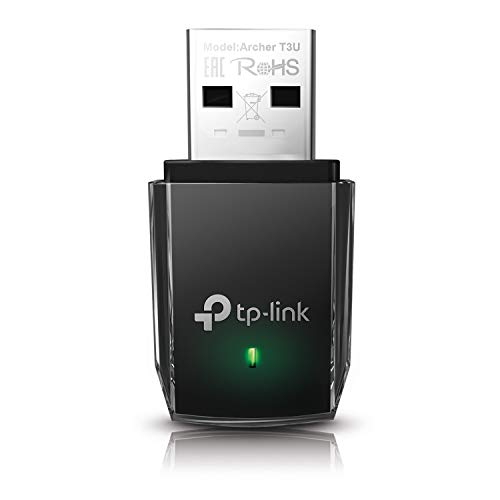
TP-Link AC1300 USB WiFi Adapter(Archer T3U)- 2.4G/5G Dual Band Wireless Network Adapter for PC Desktop, MU-MIMO WiFi Dongle, USB 3.0, Supports Windows 11, 10, 8.1, 8, 7, XP/Mac OS X 10.9-10.14
AC1300 Dual Band Wi-Fi Adapter for PC, Desktop and Laptop. Archer T3U provides 2.4G/5G strong high speed connection…
As an affiliate, we earn on qualifying purchases.
As an affiliate, we earn on qualifying purchases.
Selecting the Best Webcam App for Your Device
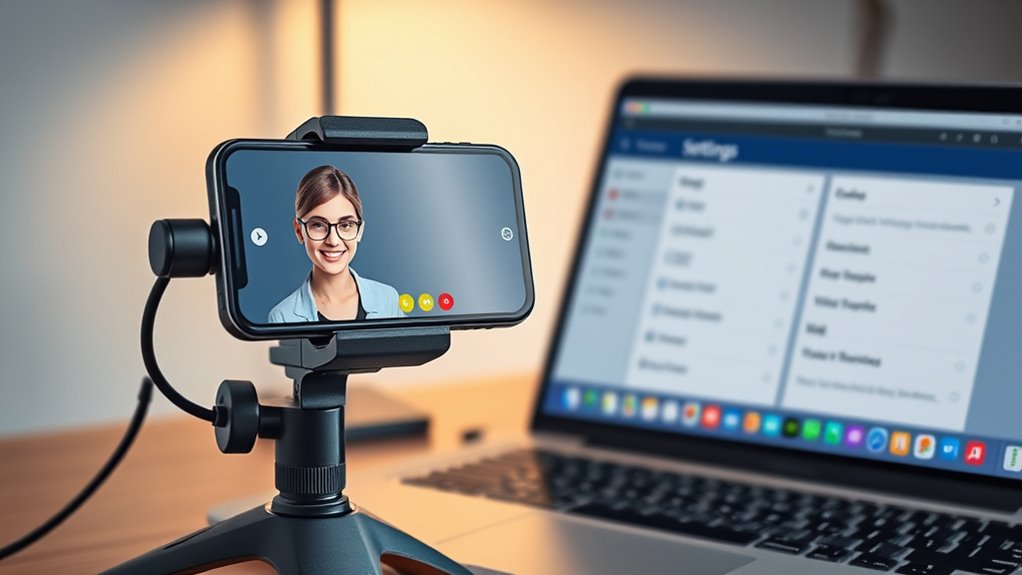
Choosing the right webcam app is key to ensuring your smartphone functions smoothly as a PC camera. You need an app that balances features with privacy, as many require extensive permissions. Look for options that clearly specify what data they access and avoid those with unnecessary access. Consider apps with built-in security measures to address privacy concerns. Check compatibility with your device and preferred video conferencing platform. User reviews can reveal potential issues or privacy risks. Popular apps often offer free versions, but premium options may provide better security and features. Be cautious about app permissions—only grant what’s necessary for the app to work correctly. Prioritize trusted developers to keep your data safe. Additionally, selecting an app with a trusted developer reputation can help ensure your privacy is protected.
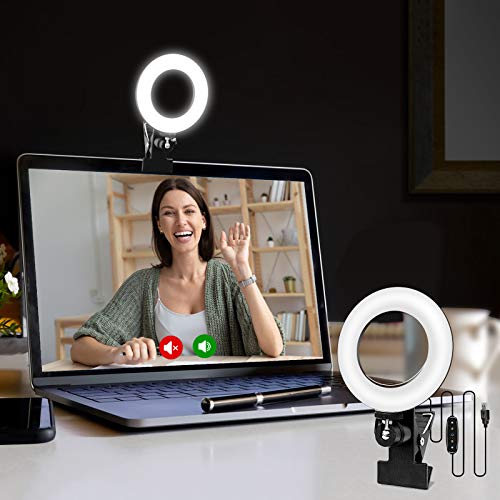
Cyezcor Video Conference Lighting Kit, Ring Light for Monitor Clip On,for Remote Working, Distance Learning,Zoom Call, Self Broadcasting and Live Streaming, Computer Laptop Video Conferencing
【ADJUSTABLE TEMPERATURE AND BRIGHTNESS】Our video conference lights have 3 color temperatures (white light/warm light/natural light) which are 3200k-6800k,…
As an affiliate, we earn on qualifying purchases.
As an affiliate, we earn on qualifying purchases.
Installing the Webcam App on Your Smartphone and PC
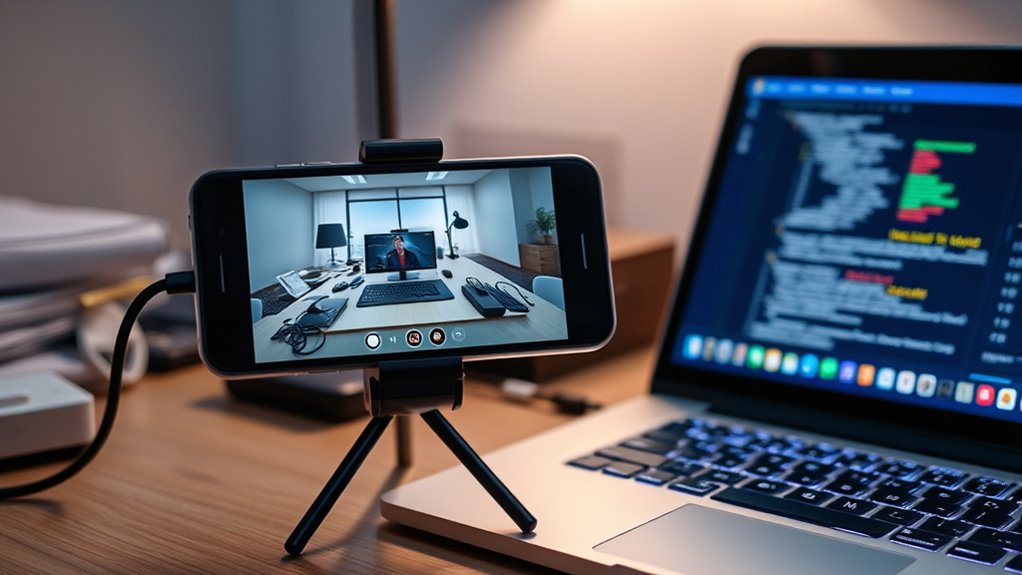
Installing the webcam app on your smartphone and PC is a straightforward process that guarantees your devices are ready for use. First, download the app from your device’s app store and the official website for your PC. During installation, you’ll be prompted to grant necessary app permissions, such as camera and microphone access, which are essential for proper functioning. Make sure your smartphone and PC are connected to the same Wi-Fi network, as a stable wireless connection is key for smooth video transmission. Follow the on-screen instructions to complete setup on both devices. Once installed and permissions are granted, your devices are prepared for the next step—connecting them wirelessly. This process ensures your smartphone can seamlessly serve as a high-quality webcam during your video calls. Additionally, understanding outdoor wisdom and proper tech setup can help optimize your overall experience.

Phone Tripod with Light, Portable and Flexible Phone Stand for Video Recording with Wireless Remote, 360° Rotating Tabletop & Travel Tripods for iPhone, Smartphones, Camera
Durable & Steady, Day or Night. The foam design allows you to use it normally even on bike…
As an affiliate, we earn on qualifying purchases.
As an affiliate, we earn on qualifying purchases.
Connecting Your Smartphone to Your PC

Next, you’ll need to choose a compatible connection method, like USB or Wi-Fi, to link your smartphone to your PC. Make sure to follow the setup instructions carefully to guarantee everything works smoothly. Proper configuration is key to getting a stable and high-quality webcam feed. Additionally, reviewing safe installation practices can help prevent potential issues during setup and ensure your devices operate reliably. Selecting a connection method that supports free floating capabilities can optimize your setup for a more flexible and clutter-free environment. Incorporating modern technology features can further enhance your experience by providing more reliable and versatile connections, especially when integrating with smart home technology for seamless control and automation. Considering connection stability can also improve overall performance, reducing interruptions during your video calls.
Compatible Connection Methods
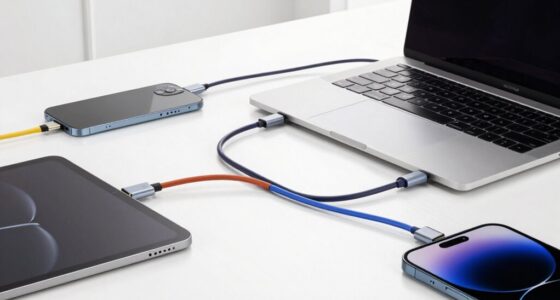
Connecting your smartphone to your PC can be straightforward, thanks to several compatible methods. You can use Bluetooth pairing for quick, wireless connection or Wi-Fi configuration for higher quality and stability. USB connection also offers a reliable wired option if needed. Each method varies in ease and performance, so choose based on your setup and preferences. For Bluetooth pairing, verify your devices are discoverable and paired correctly. With Wi-Fi, connect both devices to the same network and follow specific app instructions for seamless streaming. You might also consider third-party apps that support these connection types. These options give you flexibility to set up your smartphone as a webcam effectively, whether you prefer a wireless or wired approach.
- Bluetooth pairing
- Wi-Fi configuration
- USB connection
- Third-party app setup
- Network compatibility
Setting Up Properly
To guarantee your smartphone works smoothly as a webcam, you need to set up the connection properly. Start by ensuring your device is charged or connected to power to manage battery life effectively. Use trusted apps and secure Wi-Fi networks to address privacy considerations. Keep your phone close to your PC for a stable connection. Adjust settings to prevent interruptions during calls. Here’s a quick setup checklist:
| Step | Action | Tips |
|---|---|---|
| Connect your devices | Use USB or Wi-Fi | Use secure networks |
| Manage battery | Plug into power when possible | Avoid sudden shutdowns |
| Configure privacy | Enable app permissions | Limit app access to essentials |
Additionally, understanding the importance of secure Wi-Fi networks can help you maintain privacy and prevent unauthorized access during your video calls. Ensuring a stable internet connection is also crucial for smooth video quality and minimal disruptions. Paying attention to device compatibility can help prevent technical issues that disrupt your call quality. Being aware of privacy considerations when using third-party apps will further protect your personal data during the setup process.
Configuring Your Video Settings for Optimal Quality
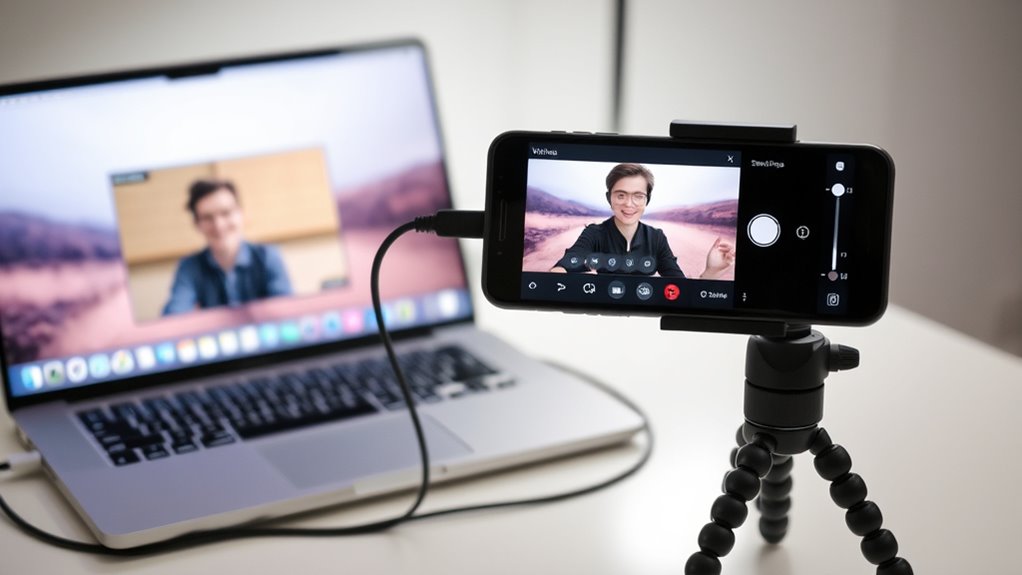
Optimizing your video settings is essential to achieving the best possible image quality when using your smartphone as a webcam. To do this, focus on adjusting your video resolution and frame rate for clarity and smoothness. Higher resolution enhances detail, while a suitable frame rate ensures fluid motion. Keep in mind that increasing these settings may impact your system’s performance and bandwidth.
Consider these tips:
- Select the highest supported video resolution for sharpness
- Set a frame rate of at least 30 fps for smooth video
- Balance resolution and frame rate based on your internet speed
- Disable unnecessary filters or effects that reduce quality
- Test different settings to find your ideal balance between quality and performance
Testing Your Smartphone Webcam Before a Call
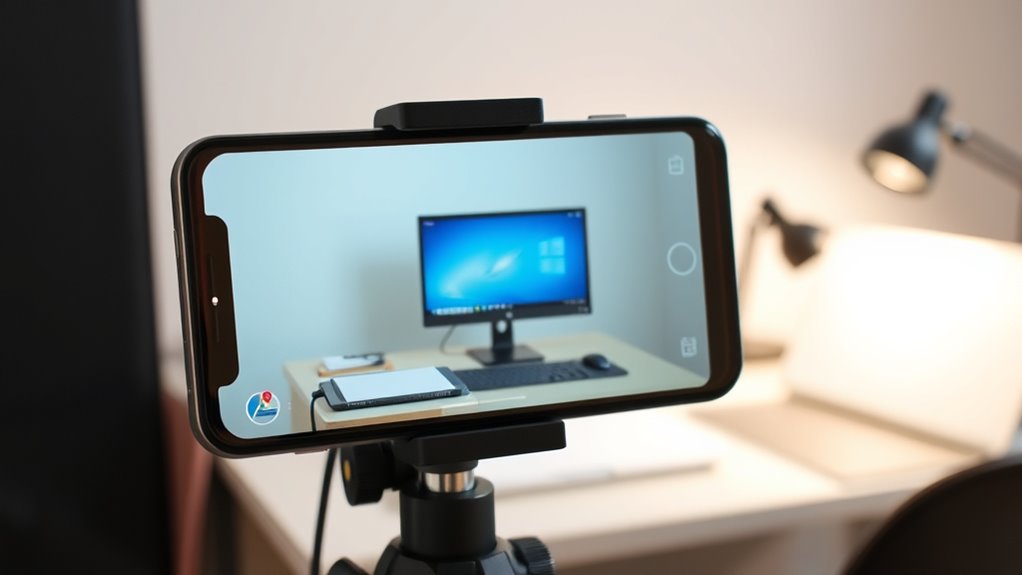
Before joining an important video call, it’s crucial to test your smartphone webcam to make sure everything works smoothly. First, open your webcam app and check the video feed for clarity, lighting, and stability. Verify your phone’s battery life is sufficient; a low battery can cause disruptions during the call. Also, check that the app permissions are correctly set—your phone needs access to the camera, microphone, and storage. Test these permissions beforehand to prevent permission prompts during the call, which could interrupt your connection. Make sure your phone remains charged and connected to power if needed. Conduct a quick test call to confirm everything functions properly, so you’re confident the webcam setup will perform well when it really counts. Additionally, reviewing all waterparks nearby can be a fun way to plan a future family outing if you want to combine your tech setup with some leisure activities. To optimize your setup, consider using connected equipment such as mounts or stands to keep your phone steady during calls. Ensuring your smartphone is part of a reliable network connection can also significantly improve video quality and reduce lag during calls.
Troubleshooting Common Connection and Quality Issues

Connection and video quality issues are common problems when using your smartphone as a webcam, but many can be alleviated with quick troubleshooting steps. If you’re experiencing audio lag or poor image quality, try these fixes:
- Restart your smartphone and PC to refresh connections.
- Ensure your Wi-Fi or USB connection is stable and strong.
- Close other bandwidth-heavy apps to improve streaming quality.
- Update your webcam app and device drivers for compatibility.
- Adjust camera settings within the app for better clarity and less lag.
Tips for Enhancing Your Video Call Experience
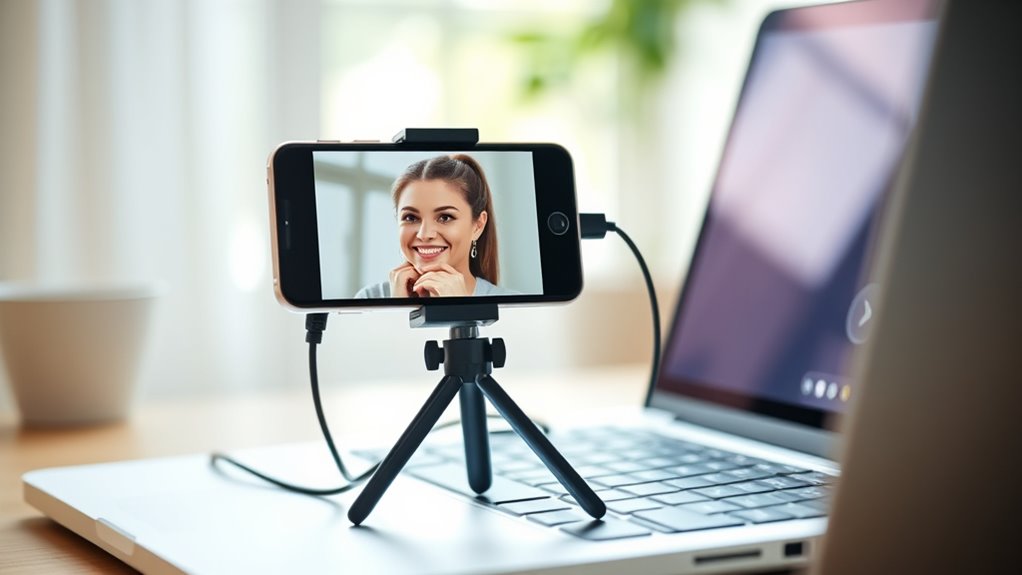
Good lighting makes your video look clearer and more professional, so try to face a natural light source or add extra lamps. Using a stable mount prevents shaky footage and keeps you centered in the frame. These simple adjustments can markedly improve your overall video call experience. Additionally, optimizing your background and minimizing distractions can create a more polished appearance. Proper lighting techniques can significantly enhance the quality of your video calls.
Optimize Lighting Conditions
Lighting plays a crucial role in how clear and professional your video calls look, so it’s worth taking the time to optimize it. Good ambient lighting ensures your face is well-lit without shadows, making you appear more approachable. Avoid harsh or uneven light sources that can create unflattering shadows or glare. Minimize background distractions by choosing a well-lit, tidy space that doesn’t pull focus away from you. Position your light source in front of you rather than behind to prevent silhouettes. Use natural light when possible, but supplement with soft, diffused lamps if needed. Adjust your lighting to ensure your face is evenly illuminated, enhancing clarity and professionalism. Incorporating lighting optimization techniques can further improve your appearance on camera, especially by considering lighting conditions that mimic professional setups. Ensuring consistent and suitable lighting can significantly enhance video quality, and paying attention to lighting calibration can make a noticeable difference in your video calls.
Use Stable Mounts
A stable mount is essential for maintaining a professional appearance during your video calls. Good mount stability prevents shaky footage and keeps your smartphone steady, making your video look polished. Use a sturdy tripod or explore tripod alternatives like books, stacks of boxes, or wall mounts to achieve a secure setup. Confirm your mount is positioned at eye level for natural framing. Avoid makeshift solutions that wobble or shift easily, as they can distract viewers and undermine your credibility. Experiment with different mounting options to find what works best for your space. A well-secured, stable mount helps you stay focused on the call without worrying about camera movement, giving you a more confident and professional presence during every video conference.
Frequently Asked Questions
Can I Use My Smartphone as a Webcam Without an Internet Connection?
Yes, you can use your smartphone as a webcam without an internet connection by setting up an offline connection. You’ll need a wireless connection, like Wi-Fi or Bluetooth, and compatible apps that support offline mode. Follow the app’s instructions to establish a direct wireless connection between your phone and PC. This offline setup allows you to improve your video calls without relying on internet access, ensuring privacy and stability.
What Are the Best Smartphone Models for High-Quality Video Streaming?
You should consider flagship models like the iPhone 15 or Samsung Galaxy S23 for high-quality video streaming. These devices deliver excellent video quality with sharp resolution and smooth frame rates. They also offer broad device compatibility, ensuring seamless connection with your PC or streaming setup. Opt for phones with good camera sensors, strong processing power, and reliable software updates to get the best streaming experience every time.
How Do I Update the Webcam App on My Device?
Think of your app update as a fresh coat of paint, keeping your webcam app shiny and new. To update it, open your app store, search for the webcam app, and tap “Update” if available. Regular updates fix bugs and troubleshoot issues, ensuring smooth performance. If you encounter problems, restarting your device or reinstalling the app can help clear glitches, making your video calls crystal clear.
Is There a Lag or Delay When Using My Smartphone as a Webcam?
Using your smartphone as a webcam can sometimes cause video lag or delay issues, especially if your Wi-Fi connection isn’t strong or your device is overwhelmed. You might notice a slight delay in the video feed, but improving your network stability or closing background apps can reduce this lag. Keep in mind, some delay is normal, but optimizing your setup helps make certain smoother video calls.
Can I Use Multiple Smartphones as Webcams Simultaneously?
Think of your setup as a symphony—yes, you can orchestrate a multi device setup with multiple smartphones streaming simultaneously. With the right apps and software, you can turn each phone into a unique camera angle, creating a dynamic multi-camera environment. Just guarantee your PC can handle the bandwidth, and you’ll enjoy seamless simultaneous streaming, transforming your video calls into a professional broadcast experience.
Conclusion
Just like tech pioneers harnessed new tools to connect the world, turning your smartphone into a webcam empowers you to elevate your video calls effortlessly. With a few simple steps, you can transform your device into a high-quality camera, making every conversation clearer and more professional. So, embrace this modern solution—your own digital Swiss Army knife—and stay connected with confidence, just as innovators once did with their groundbreaking ideas.