
An eSIM is a digital, embedded SIM that replaces traditional physical cards, allowing you to switch carriers, manage multiple profiles, and enjoy a more streamlined device design. It enables remote activation, improves security, and supports newer devices like smartphones and smartwatches. Moving to eSIMs means fewer physical parts and more flexibility. If you want to understand how this technology is transforming connectivity and what it means for your devices, keep exploring the details.
Key Takeaways
- eSIMs are embedded chips replacing physical SIM cards, allowing remote activation and profile management.
- They enable instant carrier switching and multiple profiles on one device, enhancing flexibility.
- eSIM technology supports smaller, more durable, and water-resistant device designs.
- Activation is done via QR code scan or digital profiles, eliminating the need for physical SIM swaps.
- The shift to eSIMs streamlines connectivity, improves security, and signifies the end of traditional SIM cards.
What Is an Esim and How Does It Differ From Traditional SIM Cards
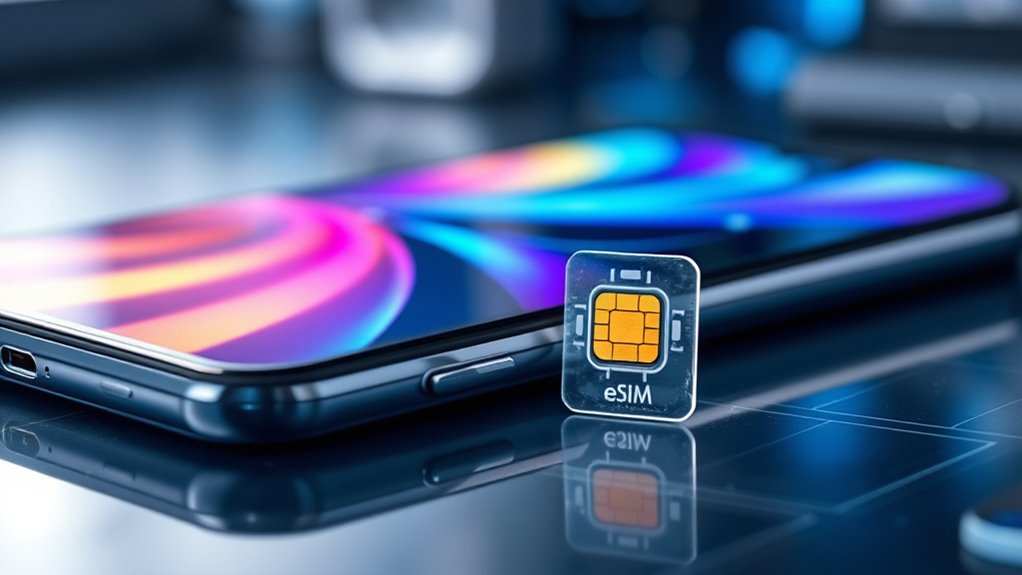
Have you ever wondered how eSIMs differ from traditional SIM cards? Unlike physical SIM cards, an eSIM is embedded directly into your device, eliminating the need for a removable card. This makes eSIM compatibility easier across various devices, streamlining switching between carriers without swapping SIMs. When it comes to eSIM security, it offers enhanced protection since it cannot be physically removed or tampered with, reducing the risk of theft or fraud. Devices with eSIMs can store multiple profiles, enabling flexible management of carriers and plans. This digital approach simplifies activation and improves overall security. Additionally, contrast ratio plays a crucial role in display quality, ensuring clear and vibrant visuals on devices that support eSIM technology. So, while traditional SIM cards require physical handling, eSIMs provide a more secure, versatile, and convenient solution for modern connectivity needs. The integration of nanotechnology in electronic components could further revolutionize device security and performance in the future, especially in secure data storage and authentication systems. Moreover, advancements in European cloud innovation can enhance the security and efficiency of eSIM management and deployment across various networks.
The Technology Behind Esims

At the core of eSIM technology is a small chip embedded directly into your device’s circuitry, which contains the entire profile needed to connect to your carrier’s network. This chip enables remote provisioning, meaning carriers can update or change your profile without physical access to your device. The process relies heavily on network virtualization, allowing multiple profiles to coexist virtually on a single chip. Vetted The use of secure protocols ensures that profile downloads and updates are protected against unauthorized access. Additionally, the embedded architecture reduces the overall device size and complexity, making devices more streamlined and less prone to damage. Device integration This embedded architecture also allows for easier device design and manufacturing, contributing to more innovative and compact gadgets. Furthermore, the security protocols embedded within eSIMs enhance user privacy and prevent malicious attacks. The ongoing development of remote management capabilities further simplifies device maintenance and carrier interactions.
Benefits of Using an Esim
Using an eSIM offers several advantages that enhance your mobile experience. First, it provides greater carrier flexibility, allowing you to switch networks easily without swapping physical cards. This means you can choose the best virtual network for your needs instantly. Additionally, eSIMs save space in your device, making it more compact and durable. You can manage multiple profiles on one device, which is perfect for travel or work. The table below highlights key benefits:
| Benefit | Explanation |
|---|---|
| Virtual Network Access | Connect to various networks without hardware changes |
| Carrier Flexibility | Switch carriers seamlessly at will |
| Device Durability | Fewer physical components reduce damage risk |
Moreover, eSIM technology is increasingly used in waterproof devices, making it suitable for aquatic activities and environments. This integration supports modern device design, emphasizing durability and versatility across different settings. Incorporating connected technology into eSIM-enabled devices enhances overall functionality and user experience. Additionally, the security features of eSIMs help protect your data better than traditional SIM cards, providing peace of mind. As the market for Gold IRA investments continues to grow, embracing innovative technologies like eSIMs can reflect the same forward-thinking approach in your digital lifestyle.
How to Activate an Esim on Your Device

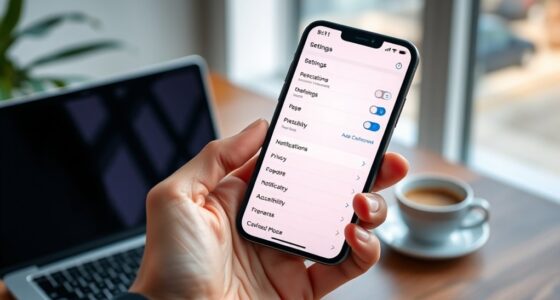
To activate your eSIM, start by accessing your device’s Settings menu. Then, scan the QR code provided by your carrier and follow the on-screen instructions to confirm the activation prompt. Once completed, your eSIM will be ready to use. Be sure to verify local automation options to ensure your device integrates seamlessly with your smart home ecosystem. Additionally, exploring smartphone settings can help optimize your device’s performance after activation. For optimal functionality, ensure your device supports eSIM technology and is compatible with your carrier’s network. Understanding environmental considerations can also help you minimize your ecological footprint during the setup process. Being aware of sound design techniques can also enhance your experience with multimedia content on your device.
Access Settings Menu
Accessing the settings menu on your device is the first step to activating your eSIM. Start by opening your device’s main menu and locating the device settings icon. Once there, follow these steps:
- Tap on “Network & Internet” or “Connections”
- Select “Mobile Network” or “Cellular”
- Choose “Add Carrier” or “eSIM Management”
- Tap “Scan QR Code” or “Enter Details Manually”
- Confirm activation instructions
- Review compatible devices to ensure your device supports eSIM technology
Navigating the access menu might vary slightly depending on your device, but generally, these options are found within your device settings. Ensuring you’re in the correct section makes activating your eSIM straightforward. This process sets the foundation for the subsequent steps to get your eSIM fully operational.
Scan QR Code
Wondering how to quickly activate your eSIM? It’s simple—just scan the QR code provided by your carrier. Open your device’s camera or the dedicated QR code scanner in your settings. Point it steadily at the barcode or QR code on your eSIM activation card or email. Your device will recognize the code and automatically prompt you to proceed. Make sure the QR code is clear and well-lit for a smooth scan. Once scanned, follow the on-screen instructions to download and install the eSIM profile. This process links your device to the carrier’s network seamlessly. Proper setup during activation can help prevent connectivity issues and ensure a reliable connection. Remember, accuracy when scanning the QR code ensures a quick activation. To further facilitate the process, ensure that your device’s software is up to date, as software compatibility can impact activation success. Keeping your device’s software current can also improve security and overall performance during setup. No more fiddling with physical SIM cards—just scan, confirm, and go.
Confirm Activation Prompt
After scanning the QR code and downloading the eSIM profile, your device will typically display an activation prompt. This is your cue to confirm the setup and finalize activation. You’ll often see options to:
- Select your preferred carrier, considering carrier exclusivity restrictions
- Enable or disable international roaming features
- Confirm your plan details and billing info
- Choose a primary line if multiple profiles are present
- Activate the eSIM with a simple tap or button press
Make sure to review these options carefully, especially if you plan to travel, as international roaming can be affected by carrier policies. Confirming your activation is key to ensuring seamless connectivity and avoiding delays in using your new eSIM profile. Additionally, understanding eSIM compatibility can help prevent issues with unsupported devices or carriers.
Devices That Support Esim Technology

Many modern smartphones and tablets now support eSIM technology, allowing you to activate cellular plans without needing a physical SIM card. This advancement relies on eSIM compatibility, guaranteeing your device can seamlessly integrate the eSIM profile. Most flagship devices from Apple, including recent iPhone models, feature built-in eSIM support, making device integration straightforward. Android devices like Google Pixel and Samsung Galaxy series also offer eSIM functionality, expanding options for users seeking flexibility. Some newer laptops and wearables, such as smartwatches, now include eSIM support, enabling cellular connectivity on the go. When choosing a device, check for eSIM compatibility to ensure it meets your needs. Overall, the expanding range of eSIM-supported devices simplifies connectivity, reducing reliance on physical SIM cards.
The Impact of Esims on Mobile Carrier Plans

eSIM technology is revolutionizing how mobile carriers manage plans by enabling more flexible and streamlined service options. With eSIMs, you can easily switch carriers, modify plans, or add new services without changing physical SIM cards. This shift impacts carrier plans and pricing strategies by encouraging more competitive offers and personalized packages. Carriers now focus on dynamic pricing and data options tailored to your usage, making plans more adaptable.
- Easier plan switching reduces customer lock-in
- Carriers offer more customizable and flexible plans
- Pricing strategies become more competitive
- Promotions can target specific user needs
- Consumers gain greater control over their mobile expenses
Transitioning From Physical SIMS to Esims
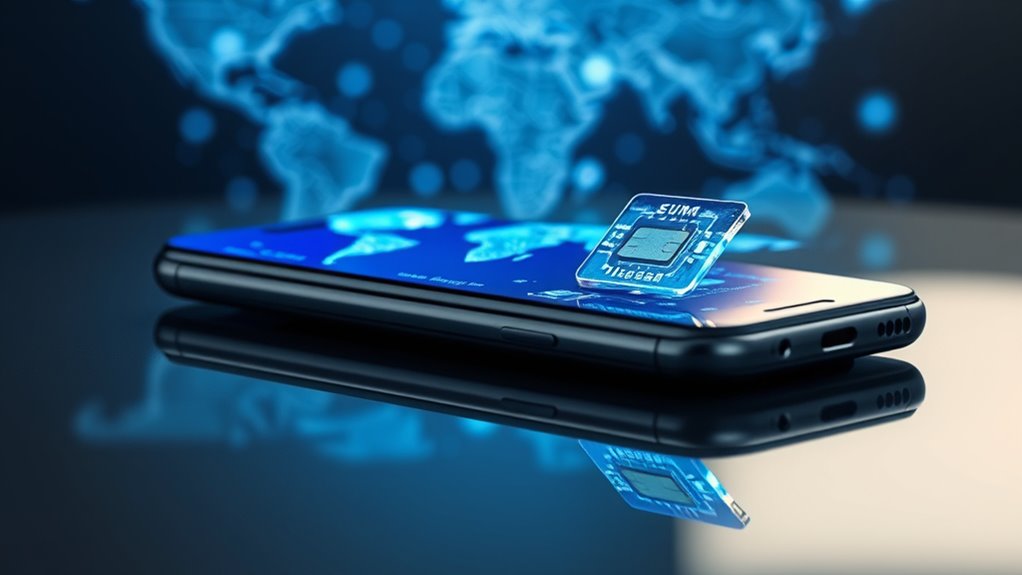
Switching from physical SIMs to eSIMs involves understanding the digital activation process, which can vary by device. You may face device compatibility challenges, as not all gadgets support eSIM technology yet. Additionally, security and privacy concerns become more prominent, so it’s important to stay informed about how your data is protected during and after the progression.
Digital Activation Process
Have you ever wondered how your device seamlessly shifts from a physical SIM card to an eSIM? The digital activation process makes this possible through remote provisioning, eliminating the need for physical swaps. You simply request activation from your carrier, who then sends the profile directly to your device. This process offers significant carrier flexibility, allowing you to switch plans or providers without visiting a store. To activate, you typically scan a QR code or download an app, which securely loads the eSIM profile onto your device. This streamlined approach reduces wait times and simplifies management. The entire process is quick, secure, and convenient, making switching carriers or plans effortless and supporting the growing adoption of eSIM technology.
Device Compatibility Challenges
While eSIM technology offers many advantages, not all devices are immediately compatible with these digital SIM profiles. Device fragmentation remains a challenge, as many older smartphones and gadgets lack eSIM support, limiting adoption. You might find that switching between carriers or activating new plans involves more steps or isn’t possible without a compatible device. Additionally, app compatibility can be an issue; some carrier apps or management tools aren’t optimized for eSIM functionality, making activation and management more complicated. This fragmentation means you may need to upgrade hardware or rely on workarounds until more devices fully embrace eSIM technology. As a result, shifting from physical SIMs requires patience and awareness of device limitations to ensure a smooth experience.
Security and Privacy Concerns
As more devices adopt eSIM technology, concerns about security and privacy come to the forefront. Since eSIMs store sensitive data digitally, it’s natural to worry about potential vulnerabilities.
- Unauthorized remote activation could expose your personal info.
- Hackers might exploit software flaws in eSIM management.
- Privacy concerns arise if carriers share data without consent.
- Loss of physical SIM makes theft recovery more complex.
- Cloud-based profiles could be targeted if not properly secured.
While eSIM security has improved, these privacy concerns highlight the need for robust encryption and strict access controls. Ensuring your data remains safe requires both technological safeguards and user awareness. As adoption grows, addressing these risks is vital to maintain trust in the new technology.
Security and Privacy Considerations With Esims
Security and privacy are critical concerns when it comes to eSIM technology, especially given its digital nature and remote management capabilities. Since eSIMs can be activated and managed remotely, there’s a risk of unauthorized access if proper safeguards aren’t in place. Biometric security features, like fingerprint or facial recognition, help protect your device from unauthorized use. Data encryption is essential for safeguarding your personal information during transmission and storage, ensuring that your data remains confidential. Additionally, secure onboarding processes and regular security updates reduce vulnerabilities. While these measures substantially improve security, you should stay vigilant by using strong passwords and enabling biometric security options. Proper implementation of these protections helps ensure your eSIM remains a secure and private part of your digital life.
Future Trends and Innovations in Esim Technology

As eSIM technology advances, you’ll see more devices seamlessly integrating with each other, making connectivity more effortless. Stronger security measures will protect your data as the technology evolves, giving you peace of mind. Additionally, global connectivity will expand, allowing you to stay connected no matter where you are.
Increased Device Integration
Advancements in eSIM technology are driving a future where devices become increasingly integrated, streamlining user experiences and expanding possibilities. With greater device flexibility, you’ll see more gadgets seamlessly connecting and switching networks without physical SIM swaps. Network virtualization enables smarter, more adaptable devices that can support multiple carriers and profiles simultaneously. This integration leads to compact designs, reducing the need for physical SIM slots and enabling innovations like wearables, IoT devices, and smart appliances. As device integration grows, expect:
- Multi-device management from a single profile
- Enhanced interoperability across platforms
- Faster deployment of new network features
- Reduced hardware complexity
- More versatile, compact devices overall
This shift not only simplifies your connectivity options but also opens new horizons for personalized, flexible technology experiences.
Enhanced Security Measures
With the increasing adoption of eSIM technology, manufacturers and service providers are focusing more on enhancing security measures to protect your data and device integrity. Network security becomes paramount as eSIMs store sensitive information, making them attractive targets for cyber threats. To combat this, advanced encryption protocols are implemented to safeguard your connection and prevent unauthorized access. User authentication methods are also evolving, utilizing biometric verification like fingerprint or facial recognition to ensure only you can activate or modify your eSIM profile. These innovations help prevent SIM swapping and identity theft, reinforcing your device’s security. As eSIM technology develops, expect even more robust security features designed to keep your data safe without compromising convenience or ease of use.
Global Connectivity Expansion
The future of eSIM technology promises to considerably expand global connectivity by making it easier for you to stay connected across different regions and networks. With advancements in remote provisioning, switching carriers or plans becomes seamless without physical SIM swaps. This innovation simplifies global roaming, allowing you to activate local plans instantly when traveling. Expect more widespread adoption of eSIMs in devices, reducing dependency on physical cards. Enhanced interoperability ensures that your device can connect effortlessly worldwide. Additionally, network providers are likely to collaborate more closely, offering tailored plans for international travelers. As eSIMs evolve, you’ll benefit from increased flexibility, better coverage, and simplified management of multiple profiles, making staying connected across borders more convenient than ever before.
Challenges and Limitations of Esim Adoption

Despite the many benefits of eSIM technology, its adoption faces several significant challenges. One major hurdle is carrier exclusivity, where some providers limit eSIM support to specific plans or devices, restricting user choices. Regional restrictions also pose problems, as not all countries or carriers fully embrace eSIMs, leading to compatibility issues and limited availability in certain markets. These barriers slow down widespread adoption and create confusion for consumers trying to switch providers or travel internationally. Additionally, some carriers are hesitant to fully shift to eSIMs due to concerns over losing control or revenue from traditional SIM card sales. Overcoming these challenges requires broader industry cooperation, regulatory support, and consumer awareness to unlock the full potential of eSIM technology.
Frequently Asked Questions
Can Esims Be Transferred Between Devices Easily?
Yes, eSIMs can be transferred between devices more easily than traditional SIM cards, but it hinges on network compatibility and your digital privacy. You typically need to activate the eSIM on your new device through your carrier’s app or support service. This process ensures your data stays secure and private. Just make sure both devices support eSIM technology and are compatible with your network to make the transfer smooth and hassle-free.
Are Esims Compatible With All Mobile Carriers Worldwide?
Not all carriers worldwide support eSIMs, so compatibility depends on your carrier’s policies and whether your device is free. Some carriers impose carrier lock restrictions, making it harder to switch carriers or use eSIMs internationally. If your carrier supports eSIMs, you’ll enjoy easier international roaming options, but always check compatibility beforehand to avoid surprises. Make sure your device is unlocked for seamless use across different carriers and regions.
How Secure Are Esims Against Hacking and Unauthorized Access?
You’re relatively safe with eSIMs, as they use advanced encryption protocols that protect your data. While no system is entirely invulnerable, eSIMs have fewer hacking vulnerabilities compared to traditional SIM cards. They’re designed with security in mind, making unauthorized access more difficult. Just verify your device’s software stays updated, and avoid suspicious networks or links to minimize risks. Overall, eSIMs offer a secure way to manage your mobile connectivity.
Can Esims Support Multiple Profiles Simultaneously?
Yes, eSIMs can support multiple profiles simultaneously, and it’s a game-changer for your digital wallet and app integration. Imagine switching between work and personal numbers instantly, all within one device. This flexibility hints at a future where managing multiple identities becomes seamless. But as you access this potential, consider the security implications—each profile could become a target. The question is, are your devices prepared for this new level of complexity?
What Happens if an Esim Fails or Gets Corrupted?
If your eSIM fails or gets corrupted, you might experience service disruptions, but device compatibility and eSIM limitations can affect how quickly you can resolve it. Some devices allow you to re-download or reset profiles easily, but others might require technical support or hardware repairs. To avoid issues, verify your device supports multiple profiles and keep backups of your eSIM data. Regular updates can also help prevent corruption.
Conclusion
As eSIMs weave their way into your devices like an invisible thread, they promise a future where switching networks feels as easy as flipping a switch. Embracing this new technology lets you stay connected effortlessly, freeing you from the physical constraints of traditional SIM cards. While challenges remain, the horizon gleams with innovation, inviting you to step into a world where your digital identity is as flexible and dynamic as your imagination.