Flagship phones boast top-tier cameras, the latest hardware, and prompt software updates, making them ideal if you want the best performance and longevity. Mid-range devices offer a good balance, with decent cameras and features at a lower price, perfect if you seek quality without breaking the bank. Budget phones focus on basic needs and affordability but may lack advanced features and long-term support. To discover which fits your needs best, there’s more to explore below.
Key Takeaways
- Flagship phones feature advanced hardware, superior camera technology, and the latest software updates, offering top-tier performance and longevity.
- Mid-range phones balance decent performance, good camera quality, and some premium features at a more affordable price point.
- Budget phones prioritize basic functionality, with limited hardware and camera capabilities, often lacking long-term software support.
- Software update frequency and security patches are most consistent in flagships, less so in mid-range, and infrequent or discontinued in budget models.
- User needs dictate choice: flagships suit tech enthusiasts and professionals, mid-range for balanced performance, budget for casual use.
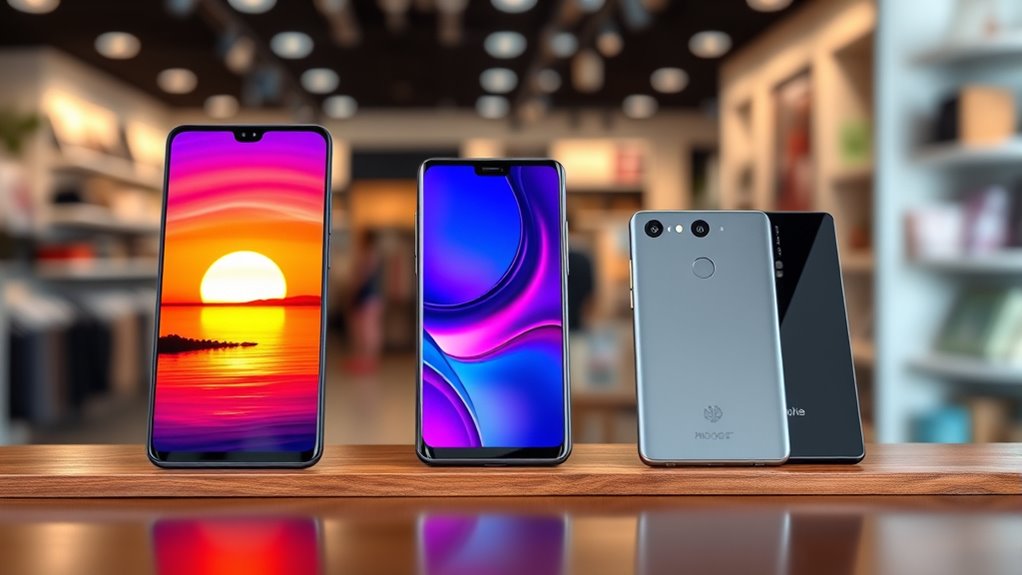
Choosing the right smartphone can be challenging, especially with so many options available across different price ranges. When you’re trying to decide between flagship, mid-range, and budget phones, it’s important to understand what sets each apart, particularly in areas like camera quality and software updates. Flagship phones typically offer the best camera technology, with advanced sensors, multiple lenses, and features like optical zoom and night mode. These phones are designed for users who want professional-grade photos and videos, and they usually come with the latest software updates, ensuring you get new features and security patches as soon as they’re released. This means your device remains secure and current for years, which is a significant advantage if you prioritize longevity and performance.
Mid-range phones strike a balance. They often include camera systems that are quite capable, delivering good photo quality for everyday use, though they might lack some of the advanced features found in flagships. These phones tend to get software updates regularly, but sometimes not as quickly or for as long as flagship devices. If you value decent camera quality without paying top dollar, and you want a phone that stays reasonably up-to-date, mid-range models are a solid choice. They often incorporate some premium features like faster processors or better displays, giving you more value for your money without sacrificing too much on performance or software support.
Budget phones, on the other hand, usually focus on basic camera quality and more limited or slower software updates. These devices often use less advanced hardware, which impacts camera performance, especially in low-light conditions or when trying to capture complex scenes. Software updates are less frequent for budget devices, and in many cases, they may not receive updates at all after a certain period. This can leave your device vulnerable to security issues or missing out on new features. If you mainly need a device for calls, messaging, and casual browsing, a budget phone can meet those needs without a hefty investment. However, if you’re serious about photography or want a device that stays current longer, a budget model might not be the best choice.
Frequently Asked Questions
How Long Do Flagship Phones Typically Receive Software Updates?
Flagship phones usually get software updates for about 3 to 4 years, including security patches and OS upgrades. You can expect regular security patch frequency, often monthly or quarterly, to maintain your device secure. Manufacturers prioritize these updates to ensure top performance and security. After this period, updates may slow down or stop, so if you want longevity, flagship phones generally offer better software support than mid-range or budget models.
Are Mid-Range Phones Suitable for Professional-Grade Photography?
Ever wondered if mid-range phones can handle professional-grade photography? They can, to an extent. With decent camera quality and advanced image processing, mid-range phones capture sharp images and good detail. However, they might lack the versatility and low-light performance of flagships. So, if you’re okay with some limitations and don’t need top-tier results, a mid-range phone can serve you well for high-quality photos.
Do Budget Phones Have Any Advantages Over Mid-Range Devices?
Budget phones do have advantages over mid-range devices, especially when it comes to affordable durability and entry-level performance. You get a device that’s easier on your wallet, yet still offers reliable performance for everyday tasks. While they might lack high-end features, budget phones often excel in providing essential functions without compromise, making them a practical choice if you prioritize affordability and basic usability over top-tier specs.
How Do Battery Life and Charging Speed Compare Across Categories?
Think of your phone’s battery like a marathon runner—flagships usually have better stamina, offering longer battery longevity, while budget phones may tire quicker. Charging speed is akin to a relay race: flagships often pass the baton faster with superior charging efficiency, getting you powered up in less time. Mid-range devices sit in the middle, balancing decent battery life with reasonable charging speeds, ensuring you’re back on the go without long waits.
Can Budget Phones Support the Latest Apps and Games Effectively?
Budget phones can support the latest apps and games, but their performance might vary. You might notice some lag or slower load times, especially with demanding titles. While they generally offer decent app compatibility for everyday use, high-end gaming or intensive tasks could challenge their capabilities. If you prioritize smooth performance with the newest apps, consider a mid-range or flagship device. Still, budget phones are improving and can handle most common apps well.
Conclusion
So, whether you’re after the flashy flagship, the reliable mid-range, or the basic budget phone, remember each offers unique benefits. Choose based on your needs, not just the name. Don’t overlook the value in versatility, affordability, or features. Make your decision wisely, weighing what works for you. Ultimately, your perfect phone depends on your priorities. Don’t just settle — select the smartphone that suits your style, needs, and budget best!