
If you’re choosing between LCD and OLED screens for your smartphone, consider how each benefits you. OLED displays offer richer colors, deeper contrast, and better energy efficiency, especially with dark themes. They also provide stunning visuals for videos and games. However, they can be prone to burn-in and may not last as long. LCD screens are more durable and resistant to image retention. Want to discover which type suits your daily use? Keep exploring the details.
Key Takeaways
- OLED screens offer richer colors and deeper contrast due to self-emitting pixels, enhancing visual quality.
- LCD displays use backlighting, resulting in slightly less vibrant colors but increased durability and resistance to burn-in.
- OLEDs are more energy-efficient with dark images, helping extend battery life, while LCDs consume more power regardless of content.
- LCDs tend to be more durable and less prone to image retention, making them suitable for long-term use.
- Choice depends on user preferences for superior visuals (OLED) versus longevity and cost-effectiveness (LCD).
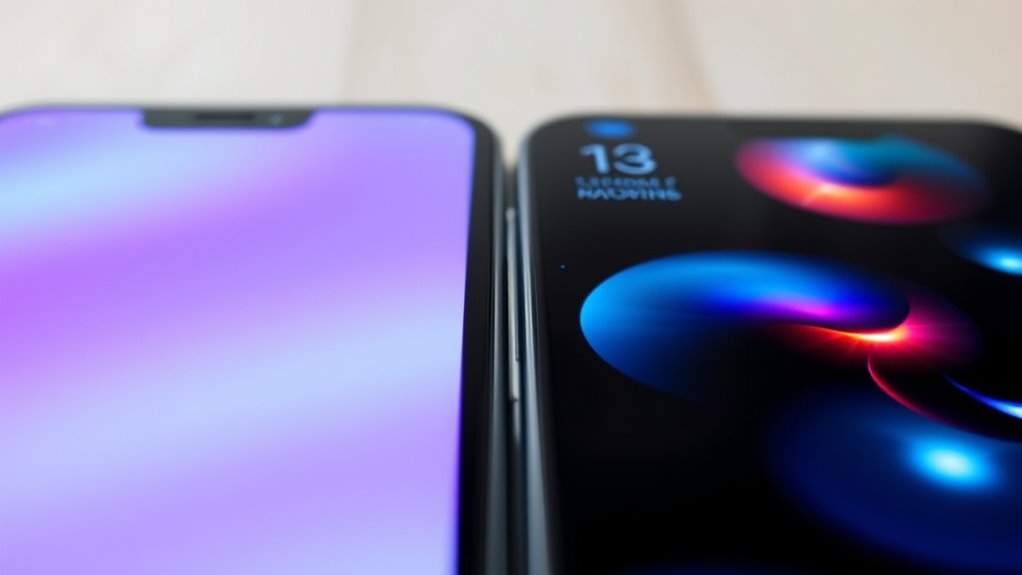
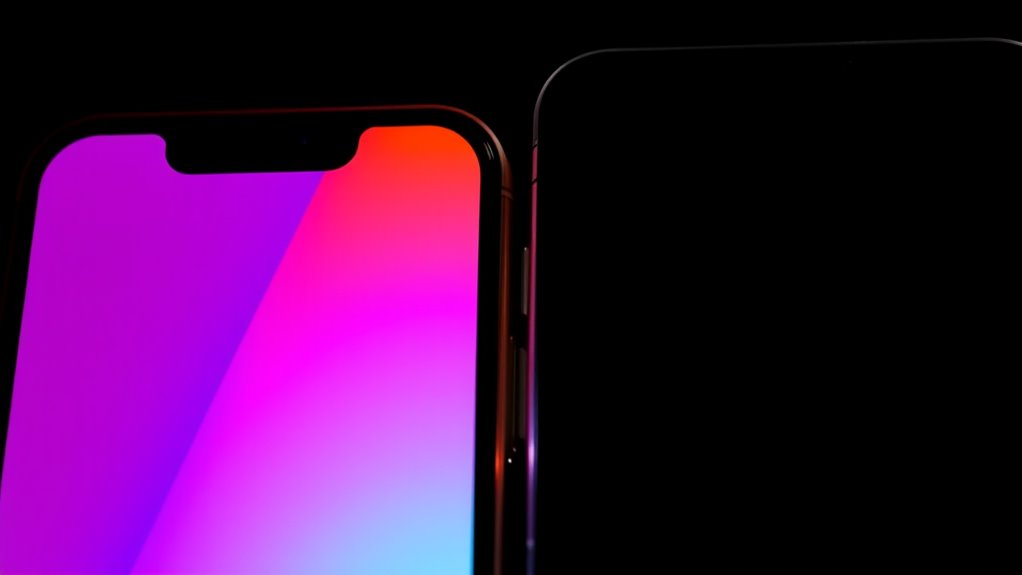
When choosing between LCD and OLED displays, understanding their differences can help you make an informed decision. Both screen types have unique advantages and drawbacks, and knowing what sets them apart will guarantee you select the best option for your needs. One of the key differences lies in color accuracy. OLED screens tend to deliver richer, more vibrant colors because each pixel emits its own light. This allows for a broader color palette and better contrast, making images pop with more depth and realism. If you’re into photography, gaming, or watching high-definition videos, this enhanced color accuracy can profoundly improve your viewing experience. LCD screens, on the other hand, rely on a backlight to illuminate pixels, which can result in slightly less accurate color reproduction and less contrast. While modern LCDs have improved considerably in this area, they still often fall behind OLEDs when it comes to delivering the same level of color vibrancy and depth. Additionally, OLED technology can be more energy-efficient for certain usages, especially when displaying dark images or interfaces, which can help extend your device’s battery life. Energy efficiency is another important factor to contemplate. OLED displays are generally more energy-efficient when displaying darker images or interfaces. Since each pixel emits light only when it’s needed, black areas on an OLED screen are truly black and require no power to maintain. This means that if you frequently use your phone for reading, browsing, or watching dark themes, an OLED can help conserve battery life. Conversely, LCD screens use a constant backlight regardless of what’s shown on the display, which consumes more power overall, especially when displaying bright or colorful images. As a result, OLEDs can offer better energy efficiency for certain usages, helping your device last longer between charges. However, it’s worth noting that OLED screens can be more vulnerable to issues like burn-in or image retention over time, which may impact long-term durability. LCD screens tend to be more resilient in this regard, making them a more durable choice for some users. When weighing these options, consider how you typically use your device. If you prioritize stunning visuals and want to enjoy the most accurate colors, OLED might be the way to go. If you’re more concerned about battery life or durability, an LCD could serve you better. Ultimately, understanding the strengths and weaknesses of each display type allows you to pick the one that aligns with your preferences and habits, ensuring you get the best experience from your smartphone.
OLED smartphone screen protector
As an affiliate, we earn on qualifying purchases.
As an affiliate, we earn on qualifying purchases.
Frequently Asked Questions
Which Screen Type Is More Eco-Friendly?
You’ll find OLED screens more eco-friendly because they typically consume less energy, especially with darker themes, reducing your device’s overall energy consumption. Additionally, OLEDs are more recyclable due to their organic materials, which break down more easily than LCD components. By choosing an OLED display, you help lower your environmental impact through decreased energy use and better recyclability, making it a smarter choice for eco-conscious users.
How Do LCD and OLED Screens Perform in Different Lighting?
In bright lighting, OLED screens excel with higher brightness levels and deeper blacks, making images pop and texts clearer. LCD screens, however, often struggle with glare and washed-out colors under strong sunlight. In dim environments, OLEDs maintain excellent contrast and color accuracy, while LCDs may appear dull and less vibrant. So, if you frequently use your device outdoors or in bright settings, OLED screens offer better performance and visual clarity.
Can OLED Screens Cause More Eye Strain?
Yes, OLED screens can cause more eye strain because they emit more blue light and sometimes flicker due to their refresh rate. The blue light emission can lead to discomfort and disrupt sleep if you use your device late at night. Flicker effects, especially in lower brightness settings, can also cause eye fatigue over time. To protect your eyes, consider using blue light filters or adjusting brightness levels.
Are There Significant Differences in Manufacturing Costs?
They say, “You get what you pay for,” and that’s true for manufacturing costs. OLED screens generally have higher manufacturing cost differences due to their production complexity, involving more intricate materials and processes. This makes OLEDs more expensive to produce than LCDs. However, their superior picture quality and flexibility often justify the extra cost, balancing out the investment in high-end displays for your smartphone.
How Do Screen Repairs Compare Between LCD and OLED?
When it comes to screen repairs, LCD screens are generally easier and less costly to fix than OLEDs. OLED screens have higher repair complexity due to their delicate organic layers, which are more prone to damage and require precise handling. Durability concerns also play a role, as OLEDs can degrade faster over time, making repairs trickier and potentially more expensive. You’ll find that LCD repairs tend to be simpler and more affordable overall.
LCD screen durability screen protector
As an affiliate, we earn on qualifying purchases.
As an affiliate, we earn on qualifying purchases.
Conclusion
Ultimately, choosing between LCD and OLED is like picking between a reliable friend and an adventurous spirit. LCDs offer dependable performance with vibrant colors, while OLEDs bring stunning contrast and true blacks. Your choice depends on what matters most to you—steadfast reliability or breathtaking visuals. Whichever you pick, understanding these screens helps you make a smarter decision, ensuring your device’s display becomes a window to your digital world, not just a mirror reflecting your tech dreams.
smartphone screen cleaning kit
As an affiliate, we earn on qualifying purchases.
As an affiliate, we earn on qualifying purchases.
high contrast OLED display smartphone
As an affiliate, we earn on qualifying purchases.
As an affiliate, we earn on qualifying purchases.