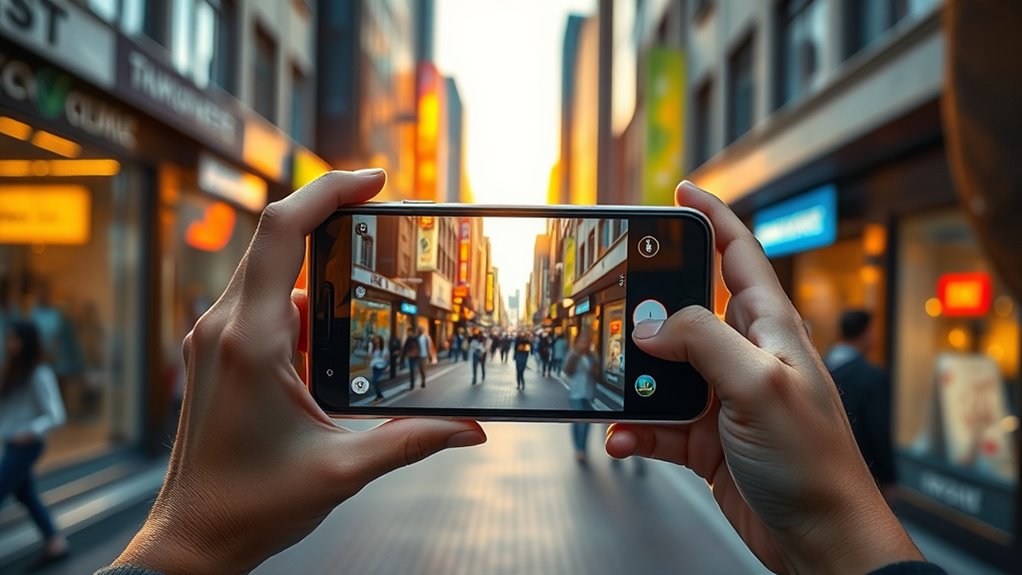

To master phone photography, focus on natural lighting, especially during the golden hour, and avoid harsh midday sun. Use composition techniques like the rule of thirds, leading lines, and uncluttered backgrounds to highlight your subject. Experiment with different angles and perspectives to add interest. Pay attention to framing and background details to make your photos stand out. Keep practicing these tips, and you’ll discover more ways to make your images shine.
Key Takeaways
- Use natural light during golden hour for warm, well-lit photos; avoid harsh midday sun to prevent shadows and overexposure.
- Follow the rule of thirds and keep backgrounds uncluttered to enhance subject focus and composition.
- Experiment with angles and perspectives, including close-ups and high or low vantage points, for creative shots.
- Frame subjects with natural or architectural elements to add depth and emphasize the main focus.
- Take multiple shots in various lighting conditions and settings to increase the chance of capturing the perfect photo.
Have you ever wondered how to turn your everyday phone into a powerful photography tool? The secret lies in mastering some fundamental skills, starting with lighting techniques and composition tips. Lighting is the backbone of any good photo. Natural light, especially during the golden hour—the hour after sunrise and before sunset—can add warmth and depth to your images. Avoid harsh midday sun, which can create unwanted shadows and washed-out colors. Instead, look for softer light that gently wraps around your subject, highlighting details without creating stark contrasts. If you’re indoors, position your subject near windows to take advantage of diffused natural light. When necessary, use your phone’s built-in features like exposure adjustment to brighten or darken scenes, ensuring your subject is well-lit without overexposing bright spots.
Next, focus on composition tips to elevate your photos. The rule of thirds is a good starting point: imagine dividing your frame into nine equal parts with two horizontal and two vertical lines, then place your subject along these lines or at their intersections. This approach creates a balanced and engaging image, drawing viewers’ eyes naturally to the focal point. Pay attention to leading lines—roads, fences, shadows—that guide the viewer’s gaze into the scene. Be mindful of clutter in the background; a clean, uncluttered backdrop keeps the main subject clear and impactful. Incorporate framing techniques, like shooting through arches, branches, or windows, to add depth and context while directing attention toward your subject.
Additionally, mastering simple composition tips, such as filling the frame to eliminate distractions and experimenting with different angles, can dramatically improve your photos. Don’t be afraid to get close or shoot from unusual perspectives—lying on the ground or shooting from a higher vantage point. Keep your horizon straight to avoid tilted images unless creatively intended. When framing your shot, consider the background carefully; a simple, contrasting background makes your subject stand out more vividly. Always take multiple shots from different angles and lighting conditions, as this gives you options to choose from later. Furthermore, understanding the importance of contrast ratio can help you capture images with more vibrant and detailed visuals, especially in scenes with varying light levels.
Top picks for "ultimate phone photography"
Open Amazon search results for this keyword.
As an affiliate, we earn on qualifying purchases.
Frequently Asked Questions
How Can I Improve Low-Light Photos With My Phone?
To improve your low-light photos, start by stabilizing your phone with tripod techniques to prevent blur. Adjust your ISO settings higher to capture more light, but be cautious of noise. Use your phone’s manual or pro mode if available. Additionally, find the best light sources nearby, and avoid digital zoom, which can reduce image quality. These tips help you get clearer, brighter low-light shots effortlessly.
What Are the Best Editing Apps for Beginner Photographers?
You should try editing apps like Snapseed or VSCO, which are perfect for beginner photographers. They offer easy-to-use tools, including photo filters that instantly enhance your images. Plus, many apps provide editing tutorials to help you learn new techniques. These features make it simple to improve your photos, experiment with different styles, and develop your skills without feeling overwhelmed. Start exploring these apps today to elevate your photography!
How Do I Stabilize My Phone for Sharper Images?
Think of your phone as a delicate dancer needing steady support. To stabilize your phone for sharper images, use a tripod for excellent stability, ensuring tripod stability during shots. When shooting handheld, grip your phone firmly, keep your elbows close to your body, and breathe steadily to minimize shake. Practice these handheld techniques, and you’ll find your photos becoming crisper, capturing moments with clear, sharp detail.
Can Phone Photography Replace Professional Cameras?
While phone photography has advanced with larger camera sensors and higher image resolution, it can’t fully replace professional cameras. Your phone offers convenience and portability, but professional cameras excel in low-light conditions, dynamic range, and detail. If you want the best quality for large prints or commercial work, a professional camera remains your top choice. However, for casual, everyday shots, your phone’s capabilities are more than enough.
What Accessories Enhance Mobile Photography Quality?
Imagine your phone as a painter’s canvas—accessories become the brushes that unlock new shades of creativity. You enhance your shots with tripod accessories, providing stability like a sturdy foundation, and lens attachments that transform perspectives, like opening new windows to the world. These tools elevate your mobile photography, allowing you to capture sharper, more vivid images that tell your story with clarity and emotion.
Conclusion
Now that you’re armed with these tips, your phone can become your most powerful creative tool. Remember, every great photographer started with just a single shot—so don’t be afraid to experiment and embrace imperfections. Think of your camera as a magic wand, transforming everyday moments into extraordinary memories. Keep practicing, stay curious, and soon, you’ll find that exceptional photos are just a tap away. Your journey to stunning phone photography begins now—ready to capture your world?