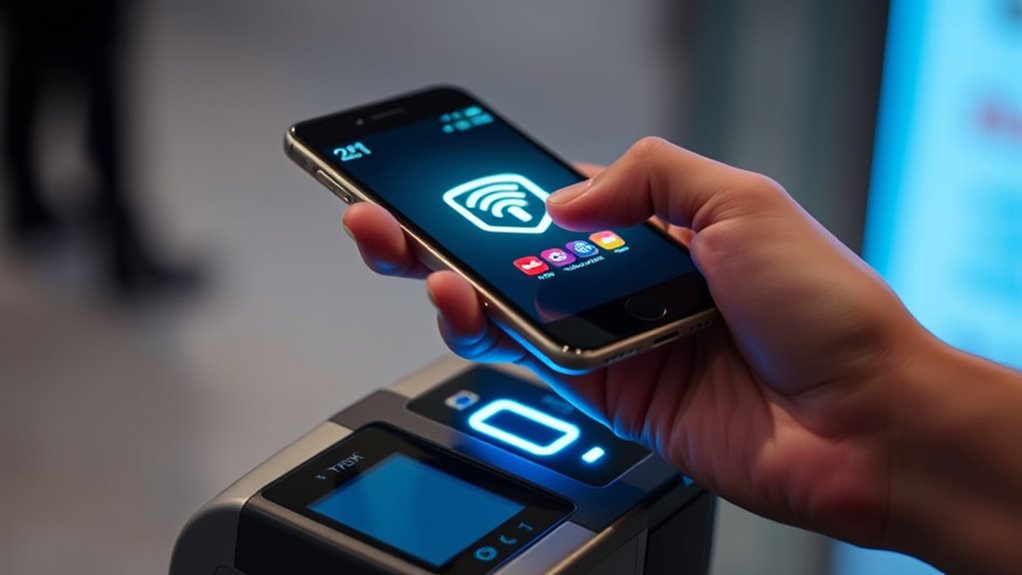

Your smartphone has become your digital wallet, making everyday payments simple and fast with just a tap or swipe. As more stores and services accept mobile payments, you can skip cash and cards for groceries, transit, and coffee. Security features like encryption, tokenization, and biometric authentication protect your financial details, so you can pay with confidence. The ongoing rise of mobile payments means more convenience and acceptance—if you want to explore how it all works, keep going.
Key Takeaways
- Mobile payments replace cash and cards, offering a quick, convenient way to make everyday transactions using smartphones.
- Enhanced security features like encryption, tokenization, and biometrics protect user data during mobile transactions.
- User trust grows as acceptance by businesses increases, coupled with incentives and seamless payment experiences.
- Security best practices, including strong passwords and multi-factor authentication, help mitigate potential risks.
- The widespread adoption of mobile payments is driven by convenience, technological improvements, and expanding merchant acceptance.
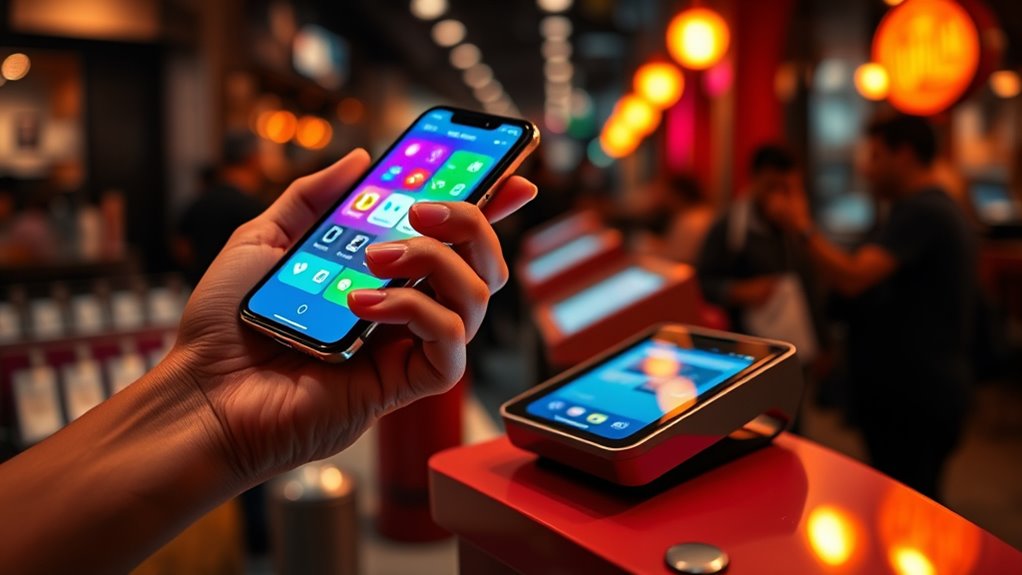
Have you ever wondered how your smartphone can replace cash or cards for everyday transactions? It’s quite impressive how mobile payments have transformed the way you handle money. Instead of digging through your wallet or purse, you can simply tap your phone to pay for groceries, transit, or even a quick coffee. But as convenient as this technology is, it’s natural to have some security concerns. You’re probably wondering if your financial information is safe from hackers or unauthorized access. Mobile payment systems use advanced encryption, tokenization, and biometric authentication—like fingerprint or face recognition—to protect your data. These security measures make it difficult for cybercriminals to intercept or misuse your information. Still, no system is completely foolproof, so it’s wise to stay vigilant. Using strong, unique passwords and enabling multi-factor authentication adds extra layers of security, giving you peace of mind. Security protocols play a crucial role in safeguarding your financial details during transactions.
User adoption plays a significant role in how quickly mobile payments become mainstream. You might hesitate to trust your smartphone with such sensitive transactions, especially if you’re accustomed to traditional cash or card methods. Over time, though, more of your friends, family, and local businesses are embracing this technology, which makes it easier for you to jump on board. As the convenience becomes undeniable—no more fumbling for cash or waiting in line—you’re more likely to adopt mobile payments yourself. Retailers and service providers are also encouraging this shift by offering discounts or faster checkout options for users who pay via smartphones. The growing acceptance and seamless integration into daily routines help build confidence and familiarity, gradually increasing user adoption.
Frequently Asked Questions
How Secure Are Mobile Payment Transactions Compared to Traditional Credit Cards?
Mobile payment transactions are generally more secure than traditional credit cards because they use advanced encryption standards, making your data harder to intercept. Plus, they feature real-time fraud detection, alerting you to suspicious activity instantly. You benefit from biometric authentication, like fingerprint or facial recognition, adding an extra layer of security. Overall, mobile payments offer a safer, more protected way to make transactions compared to swiping or handing over your card.
Can Mobile Payments Be Used Internationally Without Extra Fees?
Yes, you can use mobile payments internationally without extra fees, but it depends on your provider. When making foreign transactions, currency exchange rates may apply, and some services charge international fees. To avoid surprises, check your app’s terms and your bank’s policies before traveling. Using a service with no foreign transaction fees and favorable currency exchange rates guarantees smooth, cost-effective international mobile payments.
What Devices Are Compatible With Mobile Payment Apps?
You can use NFC-enabled smartphones and wearable payment devices with mobile payment apps. These devices allow quick, contactless transactions, making your payments seamless. While most modern smartphones support NFC, some older models might not. Wearable devices like smartwatches also enable mobile payments, offering convenience on the go. Confirm your device is compatible and has the latest software updates to enjoy smooth, secure mobile payment experiences everywhere you go.
How Does Mobile Payment Technology Protect User Privacy?
Mobile payment technology safeguards your privacy by using biometric authentication, like fingerprint or facial recognition, to guarantee only you can authorize transactions. Additionally, it employs data encryption to secure your payment information during transmission, preventing unauthorized access. These features work together to keep your personal and financial data safe, giving you confidence when making purchases with your smartphone.
Are There Any Hidden Costs Associated With Mobile Payment Services?
Sure, there are hidden costs lurking in mobile payment services. You might not see those sneaky hidden fees until a surprise charge pops up, or find yourself locked into costly account subscriptions. It’s like paying for a free app and then realizing it’s a subscription trap. Always read the fine print, or end up paying more than you bargained for—your digital wallet might just be your most expensive accessory.
Conclusion
Now, your smartphone becomes your wallet. Now, you pay with a tap, a scan, a swipe. Now, you shop more securely, more conveniently, more effortlessly. Your phone simplifies your payments, streamlines your purchases, transforms your everyday transactions. Embrace the future where your device is your money, your key, your ticket. Because, with mobile payments, it’s not just about convenience—it’s about changing how you live, spend, and connect, every day.