📊 Full opportunity report: How To Include Arm-Load Checks In A Youth Pitcher's Routine on IdeaNavigator AI — validation score, market gap, and execution plan.

Get the latest gadgets delivered free with Prime
- Fast, free delivery on millions of items
- Prime Video, Amazon Music and more included
- Member-only deals all year
TL;DR
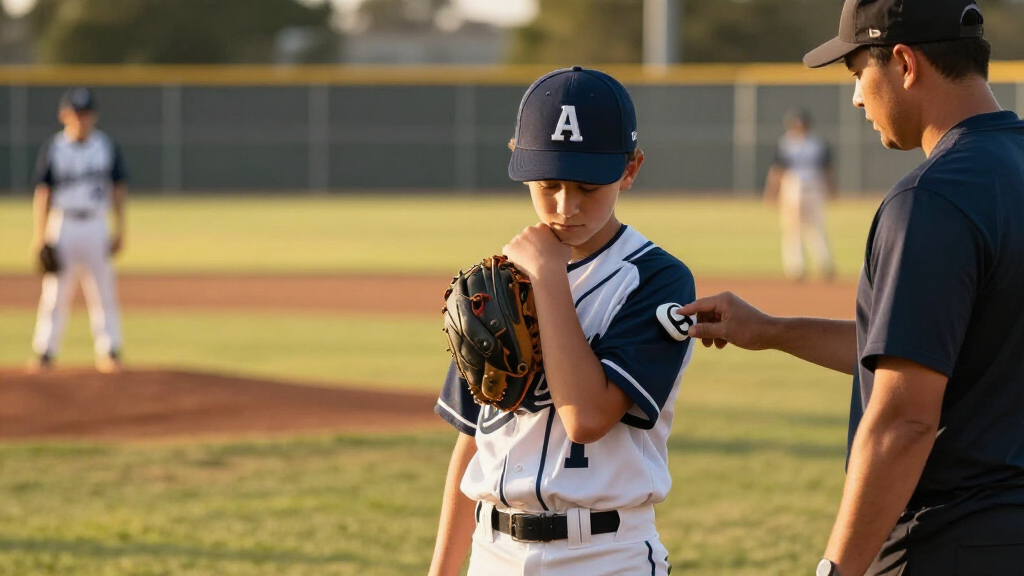
A proposed arm-load tracking workflow would help parents record a youth pitcher’s outings across school, travel and showcase teams, then compare rolling workload with age-based guidance. The approach has not been validated; a proposed test would involve 200 travel-ball families and measure logging consistency and whether alerts affect rest decisions.
IdeaNavigator AI has proposed a parent-led arm-load tracking routine for youth pitchers who play across school, travel and showcase teams, where workload records may not be shared. In its proposal, the organization says the concept would combine outing logs into a rolling view, compare workload with age-based guidance and provide coaches with a shareable report. It remains a proposed workflow, not a validated injury-prevention product.
In its proposal, IdeaNavigator AI describes a routine aimed at parents of children pitching across multiple teams and seasons. The proposal says a parent would record each outing in seconds or import game information from GameChanger, then use one account to assemble workload records that otherwise may be spread across team systems. It calls for tracking against age-based guidance, flagging thresholds, scheduling rest and producing a report for each coach.
IdeaNavigator AI frames the initial product as a narrow first test, rather than a full youth-sports platform. The proposal suggests recruiting 200 travel-ball families and following them over a season. Its suggested measures are whether families log outings consistently and whether alerts change decisions about rest. The proposal reports no trial results, injury outcomes, product launch, pricing details or independent evaluation.
The proposal identifies a family annual subscription as a possible business model, with team licenses as a later expansion. It names youth-sports injury prevention as the market, but offers no market-size estimate or evidence that families or teams would pay. Those are commercial hypotheses, separate from whether the tracking routine can be used consistently or influence workload decisions.
IdeaNavigator AI’s proposal describes a coordination problem: a young player may pitch for several organizations, while each coach sees only part of the schedule. The proposal argues that fragmented records may leave parents and coaches without a combined account of recent outings when deciding whether a player should pitch again. A shared log could make that information easier to review, provided entries are complete and the people making decisions use them.
That possibility matters because rest decisions concern a young athlete’s workload, but an app cannot establish that a pitcher is safe to play or diagnose an injury. Its alerts would depend on accurate records and the guidance selected for comparison. IdeaNavigator AI says its proposed family trial would test use and decision changes; the proposal does not describe it as a clinical study, and such a test would not, by itself, show that the workflow prevents injuries.
For families, the practical question is whether recording each outing is quick enough to sustain across a season. For coaches, it is whether a report from another team is timely, clear and useful. The proposal’s value therefore rests on behavior and coordination, not merely on producing a workload number.
youth baseball pitch count tracker
As an affiliate, we earn on qualifying purchases.
As an affiliate, we earn on qualifying purchases.
Why Records Span Multiple Teams
IdeaNavigator AI’s proposal describes a schedule that can include school, travel and showcase baseball, with separate teams that may not share pitch counts. It argues that this fragmented calendar can leave cumulative workload untracked. The proposal points to Pitch Smart guidelines as existing guidance and says those recommendations are not enforced across a player’s different team schedules.
IdeaNavigator AI also claims that youth elbow-surgery rates are rising as travel baseball expands and that UCL injuries once associated mainly with professional players are now seen in high school. The proposal supplies no statistics, study citations or time period to quantify these claims. They are claims in the proposal, not independently substantiated evidence here, and should not be treated as evidence that a tracking app would reduce injury risk.
The workflow suggested by IdeaNavigator AI puts parents in the middle of the information gap: they can record outings from different teams and share a combined report with coaches. That arrangement would depend on families having access to reliable outing information and on coaches being willing to consult it. The proposal does not describe an agreed reporting standard or a system that automatically connects every team.
arm load monitoring for young pitchers
As an affiliate, we earn on qualifying purchases.
As an affiliate, we earn on qualifying purchases.
What the Pilot Must Establish
IdeaNavigator AI reports no functioning product or pilot results. Its proposal does not explain how workload would be calculated, which age-based thresholds would be used, how the system would account for differences in player development or pitching roles, or what would trigger a risk flag. It also does not specify how an alert should be interpreted or who would be responsible for acting on it.
Importing data from GameChanger is suggested in the proposal, but it gives no technical details about access, compatibility, accuracy or permission. Manual logging could fill gaps, but missed or duplicated outings could make a rolling workload picture unreliable. It is also unclear whether teams would share records consistently or whether a parent-generated report would reach all relevant coaches before a game.
The proposed 200-family test would examine logging consistency and whether flags changed rest decisions. IdeaNavigator AI does not set out a comparison group, a definition of a meaningful change, a plan for measuring injuries or a period of follow-up beyond a season. Until those details and results are available, the concept’s effect on health outcomes remains unknown.
As an affiliate, we earn on qualifying purchases.
Testing Use Across a Season
IdeaNavigator AI proposes recruiting 200 travel-ball families and tracking whether they record outings consistently over a season. The proposal also says the test would audit whether workload flags lead to changes in rest decisions. Those measures could show whether parents can maintain the routine and whether the information reaches decisions, though they would not alone establish injury prevention.
Before such a test can be assessed, the developers would need to explain the workload calculation, guidance thresholds, data-import process and alert rules. Reporting should also distinguish a change in a coach’s or parent’s decision from a health outcome. IdeaNavigator AI provides no recruitment date, launch schedule or published evaluation, so the timing and status of a pilot are unclear.
For now, the proposal is best understood as a product hypothesis: make a cross-team record easier to maintain and share. Whether families will log reliably, coaches will use the reports and the approach improves player safety remains to be tested.
Source: IdeaNavigator AI proposal
youth sports injury prevention device
As an affiliate, we earn on qualifying purchases.
As an affiliate, we earn on qualifying purchases.
Key Questions
What is an arm-load check for a youth pitcher?
In IdeaNavigator AI’s proposal, it means keeping a combined record of a pitcher’s outings across teams and comparing rolling workload with age-based guidance. The specific calculation and thresholds have not been provided.
Who is the proposed routine designed for?
IdeaNavigator AI aims the proposed routine at parents of pitchers playing across school, travel and showcase seasons, particularly when those teams do not share workload records.
Does the proposed app prevent elbow injuries?
That has not been shown. IdeaNavigator AI reports no trial results or injury-outcome evidence, and its proposed test would focus on logging consistency and whether alerts affect rest decisions.
What would the proposed pilot measure?
IdeaNavigator AI proposes recruiting 200 travel-ball families for a season, measuring whether they log outings consistently and auditing whether flags changed rest decisions. The proposal reports no pilot dates or results.
Source: IdeaNavigator AI
Halloween Picks
halloween
As an affiliate, we earn on qualifying purchases.