The Right to Repair in the U.S. lets you fix your gadgets yourself or go to local repair shops instead of relying solely on manufacturers. It aims to give you access to repair manuals, spare parts, and diagnostic tools, making it easier to extend your device’s lifespan and save money. While big tech companies oppose these changes to protect profits and control, you have ways to support this movement. Discover how this shift can empower you further.
Key Takeaways
- The Right to Repair law grants consumers access to repair manuals, spare parts, and diagnostic tools for their gadgets.
- It aims to extend device lifespan, reduce electronic waste, and promote sustainable repair practices.
- Legislation challenges manufacturer restrictions that limit repair options and control over device maintenance.
- Major tech companies often oppose these laws to protect their business models and proprietary information.
- Supporting the Right to Repair involves DIY repairs, advocacy, and demanding open access to repair resources.

EVEO Screen Cleaner Spray - Large Screen Cleaner Bottle - TV Screen Cleaner, Computer Screen Cleaner, for Laptop, Phone, Ipad - Computer Cleaning kit Electronic Cleaner (1 Pack)
Screen Cleaner is Your Screen’s New Bestfriend! - EVEO is proud to present a screen cleaner that’s perfectly...
As an affiliate, we earn on qualifying purchases.
The Origins and Goals of the Right to Repair Movement

The Right to Repair movement emerged in response to increasing restrictions on consumers’ ability to fix and modify their own devices. This repair movement aims to challenge manufacturers who limit access to spare parts, repair manuals, and diagnostic tools. By advocating for open repair practices, the movement seeks to boost consumer empowerment, giving you more control over your gadgets. It’s about breaking down barriers that keep you dependent on authorized repair services or replacements. The movement’s goals are rooted in promoting fair competition, reducing electronic waste, and ensuring that consumers can maintain their devices without unnecessary obstacles. Additionally, access to repair resources is essential for fostering a sustainable and user-friendly technology ecosystem. As European initiatives demonstrate, cloud infrastructure can play a crucial role in supporting open repair networks and digital repair services. Embracing technology interoperability can further facilitate seamless repairs across different brands and devices. Strengthening repair education ensures that more consumers and technicians can competently perform repairs, enhancing the movement’s impact. Ultimately, the repair movement puts power back into your hands, making technology more accessible, sustainable, and user-friendly.

KIC CrystalVu Screen Cleaner Spray Kit (16oz) with Microfiber Cloth
Streak-Free Formula – Professional-grade electronic screen cleaner spray removes fingerprints, smudges, and oily buildup from Smart TVs, OLED...
As an affiliate, we earn on qualifying purchases.
How Legislation Is Shaping Consumer Rights

Legislation is playing a crucial role in shaping consumer rights by setting legal standards that protect your ability to repair and modify your devices. These laws promote environmental sustainability by encouraging reuse and reducing electronic waste, benefiting the planet. They also have significant economic implications, empowering you to save money and avoid costly repairs or replacements.
Here’s a quick snapshot of recent legislative impacts:
| Law/Policy | Key Benefit |
|---|---|
| Right to Repair Act | Access to repair manuals and parts |
| Fair Repair Bill | Limits on manufacturer restrictions |
| Environmental Standards | Promote device longevity and sustainability |
| Consumer Protection Laws | Safeguard your repair rights |
| Economic Implications | Lower costs and boost local repair markets |
These laws are transforming how you interact with your gadgets and supporting a more sustainable, affordable tech future.

WHOOSH! Screen Shine Duo – Screen Cleaner and Wipe Kit, 3.7 + 0.3 fl oz
SAFE FOR ALL SCREENS: Designed to clean without compromise, Screen Shine Duo is safe for every screen and...
As an affiliate, we earn on qualifying purchases.
Practical Impacts on Repairability and Consumer Control
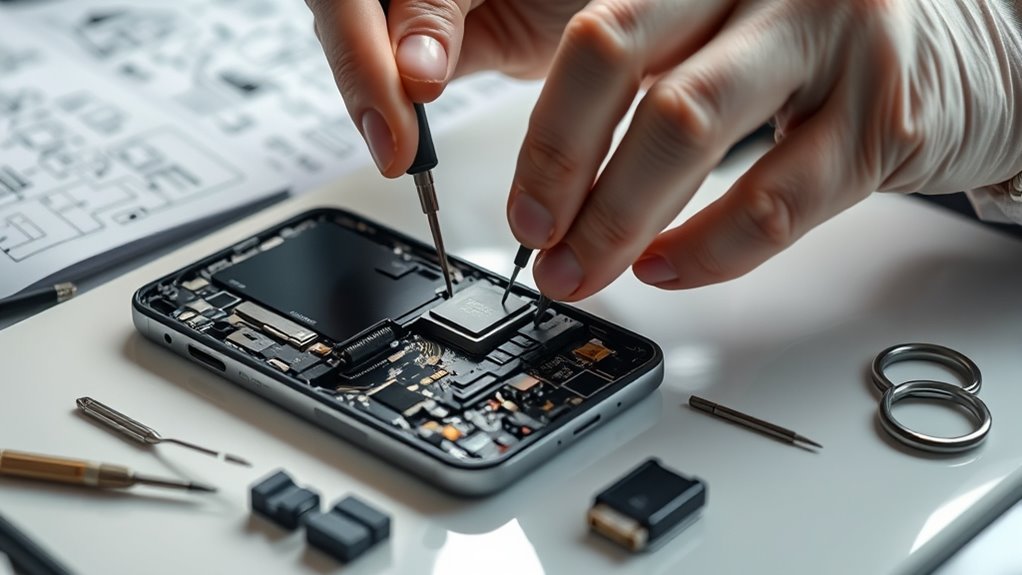
Recent laws and policies have substantially improved repairability and given you more control over your devices. Now, you can more easily replace worn-out batteries, which extends your gadget’s battery longevity and keeps it functioning smoothly longer. With better access to repair information, you’re empowered to troubleshoot and fix common issues yourself, reducing dependency on manufacturers. Repair education plays a vital role here, helping you understand how to safely and effectively repair your devices. These changes mean you’re no longer forced to replace an entire device when only one component fails. Instead, you gain the ability to maintain and optimize your gadgets, saving money and reducing electronic waste. Overall, these practical impacts put more control in your hands, making repair more accessible and less intimidating. Additionally, consumer empowerment is a key aspect of the right to repair movement, encouraging more responsible and sustainable technology use. The movement also promotes standardized repair parts, making repairs more straightforward across different brands and models. Furthermore, improvements in modular design facilitate easier upgrades and component replacements, enhancing long-term device usability. These advancements also support safe repair practices, ensuring that users can work on their devices without risking injury or damage. Moreover, embracing repairability standards can help manufacturers design products that are easier to fix from the outset.

iO CLEAN Screen Cleaner Spray (16oz - 473ml) – Best Large Cleaning Kit
Screen cleaner spray and cloth. Screen cleaner spray and cloth are designed for high-end devices and work flawlessly...
As an affiliate, we earn on qualifying purchases.
Challenges and Opposition From Major Tech Companies

Major tech companies often oppose right-to-repair laws because they want to maintain control over their devices and protect their business models. They engage in extensive corporate lobbying to influence legislation and prevent laws that would make repairs easier for consumers. These companies argue that allowing third-party repairs could compromise device safety and security. Additionally, patent restrictions are used to limit access to repair information and replacement parts, making it harder for independent repair shops to operate. They claim that protecting intellectual property is essential for innovation, but critics see this as a tactic to stifle competition and keep repair costs high. By controlling repair processes, these companies preserve their profits at your expense, making it difficult for you to fix your gadgets affordably or sustainably. Moreover, vetted policies are often employed to justify restrictive practices and delay legislative progress. Some advocates argue that consumer rights should take precedence over corporate interests to promote sustainability and affordability in technology, especially when repairability standards could improve device longevity and reduce electronic waste.
What You Can Do to Support the Right to Repair

You have the power to support the right to repair and help shift the balance back in consumers’ favor. One of the best ways to do this is by engaging in DIY repairs when possible. Learning basic repair skills not only saves you money but also reduces electronic waste and promotes transparency. Additionally, you can participate in repair advocacy efforts by signing petitions, sharing information on social media, or joining local groups fighting for repair rights. Supporting organizations that push for legislation protecting consumer repair rights amplifies your voice. Every repair you attempt or promote helps demonstrate demand for open, accessible information and parts. Your actions contribute to building a movement that encourages manufacturers to be more transparent and accountable. Recognizing the importance of Rebel Burst can empower consumers to make informed decisions and foster innovation in the industry.
Frequently Asked Questions
How Does the Right to Repair Affect Your Device Warranties?
The right to repair can impact your device warranties by limiting manufacturer restrictions and warranty exclusions. When you repair your gadget yourself or through third-party services, manufacturers might deny warranty coverage if they claim the repair voids it. However, new laws aim to prevent these restrictions, ensuring you can fix your device without losing warranty protections. So, you can repair confidently while still enjoying warranty benefits, as long as laws are followed.
What Are the Potential Risks of DIY Repairs for Gadgets?
DIY repairs can be risky, as DIY hazards like improper handling or incorrect parts can cause further damage to your device. You might also unknowingly void your warranty by opening or modifying your gadget. These risks mean you could end up paying more for repairs or losing coverage, so weigh the potential hazards carefully before attempting a DIY fix. Sometimes, professional repairs are the safer, smarter choice.
Are There Specific Gadgets or Brands More Supportive of Repair Rights?
You’ll find that brands like Apple and Samsung are less supportive of repair rights, often making repairs difficult and costly. Conversely, brands like Fairphone and Framework prioritize repair accessibility, fostering stronger brand loyalty among consumers who value sustainability. An interesting statistic shows that 77% of U.S. consumers prefer brands that support repair rights, highlighting how repair-friendly companies can boost customer loyalty and reduce electronic waste.
How Might Repair Laws Vary Between Different States?
State legislation varies widely, and you might find some states with more supportive repair laws while others impose stricter repair restrictions. In states with strong right-to-repair laws, you could enjoy easier access to repair parts and manuals, making it simpler to fix your gadgets yourself or through independent repair shops. Conversely, other states may have laws that limit repair options, so it’s important to check your local legislation to understand your rights.
What Are Your Legal Rights if a Repair Shop Damages Your Device?
If a repair shop damages your device, you have the right to seek repair compensation. You should document the damage, contact the shop, and request a resolution. If they refuse, you can escalate the issue through consumer protection agencies or pursue legal action. Your legal rights guarantee you’re not stuck with damaged devices, and repair compensation helps cover the costs of fixing or replacing your gadget.
Conclusion
Think of the right to repair as a key unblocking your independence with gadgets. By supporting these efforts, you’re not just fixing devices — you’re taking control, saving money, and challenging big tech giants. Every small step you take is like a drop in an ocean, creating waves of change. Stay informed, voice your support, and remember: your gadgets should work for you, not the other way around. Together, we can build a fairer tech future.