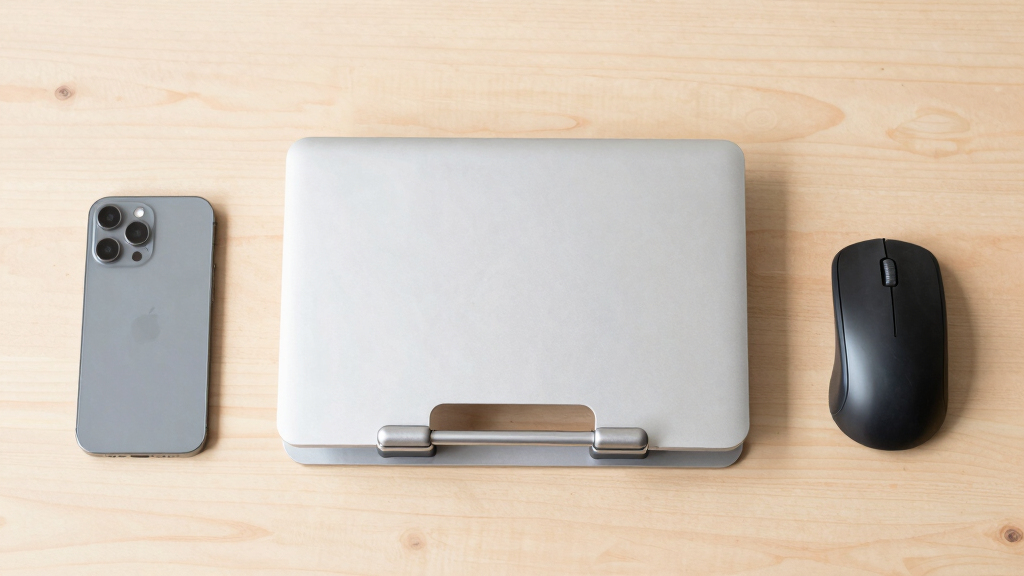

This guide will show you how to choose and set up a portable laptop stand that enhances comfort and portability. Ideal for remote workers, students, or anyone needing an ergonomic solution on the go, this process is straightforward and quick. You will learn to select the right stand, assemble it if needed, and position your laptop correctly.

Get the latest gadgets delivered free with Prime
- Fast, free delivery on millions of items
- Prime Video, Amazon Music and more included
- Member-only deals all year

AXA AXCESSABLES DJ Laptop Stand with Travel Bag
- ✔ Form Factor: Foldable
- ✔ Compatible Devices: Laptops, Keyboard, Launchpad
- ✔ Item Dimensions: 10 x 7 x 2 inches

Tonmom Adjustable Laptop Stand for Desk, Black
- ✔ Height Adjustment: 2.78 to 6.5 inches
- ✔ Weight: 0.53 pounds
- ✔ Folded Dimensions: 10.5 x 1.96 x 0.68 inches

OMOTON LA10 360° Rotating Laptop Stand Riser Foldable for Desk, Silver
- ✔ Rotation: 360°
- ✔ Height Adjustment: 1.8" to 10.4"
- ✔ Weight: 1.85 lbs
Difficulty: Beginner | Time: 10-15 minutes
What You’ll Need
Tools & Materials:
- None required, but a clean, flat surface is helpful
Knowledge:
- Basic understanding of ergonomic principles (optional but helpful)
Determine your primary needs: portability, height adjustment, or cooling features. Measure your laptop dimensions if needed for size compatibility.
AXA AXCESSABLES DJ Laptop Stand with Travel Bag
<p>The <strong>AXA AXCESSABLES DJ Laptop Stand</strong> stands out for its heavy-duty aluminum construction, making it ideal for professionals who need a sturdy, reliable platform. Its foldable design and included travel bag make it highly portable, perfect for DJs or mobile workers. Compared with the others, it offers a dedicated middle tier for accessories, which is a significant advantage for those who carry additional equipment. However, its size is fixed for laptops up to 15 inches, limiting its versatility for larger devices. Its minimalist aesthetic may not appeal to all users.</p>
Pros:
- Portable and lightweight with a dedicated carrying bag
- No assembly required, ready to use immediately
- Heavy-duty aluminum construction ensures durability
- Adjustable shelf for accessories
Cons:
- Limited to laptops up to 15 inches
- May not support heavier or larger devices
- Design might not match all aesthetic preferences
Best for: Mobile professionals or DJs needing a durable stand with accessory support
Not ideal for: Users with laptops larger than 15 inches or seeking a sleek aesthetic
Bottom line: A robust, accessory-ready stand best suited for professionals who prioritize durability and portability over size flexibility.
“A robust, accessory-ready stand best suited for professionals who prioritize durability and portability over size flexibility.”
Tonmom Adjustable Laptop Stand for Desk, Black
<p>The <strong>Tonmom Adjustable Laptop Stand</strong> is designed for ergonomic comfort, elevating laptops from 2.78 to 6.5 inches. Its adjustable height helps reduce neck, back, and eye strain, making it ideal for working outdoors, at cafes, or in flexible home setups. Its lightweight construction and foldable design enhance portability, but it supports only laptops between 10 and 15.6 inches, limiting larger device compatibility. The open design favors airflow but offers less spill protection, which may concern some users.</p>
Pros:
- Adjustable height for ergonomic comfort
- Sturdy support with anti-slip pads
- Portable and foldable for travel convenience
- Enhanced ventilation to prevent overheating
Cons:
- Limited to laptops 10-15.6 inches
- May not support very heavy laptops
- Open design lacks spill resistance
Best for: Travelers and remote workers seeking ergonomic support in portable form
Not ideal for: Owners of larger or very heavy laptops or those needing spill protection
Bottom line: A highly portable, ergonomically adjustable stand perfect for smaller laptops and travelers focusing on comfort.
“A highly portable, ergonomically adjustable stand perfect for smaller laptops and travelers focusing on comfort.”
OMOTON LA10 360° Rotating Laptop Stand Riser Foldable for Desk, Silver
<p>The <strong>OMOTON LA10</strong> offers a unique combination of 360° rotation, adjustable height, and tilt, making it highly versatile for various viewing angles and ergonomic positions. Its open X-frame design promotes excellent airflow, reducing overheating, which is especially useful for longer work sessions. Compatible with laptops up to 17 inches, it provides ample support for larger devices. However, the need to remove the laptop before adjusting height or angle can be inconvenient, and its stability may decrease with very heavy or thick laptops. Its limited color options might not suit all aesthetic tastes.</p>
Pros:
- 360° rotation for flexible viewing angles
- Foldable and lightweight for portability
- Adjustable height and tilt without tools
- Open design enhances airflow
Cons:
- Requires removing the device before adjusting height or angle
- May not support very heavy or thick laptops securely
- Limited color options
Best for: Users who prioritize flexibility, airflow, and larger device support
Not ideal for: Those seeking a stand with quick, one-touch adjustments or with a very heavy laptop
Bottom line: A versatile, airflow-optimized stand best suited for users who need adjustable angles and support for larger laptops on the go.
“A versatile, airflow-optimized stand best suited for users who need adjustable angles and support for larger laptops on the go.”
As an Amazon Associate we earn from qualifying purchases.
Before You Start
Ensure your workspace is clean and flat. Clear any clutter that might interfere with setting up the stand. Check that your laptop’s size fits the stand you plan to use.
Step-by-Step Instructions
Step 1: Select a portable laptop stand
Choose a stand that is lightweight, foldable, and compatible with your laptop size. Consider features like adjustable height, cooling vents, or angle tilting based on your needs.
Tip:Look for stands made of durable materials like aluminum or high-strength plastic for longevity and stability.
Check: The stand fits your laptop securely, and it folds or disassembles easily for transport.
Step 2: Unfold or assemble the stand
If your stand is foldable or modular, open or assemble it according to the manufacturer’s instructions. Ensure all joints lock securely.
Tip:Test the stability by gently pressing down on the top surface to verify it does not wobble or collapse.
Check: The stand is fully assembled, stable, and ready to hold your laptop securely.
Step 3: Position the stand on your workspace
Place the stand on a flat, stable surface at your chosen location. Make sure it is level and free of obstructions.
Tip:A firm, non-slip surface prevents sliding. If needed, use a non-slip pad under the stand.
Check: The stand remains steady when you gently press on it and does not slide or wobble.
Step 4: Place your laptop on the stand
Set your laptop onto the stand, aligning it with the surface and ensuring it sits securely. Close any hinges or locking mechanisms if applicable.
Tip:Center your laptop to distribute weight evenly and avoid overhanging edges that might cause instability.
Check: The laptop sits flat, does not slide off, and is supported evenly on the stand.
Step 5: Adjust the height and angle
If your stand is adjustable, set it to a height where the top of your screen is at eye level and the keyboard is comfortable to use.
Tip:Use a mirror or ask someone to verify your posture for optimal ergonomic positioning.
Check: Your eyes are level with the top of the screen, and your wrists are straight while typing.
Common Mistakes to Avoid
- Using a stand that is too small or unstable for the laptop’s weight. — Select a stand with a weight capacity that exceeds your laptop’s weight and check stability before use.
- Positioning the stand too low or high, causing neck strain. — Adjust the stand so that the top of the screen is at eye level when seated comfortably.
- Placing the stand on an uneven or slippery surface. — Use a flat, non-slip surface or add a non-slip pad underneath the stand.
- Not securing adjustable parts properly, leading to collapse or wobbling. — Tighten all locking mechanisms securely after adjustment.
Troubleshooting
Problem: The stand wobbles or shifts during use.
Solution: Check stability on the surface, tighten any adjustable joints, and add non-slip pads if needed.
Problem: Laptop slides off the stand.
Solution: Ensure the surface is flat and the laptop is centered. Use stands with lip edges or non-slip grips if available.
Problem: Stand does not fold or is difficult to assemble.
Solution: Follow manufacturer instructions carefully, and apply gentle force where appropriate without forcing joints.
Problem: Stand feels unstable at higher positions.
Solution: Choose a stand with a wider base or reinforced joints for better stability at larger angles.
What Success Looks Like
The laptop sits securely on the stand without wobbling, the height is adjustable to eye level, and the stand is portable, folding compactly for transport.
Next Steps
Store the stand in your bag or designated space after each use. Regularly inspect for wear or damage, and replace if stability is compromised. Use the stand consistently to improve ergonomics during prolonged laptop use.
Frequently Asked Questions
Can I use any laptop stand with my device?
Choose a stand compatible with your laptop’s size and weight. Check size specifications and weight capacity before purchasing.
Is a portable stand suitable for all surfaces?
Portable stands work best on flat, stable surfaces. Avoid uneven or slippery surfaces to maintain stability.
How do I clean my portable stand?
Wipe with a damp cloth and mild detergent as needed. Avoid abrasive cleaners that could damage the surface.
Can a stand improve my posture?
Yes, setting the screen at eye level and keeping wrists straight can reduce neck and wrist strain during long use.
Halloween Picks

JOYIN 5-Foot Halloween Animatronic Drinking Skeleton

Haunted Hill Farm 4.6‑Ft Head‑Spinning Beatrix Halloween Animatronic Prop

MGparty 10FT Halloween Inflatable Archway with LED Lights
As an affiliate, we earn on qualifying purchases.