
To boost your internet privacy right now, start by using a VPN to encrypt your connection and hide your IP address. Adjust your social media privacy settings to limit what others see. Switch to encrypted messaging apps for private chats. Keep your devices and software updated to patch security flaws. Use strong, unique passwords with two-factor authentication, and be mindful of the personal info you share online. Browsing privately and clearing cookies regularly helps reduce tracking—discover more ways to stay protected below.
Key Takeaways
- Use a VPN and encrypted messaging apps to secure your internet connection and private communications.
- Enable private browsing modes and regularly clear cookies to prevent tracking.
- Adjust social media privacy settings to limit data visibility and control sharing.
- Create strong, unique passwords and enable two-factor authentication for all accounts.
- Keep your devices and software updated to patch vulnerabilities and enhance security.
Top picks for "keep private easy"
Open Amazon search results for this keyword.
As an affiliate, we earn on qualifying purchases.
Use a Virtual Private Network (VPN) Whenever You Browse
Using a Virtual Private Network (VPN) every time you browse is one of the most effective ways to protect your online privacy. VPN security encrypts your internet connection, making it difficult for hackers, ISPs, or third parties to intercept your data. Strong encryption protocols, such as AES-256, ensure that your information remains private even on unsecured networks. When you connect through a VPN, your IP address is masked, preventing tracking and location identification. This added layer of security is especially crucial when using public Wi-Fi or handling sensitive information. By consistently using a VPN with robust security features, you can browse more securely and maintain greater control over your online privacy. Additionally, understanding the network hardware involved can help you make better decisions about your online security. Being aware of VPN encryption protocols can further enhance your understanding of how your data is protected during transmission. Moreover, selecting a VPN that operates on European cloud servers can provide you with additional assurances of compliance with data protection regulations and sustainable hosting standards. Ensuring your device’s security settings are properly configured complements the VPN’s protections and maximizes your privacy. Regularly updating your device’s firmware and security software can also help close vulnerabilities that might be exploited by malicious actors.
Adjust Your Privacy Settings on Social Media Platforms
Adjusting your privacy settings on social media platforms is an essential step to control who can see your personal information and posts. Start by reviewing your profile visibility options—set your profile to private if possible, so only approved followers can view your content. Explore each platform’s privacy settings to limit who can see your posts, friend lists, and personal details. Turn off location sharing and restrict app permissions that access your data. Regularly update these settings to match your comfort level and prevent unwanted exposure. Social media privacy isn’t just about hiding posts; it’s about managing who has access to your information. Taking control of your profile visibility helps protect your privacy and reduces the risk of data misuse. Additionally, understanding how data privacy regulations impact your online presence can help you stay compliant and safeguard your digital footprint. Implementing these measures can also help prevent unauthorized data access and strengthen your overall privacy. Moreover, reviewing the cookie settings on your devices can further enhance your privacy by limiting tracking and targeted advertising. Being aware of your privacy options empowers you to make informed decisions about your online security. Being mindful of online tracking practices can further enhance your privacy efforts and prevent unwarranted data collection.
Switch to Encrypted Messaging Apps for Private Communication
Since your messages can contain sensitive information, switching to encrypted messaging apps is one of the best ways to keep your conversations private. These apps use end-to-end encryption, guaranteeing that only you and the recipient can read the messages. Even the app providers can’t access the content, providing a higher level of security. Yarn for scarves can serve as an analogy, emphasizing that just as choosing the right yarn ensures a cozy, private scarf, selecting secure messaging apps ensures private communication. For added privacy, look for apps that support anonymous messaging, allowing you to communicate without revealing your identity. This prevents your personal info from being exposed if the app is compromised. Using encrypted messaging apps protects your conversations from hackers, government surveillance, and data breaches. By choosing platforms that prioritize privacy, you ensure your private messages stay private, giving you peace of mind in today’s digital world. Encryption technology plays a crucial role in safeguarding your communications from unauthorized access, especially when it incorporates the latest privacy features. Additionally, opting for apps with secure server infrastructure can further enhance your data protection.
Regularly Update Your Devices and Software
You should enable automatic updates on your devices and software to stay protected. Regular updates patch security vulnerabilities and fix bugs that can be exploited. Keeping everything current minimizes risks and keeps your privacy intact. Additionally, implementing auditory processing techniques can enhance your overall security awareness by improving your ability to detect suspicious activities. Incorporating astrological insights might also help you understand patterns that could influence your online habits and privacy concerns. Regularly reviewing your device security settings ensures that your defenses remain robust against emerging threats, just as choosing the right small appliance maintenance supports your home’s comfort and efficiency.
Enable Automatic Updates
Regularly updating your devices and software is one of the most effective ways to protect your internet privacy. By enabling automatic updates, you ensure that your system receives the latest software patches without delay. These patches fix security flaws that hackers often exploit, reducing your vulnerability to cyber threats. Automatic updates save you time and effort, eliminating the need to manually check for updates. They also help keep your apps and operating systems current, which is vital since outdated software can be a target for attackers. Turn on automatic updates on your devices and software settings to stay protected effortlessly. Staying up-to-date is a simple, proactive step that considerably enhances your online privacy and security. Keeping software current is essential because software developers regularly release security updates to address newly discovered vulnerabilities. Additionally, software patching is a critical process that closes security gaps before they can be exploited by cybercriminals, making it a key component of cybersecurity best practices. Implementing automatic update features ensures continuous protection against emerging threats.
Patch Security Vulnerabilities
Keeping your devices and software up to date is essential for patching security vulnerabilities that hackers often target. Regularly installing software patches ensures you receive the latest vulnerability fixes, closing security gaps that could be exploited. Developers release these updates to address known issues and strengthen defenses against cyber threats. Ignoring updates leaves your system exposed to malware, phishing, and data breaches. Setting your devices to update automatically whenever possible helps ensure you don’t miss critical security patches, especially when new threats emerge. Check for updates if automatic updates aren’t available, and install them promptly. Staying current with updates is a simple yet effective way to protect your privacy and keep hackers at bay. Regular maintenance helps prevent security breaches, and understanding crypto pump patterns can aid in avoiding market manipulation. Incorporating software updates into your routine is a crucial step toward maintaining a secure digital environment. Ensuring your device firmware is also kept current adds an extra layer of security against potential vulnerabilities. Don’t delay—patch those vulnerabilities today to maintain your online safety.
Keep Software Current
Updating your devices and software regularly guarantees you stay protected against emerging threats and vulnerabilities. Staying current guarantees software compatibility with new apps and security standards. To keep things manageable, establish an update scheduling routine that fits your routine, like weekly checks. This helps prevent missed updates that could leave you exposed. Remember to:
- Enable automatic updates whenever possible
- Regularly check for updates manually if automation isn’t available
- Prioritize security patches over feature updates
- Monitor device compatibility before installing major updates
- Keep backups before performing large updates to prevent data loss
Consistent updates patch security flaws, improve performance, and reduce the risk of exploitation. By staying proactive, you minimize vulnerabilities and maintain privacy across all your devices.
Use Strong, Unique Passwords and Enable Two-Factor Authentication
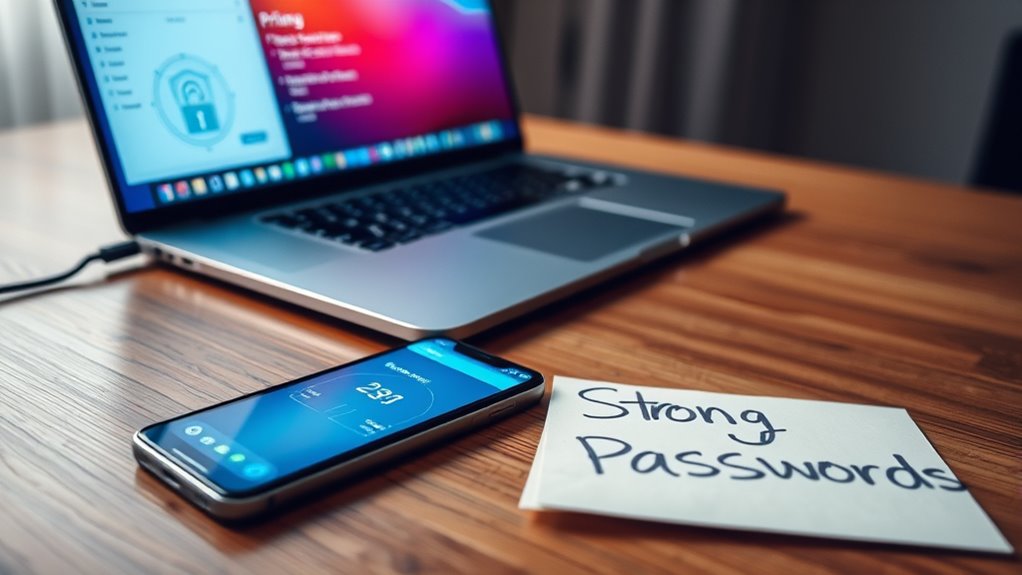
To safeguard your online accounts from hackers, it is essential to use strong, unique passwords for each service. Relying on the same password across multiple accounts increases vulnerability, so invest in a reliable password management tool to generate and store complex passwords securely. Avoid simple or easily guessable passwords like “password123” or your birthdate. Additionally, enable two-factor authentication whenever possible. This extra layer of security requires a second verification step, such as a code sent to your phone, making it much harder for intruders to access your accounts even if they discover your password. Combining strong passwords with two-factor authentication considerably reduces the risk of unauthorized access and keeps your personal information safer online.
Limit the Information You Share Online and Be Mindful of Your Digital Footprint

Since the information you share online can be easily accessed and tracked, it’s important to be intentional about what you post. Your digital footprint grows with every piece of online information you share, which can be used to build profiles or target ads. To protect your privacy, limit personal details in posts and profiles. Be cautious about sharing location, contact info, or daily routines. Regularly review privacy settings on social media platforms. Consider deleting outdated or unnecessary accounts. Remember, even seemingly harmless information can be combined to compromise your privacy or security. By controlling your online information, you reduce your digital footprint and make it harder for others to track or misuse your data. Your online presence should reflect your privacy priorities.
Browse in Incognito or Private Mode and Clear Your Cookies Frequently
Using private browsing modes like Incognito or Private mode can considerably reduce the amount of data stored on your device while you surf the web. These modes help limit tracking by preventing your browser from saving cookies, history, and other browsing data. However, they don’t block all tracking, so practicing good cookie management remains essential. Clearing your cookies frequently disrupts persistent trackers and reduces the chances of your browsing habits being monitored over time. Make it a habit to delete cookies regularly and switch between private and normal modes based on your activity. This simple step enhances your privacy, making it harder for advertisers and third parties to build detailed profiles based on your online behavior. Stay vigilant and keep your browsing habits private.
Frequently Asked Questions
How Do I Choose the Best VPN for My Needs?
To choose the best VPN for your needs, start by considering VPN protocols like OpenVPN or WireGuard for security and speed. Look for a provider with diverse server locations to access content globally and guarantee reliable connection options. Check user reviews and privacy policies to verify no data logging. Ultimately, pick a VPN that balances robust protocols, wide server coverage, and trustworthiness to protect your online privacy effectively.
Can Social Media Privacy Settings Be Easily Bypassed?
Social media settings can be surprisingly simple to bypass, exposing your privacy loopholes and account vulnerabilities. Hackers and bad actors often exploit default or weak privacy protections, so don’t assume your settings are foolproof. You must regularly review and tighten your privacy controls, be cautious about sharing personal info, and stay alert to potential breaches. Protecting your profile from prying eyes requires proactive, persistent privacy practices.
Are Encrypted Messaging Apps Truly Secure?
Encrypted messaging apps are generally secure because they use end-to-end encryption, meaning only you and your recipient can read the messages. However, they might not protect your metadata, like who you’re talking to and when. While encryption keeps content private, be aware that metadata can still reveal your communication patterns. To enhance privacy, choose apps that prioritize metadata protection and regularly update your security settings.
How Often Should I Update My Devices for Optimal Security?
Did you know that 60% of cyberattacks exploit unpatched software vulnerabilities? You should update your devices at least once a month to guarantee peak security. Regular software updates fix bugs and patch device vulnerabilities, making it harder for hackers to access your data. Staying current with updates minimizes risk, so make it a habit to check for new versions frequently. Your privacy depends on keeping your devices secure.
What Are Effective Ways to Minimize My Online Digital Footprint?
To minimize your digital footprint and enhance online anonymity, start by reviewing your privacy settings on social media and limiting the personal info you share. Use strong, unique passwords and consider a VPN to hide your IP address. Regularly delete old accounts and search for your name online to see what info is public. These steps help reduce your online presence and keep your digital footprint smaller and more private.
Conclusion
By taking these simple steps, you’re practically donning a digital invisibility cloak, shielding yourself from prying eyes and lurking threats. Think of your online privacy as your most precious treasure—guard it fiercely! The internet may be a wild jungle, but with these tips, you hold the power to stay hidden, safe, and in control. Don’t just browse—be the master of your digital destiny and keep your private life truly private!