TL;DR

Get the latest gadgets delivered free — and shop member deals
- Fast, free delivery on millions of items
- Access to Prime Big Deal Days deals on October 6–7
- Prime Video, Amazon Music and more included
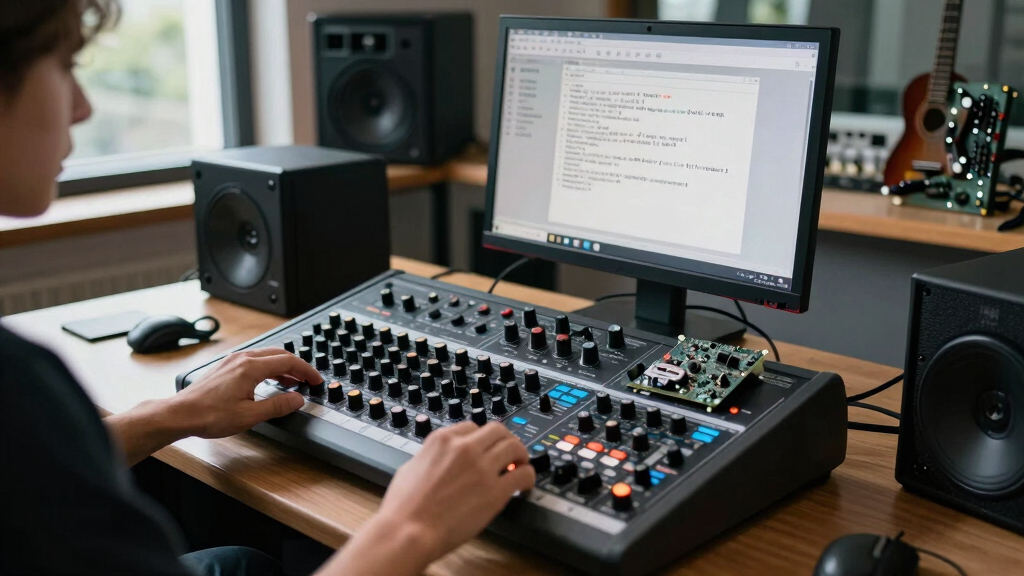
A developer has created a DIY x86 BIOS and successfully booted MS-DOS on the Behringer DDX3216, which contains a built-in AMD Elan SC300 386 processor. This breakthrough demonstrates the device’s potential for running full operating systems.
A hobbyist developer has successfully booted MS-DOS on the Behringer DDX3216 by creating a custom x86 BIOS from scratch, leveraging the device’s AMD Elan SC300 processor. This achievement highlights the hardware’s potential beyond its original purpose and opens new avenues for DIY hardware hacking.
The Behringer DDX3216 contains a built-in AMD Elan SC300 386SX processor, along with ROM and RAM components compatible with x86 architecture. The developer, who initially aimed to understand the device’s boot process, designed a custom BIOS that initializes the processor and enables it to load MS-DOS 6.22. This process involved reverse-engineering the reset vector, writing assembly code to disable interrupts, and implementing a minimal BIOS to facilitate booting.
Using a combination of hardware knowledge and programming skills, the developer successfully placed a custom reset vector at the correct memory location (0xFFF0) and executed a bootstrap sequence that transitioned the device into real mode. This allowed the device to load and run MS-DOS, with further efforts underway to boot FreeDOS 1.4. The project demonstrates that the device’s hardware is capable of supporting full x86 operating systems, contrary to its intended use as a digital audio workstation.
Potential for Hardware Hacking and Retro Computing
This development is significant because it reveals that the Behringer DDX3216’s hardware, specifically the AMD Elan SC300 processor, is capable of running full x86 operating systems like MS-DOS and FreeDOS. For hobbyists and retro computing enthusiasts, this opens up possibilities for repurposing or extending the device’s functionality beyond its original audio mixing purpose. It also underscores the broader potential for repurposing embedded hardware in consumer devices through DIY BIOS development.
As an affiliate, we earn on qualifying purchases.
Hardware and Software Challenges in Custom BIOS Development
The Behringer DDX3216 was thought to be a specialized audio device, but it contains hardware compatible with the x86 architecture, including an AMD Elan SC300 processor. Historically, developing custom BIOS for such embedded systems has been difficult due to lack of source code and proprietary restrictions. The developer’s efforts involved reverse-engineering the reset vector, understanding the x86 boot process, and writing assembly code to initialize the processor and load an operating system.
Previous attempts to find or obtain BIOS source code from manufacturers or third-party vendors failed, as the relevant source code for the SC300 was unavailable or outdated. This prompted the developer to create a BIOS from scratch, guided by knowledge of the x86 architecture and the device’s hardware specifications. The successful boot of MS-DOS marks a significant milestone in this process, demonstrating the feasibility of such DIY projects on similar hardware.
“Creating a custom BIOS for the SC300 was a complex but rewarding challenge that proved the hardware’s potential for running full x86 operating systems.”
— Developer
MS-DOS compatible embedded hardware
As an affiliate, we earn on qualifying purchases.
As an affiliate, we earn on qualifying purchases.
Remaining Hardware Compatibility and Stability Questions
While the initial boot of MS-DOS has been achieved, it remains unclear how stable and fully functional the system is under various workloads. Compatibility with other DOS-based software, drivers, or hardware peripherals has not yet been tested extensively. Additionally, the long-term stability of the custom BIOS and its ability to support future OS versions is still uncertain.
As an affiliate, we earn on qualifying purchases.
Next Steps for Hardware Exploration and Software Compatibility
The developer plans to refine the BIOS further to improve stability and expand hardware support, including peripherals and storage devices. Testing with other operating systems like FreeDOS 1.4 is underway, and efforts are being made to optimize performance. Community sharing of the BIOS code could enable broader experimentation and development on similar embedded systems.
Behringer DDX3216 hardware hacking tools
As an affiliate, we earn on qualifying purchases.
As an affiliate, we earn on qualifying purchases.
Key Questions
Can the DDX3216 run other operating systems besides MS-DOS?
It is not yet confirmed, but the hardware appears capable of supporting other x86-compatible OSes like FreeDOS or potentially lightweight Linux distributions, pending further development and testing.
Is this project reversible or safe for the device?
Modifying the BIOS and boot process carries risks of bricking the device. The developer recommends careful testing and backup procedures before attempting to run custom firmware on the hardware.
Will this enable new features for the DDX3216?
Potentially, yes. Running a full OS could allow for custom software, improved interfaces, or hardware control beyond the original audio functions, but practical implementations are still in development.
How difficult is it to replicate this process on similar hardware?
This requires advanced knowledge of embedded systems, assembly programming, and reverse-engineering. It is not recommended for casual users but feasible for experienced hobbyists.
Source: Hacker News
Evergreen bestsellers Picks
bestsellers
As an affiliate, we earn on qualifying purchases.