
Advancements in electric vehicles and smart home tech help you live greener by reducing pollution, optimizing energy use, and integrating renewable sources like solar and wind. EVs cut emissions, especially with improved batteries and fast chargers. Smart systems automate heating, cooling, and lighting to save energy, while solar panels and wind turbines generate clean power. IoT devices monitor and control consumption, making your home more sustainable. Keep exploring to discover how these innovations can transform your eco-friendly lifestyle.
Key Takeaways
- Electric vehicles reduce urban pollution and support cleaner air through government incentives and cleaner transportation options.
- Smart home systems optimize energy use via automated controls, real-time monitoring, and integration with renewable energy sources.
- Wireless and fast-charging technologies improve EV charging efficiency, encouraging widespread adoption and reducing environmental impact.
- Renewable energy integration, including solar and wind, powers homes and EVs sustainably, lowering reliance on fossil fuels.
- IoT-enabled sensors and energy management systems enhance home sustainability by reducing waste, detecting leaks, and optimizing energy consumption.
Top picks for "electric cars smart"
Open Amazon search results for this keyword.
As an affiliate, we earn on qualifying purchases.
The Rise of Electric Vehicles and Their Environmental Impact
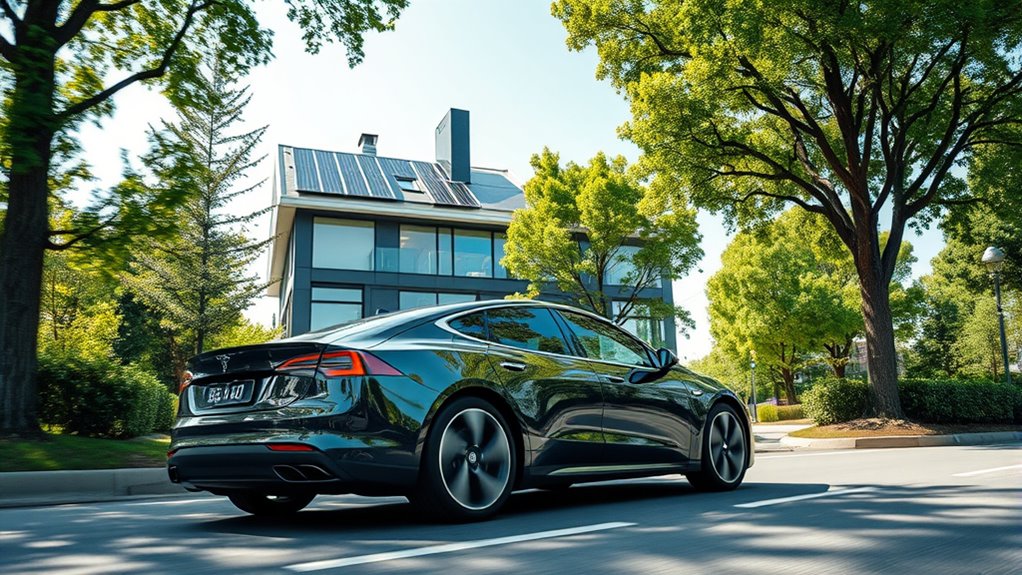
Electric vehicles have quickly gained popularity as a cleaner alternative to traditional gasoline-powered cars, and their environmental impact is a vital reason why. By reducing urban pollution, EVs help improve air quality in crowded cities where exhaust emissions are a major concern. Governments worldwide recognize this benefit and often offer incentives like tax credits or rebates to encourage adoption. These incentives make electric cars more affordable, motivating you to choose a greener option. With fewer tailpipe emissions, EVs directly cut down pollutants contributing to smog and health problems. As more people switch to electric, cities experience cleaner air and healthier environments. The push from government programs accelerates this shift, making electric vehicles a crucial part of reducing the urban pollution crisis. Additionally, innovations such as biohacking techniques are being explored to further enhance the sustainability and health benefits of modern living. Moreover, advances in AI-generated technologies are helping optimize EV battery performance and charging efficiency, supporting broader adoption. Increasing awareness of renewable energy sources also plays a significant role in making electric vehicle use even more environmentally friendly, especially as the integration of smart grid systems improves energy distribution and utilization. Embracing energy storage solutions further enhances the sustainability of electric mobility by ensuring a reliable and clean power supply.
Innovations in Battery Technology and Charging Infrastructure
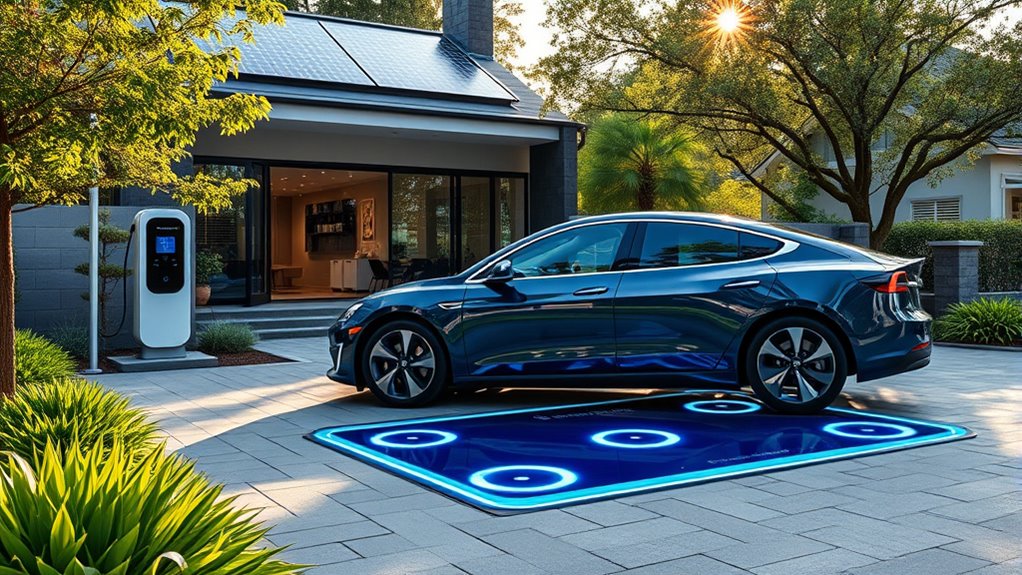
Advancements in battery technology and charging infrastructure are driving the widespread adoption of electric vehicles. Wireless charging allows you to simply park your EV over a pad, eliminating the need for cables and reducing charging time. This convenience encourages more frequent top-ups and longer trips. Meanwhile, solid state batteries offer higher energy density, faster charging, and improved safety compared to traditional lithium-ion batteries. These innovations mean longer driving ranges and shorter charging stops, making electric cars more practical for everyday use. Additionally, integrating Free Floating systems into urban environments can optimize charging station placement and enhance accessibility. Charging stations are also becoming more widespread and efficient, supporting rapid charging capabilities. Together, wireless charging and solid state batteries are transforming how you recharge your vehicle, making electric transportation more seamless, reliable, and sustainable. Furthermore, battery innovation continues to push the boundaries of vehicle performance and sustainability, paving the way for a cleaner future. New charging technologies are also helping to reduce wait times and expand infrastructure coverage, making EV ownership even more convenient. As the EV market grows, manufacturers are investing heavily in these technological advancements to meet increasing consumer demand.
How Smart Home Systems Optimize Energy Consumption
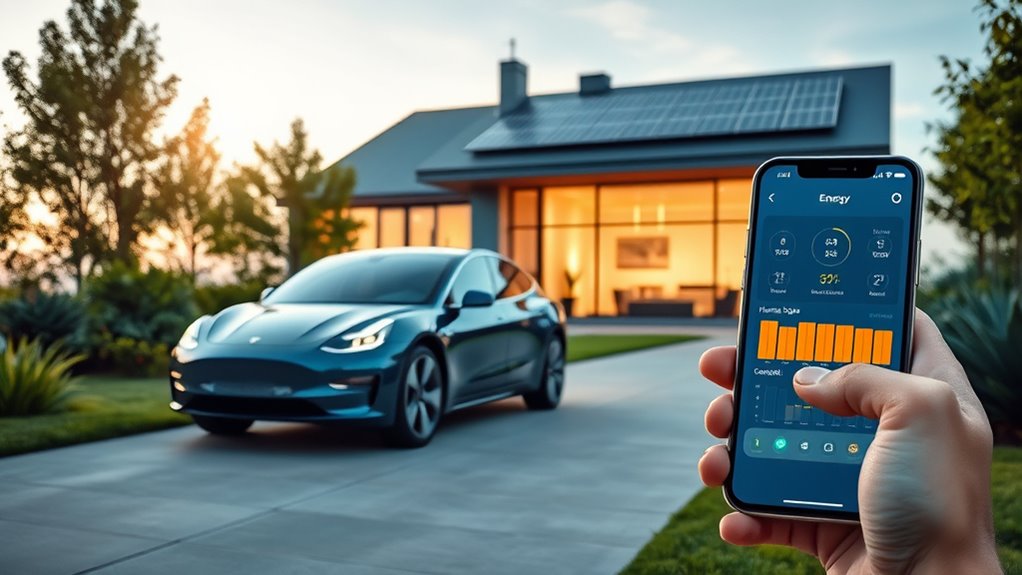
Smart home systems help you save energy through automated management that adjusts settings based on your routines. You can also monitor your energy usage in real time, giving you immediate insights into consumption patterns. This combination guarantees your home stays efficient without sacrificing comfort. Additionally, integrating energy-efficient appliances can further reduce your overall environmental impact, especially when paired with smart grid technology that optimizes energy distribution and storage. Incorporating automated control systems can enhance your home’s efficiency by seamlessly coordinating various devices and functions. Understanding home energy management principles can empower you to make more informed decisions about your energy use. Employing energy monitoring tools can provide a clearer picture of your consumption habits and help identify areas for improvement.
Automated Energy Management
Have you ever wondered how your home can automatically adjust energy use to save resources and reduce costs? Smart thermostats play a key role in automated energy management by learning your schedule and preferences. They optimize heating and cooling, ensuring your home stays comfortable while reducing unnecessary energy consumption. These devices communicate with your HVAC system and other smart appliances to fine-tune energy use throughout the day. This automation improves energy efficiency without requiring manual adjustments. With intelligent algorithms, your system detects when you’re away or asleep and adjusts settings accordingly. Additionally, net worth can influence the quality and capabilities of smart home systems you choose, enhancing overall efficiency. Incorporating home automation technology allows for more seamless integration and control of various devices within your household. Integrating local automation features allows for more personalized and responsive energy management tailored to your household’s needs. As a result, you save money on utility bills and reduce your carbon footprint. Energy management systems make your home smarter, more sustainable, and more cost-effective, all while maintaining comfort.
Real-Time Usage Monitoring
By continuously tracking energy use in real time, smart home systems can identify where and when your home consumes the most power. Smart meters play a pivotal role by providing instant data, giving you clear insights into your energy consumption patterns. Using advanced usage analytics, your system can detect peak usage times and inefficient appliances. This real-time information allows you to adjust habits, such as running high-energy devices during off-peak hours. Many smart home platforms automatically optimize settings to reduce waste, saving you money and lowering your carbon footprint. With ongoing monitoring, you gain a deeper understanding of your energy footprint, empowering you to make smarter choices. Energy efficiency is further enhanced when these systems can adapt to your lifestyle patterns over time. Additionally, understanding your field‑of‑view helps in positioning devices for optimal monitoring and response. Overall, integrating smart energy management solutions can significantly boost your home’s sustainability. Ultimately, real-time usage monitoring helps you create a more sustainable, energy-efficient home with minimal effort. Incorporating automated adjustments based on real-time data enables your system to respond dynamically, further optimizing energy consumption and reducing waste. Moreover, energy-saving tips derived from these insights can guide you toward more eco-friendly habits.
The Role of Renewable Energy Sources in Powering Smart Homes
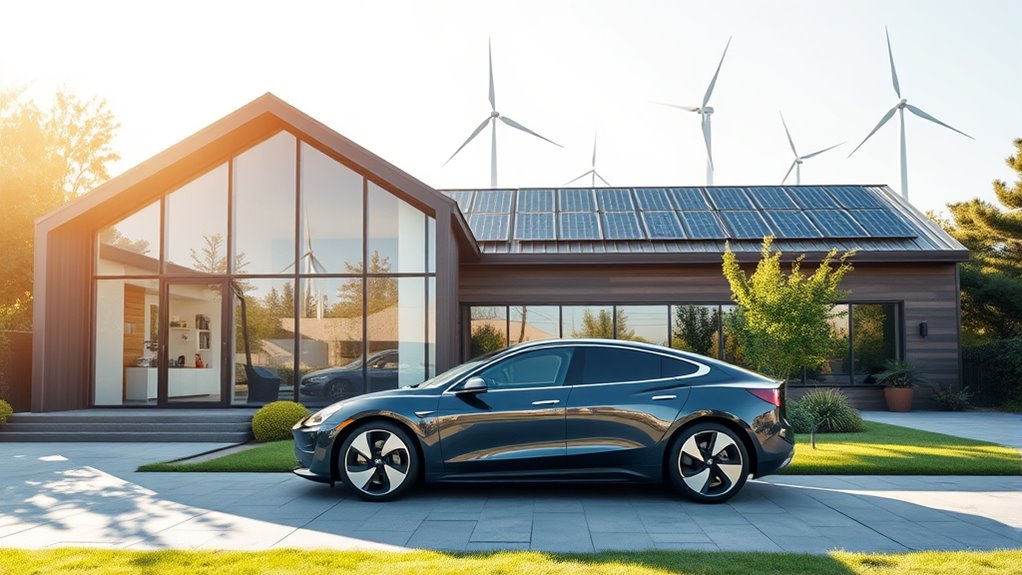
Renewable energy sources like solar and wind power are transforming how smart homes get their electricity. By integrating solar panels and wind turbines, you can generate clean energy right at home, reducing reliance on the grid. Battery storage solutions then help you store excess power for use during cloudy days or calm nights. Embracing renewable energy technology can further optimize your home’s energy efficiency and environmental impact. Additionally, advanced energy management systems enable smarter distribution and usage of generated power, maximizing sustainability.
Solar Power Integration
Integrating solar power into smart homes allows you to harness clean, abundant energy directly from the sun, reducing reliance on traditional electricity sources. By installing solar panels, you generate renewable energy that can power your home efficiently. Coupled with energy storage systems, you store excess energy for use during cloudy days or at night, ensuring consistent power supply. This setup not only cuts your energy bills but also lowers your carbon footprint. Consider the following options:
| Solar Panel Type | Energy Storage Method | Efficiency Rating |
|---|---|---|
| Monocrystalline | Lithium-ion batteries | 18-22% |
| Polycrystalline | Lead-acid batteries | 13-16% |
| Thin-Film | Flow batteries | 10-12% |
This integration makes your home smarter and greener.
Wind Energy Contribution
Harnessing wind energy enhances your smart home’s reliance on clean power sources. Wind turbines capture the kinetic energy of the breeze, converting it into electricity through effective energy harvesting. Modern turbines are designed to operate efficiently even at low wind speeds, maximizing your renewable energy intake. By integrating wind power, you reduce dependence on fossil fuels, lowering your carbon footprint. Wind energy offers a consistent, sustainable source that complements solar power, especially during cloudy or calm days. Smart home systems can seamlessly connect to wind turbines, allowing real-time monitoring and optimized energy use. This synergy ensures your home remains eco-friendly and energy-efficient, helping you contribute to a greener future while enjoying the benefits of renewable power.
Battery Storage Solutions
Battery storage solutions play a crucial role in ensuring your smart home can reliably utilize renewable energy sources. High energy density batteries store more power in less space, maximizing efficiency. Thermal stability is essential for safety and longevity, preventing overheating during charge and discharge cycles. With advanced storage, you can harness solar or wind energy even when these sources aren’t actively generating power. This guarantees a steady energy supply, reducing reliance on the grid. Here’s a simplified comparison:
| Feature | Importance | Impact |
|---|---|---|
| Energy Density | Stores more energy in less space | Maximizes storage capacity |
| Thermal Stability | Prevents overheating | Ensures safety and durability |
| Charging Speed | Quickly stores excess energy | Supports real-time energy use |
| Longevity | Maintains performance over time | Reduces replacement costs |
These solutions make your smart home more resilient and sustainable.
Connected Devices and the Internet of Things in Sustainable Living
Connected devices and the Internet of Things (IoT) are transforming how we approach sustainable living by making homes smarter and more efficient. You can leverage wireless sensors to monitor energy use, detect leaks, and optimize heating and cooling. Data analytics then process this information, giving you actionable insights to reduce waste and improve efficiency. Here are three ways IoT helps you live greener:
IoT devices help create smarter, more efficient homes by monitoring energy, detecting leaks, and optimizing comfort.
- Sensors track energy consumption in real-time, helping you identify areas to cut back.
- Automated systems adjust lighting and temperature based on occupancy, saving power.
- Data analysis predicts maintenance needs, preventing unnecessary repairs and resource use.
Benefits of Automated Home Management for Reducing Waste

Automated home management systems actively work to reduce waste by optimizing energy and resource use with minimal effort from residents. For example, smart irrigation systems adjust watering schedules based on weather data, preventing overwatering and conserving water. These systems ensure your home only uses what’s necessary, minimizing waste and lowering utility bills. Automated controls also regulate lighting, heating, and cooling, preventing unnecessary energy consumption. By integrating sensors and timers, your home can automatically respond to changing conditions, reducing unnecessary resource use. This not only helps the environment but also saves you money. Overall, automated home management enhances waste reduction by making resource use smarter, more efficient, and less wasteful, all while simplifying your daily routines.
Challenges and Future Trends in Green Technology Integration
Have you ever wondered what stands in the way of fully integrating green technologies into everyday life? Policy hurdles and technological disparities present real challenges. First, policymakers often delay or restrict green initiatives due to budget constraints or political disagreements. Second, technological disparities mean not everyone has access to the latest eco-friendly innovations, creating a divide. Third, infrastructure limitations, like charging stations for electric cars, slow down adoption. While these issues remain, future trends point toward increased investment in green R&D, more unified policies, and infrastructure expansion. By addressing policy hurdles and bridging technological gaps, you’ll see smarter, greener homes and transportation becoming more accessible and seamless. The path ahead involves overcoming obstacles to make eco-friendly living a universal reality.
Practical Tips for Adopting Eco-Friendly Tech at Home
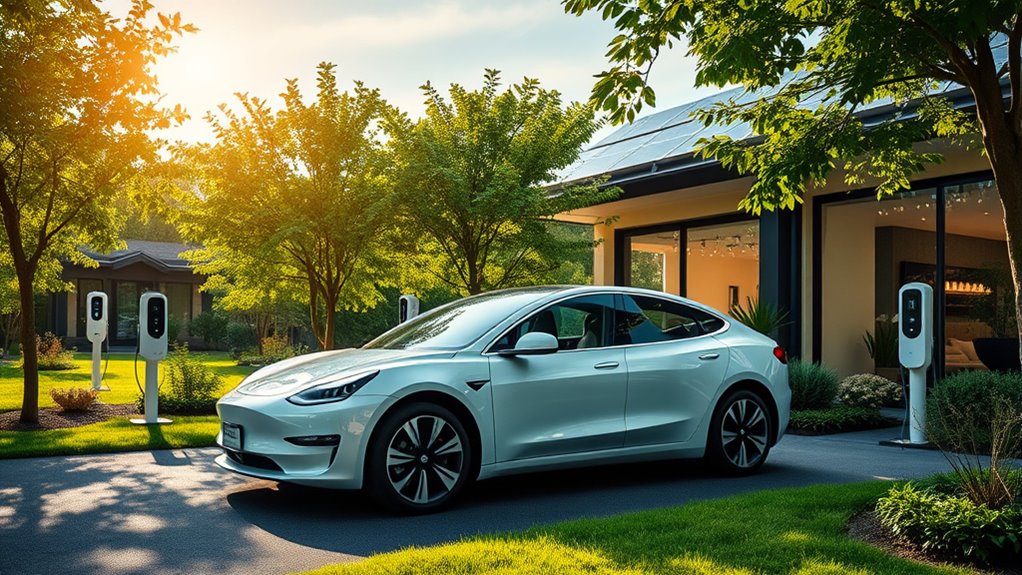
As green technologies become more accessible, adopting eco-friendly solutions at home is easier than ever. Start with simple actions like DIY composting; it reduces waste and creates nutrient-rich soil for your garden. Incorporate eco-friendly cleaning products to cut down on harmful chemicals and minimize your environmental impact. You can also upgrade to smart thermostats to optimize energy use and lower utility bills. Installing solar panels, if feasible, can notably cut your carbon footprint. Make small changes consistently, like switching to LED bulbs or using water-saving fixtures. Educate yourself about new tech options and stay updated on eco innovations. By taking these practical steps, you actively contribute to a greener future while creating a healthier home environment.
Frequently Asked Questions
How Do Electric Vehicles Compare in Cost Over Their Lifespan?
You’ll find that electric vehicle costs tend to be lower over their lifespan compared to traditional cars, mainly due to reduced fuel and maintenance expenses. With a lifespan comparison, EVs often last longer because of fewer moving parts and advanced battery technology. Although the upfront price is higher, the long-term savings on fuel and repairs make electric vehicles a more economical choice over time, especially if you prioritize sustainability.
What Are the Limitations of Current Home Automation Energy Systems?
Did you know that only 30% of smart home energy systems effectively optimize energy use? You might find that current home automation energy systems have limitations like inadequate energy storage, which restricts their ability to store excess solar power. Also, the user interface can be clunky, making it hard for you to monitor or adjust settings easily. These issues hinder maximizing energy efficiency and cost savings in your smart home.
How Reliable Are Renewable Energy Sources for Continuous Home Power?
Renewable energy sources can be quite reliable for continuous home power, but you should consider solar variability and grid stability. Solar power depends on sunlight, which varies daily and seasonally, so you might need backup systems or energy storage. Maintaining grid stability is essential, and integrating smart tech helps manage supply and demand effectively. With proper planning and technology, you can rely on renewables for consistent, eco-friendly energy.
What Privacy Concerns Arise With Iot Devices in Smart Homes?
You should be aware that IoT devices in smart homes raise privacy concerns related to data security and data ownership. As you connect more devices, sensitive information like your habits and preferences can be vulnerable to hacking or misuse. You might not always know who owns your data or how it’s being shared. To protect yourself, verify your devices have strong security measures and understand your rights regarding data ownership.
How Can Consumers Effectively Evaluate Green Technology Options?
Think of choosing green tech like picking a ripe fruit; you want the best quality. You should look for eco-friendly certifications that verify sustainability claims. Immerse yourself in user feedback analysis to see real-world experiences. Compare options based on energy efficiency, durability, and environmental impact. Trust reputable sources, and don’t hesitate to ask questions. This way, you make informed choices that truly support a greener future.
Conclusion
So, next time you park your electric car and command your smart home to save energy, remember—you’re basically starring in a sci-fi movie where everyone’s greener side gets a high-tech upgrade. With batteries that last longer than your phone’s battery life and smart devices that outwit your energy habits, you’re living in a future where eco-friendly is the new cool. Just don’t forget to charge your phone—your eco-avatar depends on it.