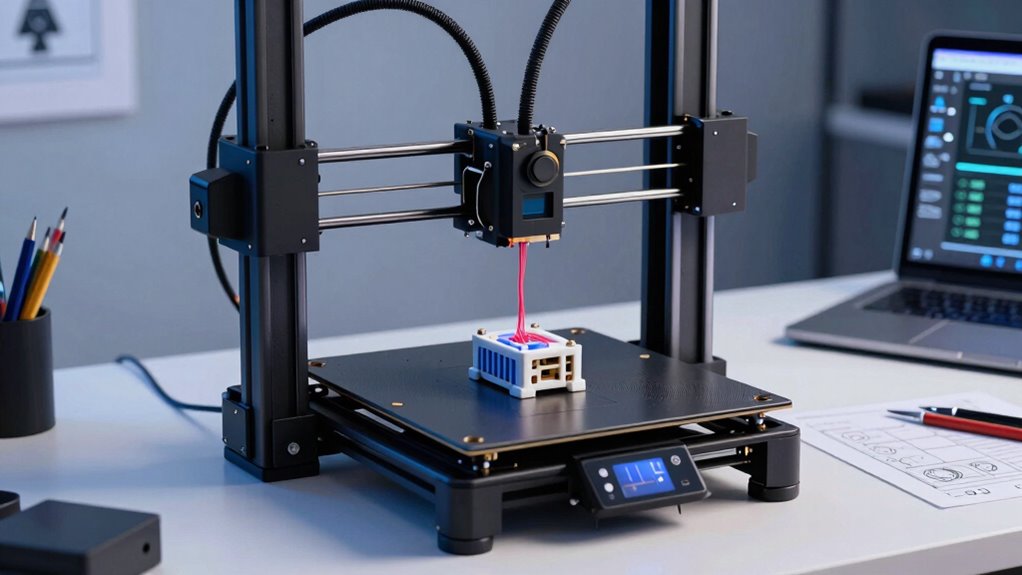

With 3D printing at home, you can turn digital designs into real gadgets quickly and affordably. By choosing the right printer, materials, and software, you can craft custom items like phone holders, tools, or decor to suit your needs. The technology has evolved to offer high detail, strong finishes, and endless customization options. Keep exploring, and you’ll discover how to create your own innovative gadgets right in your living space.
Key Takeaways
- 3D printing enables designing and creating custom gadgets tailored to individual needs and preferences at home.
- It allows for rapid prototyping and iterative improvements of gadgets without external manufacturing delays.
- A wide range of printable materials offers options for durable, flexible, or aesthetic gadget components.
- Home 3D printers facilitate personalization and experimentation with shapes, textures, and colors.
- Responsible use involves understanding material properties, safety precautions, and legal considerations for DIY gadget creation.
Top picks for "print could gadget"
Open Amazon search results for this keyword.
As an affiliate, we earn on qualifying purchases.
The Evolution of 3D Printing Technology

The evolution of 3D printing technology has transformed how we create and innovate. It all began with early historical breakthroughs, like Chuck Hull’s invention of stereolithography in the 1980s, which marked a key technological milestone. This breakthrough introduced the first practical method to build objects layer by layer, opening the door to rapid prototyping. Over time, advancements such as fused deposition modeling (FDM) and selective laser sintering (SLS) expanded capabilities, making 3D printing faster, more precise, and accessible. Each technological milestone pushed the boundaries of what’s possible, enabling both industries and hobbyists to produce complex designs. Today, this ongoing evolution continues to revolutionize manufacturing, empowering you to create custom gadgets right at home. High-resolution printing has further improved detail and surface quality in modern 3D printers. Additionally, the integration of advanced materials has broadened the range of functional and durable objects that can be produced through 3D printing. A cost-effective approach has also made 3D printing more appealing for individual users and small businesses. Moreover, ongoing research into wave and wind energy applications demonstrates the versatility of 3D printing for sustainable innovations. The development of new materials continues to enhance the strength, flexibility, and environmental friendliness of 3D printed objects.
Essential Components of a Home 3D Printing Setup
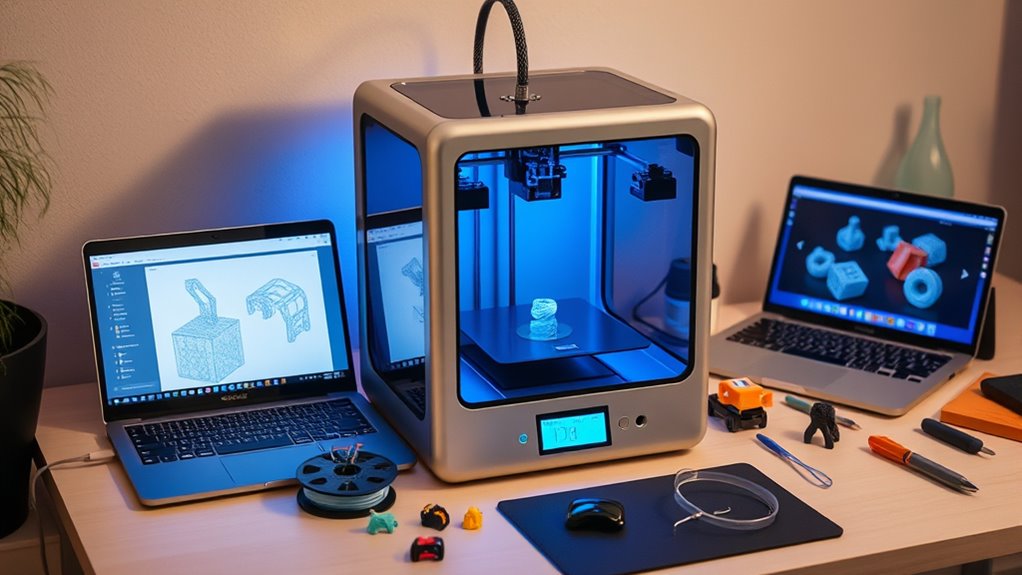
Setting up a home 3D printing station requires selecting key components that guarantee reliable and high-quality results. First, you need proper filament storage; storing filament in a dry, airtight container prevents moisture absorption that can cause print issues. Ensuring your filament is organized and accessible will streamline your workflow. Next, focus on print bed calibration—accurately leveling and calibrating the bed is essential for successful prints, helping layers adhere properly and preventing warping. A well-calibrated bed provides a flat, stable surface, reducing failed prints and material waste. Additionally, choose a reliable 3D printer with compatible features. Together, filament storage and print bed calibration form the foundation for consistent, high-quality 3D prints at home. Proper understanding of Free Floating concepts can help optimize your 3D printing environment for better results. Incorporating ventilation considerations can also improve safety and reduce fumes during printing. Moreover, paying attention to thermal management ensures consistent print quality and prolongs your equipment’s lifespan, which aligns with the importance of quality assurance in technical setups.
Designing Your Own Gadgets: Software and Creativity
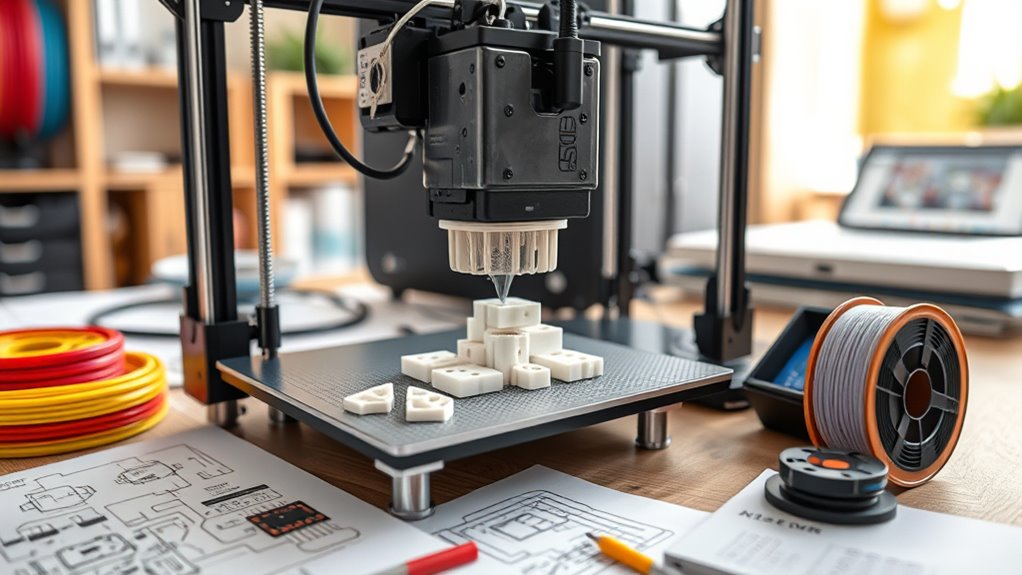
Once your home 3D printing setup is ready, the next step is to bring your ideas to life through design. You’ll use 3D modeling software to create or customize your gadget designs. Many programs, like Tinkercad or Fusion 360, offer user-friendly interfaces suitable for beginners and advanced users alike. Ensuring software compatibility with your computer and printer is essential for a smooth workflow. You can start by sketching your ideas and then refining them into detailed models. Creativity plays a key role here—think about functionality, aesthetics, and how parts will fit together. With the right tools and imagination, you can design gadgets tailored exactly to your needs, ready to be printed and assembled at home.
Materials Used in 3D Printing and Their Applications

Choosing the right material is essential for successful 3D printing, as different substances offer unique strengths and limitations. You’ll find a variety of options suited for diverse applications. For eco-conscious projects, biodegradable plastics are popular because they break down naturally, reducing environmental impact. Metal composites combine metals with other materials to create durable, high-strength parts ideal for functional gadgets. Additionally, thermoplastics like ABS and PLA are versatile for prototyping and everyday use. You can also explore resin-based materials for highly detailed, smooth finishes. Understanding the properties of 3D printing materials influences the final product’s strength, flexibility, and appearance, so selecting the appropriate one depends on your gadget’s purpose. Moreover, staying informed about the astrological signs associated with certain traits can inspire creative design choices or personalization in your projects. Being aware of the material characteristics can help you optimize your printing process and achieve better results, especially when considering the vetted – floating on water nature of some materials for specific applications.
Practical Projects: Examples of Gadgets You Can Make
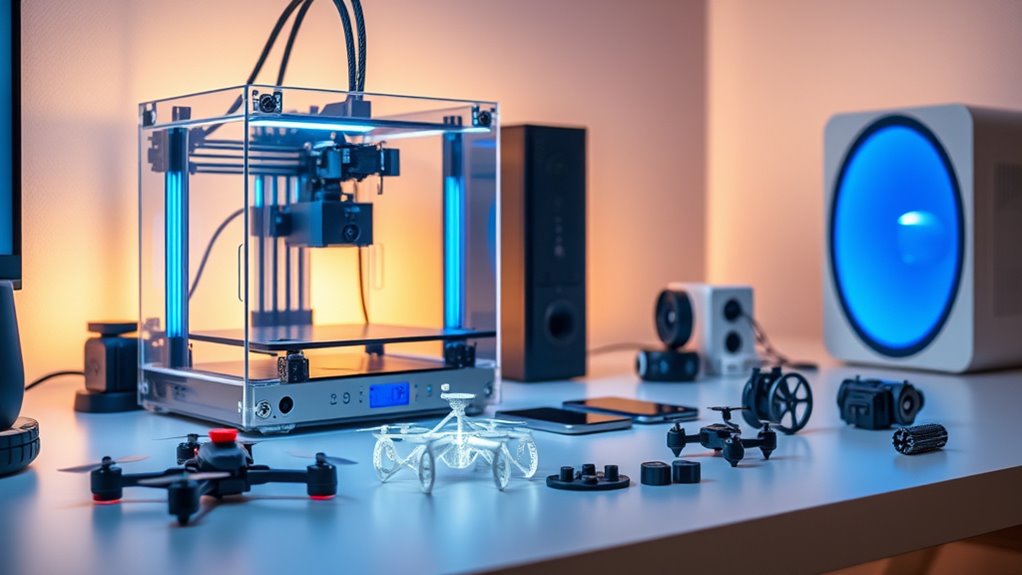
You can create practical gadgets like custom phone holders, personalized toolkits, or unique home decor with 3D printing. These projects let you tailor items to your needs and style, making everyday objects more functional and personal. Exploring these examples shows just how versatile 3D printing can be for practical, everyday use. Additionally, incorporating artistry and craftsmanship into your designs can elevate simple objects into pieces of functional art. By focusing on unique high-quality products, you can ensure your creations stand out and add a distinctive touch to your home or gifts.
Custom Phone Holders
Creating custom phone holders with 3D printing offers a practical way to tailor your accessories to your needs. You can achieve perfect design customization by adjusting size, angle, and style to fit your environment. Material selection is vital, allowing you to choose from durable plastics, flexible filaments, or even lightweight composites for different uses. Here are some ideas to think about: 1. Unique shapes that match your decor or personal style. 2. Adjustable angles for ideal viewing. 3. Compact designs for portability and storage. Additionally, considering the heat distribution properties of your chosen filament can help ensure the durability and longevity of your printed gadget. Regular use of appropriate materials can also enhance the collagen production, helping your accessories last longer and maintain their shape over time.
Personalized Toolkits
Ever considered designing your own personalized toolkit with 3D printing? You can create custom tools tailored to your specific needs, making DIY assembly easier and more efficient. Printing your own screwdriver handles, wrench holders, or specialty prying tools means you always have the right tool on hand. With a 3D printer, you can produce durable, lightweight parts that fit perfectly in your hand. Maintenance tips include using high-quality filament to ensure longevity and regularly checking for cracks or wear. You can even design modular components that snap together, reducing clutter. This approach saves money and provides the satisfaction of crafting tools suited exactly for your projects. Personalizing your toolkit not only enhances your DIY capabilities but also encourages ongoing innovation in home repairs and hobby projects.
Unique Home Decor
Designing personalized gadgets with a 3D printer opens up exciting possibilities for home decor. You can craft one-of-a-kind pieces that reflect your style and creativity. For example, you might create:
- Custom DIY wall art that adds a modern touch and becomes a conversation starter.
- Unique plant pots with intricate designs, perfect for showcasing your favorite greenery.
- Decorative figurines or sculptures, turning simple objects into eye-catching accents.
Using a 3D printer, you can easily experiment with different shapes, textures, and colors. This approach allows you to tailor your home decor to match your personality while maintaining practicality. Incorporating Italian craftsmanship into your projects makes customizing your space even more innovative. With a little planning, you’ll be able to produce stunning pieces that make your space truly yours.
Challenges and Considerations for Home 3D Printing

When you try 3D printing at home, you’ll face limitations with the materials available, which can affect your project’s durability and finish. Safety and regulatory concerns are also important, as improper use or faulty printers can pose risks. Considering these challenges helps you make smarter choices and avoid common pitfalls. Additionally, understanding material properties is crucial for selecting the right filament or resin for your specific needs.
Limitations of Material Choices
One of the main challenges in home 3D printing is choosing the right materials, as not all filaments suit every project. Material durability varies markedly, affecting how well your printed gadgets hold up over time. You’ll also face color limitations, since not all filaments come in your preferred shades, restricting aesthetic options. When selecting materials, consider:
- Strength and flexibility – for functional parts that need durability
- Temperature resistance – if your gadget will face heat or friction
- Color availability – to match your design preferences
Additionally, understanding air fryer technology can help you choose materials that withstand specific environmental conditions, especially when printing gadgets meant for kitchen use. These factors influence the success of your print, especially when aiming for both performance and visual appeal. Recognizing the importance of material properties can help you make smarter choices for home printing projects, and exploring StyleGuru.org can provide additional insights into material selection and finishing techniques. It’s also beneficial to stay informed about material testing methods to ensure your chosen filament meets safety and quality standards.
Safety and Regulatory Concerns
Safety and regulatory concerns are critical considerations when you’re home 3D printing, as improper handling or use of materials can pose health risks and legal issues. You need to follow safety regulations to prevent exposure to harmful fumes or debris, especially when working with certain plastics or resins. Additionally, printing items that infringe on intellectual property rights can lead to legal trouble. Be aware of copyright laws and avoid replicating proprietary gadgets or designs. Ensuring proper ventilation and using protective gear helps minimize health hazards. Also, stay informed about local laws governing home manufacturing and the use of 3D printers. By respecting safety regulations and intellectual property rights, you can safely enjoy the benefits of home 3D printing without risking legal or health issues. Moreover, understanding the safety considerations for Vetted – Mother Baby Kids products can help you make informed choices about what materials and designs are appropriate for home use.
Frequently Asked Questions
What Safety Precautions Should I Take When Operating a Home 3D Printer?
When operating your home 3D printer, you should wear safety gear like gloves and goggles to protect your skin and eyes. Make certain proper ventilation to avoid inhaling fumes from heated plastics, and always print in a well-ventilated area or near an exhaust fan. Keep the workspace clean, and never leave the printer unattended while it’s running. Following these precautions helps keep you safe during your 3D printing projects.
How Can I Troubleshoot Common Issues With 3D Printers?
Imagine your 3D printer turning into a rebellious artist, refusing to cooperate! To troubleshoot, check filament types—some need specific settings—and guarantee proper print bed adhesion, so your masterpiece doesn’t warp or detach. Clear clogs, level the bed, and adjust temperature settings. If issues persist, inspect wires and nozzle for blockages. With patience, you’ll tame your printer’s wild streak and produce flawless prints every time!
Are There Environmental Impacts of 3D Printing Materials I Should Consider?
Yes, there are environmental impacts to contemplate with 3D printing materials. You should prioritize recyclable materials to reduce waste and lessen pollution concerns. Some filaments, like PLA, are biodegradable and eco-friendly, but others release harmful fumes or microplastics. Always check material sustainability and dispose of leftover filament responsibly. By choosing greener options, you can minimize your environmental footprint while enjoying the benefits of at-home 3D printing.
Can I Print Functional Electronic Components With a Home 3D Printer?
You can print functional electronic components at home using conductive filaments, which are specially designed for electronic integration. notably, the global market for conductive 3D printing filaments is predicted to grow over 25% annually, reflecting rapid advancements. While you can create simple circuits and prototypes, complex electronics may still require traditional soldering and assembly. However, with ongoing innovation, your home 3D printer could soon handle more sophisticated electronic projects.
What Legal or Copyright Issues Might Arise From Printing Custom Gadgets?
When you print custom gadgets, you might face legal issues like intellectual property violations or copyright infringement. If your design copies patented technology or copyrighted content, you could be sued or face fines. Always guarantee your creations are original or properly licensed. Avoid using protected designs without permission. Staying informed about IP laws helps you prevent legal trouble and encourages responsible, creative printing at home.
Conclusion
With a bit of patience and imagination, you can unlock incredible possibilities right from your own home. 3D printing gently encourages you to explore your creativity and bring ideas to life, all while embracing the little quirks along the way. So, consider it an invitation to set out on a fun journey of discovery—where every print is a new chapter, and your gadgets are just waiting to be gently brought into existence.