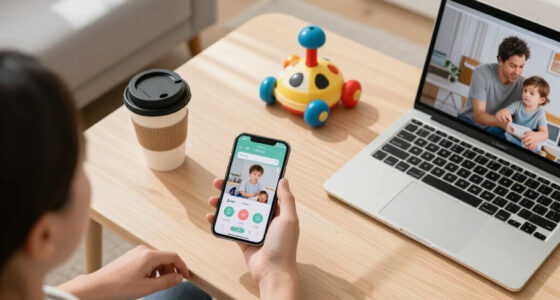
You’ve seen consumer tech shift toward personalization, with devices now tailored to your routines and goals. Wearables track multiple health metrics, learn from how you use them, and connect seamlessly with your devices. Innovations in battery life, safety, and energy efficiency make gadgets more reliable and eco-friendly. Smart sensors and standard protocols guarantee these devices work smoothly together. Keep exploring to discover how these trends could change your experience even more.

Get the latest gadgets delivered free with Prime
- Fast, free delivery on millions of items
- Prime Video, Amazon Music and more included
- Member-only deals all year
Key Takeaways
- Consumer devices now tailor features to individual routines, emphasizing personalization and adaptive user experiences.
- Increased integration of power safety and energy solutions enables specialized gadgets to operate safely within renewable energy setups.
- Advances in battery technology improve device longevity and reliability, supporting more specialized and always-on functionalities.
- Energy-efficient designs and sustainability initiatives drive the development of specialized devices with eco-friendly features.
- Smart sensors and standardized protocols enhance responsiveness and cross-device compatibility, fostering highly specialized interconnected ecosystems.
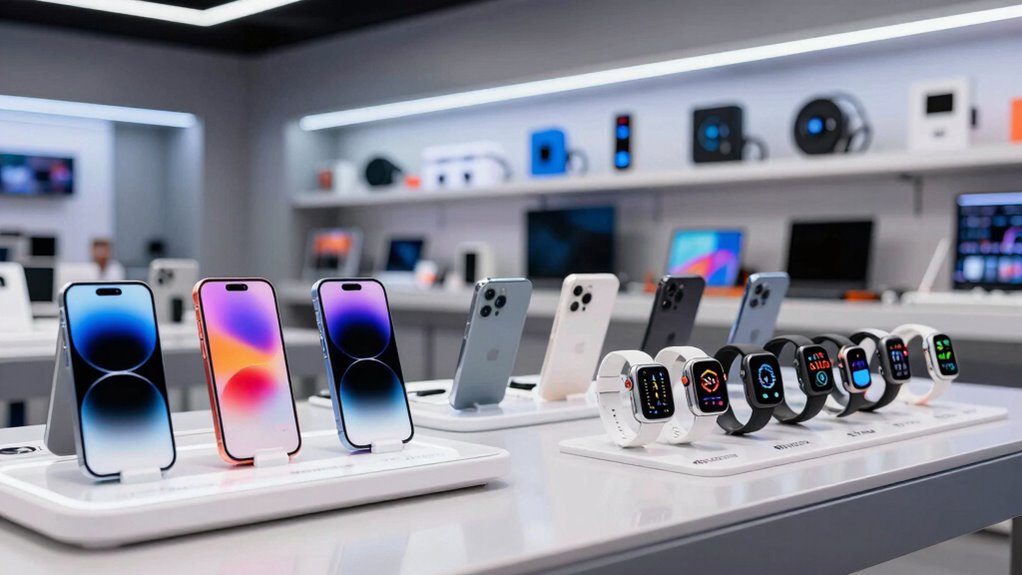
Have you ever wondered how consumer technology has become so tailored to our daily lives? It’s because companies have shifted from producing generic gadgets to developing highly specialized devices designed to fit your personal routines. Wearable integration is a prime example. Today, your smartwatch not only tracks your steps but also monitors your heart rate, sleep patterns, and even stress levels. These devices connect seamlessly with your phone and other gadgets, forming a network that adapts to your habits. Instead of one-size-fits-all solutions, tech makers now focus on creating personalized experiences, which means your wearables learn from your behavior and provide tailored feedback. This evolution guarantees that your devices aren’t just tools but extensions of your lifestyle, making everyday tasks more efficient. Power safety is also becoming more integrated into consumer tech, ensuring that these specialized devices are safe to use alongside solar system designs and other energy solutions. Additionally, advancements in battery technology are allowing these devices to operate longer and more reliably, further enhancing their seamless integration into daily life. Innovations in energy efficiency are also contributing to longer device lifespan and reduced environmental impact, aligning with sustainability goals. Moreover, the integration of smart sensors enhances device responsiveness and overall user experience, enabling more precise automation and control. As the demand for interconnected devices grows, manufacturers are increasingly adopting standardized protocols to ensure compatibility across different brands and platforms.
personalized health tracking smartwatch
As an affiliate, we earn on qualifying purchases.
As an affiliate, we earn on qualifying purchases.
Frequently Asked Questions
How Does Specialization Impact the Affordability of Consumer Tech Products?
Specialization in consumer tech can make products more expensive because you often pay for advanced features and specialized components. While mass production helps reduce overall costs, highly specialized parts increase component costs, which can raise prices. You might notice this in niche devices or custom features, where limited production runs mean less economies of scale. Ultimately, specialization can improve functionality but often at the expense of affordability.
Are There Any Downsides to Highly Specialized Consumer Technology?
Like a puzzle with missing pieces, highly specialized consumer tech can cause market fragmentation, making it harder for you to find compatible devices. This focus on niche features might also lead to innovation stagnation, where companies hesitate to develop broader, versatile solutions. As a result, you could face limited choices and higher costs, while the tech landscape becomes more fragmented and less dynamic, ultimately hindering your overall user experience.
How Do Companies Decide Which Niches to Target?
Companies decide which niches to target by analyzing market segmentation and consumer preferences. They look for specific groups with unique needs or interests that aren’t fully met by mainstream products. You’ll find companies conducting surveys, studying buying behaviors, and evaluating industry trends to identify underserved audiences. By focusing on these niches, they can tailor their products and marketing strategies to better serve dedicated customers, boosting loyalty and market share.
What Skills Are Necessary to Develop Specialized Consumer Tech?
To develop specialized consumer tech, you need strong skills in designing intuitive user interfaces and ensuring software compatibility across devices. You should understand user experience principles and stay updated on emerging technologies. Proficiency in programming languages, hardware integration, and troubleshooting is essential. Additionally, your ability to collaborate with multidisciplinary teams helps create seamless, tailored solutions that meet specific niche needs effectively, making your products stand out in a crowded market.
Will Generalist Devices Become Obsolete Due to Specialization?
Sure, generalist devices will become extinct like floppy disks in a cloud world. As specialization skyrockets, you’ll find that universal compatibility and multi-purpose design are relics of yesteryear. Expect your gadgets to be laser-focused tools that excel at one thing—like a camera drone or a fitness tracker—making the bulky, all-in-one devices obsolete. Welcome to the era of the hyper-specialized, where “jack of all trades” is just a punchline.
interconnected smart home sensors
As an affiliate, we earn on qualifying purchases.
As an affiliate, we earn on qualifying purchases.
Conclusion
As you see, the world of consumer tech has become more specialized than ever, tailoring devices to meet your unique needs. This trend means you can find tools that fit perfectly into your lifestyle, no matter how niche your interests are. It’s like finding a needle in a haystack, but now, those needles are right at your fingertips. Embrace this shift, and you’ll discover tech that works harder for you, making your life simpler and more personalized.
energy-efficient wearable devices
As an affiliate, we earn on qualifying purchases.
As an affiliate, we earn on qualifying purchases.
As an affiliate, we earn on qualifying purchases.
Halloween Picks
halloween
As an affiliate, we earn on qualifying purchases.