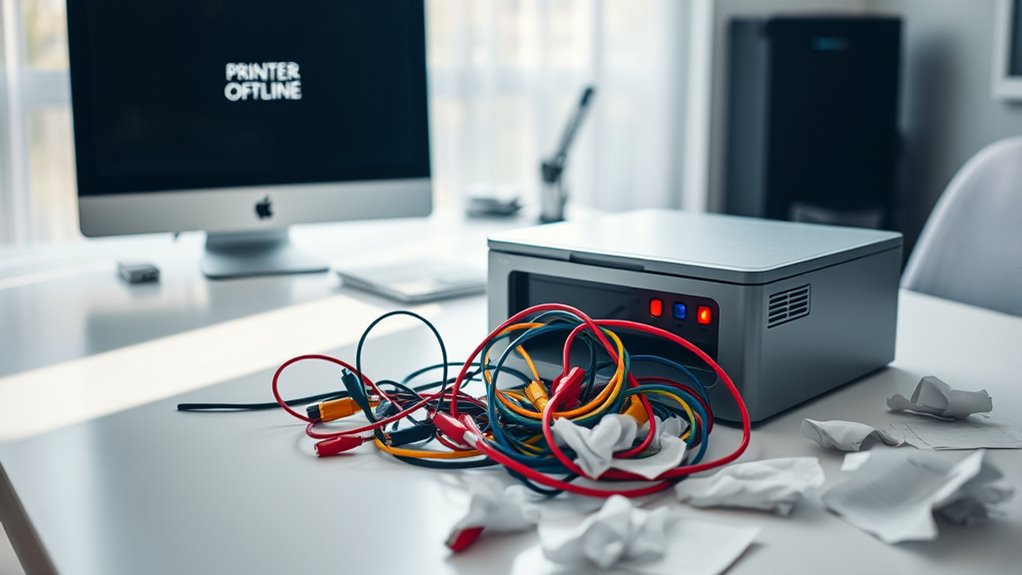

If your printer keeps going offline, start by checking its connection and ensuring it’s powered on and connected to Wi-Fi or your computer. Restart both your printer and computer to refresh the connection. Set the printer as your default device and verify it’s online in settings. Update or reinstall your drivers, and clear any stuck print jobs. For long-term stability, optimize your network, and if issues persist, follow the detailed steps ahead to fix the problem once and for all.
Key Takeaways
- Restart both printer and computer to reset network and clear temporary issues.
- Ensure the printer is connected to the correct Wi-Fi network and set as default device.
- Update printer drivers and firmware for improved stability and compatibility.
- Cancel all stuck print jobs and restart the print spooler service to clear the queue.
- Assign a static IP address and secure your Wi-Fi to prevent disconnections and offline status.
Top picks for "printer offline again"
Open Amazon search results for this keyword.
As an affiliate, we earn on qualifying purchases.
Checking Your Printer’s Connection and Power Status
Before troubleshooting other issues, you should verify that your printer is properly connected and powered on. Check the power cable and ensure the printer is turned on. For wireless connectivity, confirm your printer is connected to the Wi-Fi network. Sometimes, the connection drops, causing the printer to appear offline. If your printer isn’t responding, try a simple power cycle—turn it off, unplug it for about 30 seconds, then plug it back in and turn it on. This refreshes the connection and can resolve minor glitches. Also, ensure your device is connected to the same Wi-Fi network. Reviewing the contrast ratio of your printer or projector can help in understanding display quality and troubleshooting display issues more effectively. Additionally, examining the wireless network strength can help identify connectivity problems that contribute to the offline status, and paying attention to power stability can prevent unexpected disconnections. Keeping an eye on the printer driver updates can also help maintain smooth communication between your device and the printer. Regularly checking device compatibility is also recommended to avoid connection issues caused by outdated software or hardware incompatibilities.
Restarting Your Printer and Computer for a Fresh Start
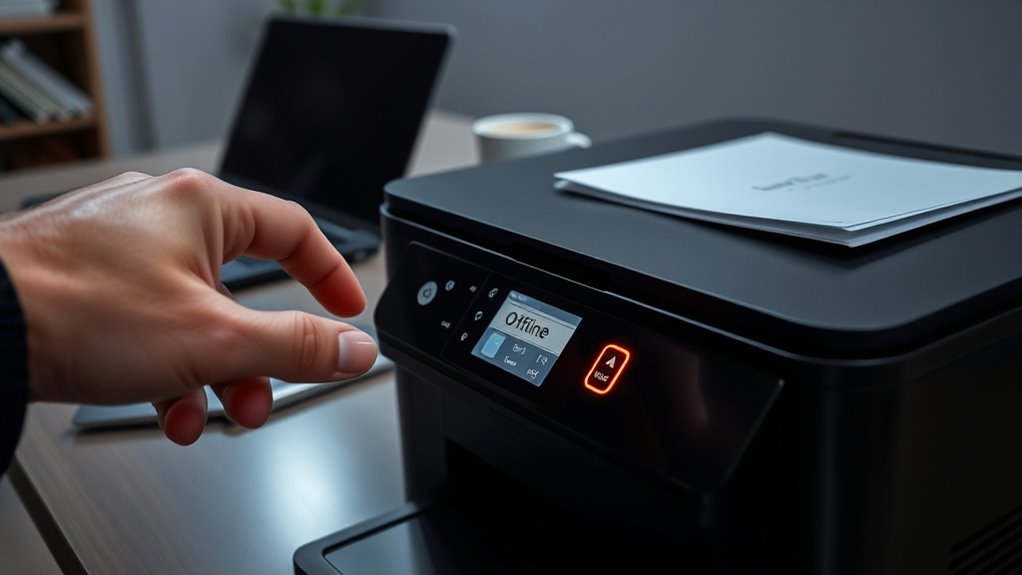
Sometimes, simply restarting your printer and computer can resolve connectivity issues that keep your printer offline. This refresh can reset wireless connectivity, clear stuck processes, and improve communication between devices. Before restarting, check if your ink cartridge replacement was recent; sometimes, low ink can cause issues. To restart effectively:
- Power off both your printer and computer completely
- Unplug the printer from power and wait 30 seconds
- Restart your computer first, then turn your printer back on
- Ensure your printer reconnects to your Wi-Fi network after rebooting
- Additionally, wireless connectivity issues can sometimes be caused by interference or outdated network settings that a restart can help resolve. Performing a network reset can also help troubleshoot persistent connection problems. Sometimes, router firmware updates are necessary to maintain optimal performance and stability. Updating your network settings may also enhance connection reliability. Regularly updating firmware and network configurations can prevent recurring offline printer issues and improve overall connection stability.
This process often clears temporary glitches and helps establish a stable connection, making it easier to print without interruptions. A fresh start can do wonders for resolving offline status and ensuring your printer works smoothly.
Setting Your Printer as the Default Device

To guarantee your printer works smoothly, you need to set it as the default device. You can do this by accessing your printer settings, selecting your preferred printer, and confirming your choice. Once you save the settings, your printer will be ready for use without interruptions. Be sure to monitor your device status regularly to ensure consistent performance and avoid common issues such as being printer offline again. Additionally, understanding printer specifications can help you troubleshoot hardware compatibility and optimize your setup for better reliability. Knowing how printer technology functions can also assist in diagnosing and resolving connectivity problems more effectively.
Access Printer Settings
Setting your printer as the default device guarantees your computer directs print jobs to the correct printer automatically. To do this, you need to access your printer settings. First, open the Control Panel or Settings app, then navigate to Devices > Printers & scanners. Here, you can select your printer and set it as default. This step is vital for maintaining printer security, preventing unauthorized access, and ensuring smooth wireless setup. It also helps avoid confusion if multiple devices are connected. Remember to check your printer’s network settings to confirm it’s properly connected. Regularly updating printer drivers can improve performance and security. Additionally, keeping firmware up to date can protect your device from vulnerabilities. By accessing printer settings correctly, you ensure your printer functions seamlessly and remains protected from potential vulnerabilities. Understanding the importance of device security helps safeguard your printing environment. Additionally, ensuring your printer’s network connection is stable can prevent recurring offline issues. Properly configuring your printer as the default also minimizes the chances of scanning or printing errors, streamlining your workflow. Being aware of your network infrastructure can further improve overall connectivity and reliability.
Select Default Printer
Once you’ve accessed your printer settings, the next step is to select your preferred device as the default printer. This guarantees your computer always directs print jobs to the right device, reducing offline errors. When choosing your default printer, consider its printer security; a secure connection helps prevent unauthorized access, especially if it’s connected wirelessly. If you use a wireless printer, make sure it’s properly connected and recognized by your network to avoid connectivity issues. Setting the correct default printer streamlines your printing process and minimizes confusion. Double-check that the selected device supports your security protocols and maintains a stable wireless connection to prevent future offline problems. Establishing a reliable printing environment involves verifying your device’s security and connection stability, making your device more efficient and secure. Additionally, regularly updating your printer drivers can help prevent compatibility issues that may lead to offline errors. Properly configuring your printer settings also helps maintain network stability and ensures consistent performance, especially when considering website performance metrics that can indirectly influence troubleshooting processes.
Confirm and Save
After selecting your preferred printer, it’s important to confirm your choice and save the settings. This guarantees your printer remains the default, preventing repeated offline issues. When confirming, double-check the print quality settings to avoid blurry or streaky documents. Make sure your ink cartridges are properly installed and have enough ink, as low ink can affect print quality and cause errors. To lock in your selection, click “Apply” or “Save” in the printer settings. This simple step helps maintain a stable connection and reduces troubleshooting later. Remember, setting your printer as the default ensures smooth printing sessions, especially when printing important documents. Regularly review your printer settings to keep print quality high and avoid offline problems.
Ensuring Your Printer Is Properly Online in Settings

If your printer keeps showing as offline, the first step is to verify that it’s properly connected and set to online in your device settings. Check your wireless security settings to confirm your connection is secure and stable; an unstable network can cause the printer to appear offline. Restart your printer and computer to refresh the connection. Also, confirm that your printer’s ink cartridge calibration is correct, as some printers disable printing when cartridges aren’t properly aligned, which can interfere with online status. Make sure the printer is set as the default device in your system. These steps help guarantee your printer is recognized as active and ready for printing, reducing the chances of it slipping back into offline mode.
Updating or Reinstalling Printer Drivers

Updating or reinstalling your printer drivers can resolve communication issues that cause your printer to appear offline. Outdated or corrupted drivers often lead to driver compatibility problems and hinder proper communication between your computer and printer. Making sure you have the latest firmware updates can also improve performance and stability. To get started:
- Download the latest driver directly from the manufacturer’s website
- Use device manager to update drivers automatically
- Uninstall the current driver before reinstalling for a clean setup
- Check for firmware updates that might enhance compatibility and fix bugs
Keeping your drivers up to date helps prevent offline errors and ensures your printer operates smoothly. Regular updates maintain driver compatibility, reducing the chances of connection issues.
Managing Print Queues and Clearing Stuck Jobs
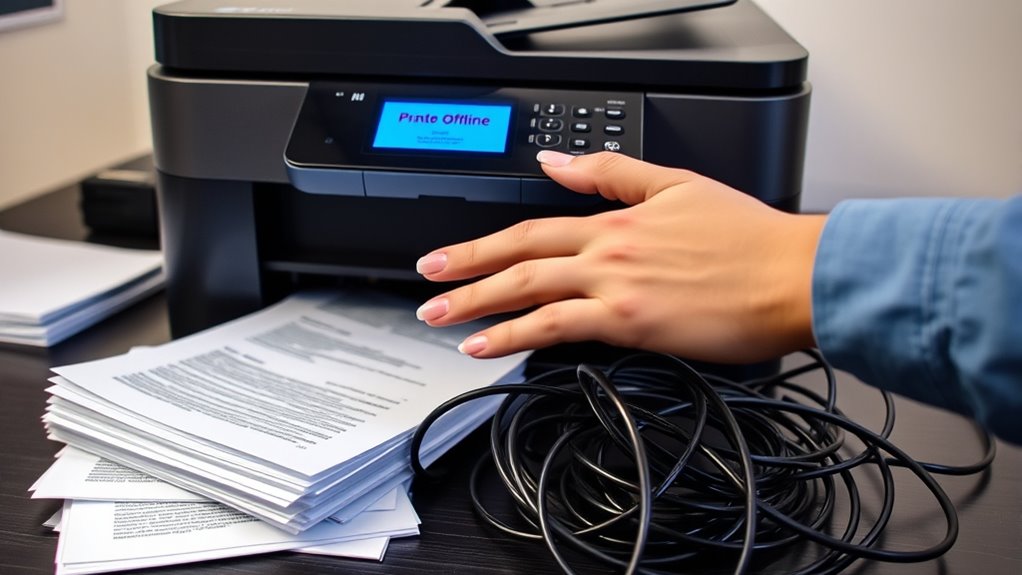
When your printer gets stuck, clearing persistent jobs can restore smooth operation. You need to identify and cancel those stuck print tasks to prevent delays. Prioritizing your print tasks helps guarantee important documents print first without unnecessary clutter.
Clearing Persistent Jobs
Persistent print jobs can cause ongoing printer offline issues, especially when stuck jobs clog the queue. These stuck jobs can be caused by wireless interference or a paper jam, preventing new jobs from processing. To eliminate these, start by canceling all print jobs from your device’s print queue. If jobs remain, restart the print spooler service to reset the queue. For stubborn jobs, turn off the printer, disconnect it, and manually remove any stuck paper or debris. Sometimes, wireless interference disrupts communication, so ensure your Wi-Fi signal is strong and stable. Clearing out the queue regularly keeps things running smoothly and prevents offline errors.
- Restart your printer and computer to refresh connections
- Check for paper jams or debris inside the printer
- Disable and re-enable the printer driver
- Move your printer away from wireless interference sources
Prioritizing Print Tasks
Managing your print queue effectively is essential to ensuring your printer operates smoothly. Prioritizing print tasks helps prevent congestion and stops your printer from getting stuck. Start by reviewing the print queue and identify high-priority jobs that need immediate attention. Use print job prioritization features in your printer settings or print management software to assign urgency levels, ensuring important documents print first. Regular print queue management involves canceling or deleting unnecessary or stuck jobs that can clog the queue. Clearing these stuck jobs frees up space and prevents delays. Keep an eye on the queue during busy periods, and adjust priorities as needed. Proper print task prioritization keeps your workflow seamless and reduces the chances of your printer going offline due to a backlog.
Configuring Your Network Settings for Stability

Ensuring your network settings are properly configured is essential for maintaining a stable connection to your printer. Start by checking your wireless security settings to prevent unauthorized access that could disrupt your connection. Next, verify your IP address and DNS settings to avoid conflicts that cause offline errors. Regularly update your router firmware to improve stability and security. Additionally, perform network troubleshooting to identify and fix issues like weak signals or interference.
Proper network setup ensures a stable, secure connection to your printer.
- Secure your Wi-Fi with strong wireless security protocols
- Assign a static IP address for your printer
- Keep your router firmware up to date
- Run network troubleshooting tools to diagnose connectivity problems
Using the Printer Troubleshooter and Diagnostic Tools

When your printer keeps going offline, using built-in troubleshooters and diagnostic tools can quickly identify the root cause. Most operating systems offer print troubleshooting options that detect common issues, like connectivity problems or driver conflicts. Run the printer troubleshooter through your computer’s settings; it will scan for errors and suggest solutions. Diagnostic tools, provided by printer manufacturers or third-party apps, can perform deeper checks, such as firmware status or hardware malfunctions. These tools often generate reports you can review to pinpoint specific issues. By leveraging print troubleshooting and diagnostic tools, you save time and avoid guesswork, making it easier to fix the offline problem once and for all. This proactive approach guarantees your printer stays connected and ready when you need it.
Implementing Preventive Maintenance and Regular Checks
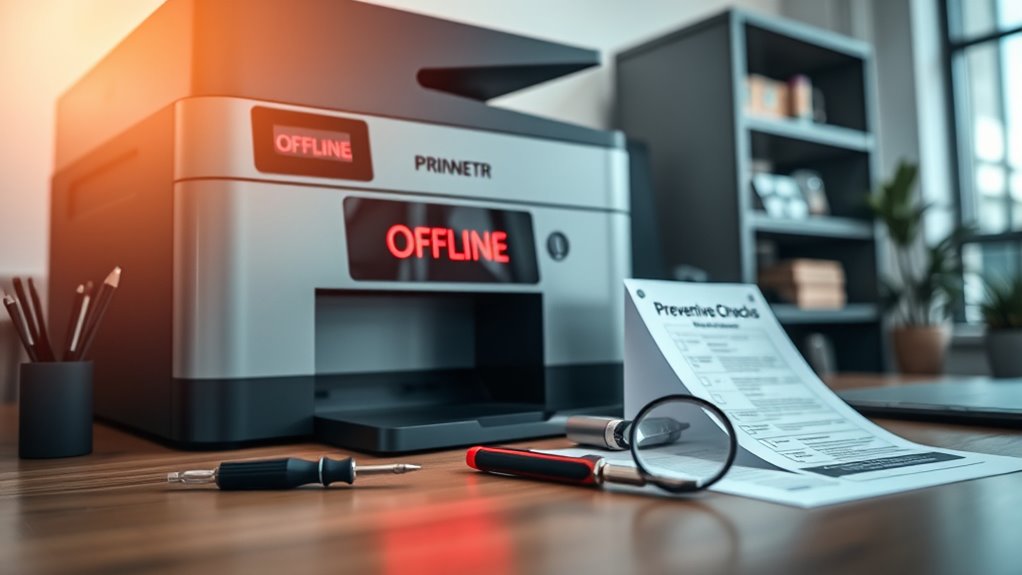
Regular preventive maintenance and routine checks are essential to keep your printer functioning smoothly and prevent unexpected offline issues. Regularly inspecting your ink cartridge ensures it’s filled and properly seated, avoiding print errors. Check for paper jams and clear them promptly to prevent damage or miscommunication with your device. Cleaning the rollers and print head reduces the risk of smudges and paper jams. Updating printer drivers and firmware keeps everything compatible and running efficiently.
- Replace or refill ink cartridges before they dry out or cause print quality issues
- Clear paper jams immediately to avoid prolonged offline status
- Clean rollers and print head for smoother operation
- Update drivers regularly to prevent software conflicts
Frequently Asked Questions
How Can I Prevent My Printer From Going Offline Unexpectedly?
You can prevent your printer from going offline unexpectedly by checking the printer hardware for loose cables or paper jams regularly. Make sure your user settings are correctly configured, like setting your printer as the default and disabling “Use Printer Offline” mode. Keep your drivers updated and restart your printer and computer regularly. Doing these steps helps maintain a stable connection, minimizing offline issues and keeping your printing smooth.
What Are Common Signs Indicating a Printer Needs Maintenance?
Noticing frequent printer jams or paper misfeeds? These are clear signs your printer needs maintenance. You might also see faded prints, ink or toner smudges, or error messages on the display. Are you experiencing slower printing speeds or unusual noises? Regularly checking and cleaning your printer, clearing jams, and replacing worn parts can keep it running smoothly. Ignoring these signs could lead to bigger issues, so stay proactive with your maintenance routines.
How Do I Connect My Wireless Printer to a New Wi-Fi Network?
To connect your wireless printer to a new Wi-Fi network, start by ensuring your Wi-Fi security details are handy. Place your printer within the network range for a strong connection. Access your printer’s wireless setup menu, select the option to connect to a new network, then enter your Wi-Fi credentials carefully. Confirm the connection, and your printer should be ready to print wirelessly from your new network.
Can Using Third-Party Toner or Ink Cause Printer Offline Issues?
Using third-party ink can cause your printer to go offline if there are compatibility issues. Some third-party toner or ink cartridges don’t match your printer’s specifications, leading to communication errors. These issues may disrupt the printer’s ability to connect and function properly. To prevent offline problems, always check compatibility before using third-party ink, or consider sticking with OEM cartridges to guarantee smooth operation and reliable connectivity.
How Often Should I Update My Printer Drivers for Optimal Performance?
Think of your printer drivers as the engine oil for your car—they need regular changes to keep everything running smoothly. You should update your printer drivers at least every six months to guarantee peak performance and maintain hardware compatibility. Regular driver updates prevent glitches, fix bugs, and make sure your printer communicates properly with your device, reducing the chances of offline issues and keeping your printing tasks on track.
Conclusion
Dealing with a printer that’s offline can be frustrating, but with these simple steps, you’re well on your way to fixing it. Have you checked all the basics and tried troubleshooting? Remember, regular maintenance can prevent future issues. By staying proactive, you’ll keep your printer running smoothly when you need it most. So, are you ready to keep your printer online and your workflow uninterrupted?