
Choosing the best professional graphics card in 2026 requires balancing raw performance, stability, and feature set tailored for demanding creative and engineering workflows. The NVIDIA RTX PRO 4000 Blackwell stands out as the overall best thanks to its advanced GDDR7 ECC memory and PCIe 5.0 support, making it ideal for high-end workstations. Meanwhile, the AMD Radeon Pro W7800 offers a compelling alternative for those prioritizing open standards and compatibility. The main tradeoffs involve whether to prioritize raw power, memory capacity, or features like ECC and multi-display support. Continue reading for a detailed breakdown of these options and how to select the best card for your needs.

Get the latest gadgets delivered free — and shop member deals
- Fast, free delivery on millions of items
- Access to Prime Big Deal Days deals on October 6–7
- Prime Video, Amazon Music and more included
Complete the kit



Key Takeaways
- The top-performing cards combine high VRAM (24GB+) with ECC support for stability in professional tasks.
- NVIDIA’s Blackwell-based RTX PRO 4000 offers cutting-edge connectivity and memory, making it the best overall choice.
- AMD‘s Radeon Pro W7800 provides a strong balance of performance and open standards, appealing to certain professional workflows.
- Premium options like the Quadro RTX 8000 are geared towards users with massive memory and extreme reliability needs, but at a high cost.
- Value-oriented picks like the RTX 3090 still deliver excellent performance for less, though they lack some professional features.
| GIGABYTE GeForce RTX 5080 Gaming OC 16G Graphics Card |  | Best Overall High-End Gaming and Creative Power | GPU Architecture: NVIDIA Blackwell | Memory: 16GB GDDR7 | Memory Interface: 256-bit | VIEW LATEST PRICE | See Our Full Breakdown |
| AMD Radeon Pro W7800 Professional Graphics Card |  | Best for High-Resolution and Professional Workloads | Compute Units: 70 CU | FP32 Performance: 45 TFLOPS | Memory: 32GB GDDR6 | VIEW LATEST PRICE | See Our Full Breakdown |
| NVIDIA RTX PRO 4000 Blackwell Workstation Graphics Card – 24GB GDDR7 ECC, PCIe 5.0 x16, 4x DisplayPort 2.1b |  | Best for AI and Creative Workflows in Workstations | GPU Architecture: Blackwell | Memory: 24GB GDDR7 ECC | Interface: PCIe 5.0 x16 | VIEW LATEST PRICE | See Our Full Breakdown |
| NVIDIA Quadro RTX 8000 |  | Premium Choice for AI, Data Science, and 3D Rendering | VIEW LATEST PRICE | See Our Full Breakdown | |||
| MSI Gaming RTX 5080 16G SUPRIM SOC Graphics Card |  | Best for Extreme Gaming and Creative Performance | GPU Series: NVIDIA RTX 50 Series | Video Memory: 16GB GDDR7 | Memory Interface: 256-bit | VIEW LATEST PRICE | See Our Full Breakdown |
| ASUS TUF Gaming GeForce RTX 5080 16GB GDDR7 OC Edition Graphics Card |  | Best for High-End Durability and Overclocking | GPU Architecture: NVIDIA Blackwell | Graphics Memory: 16 GB GDDR7 | Boost Clock: 2730 MHz (OC) | VIEW LATEST PRICE | See Our Full Breakdown |
| Gigabyte NVIDIA GeForce RTX 3090 Turbo 24GB GDDR6X Graphics Card (GV-N3090TURBO-24GD) |  | Best for Content Creation and High-Resolution Gaming | GPU: NVIDIA GeForce RTX 3090 | Memory: 24 GB GDDR6X | Core Clock: 1695 MHz | VIEW LATEST PRICE | See Our Full Breakdown |
| ASUS Dual GeForce RTX 5060 Ti 16GB GDDR7 OC Edition Gaming Graphics Card |  | Best for Compact High-Performance Gaming | GPU: NVIDIA GeForce RTX 5060 Ti | Memory: 16 GB GDDR7 | Boost Clock: 2632 MHz | VIEW LATEST PRICE | See Our Full Breakdown |
| MSI GeForce RTX 5080 16G Ventus 3X OC Black Graphics Card |  | Best for Balanced High-Performance Gaming and Workloads | GPU: NVIDIA GeForce RTX 5080 | Memory: 16 GB GDDR7 | Boost Clock: 2640 MHz | VIEW LATEST PRICE | See Our Full Breakdown |
| ASUS TUF Gaming GeForce RTX 5090 32GB GDDR7 OC Edition Graphics Card |  | Best for High AI Performance and Compact Enthusiasts | GPU: NVIDIA Blackwell | Memory: 32 GB GDDR7 | AI Performance: 772 TOPS | VIEW LATEST PRICE | See Our Full Breakdown |
| NVIDIA GeForce RTX 3090 Founders Edition Graphics Card |  | Best Overall for High-End Creative and Professional Workloads | Chipset: NVIDIA GeForce RTX 3090 | Video Memory: 24GB GDDR6X | Memory Interface: 384-bit | VIEW LATEST PRICE | See Our Full Breakdown |
| professional graphics card | Memory |
|---|---|
| GIGABYTE GeForce RTX 5080 Gami | 16GB GDDR7 |
| AMD Radeon Pro W7800 Professio | 32GB GDDR6 |
| NVIDIA RTX PRO 4000 Blackwell | 24GB GDDR7 ECC |
| NVIDIA Quadro RTX 8000 | — |
| MSI Gaming RTX 5080 16G SUPRIM | — |
| ASUS TUF Gaming GeForce RTX 50 | — |
| Gigabyte NVIDIA GeForce RTX 30 | 24 GB GDDR6X |
| ASUS Dual GeForce RTX 5060 Ti | 16 GB GDDR7 |
| MSI GeForce RTX 5080 16G Ventu | 16 GB GDDR7 |
| ASUS TUF Gaming GeForce RTX 50 | 32 GB GDDR7 |
| NVIDIA GeForce RTX 3090 Founde | — |
More Details on Our Top Picks
GIGABYTE GeForce RTX 5080 Gaming OC 16G Graphics Card
The GIGABYTE GeForce RTX 5080 Gaming OC 16G stands out for its cutting-edge NVIDIA Blackwell architecture, making it the top choice for gamers and creatives demanding premium performance. Compared to the MSI SUPRIM SOC, it offers slightly lower clock speeds but benefits from a robust cooling system and a large 16GB GDDR7 buffer, ensuring smooth handling of intensive tasks. The support for DLSS 4 amplifies frame rates and visual fidelity, making it ideal for high-resolution gaming and demanding rendering workflows. Its reliance on PCIe 5.0 and a powerful power supply means it’s best suited for high-end systems, but these requirements could be a barrier for some builds. Overall, this card balances raw power with advanced features, but at a premium price and with significant power needs.
Pros:- Supports the latest NVIDIA Blackwell architecture for future-proofing
- DLSS 4 boosts performance and visual quality
- Large 16GB GDDR7 memory buffer for demanding workflows
- Uses PCIe 5.0 for maximum bandwidth
Cons:- High power consumption requiring a robust PSU
- Premium pricing limits accessibility for casual users
- High-end cooling system adds size and complexity
Best for: Enthusiast gamers and professional creators who want top-tier performance and are ready to invest in a high-end setup.
Not ideal for: Budget-conscious users or anyone with a mid-range system that lacks PCIe 5.0 support and a capable power supply.
- GPU Architecture:NVIDIA Blackwell
- Memory:16GB GDDR7
- Memory Interface:256-bit
- DLSS:DLSS 4
- Interface:PCIe 5.0
- Cooling System:WINDFORCE
Our verdict“This card is best for high-end gaming and professional workloads where maximum performance justifies the investment.”
AMD Radeon Pro W7800 Professional Graphics Card
The AMD Radeon Pro W7800 makes a compelling case for professionals focused on 3D rendering, AI, and 8K display support. Unlike the NVIDIA RTX PRO 4000, it offers a massive 32GB GDDR6 buffer, which is better suited to large datasets and complex designs. Its 45 TFLOPS FP32 performance provides substantial computational power, especially for rendering and simulation tasks. The card’s extensive API support and high-resolution display capabilities make it ideal for high-end workstations, but its high price and power draw (260W TDP) mean it’s less attractive for casual or budget users. Compared with the RTX 8000, the W7800 offers more modern memory and better power efficiency for professional tasks.
Pros:- Massive 32GB GDDR6 memory for complex projects
- High FP32 performance at 45 TFLOPS for demanding tasks
- Supports ultra-high-resolution displays up to 8K
- Extensive API support for professional applications
Cons:- High price point restricts accessibility
- Requires a substantial power supply (260W TDP)
- Designed for professional use, not gaming
Best for: Creative professionals and engineers working with large datasets, 3D rendering, or high-resolution visualization.
Not ideal for: Casual gamers or users with limited power supply capacity, as this card is designed mainly for professional environments.
- Compute Units:70 CU
- FP32 Performance:45 TFLOPS
- Memory:32GB GDDR6
- Display Support:4K, 8K, 12K, AV1
- Display Outputs:DisplayPort 2.1
- TDP:260W
Our verdict“Ideal for demanding professional workflows where large datasets and high-resolution support are critical.”
NVIDIA RTX PRO 4000 Blackwell Workstation Graphics Card – 24GB GDDR7 ECC, PCIe 5.0 x16, 4x DisplayPort 2.1b
The NVIDIA RTX PRO 4000 stands out for its balance of professional features and modern architecture, making it suitable for AI, ray tracing, and demanding creative tasks. Compared to the Quadro RTX 8000, it offers a more compact, single-slot design, which fits better in standard workstations. Its 24GB GDDR7 ECC memory ensures error-corrected stability for critical computations, and PCIe 5.0 interface guarantees high data throughput. The four DisplayPort 2.1b outputs support multi-monitor setups up to 8K resolution. While its full-height, full-width form factor may limit compatibility with small systems, it provides a modern, capable platform for advanced workloads that don’t require the sheer size or cost of the RTX 8000.
Pros:- Supports professional AI and ray-tracing workloads with Blackwell architecture
- 24GB GDDR7 ECC memory for error-corrected reliability
- PCIe 5.0 x16 interface for maximum data bandwidth
- Four DisplayPort 2.1b outputs for flexible multi-monitor setups
Cons:- Full-height, single-slot design limits case options
- Requires PCIe 5.0 platform to maximize bandwidth
- Designed primarily for professional use, not gaming
Best for: AI developers, high-end creative professionals, and workstation builders needing a balance of performance and compatibility.
Not ideal for: Casual users or gamers who do not need ECC memory or PCIe 5.0 support, as these features are unnecessary for standard use.
- GPU Architecture:Blackwell
- Memory:24GB GDDR7 ECC
- Interface:PCIe 5.0 x16
- Display Outputs:4 x DisplayPort 2.1b
- Form Factor:Single Slot, Full Height
Our verdict“A solid choice for professionals needing a balanced, modern workstation GPU with high reliability and multi-display support.”
NVIDIA Quadro RTX 8000
The NVIDIA Quadro RTX 8000 remains a benchmark for high-end professional graphics, especially for AI, data science, and complex 3D rendering. With its substantial memory capacity and advanced ray-tracing capabilities, it surpasses most consumer-grade cards, including the RTX PRO 4000, in sheer power. However, its hefty size and cost pose practical challenges, making it suitable only for dedicated workstation setups. While it offers unmatched performance for demanding tasks, the high price and physical bulk mean it’s not for casual or budget-conscious users. Its legacy as a flagship professional card still holds, but modern alternatives like the RTX PRO 4000 provide similar capabilities at a lower entry point.
Pros:- Exceptional performance for AI and scientific workloads
- Massive memory capacity ideal for complex datasets
- Advanced ray tracing and AI features enhance visual and computational tasks
- Reliable, long-term professional support
Cons:- Very high cost and limited accessibility
- Large size and weight complicate installation
- Overkill for non-specialized tasks
Best for: Large-scale AI research, scientific simulations, and professional 3D studios requiring maximum compute and memory.
Not ideal for: Small offices or individual hobbyists who lack the space or budget for such a specialized, expensive GPU.
Our verdict“A powerful, high-cost solution best suited for large enterprises and research institutions needing maximum compute capability.”
MSI Gaming RTX 5080 16G SUPRIM SOC Graphics Card
The MSI SUPRIM SOC leverages NVIDIA’s Blackwell architecture to deliver exceptional gaming and creative workloads, with a boosted clock of up to 2760 MHz and 16GB of GDDR7 memory. Its build emphasizes aesthetics and cooling, making it ideal for high-end gaming rigs and demanding creative workstations. When compared with the GIGABYTE RTX 5080 Gaming OC, the MSI SUPRIM SOC offers slightly higher clock speeds and a premium design, but it also comes with a flagship price tag that may be prohibitive for many users. Its large size and cooling system, while beneficial for thermal performance, could limit compatibility with smaller cases. This makes it a compelling choice for those seeking maximum performance and premium quality, provided their system can accommodate it.
Pros:- Extreme boost clock of 2760 MHz for peak performance
- 16GB GDDR7 memory on a 256-bit interface for high bandwidth
- Premium cooling and build quality for thermal stability
- Supports multiple high-resolution displays up to 8K
Cons:- High price limits accessibility for budget-conscious users
- Large card size may not fit smaller cases
- Premium features come with a premium cost
Best for: Enthusiasts who want a visually striking, high-performance GPU for gaming, video editing, or 3D rendering in a spacious case.
Not ideal for: Small-form-factor builds or users on a tight budget who need a more affordable or compact option.
- GPU Series:NVIDIA RTX 50 Series
- Video Memory:16GB GDDR7
- Memory Interface:256-bit
- GPU Clock Speed:2760 MHz
- Video Outputs:3x DisplayPort 2.1a, 1x HDMI 2.1b
- Max Resolution:7680 x 4320
Our verdict“Best suited for users with spacious builds seeking maximum gaming and creative performance without compromise.”
ASUS TUF Gaming GeForce RTX 5080 16GB GDDR7 OC Edition Graphics Card
This ASUS TUF Gaming RTX 5080 OC Edition stands out for its robust build quality, military-grade components, and excellent cooling system, making it ideal for demanding workloads. Compared with the MSI GeForce RTX 5080 Ventus 3X OC, it offers a slightly higher boost clock (2730 MHz vs. 2640 MHz) and enhanced durability features, though it comes with a larger, heavier form factor. Its triple Axial-tech fans and protective PCB coating provide increased longevity under continuous high load, while the inclusion of GPU Tweak III software allows for precise tuning. However, the requirement for a minimum 850W power supply and the 3.6-slot size could limit compatibility in smaller cases or with less powerful PSUs. This pick makes the most sense for professionals who need top-tier performance combined with extreme reliability and overclocking potential, and who have a spacious case and adequate power capacity.
Pros:- Durable military-grade components and protective PCB coating
- Excellent cooling with three Axial-tech fans and phase-change thermal pad
- High-performance NVIDIA Blackwell architecture with DLSS 4 support
- Includes GPU Tweak III for detailed tuning
Cons:- Requires a minimum 850W power supply, increasing overall system cost
- Large size (3.6 slots, 13.7 inches long) limits compatibility with smaller cases
- Heavy weight at 4.3 lbs may complicate installation
Best for: High-end professionals and enthusiasts seeking maximum durability, overclocking headroom, and extensive cooling support in large, well-equipped systems
Not ideal for: Casual users or those with compact builds who cannot accommodate the large size and high power demands of this card
- GPU Architecture:NVIDIA Blackwell
- Graphics Memory:16 GB GDDR7
- Boost Clock:2730 MHz (OC)
- Outputs:Native DisplayPort 2.1a x3, HDMI 2.1b x2
- Form Factor:3.6 slots, 13.7 inches
- Power Requirement:Minimum 850W PSU, 16-pin 12VHPWR
Our verdict“This card is best suited for users with large, well-powered systems who prioritize durability, overclocking, and maximum stability.”
Gigabyte NVIDIA GeForce RTX 3090 Turbo 24GB GDDR6X Graphics Card (GV-N3090TURBO-24GD)
The Gigabyte RTX 3090 Turbo makes this list for its massive 24GB GDDR6X memory and solid cooling features, which support professional content creation and ultra-high-resolution gaming, including 8K displays. Compared to the ASUS Dual RTX 5060 Ti, the 3090 offers significantly more VRAM, making it better suited for demanding workflows like 3D rendering or large dataset processing. Its vapor chamber, copper heat sink, and double ball bearing fans provide reliable cooling, while its durable metal backplate adds extra protection. The large dimensions (11.69″ x 5.08″) might restrict smaller cases, and its high power draw is a concern for systems with limited capacity. This card appeals to users needing extensive VRAM and raw processing power, especially those working with high-res media or complex simulations.
Pros:- Massive 24GB GDDR6X memory supports large projects and high-res gaming
- Robust cooling with vapor chamber and durable metal construction
- Supports 8K output for professional and gaming use
- Built with a sturdy, high-quality design
Cons:- Large dimensions may not fit smaller cases
- High power consumption requires a strong PSU
- Size and weight increase installation complexity
Best for: Content creators, 3D artists, and gamers pushing high resolutions who need large VRAM buffers and robust cooling
Not ideal for: Small-form-factor builds or users with limited power supplies, due to its size and high power consumption
- GPU:NVIDIA GeForce RTX 3090
- Memory:24 GB GDDR6X
- Core Clock:1695 MHz
- Memory Speed:19500 MHz
- Outputs:HDMI, DisplayPort
- Dimensions:11.69″ L x 5.08″ W
Our verdict“This card is ideal for professionals and gamers needing maximum VRAM and stable high-resolution performance in large, well-equipped systems.”
ASUS Dual GeForce RTX 5060 Ti 16GB GDDR7 OC Edition Gaming Graphics Card
The ASUS Dual RTX 5060 Ti offers a compelling balance between high performance and small form factor, making it well-suited for gamers and professionals with limited space. Its 16GB GDDR7 memory and a boost clock of 2632 MHz deliver strong gaming and rendering capabilities, comparable to larger cards like the MSI RTX 5080 Ventus 3X OC, but in a more manageable size. The dual Axial-tech fans and 0dB technology keep noise low during light workloads, while the compact 2.5-slot design enhances compatibility in tight builds. Its support for resolutions up to 7680×4320 is ideal for high-end gaming and creative tasks. The main tradeoff is potentially higher power consumption for sustained high performance, and it requires a PCIe 5.0 motherboard for maximum throughput.
Pros:- High-performance 16GB GDDR7 memory with 2632 MHz boost clock
- Dual Axial-tech fans with 0dB technology for quiet operation
- Compact 2.5-slot form factor improves compatibility
- Supports high resolutions up to 7680×4320
Cons:- Higher power consumption at peak loads
- Limited detailed user reviews available
- Requires PCIe 5.0 motherboard for full performance
Best for: Gamers and professionals who need high-end performance in a small, space-efficient design
Not ideal for: Users with older motherboards lacking PCIe 5.0 support or those in small cases where even 2.5 slots are tight
- GPU:NVIDIA GeForce RTX 5060 Ti
- Memory:16 GB GDDR7
- Boost Clock:2632 MHz
- Maximum Resolution:7680×4320
- Form Factor:2.5 slots
- Power:Requires PCIe 5.0 motherboard
Our verdict“This pick is perfect for gamers and professionals who want strong performance in a smaller, more adaptable package.”
MSI GeForce RTX 5080 16G Ventus 3X OC Black Graphics Card
The MSI RTX 5080 Ventus 3X OC stands out for offering a high clock speed of 2640 MHz and 16GB of GDDR7 memory, making it a versatile choice for both gaming and professional tasks. Compared to the ASUS TUF Gaming RTX 5080, it provides similar performance but with a slightly different cooling aesthetic and build focus. Its triple fan configuration and OC tuning ensure stable operation under load, while the Ventus design emphasizes a balanced approach to cooling and noise. It’s well-suited for users who want a capable card without the larger, more expensive premium options. The main tradeoff is that, although powerful, it still demands a significant power supply and may generate considerable heat, especially during extended sessions.
Pros:- High core clock of 2640 MHz with OC tuning
- Reliable cooling with triple fans and balanced airflow
- Supports high resolutions up to 7680×4320
- Good value for high-end performance without premium features
Cons:- High power consumption necessitates a strong PSU
- Larger size may restrict smaller case compatibility
- Cooling performance may vary under extreme loads
Best for: Users seeking a balanced, high-performance card suitable for both gaming and creative workflows
Not ideal for: Enthusiasts needing the absolute highest overclocking margins or those with limited case space
- GPU:NVIDIA GeForce RTX 5080
- Memory:16 GB GDDR7
- Boost Clock:2640 MHz
- Outputs:DisplayPort x3, HDMI
- Cooling:Triple fan Ventus design
- Size:Standard 3-slot
Our verdict“This card offers a well-rounded performance profile for users needing reliable high-end graphics in a balanced package.”
ASUS TUF Gaming GeForce RTX 5090 32GB GDDR7 OC Edition Graphics Card
The ASUS TUF Gaming RTX 5090 OC Edition makes this list thanks to its exceptional AI performance of 772 TOPS and a substantial 32GB of GDDR7 memory, ideal for AI-intensive workflows and demanding creative applications. Its compact 2.5-slot design distinguishes it from larger, bulkier high-end cards like the MSI RTX 5080 16G Ventus, offering better build compatibility for smaller or more constrained cases. The dual BIOS profiles, Axial-tech fans, and dual-ball bearings create a durable, quiet, and thermally efficient setup for sustained workloads. The tradeoff lies in its high price point and the fact that its capabilities may be overkill for casual users or standard gaming. This card is best for those who need cutting-edge AI performance without sacrificing build flexibility.
Pros:- Exceptional AI performance with 772 AI TOPS
- Compact 2.5-slot design enhances build compatibility
- Dual BIOS profiles for Quiet and Performance modes
- Durable cooling with Axial-tech fans and dual-ball bearings
Cons:- High cost, reflecting its advanced AI capabilities
- More than what casual users need, leading to potential underuse
- Limited availability may impact purchase options
Best for: AI developers, researchers, and professionals demanding high AI throughput and compact form factor
Not ideal for: Budget-conscious buyers or casual gamers who do not require extreme AI processing or compact design
- GPU:NVIDIA Blackwell
- Memory:32 GB GDDR7
- AI Performance:772 TOPS
- Boost Clock:2550 MHz
- Form Factor:2.5-slot
- Cooling:Axial-tech fans with dual-ball bearings
Our verdict“This card is tailored for AI professionals and enthusiasts who need maximum AI performance in a smaller, reliable package.”
NVIDIA GeForce RTX 3090 Founders Edition Graphics Card
The NVIDIA GeForce RTX 3090 Founders Edition stands out as the most versatile option in this roundup, blending gaming prowess with professional-grade performance. Its 24GB of GDDR6X memory makes it particularly well-suited for demanding tasks like 3D rendering, video editing, and AI workloads, surpassing the 16GB found in the GIGABYTE RTX 5080 Gaming OC. However, this power comes with tradeoffs: its high price tag and substantial size mean it isn’t the best choice for compact workstations or budget-conscious setups. Compared to premium workstation cards like the NVIDIA RTX PRO 4000, the 3090 offers broader gaming compatibility but may lack some ECC features and optimized stability for prolonged professional use. Its high power draw also necessitates a robust PSU and ample space, making installation more complex. Overall, this pick makes the most sense for professionals who need top-tier performance across gaming and demanding creative tasks, and who are prepared for the accompanying costs and setup considerations.
Pros:- Exceptional performance for gaming and professional workloads
- Large 24GB GDDR6X memory supports large datasets and complex projects
- Multiple connectivity options including DisplayPort and HDMI 2.1
Cons:- High cost makes it less accessible for budget-conscious users
- Large and heavy, requiring substantial space and a strong power supply
- High power consumption may increase operational costs
Best for: Power users requiring a blend of gaming, 3D rendering, and AI workloads with ample space and budget.
Not ideal for: Small office setups or users with limited space and power supply, due to its size and high power consumption.
- Chipset:NVIDIA GeForce RTX 3090
- Video Memory:24GB GDDR6X
- Memory Interface:384-bit
- Outputs:DisplayPort x 3 (v1.4a), HDMI 2.1 x 1
- Power Consumption:350W (typical)
- Form Factor:Dual-slot
- Recommended PSU:750W or higher
Our verdict“This card is ideal for professionals who need maximum performance and have the space and budget to support it.”
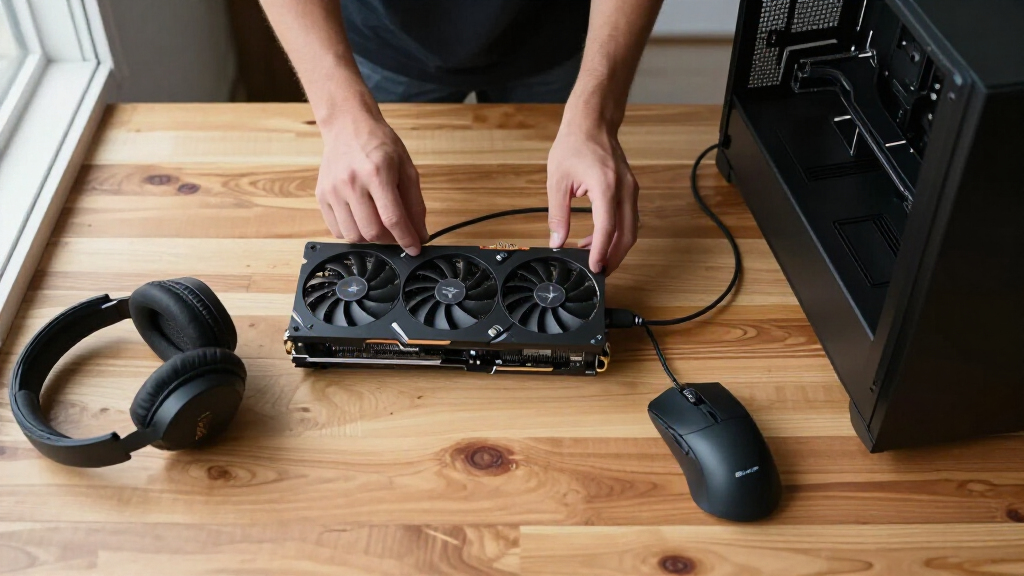
How We Picked
Our evaluation focused on key criteria that matter most to professional users: performance in creative and engineering applications, stability, build quality, feature set, and value. We prioritized hardware with ample VRAM, ECC support, and compatibility with high-speed interfaces like PCIe 5.0. Each card was assessed for its suitability across different professional workflows—whether for 3D rendering, CAD, or data analysis—and for how well it balances cost against performance. The ranking reflects not only raw power but also features that enhance reliability and ease of use in demanding environments.Factors to Consider When Choosing Best Professional Graphics Cards
Selecting the right professional graphics card involves understanding several critical factors that affect workflow, reliability, and future-proofing. While high VRAM and CUDA or Stream cores are important, other considerations like ECC support, connectivity options, and driver stability can significantly impact your experience. This guide explores the key aspects you should evaluate before making a purchase, helping you avoid common pitfalls and identify the best fit for your professional needs.Performance and VRAM Capacity
For most professional workloads, ample VRAM (at least 16GB, ideally 24GB or more) ensures smooth operation with complex models and datasets. High core counts and advanced architectures improve rendering, simulation, and computation tasks. However, more power often means higher costs and greater power consumption. Consider your typical project size and software requirements to choose a GPU that provides enough headroom without overspending on unnecessary performance.
Memory Stability and ECC Support
Memory errors can cause crashes or data corruption during critical tasks. ECC (Error-Correcting Code) support is a vital feature on many professional cards, especially for long-running simulations and scientific computations. Not all high-end gaming cards include ECC, so if stability is paramount, prioritize options that explicitly support it. Keep in mind that enabling ECC may slightly reduce effective memory bandwidth, but the stability gains outweigh this for professional use.
Connectivity and Compatibility
Modern workstations benefit from high-speed interfaces like PCIe 5.0 and multiple display outputs, including DisplayPort 2.1b. Ensure your chosen card supports these features if you need high bandwidth or multiple high-resolution monitors. Compatibility with your existing hardware and software drivers is also important; some professional cards have optimized drivers for CAD, 3D modeling, or rendering applications, which can enhance stability and performance.
Price and Total Cost of Ownership
While premium cards offer unmatched performance and features, they come with steep price tags and higher power requirements. Budget-conscious buyers should consider whether their software can run efficiently on mid-range cards like the RTX 3090 or Radeon Pro W7800. Remember that the total cost includes not just the initial purchase but also power, cooling, and potential maintenance over time. Investing in a slightly more expensive card with better reliability can save money and headaches down the line.
Future-Proofing and Scalability
Investing in a graphics card with support for the latest standards like PCIe 5.0 and high VRAM ensures your system remains capable for upcoming applications. Consider your long-term needs: if you expect to expand your workflow or adopt new software, choosing a card with higher specifications now may be more economical than upgrading frequently. Also, check for driver updates and manufacturer support to maintain compatibility over the lifespan of your workstation.
Frequently Asked Questions
Is ECC memory support necessary for professional work?
ECC memory support is highly recommended for tasks where data integrity and system stability are critical, such as scientific simulations, financial modeling, or long rendering jobs. While non-ECC cards can handle many workflows, errors may lead to crashes or corrupted results in complex calculations. For mission-critical applications, investing in a card with ECC support provides peace of mind and reduces potential downtime.
Should I prioritize raw performance or stability features like ECC?
It depends on your workload. If you primarily do real-time rendering or gaming, raw performance might take precedence. However, for professional tasks involving precise calculations, simulations, or large datasets, stability features like ECC support become essential. Balancing these factors based on your specific use case will lead to more reliable and efficient workflows.
How important is VRAM size for professional graphics cards?
VRAM size directly impacts your ability to handle large models, complex textures, and high-resolution outputs without bottlenecks. For demanding CAD, 3D modeling, or rendering projects, 24GB or more of VRAM can prevent slowdowns and crashes. Smaller VRAM capacities may suffice for lighter tasks but will limit your project’s complexity and future scalability.
Can I use gaming GPUs for professional workflows?
While gaming GPUs like the GeForce series can deliver impressive raw power, they often lack professional features such as ECC memory, optimized drivers, and certification for CAD or rendering applications. Using them may lead to stability issues, reduced reliability, or compatibility problems in demanding professional environments. For mission-critical work, investing in dedicated professional GPUs is usually the better choice.
What is the benefit of PCIe 5.0 support in these cards?
PCIe 5.0 offers double the data transfer rate of PCIe 4.0, which can improve performance in data-heavy workflows and future-proof your setup. It allows for faster communication between the GPU and other system components, reducing bottlenecks in large data transfers. If your workstation supports PCIe 5.0, choosing a card with this support ensures compatibility with emerging hardware standards and maximum throughput.
Conclusion
For users seeking the highest performance and future-proofing, the NVIDIA RTX PRO 4000 Blackwell stands out as the best overall choice. Those on a tighter budget but still needing professional features should consider the AMD Radeon Pro W7800 for a good balance of value and capability. Creative professionals who prioritize reliability and extensive VRAM might lean toward the Quadro RTX 8000, despite its steep price. Beginners or those upgrading existing systems can find strong performance in the RTX 3090 series, offering excellent value without sacrificing core features. Ultimately, your ideal card depends on your specific workload, budget, and future plans.
As an affiliate, we earn on qualifying purchases.Halloween Picks
halloween