

When I set out to find the best bone conduction headphones in 2027, I knew the category had grown far beyond the early AfterShokz models. The clear leader is the SHOKZ OpenRun Pro 2, which offers the best combination of sound quality, battery life, and comfort. For a budget pick, the Blrakx X27 impresses with a 10-hour battery that outlasts most competitors. And if you want a true wireless design, the JBL Sense Lite is a compact alternative that skips the neckband entirely. The main tradeoffs you’ll face are sound quality versus open-ear awareness, battery endurance, and whether you prefer a neckband or true wireless form factor. Keep reading for the full breakdown of all 14 models.

Get the latest gadgets delivered free with Prime
- Fast, free delivery on millions of items
- Prime Video, Amazon Music and more included
- Member-only deals all year
Complete the kit


Key Takeaways
- SHOKZ dominates the premium tier, with the OpenRun Pro 2 leading in audio clarity and battery life, while the OpenRun Air 2 offers a lighter alternative for runners.
- The Blrakx X27 delivers the longest battery life in this roundup at 10 hours, making it the clear value pick for marathon training or all-day wear.
- True wireless designs like the JBL Sense Lite are still rare in bone conduction, but they offer a more discreet fit that traditional neckband users may prefer.
- The SHOKZ OpenComm2 is the only model with a noise-canceling microphone, making it the standout choice for calls and virtual meetings.
- Entry-level models like the AfterShokz Trekz Titanium still hold up for basic workouts but lack modern conveniences like USB-C charging and multipoint pairing.
| AfterShokz Trekz Titanium Bone Conduction Wireless Headphones, Slate Grey |  | Best for Multipoint Pairing | Audio technology: Bone conduction | Fit: Open ear, wraparound | Connectivity: Bluetooth 4.1 | VIEW LATEST PRICE | See Our Full Breakdown |
| JBL Sense Lite True Wireless Open-Ear Headphones, Black |  | Best for Long Listening Sessions | Type: True wireless open-ear headphones | Audio technology: Air conduction | Driver size: 18 × 11 mm | VIEW LATEST PRICE | See Our Full Breakdown |
| Blrakx HS1 Open-Ear Bone Conduction Headphones | 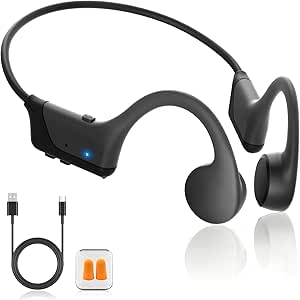 | Best Lightweight Workout Pick | Audio technology: Bone conduction | Frame material: Titanium | Weight: 29 g | VIEW LATEST PRICE | See Our Full Breakdown |
| Blrakx X27 Bone Conduction Open-Ear Headphones, Bluetooth, IP55, 10-Hour Battery |  | Best for Straightforward Outdoor Use | Audio technology: Bone conduction | Design: Open ear | Frame material: Titanium | VIEW LATEST PRICE | See Our Full Breakdown |
| Aftershokz OpenMove Wireless Bone Conduction Headphones, Slate Grey |  | Best for Simple Everyday Listening | Audio technology: Bone conduction | Ear placement: Open ear | Connectivity: Wireless Bluetooth 5.0 | VIEW LATEST PRICE | See Our Full Breakdown |
| Raycon Everyday Bone Conduction Headphones (2nd Gen), Black |  | Best for Long Listening Sessions | Model: RBB843-26E | Generation: 2nd Gen | Design: Open-ear bone conduction | VIEW LATEST PRICE | See Our Full Breakdown |
| Shokz OpenMove Wireless Bone Conduction Open-Ear Headphones |  | Best Entry-Level Shokz Pick | Model: OpenMove (AS660) | Audio technology: Bone conduction | Frame material: Titanium | VIEW LATEST PRICE | See Our Full Breakdown |
| Raycon Bone Conduction Open-Ear Headphones, Gray |  | Best for Wet-Weather Workouts | Model: RBB842-24E | Color: Gray | Audio technology: Bone conduction | VIEW LATEST PRICE | See Our Full Breakdown |
| Suunto Sonic Open-Ear Bone Conduction Bluetooth Headphones, Lime |  | Best for Multipoint and Calls | Model: SS050947000 | Connectivity: Bluetooth 5.2, multipoint | Bluetooth range: 10 meters | VIEW LATEST PRICE | See Our Full Breakdown |
| SHOKZ OpenRun Pro 2 Open-Ear Bluetooth Sport Headphones, Black |  | Best Premium Sound for Training | Model: OpenRun Pro 2 (S820) | Design: Open-ear | Audio technology: Bone conduction and air conduction dual drivers | VIEW LATEST PRICE | See Our Full Breakdown |
| SHOKZ OpenRun Bone Conduction Open-Ear Bluetooth Sport Headphones, Black |  | Best Overall | Model: OpenRun (S803) | Connectivity: Bluetooth | Water resistance: IP67 | VIEW LATEST PRICE | See Our Full Breakdown |
| Shokz OpenRun Wireless Bone Conduction Headphones, Black |  | Best for Everyday Awareness | Model: S803BK | Connectivity: Bluetooth 5.2 | Bluetooth range: 10 meters | VIEW LATEST PRICE | See Our Full Breakdown |
| SHOKZ OpenRun Air 2 Bone Conduction Open-Ear Bluetooth Headphones, Black |  | Best for Long Training Sessions | Model: OpenRun Air 2 (S610) | Connectivity: Bluetooth 6.0 | Weight: 26.4 g | VIEW LATEST PRICE | See Our Full Breakdown |
| SHOKZ OpenComm2 Open-Ear Bluetooth Headset with Noise-Canceling Microphone | 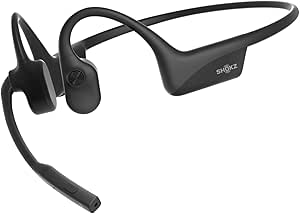 | Best for Calls & Meetings | Model: OpenComm2 C120 | Weight: 35 g | Microphone: DSP noise-canceling | VIEW LATEST PRICE | See Our Full Breakdown |
| bone conduction headphone | Weight | Battery life | Water resistance | Model |
|---|---|---|---|---|
| AfterShokz Trekz Titanium Bone | 59 g | Up to 6 hours | — | — |
| JBL Sense Lite True Wireless O | — | Up to 8 hours in earbuds; up to 24 additional hours with charging case | — | — |
| Blrakx HS1 Open-Ear Bone Condu | 29 g | Up to 10 hours | IP55 | — |
| Blrakx X27 Bone Conduction Ope | 29 g | Up to 10 hours | IP55 | — |
| Aftershokz OpenMove Wireless B | 29 g | Up to 6 hours | IP55 | — |
| Raycon Everyday Bone Conductio | — | Up to 16 hours | — | RBB843-26E |
| Shokz OpenMove Wireless Bone C | 29 g | Up to 6 hours | — | OpenMove (AS660) |
| Raycon Bone Conduction Open-Ea | 5.6 ounces | — | IP68 | RBB842-24E |
| Suunto Sonic Open-Ear Bone Con | 30.6 g | Up to 10 hours | IP55; resistant to sweat and light rain | SS050947000 |
| SHOKZ OpenRun Pro 2 Open-Ear B | 30.3 g | Up to 12 hours | IP55 | OpenRun Pro 2 (S820) |
| SHOKZ OpenRun Bone Conduction | 26 g | Up to 8 hours | IP67 | OpenRun (S803) |
| Shokz OpenRun Wireless Bone Co | 26 g | — | Water resistant | S803BK |
| SHOKZ OpenRun Air 2 Bone Condu | 26.4 g | Up to 10 hours | IP67 (not for swimming) | OpenRun Air 2 (S610) |
| SHOKZ OpenComm2 Open-Ear Bluet | 35 g | — | IP55 | OpenComm2 C120 |
More Details on Our Top Picks
AfterShokz Trekz Titanium Bone Conduction Wireless Headphones, Slate Grey
The Trekz Titanium is a practical pick for listeners who want a classic bone-conduction fit and need to stay connected to more than one device. Its multipoint Bluetooth pairing can make switching between a phone and computer easier than with the Blrakx HS1, whose listed features do not mention multipoint. The flexible, 59 g wraparound frame leaves the ears open, while IP55 resistance suits sweaty workouts and damp conditions. The tradeoff is its six-hour battery life, which is shorter than the HS1’s stated 10 hours and far below the JBL Sense Lite’s case-assisted total. Sound can also leak from the open-ear design, so it is less suited to quiet shared spaces than an isolating headset.
Pros:- Multipoint pairing supports connection to two devices.
- Open-ear bone conduction leaves the ear canals uncovered.
- Flexible wraparound fit is designed for extended wear.
- IP55 rating offers resistance to sweat, dust, and moisture.
Cons:- Up to six hours of battery life is modest beside the Blrakx HS1 and JBL Sense Lite.
- Open-ear playback may leak sound to nearby people.
- At 59 g, it is heavier than the listed 29 g Blrakx models.
Best for: People who alternate between a phone and computer and want open-ear listening with multipoint pairing.
Not ideal for: Listeners who need all-day battery life, private listening in quiet offices, or strong isolation from surrounding noise.
- Audio technology:Bone conduction
- Fit:Open ear, wraparound
- Connectivity:Bluetooth 4.1
- Battery life:Up to 6 hours
- Water and dust resistance:IP55
- Weight:59 g
- Compatibility:iOS and Android devices, Mac and PC computers
Our verdict“Choose the Trekz Titanium if multipoint pairing matters more than a lighter frame or longer battery life.”
JBL Sense Lite True Wireless Open-Ear Headphones, Black
The JBL Sense Lite stands apart from the bone-conduction picks here: it uses air conduction through 18 × 11 mm drivers, while leaving the ear canals open. That makes it a better fit for buyers who want a true-wireless ear-hook style and app-based sound adjustments, rather than the wraparound frames of the AfterShokz Trekz Titanium or Blrakx X27. Its up to 32 hours of total playtime includes the charging case, and a 10-minute charge is listed to provide up to three hours. Four beamforming microphones and multipoint connection add practical call and device-switching features. The tradeoffs are that the extra battery depends on carrying the case, and an open-ear design offers less isolation from traffic or other background noise.
Pros:- Up to 32 hours of total playtime with the charging case.
- 10-band EQ and customizable touch controls are available through the app.
- Four beamforming microphones support hands-free calls.
- Multipoint connection supports up to two devices.
Cons:- Uses air conduction rather than bone conduction, unlike the other bone-conduction picks in this batch.
- The additional 24 hours of stated playtime requires the charging case.
- Open-ear construction provides limited isolation from surrounding noise.
Best for: Commuters and workday listeners who want open-ear awareness, adjustable EQ, multipoint connection, and a charging case for extended use.
Not ideal for: Buyers specifically seeking bone-conduction audio, a frame-free setup without ear hooks, or strong noise isolation.
- Type:True wireless open-ear headphones
- Audio technology:Air conduction
- Driver size:18 × 11 mm
- Microphones:4 beamforming microphones
- Battery life:Up to 8 hours in earbuds; up to 24 additional hours with charging case
- Water and dust resistance:IP54
- Bluetooth connection:Multipoint connection with up to 2 devices
- App features:10-band EQ and customizable touch controls
Our verdict“Pick the JBL Sense Lite if you prefer true-wireless air-conduction earbuds with app controls and case-backed battery life over a bone-conduction frame.”
Blrakx HS1 Open-Ear Bone Conduction Headphones
At a listed 29 g, the Blrakx HS1 is the lightest-feeling style on paper among this batch’s wraparound bone-conduction options, matching the X27’s stated weight while adding a 10-hour battery and Bluetooth 6.0. That combination makes it a stronger workout candidate than the AfterShokz Trekz Titanium, which lists six hours of playback and weighs 59 g. The titanium frame, button controls, built-in microphone, and IP55 rating suit outdoor exercise without sealing the ears. Blrakx also describes an enclosed cavity intended to reduce sound leakage, though the open-ear fit still cannot promise private listening. The brand’s specification list includes a puzzling 20 MHz frequency response; I would not rely on that figure when comparing sound quality.
Pros:- Listed 29 g titanium frame is light for a wraparound design.
- Up to 10 hours of battery life exceeds the Trekz Titanium and OpenMove listings.
- IP55 water resistance suits workouts and outdoor use.
- USB-C fast charging and physical buttons are included.
Cons:- The stated 20 MHz frequency response appears questionable or incomplete.
- Open-ear playback may still be audible to people nearby.
- The supplied product data does not specify a charging-time figure or multipoint pairing.
Best for: Runners and fitness users who want a lightweight bone-conduction frame, longer listed battery life, and physical button controls.
Not ideal for: Buyers who prioritize well-documented audio measurements, strong sound isolation, or established brand specifications.
- Audio technology:Bone conduction
- Frame material:Titanium
- Weight:29 g
- Water resistance:IP55
- Battery life:Up to 10 hours
- Bluetooth:Bluetooth 6.0
- Charging:USB-C fast charging
- Controls:Button
- Microphone:Built-in
Our verdict“Choose the HS1 for a lightweight workout frame and longer listed runtime, but skip it if dependable audio specifications are a priority.”
Blrakx X27 Bone Conduction Open-Ear Headphones, Bluetooth, IP55, 10-Hour Battery
The Blrakx X27 covers the essentials for outdoor listening: a 29 g titanium frame, IP55 water resistance, USB-C charging, a microphone, and up to 10 hours of stated battery life. It is close on paper to the Blrakx HS1, which shares the listed weight and runtime but adds Bluetooth 6.0 and describes an enclosed cavity intended to reduce leakage. The X27’s connection specification is less clear: its description lists Bluetooth 5.4, while the title and product information say Bluetooth 6.0. That conflict makes it hard to rank on connectivity. Compared with the six-hour SHOKZ OpenMove, its stated runtime is longer, but the X27 lacks listed EQ settings. Sound leakage remains a tradeoff, and IP55 does not mean it can be submerged.
Pros:- Listed 29 g titanium frame keeps the wraparound design lightweight.
- Up to 10 hours of battery life is longer than the SHOKZ OpenMove listing.
- IP55 rating suits sweat and splashes during outdoor activity.
- USB Type-C charging and a built-in microphone are listed.
Cons:- Bluetooth version is inconsistent across the supplied product information.
- IP55 is not a submersion rating.
- Open-ear playback may leak sound, and no EQ settings are listed.
Best for: Outdoor walkers, hikers, and runners who want a light bone-conduction frame with a longer listed runtime and USB-C charging.
Not ideal for: Buyers who need a clearly documented Bluetooth version, submersion protection, or adjustable EQ settings.
- Audio technology:Bone conduction
- Design:Open ear
- Frame material:Titanium
- Weight:29 g
- Battery life:Up to 10 hours
- Water resistance:IP55
- Bluetooth:Bluetooth 5.4 in description; Bluetooth 6.0 in title and product information
- Charging interface:USB Type-C
- Microphone:Built-in
Our verdict“Choose the X27 for a lightweight outdoor frame and longer listed runtime, provided you can accept unclear Bluetooth details and no submersion protection.”
Aftershokz OpenMove Wireless Bone Conduction Headphones, Slate Grey
The Aftershokz OpenMove is the straightforward choice for everyday bone-conduction listening: it combines a 29 g open-ear frame with Bluetooth 5.0, IP55 water resistance, and three EQ settings. Those modes give it a modest sound-adjustment advantage over the Blrakx X27, which has no EQ feature listed, but its six-hour battery falls short of the X27 and HS1’s stated 10 hours. The OpenMove also matches the Trekz Titanium’s listed runtime while being much lighter on paper; the Trekz, by contrast, offers multipoint pairing. Its uncomplicated feature set suits buyers who want to keep their ears open for routine walks or errands. It is less compelling for long days away from charging or users who need a headphone jack.
Pros:- Listed 29 g weight is substantially lower than the Trekz Titanium’s 59 g.
- Bluetooth 5.0 supports wireless everyday listening.
- Three EQ settings provide a choice of sound modes.
- IP55 water resistance suits sweat and moisture exposure.
Cons:- Six-hour battery life is shorter than the Blrakx HS1 and X27 listings.
- No headphone jack is listed.
- The supplied product data does not list a warranty.
Best for: Everyday listeners who want a lightweight bone-conduction option with simple EQ choices for walks, errands, and short workouts.
Not ideal for: People who need more than six hours of playback, multipoint pairing, a headphone jack, or a listed warranty.
- Audio technology:Bone conduction
- Ear placement:Open ear
- Connectivity:Wireless Bluetooth 5.0
- Battery life:Up to 6 hours
- EQ settings:3
- Water resistance:IP55
- Weight:29 g
- Bluetooth range:10 m
Our verdict“Pick the OpenMove for a light, uncomplicated bone-conduction headset with EQ choices, but choose the HS1 or X27 for longer listed battery life.”
Raycon Everyday Bone Conduction Headphones (2nd Gen), Black
Up to 16 hours of battery life gives the Raycon Everyday 2nd Gen an advantage over the Shokz OpenMove, which is rated for up to 6 hours, and the Suunto Sonic at up to 10. That extra runtime suits long workdays or extended outdoor outings without frequent charging. Regular and small fit options also make it a more adaptable pick for buyers who find a one-size frame uncomfortable. Its open-ear design keeps traffic and conversation audible, a useful safety benefit but not a substitute for sound isolation. IP67 water and dust resistance adds protection for active use, while dual microphones support calls. The tradeoff is that surrounding noise remains present, and the supplied details don’t specify charging time or wireless connectivity version.
Pros:- Up to 16 hours of battery life outlasts the listed Shokz OpenMove and Suunto Sonic runtimes.
- Regular and small sizes offer more fit choice than a single-size frame.
- IP67 water and dust resistance suits active use in varied conditions.
- Dual microphones support hands-free calls.
Cons:- Open-ear listening leaves surrounding noise audible, which can make audio harder to hear in loud places.
- The supplied specifications do not state charging time or Bluetooth version.
Best for: People who want open-ear headphones for long outings or workdays and need a choice of regular or small fit.
Not ideal for: Commuters seeking isolation from traffic or other loud surroundings, since the open-ear design does not block ambient noise.
- Model:RBB843-26E
- Generation:2nd Gen
- Design:Open-ear bone conduction
- Fit sizes:Regular and Small
- Battery life:Up to 16 hours
- Water and dust resistance:IP67
- Microphones:Dual
- Warranty:1 year limited warranty
Our verdict“Choose the Raycon Everyday 2nd Gen if long battery life and two fit sizes matter more than blocking outside noise.”
Shokz OpenMove Wireless Bone Conduction Open-Ear Headphones
The Shokz OpenMove keeps the essentials straightforward: a 29 g titanium frame, open-ear bone conduction, and USB-C charging. That makes it a practical introduction to the format for runners or everyday listeners who want their ears unobstructed without paying for the Suunto Sonic’s multipoint connectivity or the SHOKZ OpenRun Pro 2’s dual-driver setup. The compromise is runtime: up to 6 hours is shorter than either of those alternatives and may mean a charge after a full day of mixed use. Bluetooth 5.0 and a stated 10-meter range cover ordinary wireless listening, while the two-hour charging time calls for some planning. Its water-resistant description supports active use, but no specific IP rating is provided in the supplied data.
Pros:- Lightweight 29 g titanium frame is suited to active wear.
- Open-ear design leaves the ear canals unobstructed.
- USB-C charging uses a widely available cable type.
- Bluetooth 5.0 wireless connection has a listed 10-meter range.
Cons:- Up to 6 hours of battery life is shorter than the Raycon Everyday 2nd Gen, Suunto Sonic, and SHOKZ OpenRun Pro 2.
- A full charge takes 2 hours, with no fast-charge feature listed.
- The supplied specifications say waterproof but do not provide an IP rating.
Best for: First-time bone conduction buyers and casual runners who want a light, uncomplicated wireless set for shorter sessions.
Not ideal for: People who need all-day battery life, fast charging, or a clearly stated IP water-resistance rating.
- Model:OpenMove (AS660)
- Audio technology:Bone conduction
- Frame material:Titanium
- Weight:29 g
- Connectivity:Bluetooth 5.0, wireless
- Bluetooth range:10 meters
- Battery life:Up to 6 hours
- Charging:USB-C; 2-hour charging time
Our verdict“Pick the OpenMove for a light, basic entry into bone conduction, but choose another model for longer sessions or more detailed water protection.”
Raycon Bone Conduction Open-Ear Headphones, Gray
IP68 water resistance is the defining advantage of this Raycon: it offers a higher stated protection rating than the IP55 Suunto Sonic and SHOKZ OpenRun Pro 2. That makes it a compelling match for sweaty workouts and wet conditions, though the supplied details don’t say it can be submerged or rinsed, so I wouldn’t infer that from the rating alone. Its adjustable ergonomic fit and magnetic charging cable add practical touches for active routines. Compared with the Raycon Everyday 2nd Gen, this model has the higher IP rating, but its battery life is not specified, so buyers can’t compare runtime from the provided data. Like the other open-ear options, it keeps outside sounds audible rather than filtering them; high-noise settings can drown out what you’re listening to.
Pros:- IP68 rating is higher than the IP55 ratings listed for Suunto Sonic and SHOKZ OpenRun Pro 2.
- Adjustable ergonomic fit can help accommodate different head shapes.
- Magnetic charging cable makes connecting the charger simple.
- Open-ear bone conduction design keeps ears unobstructed.
Cons:- Battery life is not provided in the supplied specifications.
- No noise control means loud environments can mask audio.
- The supplied details do not state Bluetooth version or microphone specifications.
Best for: Active users who prioritize a strong stated sweat-and-water protection rating and want an adjustable open-ear fit.
Not ideal for: Listeners who need a documented long battery runtime, noise isolation, or clear call and connectivity specifications.
- Model:RBB842-24E
- Color:Gray
- Audio technology:Bone conduction
- Ear placement:Open ear
- Water resistance:IP68
- Weight:5.6 ounces
- Battery charge time:2 hours
- Warranty:1 year
Our verdict“Choose this Raycon for its IP68 rating and adjustable fit, but look elsewhere if battery runtime or noise control is a priority.”
Suunto Sonic Open-Ear Bone Conduction Bluetooth Headphones, Lime
The Suunto Sonic balances useful connectivity and call features without matching the SHOKZ OpenRun Pro 2’s higher stated battery life. Bluetooth 5.2 multipoint lets buyers connect to more than one device, which is handy for switching between a phone and computer. Its dual HD microphones use echo and noise suppression, giving it a clearer call-focused specification than the basic microphone listing for the Shokz OpenMove. Fast charging is another practical advantage: five minutes provides up to 90 minutes of use, and a full charge is listed at one hour. The limits are its IP55 rating, which covers sweat and light rain rather than rinsing under a faucet, and a 10-hour runtime that falls short of the Raycon Everyday 2nd Gen’s 16 hours. The Suunto app also handles sound modes and settings.
Pros:- Bluetooth 5.2 multipoint supports connections to multiple devices.
- Five minutes of charging provides up to 90 minutes of use.
- Dual HD microphones include echo and noise suppression.
- Lightweight 30.6 g frame and 2-year warranty are specified.
Cons:- IP55 protection is for sweat and light rain, not rinsing under a faucet.
- Up to 10 hours of battery life is shorter than the Raycon Everyday 2nd Gen’s listed runtime.
- Sound modes and settings are managed through the Suunto app.
Best for: People who switch between phone and computer, take calls outdoors, and value quick top-ups between listening sessions.
Not ideal for: Buyers who need a higher water-protection rating, the longest listed runtime, or a set-and-forget experience without app-based settings.
- Model:SS050947000
- Connectivity:Bluetooth 5.2, multipoint
- Bluetooth range:10 meters
- Battery life:Up to 10 hours
- Charging:1 hour; 5 minutes provides up to 90 minutes of use
- Weight:30.6 g
- Water resistance:IP55; resistant to sweat and light rain
- Warranty:2 years
Our verdict“Choose the Suunto Sonic if multipoint, quick charging, and call-focused microphones matter more than maximum battery life or stronger water protection.”
SHOKZ OpenRun Pro 2 Open-Ear Bluetooth Sport Headphones, Black
The SHOKZ OpenRun Pro 2 is the most audio-focused sports option here, pairing bone and air conduction drivers for a fuller sound profile than the single bone-conduction design listed for the Suunto Sonic. Its memory-wire frame and ergonomic ear hooks are built to stay secure during movement, while wind-resistant dual microphones with AI noise reduction target clearer outdoor calls. The 12-hour battery life sits between the Suunto Sonic’s 10 hours and Raycon Everyday 2nd Gen’s 16, giving it solid session coverage without leading this lineup. IP55 suits sweat and outdoor workouts, but not heavy water exposure. Buyers should also note that EQ customization requires the SHOKZ app, and the open-ear design cannot provide the isolation of in-ear headphones.
Pros:- Bone and air conduction drivers offer a different, fuller sound approach than the Suunto Sonic’s listed bone-conduction system.
- Memory wire and ergonomic ear hooks are designed to hold securely during exercise.
- Up to 12 hours of battery life exceeds the Suunto Sonic’s listed 10 hours.
- Dual wind-resistant microphones with AI noise reduction support outdoor calls.
Cons:- IP55 protection is less than the IP68 rating listed for the Raycon Bone Conduction Open-Ear Headphones.
- Open-ear design provides less isolation from surrounding noise.
- EQ mode customization requires the SHOKZ app.
Best for: Runners and training-focused listeners who want a secure fit, richer driver setup, and call support for outdoor use.
Not ideal for: People who want noise isolation, stronger water protection than IP55, or EQ controls without using an app.
- Model:OpenRun Pro 2 (S820)
- Design:Open-ear
- Audio technology:Bone conduction and air conduction dual drivers
- Battery life:Up to 12 hours
- Water resistance:IP55
- Microphones:Dual wind-resistant microphones with AI noise reduction
- Fit:Ni-Ti alloy memory wire and ergonomic ear hooks
- Weight:30.3 g
Our verdict“Choose the OpenRun Pro 2 for a secure training fit and dual-driver sound, unless you need stronger water protection or ambient-noise isolation.”
SHOKZ OpenRun Bone Conduction Open-Ear Bluetooth Sport Headphones, Black
The SHOKZ OpenRun earns the top spot because it balances everything most runners and gym-goers need without forcing compromises. Its IP67 water resistance shrugs off rain and heavy sweat, while the 8-hour battery covers a full week of daily workouts. The included sport headband, magnetic charging cable, and protective case add real value that the bare-bones OpenRun Air 2 skips. Compared with the OpenComm2, which leans heavily toward call duty, this model keeps the focus on athletic performance with a lighter 26-gram frame and a more flexible wraparound design. The tradeoff is that it lacks the transparency mode found on the standard Shokz OpenRun (B09LT4SFGJ), so you won’t get that extra layer of ambient sound control—though the open-ear design already keeps you aware of traffic and conversation. For a do-it-all sport headphone that stays secure during sprints and still sounds clear on podcasts, this is the one to pick.
Pros:- IP67 water resistance handles rain and heavy sweat
- Lightweight 26g wraparound frame stays put during high-impact movement
- 10-minute quick charge delivers up to 1.5 hours of playback
- Bundle includes sport headband, magnetic cable, and protective case
Cons:- No noise control or transparency mode, limiting ambient sound management
- 8-hour battery is shorter than the OpenRun Air 2’s 10 hours
- Not swim-safe despite the IP67 rating
Best for: Runners, cyclists, and gym regulars who want a rugged, sweatproof headphone with useful accessories included and a secure wraparound fit.
Not ideal for: Swimmers—the IP67 rating is not suitable for submersion—and anyone who wants active noise control, since there is none.
- Model:OpenRun (S803)
- Connectivity:Bluetooth
- Water resistance:IP67
- Battery life:Up to 8 hours
- Quick charge:10 minutes for up to 1.5 hours
- Weight:26 g
- Audio sensitivity:105 dB
- Included accessories:Sport headband, magnetic charging cable, protective case
Our verdict“If you need a dependable, well-rounded sport headphone with solid water resistance and a complete accessory kit, the SHOKZ OpenRun is the safest bet.”
Shokz OpenRun Wireless Bone Conduction Headphones, Black
The Shokz OpenRun (B09LT4SFGJ) stands apart from its sibling (B09BW1QVVT) by adding a transparency mode—a feature that lets you dial in how much ambient sound reaches your ears. That makes it the better choice for urban commuters who need to hear announcements or traffic while still enjoying music. At just 26 grams, it’s equally featherlight, and Bluetooth 5.2 offers a stable 10-meter range. However, it lacks the IP67 rating of the other OpenRun, settling for generic water resistance, so heavy rain or intense sweat might be a concern. Compared with the OpenComm2, this model is more music-focused and lighter, but it doesn’t have the noise-canceling microphone for calls. The open-ear design means you’ll get minimal passive isolation—that’s the point—but if you want to block out a noisy office, look to sealed headphones instead.
Pros:- Transparency mode gives you control over ambient sound levels
- Lightweight 26g design is barely noticeable during long wear
- Bluetooth 5.2 provides stable, low-latency connection
- Open-ear fit keeps you alert to traffic and conversations
Cons:- Only water-resistant, not IP-rated for heavy rain or submersion
- No headphone jack for wired backup
- Transparency mode is not adjustable on the fly—it’s either on or off
Best for: Urban commuters, walkers, and office workers who need to stay aware of their surroundings while listening to music or podcasts.
Not ideal for: Serious athletes who train in heavy rain or sweat profusely—the lack of IP67 protection is a real drawback.
- Model:S803BK
- Connectivity:Bluetooth 5.2
- Bluetooth range:10 meters
- Weight:26 g
- Noise control:Transparency mode
- Sensitivity:110 dB
- Water resistance:Water resistant
Our verdict“Choose this OpenRun if you value situational awareness and a lighter feel over rugged water resistance, making it ideal for daily commutes and casual listening.”
SHOKZ OpenRun Air 2 Bone Conduction Open-Ear Bluetooth Headphones, Black
The SHOKZ OpenRun Air 2 extends the battery life to 10 hours—two hours more than the standard OpenRun—which makes it the clear pick for marathon training or all-day adventures. Its customizable EQ profiles (four presets plus two custom) let you tune the sound to your preference, something the OpenComm2 doesn’t offer. The memory-alloy earhooks hold securely even during intense interval work, and the IP67 rating matches the top-tier OpenRun. However, the package notably omits a charging cable, so you’ll need to supply your own USB-C cable. Compared with the OpenRun Air 2’s predecessor, this version uses Bluetooth 6.0 for better stability, but the lack of a cable is a frustrating oversight for a product at this level. It’s also not swim-safe, so keep it out of the pool.
Pros:- 10-hour battery life outlasts most competitors in this lineup
- Customizable EQ with 4 presets and 2 custom profiles
- IP67 water resistance for rain and sweat
- Memory-alloy earhooks provide a secure, flexible fit
Cons:- Charging cable not included—must buy separately
- Not suitable for swimming or underwater use
- Physical buttons can be tricky to locate mid-workout
Best for: Endurance athletes, triathletes in training, and anyone who needs a full day of listening without frequent recharging.
Not ideal for: Buyers who expect a complete out-of-box experience—the missing charging cable is a genuine inconvenience.
- Model:OpenRun Air 2 (S610)
- Connectivity:Bluetooth 6.0
- Weight:26.4 g
- Battery life:Up to 10 hours
- Quick charge:5 minutes for up to 2 hours
- Water resistance:IP67 (not for swimming)
- Audio:PremiumPitch 3.0 with 4 preset + 2 custom EQ
- Included accessories:Sport headband (no charging cable)
Our verdict“If you train for hours and hate stopping to recharge, the OpenRun Air 2’s extended battery and EQ flexibility make it the best long-distance companion.”
SHOKZ OpenComm2 Open-Ear Bluetooth Headset with Noise-Canceling Microphone
The SHOKZ OpenComm2 flips the priority from music to communication. Its DSP noise-canceling microphone filters out background chatter so your voice comes through clearly on conference calls, while the dual-device pairing lets you switch between a laptop and phone seamlessly. At 35 grams, it’s heavier than the OpenRun Air 2, but the flexible frame distributes weight well for all-day wear. The battery split is telling: 16 hours of talk time versus 8 hours of listening—so it’s built for voice, not marathon music sessions. Compared with the standard OpenRun, the OpenComm2 trades water resistance (IP55 vs IP67) and audio tuning for call-focused features. If you’re a remote worker or frequent caller who needs to hear your surroundings, this is the pick. But if you’re primarily listening to music, the OpenRun series offers better battery and EQ options.
Pros:- DSP noise-canceling microphone ensures clear voice pickup
- Pairs with two Bluetooth devices simultaneously for easy switching
- 16 hours of talk time per charge
- USB-C charging for convenience
Cons:- Only 8 hours of listening time—short for music playback
- IP55 water resistance is lower than the OpenRun’s IP67
- No headphone jack for wired use
Best for: Remote workers, call-center agents, and professionals who spend hours on voice calls and need to stay aware of their environment.
Not ideal for: Music-first listeners who want long playback time or customizable EQ—the OpenRun Air 2 is better suited for that.
- Model:OpenComm2 C120
- Weight:35 g
- Microphone:DSP noise-canceling
- Bluetooth pairing:Two devices simultaneously
- Talk time:Up to 16 hours
- Listening time:Up to 8 hours
- Charging:USB-C
- Water resistance:IP55
Our verdict“If your days are filled with calls and you need a headset that keeps you present in the room, the OpenComm2 is the dedicated communication tool.”

How We Picked
I evaluated these 14 bone conduction headphones based on five core criteria: audio performance (clarity, bass response, and volume), comfort and fit stability during movement, battery life and charging speed, connectivity (Bluetooth version, multipoint support), and durability (water resistance and build quality). I also weighed the value each model offers relative to its feature set, since prices vary widely across the category.
The ranking reflects how well each model balances these factors for its intended use case. Premium models like the OpenRun Pro 2 earned top spots for delivering the most complete package, while budget picks like the Blrakx HS1 ranked lower because they cut corners on sound and build. I also separated models that excel in specific niches, such as the OpenComm2 for calls or the JBL Sense Lite for compact design, so you can find the right fit for your priorities.
| bone conduction headphone | Audio technology | Battery life | Water resistance |
|---|---|---|---|
| AfterShokz Trekz Titanium Bone | Bone conduction | Up to 6 hours | — |
| JBL Sense Lite True Wireless O | Air conduction | Up to 8 hours in earbuds; up to 24 additional hours with charging case | — |
| Blrakx HS1 Open-Ear Bone Condu | Bone conduction | Up to 10 hours | IP55 |
| Blrakx X27 Bone Conduction Ope | Bone conduction | Up to 10 hours | IP55 |
| Aftershokz OpenMove Wireless B | Bone conduction | Up to 6 hours | IP55 |
| Raycon Everyday Bone Conductio | — | Up to 16 hours | — |
| Shokz OpenMove Wireless Bone C | Bone conduction | Up to 6 hours | — |
| Raycon Bone Conduction Open-Ea | Bone conduction | — | IP68 |
| Suunto Sonic Open-Ear Bone Con | — | Up to 10 hours | IP55; resistant to sweat and light rain |
| SHOKZ OpenRun Pro 2 Open-Ear B | Bone conduction and air conduction dual drivers | Up to 12 hours | IP55 |
| SHOKZ OpenRun Bone Conduction | — | Up to 8 hours | IP67 |
| Shokz OpenRun Wireless Bone Co | — | — | Water resistant |
| SHOKZ OpenRun Air 2 Bone Condu | — | Up to 10 hours | IP67 (not for swimming) |
| SHOKZ OpenComm2 Open-Ear Bluet | — | — | IP55 |
Factors to Consider When Choosing Best Bone Conduction Headphones
Choosing the best bone conduction headphones goes beyond just picking a familiar brand. Here are the key factors I considered when comparing these models, along with the tradeoffs that matter most.
Sound Quality vs. Open-Ear Awareness
The biggest tradeoff in bone conduction is always audio fidelity versus situational awareness. Bone conduction headphones leak sound and lack deep bass compared to in-ear or over-ear options, but they keep your ears open for traffic, conversations, or trail sounds. If you’re a runner or cyclist, that awareness is worth the compromise. However, if you expect audiophile-level sound, you’ll be disappointed with any model here. The SHOKZ OpenRun Pro 2 does the best job of adding bass without sacrificing the open-ear experience, but it still won’t match traditional headphones.
Battery Life and Charging
Battery life varies from 6 to 10 hours across this roundup, and that difference matters more than you might think. The Blrakx X27’s 10-hour battery is ideal for long training sessions or multi-day trips without charging. Most other models land around 8 hours, which is fine for daily use but requires more frequent top-ups. Also check the charging connector: USB-C is now standard on newer models like the OpenRun Pro 2, while older ones like the AfterShokz Trekz Titanium still use proprietary cables. That’s a small but annoying inconvenience.Fit and Comfort for Different Head Shapes
Bone conduction headphones rely on a secure fit against your cheekbones, so the design of the ear hooks and band matters. Some models, like the JBL Sense Lite, use a true wireless earbud style that fits more discreetly but may not stay put during high-impact exercise. Neckband designs like the SHOKZ OpenRun series are more stable but can feel bulky under hats or helmets. If you wear glasses, check the clearance—the Raycon Everyday model has a slimmer profile that works better with eyewear. I recommend trying a few styles to see which stays comfortable over long periods.Water Resistance and Durability
Sweat and rain are inevitable during workouts, so IP rating is a key spec to check. Most models here offer at least IP55, which handles sweat and light rain, but only a few like the Suunto Sonic go higher for more demanding conditions. If you plan to use your headphones for swimming, you’ll need a dedicated model with IP68 and built-in storage—none of the 14 in this roundup qualify. For general fitness, IP55 is sufficient, but don’t expect to submerge them. Also consider the build quality of the band and hinges; cheaper models like the Blrakx HS1 feel more fragile than the reinforced SHOKZ designs.Connectivity and Multipoint Pairing
Bluetooth version and multipoint support are often overlooked. Multipoint pairing lets you connect to two devices simultaneously, which is a lifesaver if you switch between a phone and laptop. The SHOKZ OpenComm2 and OpenRun Pro 2 both support it, while budget models like the Blrakx HS1 do not. Bluetooth 5.2 or newer ensures a stable connection and better power efficiency. If you plan to use your headphones for calls, also check the microphone quality—the OpenComm2’s noise-canceling mic is a standout, while most others have basic mics that pick up background noise.Frequently Asked Questions
What is the difference between bone conduction and open-ear headphones?
Bone conduction headphones transmit sound through vibrations in your cheekbones, leaving your ear canals completely open. Open-ear headphones, like the JBL Sense Lite, use small speakers that sit just outside your ear canal, but they still allow ambient sound in. The practical difference is that bone conduction works even if you have earplugs or hearing aids, while open-ear designs can leak more sound and may not be as comfortable for glasses wearers. For most people, bone conduction offers a more secure fit for sports, but open-ear true wireless models are more discreet for daily commutes.
Do bone conduction headphones leak sound to people nearby?
Yes, they do leak some sound, especially at higher volumes. The amount depends on how tightly the transducers press against your head and the volume level. In a quiet office, someone sitting next to you might hear a faint whisper of your music. The SHOKZ OpenRun Pro 2 and other premium models have improved vibration isolation to reduce leakage, but you can’t eliminate it entirely. If you’re concerned about privacy, keep the volume below 60% or choose a model with more precise transducer placement. For outdoor use, leakage is rarely an issue.
Can I use bone conduction headphones for swimming?
Most bone conduction headphones, including every model in this roundup, are not designed for swimming. They have IP55 or IPX5 ratings, which protect against sweat and rain but not full submersion. To swim, you need a dedicated model like the SHOKZ OpenSwim or Naenka Runner Diver, which have IP68 ratings and built-in MP3 storage. If you only swim laps occasionally, you could risk it with an IPX7 model, but it’s not recommended. For pool workouts, look for headphones that explicitly mention swimming capability.
How do I choose between a neckband and true wireless design?
The choice comes down to stability versus convenience. Neckband models like the SHOKZ OpenRun series wrap around the back of your head, providing a secure fit that won’t fall off during sprints or jumps. They also tend to have longer battery life and bigger controls. True wireless models like the JBL Sense Lite are smaller and more discreet, but they can shift or fall out during intense workouts, and they typically have shorter battery life. If you’re a runner or cyclist, a neckband is safer; if you just want something for calls or light gym sessions, true wireless might be more comfortable.
Which bone conduction headphones are best for phone calls?
The SHOKZ OpenComm2 is the clear winner for calls because it has a noise-canceling microphone that filters out wind and background noise. The OpenRun Pro 2 also has a decent mic, but it’s not as effective in noisy environments. Most other models, especially budget ones like the Blrakx HS1, have mics that pick up too much ambient sound, making your voice hard to hear. If you take calls in busy streets or open offices, prioritize the OpenComm2 or at least a model with dual microphones and noise reduction.
Conclusion
After comparing all 14 models, the best overall bone conduction headphones are the SHOKZ OpenRun Pro 2—they offer the most balanced mix of sound, battery, and comfort, making them the default recommendation for most people. If you’re on a budget, the Blrakx X27 delivers the longest battery life at a fraction of the cost, though you’ll sacrifice some audio quality and build. For a premium investment, the OpenRun Pro 2 is also the best premium pick, but if you want a lighter version, the OpenRun Air 2 is a great alternative. Beginners should start with the Shokz OpenMove because it’s easy to use and covers the basics without overwhelming features. For specific needs, the OpenComm2 is the best for calls, the JBL Sense Lite is the best for a compact true wireless fit, and the Suunto Sonic is ideal for trail runners who want a rugged, sporty design. Match your priorities to these picks, and you’ll find the right pair for your ears.