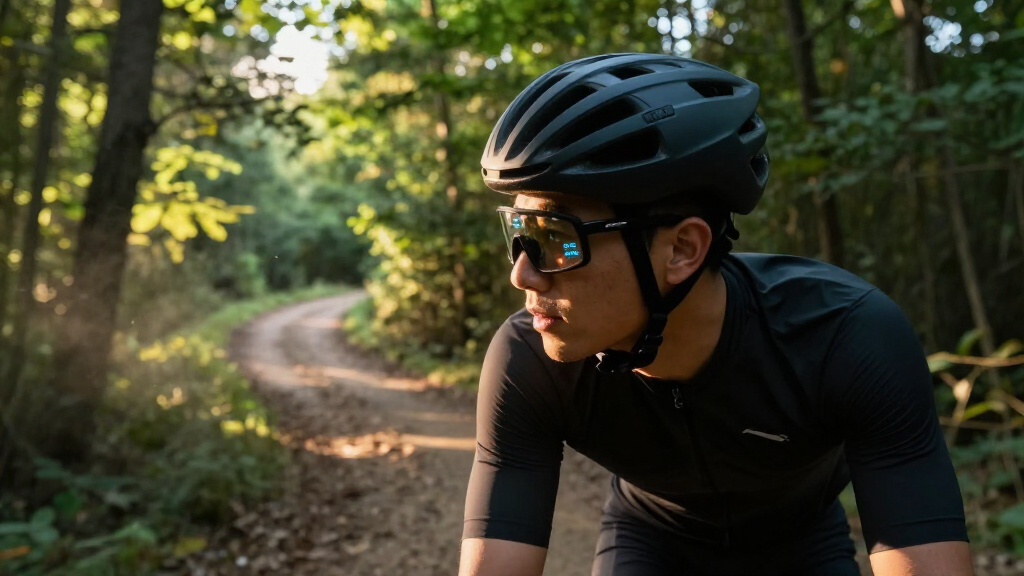
The best sports smart glasses balance secure fit, useful outdoor visibility, and features you will actually use while moving. My best overall pick is the Meta Oakley Vanguard Smart AI Glasses, while the 32MP polarized camera glasses stand out for stabilization-focused recording and the OHO Sport Open-Ear Smart Glasses suit buyers who value audio and impact resistance over a camera. The main tradeoffs are camera quality versus comfort, automatic light adaptation versus reliable lens tint, and added electronics versus durability and battery life. A long feature list matters less if the glasses shift during a ride or block too much awareness of traffic. Read on for the full comparison and a guide to choosing a pair for your sport.

Get the latest gadgets delivered free with Prime
- Fast, free delivery on millions of items
- Prime Video, Amazon Music and more included
- Member-only deals all year
Complete the kit



Key Takeaways
- The lineup splits into camera-first and audio-first choices: several models emphasize POV capture, while OHO Sport is a clearer fit for buyers prioritizing open-ear audio and impact-resistant sunglasses.
- Stabilization is a meaningful differentiator: the 32MP polarized model lists EIS, while the 4K EIS sports model and the 4K anti-shake photochromic model also target motion-heavy footage.
- Lens features answer different outdoor problems: photochromic lenses adapt to changing light, polarized lenses reduce glare, and UV400 claims focus on ultraviolet protection; one feature does not replace the others.
- Resolution alone does not settle the camera choice: 8MP, 13MP, 32MP, 2K, and 4K labels appear across the options, but stabilization, recording behavior, and fit can matter more during movement.
- The premium and specialized options serve different priorities: Meta Oakley Vanguard is the premium sports-oriented pick, while the Cybersight Zenith Pro HUD is the option to examine for a heads-up display rather than camera-led recording.


| sports smart glasse | Water resistance | Camera | Weight |
|---|---|---|---|
| AI Smart Glasses with 8MP Came | IP66 | 8MP | — |
| Sport Smart Glasses with Camer | IP65 | 8MP with anti-shake | 49.3g |
| AI Smart Glasses with POV Came | IP65 | — | 52.7g |
| Cybersight Zenith Pro HUD Spor | — | — | — |
| HTC Vive Eagle AI Glasses | — | 12MP | 48.5g |
| Smart Glasses with Camera and | IP64 | 32MP | — |
| OHO Sport Open-Ear Smart Glass | Water resistant | — | 31 g |
| OHO 2K QHD Sports Smart Glasse | — | — | 128 g |
| Sport AI Smart Sunglasses with | Water resistant | 13MP HD | 38 g |
| AI Smart Glasses with Camera f | IP54 | — | — |
| Meta Oakley Vanguard Smart AI | IP67 | 12 MP; 3K Ultra HD video described | 65.2 g |
| AI Sports Smart Glasses with C | IP66 | 4K with EIS stabilization | — |
| AI Smart Glasses with Voice Co | IP55 | 800W HD EIS anti-shake | — |
| Coucur AI Smart Glasses with C | IP65 | — | — |
More Details on Our Top Picks
AI Smart Glasses with 8MP Camera, 4K Photo, 1200P Video Recording, AI Voice Assistant, Real-Time Translation, Open-Ear Audio, Photo Recognition, UV Protection
I’d pick these for outdoor sessions where weather protection and hands-free capture matter more than seeing stats on the lens. The IP66 rating offers stronger stated water protection than the IP65 rating on the Sport Smart Glasses with Camera, while open-ear audio lets you hear calls or prompts without fully shutting out your surroundings. The camera records 1200P video and captures high-resolution photos, with real-time translation and photo recognition adding everyday uses beyond training. The tradeoff is that there’s no built-in display, so framing, settings, and other visual feedback depend on a paired phone. Their listed 12-hour music playback figure also won’t tell you how long the camera and AI features last in active use. For ride data in your sightline, the Cybersight Zenith Pro is a better fit.
Pros:- IP66 water-resistance rating is higher than the IP65 ratings listed for two other camera-focused picks here.
- 8MP camera supports high-resolution still photos and 1200P video.
- Open-ear audio preserves awareness of nearby sounds.
- Translation and photo-recognition features extend use beyond recording workouts.
Cons:- No display for live framing, settings, or visual training feedback.
- Battery life for camera and AI use is not specified; the 12-hour figure applies to music playback.
- Full functionality may depend on smartphone pairing.
Best for: Cyclists and hikers who want open-ear audio, camera capture, and a higher stated water-resistance rating for outdoor use.
Not ideal for: Athletes who need a heads-up display for live training metrics or want to operate camera features without a paired smartphone.
- Camera:8MP
- Photo resolution:6560 × 4928
- Video recording:1200P
- Battery:290mAh
- Water resistance:IP66
- Compatibility:Android, iOS
- Display:None
- Battery life:Up to 12 hours of music playback; 7+ days standby
Our verdict“Choose these if weather resistance and camera-assisted outdoor use matter more to you than a built-in display or live workout metrics.”
Sport Smart Glasses with Camera, 4K POV Glasses with Photochromic Lens, Anti-Shake Camera, AI Voice Assistant, Real-Time Translation, IP65 UV400 Outdoor Sunglasses
For rides that move between open sun and shade, these glasses have the clearest lens advantage in this group: photochromic UV400 lenses adjust to changing light, reducing the need to swap eyewear mid-activity. The anti-shake camera also targets a common action-capture problem—jostling footage—while open-ear audio keeps outside sounds accessible. Compared with the AI Smart Glasses with POV Camera, this model gives more attention to adaptive lenses, but the other pair lists 6-axis EIS, built-in storage, and a defined video frame rate. These glasses are listed at 49.3g and carry an IP65 rating, though their battery capacity and runtime are not provided. I’d favor them for outdoor sports in variable light, not as an all-purpose smart-glasses choice.
Pros:- Photochromic UV400 lenses adapt to changing light conditions.
- Anti-shake camera is designed to reduce movement in captured footage.
- Open-ear audio supports listening while keeping environmental sounds audible.
- Bluetooth 5.4 connectivity and a 49.3g listed weight.
Cons:- Battery capacity and operating time are not specified.
- IP65 protection is lower than the IP66 rating listed for the first product.
- Its outdoor-sport emphasis may make it less versatile for everyday wear.
Best for: Cyclists, hikers, and skiers who frequently move between bright sun and shade and want camera stabilization with adaptive lenses.
Not ideal for: Buyers who need documented battery runtime, a stated video frame rate, or glasses suited equally well to casual indoor use.
- Photo resolution:6560 × 4928 pixels
- Camera:8MP with anti-shake
- Lens:Photochromic, UV400
- Water resistance:IP65
- Weight:49.3g
- Connectivity:Bluetooth 5.4, USB
- Battery type:NiMH
Our verdict“Pick these for outdoor routes with changing light, but choose the POV Camera model if stated stabilization details and built-in storage matter more.”
AI Smart Glasses with POV Camera, 4K Video Recording for Cycling & Hiking
Among the camera-first options here, this pair gives buyers the most specific stabilization and storage details: 6-axis EIS is intended to steady movement, and 4GB of built-in storage provides room for clips without describing a separate storage device. Its stated video output is 1200P at 30fps, so the “4K” language in the product title should not be mistaken for the listed video recording specification. Compared with the Sport Smart Glasses with Camera, this model spells out stabilization and storage, while that alternative lists photochromic lenses for variable light. At 52.7g with IP65 water resistance, it suits active use, but 4GB can fill quickly and battery runtime is not clearly stated. Choose it for hands-free POV recording, not extensive all-day filming.
Pros:- 6-axis EIS stabilization is specified for reducing camera shake.
- 4GB built-in storage allows local clip storage.
- Open-ear audio, object recognition, and real-time translation add functions beyond recording.
- IP65 water resistance and UV400 protection suit outdoor activities.
Cons:- Listed video recording is 1200P/30fps, not 4K video.
- 4GB storage may be restrictive for frequent or extended recording.
- No display is included for real-time viewing.
Best for: Cyclists and hikers who want stabilized hands-free clips, built-in storage, and voice or translation features in one pair.
Not ideal for: Athletes planning long recording sessions, needing large onboard storage, or expecting a built-in screen to preview footage.
- Photo output:32MP
- Video recording:1200P at 30fps
- Stabilization:6-axis EIS
- Battery:300mAh
- Built-in storage:4GB
- Water resistance:IP65
- Weight:52.7g
- Connectivity and compatibility:Wi-Fi and Bluetooth; Android and iOS
Our verdict“Choose this model for stabilized POV clips and useful built-in storage, provided its listed 1200P video and limited capacity suit your recording habits.”
Cybersight Zenith Pro HUD Sports Glasses
The Zenith Pro earns its place by serving a different sports need from the camera-led glasses: it puts training metrics in your line of sight instead of focusing on recording what you see. Speed, heart rate, navigation, and a broad set of other metrics can reduce the need to glance down at a bike computer or watch. Its rear-vehicle warnings and AI coaching also make it the strongest data-and-safety pick in this lineup, provided you already use compatible equipment. By contrast, the AI Smart Glasses with POV Camera are better suited to capturing stabilized clips, and the Zenith Pro’s description does not list a camera. Full safety functions rely on external devices such as a radar taillight, while one stated Garmin running limitation is that power data is not displayed. This is a specialist training tool, not the most self-contained option.
Pros:- Heads-up display presents metrics without requiring a glance down at a watch or bike computer.
- Supports more than 60 metrics, including speed, heart rate, and navigation.
- Rear-vehicle warning integration adds a safety-oriented function when paired with compatible radar equipment.
- Listed compatibility includes Garmin, Apple Watch, cycling systems, iPhone, and Android.
Cons:- Full rear-vehicle warning features require pairing with external equipment such as a radar taillight.
- Garmin running mode does not display power data.
- The listed features focus on metrics and communication rather than camera recording.
Best for: Cyclists and multisport athletes who already use compatible devices and want live metrics, navigation, and vehicle alerts in their field of view.
Not ideal for: Athletes seeking camera capture, or buyers without compatible sports devices who want core functions to work independently.
- Model:Cybersight Zenith Pro
- Display:Heads-up display
- Metrics:60+
- Safety feature:Real-time rear-vehicle warnings with radar taillight integration
- Coaching:Shadow Coach AI Trainer
- Connectivity:Garmin, Hammerhead, Bosch, Shimano, Apple Watch, iPhone, Android
- Audio:Directional speakers and noise-canceling microphone
Our verdict“Choose the Zenith Pro if live data and compatible-device integration are your priority; choose a camera-focused model if capturing rides matters more.”
HTC Vive Eagle AI Glasses – Square Transition Lens, Black
The HTC Vive Eagle is the most everyday-oriented pick here: it combines 12MP hands-free photography, voice control, calls, music, and translation in a listed 48.5g frame. Its transition lenses are intended to adapt to changing light, while local storage and encryption give privacy-conscious buyers a stated reason to prefer it over simpler camera glasses. Compared with the Sport Smart Glasses with Camera, the Vive Eagle is presented as a broader daily companion rather than a model built specifically around anti-shake sports capture; the sport pair has a more explicit outdoor-performance focus. This one has no display, only moisture resistance is specified, and some AI features require a subscription. The listed 36-hour battery figure also needs context, since real runtime may vary with camera and AI use.
Pros:- 12MP camera supports hands-free photography.
- Transition lenses and 48.5g listed weight suit mixed-light everyday wear.
- Voice control supports translation, calls, music, and other functions.
- Local storage and encryption are listed as privacy features.
Cons:- No display for visual feedback or training metrics.
- Moisture resistance is specified, but no IP rating is provided.
- Some AI features require a subscription, and battery life varies with use.
Best for: People who want one pair for casual outdoor activity, voice-controlled calls and music, translation, and occasional hands-free photos.
Not ideal for: Competitive athletes who need a HUD, detailed water-resistance protection, or clearly specified camera stabilization for fast-moving sports.
- Camera:12MP
- Weight:48.5g
- Lens:Transition lens
- Operating system:Wear OS 3.0
- Battery capacity:235mAh
- Listed battery life:36 hours
- Water protection:Moisture resistant
- Display:None
- Phone compatibility:Android and iOS
Our verdict“Choose the Vive Eagle for daily voice and camera features with transition lenses, but select a dedicated sports model for HUD metrics or clearly specified action-camera stabilization.”
Smart Glasses with Camera and Bluetooth, Polarized Sunglasses with 32MP Anti-Shake Camera, EIS Stabilization, IP64 Waterproof Sports Sunglasses for Cycling Running Hiking Baseball
For buyers who want their sports glasses to capture footage, this model pairs a 32MP camera with 1200P video and both AI stabilization and EIS. That combination targets smoother hands-free clips during activities such as cycling or hiking, while the IP64 rating adds protection from dust and water spray. Its polarized blue lenses address glare, and a removable prescription frame gives glasses-wearers more flexibility than the camera-focused OHO 2K QHD Sports Smart Glasses, which list photochromic lenses instead.
The tradeoff is that key recording details are missing: battery life and storage capacity are not specified, making it hard to judge suitability for long outings. At one size and with an ABS frame, it may also feel bulky for everyday wear. I’d choose it for stabilization and prescription-lens adaptability, not for buyers who need clearly documented recording endurance.
Pros:- 32MP camera with 1200P video and AI stabilization plus EIS
- IP64-rated protection against dust and water spray
- Removable frame for fitting prescription lenses
- Bluetooth 5.3, dual microphones, and ENC for calls and audio
Cons:- Battery life and storage capacity are not specified
- One-size ABS frame may be bulky for casual all-day wear
- Video resolution is 1200P rather than a higher-resolution option
Best for: Cyclists and hikers who want stabilized hands-free footage and need a removable prescription lens frame.
Not ideal for: Buyers planning long recording sessions or seeking slim everyday glasses, since battery life and storage are unspecified and the design may feel bulky.
- Camera:32MP
- Video:1200P
- Stabilization:AI stabilization and EIS
- Water resistance:IP64
- Bluetooth:5.3
- Lens color:Blue polarized
- Frame material:ABS
- Prescription support:Removable prescription lens frame
Our verdict“Pick these if stabilized sports footage and prescription-lens flexibility matter more than known battery and storage limits.”
OHO Sport Open-Ear Smart Glasses, Impact-Resistant Bluetooth Sunglasses
The OHO Sport is the audio-first choice here: it offers 12 hours of Bluetooth playback in a 31 g frame, so it suits long training days better than the Sport AI Smart Sunglasses with 13MP POV Camera, whose listed battery life is five hours. Its open-ear design lets ambient sound remain part of the ride or run, while UV400, impact-resistant lenses and water resistance support outdoor use. Photochromic lenses also adapt to changing light, rather than locking you into the fixed blue polarized lenses on the 32MP camera model.
The main compromise is what it doesn’t prioritize: there’s no camera listed, so it won’t record a ride from your point of view. Open-ear audio also gives up the more immersive sound of sealed headphones, and the available color choice is limited. I’d pick these for comfortable calls and music, not for buyers seeking action footage or rich, isolating audio.
Pros:- Lightweight 31 g design for extended wear
- Up to 12 hours of Bluetooth audio playback
- Photochromic lenses with UV400 protection
- Impact-resistant lenses and water-resistant construction
Cons:- No camera or video recording is listed
- Open-ear audio is less immersive than sealed headphones
- Limited color choice
Best for: Runners and cyclists who want lightweight music and hands-free calls while staying aware of nearby traffic and activity.
Not ideal for: Sports users who want built-in POV recording or immersive audio, since this model is focused on open-ear Bluetooth sound.
- Weight:31 g
- Battery life:Up to 12 hours
- Lens type:Photochromic
- Lens material:Tri Acetate Cellulose
- Frame material:TR90
- UV protection:UV400
- Water resistance:Water resistant
- Voice assistant compatibility:Siri and Google Assistant
Our verdict“Choose the OHO Sport for long-wear audio and outdoor awareness, but skip it if recording sports footage is a priority.”
OHO 2K QHD Sports Smart Glasses with Camera, Photochromic UV400 Anti-Shake
These OHO glasses suit outdoor sessions that move between sun and shade. Their photochromic UV400 lenses adapt to changing brightness, while 2K QHD video with anti-shake gives this camera model a clear recording pitch compared with the 1200P 32MP Smart Glasses. Built-in memory and the ability to record while charging may also help when capturing longer activities, although the listing gives no battery runtime or memory capacity to set expectations.
That uncertainty matters: compared with the Sport AI Smart Sunglasses with 13MP POV Camera, which specify 4GB storage and five hours of battery life, the OHO leaves buyers with fewer concrete limits to plan around. At 128 g, it is also much heavier than the 31 g OHO Sport audio glasses, so fit may be a concern for running. I’d favor this model for adaptable lenses and video detail, not for ultralight wear or predictable recording duration.
Pros:- 2K QHD video with anti-shake stabilization
- Photochromic lenses with UV400 protection
- Supports recording while charging
- Built-in memory for recording without a separate memory card
Cons:- At 128 g, it is heavier than the 31 g OHO Sport audio glasses
- Battery life and built-in memory capacity are unspecified
- Water resistance is stated without a specific rating
Best for: Cyclists and hikers moving between bright sun and shade who want stabilized 2K footage and photochromic lenses.
Not ideal for: Runners prioritizing a very light frame, or buyers who need confirmed battery runtime and storage capacity.
- Video quality:2K QHD
- Stabilization:Anti-shake
- Lens type:Photochromic
- UV protection:UV400
- Memory:Built-in; capacity not specified
- Battery feature:Supports recording while charging
- Weight:128 g
- Frame and lens material:Plastic frame, polycarbonate lenses
Our verdict“Choose this OHO for variable-light riding and 2K recording if its heavier fit and unspecified endurance are acceptable.”
Sport AI Smart Sunglasses with 13MP POV Camera
This is the feature-focused pick for athletes who want more than a camera: it combines 1080P POV video with open-ear audio, noise-canceling calls, translation and AI object recognition. At 38 g, its TR90 memory frame is lighter than the 128 g OHO 2K QHD Sports Smart Glasses, making it the more practical option for active wear when low weight matters more than higher-resolution recording. The polarized UV400 lenses and water resistance round out a sports-oriented setup.
Its clearest limits are also specific: 4GB of built-in storage restricts how much footage you can keep, and the listed five-hour battery life may fall short on longer outings. By comparison, the OHO Sport offers up to 12 hours of audio playback, though it has no camera listed. There’s no display for live viewing either, so footage review happens elsewhere. I’d choose this for lightweight capture and AI tools, not extended recording.
Pros:- 1080P video at 30 fps and 32MP photo capture
- Lightweight 38 g TR90 memory frame
- Open-ear audio with noise-canceling calls
- AI translation, voice assistance, and object recognition
Cons:- 4GB built-in storage limits footage capacity
- Listed battery life is five hours
- No display for live viewing or on-device footage review
Best for: Multisport users who want a lightweight POV camera, open-ear audio, and translation or recognition tools for training and travel.
Not ideal for: Athletes recording long events or needing to review footage on the glasses, due to limited storage, five-hour battery life, and no display.
- Camera:13MP HD
- Photo capture:Up to 32MP
- Video recording:1080P at 30 fps
- Storage:4GB built-in
- Battery:300mAh; listed life of 5 hours
- Weight:38 g
- Lenses:Polarized UV400
- Connectivity:WiFi 6 and Bluetooth
- Water resistance:Water resistant
Our verdict“Pick these for a lightweight sports camera with AI features, but choose another model for longer recording sessions or larger storage needs.”
AI Smart Glasses with Camera for Cycling & Outdoor Sports – Blue
Among these five, this model makes the strongest resolution claim: 4K video with stabilization is aimed at riders and hikers who want detailed footage, while GPS geotagging can attach location context to captures. It also adds AI translation and assistant functions, giving it a broader toolset than the camera-focused 32MP Smart Glasses, which specify 1200P video. The blue UV-protected design is listed as lightweight, and Bluetooth 5.3 with WiFi transfer is presented as a route for sharing footage.
There are important unknowns before choosing it for a full day outdoors. The 260mAh battery is specified, but runtime is not, and the no-display design means footage cannot be viewed directly on the glasses. Its IP54 rating offers less protection than the IP64 rating on the 32MP model, so I’d be more cautious around wet or dusty conditions. This is a resolution-led pick, not the safest choice for harsh weather or predictable battery planning.
Pros:- 4K video recording with stabilization
- GPS geotagging adds location context to footage
- AI translation and smart assistant functions
- Bluetooth 5.3 and WiFi transfer are listed for sharing
Cons:- Battery runtime is not specified despite the 260mAh capacity
- No display for viewing footage directly
- IP54 protection is less robust than the IP64 rating on the 32MP Smart Glasses
Best for: Cyclists and hikers who prioritize 4K stabilized capture, GPS-tagged footage, and AI translation over an on-glasses display.
Not ideal for: Outdoor users facing heavy rain or dust, and buyers who need a confirmed runtime or want to preview footage on the glasses.
- Video:4K with stabilization
- Battery capacity:260mAh
- Charging time:1.5 hours
- Water resistance:IP54
- Display:No display
- Color:Obsidian Ice Blue
- GPS:GPS geotagging
- Sports listed:Climbing, cycling, hiking, multisport, running
Our verdict“Choose these for 4K stabilized sports footage and GPS tagging, but look elsewhere for stronger weather protection or known battery runtime.”
Meta Oakley Vanguard Smart AI Glasses Black, Prizm Road
For athletes who want training context alongside hands-free footage, the Oakley Meta Vanguard is the most sports-focused choice in this group. Its 12 MP camera records 3K video across a wide 122° field of view, while Meta AI can surface workout metrics when paired with a compatible Garmin device. That Garmin requirement is the key tradeoff: unlike the more general-purpose AI Sports Smart Glasses with Camera, 4K EIS, this model’s training appeal depends on gear you may not already own. Its IP67 rating and stated battery life of up to nine hours suit longer outdoor sessions, with a charging case adding up to 36 hours. Open-ear audio leaves you able to hear your surroundings, but the 65.2 g weight is substantial compared with lighter-feeling sport eyewear. I’d choose it for training utility and ruggedness, not as a low-commitment camera accessory.
Pros:- Records hands-free 3K video with a 122° field of view.
- Can provide workout metrics and performance insights when paired with a compatible Garmin device.
- IP67 water resistance is suited to demanding outdoor conditions.
- Open-ear audio supports calls and music while keeping ambient sound audible.
Cons:- Full workout-feature value depends on a compatible Garmin device, sold separately.
- At 65.2 g, it is relatively heavy for sports glasses.
- Battery life and charging-case figures are stated, but actual runtime can vary with camera and audio use.
Best for: Athletes who already use a compatible Garmin device and want workout metrics, wide-angle recording, and weather resistance in one pair of glasses.
Not ideal for: Casual cyclists or runners who do not own compatible Garmin gear, or buyers who prioritize a lighter frame over added training features.
- Camera:12 MP; 3K Ultra HD video described
- Camera field of view:122°
- Water resistance:IP67
- Battery life:Up to 9 hours
- Charging case battery:Up to 36 additional hours
- Weight:65.2 g
- Lens:Prizm; black frame with multicolor lens
- Compatibility:Compatible with Garmin devices; sold separately
Our verdict“Choose the Oakley Meta Vanguard if Garmin-linked training features matter more to you than a lighter, simpler pair of camera glasses.”
AI Sports Smart Glasses with Camera, 4K EIS, Bluetooth, Cycling Sunglasses
The clearest reason to pick these glasses is the combination of a 4K camera and EIS stabilization, aimed at reducing distracting shake in cycling or running clips. They also bundle AI object recognition, real-time translation, and Bluetooth calling, making them broader in function than the training-oriented Oakley Meta Vanguard. That breadth comes with less clarity about everyday use: the listing gives no battery runtime or charging details, so I can’t gauge whether they’ll last through a long ride while recording. Their IP66 water resistance offers useful protection for outdoor activity, but the description does not provide a weight or a defined recording field of view. Compared with the more basic AI Smart Glasses with Voice Control and Open Ear Audio, this model emphasizes resolution and stabilization rather than a clearly specified wraparound fit. I’d shortlist it for footage quality, while treating the missing battery information as a genuine buying risk.
Pros:- 4K camera with EIS stabilization is designed for smoother action footage.
- IP66 water resistance suits many outdoor workouts.
- Open-ear speakers allow calls and music without sealing off ambient sound.
- Includes real-time translation and AI object recognition features.
Cons:- Battery life and charging time are not specified.
- Full feature access requires a compatible smartphone and app.
- The supplied details do not state weight or camera field of view.
Best for: Cyclists and runners who value stabilized 4K recording and want translation or object-recognition features through a connected smartphone.
Not ideal for: Buyers planning long recording sessions who need confirmed battery runtime, or those who want detailed fit and camera-view specifications before buying.
- Camera:4K with EIS stabilization
- Water resistance:IP66
- Connectivity:Bluetooth
- Supported application:Camera
- Battery type:Lithium polymer
- Operating system:Android
- Design:Rectangular
- Input:Microphone
Our verdict“Pick this model if stabilized 4K footage is your priority and you are comfortable with incomplete battery and fit details.”
AI Smart Glasses with Voice Control and Open Ear Audio for Outdoor Sports
These glasses make the most sense for buyers who want voice control, open-ear audio, and a sports wraparound frame without making translation or extensive AI tools the main attraction. The HD EIS anti-shake camera is described as an 800W camera, but the listing does not clarify how that figure maps to video resolution, so I would not choose it over the 4K EIS cycling glasses for a resolution-first recording setup. Instead, its UV400 polarized lenses and polycarbonate-and-elastic-rubber construction point toward a practical outdoor fit, while IP55 protection covers sweat and some exposure without matching the IP66 or IP67 ratings of the other two models. It works with Android and iOS, though setup involves an app and pairing. Battery life is not specified, and the listed 4 GB RAM does not establish usable video storage. This is the simpler sports-wear pick, but its recording limits need a closer look.
Pros:- Voice control can reduce the need to handle a phone during activity.
- Open-ear audio leaves ambient sounds audible.
- Polarized UV400 lenses provide stated sun and UV protection.
- Wraparound sports design uses polycarbonate and elastic rubber.
Cons:- Battery life is not specified.
- The 800W camera description does not clearly state video resolution.
- IP55 protection is below the IP66 and IP67 ratings listed for other options.
Best for: Outdoor exercisers who want voice-operated recording, open-ear audio, and polarized UV400 lenses in a wraparound design.
Not ideal for: Athletes seeking a clearly specified high-resolution camera, verified storage capacity, or stronger water protection for wet conditions.
- Camera:800W HD EIS anti-shake
- Water resistance:IP55
- Lens:UV400 polarized
- Connectivity:Bluetooth
- Supported devices:Android and iOS
- Memory listed:4 GB RAM
- Material:Polycarbonate and elastic rubber
- Design:Sports wraparound; black/blue
Our verdict“Choose these for voice-controlled outdoor use and polarized lenses, not if camera specifications or stronger water resistance lead your decision.”
Coucur AI Smart Glasses with Camera, Sports Bluetooth Glasses for Men and Women
The Coucur stands apart from the more training-centered Oakley Meta Vanguard by pairing sports-friendly open-ear audio with translation across 139+ languages and 32 GB of listed storage. Its 1200P EIS video and 8 MP photos (advertised as up to 32 MP with AI processing) cover casual recording, though this is not the strongest choice here for high-resolution action footage: the other cycling model lists 4K video with EIS. Translation also needs an active internet connection, which makes the feature less useful away from reliable service. The IP65 rating is suited to splashes, not immersion, so I’d keep it to drier rides and everyday outdoor wear rather than wet-weather training. Battery capacity is listed at 270 mAh, but runtime is not, leaving endurance uncertain. Its mix of storage and language tools favors travel and mixed daily use over performance tracking.
Pros:- Supports real-time translation across more than 139 languages.
- Lists 32 GB of memory storage.
- 1200P EIS video and 8 MP photos support casual hands-free capture.
- Bluetooth and Wi-Fi connectivity accompany open-ear audio.
Cons:- Translation requires an active internet connection.
- IP65 protection is for splashes rather than full immersion.
- Battery runtime is not specified despite the 270 mAh capacity.
Best for: Travelers and recreational outdoor users who want open-ear audio, substantial listed storage, and internet-connected translation in their glasses.
Not ideal for: Athletes who need workout metrics, 4K action footage, confirmed long-session battery runtime, or glasses suited to immersion.
- Video:1200P EIS
- Photo camera:8 MP; up to 32 MP with AI processing
- Battery capacity:270 mAh
- Water resistance:IP65
- Connectivity:Bluetooth and Wi-Fi
- Memory storage:32 GB
- Supported languages:139+
- Operating system:Android Wear 2.7; Wear OS 3.0
Our verdict“Choose the Coucur for travel-oriented translation and everyday capture, rather than demanding sports recording or wet-weather use.”
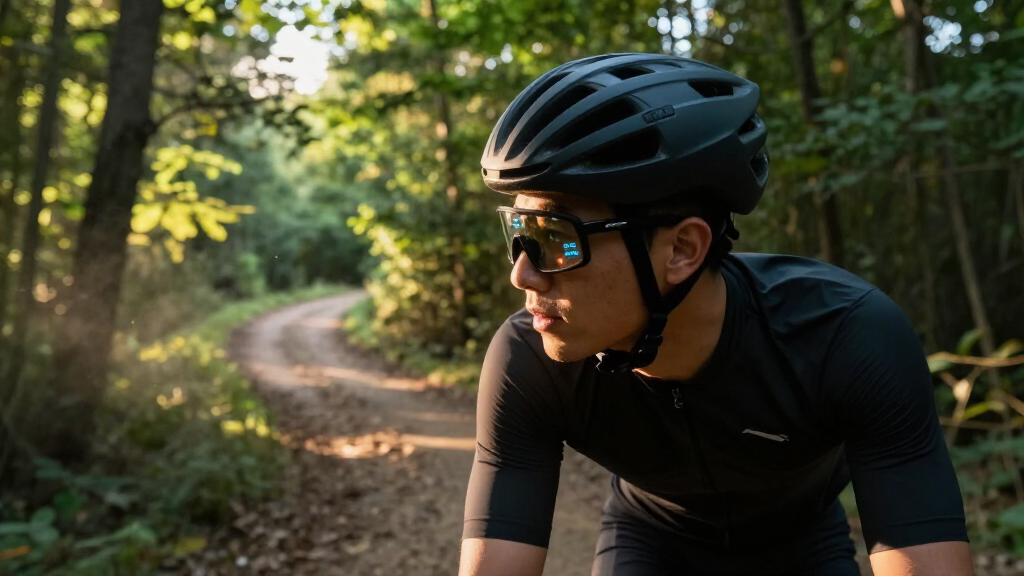
How We Picked
I compared the 14 listed models through a sports-use lens: how well their stated features match movement, changing light, outdoor awareness, and the practical demands of wearing electronics during activity. I gave more weight to clear sports-relevant differentiators—such as stabilization, polarized or photochromic lenses, impact resistance, water-resistance claims, open-ear audio, and a HUD—than to broad AI labels or resolution claims on their own. A feature only improves a ranking when it addresses a recognizable buyer need.
The order favors options with a defined role and a stronger fit for active use, then separates specialist picks from more general camera or audio glasses. The Meta Oakley Vanguard leads as the premium sports-focused choice; stabilization- and lens-equipped camera models follow for riders and outdoor recorders. Models with less clearly specified sport advantages rank lower, not because they cannot suit a buyer, but because the available product details give less basis for comparing performance, fit, or durability. I also treat listed specifications as claims, not independent proof of real-world results.
Factors to Consider When Choosing Best Sports Smart Glasses
Smart glasses combine eyewear with electronics, so the right choice depends on how they behave as sunglasses as much as on what they can record. I would start with the sport and conditions, then narrow the field by fit, lenses, camera behavior, and the limits of wearing connected gear outdoors.
Choose for the movement you actually do
A pair that works for a relaxed walk may shift or feel distracting during a run, rough trail ride, or fast descent. Think about head movement, helmet compatibility, sweat, and whether you need to operate controls without stopping. For cycling, a secure fit and clear peripheral view may matter more than a long feature list. For hiking, changing light and comfortable all-day wear can take priority over high-resolution clips. A common mistake is choosing by the sport printed in a product name rather than checking its frame fit, lens shape, and controls against your own gear.
Match lens behavior to your route
Polarized lenses can cut reflected glare from roads and water, while photochromic lenses are designed to change tint as light conditions shift. UV protection is a separate concern: check that the product specifies protection rather than assuming a dark lens provides it. Photochromic response may not suit every activity, and some lens technologies behave differently behind vehicle windscreens or in deep shade. If your route moves between bright sun and wooded sections, adaptability may be more useful than maximum darkness. For dawn, dusk, or mixed indoor-outdoor use, prioritize visibility and a lens you can comfortably wear throughout the outing.
Look past camera resolution
Resolution labels describe only one part of a recording: they do not tell you how stable footage looks, how the camera handles fast motion, or how easy it is to frame a useful view. Electronic stabilization and anti-shake claims may help with movement, but buyers should check recording limits and sample footage where available. A high-resolution camera can also create larger files and more work when transferring or editing clips. Decide whether you want hands-free memories, footage suitable for sharing, or material for closer review of a ride. That purpose will tell you more than a single megapixel or video-resolution figure.
Treat audio and awareness as a tradeoff
Open-ear audio can let you hear navigation or calls without sealing your ears, which may suit outdoor workouts better than conventional earbuds. It does not guarantee that you will hear traffic clearly at every volume or in every environment. Check where the speakers sit, how controls work with gloves, and whether calls are part of your routine. For road use, keep volume low enough to notice surrounding sounds and follow local rules. If audio is not central to your activity, a simpler camera-focused model may be a better use of weight and battery capacity.
Check durability, fit, and upkeep before adding features
Water-resistance ratings such as IP64 or IP65 indicate a stated level of protection, not permission to submerge the glasses or ignore care instructions. Sweat, rain, dust, and frequent lens cleaning can all affect long-term usability. Impact-resistant construction matters for some sports, but it is not a substitute for activity-specific protective eyewear or a certified helmet. Try to confirm frame measurements, weight, nose-pad options, and compatibility with prescription needs before buying. Buyers often focus on electronics and overlook whether the glasses remain comfortable after several hours.
Decide which extras justify added complexity
AI assistants, translation, image recognition, and HUD displays can add value when they solve a repeated problem, but they also add controls, charging needs, and setup steps. Ask whether the feature works without a phone connection, which languages or functions it supports, and whether data must be sent to an app or service. A heads-up display can be useful for glanceable information, yet it may not be the right priority for someone who mainly wants action footage. Battery runtime, charging method, storage, and phone compatibility deserve a place in the decision even when listings give them less attention. Paying for fewer functions can be the smarter choice if it means better fit and more reliable use for your sport.
Frequently Asked Questions
Are sports smart glasses a safe replacement for a cycling camera or helmet camera?
They can capture a hands-free point of view, but they are not automatically a replacement for a dedicated camera. Glasses may move with your head, and their footage can differ from a camera mounted to a helmet or bike. Check how recording starts, whether the camera angle suits your riding posture, and whether stabilization is specified. Do not let recording controls distract you in traffic. For safety-critical rides, prioritize protective eyewear and helmet fit over camera convenience.
Should I choose photochromic or polarized lenses for mixed outdoor conditions?
Choose based on the problem you face most often: photochromic lenses are intended to adapt as light changes, while polarized lenses reduce reflected glare. Neither label alone tells you whether the tint will suit every trail, road, or time of day. A shaded route may call for a lens that stays bright enough to preserve detail, while open roads or water can make glare reduction more useful. Check the product’s lens details and any limits on use, especially if you ride through tunnels or spend time behind a windscreen. If your activities span very different conditions, replaceable lenses may be worth looking for.
Does a 4K camera make more sense than a 32MP camera for sports footage?
Those figures describe different things: 4K refers to video resolution, while megapixels commonly describe still-image resolution. Neither figure tells you by itself how smooth moving footage will look or whether the camera captures the scene you want. Stabilization, frame rate, recording duration, storage, and ease of transferring clips can matter more during sport. Choose according to whether you mainly record video, take stills, or want both. When possible, compare sample footage rather than ranking cameras by the largest number in a listing.
Can open-ear smart glasses replace earbuds while I run or ride?
They may cover calls, music, or navigation for some users, but fit and sound levels vary, and open-ear audio is not a guarantee of situational awareness. Wind and surrounding noise can make speech harder to hear outdoors. Before relying on them, check comfort during movement and learn how to adjust volume or pause audio without fumbling. Keep awareness of people, vehicles, and trail signals ahead of entertainment. On roads, follow local laws and avoid audio use that distracts from riding.
What should I verify before buying camera smart glasses for long outings?
Check battery runtime under camera recording, not only under occasional audio or assistant use, since continuous capture can place a different load on the device. Confirm how footage is stored, transferred, and charged, and whether the glasses can record without a phone nearby. Fit, sweat handling, lens comfort, and compatibility with a helmet can shape whether you keep wearing them past the first outing. Look for clearly stated water-resistance limits rather than assuming a sport label means rainproof. If those details are missing, treat them as unanswered questions rather than assuming the most favorable case.
Conclusion
For most buyers seeking a sports-led premium pair, I would start with the Meta Oakley Vanguard Smart AI Glasses as the best overall. If recording stability is the priority, compare the 32MP polarized EIS model with the 4K EIS sports glasses; the first pairs a high still-image spec with polarized lenses, while the second foregrounds stabilized 4K video. The OHO Sport Open-Ear Smart Glasses are my pick for buyers who value open-ear audio and impact resistance more than a built-in camera. Beginners should favor the model whose fit, controls, and lens behavior are easiest to understand, rather than paying for AI functions they may not use; the OHO Sport’s audio-first role is a simpler starting point if recording is not a need. For changing light, look closely at the photochromic OHO 2K or 4K anti-shake options, and for a heads-up display, investigate the Cybersight Zenith Pro HUD. My best-value choice is the feature-focused 4K EIS sports model for buyers who want stabilized POV video without choosing a premium-branded pair; confirm its battery, fit, and recording details before deciding.
Fall Picks
fall essentials
As an affiliate, we earn on qualifying purchases.