
If you’re searching for the best 3D scanners, you’re likely balancing accuracy, ease of use, and value. The Creality CR-Scan Raptor Pro stands out for its high speed and detailed color capture, making it ideal for professional workflows. Meanwhile, the Revopoint POP 4 offers advanced AI segmentation at a more accessible price point, perfect for those who want smart features without overspending. However, many buyers face tough choices between rugged portability and precision, or between comprehensive features and simplicity. Keep reading to see how these options compare and find the best fit for your projects.

Get the latest gadgets delivered free with Prime
- Fast, free delivery on millions of items
- Prime Video, Amazon Music and more included
- Member-only deals all year
Complete the kit



Key Takeaways
- High-precision models like the Creality CR-Scan Raptor excel for detailed scanning tasks, but often come at a premium price.
- Portable and wireless options such as the Creality Otter Lite and Pika offer convenience but may sacrifice some accuracy and resolution.
- Entry-level scanners like the 3DMakerpro Fox are suitable for beginners but may struggle with complex or large objects.
- Advanced features like AI segmentation and multi-mode scanning set premium models apart, enhancing versatility for professional use.
- Speed and object size capacity vary significantly; choosing the right scanner depends heavily on your typical projects’ scale and complexity.






More Details on Our Top Picks
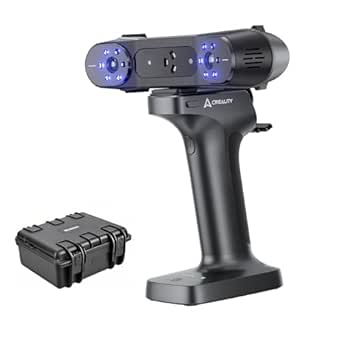
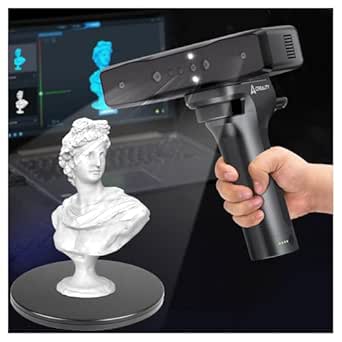
Creality 3D Scanner, CR-Scan Raptor Pro Handheld 3D Scanner for 3D Printing
The Creality CR-Scan Raptor Pro stands out for its metrology-grade accuracy of 0.02mm, making it ideal for professional applications requiring precise detail, such as industrial or medical modeling. Compared to the 3DMakerpro Fox, it offers faster, more reliable scans for larger objects, though at a significantly higher price point. Its ability to scan outdoors without spray powder and handle challenging surfaces broadens its usability, but the setup can be complex and demands a powerful PC, which might be a barrier for casual users. The wireless design adds convenience, especially for on-site or outdoor scanning, but the need for high-end hardware limits accessibility for some buyers.
Pros:- Exceptional 0.02mm accuracy suitable for detailed professional work
- No spray powder needed, even on difficult surfaces
- Supports outdoor, ambient light conditions for flexible scanning
Cons:- High cost and complex setup require a powerful PC
- Steep learning curve for beginners unfamiliar with advanced 3D scanning workflows
Best for: Professionals in industrial, medical, or automotive fields needing highly accurate, versatile scans in challenging environments.
Not ideal for: Hobbyists or casual users seeking an affordable, straightforward scanner without the need for high-performance hardware.
- Measurement Accuracy:0.02mm
- Volume Accuracy:0.02mm + 0.08mm/m
- Laser Types:22 crossed blue lasers, 7 parallel blue lasers, NIR infrared structured light
- Scan Speed:660,000 points/sec
- Object Size Range:5mm to 4000mm
- Wireless:Yes
- Supported Operating Systems:Windows 10/11, MacOS
- Recommended PC Specs:i7-Gen10 CPU, Nvidia GPU with 8GB VRAM, 32GB RAM
Our verdict“This scanner is perfect for professionals demanding top-tier accuracy and versatility, despite its higher price and complexity.”
3DMakerpro Fox Entry-Level Medium-Format 3D Scanner for 3D Printing
The 3DMakerpro Fox delivers a compelling balance of accuracy (0.07mm) and user-friendly features, making it an excellent choice for hobbyists and beginners who want reliable results without breaking the bank. Unlike the more advanced CR-Scan Raptor Pro, it is less suited for industrial-grade projects but excels in 3D printing, modeling, and basic quality inspections. Its markerless AI visual tracking simplifies setup, and the software is intuitive, which helps new users get started quickly. However, its performance can falter with complex or fast-moving objects, and it lacks some of the advanced features found in higher-end scanners, making it less adaptable for demanding professional tasks.
Pros:- Reliable 0.07mm accuracy for detailed scans
- Markerless AI visual tracking simplifies operation
- User-friendly software suited for beginners
Cons:- Limited performance with complex or fast-moving objects
- Lacks advanced features for professional use
Best for: Hobbyists and small-scale professionals starting with 3D scanning for printing, education, or DIY projects.
Not ideal for: Industrial or medical professionals requiring ultra-high precision and extensive scanning capabilities across large objects.
- Accuracy:0.07mm
- Resolution:0.10mm
- Scan Speed:10 FPS
- Item Weight:2.39 pounds
- Package Dimensions:9.06 x 8.98 x 3.46 inches
- Manufacturer:3dmakerpro
- First Available:July 21, 2026
- Best Sellers Rank:#28,275 in Industrial & Scientific, #6 in 3D Scanners
Our verdict“This scanner offers excellent value for entry-level users focused on 3D printing and hobbyist projects, with some limitations on complexity.”
3DMakerpro Handheld 3D Scanner for 3D Printing, 0.05mm Precision, 10FPS, Compatible with Android/iOS/Win/MacOS
The 3DMakerpro Moose Lite is designed for users seeking high precision in a portable form, with 0.05mm accuracy and multi-platform compatibility. Its AI visual tracking and anti-shake tech make it intuitive for quick, detailed scans, suitable for both beginners and professionals. Compared to larger, more complex scanners like the CR-Scan Raptor Pro, it emphasizes ease of use and quick setup, making it ideal for on-the-go scanning and small to medium objects. The inclusion of lifetime software updates adds value, but the lack of detailed info on battery life and scanning range can be a drawback for extended outdoor use or larger projects.
Pros:- High precision with 0.05mm accuracy
- Compatible across Android, iOS, Windows, and MacOS
- Markerless and anti-shake technology for stable scans
Cons:- Limited info on battery life and scanning distance
- Costs may be high for casual users
Best for: Mobile professionals, educators, and hobbyists who need accurate, portable scanning across multiple devices.
Not ideal for: Users needing to scan large objects or requiring ultra-high accuracy for industrial applications.
- Precision:0.05mm
- Scanning Speed:10FPS
- Compatibility:Android, iOS, Windows, MacOS
- Features:AI Visual Tracking, Anti-shake, Marker-Free
- Software:Lifetime Free OTA
Our verdict“This versatile scanner suits users who want portability and high accuracy without sacrificing cross-platform compatibility, though it may lack some robustness for large-scale projects.”
Creality Raptor Pro 3D Scanner with Scan Bridge Wireless
The Creality Raptor Pro excels in delivering full-color, high-accuracy scans at 0.02mm with impressive speed at 60 FPS, making it a top choice for detailed, vibrant models. Its wireless connectivity and fast capture rate set it apart from the CR-Scan Raptor Pro, which is more suited for static, professional environments. However, it requires regular calibration and might be complex for newcomers to operate effectively. Its color support and rapid scanning make it appealing for artists and designers who need detailed, fast, full-color models, but the lack of detailed software compatibility info could be a concern for integration into existing workflows.
Pros:- High-precision 0.02mm accuracy for detailed models
- Fast scanning at 60 FPS for efficient workflows
- Supports full-color scans for realistic rendering
Cons:- Requires calibration for optimal results
- Potentially complex setup for new users
Best for: Artists, designers, and professionals needing quick, colorful, high-detail scans for artistic or presentation purposes.
Not ideal for: Beginners or those with limited experience in calibration, or users requiring extensive software integration details.
- Accuracy:0.02mm
- Scanning Speed:60 FPS
- Points per Second:660,000
- Object Size Range:5mm to 2000mm
- Single Capture Range:270mm x 170mm @300mm
- Color Support:Yes
Our verdict“This scanner is ideal for creative professionals who prioritize speed and color fidelity over straightforward operation.”
3DMakerpro Fox 3D Scanner, 0.07mm Accuracy, Entry-Level for Small to Large Objects
The 3DMakerpro Fox offers a solid entry point for those interested in digitizing objects ranging from 40mm to 1200mm, with 0.07mm accuracy. Its NIR technology and markerless tracking make it accessible for STEM projects, DIY prototyping, and educational use, especially for small to medium-sized objects. While it provides decent detail, it demands a learning curve to achieve optimal results, and resource-intensive software may slow down less capable computers. Larger objects beyond its 1200mm range or high-precision industrial applications might find it limiting.
Pros:- Reliable 0.07mm accuracy for detailed scans
- Markerless tracking simplifies setup
- Supports multiple export formats for flexibility
Cons:- Requires user familiarity and learning for best results
- Resource demands on software may limit performance on weaker PCs
Best for: Educational settings, DIY enthusiasts, and small-scale prototyping involving small to medium objects.
Not ideal for: Professionals needing ultra-high precision or large-scale scanning, or projects with complex geometries.
- Accuracy:0.07mm
- Object Size Range:40mm to 1200mm
- Optimal Working Distance:150–400mm
- Software:JMStudio
- Supported Export Formats:OBJ, STL, PLY, ASC
- Power:65W
Our verdict“This scanner provides a good balance of accuracy and ease of use for small to medium objects in educational and hobbyist contexts, with some setup learning required.”
Creality Sermoon S1 3D Scanner with Blue Laser Handheld, 1+7+34 Modes, 90FPS, 0.02mm Accuracy, Deep Hole Detection, Compatible with Windows and macOS
The Creality Sermoon S1 stands out for its exceptional combination of high accuracy, speed, and versatility, making it ideal for professionals requiring detailed scans of both small components and large structures. Its triple blue laser modes enable tailored scanning for different object geometries, outperforming models like the 3DMakerpro Moose in speed and depth detection, though it demands a robust system setup. The AI-assisted software streamlines workflows, but the complex configuration can be daunting for those new to 3D scanning. The high system requirements and premium price are tradeoffs for its advanced capabilities.
Pros:- Exceptional 0.02mm accuracy and 90FPS speed for detailed, fast scans
- Versatile triple laser modes for different object types and depths
- Supports large and small objects without multiple devices
- AI-assisted software enhances workflow efficiency
Cons:- Requires powerful hardware with specific system specs for optimal performance
- Complex setup process may be intimidating for newcomers
Best for: Engineers, reverse engineers, and quality inspectors seeking versatile, high-precision scanning in complex environments.
Not ideal for: Beginners or hobbyists with limited technical experience who prefer plug-and-play solutions and simpler setups.
- Laser Modes:34 crossed, 7 parallel, single-line for deep holes
- Scan Range:5mm to 4000mm
- Accuracy:0.02mm
- Frame Rate:90 FPS
- Deep Hole Detection:0.1mm
- Compatibility:Windows, macOS
- System Requirements:Win: i7-Gen10, 32GB RAM; macOS: M1/M2/M3, 16GB RAM
Our verdict“This scanner suits professionals who need a flexible, high-precision device and are prepared for complex setup and higher investment.”
3DMakerpro Moose Handheld 3D Scanner for 3D Printing, Up to 0.03mm Accuracy, Suitable for Objects 15mm to 1500mm, Premium Edition
The 3DMakerpro Moose excels at capturing detailed medium-sized objects with up to 0.03mm accuracy, making it a strong choice for hobbyists and designers focused on high-quality 3D printing. Unlike the Creality Otter Lite, which emphasizes portability and wireless convenience, the Moose offers more precise color and texture details, ideal for creating realistic models. Its reliance on indoor environments and the need for practicing handheld scanning are tradeoffs, but its accessory support and compatibility with various software formats make it adaptable for detailed modeling tasks.
Pros:- High precision with 0.03mm accuracy for detailed models
- Supports detailed color and texture capture
- Flexible with accessories like turntables and tripods
- Compatible with multiple software formats
Cons:- Requires practice to master handheld scanning techniques
- Optimal results depend on a capable computer setup
- Plastic build may be less durable for frequent use
Best for: 3D printing enthusiasts and designers working primarily indoors on medium-sized objects requiring high detail.
Not ideal for: Beginners with limited experience or users needing to scan larger or outdoor objects, due to its size constraints and indoor focus.
- Technology:Blue LED Structured Light
- Accuracy:0.03mm
- Resolution:0.07mm
- Object Size Range:15mm to 1500mm
- Frame Rate:10fps
- Compatibility:Windows and macOS
- Included Accessories:Turntable, Tripod, Power Adapter, Data Cable
Our verdict“This scanner suits detail-oriented users focused on medium-sized objects and high-resolution color capture, willing to invest time in mastering its use.”
Creality Otter Lite Wireless 3D Scanner
The Creality Otter Lite offers a compelling combination of precision and portability, with 0.05mm accuracy and wireless connectivity via Wi-Fi, making it a practical choice for on-the-go scanning. Its adaptive lighting and real-time 30fps scanning excel in outdoor or variable lighting conditions, outperforming wired models like the CR-Scan Ferret Pro in mobility. However, its setup can be complex for newcomers, and limited details on durability and battery life suggest it’s better suited for occasional use rather than heavy-duty applications.
Pros:- High precision with 0.05mm accuracy
- Wireless control via smartphone app for mobility
- Adaptive lighting makes outdoor scanning feasible
- Real-time 30fps scanning speeds for quick results
Cons:- Requires a compatible Windows or macOS device for full functionality
- Setup may be challenging for beginners
- Limited info on battery life and ruggedness
Best for: Designers, hobbyists, and field engineers who need accurate scans in outdoor or mobile environments without tethering to a computer.
Not ideal for: Users who prefer plug-and-play solutions or require ultra-high precision for small, highly detailed objects, as its accuracy may not suffice for jewelry or micro-scale work.
- Scanner Type:Handheld
- Connection Type:Wi-Fi
- Resolution:0.05mm
- Scanning Range:20mm³ to 2000mm³
Our verdict“This model is ideal for fieldwork and outdoor projects where wireless convenience and decent accuracy are priorities.”
3DMakerpro 3D Scanner for 3D Printing, Handheld 0.05mm Precision, 10FPS, Supports Android/iOS/Win/MacOS, Moose Lite Premium Kit
The 3DMakerpro Moose Lite makes a solid choice for users seeking high-precision, portable scanning across multiple platforms, including Android and iOS. Its lightweight design—just 250g—enables easy use on the go, with AI visual tracking simplifying the process. Compared to the Creality Sermoon S1, which offers more advanced features but at higher cost and complexity, the Moose Lite provides a more accessible entry point for detailed medium-sized object capture. Its plastic construction is a minor drawback for durability, but overall, it balances precision, portability, and versatility.
Pros:- High precision with 0.05mm accuracy in a lightweight form
- Supports multiple platforms including Android and iOS
- AI tracking enhances scan quality and ease of use
- Very portable for on-the-go scanning
Cons:- Limited to medium-sized objects within 15-1500mm range
- Plastic build may impact durability over time
- Requires compatible software for best results
Best for: Mobile professionals and hobbyists who need accurate scans on various devices without sacrificing portability.
Not ideal for: Users focusing on extremely small or highly detailed objects that require sub-0.05mm accuracy, or those needing rugged, industrial-grade equipment.
- Accuracy:0.05mm
- Resolution:0.1mm
- Scan Range:15mm to 1500mm
- Weight:250g
Our verdict“This scanner is perfect for mobile users who want accurate, cross-platform scanning in a lightweight, easy-to-carry package.”
Creality 3D Scanner CR-Scan Ferret Pro for 3D Printing, Wireless Handheld Scanner with Full-Color and 0.1mm Accuracy
The Creality CR-Scan Ferret Pro offers a straightforward, portable solution for newcomers and hobbyists, combining 0.1mm accuracy with full-color capture in a lightweight 105g device. It’s ideal for scanning objects from 50mm to 2000mm, making it suitable for a variety of objects but less ideal for ultra-fine details like jewelry. Its wireless design and included accessories promote ease of use, though it may struggle with reflective surfaces and outdoor lighting conditions. Compared to the more advanced Sermoon S1, it trades off some precision for simplicity and portability.
Pros:- Lightweight at just 105g for portability
- Wireless connectivity simplifies setup and use
- Full-color scanning enhances visual realism
- Includes accessories like tripod and carrying case
Cons:- Limited for very small or highly detailed objects
- Performance affected by reflective or dark surfaces
- Less suitable for outdoor use without controlled lighting
Best for: Beginners and casual users who want an easy, portable, and versatile scanner for general 3D printing projects.
Not ideal for: Professional users or those needing micro-detail accuracy for small, intricate objects, as the 0.1mm precision might be insufficient.
- Accuracy:0.1mm
- Color Depth:24-bit
- Object Size Range:50mm to 2000mm
- Weight:105g
Our verdict“This device is well-suited for beginners and hobbyists seeking an affordable, portable, full-color 3D scanner for general projects.”
Revopoint MetroX Pro 3D Scanner, Blue Laser Scan, for 3D Printing, Advanced
The Revopoint MetroX Pro stands out for its industrial-level accuracy and multiple scanning modes, making it ideal for detailed measurement and complex modeling. Compared with the Revopoint POP 4, it offers higher precision and supports real-time streaming, but this comes at the cost of weight and a more involved setup. Its ability to handle shiny, dark, or complex surfaces without spray is a significant advantage for professional workflows. However, the heavier weight and mixed customer reviews suggest it’s better suited to dedicated studio environments rather than portable use or casual hobbyists. This scanner excels for users who need highest precision and surface versatility in an industrial setting, though it requires Windows and additional software for full functionality.
Pros:- High-precision industrial-grade scanning with 0.01 mm accuracy
- Supports multiple modes including structured light and laser types
- Real-time streaming and automated turntable support
- Captures shiny, dark, and complex surfaces without spray
Cons:- Heavy (14.82 pounds), less portable for on-site use
- Requires Windows software with additional paid features
- Customer ratings are mixed, indicating potential setup or reliability issues
Best for: Industrial designers, quality control professionals, and advanced 3D printing labs needing high accuracy and surface detail.
Not ideal for: Casual hobbyists or portable users who prioritize lightweight equipment and easy setup over peak precision.
- Single-frame precision:0.01 mm
- Single-frame accuracy:0.02 mm
- Volumetric accuracy:0.02 mm + 0.04 mm × L (m)
- Scanning modes:Cross-line lasers, parallel lines, full-field structured light
- Points per second:up to 7 million
- Color capture:Yes
- Auto turntable:Yes
- Streaming:PC-to-mobile real-time
Our verdict“This scanner is best suited for professionals who need maximum precision and surface handling in a fixed environment, accepting the tradeoff of weight and complexity.”
Revopoint POP 4 3D Scanner, AI Segmentation, for 3D Printing, Standard
The Revopoint POP 4 offers a compelling balance of high accuracy (0.03 mm) and fast scanning speeds, making it ideal for large, detailed projects like reverse engineering or outdoor scans. Unlike the MetroX Pro, it emphasizes speed with up to 105 fps and AI-powered segmentation, simplifying post-processing. Its wireless connectivity enhances mobility, but this feature requires additional software and hardware for full use, making it less plug-and-play than some competitors. While it’s not as precise as the MetroX Pro, it still provides detailed surface reproduction suitable for most 3D printing needs. This pick makes the most sense for users who want outdoor flexibility and quick turnaround times but can handle a slightly lower precision threshold and extra software costs.
Pros:- High accuracy of 0.03 mm for detailed surface capture
- Fast scan speeds ideal for large or complex objects
- AI segmentation simplifies post-processing workflows
- Capable of outdoor and high-light environments
Cons:- Requires Windows software for AI features, adding complexity
- Additional cost for optional battery grip and software
- Software sold separately, increasing overall expense
Best for: Engineers, product designers, and outdoor scanning professionals needing high precision with fast, mobile operation.
Not ideal for: Casual users or those requiring ultra-high precision or simple plug-and-play solutions without software complexities.
- Accuracy:0.03 mm
- Volumetric Accuracy:0.03 mm + 0.05 mm x L
- Frame Rate:up to 105 fps
- Points per Second:5,000,000
- Lighting Conditions:up to 100,000 lux
- Minimum Scan Volume:10x10x10 mm
- Maximum Scan Volume:2x2x2 m
- Battery Life:up to 4 hours
Our verdict“This scanner is perfect for professionals who prioritize speed and outdoor capabilities, accepting some additional software setup and costs.”
Creality CR-Scan Raptor 3D Scanner, 60fps Blue Laser & NIR, 0.02mm Accuracy, 24-Bit Color, Scans 5-2000mm Objects, Anti-Shake Tracking for Windows macOS
The Creality CR-Scan Raptor provides a high level of accuracy at 0.02 mm and rapid speeds of 60 fps, making it suitable for detailed models of objects ranging from small components to full-sized items. Its dual-mode laser and NIR sensors offer flexibility for different surfaces, standing out against the POP 4’s single-mode approach. However, its reliance on high-performance PC hardware and safety precautions for laser exposure can be barriers for casual or less-equipped users. Compared to the MetroX Pro, it’s less advanced in surface handling but excels in speed and accuracy for moderately complex projects. It is best targeted at professionals who need fast, precise scans of medium to large objects in a variety of environments, with an understanding of safety and hardware requirements.
Pros:- Exceptional 0.02 mm accuracy for detailed models
- Fast frame rate of 60 fps allows quick capture of complex objects
- Dual laser modes (blue laser and NIR) provide surface versatility
- Captures full color with 24-bit depth
Cons:- Requires high-end PC hardware for optimal performance
- Blue laser safety precautions necessary, adding complexity
- Limited portability due to hardware demands
Best for: Product developers, quality inspectors, and professionals scanning objects up to 2 meters for detailed, accurate models.
Not ideal for: Beginners or casual hobbyists who lack high-end PC hardware or need a simple, portable device.
- Scanning Accuracy:0.02 mm
- Laser Lines:7 parallel blue laser lines
- Frame Rate:60 fps
- Object Size Range:5mm to 2000mm
- Color Depth:24-bit
- Safety Class:Class 1 blue light
Our verdict“This scanner is aimed at professionals needing fast, precise scans of medium to large objects, with hardware and safety considerations in mind.”
Revopoint MetroY Ultra 3D Scanner, Up to 90 FPS, for 3D Printing, Standard
The Revopoint MetroY Ultra offers high accuracy (up to 0.01 mm) and rapid capture speeds of 90 FPS, making it ideal for detailed inspection, reverse engineering, and outdoor scanning. Its support for no-spray scanning of shiny or dark surfaces gives it an edge over many handheld scanners that require surface prep. While it’s lighter and portable at 450 g, achieving optimal results demands a robust hardware setup, especially for Windows users, and some familiarity with scanning workflows. Compared to the POP 4, it emphasizes industrial-grade precision and speed, but its complexity and weight may be limiting for casual or less experienced users. It’s best suited for those who need high accuracy combined with mobility and outdoor capability.
Pros:- Exceptional 0.01 mm accuracy for detailed measurements
- Fast scanning at up to 90 FPS, reducing capture time
- Supports outdoor and dark/shiny surface scanning without spray
- Wireless connectivity via Wi-Fi 6 for flexible workflows
Cons:- Requires high-performance hardware for optimal use
- Heavier handheld design at 450 g may cause fatigue
- Setup complexity may challenge beginners
Best for: Field engineers, industrial inspectors, and reverse engineers demanding high accuracy with portable operation.
Not ideal for: Beginners or hobbyists who prefer simple, plug-and-play devices and do not require the highest precision or outdoor capability.
- Scanner Type:3D Scanner
- Connection Type:USB, Wi-Fi
- Resolution:0.05 mm
- Item Weight:450 g
- Minimum System Requirements:macOS: CPU M2 Pro, RAM ≥ 16 GB; Windows: CPU i7 13th Gen, RAM ≥ 32GB, GPU NVIDIA GeForce RTX 3060
Our verdict“Ideal for professionals needing portable, high-precision scanning in outdoor or industrial environments, accepting setup and hardware requirements.”
Creality Pika Portable 3D Scanner, 0.03mm High Accuracy, Dual-Mode Blue Laser & NIR Structured Light, AI Features, 110 FPS, Wi-Fi 6, 3″ Touchscreen
The Creality Pika combines high-precision scanning (0.03 mm) with a compact, lightweight design—only 9.12 ounces—making it highly portable. Its dual-mode scanning capability with blue laser and NIR structured light allows detailed capture of small objects and full-body scans, supported by AI-powered features like retexturing and hole filling. The built-in 3″ touchscreen provides an intuitive interface, but the small display may be limiting for some users, and the device’s advanced features require compatible software and devices. Unlike larger, more industrial scanners, Pika is tailored for ease of use and versatility on the go, though at a higher cost. It’s perfect for users who want high accuracy combined with portability and AI-driven enhancements.
Pros:- High accuracy of 0.03 mm for detailed scans
- Dual-mode scanning (blue laser and NIR structured light) for surface versatility
- AI features for body completion, retexturing, and hole filling
- Wireless with Wi-Fi 6 and a 3″ touchscreen for easy operation
Cons:- Small touchscreen may limit ease of use for some
- Requires compatible devices and software for full AI functionality
- Higher price compared to basic portable scanners
Best for: Artists, small-scale product designers, and mobile professionals needing high-accuracy scans in a portable package.
Not ideal for: Users requiring large-area scanning or those who prefer larger screens and more extensive hardware integration.
- Scanner Type:3D Scanner
- Connection Type:Wi-Fi 6, USB
- Resolution:0.1 mm
- Color Depth:24 bits
- Measurement Range:10-20000mm
- Item Weight:9.12 ounces
Our verdict“This compact scanner offers professional-level accuracy and AI features in a portable design, suitable for mobile artists and professionals willing to invest in advanced features.”
How We Picked
The products in this roundup were selected based on a combination of technical performance, usability, build quality, and value for money. Priority was given to scanners that deliver consistent accuracy, fast processing speeds, and user-friendly interfaces. We also considered compatibility with various devices and operating systems, as well as versatility in handling different object sizes. Rank order reflects how well each model balances these factors, with top picks excelling in both performance and practicality for targeted user groups.Factors to Consider When Choosing Best 3D Scanners
Choosing the right 3D scanner depends on several key factors that impact your workflow and project needs. Beyond just resolution and speed, it’s important to evaluate ease of use, compatibility, and future-proof features. Making the wrong choice can lead to frustration or the need to upgrade prematurely, so understanding these considerations helps you invest wisely.Accuracy and Resolution
High accuracy and resolution are essential if your work demands detailed reproductions, such as in reverse engineering or jewelry design. However, these specs often come at a higher cost and may require more complex calibration. For casual or hobbyist use, moderate resolution may suffice, saving money without sacrificing too much detail.
Speed and Object Size
Fast scanning speeds are crucial for capturing multiple objects quickly, especially in professional environments. Consider the maximum object size your scanner can handle—larger objects require models with extended scanning ranges. Balancing speed and size capacity helps ensure your scanner fits your typical workload without unnecessary compromises.
Portability and Ease of Use
If mobility is a priority, look for lightweight, wireless models that are easy to carry and operate without extensive setup. Conversely, stationary scanners may offer higher accuracy but limit flexibility. User-friendly interfaces and quick calibration processes also reduce downtime and learning curves.
Compatibility and Software
Ensure the scanner integrates smoothly with your existing hardware and software ecosystem. Compatibility with Windows, macOS, Android, or iOS can influence your workflow. Additionally, robust software with features like AI segmentation or multi-angle scanning can significantly enhance your productivity.
Budget and Future Proofing
While high-end scanners deliver top-tier results, they come with a hefty price tag. Evaluate your current needs against potential future projects—investing slightly more might save you from needing an upgrade later. Also, consider the availability of firmware updates and ongoing support to extend your scanner’s lifespan.
Frequently Asked Questions
Will a more expensive 3D scanner always give me better results?
Not necessarily. While higher-priced scanners often feature better accuracy, faster speeds, and more advanced software, the best choice depends on your specific needs. For casual or beginner projects, a mid-range or entry-level scanner can provide satisfactory results without overspending. It’s important to match the scanner’s capabilities to your project complexity rather than defaulting to the most expensive option.
Can I use a handheld 3D scanner for detailed product prototyping?
Yes, handheld scanners are increasingly capable of producing detailed captures suitable for prototyping, especially those with high accuracy like the Creality Raptor Pro or Moose editions. However, achieving consistent detail may require steady handling and proper calibration. For extremely fine features or smaller parts, a stationary scanner with a higher resolution might be more reliable.
What should I consider if I want to scan large objects?
Scanning large objects demands a scanner with a wide measurement range and fast processing speeds to handle extensive surfaces efficiently. Some models, such as the Creality CR-Scan Raptor or Revopoint MetroX Pro, are designed for bigger projects. Keep in mind that larger scans may require multiple passes and post-processing to assemble the full model accurately.
Are wireless scanners as reliable as wired ones?
Wireless scanners offer great convenience for portability and quick setup, but they may experience occasional connectivity issues or slight latency that can impact the scan quality. Wired models generally provide more stable data transfer, which can be critical in high-precision applications. Your choice depends on whether flexibility or stability is a higher priority for your workflow.
How important is software compatibility for my 3D scanner?
Software compatibility is vital because it determines how easily you can process, edit, and use your scans. A scanner that works seamlessly with your preferred CAD or editing tools can save significant time and effort. Also, look for software with features like AI segmentation, automatic alignment, and cloud storage options, which can broaden your capabilities and streamline your projects.
Conclusion
For most users, the Creality CR-Scan Raptor Pro stands out as the best overall choice thanks to its balanced mix of speed, accuracy, and color fidelity. Budget-conscious buyers should consider the 3DMakerpro Fox for entry-level projects, while professionals seeking top-tier features might prefer the Revopoint POP 4 or Creality Pika for their advanced AI and high-speed capabilities. Beginners will find models like the Creality Otter Lite approachable, whereas those with large or complex objects should look at scanners with greater measurement ranges. Ultimately, your choice depends on your specific project needs and budget constraints.
As an affiliate, we earn on qualifying purchases.Halloween Picks
halloween