

The best Mac computers balance speed, memory, screen size, and the way you work; for most people, I’d start with the 13-inch MacBook Air with M5 for its portable, versatile format. The Mac mini with M6 is a strong compact desktop choice if you already have a monitor and peripherals, while the 16-inch MacBook Pro with M4 Max suits demanding creative work that benefits from extra power and memory. The main tradeoffs are laptop mobility versus desktop value, and whether a larger screen or more capable chip justifies a less portable setup. Older or renewed iMacs may appeal as all-in-one desktops, but their age and configuration deserve careful scrutiny. Read on for my comparison of all 15 options and guidance on choosing the right fit.

Get the latest gadgets delivered free with Prime
- Fast, free delivery on millions of items
- Prime Video, Amazon Music and more included
- Member-only deals all year
Complete the kit



Key Takeaways
- The 13-inch MacBook Air M5 is the most flexible starting point: it combines a portable laptop format with a newer chip, while the 15-inch Air favors a larger built-in screen over easier carrying.
- The Mac mini M6 is the compact desktop pick only if you have the rest of the setup: a monitor, keyboard, and mouse add to the total system you need to assemble.
- The 16-inch MacBook Pro M4 Max is aimed at heavy workloads, not casual browsing: its 64GB memory and 1TB SSD set it apart, but many everyday users do not need that headroom.
- Newer iMacs with 16GB memory are more appealing for longevity than older 8GB configurations: compare the 2024 M4 models and listed M6 models against the M1 and renewed alternatives.
- Renewed iMacs vary widely in age and capability: a 2020 5K model, a 2021 M1 model, and an older Intel 21.5-inch iMac are not interchangeable choices.




| Mac computer | Display | Storage | Memory | Processor |
|---|---|---|---|---|
| Apple iMac 27-inch Retina 5K D | 27-inch Retina 5K (5120 x 2880) | 512GB SSD | — | 3.3GHz 6-core Intel Core i5 (10th Gen) |
| 13-inch MacBook Air | 13.6-inch Liquid Retina | 512GB SSD | — | Apple M5 Chip |
| Apple 2021 iMac 24-inch All-in | 24-inch 4.5K Retina | 256GB SSD | — | Apple M1, 8-core CPU |
| 2024 Apple MacBook Pro with M4 | 16.2-inch Liquid Retina XDR | 1TB SSD | — | Apple M4 Max Chip |
| Apple iMac 24-Inch All-in-One | 24-inch 4.5K Retina | — | Up to 32GB Unified Memory | Apple M6 Chip |
| Apple iMac 27-Inch Retina 5K D | 27-inch Retina 5K (5120 x 2880) | 1 TB Fusion Drive | 8 GB DDR3 | 3.2 GHz Intel Core i5 Quad-Core |
| Apple Mac mini Desktop Compute | — | — | Up to 32GB unified memory | — |
| Apple 2024 iMac 24-inch All-in | 24-inch 4.5K Retina, 500 nits | 512GB SSD | 16GB Unified Memory | Apple M4 with 10-core CPU and 10-core GPU |
| Apple 2024 iMac All-in-One Des | 24-inch 4.5K Retina, 500 nits | 256GB SSD | 16GB Unified Memory | — |
| Apple 2026 MacBook Air 13-inch | 13.6-inch Liquid Retina | 512GB SSD | 16GB Unified Memory | Apple M5 chip |
| Apple 2023 iMac 24-inch with M | 24-inch 4.5K Retina | 512 GB SSD | 8 GB Unified Memory | — |
| Apple 2026 MacBook Neo 13-inch | 13-inch Liquid Retina | 512 GB SSD | 8 GB Unified Memory | — |
| Apple MacBook Air 15-inch with | 15.3-inch Liquid Retina | 512 GB SSD | 16 GB Unified Memory | — |
| Apple iMac 21.5-inch All-in-On | 21.5-inch 1920×1080 | 256 GB SSD | 8 GB DDR3 SDRAM | Intel Core i5 2.7GHz |
| Apple iMac 24-inch All-in-One | 24-inch 4.5K Retina | — | Up to 32 GB Unified Memory | — |
More Details on Our Top Picks
Apple iMac 27-inch Retina 5K Display (2020, 8GB RAM, 512GB SSD)
This 27-inch all-in-one remains a strong contender for anyone needing massive screen real estate without the bulk of a tower and separate monitor. The Retina 5K display offers exceptional sharpness, making it ideal for photo editing or detailed spreadsheet work where pixel density matters. However, it relies on an older Intel Core i5 processor, which means it lacks the thermal efficiency and raw speed of Apple Silicon models like the iMac 24-inch with M1 Chip. While the dedicated AMD Radeon Pro graphics help with video tasks, the Intel architecture runs hotter and louder under sustained loads. You are buying this for the screen size and legacy software compatibility, not for future-proofing or battery efficiency.
Pros:- Huge 5K Retina display is perfect for detailed visual work
- Dedicated AMD Radeon Pro GPU handles video editing better than integrated graphics
- All-in-one design saves desk space compared to a tower and monitor setup
Cons:- Intel processor is significantly less efficient and slower than Apple Silicon alternatives
- Internal components are not user-upgradeable, locking you into the initial configuration
- Heavier and bulkier than modern Apple Silicon desktops
Best for: Creative professionals who require a 27-inch 5K canvas and rely on specific Intel-only plugins or legacy software.
Not ideal for: Users who prioritize silence, energy efficiency, or long-term software support, as Intel Macs are nearing the end of their lifecycle.
- Processor:3.3GHz 6-core Intel Core i5 (10th Gen)
- Graphics:AMD Radeon Pro 5300 (4GB GDDR5)
- RAM:8GB DDR4 (2666 MHz)
- Storage:512GB SSD
- Display:27-inch Retina 5K (5120 x 2880)
- Ports:2x Thunderbolt 3, 4x USB-A
- Weight:19.7 pounds
Our verdict“Choose this if you absolutely need a 27-inch 5K screen and can tolerate older Intel technology.”
13-inch MacBook Air (M5): 32GB Memory, 512GB SSD – Midnight
This configuration of the MacBook Air strikes a rare balance between extreme portability and high-end multitasking capability. The M5 chip delivers desktop-class performance in a fanless, silent chassis, making it superior to the MacBook Pro M4 Max for users who value weight and battery life over raw GPU horsepower. With 32GB of unified memory, this laptop handles heavy browser sessions and creative apps without the performance dips common in 8GB or 16GB models. The tradeoff is limited connectivity; you only get two Thunderbolt ports, which might require a hub for complex setups. It is the ultimate choice for professionals who travel light but refuse to compromise on memory capacity.
Pros:- M5 chip offers exceptional speed and AI capabilities in a silent design
- 32GB RAM ensures smooth multitasking for demanding professional workflows
- Up to 18 hours of battery life supports full-day travel without charging
Cons:- Only two Thunderbolt ports limit direct connectivity for multiple peripherals
- Soldered RAM means you cannot upgrade memory after purchase
Best for: Business travelers and developers who need high RAM capacity in a silent, fanless, and ultra-portable form factor.
Not ideal for: Video editors or 3D artists who need sustained GPU performance and active cooling found in MacBook Pro models.
- Processor:Apple M5 Chip
- RAM:32GB Unified Memory
- Storage:512GB SSD
- Display:13.6-inch Liquid Retina
- Battery Life:Up to 18 hours
- Connectivity:2x Thunderbolt 4 ports
- Color:Midnight
Our verdict“Buy this if you want the highest possible memory configuration in the most portable Mac laptop available.”
Apple 2021 iMac 24-inch All-in-One Desktop with M1 Chip, 8-Core CPU and GPU, 8GB RAM, 256GB SSD, Blue
The 24-inch iMac with M1 redefined the entry-level desktop experience by bringing Apple Silicon efficiency to a compact, colorful form factor. Compared to the newer iMac 24-inch with M6 Chip, this model lacks the latest AI accelerations and Wi-Fi 7, but it still handles everyday computing, web browsing, and light photo editing with surprising speed. The 4.5K Retina display is vibrant and sharp, though it is smaller than the 27-inch Intel option. The primary drawback here is the 256GB SSD, which fills up quickly if you store large media libraries locally. It is an ideal starter Mac for students or home offices where desk space is premium and performance needs are moderate.
Pros:- Compact and colorful design fits easily on small desks
- M1 chip provides excellent efficiency and quiet operation
- Includes color-matched keyboard and mouse for a cohesive setup
Cons:- 256GB storage is insufficient for serious media creators without external drives
- 8GB RAM may struggle with heavy multitasking or professional creative apps
Best for: Students and home users who want a stylish, space-saving desktop with reliable performance for everyday tasks.
Not ideal for: Users with large media libraries or those who need to run multiple virtual machines, as the 256GB storage and 8GB RAM are limiting.
- Processor:Apple M1, 8-core CPU
- Graphics:8-core GPU
- RAM:8GB
- Storage:256GB SSD
- Display:24-inch 4.5K Retina
- Ports:2x Thunderbolt/USB 4, 2x USB 3
- Color:Blue
Our verdict“This is the perfect first Mac for students and home users who prioritize design and simplicity over raw power.”
2024 Apple MacBook Pro with M4 Max Chip (16-inch, 64GB RAM, 1TB SSD) (Silver, Renewed)
This MacBook Pro is a monster of productivity, powered by the M4 Max chip and 64GB of RAM. It is significantly more powerful than the MacBook Air M5, handling complex 3D rendering, large language models, and heavy video editing without breaking a sweat. The Liquid Retina XDR display offers superior brightness and contrast, making it the best choice for color grading and HDR content creation. However, it is a renewed unit, so you must weigh the savings against potential battery degradation or cosmetic wear. It is also heavy at 8.4 pounds, making it less portable than the Air. This machine is for professionals who need desktop-level performance on the go and don’t mind the weight.
Pros:- M4 Max chip delivers desktop-class performance for intensive creative workflows
- 64GB RAM allows for massive multitasking and large dataset handling
- Liquid Retina XDR display provides industry-leading color accuracy and brightness
Cons:- Renewed status implies potential battery wear or cosmetic imperfections
- Heavy and thick compared to the MacBook Air, reducing portability
Best for: Video editors, 3D animators, and AI developers who need maximum CPU/GPU power and high RAM capacity in a laptop.
Not ideal for: Frequent travelers or students who prioritize lightness and battery life over raw processing power.
- Processor:Apple M4 Max Chip
- RAM:64GB Unified Memory
- Storage:1TB SSD
- Display:16.2-inch Liquid Retina XDR
- Battery Life:Up to 21 hours
- Condition:Renewed
- Weight:8.4 pounds
Our verdict“Select this renewed model if you need top-tier professional performance but want to save money on a flagship device.”
Apple iMac 24-Inch All-in-One Desktop Computer with M6 Chip, Blue
The new iMac 24-inch with M6 represents the pinnacle of Apple Silicon desktop efficiency. Compared to the iMac 24-inch with M1, this model offers significant upgrades in AI performance, connectivity, and display support, including the ability to drive two external 6K displays. The M6 chip handles modern AI-driven workflows and heavy multitasking with ease, especially in configurations with up to 32GB of RAM. The 12MP Center Stage camera and Spatial Audio speakers are major improvements for remote workers. The tradeoff is the premium price and the fact that high-end configurations are still sold out or hard to find. It is the definitive choice for anyone buying a new desktop today who wants the longest possible software support and latest features.
Pros:- M6 chip offers the latest performance and AI acceleration capabilities
- Wi-Fi 7 and Bluetooth 6 ensure future-proof wireless connectivity
- Supports up to two external 6K displays for expansive workspace setups
Cons:- Higher price point compared to older iMac models
- Nano-texture glass and Ethernet ports are optional add-ons, increasing cost
Best for: Professionals and tech enthusiasts who want the latest Apple Silicon performance, connectivity, and AI features in a compact desktop.
Not ideal for: Budget-conscious buyers who can achieve 90% of the performance with the older M1 or M3 models at a lower cost.
- Processor:Apple M6 Chip
- Memory:Up to 32GB Unified Memory
- Display:24-inch 4.5K Retina
- Ports:Up to 4x Thunderbolt 4
- Wireless:Wi-Fi 7, Bluetooth 6
- Camera:12MP Center Stage
- Color:Blue
Our verdict“Buy this if you want the most current, feature-rich, and future-proof Mac desktop available.”
Apple iMac 27-Inch Retina 5K Desktop (Renewed)
This renewed 27-inch iMac stands out for offering a massive 5K Retina canvas at a fraction of the cost of modern equivalents. Compared to the sleek Apple 2024 iMac 24-inch, this older model trades modern silicon for raw screen real estate, making it ideal for photographers or video editors who prioritize pixel density over processing speed. The Intel Core i5 and R9 M390 graphics handle 4K video editing adequately but struggle with heavy AI tasks or modern game rendering that the newer M-series chips breeze through. While the Fusion Drive offers decent storage capacity, it lacks the snappy responsiveness of today’s pure SSDs. This is a pragmatic choice for those needing a large workspace without breaking the bank, accepting that the hardware is a generation behind.
Pros:- Enormous 27-inch 5K Retina resolution provides exceptional detail for creative work
- Significantly lower entry price compared to modern large-format Macs
- Includes keyboard and mouse in the package for immediate setup
Cons:- Intel-based processor lacks the efficiency and single-core speed of Apple Silicon
- Renewed condition implies potential cosmetic wear and non-original accessories
- 8GB of non-upgradable RAM limits multitasking capability in modern macOS versions
Best for: Photographers and video editors who need a large 5K display on a tight budget and do not require cutting-edge processing power for AI or 3D rendering.
Not ideal for: Users who need fast boot times, heavy multitasking, or future-proofed hardware, as the Intel architecture and mechanical hybrid drive feel dated.
- Processor:3.2 GHz Intel Core i5 Quad-Core
- Graphics:AMD Radeon R9 M390
- Memory:8 GB DDR3
- Storage:1 TB Fusion Drive
- Display:27-inch Retina 5K (5120 x 2880)
- Connectivity:Thunderbolt, USB 3.0, Wi-Fi, Bluetooth
- Condition:Renewed
Our verdict“This renewed 27-inch iMac is the best value pick for creatives who prioritize screen size and resolution over raw processing speed.”
Apple Mac mini Desktop Computer with M6 Chip (2026)
The Mac mini with M6 Chip redefines what a desktop can be, packing workstation-level performance into a device smaller than a sandwich. Unlike the all-in-one Apple 2024 iMac 24-inch, this unit requires you to supply your own monitor, which offers flexibility for users who already own high-quality displays. The M6 chip and Wi-Fi 7 support place it ahead of current-generation machines in terms of longevity and connectivity speed. Its ability to drive up to three external displays makes it superior to most laptops for multi-monitor setups. However, the lack of included peripherals means the total cost of ownership can rise quickly if you need a keyboard, mouse, and screen. This machine is for those who want maximum performance per square inch and prefer a customized desktop ecosystem.
Pros:- Extremely compact form factor fits anywhere
- M6 chip delivers next-generation AI and processing speeds
- Supports up to three external displays for extensive multitasking
- Wi-Fi 7 and Bluetooth 6 ensure cutting-edge wireless connectivity
Cons:- Does not include a monitor, keyboard, or mouse
- Higher initial cost compared to entry-level all-in-ones if peripherals are needed
Best for: Tech enthusiasts and professionals who already own monitors and peripherals but want the latest Apple Silicon performance in a space-saving footprint.
Not ideal for: Users who want an out-of-the-box solution, as it requires purchasing a separate display, keyboard, and mouse to function.
- Chip:Apple M6
- Memory:Up to 32GB unified memory
- Wireless:Wi-Fi 7 and Bluetooth 6
- Ports:3x Thunderbolt 4, HDMI, 2.5Gb Ethernet, 2x USB-C, Headphone Jack
- Display Support:Up to three external displays
- Dimensions:5 x 5 x 1.97 inches
- Weight:1.47 pounds
Our verdict“The Mac mini with M6 is the ultimate choice for minimalists who want top-tier performance without the bulk of a traditional tower or all-in-one.”
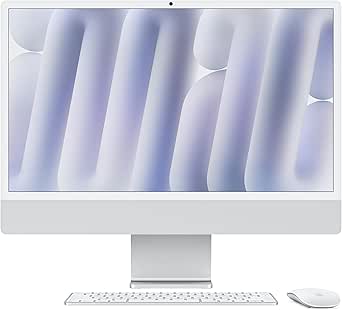
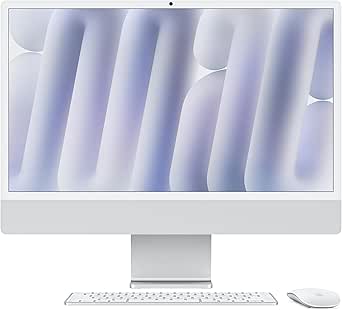
Apple 2024 iMac 24-inch All-in-One Desktop with M4, 16GB Memory, 512GB SSD, Silver
This configuration of the 2024 iMac with M4 balances performance and usability perfectly for creative professionals who value aesthetics. Compared to the base model with 256GB SSD, the 512GB storage here provides much-needed headroom for projects and media libraries, reducing reliance on external drives. The 10-core GPU offers a tangible boost in graphical tasks over the 8-core variant found in lower-tier models, making it suitable for moderate video editing and graphic design. The 4.5K Retina display and Spatial Audio speakers create an immersive media experience that standalone monitors often lack. While the 16GB unified memory is sufficient for most tasks, heavy 3D rendering might still push it. This is the sweet spot for users who want a beautiful, high-performance machine without the premium price of the Mac Studio.
Pros:- 512GB SSD provides ample room for projects and applications
- 10-core GPU offers better graphical performance than base M4 models
- Stunning 4.5K Retina display with 500 nits brightness
- Integrated six-speaker system with Spatial Audio eliminates need for external speakers
Cons:- 16GB of unified memory is not upgradable post-purchase
- All-in-one design means a failure in one component requires replacing the whole unit
Best for: Content creators and designers who need extra storage and graphical power for editing and design work in a sleek, space-saving package.
Not ideal for: Users with massive media libraries who would prefer 1TB or more of internal storage, or those needing to upgrade RAM later.
- Processor:Apple M4 with 10-core CPU and 10-core GPU
- Memory:16GB Unified Memory
- Storage:512GB SSD
- Display:24-inch 4.5K Retina, 500 nits
- Camera:12MP Center Stage
- Audio:Three microphones; six speakers with Spatial Audio
- Connectivity:Thunderbolt 4, Wi-Fi 6E, Bluetooth 5.3
- Color:Silver
Our verdict“This iMac is the best premium all-in-one for creatives who want balanced performance and storage without stepping into workstation territory.”
Apple 2024 iMac All-in-One Desktop Computer with M4 chip, 24-inch Retina Display, 16GB RAM, 256GB SSD – Silver
The base 2024 iMac with M4 is the most accessible entry point into Apple’s current desktop lineup. While the 256GB SSD is a significant constraint compared to the 512GB version, it remains viable for users who rely on cloud storage or external drives. The 8-core M4 chip is still remarkably fast for everyday tasks, web browsing, and light productivity, often outperforming older Intel machines like the 27-inch Retina 5K Desktop by a wide margin. The 12MP Center Stage camera and studio-quality mics make it a superior choice for remote workers compared to laptops with inferior webcams. However, the limited storage means you will likely need to manage files actively. This model is best for students and home office users who prioritize a clean setup and good video conferencing capabilities over heavy creative workloads.
Pros:- M4 chip delivers excellent speed for everyday tasks and productivity
- Superior webcam and audio quality for video conferencing
- Compact and elegant design fits well in small spaces
- Lower price point than higher-storage configurations
Cons:- 256GB SSD is very restrictive for modern software and media files
- Unified memory and storage are not user-upgradable
Best for: Students, remote workers, and home office users who need a reliable, stylish computer for productivity and video calls but have modest storage needs.
Not ideal for: Photographers, video editors, or anyone with large local file libraries, as the 256GB SSD fills up quickly.
- Chip:Apple M4 with 8-core CPU and 8-core GPU
- Memory:16GB Unified Memory
- Storage:256GB SSD
- Display:24-inch 4.5K Retina, 500 nits
- Camera:12MP Center Stage
- Audio:Three studio-quality mics, six speakers with Spatial Audio
- Connectivity:Up to four Thunderbolt 4 ports, Wi-Fi 6E, Bluetooth 5.3
- Color:Silver
Our verdict“This iMac is the best value pick for home office users who prioritize design and communication tools over local storage capacity.”
Apple 2026 MacBook Air 13-inch Laptop with M5 Chip
The 2026 MacBook Air with M5 represents the pinnacle of portable computing, offering desktop-class performance in a laptop that weighs less than three pounds. Unlike the stationary Mac mini with M6, this device allows you to take your work anywhere with up to 18 hours of battery life. The M5 chip provides a noticeable leap in AI-driven tasks and efficiency over the M4 found in the 2024 iMac. Its Liquid Retina display is vibrant and sharp, ideal for media consumption on the go. However, the limited port selection—just two Thunderbolt ports—requires dongle management for complex setups. This is the definitive choice for students, travelers, and professionals who need mobility without sacrificing speed or display quality.
Pros:- M5 chip delivers exceptional speed and AI capabilities in a thin chassis
- Up to 18 hours of battery life supports full-day work without charging
- Extremely lightweight at 2.71 pounds for easy portability
- 13.6-inch Liquid Retina display offers excellent color and sharpness
Cons:- Only two Thunderbolt ports limit peripheral connectivity
- Premium pricing compared to budget Windows ultrabooks
Best for: Frequent travelers, students, and professionals who need a lightweight, high-performance laptop with long battery life for on-the-go productivity.
Not ideal for: Users who need to connect multiple high-bandwidth peripherals simultaneously, as the dual-port design can become a bottleneck.
- Processor:Apple M5 chip
- Memory:16GB Unified Memory
- Storage:512GB SSD
- Display:13.6-inch Liquid Retina
- Battery Life:Up to 18 hours
- Connectivity:Wi-Fi 7, Bluetooth 6, 2x Thunderbolt 4, MagSafe
- Weight:2.71 pounds
- Camera:12MP Center Stage Camera
Our verdict“The 2026 MacBook Air is the best choice for those who demand top-tier performance and battery life in a highly portable form factor.”
Apple 2023 iMac 24-inch with M3 Chip (Silver) (Renewed)
This renewed unit offers the M3 chip’s efficiency in a compact package, making it a smart choice for those who want modern performance without the new-product premium. Compared to the 2026 MacBook Neo, the iMac provides a superior desktop experience with its 4.5K Retina display and six-speaker system, which are far better for media consumption and video calls than a laptop’s built-in hardware. However, the renewed status introduces uncertainty regarding packaging and accessory quality, unlike the pristine condition of new models. While the 8GB RAM handles daily tasks well, it lags behind the 16GB found in the MacBook Air 15-inch, limiting heavy multitasking potential.Pros:- Modern M3 chip delivers strong single-core performance for productivity.
- Vibrant 4.5K Retina display is ideal for photo editing and media.
- High-quality built-in audio and camera outperform most standalone monitors.
Cons:- Renewed condition means non-original packaging and potential cosmetic imperfections.
- 8GB of unified memory limits future-proofing for intensive creative tasks.
- Limited port selection requires dongles for multiple peripherals.
Best for: Home office users who prefer a stationary setup with a large, high-quality screen and excellent audio for meetings.
Not ideal for: Users who require guaranteed original packaging and accessories, or professionals needing more than 8GB of RAM for complex workflows.
- Chip:Apple M3 (8-core CPU, 10-core GPU)
- Memory:8 GB Unified Memory
- Storage:512 GB SSD
- Display:24-inch 4.5K Retina
- Condition:Renewed
- Color:Silver
Our verdict“A cost-effective entry into modern Apple desktop computing, provided you accept the risks of renewed hardware.”
Apple 2026 MacBook Neo 13-inch Laptop (A18 Pro, 8GB RAM, 512GB SSD)
The MacBook Neo distinguishes itself with its A18 Pro chip, a processor typically found in iPhones, now optimized for ultra-portable computing. This makes it significantly lighter and more durable than traditional MacBooks, weighing just 2.71 pounds, which is a clear advantage over the 3.32-pound MacBook Air 15-inch. Its 16-hour battery life supports full-day academic use without needing a charger nearby. However, the 8GB unified memory is a tight constraint for students running multiple browser tabs alongside heavy applications, a limitation not present in the higher-RAM configurations of the MacBook Air 15-inch. The Liquid Retina display is sharp but smaller than the 15-inch alternative, potentially impacting multitasking efficiency.Pros:- Extremely lightweight at 2.71 pounds for easy portability.
- Excellent 16-hour battery life reduces charging anxiety.
- Durable recycled aluminum chassis withstands daily commuting wear.
Cons:- 8GB RAM may struggle with heavy multitasking or virtual machines.
- Smaller 13-inch screen limits split-view productivity compared to 15-inch models.
- Performance benchmarks for the A18 Pro in a laptop context are less established than M-series chips.
Best for: Students and travelers who prioritize extreme portability and battery life over raw power or screen real estate.
Not ideal for: Creative professionals or power users who need more than 8GB of RAM for multitasking and larger screens for detailed work.
- Chip:A18 Pro
- Memory:8 GB Unified Memory
- Storage:512 GB SSD
- Display:13-inch Liquid Retina
- Battery Life:Up to 16 hours
- Weight:2.71 pounds
Our verdict“The ideal companion for students who value lightness and endurance above all else.”
Apple MacBook Air 15-inch with M5 Chip, 16GB Memory, 512GB SSD
This model balances screen size and performance better than any other option in this lineup. The M5 chip paired with 16GB of unified memory provides a noticeable performance headroom over the 8GB configurations in the MacBook Neo and renewed iMac M3, allowing for smoother multitasking and future-proofing for AI-driven applications. The 15.3-inch Liquid Retina display offers ample workspace for creators, surpassing the 13-inch Neo in utility while remaining portable at 3.32 pounds. Although it lacks the dedicated GPU power of the MacBook Pro 16-inch, its 18-hour battery life and Center Stage camera make it a superior all-rounder for professionals who need mobility without compromising on memory capacity.Pros:- 16GB RAM handles demanding multitasking and AI tasks effectively.
- Large 15.3-inch display enhances productivity and media consumption.
- Up to 18 hours of battery life outlasts most competitors in its class.
Cons:- 512GB storage may fill quickly for users with large media libraries.
- Higher price point compared to 8GB RAM models like the MacBook Neo.
- Fanless design may throttle under sustained extreme loads compared to Pro models.
Best for: Professionals and creators who need a large, crisp display and sufficient RAM for multitasking in a portable form factor.
Not ideal for: Users with extremely tight budgets or those who strictly need desktop-class GPU power for 3D rendering.
- Chip:Apple M5
- Memory:16 GB Unified Memory
- Storage:512 GB SSD
- Display:15.3-inch Liquid Retina
- Battery Life:Up to 18 hours
- Weight:3.32 pounds
Our verdict“The best balance of screen size, memory, and portability for modern professional workloads.”
Apple iMac 21.5-inch All-in-One Desktop (Renewed) – Intel Core i5
This renewed Intel-based iMac represents the lowest barrier to entry in this list, offering a functional macOS experience at a fraction of the cost of Apple Silicon models. While it includes a 256GB SSD for decent boot speeds, its 8GB DDR3 RAM and older Intel Core i5 processor are significantly slower than the M3 chip in the 2023 iMac or the M5 chip in the MacBook Air. The 21.5-inch Full HD display lacks the resolution and color accuracy of the 4.5K Retina screens on newer iMacs, making it unsuitable for photo or video editing. It runs an older OS out of the box, requiring updates that may expose its hardware limitations more clearly than newer, optimized systems.Pros:- Significantly lower cost compared to Apple Silicon models.
- Compact all-in-one design saves desk space.
- SSD ensures reasonable responsiveness for basic tasks.
Cons:- Older Intel architecture is less efficient and slower than M-series chips.
- Non-Retina 1920×1080 display lacks sharpness for media work.
- Limited upgradeability and older connectivity standards (USB 3.0).
Best for: Individuals on a strict budget who need a basic desktop for web browsing, email, and light office tasks.
Not ideal for: Creative professionals, gamers, or anyone requiring high-resolution displays or fast processing power for modern apps.
- Processor:Intel Core i5 2.7GHz
- Memory:8 GB DDR3 SDRAM
- Storage:256 GB SSD
- Display:21.5-inch 1920×1080
- Condition:Renewed
- Operating System:macOS (Upgradable)
Our verdict“A functional but dated option strictly for those prioritizing minimum cost over performance or display quality.”
Apple iMac 24-inch All-in-One Desktop Computer with M6 Chip
The M6 iMac stands as the most capable desktop in this roundup, combining the latest M6 chip with support for up to 32GB of unified memory, far exceeding the 8GB limits of the renewed M3 iMac and MacBook Neo. Its 24-inch 4.5K Retina display and Spatial Audio speakers create a premium media hub experience that the MacBook Air 15-inch cannot match due to its laptop constraints. The 12MP Center Stage camera and Wi-Fi 7 connectivity ensure future-ready performance for video conferencing and fast networking. While it lacks the raw GPU power of the MacBook Pro 16-inch, its integration, screen quality, and updated architecture make it the definitive choice for modern home and professional desktop use.Pros:- Latest M6 chip offers top-tier efficiency and performance.
- Configurable up to 32GB RAM supports heavy multitasking.
- Premium display and audio systems create an immersive workspace.
Cons:- Higher upfront cost compared to renewed or older models.
- Fixed desktop form factor lacks the portability of laptops.
- Optional features like Nano-texture glass increase the final price.
Best for: Users seeking the best desktop experience for productivity, media, and creative work with future-proof connectivity.
Not ideal for: Budget-conscious buyers or those who need the portability of a laptop like the MacBook Air 15-inch.
- Chip:Apple M6
- Memory:Up to 32 GB Unified Memory
- Display:24-inch 4.5K Retina
- Camera:12MP Center Stage
- Networking:Wi-Fi 7, Bluetooth 6
- Ports:Up to four Thunderbolt 4 ports
Our verdict“The definitive desktop choice for those who want the best current Apple technology in an all-in-one package.”

How We Picked
I compared the 15 listed Macs by the job they can handle, the practicality of their design, and the configuration buyers actually receive. The main criteria were chip generation and class, memory and storage, screen size and quality where specified, portability, and whether the computer includes a display or requires a separate one. I also weighed how clearly each configuration fits a buyer: a light-use laptop, an all-in-one family desktop, a compact desktop setup, or a machine for demanding creative work.
The ranking favors options with a clear match between capability and likely use, not simply the largest numbers or newest-sounding name. That puts a versatile M5 Air ahead for general use, gives the Mac mini a distinct role for buyers who already own peripherals, and reserves the M4 Max MacBook Pro for workloads that can use its expanded memory and performance class. I rank older and renewed models lower when their age, limited memory, or unclear configuration makes them harder to recommend broadly. The listed M6 products are treated according to the supplied names and specifications; buyers should verify the exact configuration before purchase.
Factors to Consider When Choosing Best Mac Computers
Mac choices can look deceptively similar when several models share the same brand and chip family. I’d make the decision by starting with your setup and workload, then checking memory, storage, and the exact model year before comparing screen sizes or colors.
Choose the computer format before the chip
Start by deciding whether your computer needs to travel with you. A MacBook Air gives you a screen, keyboard, battery, and computer in one package, while an iMac provides a ready-made desktop with its display built in. The Mac mini can take up less desk space, but it is only the computer itself, so you need to account for a monitor and input devices. A common mistake is comparing a mini’s listed configuration with an all-in-one without accounting for those missing parts. If you move between rooms, classes, or workplaces, portability may matter more than a modest performance difference. If the computer will stay in one place, a desktop can make a larger screen and a settled workspace easier to prioritize.
Match memory to how long you plan to keep it
Memory affects how comfortably a Mac handles many apps, large creative projects, and heavier browser use at once. The lineup ranges from several 8GB configurations to 16GB Air and iMac options, plus a 32GB Air and a 64GB Pro. Buyers who mainly browse, write, and stream may not need the most memory available, but choosing a low-memory configuration for demanding work can limit flexibility later. Since memory is generally not a routine user upgrade on these Macs, treat it as a decision made at purchase rather than a future fix. Think about the applications you expect to use over the computer’s full ownership period, not just the ones open today. Pay for extra memory when your workload can use it, rather than assuming the highest specification is automatically the best fit.
Separate storage capacity from cloud storage habits
A 256GB SSD can be workable for documents and cloud-based routines, but it leaves less room for large photo libraries, games, video files, or offline projects. A 512GB drive provides more breathing room, while the listed MacBook Pro adds 1TB for larger local workloads. Cloud services can reduce the need to keep every file on the computer, but they do not replace local space for active media projects or reliable offline access. Buyers often focus on the chip and overlook storage until they start moving files between drives. Consider the size of your current library and whether you keep original media locally. If you are choosing between otherwise similar configurations, more built-in storage can reduce everyday file management.
Judge performance by workload, not by chip label alone
Chip names indicate product generations and broad capability, but the right choice depends on what the Mac must do. Everyday schoolwork and office tasks do not call for the same headroom as sustained video editing, complex music sessions, or large creative projects. The M4 Max MacBook Pro is the lineup’s clear high-capability laptop, while an Air makes more sense when portability and ordinary daily work lead the brief. A common buying error is paying for a premium processor that does not change the tasks you can complete. The opposite mistake is choosing an entry-level or older machine for software that regularly strains it. Match the computer to your heaviest regular workload, not an occasional task you could handle another way.
Check age and renewal status before choosing an older iMac
The iMac choices span Apple silicon generations, a 2020 Intel-era 27-inch model, and renewed machines with different displays and configurations. Renewed status alone does not tell you how a computer was inspected, what accessories come with it, or what support remains. Verify the exact processor, memory, storage, display resolution, included keyboard and mouse, return terms, and warranty details before deciding. Older models can offer a large or high-resolution display, but their age may affect software support and how well they suit future workloads. Compare the whole machine, not just the screen size or the word “Retina.” A newer all-in-one may be the safer choice for a buyer who values a straightforward setup and longer useful runway.
Pay for screen size only when it improves your routine
A 15-inch MacBook Air offers more screen area than the 13-inch Air, which can make split-screen work and long sessions more comfortable. The tradeoff is a larger laptop to carry, so the bigger display pays off most when the computer often stays open on a desk. An iMac gives you a fixed desktop display, while the Mac mini lets you choose a monitor that suits your preferred size and workspace. Do not assume that a larger screen automatically means a better computer for your needs; resolution, viewing distance, and the space available also matter. If you regularly work with timelines or multiple windows, extra display area can reduce the need for a separate monitor. For travel-first use, a more compact laptop may be the better everyday companion.
Frequently Asked Questions
Should I choose the 13-inch or 15-inch MacBook Air?
I’d choose the 13-inch Air if carrying the laptop frequently matters more than having a roomy built-in display. The 15-inch model makes more sense when you work for long periods at one screen or often arrange two windows side by side. Check the configuration as well as the screen size: the listed 15-inch version has 16GB memory and 512GB storage, while the 13-inch options include different memory and storage combinations. If you regularly use an external monitor, the smaller laptop may be easier to carry without giving up desk space. Let your usual work location decide the size.
Is the Mac mini a better desktop choice than an iMac?
The Mac mini suits buyers who already own a monitor, keyboard, and mouse or want to choose those items separately. An iMac is simpler to set up because its display and computer are combined, which can make it a better fit for a shared home workspace. Compare the total setup, not just the computer: adding a good monitor and accessories can change the appeal of the mini. The mini also gives you more freedom to choose or replace a display later. Pick the iMac for a complete all-in-one arrangement and the mini for a compact, customizable desk setup.
Is an 8GB Mac enough, or should I choose 16GB or more?
An 8GB configuration may suit basic browsing, writing, and streaming, but it leaves less room for many demanding apps or large projects running together. In this roundup, several newer iMac and Air choices offer 16GB, while the 32GB Air and 64GB Pro address heavier workloads. I’d prioritize more memory if you edit media, use professional creative software, keep many applications open, or plan to keep the Mac for years. For light tasks, it can be more sensible to spend on storage or a better-fitting screen instead. Choose memory based on your regular workload rather than an isolated peak task.
Does a renewed iMac make sense if I want a large display?
It can, especially if a larger desktop screen matters more to you than having the newest hardware. The renewed options in this lineup range from 2020 27-inch 5K models to an older 21.5-inch Intel iMac, so they differ sharply in age and capability. Confirm the exact processor, memory, storage, condition, included accessories, return terms, and warranty before committing. A large or high-resolution display does not guarantee that an older computer will suit current software or future needs. If longevity and straightforward support are priorities, compare a newer Apple silicon iMac before settling on a renewed model.
When is the MacBook Pro with M4 Max worth choosing over a MacBook Air?
The Pro is the more fitting option when demanding creative or technical work can make use of its M4 Max chip, 64GB memory, and 1TB SSD. For everyday study, office tasks, browsing, and general home use, the Air is a more practical class of laptop and avoids paying for capacity you may not use. The Pro’s 16-inch size also favors a desk-based workflow over frequent light travel. Think about whether your software benefits from the extra performance and memory on a regular basis. If your main need is a portable Mac for common tasks, I’d start with the Air instead.
Conclusion
For most buyers, I’d choose the 13-inch MacBook Air with M5 as the best overall: it offers a broadly useful laptop format without tying you to a desk. The Mac mini with M6 is my best value-style desktop pick for someone who already owns a monitor and peripherals, while an M4 iMac with 16GB memory is the more convenient route to a complete desktop setup. The 16-inch MacBook Pro with M4 Max is the best premium choice for workloads that genuinely benefit from its higher performance class and 64GB memory. For beginners, I’d favor a current MacBook Air for its straightforward all-in-one laptop design; for a shared home workspace, an iMac is easier to set up. Choose a renewed 27-inch iMac for a large-display desktop only after checking its exact age and condition, and skip the older Intel 21.5-inch model if newer software support and long-term flexibility matter most.