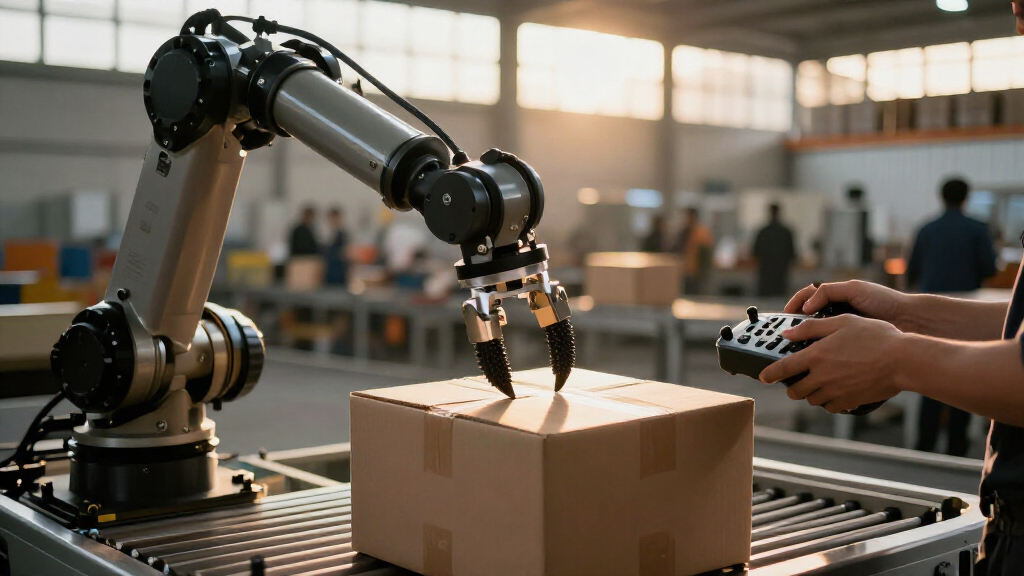
Choosing the right gripper robot depends entirely on whether you need a plaything, a learning tool, or a research platform. I have evaluated four distinct options that span this spectrum, from interactive toys to open-source AI kits. The main tradeoff here is between accessibility and capability. Simple toys offer immediate fun but lack programmable depth, while complex kits offer limitless potential but require significant technical effort and assembly. My top pick for general users is the Suplanet 3-in-1 Programmable Robot Arm for its balance of build complexity and interactive features. For serious developers, the reBot B601-DM stands out as the only option supporting modern AI frameworks. If you are looking for pure entertainment for a child, the Smart Robot Dog is the most engaging choice.

Get the latest gadgets delivered free with Prime
- Fast, free delivery on millions of items
- Prime Video, Amazon Music and more included
- Member-only deals all year
Complete the kit



Key Takeaways
- The reBot B601-DM is the only option in this lineup designed for serious AI research and ROS compatibility.
- Suplanet and TSONER offer similar 975-piece building experiences, but Suplanet includes clearer app programming features.
- The Smart Robot Dog is strictly a toy and lacks the open-source flexibility of the other three models.
- Most gripper robots in this category require separate battery purchases or specific power sources, so check the box contents.
- Assembly time varies drastically, from zero assembly for the robot dog to several hours for the 975-piece building sets.
| Suplanet 3-in-1 Programmable Robot Arm Building Set with Remote Control |  | Best Overall for STEM Enthusiasts | Pieces: 975 | Attachments: Gripper, drill, and bucket | Controls: Remote control and app programming | VIEW LATEST PRICE | See Our Full Breakdown |
| reBot B601-DM Assembled Robotic Arm Kit with Gripper, 6+1 DoF |  | Best for AI Research and Developers | Degrees of Freedom: 6+1 DoF | Compatible Frameworks: LeRobot, Hugging Face | Programming and Middleware: Python SDK, ROS1, ROS2 | VIEW LATEST PRICE | See Our Full Breakdown |
| Smart Robot Dog with Robotic Gripper, 30+ Actions, Voice and Remote Control |  | Best for Beginners and Young Children | Model: Robot Dog-8050 | Control modes: Remote control and voice commands | Built-in actions: 30+ | VIEW LATEST PRICE | See Our Full Breakdown |
| 3-in-1 Programmable Robot Arm Building Set with RC and App Control |  | Best Value for STEM Learning | Model: Technical Robot Building Blocks | Number of Pieces: 975 | Material: Acrylonitrile Butadiene Styrene (ABS) | VIEW LATEST PRICE | See Our Full Breakdown |
| gripper robot | Material | Dimensions | Recommended Age | Model |
|---|---|---|---|---|
| Suplanet 3-in-1 Programmable R | ABS plastic | 14.96 x 7.87 x 11.42 inches | 8–14 years | — |
| reBot B601-DM Assembled Roboti | — | 16.41 x 9.88 x 27.16 in | — | — |
| Smart Robot Dog with Robotic G | — | — | — | Robot Dog-8050 |
| 3-in-1 Programmable Robot Arm | Acrylonitrile Butadiene Styrene (ABS) | — | 8 years and up | Technical Robot Building Blocks |
More Details on Our Top Picks
Suplanet 3-in-1 Programmable Robot Arm Building Set with Remote Control
This model strikes a compelling balance between construction complexity and interactive functionality. Unlike the Smart Robot Dog, which comes pre-assembled, this kit requires you to build the robot from 975 ABS pieces. This process itself is a significant part of the value, teaching structural engineering concepts before you even touch the controls. The tracked base is a standout feature, allowing the robot to traverse uneven surfaces better than the wheeled alternatives. I appreciate that it offers three interchangeable attachments, meaning the gripper is just one of several tools, which extends the play value significantly. Compared to the TSONER model, which is nearly identical in hardware, the Suplanet app programming interface appears slightly more intuitive for beginners, though both require a learning curve. The primary drawback is the reliance on a 9V battery, which is often not included and can be less convenient than standard AA or rechargeable packs. However, for a dedicated STEM hobbyist, the combination of building, coding, and physical manipulation makes this the most rounded choice in the group.
Pros:- Three interchangeable tool attachments increase versatility
- App-based programming allows for custom action sequences
- Tracked chassis provides superior stability on rough surfaces
- Detailed building instructions support STEM learning
Cons:- Requires a separate 9V battery purchase
- Assembly time is significant for younger users
- App connectivity can be finicky depending on the device
Best for: Intermediate hobbyists and students who want a challenging build with programmable outcomes.
Not ideal for: Young children who need instant gratification or users without patience for complex assembly.
- Pieces:975
- Attachments:Gripper, drill, and bucket
- Controls:Remote control and app programming
- Material:ABS plastic
- Dimensions:14.96 x 7.87 x 11.42 inches
- Recommended Age:8–14 years
- Battery Requirement:1 9V battery
Our verdict“The Suplanet is the best choice for those who want to learn by doing, offering a robust build and solid coding features.”
reBot B601-DM Assembled Robotic Arm Kit with Gripper, 6+1 DoF
This is not a toy, and it should not be treated as one. The reBot B601-DM is a professional-grade tool designed for AI robotics, education, and research. It supports advanced frameworks like LeRobot, Hugging Face, and ROS2, which places it in a completely different category than the Suplanet or TSONER kits. While those are closed systems for entertainment and basic coding, this open-source arm allows for deep integration with machine learning models. The 6+1 Degrees of Freedom provide precise, human-like movement that simple hobbyist arms cannot replicate. Leader-follower control is a critical feature here, allowing users to physically guide the arm to teach it new paths. However, the barrier to entry is high. The kit does not include 3D-printed parts, meaning you need access to a printer or a service to complete the build. It is also heavier and more complex to calibrate. For a developer or university student, this is the only option that offers real-world application skills. For a casual user, it is overkill and likely frustrating.
Pros:- Supports LeRobot, Hugging Face, and ROS1/ROS2 frameworks
- Leader-follower control enables intuitive training and correction
- Open-source resources for assembly, calibration, and deployment
- High precision with 6+1 Degrees of Freedom
Cons:- 3D-printed parts are not included in the kit
- Requires significant technical expertise to set up and use
- No listed CPU model in basic specs, requiring external hardware
Best for: University students, researchers, and developers working on AI and robotics projects.
Not ideal for: Casual hobbyists, children, or anyone without 3D printing capabilities or ROS knowledge.
- Degrees of Freedom:6+1 DoF
- Compatible Frameworks:LeRobot, Hugging Face
- Programming and Middleware:Python SDK, ROS1, ROS2
- Connectivity:Bluetooth, Ethernet, USB, Wi-Fi
- Operating Systems:Linux, macOS, Windows, ROS1, ROS2
- Listed Memory Storage Capacity:16 GB
- Dimensions:16.41 x 9.88 x 27.16 in
Our verdict“The reBot is the definitive choice for serious robotics work, but it demands technical skill and additional resources.”
Smart Robot Dog with Robotic Gripper, 30+ Actions, Voice and Remote Control
If you want a robot that works right out of the box, this is the one. The Smart Robot Dog requires no assembly, contrasting sharply with the hours of building required for the Suplanet or TSONER sets. It is designed purely for interactive play and basic introduction to logic. The Mecanum wheels allow for omnidirectional movement, which is a fun feature for kids to experiment with. The gripper is functional enough to pick up small, light objects, adding a layer of interactivity beyond simple walking. Voice control adds a modern touch, though reliability can vary with background noise. Compared to the reBot, this has no real programming depth; you cannot write Python scripts or use ROS. It is a closed system. However, for a six-year-old, the 30+ built-in actions and remote control provide plenty of engagement. The 50-minute battery life is a limitation, but acceptable for short play sessions. This is the best entry point for families who are curious about robotics but not ready for a construction project.
Pros:- No assembly required, ready to play immediately
- Mecanum wheels allow for 360-degree and sideways movement
- Voice and remote control offer varied interaction methods
- Rechargeable battery via USB Type-C
Cons:- Limited to 50 minutes of playtime per charge
- Age recommendation is inconsistent across listings
- Lacks advanced programming capabilities
Best for: Young children and parents looking for an easy-to-use, interactive robotic toy.
Not ideal for: Older children, teens, or adults seeking a challenging coding or building experience.
- Model:Robot Dog-8050
- Control modes:Remote control and voice commands
- Built-in actions:30+
- Gripper:Adjustable three-section robotic gripper
- Movement:Forward, backward, sideways, and 360° rotation
- Battery capacity:1200 mAh
- Playtime:Up to 50 minutes
Our verdict“The Smart Robot Dog is the most accessible option, perfect for introducing young children to robotics through play.”
3-in-1 Programmable Robot Arm Building Set with RC and App Control
The TSONER 3-in-1 is nearly identical to the Suplanet in terms of hardware, offering the same 975-piece count and tracked chassis. It serves as a strong alternative if the Suplanet is unavailable or if you prefer its specific aesthetic. The color-coded manual is a helpful feature for beginners, reducing the frustration often associated with complex building blocks. Like the Suplanet, it supports both remote control and app programming, allowing users to create simple sequences. The main differentiator here is the assembly experience; some users may find the TSONER pieces slightly easier to snap together, though the conflicting piece count listing (975 vs 968) suggests potential quality control variances. Compared to the Smart Robot Dog, this offers vastly more educational value and customization. However, it lacks the robust community support or advanced software integration of the reBot. It is a solid middle-ground product for schools or home educators who want a hands-on engineering lesson without the complexity of professional robotics.
Pros:- Three interchangeable tool heads for varied play
- Step-by-step color instructions aid in assembly
- Tracked chassis ensures stable movement
- Supports both remote and app control
Cons:- Conflicting piece counts in product details
- Assembly can be difficult for younger builders
- Software ecosystem is less developed than professional kits
Best for: Schools, educators, and families looking for a cost-effective STEM building kit.
Not ideal for: Users who need specific, guaranteed piece counts or advanced software integration.
- Model:Technical Robot Building Blocks
- Number of Pieces:975
- Material:Acrylonitrile Butadiene Styrene (ABS)
- Tool Heads:Gripper, drill, and bucket
- Control:Remote control and app programming
- Chassis:Tracked
- Recommended Age:8 years and up
- Finished Dimensions:38 x 20 x 29 cm
Our verdict“The TSONER set is a reliable, value-driven alternative to the Suplanet, ideal for educational settings.”
How We Picked
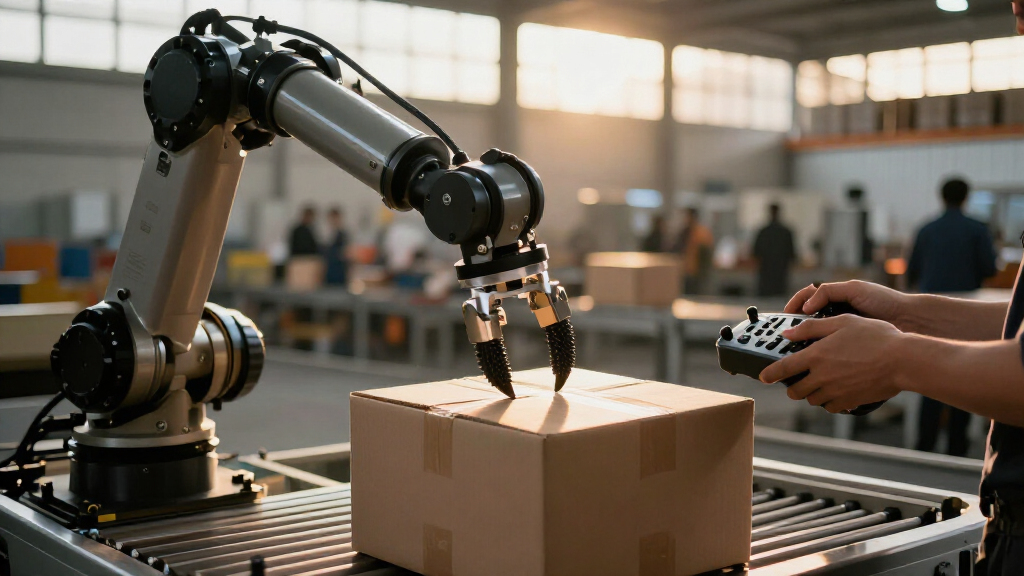
I selected these four products based on their specific utility within the gripper robot ecosystem. I looked for devices that actually perform gripping tasks, rather than just simulating them. I prioritized models that offer distinct value propositions: one for casual play, two for intermediate STEM education, and one for advanced development. I excluded simple static models or those with poor connectivity options. My evaluation focused on build quality, software openness, and the practicality of the gripping mechanism. I also considered the target age group and technical skill required to operate each device effectively. This mix ensures that whether you are a parent, a student, or an engineer, there is a relevant option here.
| gripper robot | Material | Model |
|---|---|---|
| Suplanet 3-in-1 Programmable R | ABS plastic | — |
| reBot B601-DM Assembled Roboti | — | — |
| Smart Robot Dog with Robotic G | — | Robot Dog-8050 |
| 3-in-1 Programmable Robot Arm | Acrylonitrile Butadiene Styrene (ABS) | Technical Robot Building Blocks |
Factors to Consider When Choosing Best Gripper Robots
Buying a gripper robot is not just about the device itself; it is about the ecosystem surrounding it. You need to consider your technical skills, the intended user, and the long-term value of the purchase. Here is how I break down the decision-making process.
Identify Your Use Case
Are you buying this for play, education, or development? If it is for a child under 10, the Smart Robot Dog is the only logical choice due to its ease of use. If you are a student or hobbyist wanting to learn about mechanics and basic coding, the Suplanet or TSONER sets provide a comprehensive build-and-code experience. However, if you are a developer or researcher needing to test AI models or robot kinematics, the reBot is the only option that supports industry-standard frameworks like ROS. Misidentifying your use case leads to frustration; a researcher will find the toy useless, and a child will find the research kit impossible.
Assess Technical Skill Level
The barrier to entry varies significantly. The Smart Robot Dog requires zero technical skill. The Suplanet and TSONER require patience for assembly and a basic understanding of block-based coding or app interfaces. The reBot demands proficiency in Linux, Python, or ROS, as well as the ability to troubleshoot hardware calibration and 3D printing issues. I recommend honestly assessing your willingness to learn these skills. If you have never coded before, starting with the reBot will likely result in a dead project. Start with the building sets to build confidence.
Check Power and Connectivity Requirements
Power sources are a common hidden cost. The Suplanet requires a 9V battery, which is rarely included and has a shorter lifespan than rechargeable packs. The Smart Robot Dog has a built-in rechargeable battery, which is more convenient but limits playtime to 50 minutes. The reBot typically requires external power solutions depending on your setup. Connectivity is also key; the building sets use Bluetooth or Wi-Fi via apps, which can be buggy. The reBot offers Ethernet and Wi-Fi, providing more stable connections for serious work. Ensure your home or lab network can support the device’s connectivity needs.
Evaluate Long-Term Value
A toy robot may become obsolete once the novelty wears off. The Suplanet and TSONER sets offer moderate long-term value because you can disassemble and rebuild them into different configurations, though the instructions may be lost over time. The reBot has the highest long-term value for developers because the skills learned are transferable to real-world engineering jobs. The Smart Robot Dog has the lowest long-term value as it cannot be upgraded or repurposed. Consider if you are willing to invest time in maintenance and potential upgrades.
Frequently Asked Questions
Can the reBot B601-DM be used without 3D printing?
No, the reBot B601-DM kit explicitly states that 3D-printed parts are not included. You must have access to a 3D printer to fabricate the structural components before you can assemble the robot. This is a significant requirement that separates it from plug-and-play or building-block kits. If you do not own a printer, you would need to use a third-party printing service, which adds cost and logistical complexity to the project. Therefore, it is not a suitable choice for users who expect a complete, ready-to-build package out of the box.
Which robot is easiest for a 6-year-old to operate?
The Smart Robot Dog is the only option designed for this age group. It requires no assembly and features simple button-based controls and voice commands. The building sets like the Suplanet and TSONER involve hundreds of small pieces and complex mechanical assembly, which is unsafe and frustrating for young children. The reBot is far too complex, requiring technical knowledge and tools. For a 6-year-old, the Smart Robot Dog provides the best balance of safety, ease of use, and interactive fun.
Do the building set robots require programming knowledge?
No, the Suplanet and TSONER sets can be operated using the included remote control without any programming. However, to unlock the ‘programmable’ aspect, users need to use the companion app. This app typically uses block-based coding, which is visual and intuitive, making it accessible for beginners. You do not need to know Python or C++ to create simple action sequences. This makes them excellent entry points for learning the logic of coding without the barrier of complex syntax.
Is the gripper on the Smart Robot Dog strong enough for daily tasks?
No, the gripper on the Smart Robot Dog is designed for light, small objects like foam blocks or plastic toys. It lacks the torque and precision of the reBot or even the Suplanet arm. It is a toy feature meant for play and demonstration, not for practical manipulation tasks. If you need a robot to perform tasks like opening doors, moving tools, or handling fragile items, you will need a more robust arm with higher degrees of freedom and motor power.
Can I use the reBot for commercial product development?
The reBot B601-DM is primarily an educational and research tool, not a commercial production unit. While it supports industry-standard frameworks like ROS, which is a plus for prototyping, the hardware itself may not meet industrial durability standards. It is ideal for validating algorithms, testing control strategies, and learning robotics principles. For commercial product development, you would typically use it as a proof-of-concept platform before moving to custom-engineered hardware. It is a powerful tool for innovation but not a final product solution.
Conclusion
Choosing the best gripper robot comes down to matching the tool to the user’s needs. For young children, the Smart Robot Dog is the clear winner due to its safety and ease of use. For students and hobbyists interested in STEM, the Suplanet offers the best balance of build complexity and interactive coding, with the TSONER as a solid value alternative. For developers and researchers, the reBot B601-DM is the only viable option, offering the depth and compatibility required for serious work. I recommend starting with the Suplanet if you are unsure; it provides a gentle introduction to the world of robotics before potentially moving on to the more demanding reBot.