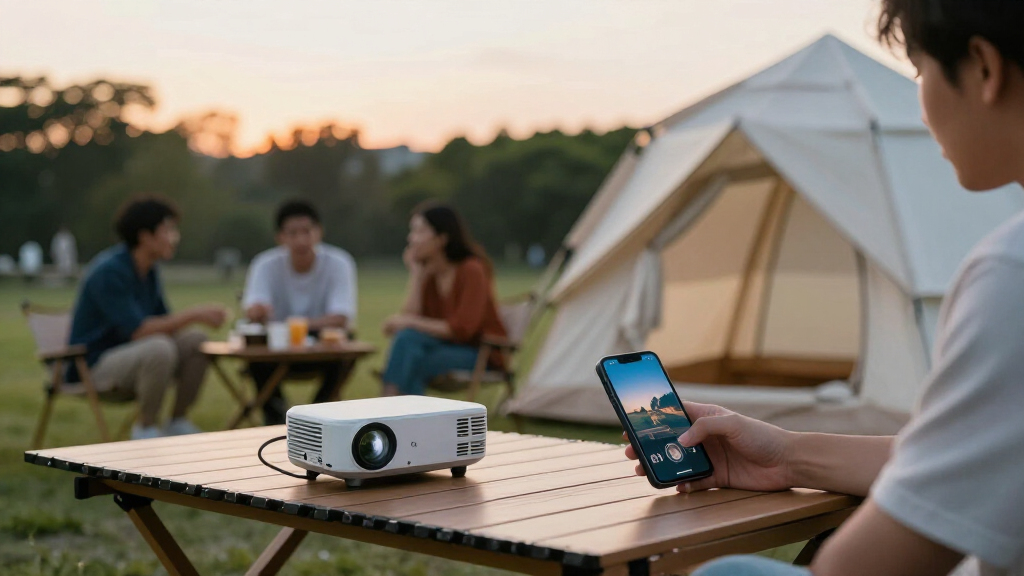
Smartphone projectors vary most in how easily they connect to a phone, what streaming options they offer, and how much setup they need. My best overall pick is the Aurzen Roku TV D1R for its Roku-based streaming experience, while the Geylnxng Q5 Mate stands out for flexible 180-degree positioning and the Native 1080p Mini Projector with Type-C mirroring for a direct phone-connection option. The main tradeoff is between built-in apps that reduce dependence on a phone and direct mirroring that can be simpler for personal media but may depend on device compatibility. Portability, image resolution, audio, and room brightness also affect whether a projector suits casual viewing or regular movie nights. Read on for the full comparison, selection criteria, and advice for choosing a model that matches your phone and viewing space.

Get the latest gadgets delivered free with Prime
- Fast, free delivery on millions of items
- Prime Video, Amazon Music and more included
- Member-only deals all year
Complete the kit



Key Takeaways
- The two Aurzen Roku models stand apart for built-in Roku TV: they suit buyers who want a familiar streaming interface rather than relying on phone mirroring for every show.
- Direct connection and smart features solve different problems: the Native 1080p model calls out Type-C smartphone mirroring, while several other picks emphasize built-in apps or Android.
- Rotation is a practical placement feature, not a picture-quality upgrade: the Geylnxng Q5 Mate and Thunrlge HY300 Pro offer 180-degree rotation, useful when a shelf or bedside setup limits projector placement.
- Resolution labels need careful reading: several products list native 1080p, while others say 1080p support or 4K support; supported input formats do not by themselves indicate native display resolution.
- Wireless specifications are not a guarantee of effortless mirroring: Wi-Fi and Bluetooth features vary across the lineup, so buyers should check phone compatibility and the exact connection method before choosing.
| Geylnxng Q5 Mate Mini Projector, 1080p, Wi-Fi 6, Bluetooth, 180° Rotatable |  | Best for Flexible Placement | Native resolution: 1920 × 1080 | Supported video input: Up to 4K | Projection rotation: 180° | VIEW LATEST PRICE | See Our Full Breakdown |
| Native 1080p Mini Projector with Bluetooth and Type-C Smartphone Mirroring |  | Best for Wired Smartphone Mirroring | Native resolution: 1920 × 1080 | Listed brightness: 95 lm | Image size: 32–200 inches | VIEW LATEST PRICE | See Our Full Breakdown |
| HAPPRUN H1 Native 1080p Portable Bluetooth Projector |  | Best Native-1080p Option for External Devices | Native resolution: 1920 × 1080 | Brightness: 300 ANSI lumens | Image size: 40–200 inches | VIEW LATEST PRICE | See Our Full Breakdown |
| Portable Mini Projector with Android 14, 1080p Resolution, 4K Support, and Phone Remote |  | Best for Built-In Apps and Travel | Operating system: Android 14 | Native resolution: 1280 × 720 | Maximum supported resolution: 4096 × 2160 | VIEW LATEST PRICE | See Our Full Breakdown |
| Portable Mini Projector with Wi-Fi, Bluetooth, and Built-In Apps |  | Best Lightweight Wireless Pick | Native resolution: 1280 × 720 | Maximum supported resolution: 3840 × 2160 | Brightness: 500 lm | VIEW LATEST PRICE | See Our Full Breakdown |
| Portable Mini Projector with Bluetooth 5.1, 1080p Support |  | Best for Simple, Flexible Setups | Native resolution: 1280 × 720 | Maximum supported input: 1080p Full HD | Brightness: 200 lm | VIEW LATEST PRICE | See Our Full Breakdown |
| Magcubic Mini Projector with Wi-Fi 6, Bluetooth 5.4, and 4K Support |  | Best for Flexible Placement | Model: HY300pro+ | Native resolution: 1280 × 720 | Maximum supported input: 4096 × 2160 | VIEW LATEST PRICE | See Our Full Breakdown |
| TMY Native 1080P Mini Portable Projector with Two-Way Bluetooth and 80-Inch Screen |  | Best for Native Resolution and a Ready Screen | Native resolution: 1920 × 1080 | Maximum supported input: 4K | Brightness: Up to 300 ANSI lumens | VIEW LATEST PRICE | See Our Full Breakdown |
| AKIYO Mini Projector with Wi-Fi and Bluetooth, 1080p Supported |  | Best for Direct Phone Casting | Native resolution: 1280 × 720 | Maximum supported input: 3840 × 2160 | Brightness: 200 ANSI lumens | VIEW LATEST PRICE | See Our Full Breakdown |
| Aurzen Roku TV D1R Portable Smart Projector |  | Best Overall for Streaming and Image Detail | Native resolution: 1920 × 1080 | Image size: 40–200 inches | Throw distance: 3.71–18.58 feet | VIEW LATEST PRICE | See Our Full Breakdown |
| YGSKK Mini Projector with Wi-Fi 6, Bluetooth 5.3, and Built-In Streaming Apps |  | Best for Sharper Smartphone Viewing | Native resolution: 1080p | 4K input: Supported via HDMI | Brightness: Up to 300 ANSI lumens | VIEW LATEST PRICE | See Our Full Breakdown |
| Philoent Mini Portable Projector with Wi-Fi 6, Bluetooth 5.4, and Built-In Apps |  | Best for Lightweight Travel | Native resolution: 1280 × 720 | Maximum display resolution: 1920 × 1080 | Brightness: 200 ANSI lumens | VIEW LATEST PRICE | See Our Full Breakdown |
| HY300Pro Portable Mini Projector with Android 14, Wi-Fi 6, Bluetooth 5.4, and Auto Keystone |  | Best for Flexible Placement | Operating system: Android 14 | Native resolution: 1280 × 720 | Maximum supported resolution: 3840 × 2160 input | VIEW LATEST PRICE | See Our Full Breakdown |
| Thunrlge HY300 Pro Portable Smart Mini Projector with Android 11, Wi-Fi 6, Bluetooth, and 180° Rotation |  | Best for Built-In Netflix | Operating system: Android 11.0 | Native resolution: 1280 × 720 | Maximum image size: 130 inches | VIEW LATEST PRICE | See Our Full Breakdown |
| Aurzen Roku TV E1R Smart Portable Mini Projector |  | Best for Roku Simplicity | Operating system: Roku TV OS | Native resolution: 1280 × 720 | Brightness: 160 lm | VIEW LATEST PRICE | See Our Full Breakdown |
| smartphone projector | Native resolution | Connectivity | Brightness | Image size |
|---|---|---|---|---|
| Geylnxng Q5 Mate Mini Projecto | 1920 × 1080 | Wi-Fi, Bluetooth, AV, USB, 3.5 mm headphone port | — | 35–135 inches (listed range) |
| Native 1080p Mini Projector wi | 1920 × 1080 | Bluetooth 5.2, HDMI, Type-C, USB | — | 32–200 inches |
| HAPPRUN H1 Native 1080p Portab | 1920 × 1080 | HDMI, USB, 3.5 mm audio, Bluetooth, IR | 300 ANSI lumens | 40–200 inches |
| Portable Mini Projector with A | 1280 × 720 | Wi-Fi 6, Bluetooth 5.4, HDMI, USB | 400 ANSI lumens | 40–100 inches |
| Portable Mini Projector with W | 1280 × 720 | Dual-band Wi-Fi, Bluetooth 5.2, HDMI | 500 lm | — |
| Portable Mini Projector with B | 1280 × 720 | — | 200 lm | 40–120 inches |
| Magcubic Mini Projector with W | 1280 × 720 | Wi-Fi 6, Bluetooth 5.4, HDMI, USB | 200 ANSI lumens | 80–130 inches |
| TMY Native 1080P Mini Portable | 1920 × 1080 | Bluetooth, HDMI, USB | Up to 300 ANSI lumens | — |
| AKIYO Mini Projector with Wi-F | 1280 × 720 | — | 200 ANSI lumens | 30–300 inches |
| Aurzen Roku TV D1R Portable Sm | 1920 × 1080 | Wi-Fi, Bluetooth 5.2, HDMI, USB, audio | — | 40–200 inches |
| YGSKK Mini Projector with Wi-F | 1080p | — | Up to 300 ANSI lumens | — |
| Philoent Mini Portable Project | 1280 × 720 | Wi-Fi 6, Bluetooth 5.4, HDMI, and USB | 200 ANSI lumens | — |
| HY300Pro Portable Mini Project | 1280 × 720 | Wi-Fi 6, Bluetooth 5.4, HDMI, and USB | 200 ANSI lumens | 35–135 inches |
| Thunrlge HY300 Pro Portable Sm | 1280 × 720 | Wi-Fi 6, Bluetooth, HDMI, and USB | — | — |
| Aurzen Roku TV E1R Smart Porta | 1280 × 720 | Wi-Fi 2.4/5 GHz, Bluetooth 5.2, HDMI, and USB | 160 lm | — |
More Details on Our Top Picks
Geylnxng Q5 Mate Mini Projector, 1080p, Wi-Fi 6, Bluetooth, 180° Rotatable
The Geylnxng Q5 Mate earns its place for buyers who need to aim a projector at an awkward wall or the ceiling: its 180° rotatable base changes the projection angle without requiring a separate mount. Unlike the Android 14 Portable Mini Projector, it lists native 1080p resolution rather than 720p, a useful distinction for sharper detail when viewing compatible content. Wi-Fi, Bluetooth, and AV, USB, and headphone connections give it several ways to pair with phones and other devices, while its stated lamp life is 45,000 hours. The tradeoff is that some streaming apps may block screen mirroring because of content-protection rules, so phone connectivity does not guarantee every service will play. Its listed image-size information also varies, making setup expectations less certain.
Pros:- Native 1920 × 1080 resolution
- 180° rotation supports wall and ceiling projection
- Wi-Fi, Bluetooth, AV, USB, and headphone connections
- Stated lamp life of up to 45,000 hours
Cons:- Some streaming apps may block phone screen mirroring because of content-protection restrictions
- Product information gives conflicting projection-size ranges
Best for: Phone and tablet owners who want native 1080p and ceiling-friendly placement in a portable tabletop projector.
Not ideal for: Viewers who want guaranteed wireless playback from every streaming app or need a clearly consistent projection-size specification.
- Native resolution:1920 × 1080
- Supported video input:Up to 4K
- Projection rotation:180°
- Image size:35–135 inches (listed range)
- Connectivity:Wi-Fi, Bluetooth, AV, USB, 3.5 mm headphone port
- Display type:LCD
- Lamp life:Up to 45,000 hours
Our verdict“Choose the Geylnxng Q5 Mate if native 1080p and flexible ceiling projection matter more than dependable app mirroring.”
Native 1080p Mini Projector with Bluetooth and Type-C Smartphone Mirroring
This model is the clearest fit for buyers who would rather connect a phone by cable than depend on wireless casting. Its included Type-C cable, HDMI, and USB connections offer more direct routes than the HAPPRUN H1, which requires a separately purchased phone-to-HDMI adapter for wired phone playback. Native 1080p resolution, electronic focus, and automatic keystone correction make image setup easier, while the stated image range reaches 200 inches. But the listed brightness is just 95 lm, so a large image is better treated as a dark-room option, not a bright-living-room solution. Phone compatibility and streaming-app restrictions can still affect playback; having a Type-C cable does not promise that every phone or protected video source will work.
Pros:- Native 1920 × 1080 resolution
- Type-C cable is included for compatible smartphone mirroring
- Automatic keystone correction and electronic focus simplify setup
- HDMI, USB, and Bluetooth connections support varied devices
Cons:- Listed brightness of 95 lm limits use in brighter rooms
- Phone mirroring and app playback depend on device compatibility and content restrictions
- Maximum 200-inch image size does not remove the need for a dark viewing space
Best for: Phone owners with a compatible Type-C device who want a direct cable connection and automatic image alignment.
Not ideal for: People who plan to watch in rooms with substantial ambient light or expect wireless mirroring to work with every app.
- Native resolution:1920 × 1080
- Listed brightness:95 lm
- Image size:32–200 inches
- Connectivity:Bluetooth 5.2, HDMI, Type-C, USB
- Included features:Auto keystone, electronic focus, zoom, Type-C cable
- Throw distance:2.65–26.25 feet
- Mounting options:Ceiling, floor, tabletop, tripod, or wall
Our verdict“Pick this projector for straightforward wired phone mirroring in a dark room, but skip it if brightness is your priority.”
HAPPRUN H1 Native 1080p Portable Bluetooth Projector
The HAPPRUN H1 suits buyers who already have a streaming stick, laptop, or phone adapter and want a portable projector with native 1080p. Its HDMI connection handles video from those sources, while Bluetooth 5.3 is for audio—not phone video casting. That distinction matters: unlike the Geylnxng Q5 Mate, the H1 does not list Wi-Fi, so it is less suited to wireless phone-first viewing. In return, its stated 300 ANSI lumens, stereo speakers, and options for desktop, tripod, or ceiling mounting make it a more device-centered setup. The main compromise is extra hardware: streaming sticks and phone-to-HDMI adapters are not included, and protected content or device compatibility may still affect phone playback.
Pros:- Native 1920 × 1080 resolution
- 300 ANSI lumens listed, with a built-in stereo speaker system
- Bluetooth 5.3 supports wireless audio
- Desktop, tripod, and ceiling-mount options
Cons:- Streaming stick and phone-to-HDMI adapter must be purchased separately
- Bluetooth does not transmit phone video
- No Wi-Fi connection is listed for wireless streaming
Best for: Buyers with an HDMI streaming stick, laptop, or compatible phone adapter who want portable native-1080p viewing and Bluetooth audio.
Not ideal for: People seeking direct wireless phone video casting or an all-in-one projector with built-in streaming apps.
- Native resolution:1920 × 1080
- Brightness:300 ANSI lumens
- Image size:40–200 inches
- Connectivity:HDMI, USB, 3.5 mm audio, Bluetooth, IR
- Bluetooth version:5.3
- Built-in audio:Stereo speakers
- Mounting options:Desktop, tripod, ceiling mount
Our verdict“Choose the HAPPRUN H1 if you already own an HDMI video source and want native 1080p rather than built-in phone streaming.”
Portable Mini Projector with Android 14, 1080p Resolution, 4K Support, and Phone Remote
For phone-first viewers who want apps on the projector itself, this Android 14 model offers a different proposition from the HDMI-dependent HAPPRUN H1: it lists access to over 7,000 apps and adds a smartphone remote app, so a separate streaming device may be unnecessary. Its 356.5 g weight, 270° rotating stand, and auto keystone correction suit travel or rooms where the projection angle changes often. The key compromise is image detail: despite 1080p and 4K playback support, its native resolution is 1280 × 720, below the Geylnxng Q5 Mate’s native 1080p. At 400 ANSI lumens, it is also better suited to dim settings than bright rooms. Buyers should choose it for app convenience and portability, not native Full HD sharpness.
Pros:- Android 14 provides access to over 7,000 apps
- Lightweight 356.5 g body suits travel
- 270° rotation and auto keystone correction help with flexible placement
- Wi-Fi 6, Bluetooth 5.4, HDMI, and USB provide varied connections
Cons:- Native resolution is 1280 × 720, despite 1080p playback and 4K decoding support
- 400 ANSI lumens is better suited to dim rooms
- Manual focus is listed rather than autofocus
Best for: Travelers and casual phone-streaming viewers who value built-in apps, a phone remote, and flexible projection angles over native 1080p.
Not ideal for: Buyers who want native Full HD detail or need a projector that performs well in bright rooms.
- Operating system:Android 14
- Native resolution:1280 × 720
- Maximum supported resolution:4096 × 2160
- Brightness:400 ANSI lumens
- Image size:40–100 inches
- Rotation:270°
- Weight:356.5 g
- Connectivity:Wi-Fi 6, Bluetooth 5.4, HDMI, USB
Our verdict“Choose this model for a lightweight, app-equipped travel projector if 720p native detail is acceptable.”
Portable Mini Projector with Wi-Fi, Bluetooth, and Built-In Apps
At just 0.77 lb, this is the most travel-focused option in this group for buyers who want built-in apps and wireless connections without carrying much gear. Its dual-band Wi-Fi, 180° rotation, auto vertical keystone correction, and auto/manual focus make quick placement more practical than on the HAPPRUN H1, which needs an external video source for streaming. The tradeoff is resolution: this projector’s native 1280 × 720 image is less detailed than the Geylnxng Q5 Mate’s native 1080p, even though it supports 4K playback. Its listed 500 lm brightness and recommended 40–100-inch range also suggest keeping expectations grounded; the 200-inch maximum is not the same as a recommended everyday image size. Built-in apps may reduce extra hardware, but a TV stick is not included.
Pros:- Lightweight at 0.77 lb for portable or outdoor setups
- Built-in apps and dual-band Wi-Fi support wireless viewing
- 180° rotation, auto vertical keystone, and adjustable focus aid setup
- Bluetooth 5.2, HDMI, and USB support additional devices
Cons:- Native resolution is 1280 × 720, not 4K
- Recommended image size is 40–100 inches despite a 200-inch maximum listing
- A TV stick is not included for buyers who prefer an external streaming source
Best for: Campers and travelers who want a very light projector with built-in apps, dual-band Wi-Fi, and simple adjustable placement.
Not ideal for: Viewers seeking native 1080p detail or planning to use the largest image sizes in rooms with ambient light.
- Native resolution:1280 × 720
- Maximum supported resolution:3840 × 2160
- Brightness:500 lm
- Projection size:30–200 inches; 40–100 inches recommended
- Connectivity:Dual-band Wi-Fi, Bluetooth 5.2, HDMI
- Rotation:180°
- Weight:0.77 lb (0.35 kg)
- Focus and keystone:Auto and manual focus; auto vertical keystone correction
Our verdict“Pick this lightweight model for app-based wireless viewing on the go, but choose a native-1080p projector for sharper detail.”
Portable Mini Projector with Bluetooth 5.1, 1080p Support
For a smartphone projector that can also take a wired source, this model keeps the setup straightforward: it has HDMI and USB inputs, Bluetooth for external audio, and a built-in 5W speaker for casual viewing without extra gear. Its native 720p resolution is the key limitation; 1080p support means it accepts that input, not that it displays it at full resolution. Compared with the TMY Native 1080P Mini Portable Projector, it gives up image detail and the included screen, but its 0.7 kg weight and short stated projection distance suit a small, easy-to-move setup. Phone adapters are not included, so a wired phone connection may need an extra purchase. I’d choose it for uncomplicated indoor or occasional outdoor viewing, not for a sharp, high-detail image.
Pros:- Lightweight 0.7 kg design is easy to move between rooms
- Bluetooth 5.1 supports external audio devices
- HDMI, USB, and 3.5 mm audio connections offer flexible playback options
- Built-in 5W speaker and auto-off timer support simple sessions
Cons:- Native resolution is 720p despite 1080p input support
- Phone adapters and streaming sticks are sold separately
Best for: Phone owners who want a lightweight projector with both wired connections and Bluetooth audio for casual viewing.
Not ideal for: Buyers who expect native Full HD detail or want to connect a phone without sourcing a compatible adapter.
- Native resolution:1280 × 720
- Maximum supported input:1080p Full HD
- Brightness:200 lm
- Bluetooth:5.1, two-way
- Built-in speaker:5W
- Ports:HDMI 2.0, USB 2.0, 3.5 mm jack
- Image size:40–120 inches
- Weight:0.7 kg
Our verdict“Choose this for an easy-to-move projector with flexible connections, but pick the TMY if native 1080p and an included screen matter more.”
Magcubic Mini Projector with Wi-Fi 6, Bluetooth 5.4, and 4K Support
The Magcubic’s defining advantage for phone viewing is its 180-degree rotation, which lets buyers aim the image at different surfaces without relying on a fixed tabletop angle. Built-in apps, Wi-Fi 6, and an Air Mouse remote with voice control give it more self-contained operation than the Portable Mini Projector with Bluetooth 5.1, which relies more on connected sources. Still, the Magcubic’s native 720p resolution does not become 4K because it accepts 4K input, and its 200 ANSI lumens point to dark-room use rather than bright living spaces. Its 5W speaker is convenient for casual playback, though buyers wanting fuller sound will likely prefer Bluetooth audio. I’d pick this for flexible placement and app-based viewing, not for a detailed image or daylight use.
Pros:- 180-degree rotation allows flexible image direction
- Built-in apps reduce reliance on a separate streaming device
- Air Mouse remote offers voice control
- Wi-Fi 6 and Bluetooth 5.4 support wireless connectivity
Cons:- Native resolution is 720p, despite 4K input support
- 200 ANSI lumens are better suited to dark-room viewing
- 5W speaker may be limited for larger rooms
Best for: Phone users who want a compact projector that can aim at a wall or ceiling and offer built-in apps with voice-control remote access.
Not ideal for: Viewers who watch in rooms with substantial ambient light or expect native 1080p or 4K image detail.
- Model:HY300pro+
- Native resolution:1280 × 720
- Maximum supported input:4096 × 2160
- Brightness:200 ANSI lumens
- Connectivity:Wi-Fi 6, Bluetooth 5.4, HDMI, USB
- Rotation:180 degrees
- Image size:80–130 inches
- Weight:0.88 lb
Our verdict“Pick the Magcubic for adaptable placement and built-in app access, but choose the TMY for native 1080p detail.”
TMY Native 1080P Mini Portable Projector with Two-Way Bluetooth and 80-Inch Screen
Among these five, the TMY is the clearest pick for buyers who care about the image itself: its native 1080p resolution displays Full HD detail rather than merely accepting a higher-resolution signal. The included 80-inch foldable screen also removes one setup chore, a practical advantage over the AKIYO, which offers direct phone casting but no screen in the supplied details. Two-way Bluetooth adds audio flexibility, while HDMI and USB provide wired alternatives. The tradeoff is brightness: up to 300 ANSI lumens still favors a dim room, and some streaming apps may block mirrored video through HDCP. A phone adapter may also be required and is not included. I’d favor it over the 720p Magcubic when sharpness matters more than rotation or built-in apps.
Pros:- Native 1080p resolution displays more detail than the 720p models here
- Included 80-inch foldable screen simplifies setup
- Two-way Bluetooth supports audio devices and music playback
- HDMI cable and HDMI/USB ports support wired sources
Cons:- Brightness of up to 300 ANSI lumens favors dark viewing spaces
- Phone HDMI adapter may be needed and is not included
- HDCP restrictions can block mirroring from some streaming apps
Best for: Phone owners who want native Full HD playback and an included screen for a simple, portable home setup.
Not ideal for: Buyers who need bright-room viewing, seamless mirroring from every streaming app, or a phone adapter included in the box.
- Native resolution:1920 × 1080
- Maximum supported input:4K
- Brightness:Up to 300 ANSI lumens
- Included screen:80-inch foldable screen
- Projection size:32–220 inches
- Projection distance:1.5–6 m
- Connectivity:Bluetooth, HDMI, USB
- Lamp life:10,000 hours
Our verdict“Choose the TMY for native 1080p and an included screen, provided you can dim the room and handle any phone-adapter needs.”
AKIYO Mini Projector with Wi-Fi and Bluetooth, 1080p Supported
The AKIYO earns its place for phone-first convenience: it supports direct phone screen casting over dual-band Wi-Fi, with automatic vertical keystone correction and a 360-degree rotating stand to make placement less fussy. That wireless route sets it apart from the Portable Mini Projector with Bluetooth 5.1, whose listed phone connection may require a separately purchased adapter. The AKIYO is still a native 720p projector, so its 1080p and 4K support describe accepted input rather than displayed resolution. Its 200 ANSI lumens call for a dark room, and Bluetooth does not connect to smartphones; it is for audio use instead. Some copyrighted streaming video may also fail over mirroring. I’d choose it for flexible phone casting, but the TMY is the stronger fit for native image detail.
Pros:- Direct phone casting with dual-band Wi-Fi
- 360-degree rotating stand supports flexible placement
- Automatic vertical keystone correction and up to 50% zoom aid setup
- Compact 360 g body includes HDMI, USB, and 3.5 mm audio output
Cons:- Native resolution is 720p, not 1080p
- 200 ANSI lumens require a dark viewing environment
- Bluetooth does not support smartphone connections, and some protected video may not mirror
Best for: Phone users who want wireless screen casting, a compact rotating stand, and convenient image adjustment for dark-room viewing.
Not ideal for: Viewers who need bright-room performance, native 1080p, or reliable mirroring of every protected streaming service.
- Native resolution:1280 × 720
- Maximum supported input:3840 × 2160
- Brightness:200 ANSI lumens
- Wireless bands:2.4 GHz and 5 GHz
- Bluetooth:5.2
- Image size:30–300 inches
- Dimensions:4.8 × 3.7 × 3.3 inches
- Weight:360 g
Our verdict“Choose the AKIYO for wireless phone casting and flexible positioning, but choose the TMY if native 1080p matters more.”
Aurzen Roku TV D1R Portable Smart Projector
The Aurzen Roku TV D1R is the most complete pick here for buyers who want a smartphone projector that can also work as a standalone streaming screen. Its native 1080p resolution gives it a detail advantage over the 720p Magcubic and AKIYO, while Roku TV, AirPlay, auto focus, and keystone correction reduce the steps between setup and watching. Unlike the TMY, it does not include a screen; its advantage is built-in streaming and automatic image adjustment, not an out-of-box screen bundle. Dual 5W speakers with Dolby Audio provide more audio hardware than the single 5W speakers on the other listed models, though an external speaker may still suit larger spaces. Roku activation needs an account and internet, and the fan makes some noise. Its 2.1 kg weight also makes it less grab-and-go than the smaller projectors.
Pros:- Native 1080p resolution provides Full HD image detail
- Roku TV and AirPlay support app-based and phone-based viewing
- Auto focus and keystone correction simplify setup
- Dual 5W speakers with Dolby Audio and broad wired and wireless connections
Cons:- Roku activation requires an account and internet connection
- Cooling fan produces audible noise during use
- Needs at least 20 cm of clearance at the sides and rear
Best for: Households that want native 1080p, built-in Roku streaming, AirPlay, and automatic setup adjustments in a portable home projector.
Not ideal for: Travelers prioritizing very low weight, viewers without reliable internet, or buyers who need quiet operation and minimal side clearance.
- Native resolution:1920 × 1080
- Image size:40–200 inches
- Throw distance:3.71–18.58 feet
- Audio:Dual 5W speakers with Dolby Audio
- Connectivity:Wi-Fi, Bluetooth 5.2, HDMI, USB, audio
- Smart features:Roku TV, AirPlay, voice assistant compatibility
- Weight:2.1 kg
- Mounting options:Tabletop, foldable stand, floor stand, ceiling mount
Our verdict“Choose the Aurzen for a full-featured 1080p streaming setup, but pick a lighter 720p model if easy carrying matters more than built-in Roku.”
YGSKK Mini Projector with Wi-Fi 6, Bluetooth 5.3, and Built-In Streaming Apps
The YGSKK is the strongest fit here for buyers who prioritize a native 1080p image and want streaming apps on the projector itself. That resolution gives phone photos, video, and text more detail than the native 720p Philoent, HY300Pro, Thunrlge, and Aurzen Roku models, though it still benefits from a dim room: its output is rated at up to 300 ANSI lumens. Built-in apps can reduce dependence on a phone connection, while electric focus and a 210° rotating base make positioning easier than on a fixed setup. The tradeoff is that its Bluetooth does not connect to smartphones, and Android mirroring requires an extra program. I’d choose it over the other options for image detail, but not for bright-room viewing or the simplest phone mirroring.
Pros:- Native 1080p resolution offers more image detail than the lineup’s native 720p models.
- Built-in streaming apps and an app store allow viewing without relying on a phone for every session.
- Electric focus and a 210° rotating base help with setup and projection angle.
- HDMI, USB, 3.5 mm audio, and built-in stereo speakers provide flexible playback options.
Cons:- Up to 300 ANSI lumens still calls for a dim viewing space.
- Bluetooth supports audio devices but not smartphone connections.
- Android screen mirroring requires downloading a program.
Best for: Viewers who want a native 1080p image, built-in streaming apps, and flexible placement for a dim bedroom or living room.
Not ideal for: People planning to use a phone as a Bluetooth source or watch in a bright room; smartphone Bluetooth is unsupported, Android mirroring needs a program, and brightness is limited.
- Native resolution:1080p
- 4K input:Supported via HDMI
- Brightness:Up to 300 ANSI lumens
- Screen size:50–200 inches
- Wireless connectivity:Wi-Fi 6, 5 GHz, and 2.4 GHz
- Bluetooth:Bluetooth 5.3; supports Bluetooth audio devices, not smartphones
- Ports:HDMI, USB, and 3.5 mm audio
- Focus and positioning:Electric focus; 210° rotating base
Our verdict“Choose the YGSKK if native 1080p and built-in apps matter more than effortless phone mirroring or bright-room performance.”
Philoent Mini Portable Projector with Wi-Fi 6, Bluetooth 5.4, and Built-In Apps
At 0.85 lb, the Philoent is the most straightforward choice in this group for moving between rooms or packing for a trip. Its 0.8:1 short-throw ratio can produce an image from a relatively close position, useful when a hotel room or small bedroom leaves little space behind the projector. Autofocus and automatic vertical keystone correction reduce manual setup compared with the Thunrlge HY300 Pro, which lists automatic keystone but not autofocus. The main compromise is resolution: although it accepts 1080p and 4K content, its native resolution is 1280 × 720, like the HY300Pro and Aurzen Roku. Its maximum image size is also 86 inches, well below the YGSKK’s stated 200-inch maximum. I’d favor it for compact viewing, not for a large, finely detailed phone-screen projection.
Pros:- At 0.85 lb, it is easy to carry between rooms or pack for travel.
- The 0.8:1 throw ratio suits small spaces where the projector must sit close to the wall.
- Autofocus and automatic vertical keystone correction simplify setup.
- Built-in apps, Wi-Fi 6, Bluetooth 5.4, HDMI, and USB support several viewing methods.
Cons:- Native resolution is 1280 × 720, despite support for 1080p and 4K content.
- Maximum image size is 86 inches, smaller than the YGSKK and HY300Pro specifications.
- Brightness is rated at 200 ANSI lumens, limiting use in rooms with substantial ambient light.
Best for: Travelers and apartment dwellers who want a light projector with built-in apps and quick setup at short distances.
Not ideal for: Buyers seeking native 1080p detail or a very large image; this model is native 720p and tops out at 86 inches.
- Native resolution:1280 × 720
- Maximum display resolution:1920 × 1080
- Brightness:200 ANSI lumens
- Throw ratio:0.8:1
- Throw distance:0.6–3.5 m
- Maximum image size:86 inches
- Weight:0.85 lb (387 g)
- Connectivity:Wi-Fi 6, Bluetooth 5.4, HDMI, and USB
Our verdict“Pick the Philoent for a light, short-throw travel projector, but choose the YGSKK if native 1080p detail is your priority.”
HY300Pro Portable Mini Projector with Android 14, Wi-Fi 6, Bluetooth 5.4, and Auto Keystone
The HY300Pro’s appeal is its combination of Android 14, a light 0.77 lb body, and multiple mounting options. Its 180° lens rotation and support for ceiling, tabletop, tripod, or wall placement give it more positioning freedom than the Philoent, whose listed mounting type is tabletop. The stated 35–135-inch image range also reaches larger than the Philoent’s 86-inch ceiling, although the projector’s native 720p resolution will be more apparent as the image grows. It accepts 4K input, but that does not make the projected image 4K; for sharper smartphone content, the native-1080p YGSKK is the better match. At 200 ANSI lumens, this model is best reserved for dim spaces, and its short-throw design helps when the room is compact.
Pros:- Android 14 provides built-in streaming without requiring a separate streaming stick.
- Light 0.77 lb design and multiple mounting options make placement flexible.
- Short-throw ratio suits bedrooms and other small viewing spaces.
- Auto vertical keystone correction helps correct image shape after repositioning.
Cons:- Native resolution is 1280 × 720; 4K support refers to input, not native projection.
- Brightness of 200 ANSI lumens is restrictive in rooms with ambient light.
- The built-in 5W speaker may not suit viewers who want fuller audio.
Best for: People who want Android streaming and the freedom to move a compact projector among a table, tripod, wall, or ceiling position.
Not ideal for: Viewers seeking fine detail on a large image or use in a lit room; the native resolution is 720p and brightness is 200 ANSI lumens.
- Operating system:Android 14
- Native resolution:1280 × 720
- Maximum supported resolution:3840 × 2160 input
- Brightness:200 ANSI lumens
- Image size:35–135 inches
- Throw distance:0.75–2.65 m
- Connectivity:Wi-Fi 6, Bluetooth 5.4, HDMI, and USB
- Weight and mounting:0.77 lb; ceiling, tabletop, tripod, or wall
Our verdict“Choose the HY300Pro for Android streaming and flexible mounting, but favor the YGSKK when image resolution matters more than placement options.”
Thunrlge HY300 Pro Portable Smart Mini Projector with Android 11, Wi-Fi 6, Bluetooth, and 180° Rotation
The Thunrlge is a simple pick for viewers who want Netflix built in and a projector that can point toward a wall or ceiling. Its 180° rotation and automatic keystone correction make casual placement less fussy, while Wi-Fi, HDMI, and USB cover wireless and wired sources. Compared with the HY300Pro, the Thunrlge has an older Android 11 operating system and does not list autofocus; the HY300Pro also specifies a lighter 0.77 lb weight and a wider 35–135-inch range. The Thunrlge’s listed range begins at 40 inches and reaches 130 inches. Both are native 720p models, so neither matches the YGSKK’s native 1080p detail. The Bluetooth specification is also inconsistent: the title says 5.4, but the product data lists 5.0. I’d pick it for direct Netflix access, not for the clearest smartphone image.
Pros:- Built-in Netflix and Android 11 offer direct streaming access.
- 180° rotation supports flexible wall and ceiling projection angles.
- Automatic keystone correction helps align the image after setup.
- Wi-Fi, Bluetooth, HDMI, and USB allow wireless and wired connections.
Cons:- Native resolution is 1280 × 720, below the YGSKK’s native 1080p.
- Bluetooth version is inconsistent: the title says 5.4, while the product data lists 5.0.
- Autofocus is not listed, unlike the Philoent and HY300Pro.
Best for: Casual viewers who want Netflix available on the projector and plan to use its rotating design for wall or ceiling viewing.
Not ideal for: Buyers who prioritize native 1080p, current operating-system details, or a clearly specified Bluetooth version.
- Operating system:Android 11.0
- Native resolution:1280 × 720
- Maximum image size:130 inches
- Throw distance:0.5–3 m
- Connectivity:Wi-Fi 6, Bluetooth, HDMI, and USB
- Bluetooth specification:Product data lists Bluetooth 5.0; title states 5.4
- Rotation and correction:180° rotation; automatic keystone correction
- Contrast ratio:1500:1
Our verdict“Choose the Thunrlge if built-in Netflix and ceiling-friendly rotation matter most, but skip it for native 1080p or clearer connectivity specifications.”
Aurzen Roku TV E1R Smart Portable Mini Projector
The E1R is the easiest fit for viewers who prefer a familiar streaming interface over an Android projector menu: Roku TV OS provides access to popular apps without a separate streaming stick. Its under-one-pound body, strap, and built-in 180° rotating stand suit moving it around the home, while AirPlay, screen mirroring, and two-way Bluetooth add phone-friendly options. Unlike the YGSKK, however, it is native 720p rather than 1080p, and its brightness is listed as 160 lm—so I’d keep the image modest and the room dim. It also needs a wall outlet; the word “portable” does not mean battery-powered. Compared with the Thunrlge, the E1R offers Roku rather than Android and lists Bluetooth 5.2, but both trade image detail for compact smart-TV convenience.
Pros:- Roku TV OS provides built-in access to popular streaming apps.
- AirPlay, screen mirroring, and two-way Bluetooth support smartphone playback and audio options.
- Under-one-pound weight, included strap, and 180° rotating stand aid portability and positioning.
- Dolby Audio speaker and six picture modes provide useful built-in viewing options.
Cons:- Requires a wall outlet and has no built-in battery.
- Native and maximum display resolution are both 1280 × 720.
- Brightness is listed as 160 lm, making dim-room use the safer expectation.
Best for: Roku users who want a lightweight projector for dim-room streaming and phone mirroring near a wall outlet.
Not ideal for: Buyers who need battery-powered outdoor viewing, native 1080p detail, or strong performance with ambient light.
- Operating system:Roku TV OS
- Native resolution:1280 × 720
- Brightness:160 lm
- Screen size:40–120 inches
- Connectivity:Wi-Fi 2.4/5 GHz, Bluetooth 5.2, HDMI, and USB
- Phone features:AirPlay and screen mirroring
- Stand and weight:Built-in 180° rotating stand; under 1 lb
- Power:45 W; wall outlet required; no built-in battery
Our verdict“Pick the E1R for Roku convenience and phone-friendly features near a power outlet, not for battery-free travel or sharper-than-720p projection.”
How We Picked
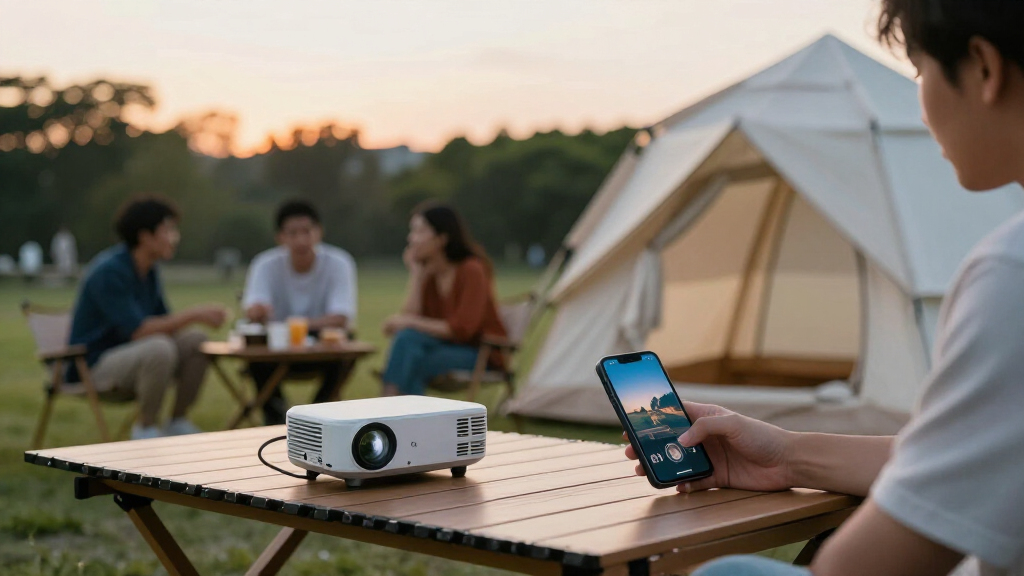
I ranked these smartphone projectors around the job buyers are trying to do: connect a phone, get a viewable image, and start watching without excessive setup. I gave priority to clearly stated native resolution over input-support claims, and distinguished direct phone mirroring from built-in streaming systems such as Roku TV or Android. Connectivity details, including Wi-Fi, Bluetooth, and Type-C mirroring, mattered because phone compatibility and ease of connection can change the experience more than a headline feature.
I also weighed practical setup features such as rotation, auto keystone, and portability, along with the flexibility of built-in apps and external audio connections. The ranking favors products whose listed features point to a clear use case, rather than treating every wireless or 4K-support claim as equivalent. Where specifications are broad or do not clarify compatibility, I treat that uncertainty as a drawback and recommend checking the manufacturer’s device and app requirements before purchase.
Factors to Consider When Choosing Smartphone Projectors
Choosing a phone projector is less about finding the longest feature list and more about avoiding a mismatch between your phone, your content, and your room. I would start with the connection path, then check the resolution wording and the conditions where you plan to watch.
Decide Whether You Want Mirroring or Built-In Streaming
Phone mirroring sends content from your device to the projector, while a projector with its own streaming platform can run supported apps directly. Mirroring can be convenient for personal photos, presentations, or content already on your phone, but some streaming services restrict casting or require a particular connection method. Built-in Roku or Android features may reduce dependence on the phone, though the interface, app support, and updates can vary by model. Avoid assuming that a projector with Wi-Fi automatically mirrors every phone or app. Before buying, check whether your phone supports the stated mirroring method and whether your main video services work on the projector itself.
Read Resolution Claims Precisely
Native resolution describes the projector’s display resolution; a phrase such as “supports 1080p” or “supports 4K” may describe accepted input rather than the image it displays. That difference matters most when projecting text, subtitles, or detailed video, where a lower native resolution can look softer. Compare products using clearly stated native resolution instead of treating every resolution label as equal. Also remember that image size and viewing distance affect perceived sharpness: enlarging an image does not add detail. If a listing does not distinguish native resolution from supported formats, verify the specification with the manufacturer before treating it as a high-resolution option.
Plan for Room Light and Screen Size
A projector that looks acceptable in a dim bedroom may struggle in a bright living room, even if both spaces use the same screen size. Larger projected images spread the available light over more area, so choosing the biggest possible image can make it appear less vivid. Think about whether you can dim lights, close curtains, and place the projector at a suitable distance before paying for features that do not address brightness. A compact projector is not automatically a good outdoor choice; evening conditions, a stable surface, and access to power still matter. If a manufacturer does not provide a clear brightness specification using a comparable measurement, avoid relying on vague brightness claims alone.
Check Your Phone’s Connection and Power Needs
Wireless mirroring is convenient, but performance can depend on the phone, network, app, and projector working well together. A Type-C connection may offer a more direct route, yet not every USB-C phone outputs video through its port, and an adapter may be required. Bluetooth is mainly useful for pairing audio devices; it does not by itself carry a phone’s video to the projector. Check whether the projector needs a separate power outlet or can run from a compatible portable power source, especially for travel or outdoor use. Confirm connection requirements before purchase rather than assuming the word “smartphone” means plug-and-play compatibility.
Choose Convenience Features for Your Actual Setup
Rotation can help aim a projector from a shelf, bedside table, or awkward corner, while auto keystone can make a tilted image look more rectangular. Neither feature replaces careful placement: digital correction can reduce usable image detail, and a rotating body does not guarantee focus or alignment from every angle. A built-in operating system can simplify app access but may add menus and setup steps compared with a simple external source. Consider where the projector will sit, how often you will move it, and whether you need a screen or can use a suitable wall. Pay extra for setup flexibility only when your room or routine will make frequent use of it.
Budget for Audio and Ongoing Use
Small projector speakers can be convenient for a quick video, but dialogue and music may be more satisfying through external speakers or headphones. Check which audio connections are supported and whether Bluetooth pairing is practical for your preferred setup; wireless audio can introduce delay with some devices. If you plan frequent movie nights, factor in the effort of connecting audio, placing the projector, and reopening streaming apps—not just the initial setup. A simpler projector may be the better buy for occasional use, while regular viewing can justify a model with a streaming platform you prefer. Keep ventilation, cleaning access, and the availability of replacement accessories in mind if the projector will stay installed.
Frequently Asked Questions
Can I stream Netflix or other services by mirroring my phone?
Not always. Some streaming apps limit screen mirroring or casting because of content-protection rules, and behavior can differ between phone models and projector software. A projector with built-in Roku TV or Android apps may be a better fit if you want to watch services without routing video through your phone. Check that the specific apps you use are supported on the projector’s operating system, since a built-in platform does not promise every app. If you rely on mirroring, verify compatibility with your phone and services before buying.
Does “4K support” mean the projector displays a 4K image?
No. “4K support” can mean the projector accepts a 4K input signal but displays it at a lower native resolution. Look for an explicit native resolution specification to understand the detail the projector can show. This distinction matters for small text, subtitles, and large projected images, where softness is easier to notice. If the listing only gives a supported resolution, ask the manufacturer for the native display resolution before comparing it with native 1080p models.
Will a USB-C phone connect directly to a projector?
Only if the phone supports video output over USB-C and the projector accepts the matching signal through its Type-C port. A USB-C charging or data port alone does not guarantee video mirroring, and some phones need a compatible adapter or app. Check the phone manufacturer’s specifications as well as the projector’s connection instructions. For wireless use, confirm that the projector supports the phone’s casting method and that your main apps allow it.
Can I use a smartphone projector in a bright room or outdoors?
These projectors generally work best when you can control ambient light, so a sunlit room can wash out the image regardless of phone compatibility. For outdoor viewing, wait until after sunset, use a stable surface, and plan for power and audio. A bigger image is not always better: reducing the projected size can make the image appear brighter and easier to see. Compare published brightness figures cautiously, since vague or inconsistent measurements make products difficult to judge from listings alone.
Should I choose built-in Roku or Android instead of phone mirroring?
Choose a built-in platform if you want to open supported streaming apps on the projector and avoid using your phone as the main source. Roku TV models offer a dedicated streaming interface, while Android-based projectors may provide a different app and settings experience. Phone mirroring can still be more useful for personal media, presentations, or content that is not available through the projector’s apps. Check app availability, software support, and your phone’s casting compatibility before deciding which route will be simpler for your household.
Conclusion
For most buyers who want streaming without making a phone the center of every session, I would start with the Aurzen Roku TV D1R as the best overall pick; the Roku TV E1R is another option for shoppers drawn to a compact smart-projector format. For best value, compare the HAPPRUN H1 and the TMY Native 1080P against your must-have features and connection needs rather than paying for app features you may not use. The Native 1080p Mini Projector with Type-C mirroring is the clearest fit for buyers prioritizing a direct phone connection, while the Geylnxng Q5 Mate suits flexible placement thanks to its 180-degree rotation. For beginners, I would favor a model with a familiar built-in streaming interface over one that depends on troubleshooting wireless mirroring. Buyers with an awkward shelf or bedside setup should compare the rotating Geylnxng and Thunrlge models, while anyone choosing Android or Wi-Fi features should first confirm app and phone compatibility.