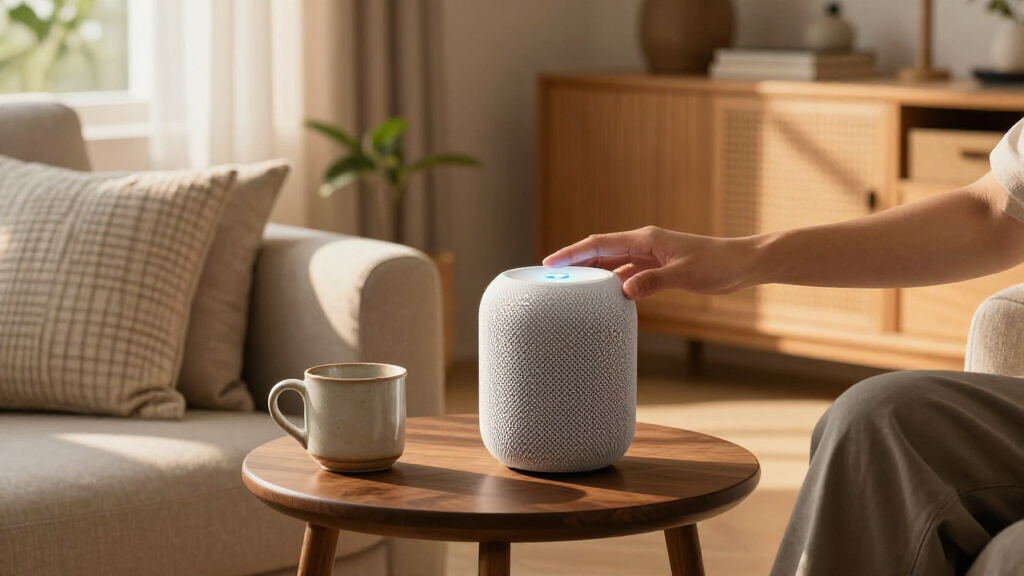

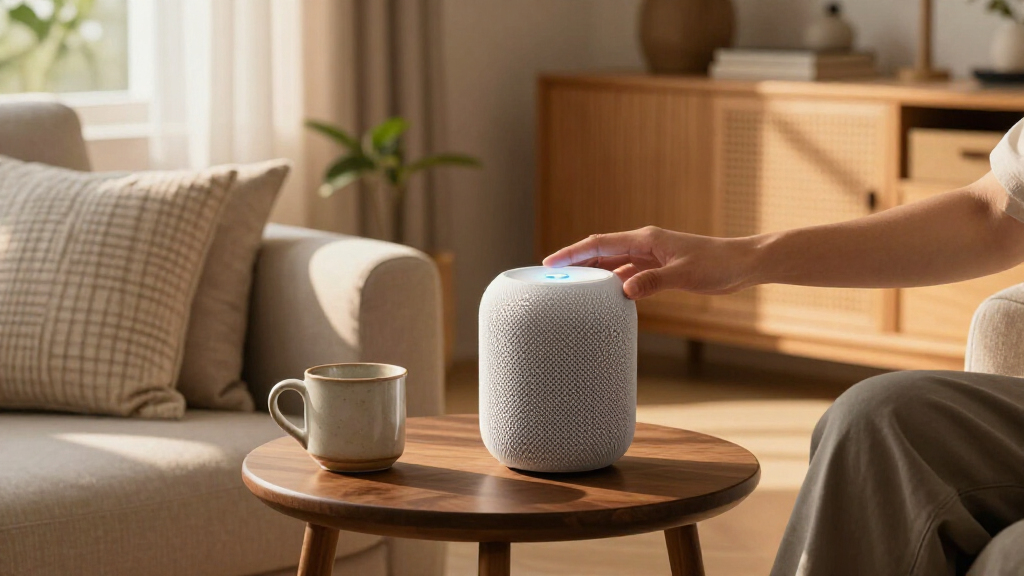
If you want an Apple speaker for music and smart-home control, I’d start with the HomePod (2nd Generation) in either color: it has the strongest audio profile in this lineup, room sensing, and the most capable setup for filling a main living space. The HomePod mini is my pick for smaller rooms and more modest listening needs, where compact size and voice control matter more than deep bass. The choice is less about color than about scale: the full-size HomePod costs more in system commitment and space, while the mini gives up audio impact. Both make the most sense for people already using Apple devices, and neither is the right fit if you need a portable, battery-powered speaker.

Get the latest gadgets delivered free with Prime
- Fast, free delivery on millions of items
- Prime Video, Amazon Music and more included
- Member-only deals all year
Complete the kit



Key Takeaways
- The HomePod (2nd Generation) Midnight is my best overall pick because its larger woofer, five beamforming tweeters, and room sensing suit a primary listening room better than the mini.
- The White HomePod (2nd Generation) offers the same main full-size listening proposition in a different finish; choose it for room-filling sound, not as a separate performance tier.
- The HomePod mini is the compact choice for bedrooms, desks, and Apple smart-home voice control, but its smaller format cannot match the full-size HomePod’s bass and scale.
- A HomePod’s strongest case is an Apple-centered home using Siri, AirPlay, and smart-home features; buyers who rely on other platforms should compare broader speaker options.
- None of these is a true portable speaker: the supplied descriptions require a power source, and the mini is listed as not water resistant.
| Apple HomePod (2nd Generation) Smart Speaker with Siri – Midnight |  | Best Overall | Generation: 2nd Generation | Woofer: 4 inches | Tweeters: 5 beamforming | VIEW LATEST PRICE | See Our Full Breakdown |
| Apple HomePod 2nd Generation (2023) – White |  | Best Full-Size Alternative | Generation: 2nd Generation (2023) | Dimensions: 5.6 inches D × 5.6 inches W × 6.6 inches H | Weight: 6.4 pounds | VIEW LATEST PRICE | See Our Full Breakdown |
| Apple HomePod mini – Space Gray |  | Best Compact Pick | Model: HomePod mini | Color: Space Gray | Audio output: Mono | VIEW LATEST PRICE | See Our Full Breakdown |
| Apple HomePod speaker | Connectivity | Color | Generation | Smart-home features |
|---|---|---|---|---|
| Apple HomePod | Wireless; Wi-Fi required for full functionality | Midnight | 2nd Generation | Siri and Matter support |
| Apple HomePod 2nd Generation | Bluetooth 5.0 and Wi-Fi | White | 2nd Generation (2023) | Thread and Matter |
| Apple HomePod mini | Bluetooth and Wi-Fi | Space Gray | — | — |
More Details on Our Top Picks
Apple HomePod (2nd Generation) Smart Speaker with Siri – Midnight
I rank the Midnight HomePod (2nd Generation) first because it is the most convincing single-speaker choice for a buyer who wants both substantial music playback and Siri-based home control. Its listed 4-inch woofer and five beamforming tweeters give it a more full-size audio proposition than the HomePod mini, whose compact 360-degree design prioritizes easy placement over the same apparent scale. Room sensing is another practical distinction: the HomePod is designed to adapt its sound to its surroundings, which makes it a stronger candidate for a shared living room than a speaker chosen mainly for a bedside table.
The smart-home case is also stronger than a simple voice assistant add-on. This listing specifies Siri and Matter support, so the speaker can fit into an Apple-centered home that uses compatible connected devices. Linking multiple units for stereo or whole-home audio offers a way to expand later, although that benefit depends on buying and placing more speakers. If one device is all you plan to own, the full-size model still makes the most sense when music is a central use rather than an occasional background soundtrack.
Compared with the white second-generation HomePod, this is not a different acoustic recommendation: the supplied details describe the same generation and core speaker hardware. I give Midnight the lead as the clearest overall pick, while the white model remains an equally sensible finish choice if it better suits the room. The mini is the more compact alternative, but it does not offer the same full-size audio profile.
There are real limits. The HomePod is tied closely to Apple’s ecosystem, and full functionality depends on Wi-Fi, so a household built around other platforms may get less value from its voice and smart-home features. The listing also describes a higher-cost single-speaker commitment, and its power details are not a sound basis for calling it portable. I’d choose it for a fixed listening space, not for outdoor use or moving between rooms without a power connection.
Pros:- The 4-inch woofer and five beamforming tweeters make it the stronger fit for a primary listening room than the mini.
- Room sensing is designed to adapt playback to the speaker’s placement.
- Siri and stated Matter support suit an Apple-centered smart home.
- Multiple units can be linked for stereo or whole-home audio.
Cons:- Full functionality relies on Wi-Fi and the Apple ecosystem.
- A full-size single speaker is a bigger commitment than the compact HomePod mini.
- The supplied power information does not establish convenient battery portability.
Best for: Apple-device owners who want a main-room speaker with stronger audio scale, room sensing, and Siri smart-home control.
Not ideal for: Buyers seeking a portable, battery-powered speaker, a small desk unit, or broad compatibility outside Apple’s ecosystem.
- Generation:2nd Generation
- Woofer:4 inches
- Tweeters:5 beamforming
- Microphones:4
- Connectivity:Wireless; Wi-Fi required for full functionality
- Smart-home features:Siri and Matter support
- Color:Midnight
- Warranty:90-day limited
Our verdict“I’d choose the Midnight HomePod as the best all-around option here when room-filling sound and Apple smart-home control matter more than compact size.”
Apple HomePod 2nd Generation (2023) – White
The White HomePod (2nd Generation) is my full-size alternative for buyers who want the same broad strengths as the Midnight pick but prefer a light finish. Its listed high-excursion woofer and five beamforming tweeters place it in a different listening category from the HomePod mini: it is aimed at richer, room-filling playback, not just convenient voice access in a small corner. The dimensions, listed as 5.6 inches deep and wide and 6.6 inches tall, help make its footprint easier to judge before choosing a shelf or table.
This listing provides more detail about audio and connection features, including Spatial Audio, AirPlay, Thread, Matter, Bluetooth 5.0, and Wi-Fi. Those labels help describe the available technology, but the buying decision is still straightforward: the white and Midnight second-generation HomePods are color variations of the same full-size line, not meaningfully separate sound tiers based on the information here. I place this model just below the Midnight option because the first pick is the more direct overall recommendation; I would not pay extra or accept a compromise solely to choose one finish over the other.
Against the mini, the white HomePod is the better match for listeners who want stronger bass and a more substantial sound from one fixed speaker. The mini wins on compactness and is easier to place where a large speaker would be visually or physically inconvenient. For paired playback or a larger Apple audio setup, the full-size unit’s support for AirPlay and compatible multi-speaker use gives it room to grow, though adding speakers also adds setup and placement decisions.
The compromises are substantial enough to shape the recommendation. A single full-size speaker is a larger commitment than the mini, and its strongest smart-home appeal depends on using Apple services. The listing says it requires a power source and is not battery operated, so it should be treated as a stationary home speaker. I’d skip it if you mainly need a low-footprint assistant, want to carry music outdoors, or expect a platform-neutral smart speaker.
Pros:- High-excursion woofer and five beamforming tweeters are suited to richer playback than the mini.
- The listing names AirPlay and Spatial Audio alongside smart-home connectivity.
- Thread and Matter support can suit compatible Apple-centered homes.
- Its stated dimensions make it easier to plan placement than an unspecified-size speaker.
Cons:- It is still a full-size, power-dependent speaker rather than a portable option.
- Its core role overlaps heavily with the Midnight second-generation HomePod.
- Apple ecosystem dependence limits its appeal in mixed-platform households.
Best for: Buyers who want the full-size second-generation HomePod’s room-filling sound and smart-home features in a white finish.
Not ideal for: People who want the smallest speaker, a portable battery-powered option, or a distinct performance upgrade over the Midnight HomePod.
- Generation:2nd Generation (2023)
- Dimensions:5.6 inches D × 5.6 inches W × 6.6 inches H
- Weight:6.4 pounds
- Audio:High-excursion woofer and five beamforming tweeters
- Connectivity:Bluetooth 5.0 and Wi-Fi
- Audio features:AirPlay and Spatial Audio
- Smart-home features:Thread and Matter
- Color:White
- Warranty:Limited 90 days
Our verdict“I’d pick the white HomePod when its finish suits the room and you want full-size HomePod sound, while treating it as an equivalent alternative to the Midnight model.”
Apple HomePod mini – Space Gray
The HomePod mini earns its place by solving a different problem from the two full-size HomePods: it is the speaker I’d choose when the room is small, the available surface is limited, or Siri access matters more than deep, room-filling sound. Its compact design and 360-degree audio make it a natural fit for a desk, kitchen counter, or bedside table. It can also extend Apple voice control to rooms where a larger speaker would be excessive.
That convenience comes with a clear audio tradeoff. The mini is listed as a mono-output speaker with a 20-watt maximum output, while both second-generation HomePods are built around a larger woofer and five beamforming tweeters. The mini can provide enjoyable everyday playback, but I wouldn’t choose it as the main speaker for a large room or for listeners who want more weight in bass-heavy music. Compared with either full-size model, its advantage is where it fits, not how much sound it can deliver.
For smart-home use, the mini offers the same broad Apple-centered appeal of hands-free Siri and integration with Apple devices. That can make it useful as a room-level voice-control point even if a larger HomePod handles the primary music duties elsewhere. Buyers considering a multiroom setup may find a compact unit more practical for secondary spaces; a pair or several units still adds cost and does not change the fact that each mini is not a full-size replacement.
The listed lack of water resistance rules it out for exposed outdoor placement, and the product details require a power source rather than supporting true portable use. I would also check the exact seller’s specifications before ordering because the listing uses inconsistent battery wording. Compared with the full-size HomePods, this is the easy choice for a small footprint, but a poor substitute if your priority is the richest sound from one speaker.
Pros:- Compact footprint is easier to place than either full-size HomePod.
- 360-degree sound suits everyday listening in smaller rooms.
- Hands-free Siri and Apple integration make it useful for voice control.
- Its lighter listed weight supports flexible placement around the home.
Cons:- Mono output and its compact format offer less audio scale than the full-size HomePods.
- It is listed as not water resistant.
- The supplied details do not establish battery-powered portability.
Best for: Apple users who need a compact speaker for a bedroom, desk, kitchen counter, or secondary smart-home room.
Not ideal for: Listeners who want a primary large-room speaker, strong bass, water resistance, or a speaker they can take away from a power source.
- Model:HomePod mini
- Color:Space Gray
- Audio output:Mono
- Audio design:360-degree sound
- Maximum output power:20 watts
- Weight:1.4 pounds
- Connectivity:Bluetooth and Wi-Fi
- Water resistance:Not water resistant
- Power:Requires a power source; listing wording is inconsistent
Our verdict“I’d choose the HomePod mini for compact placement and Apple voice control, not as a substitute for the fuller sound of a second-generation HomePod.”
How We Picked
I ranked these three options by how well each serves a distinct Apple HomePod buying need: a primary-room speaker, a full-size alternative in another finish, and a compact model for smaller spaces. Since two listings describe the same second-generation HomePod in different colors, I don’t treat them as different performance classes. Their order reflects editorial usefulness and the clear product details supplied, not an unsupported claim that one color sounds better.
Room-scale sound carries the most weight for a speaker roundup. The full-size HomePod’s 4-inch woofer and five beamforming tweeters provide a stronger on-paper case for substantial, room-filling playback than the mini’s compact 360-degree design. I also weighed smart-home fit, including Siri, Apple-device integration, and the stated Matter and Thread support where listed, because these speakers are often chosen as much for voice control as for music.
I also considered placement and ownership tradeoffs. A compact speaker can be easier to fit on a desk or bedside table, while a larger model is better suited to a central listening area. The listings contain inconsistent or unclear power details, so I avoid presenting these models as battery-portable and recommend checking the seller’s current specifications before ordering. Finally, I give each option a defined role and name who should skip it. All three are most compelling inside Apple’s ecosystem; that limitation matters just as much as their sound and smart features.
| Apple HomePod speaker | Connectivity | Smart-home features | Color |
|---|---|---|---|
| Apple HomePod | Wireless; Wi-Fi required for full functionality | Siri and Matter support | Midnight |
| Apple HomePod 2nd Generation | Bluetooth 5.0 and Wi-Fi | Thread and Matter | White |
| Apple HomePod mini | Bluetooth and Wi-Fi | — | Space Gray |
Factors to Consider When Choosing Best Apple HomePod Speakers
I’d make this choice by matching the speaker to the room and the way you use Apple services. The three listings reduce to two audio sizes: two versions of the full-size second-generation HomePod and one HomePod mini. Once that is clear, the key questions are how much sound you want, whether Siri and smart-home control are part of the plan, and whether the speaker will stay near power.
Choose full-size sound or compact convenience
The full-size HomePod is my recommendation when one speaker needs to anchor music in a living room or another shared space. Its woofer and five beamforming tweeters give it a stronger hardware basis for fuller playback and deeper bass than the mini. Room sensing adds another reason to use it as a primary speaker: its design accounts for placement rather than asking you to treat it like a tiny desk device. The mini is easier to fit and more appropriate for light listening in smaller rooms, but it makes a different promise. Think convenient sound and voice access, not the same impact as the larger model.
If you are unsure, consider what role the speaker will play most days. A unit that will play albums, radio, or playlists through much of the day has a stronger case for the full-size HomePod. A speaker used mainly for timers, questions, and occasional background music can be a better match for the mini. I would avoid buying the mini for a large room simply because it is smaller, then expecting it to replace a dedicated main-room speaker.
Treat the two full-size listings as finish choices
The Midnight and White products are both listed as second-generation HomePods. The details supplied do not establish a meaningful difference in their sound hardware or smart-home role, so I would compare them by finish, listing details, and placement, not by expecting one to outperform the other. Midnight may blend with darker furniture or electronics; white may suit a brighter room. Neither color changes the basic choice between full-size and mini.
The White listing names Spatial Audio, AirPlay, Thread, Matter, and Bluetooth 5.0, while the Midnight listing explicitly mentions Siri and Matter. Those descriptions can help confirm what each offer claims, but shoppers should verify current compatibility and package details on the product page before buying. I would not select one color on the assumption that the other lacks a feature solely because the supplied descriptions differ in detail.
Check your Apple and smart-home setup
These speakers are most persuasive when Apple devices and services are already part of the home. Siri and Apple integration can make music requests and voice control feel natural for that household, while Matter and Thread are relevant to compatible smart-home devices where listed. If most of your home runs on another platform, compare how well that platform works with the HomePod before making it the center of your setup. The feature list alone does not make a speaker platform-neutral.
Also separate speaker duties from smart-home duties. If your main goal is controlling compatible devices or speaking to Siri from another room, a mini may be enough. If you want both that voice access and a more substantial listening experience in the same room, the full-size model is the better fit. For whole-home sound, multiple linked speakers can extend coverage, but buying additional units adds setup and placement needs; it is not required to get value from a single HomePod.
Plan for a fixed power source
Do not choose any of these models expecting the convenience of a portable Bluetooth speaker. The listings describe the full-size white HomePod as requiring power and not being battery operated, while the other product details contain battery wording that is inconsistent with the intended fixed-home use. I’d plan to keep all three near a suitable power connection and confirm the included accessories and seller specifications before ordering.
The mini’s small size can make it seem portable, but its listed power details do not establish that it can operate away from a power source. Its lack of water resistance also makes outdoor or wet-area placement a poor choice. If you need music on a patio, at the beach, or while traveling, a dedicated portable speaker with explicit battery and water-resistance specifications is a better category to shop.
Match the speaker to the room, not just the feature list
Placement changes how useful a HomePod will be. A full-size model needs a stable spot where its sound can serve the room, while the mini can fit on smaller surfaces and closer to where voice control is needed. The white HomePod’s stated dimensions and weight are helpful when checking furniture space; for the other listings, confirm the current measurements before choosing a tight shelf or a location with limited support. Room size and placement are more useful decision points than counting features that you may never use.
For a one-speaker setup, give priority to the room where listening matters most. A main living area points toward the full-size HomePod; a bedroom, desk, or secondary room points toward the mini. If you are building a system over time, you could use a full-size unit in the main room and compact speakers elsewhere, but that is a different plan from expecting a mini to serve every listening need equally well.
Consider warranty and listing consistency
The two full-size listings specify a 90-day limited warranty. The mini description supplied here does not state a warranty, so I would check the seller’s current terms rather than assume they match. Warranty length is not a sound-quality feature, but it matters when comparing listings for an expensive home device. Read the seller information closely, especially if the product description combines details that appear inconsistent.
Power descriptions are one example: some fields use battery language even though the speaker is described as requiring a power source or not being battery operated. I would rely on the manufacturer’s current product information and the exact listing contents before purchase. This avoids planning a room around an assumption about included cables, portability, or power that the listing does not clearly support.
Frequently Asked Questions
Which Apple HomePod speaker is best for most people?
I’d recommend the second-generation HomePod for most buyers who want one speaker for a main listening room and already use Apple devices. Its larger audio design gives it a stronger case for music playback than the mini, while Siri and the stated smart-home features add everyday utility. If you mainly need a small speaker for a bedroom or desk, the mini is the better fit despite its more limited audio scale.
Are the Midnight and White HomePod (2nd Generation) different speakers?
The supplied product information identifies both as second-generation HomePods in different finishes. It does not establish a meaningful hardware or sound difference between them, so I’d choose based on which color works better in your room and carefully compare the seller’s listing details. The white listing provides a longer feature description, but that alone is not proof that the Midnight model has different core performance.
Is the HomePod mini powerful enough for a living room?
It can provide convenient everyday listening, but I would choose one only if compact size and Siri access matter more than strong bass or room-filling sound. Its mono output and small format place it below the full-size HomePod for a main listening role. For a larger living room or music-focused setup, the second-generation HomePod is the more suitable pick.
Can I use these HomePod speakers without an Apple-centered setup?
The strongest case for these products is their integration with Siri and Apple devices, and the supplied descriptions also make Wi-Fi relevant to full functionality on the Midnight model. Some listed technologies, such as Matter and AirPlay, have roles beyond simple voice control, but that does not make every feature equally useful in every household. If your devices and smart-home platform are mainly outside Apple’s ecosystem, check exact compatibility before choosing a HomePod.
Are any of these HomePods portable or suitable for outdoor use?
I would treat all three as home speakers that need a power source, not as portable speakers. The white full-size listing says it is not battery operated, and the supplied power details for the other products are unclear or inconsistent. The mini is specifically listed as not water resistant, so it is not the right choice for wet or exposed outdoor placement. For portable listening, choose a speaker with clearly stated battery life and water protection.
Conclusion
My recommendation depends on where the speaker will live. For a main listening room, I’d choose the Midnight HomePod (2nd Generation); it offers the strongest combination of room-scale sound and Apple smart-home features in this comparison. If you want that same full-size product line in a light finish, choose the White HomePod (2nd Generation)—I see it as a color alternative, not a separate performance tier. For a bedroom, desk, or secondary room where space and Siri access lead, the HomePod mini is the sensible compact pick. Skip all three if you need a genuinely portable, water-resistant speaker or broad platform flexibility beyond an Apple-centered home.
Halloween Picks

Halloween Pumpkin Fog Machine with 12-Color LEDs, Bluetooth Speaker, and Remote

12.2 ft Halloween Inflatable Outdoor Decoration – Giant Pumpkin

27FT Giant Inflatable Pumpkin Lighted Outdoor Halloween Decor
As an affiliate, we earn on qualifying purchases.