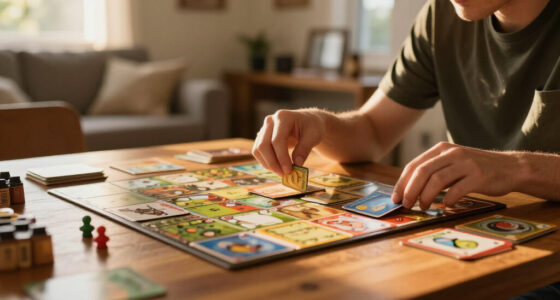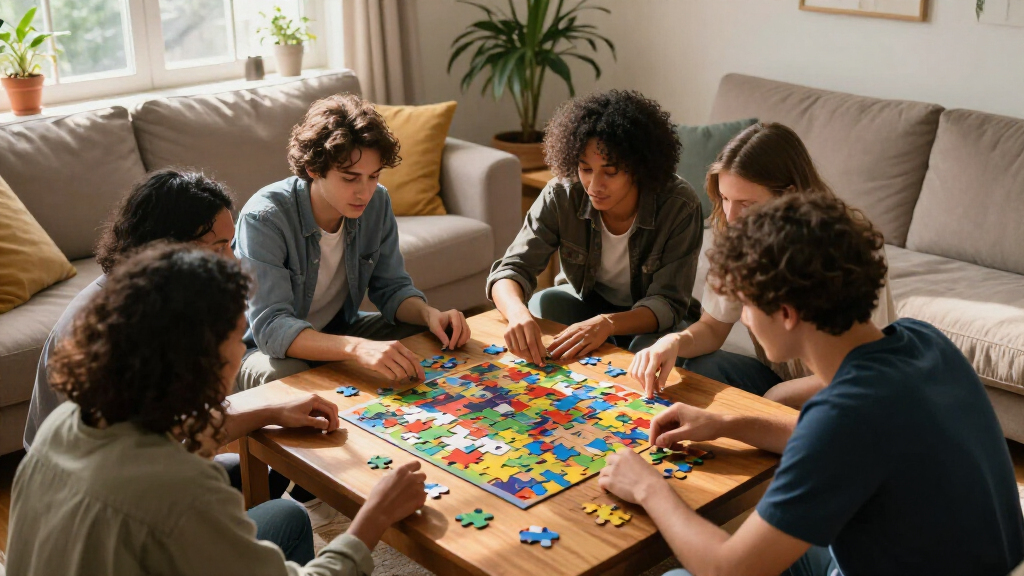

If you’re searching for the best cooperative puzzle games, you’re likely looking for titles that challenge teamwork, problem-solving, and strategic thinking. The top pick, Forbidden Jungle, stands out for its engaging cooperative play and family-friendly design, while Mysterium Park offers a mystery-solving experience for a wider age range. Other standout options like Fireside Games Castle Panic excel in thematic gameplay, but may not suit all player groups. The main tradeoffs involve balancing complexity, accessibility, and replayability. Keep reading to see how these games compare and find the perfect fit for your group.

Get the latest gadgets delivered free with Prime
- Fast, free delivery on millions of items
- Prime Video, Amazon Music and more included
- Member-only deals all year
Complete the kit



Key Takeaways
- The top-ranked games excel at balancing accessibility with strategic depth, making them suitable for a broad range of players.
- Many of the best options incorporate themes that enhance engagement, such as mystery or adventure, which increase replay value.
- Cooperative puzzle games vary significantly in complexity, so matching a game’s difficulty with your group’s experience level is key.
- Family-friendly titles often prioritize quick setup and shorter playtimes, while more complex games offer deeper strategic layers.
- Durability and ease of setup are often overlooked but crucial factors that influence long-term enjoyment and convenience.


| cooperative puzzle game | Number of Players |
|---|---|
| Forbidden Jungle | 2-5 |
| Asmodee Mysterium Park Board G | 2-7 |
| Tanglers: Cooperative Problem- | — |
| Blue Orange Games Cross Clues | — |
| Happy Camper | 1-5 |
| Pandemic Cooperative Strategy | — |
| Fireside Games Castle Panic 2n | 1-6 |
More Details on Our Top Picks
Forbidden Jungle – Cooperative Board Game
Forbidden Jungle stands out as the best overall choice for families and groups seeking a richly immersive cooperative experience with strategic depth. Its detailed artwork and engaging gameplay make it more compelling than simpler options like Cross Clues, which focus more on word play than tactical exploration. While the game’s components and scenario variety offer long-lasting replayability, the setup can be somewhat complex for new players, and the game duration may vary, especially for beginners. Compared with Mysterium Park, Forbidden Jungle offers deeper strategic challenges, though it requires more time commitment. This pick makes the most sense for players who enjoy tactical adventures with a touch of exploration and are willing to invest in a longer setup and gameplay process.
Pros:- Deep strategic gameplay with exploration elements
- Beautiful artwork and detailed components enhance immersion
- Suitable for ages 10 and up, appealing to teens and adults
Cons:- Setup can be complex and time-consuming for new players
- Limited to 2-5 players, not ideal for larger groups
Best for: Family players and tactical explorers who want a detailed cooperative adventure with beautiful artwork
Not ideal for: Casual gamers seeking quick, light games or larger groups over 5 players
- Brand:Gamewright
- Genre:Tactical
- Number of Players:2-5
- Estimated Playing Time:45 minutes
- Included Components:Game, Board, Board Game Pieces, Tiles, Tokens
- Age Range:10 and up
Our verdict“Forbidden Jungle is perfect for those seeking a richly detailed, strategic cooperative experience, despite its longer setup time.”
Asmodee Mysterium Park Board Game – Cooperative Mystery for Kids & Adults, Ages 10+, 2-7 Players, 28-Minute Playtime
Mysterium Park makes a strong case as the best quick-play cooperative mystery for mixed-age groups, especially since its non-language mechanics make it accessible for a diverse audience. Compared with Forbidden Jungle, it offers a shorter, more casual experience perfect for busy families or those new to cooperative games. Its standalone design within the Mysterium universe adds thematic charm, though this may limit replay value for dedicated fans of the franchise. The game’s quick setup and simple mechanics stand out for ease of learning, but players seeking longer or more complex puzzles might find it too fleeting. It’s ideal for players who want a light, engaging mystery that can fit into a busy schedule.
Pros:- Fast setup and quick gameplay enhance accessibility
- Non-language mechanics promote inclusivity for diverse players
- Engaging mystery theme with charming carnival art
Cons:- Shorter playtime may leave players wanting more
- Limited replay value for those familiar with the franchise
Best for: Family game nights or casual groups wanting a quick, accessible mystery experience
Not ideal for: Hardcore gamers seeking lengthy, deeply strategic puzzles or extensive campaign play
- Number of Players:2-7
- Ages:10+
- Playtime:28 minutes
Our verdict“Mysterium Park is ideal for families and casual players seeking a quick, charming cooperative mystery without complicated rules.”
Tanglers: Cooperative Problem-Solving Puzzles
Unlike the more game-like experiences of Forbidden Jungle or Mysterium Park, Tanglers emphasizes problem-solving and critical thinking through intricate puzzles. This makes it ideal for groups or classrooms focused on developing teamwork and communication skills, especially for players who enjoy brain-teasers over thematic storytelling. While it offers engaging challenges, the lack of detailed difficulty settings or components may leave some players uncertain about its suitability for younger children or beginners. Compared with Cross Clues, Tanglers leans more toward mental challenge than word association, which can be a plus for puzzle enthusiasts but a drawback for casual players. Its primary appeal lies in fostering cognitive skills and collaboration, though it might be less appealing for those wanting a full-fledged game experience.
Pros:- Encourages teamwork and communication skills
- Engages players with complex, challenging puzzles
- Suitable for a wide range of ages and skill levels
Cons:- Limited information on puzzle difficulty levels
- No included components or artwork to enhance engagement
Best for: Puzzle lovers and educators seeking cooperative, critical thinking challenges
Not ideal for: Players preferring thematic stories or those who need clear difficulty levels for younger children
Our verdict“Tanglers is best suited for puzzle enthusiasts focused on mental challenges and teamwork, though it may lack the visual appeal some players desire.”
Blue Orange Games Cross Clues – Cooperative Family Party Game for 2 to 6 Players
Cross Clues excels as a cooperative party game that encourages creative thinking and teamwork through word association, making it a great choice for mixed-age groups and casual gatherings. Its components, including tiles and clue cards, support lively, social gameplay, providing a different experience than the more thematic Forbidden Jungle or mystery-focused Mysterium Park. However, its reliance on setup and understanding of clues may challenge new players, and with a maximum of 6 players, it’s less suited for larger groups. Compared to Tanglers’ puzzle focus, Cross Clues emphasizes wordplay and creativity, which can be more accessible but less challenging for serious puzzle fans. It’s best for those who enjoy fast-paced, social word games without needing extended play sessions.
Pros:- Encourages creativity and teamwork through word clues
- Easy to learn with comprehensive components
- Suitable for a wide age range (7 and up)
Cons:- Setup and rules may be challenging for new players
- Limited to 6 players, restricting larger groups
Best for: Families and groups seeking a lively, creative party game that promotes teamwork and verbal skills
Not ideal for: Solo players or those wanting longer, more complex cooperative puzzles or themes
- Age Range:7 years and up
- Included Components:10 Axis Tiles, 25 Clue Cards, 50 Code Word Cards, 1 Sand Timer, Illustrated Rules
- Unit Count:1
- Model Year:2020
Our verdict“Cross Clues is perfect for groups looking for a quick, creative word-based cooperative experience that sparks social fun.”
Happy Camper – The Four Doors | Cooperative Adventure Game for 1-5 Players
Happy Camper offers a flexible and portable cooperative adventure, making it the best choice for solo players or small groups who want to explore together without a lengthy time commitment. Created by Matt Leacock, its design supports quick, engaging exploration sessions, contrasting with Forbidden Jungle’s more in-depth tactical gameplay or Mysterium Park’s mystery theme. While its shorter playtime of around 30 minutes is ideal for travel or busy schedules, it may not satisfy those seeking long, competitive, or highly strategic experiences. Its support for solo play distinguishes it from other entries that focus solely on multiplayer cooperation. This game makes the most sense for adventurers who value portability and quick, cooperative fun over extended campaigns or deep strategy.
Pros:- Supports solo play, perfect for travel or solo explorers
- Engages players with cooperative exploration and teamwork
- Compact and portable for easy transport
Cons:- Limited to 30-minute sessions, may feel too brief
- Less appealing for players wanting longer or competitive games
Best for: Travelers, solo players, and small groups wanting a quick, portable cooperative adventure
Not ideal for: Players seeking longer, more involved cooperative campaigns or competitive gameplay
- Number of Players:1-5
- Ages:10+
- Play Time:30 minutes
Our verdict“Happy Camper is an excellent choice for solo adventurers and small groups seeking quick, portable cooperative fun, despite its shorter gameplay duration.”
Pandemic Cooperative Strategy Board Game, 2-4 Players, 45-60 Min
Pandemic stands out as the quintessential cooperative puzzle game for players who enjoy deep strategic planning and teamwork. Unlike Castle Panic, which offers a more straightforward, fast-paced experience, Pandemic demands careful coordination to contain outbreaks and discover cures, making it ideal for groups that thrive on complex decision-making. The game’s high replay value stems from its variable roles, evolving scenarios, and layered mechanics, though it can be overwhelming for younger children or those new to cooperative games. Its 45-60 minute duration balances tension with engagement, but the depth might be a hurdle for casual players seeking lighter fun. This pick makes the most sense for experienced gamers and families who want a challenging, collaborative experience that rewards strategic thinking.
Pros:- Encourages teamwork and strategic planning at a high level
- Suitable for both family game nights and serious gaming groups
- High replay value with deep, evolving scenarios
Cons:- Can be too complex for younger children or casual players
- Requires good coordination, which may challenge less experienced players
- Game length can vary depending on players’ familiarity and experience
Best for: Strategy-oriented players and families seeking a challenging, thought-provoking cooperative puzzle
Not ideal for: Players who prefer quick, light games or are new to cooperative gameplay, as the complexity can be daunting
- Players:2-4
- Ages:8 and up
- Playtime:45-60 minutes
- Series:Pandemic series, including Pandemic Legacy Season 1
Our verdict“Pandemic is perfect for strategic players and families ready for a challenging, cooperative puzzle that rewards thoughtful teamwork.”
Fireside Games Castle Panic 2nd Edition Fantasy Board Game
Castle Panic 2nd Edition offers a lively and accessible cooperative experience, especially appealing to players who enjoy a fantasy theme and quick gameplay. Compared with Pandemic, which emphasizes strategic depth and planning, Castle Panic provides a more straightforward, action-oriented challenge that’s easier for newcomers and younger players to grasp quickly. Its multiple game modes, including solo and competitive options, boost replayability and cater to different group sizes, from solo adventurers to larger groups. The vibrant components and thematic artwork deepen immersion, but the game’s simplicity might leave seasoned gamers seeking more complexity somewhat underwhelmed. Its 45-minute playtime makes it ideal for casual game nights, though experienced players might find it too light on strategy. This pick is best suited for casual players, families, or those new to cooperative puzzle games who want quick, fun, and thematic gameplay.
Pros:- Engaging cooperative gameplay suitable for all ages
- Multiple modes increase replayability and challenge variety
- Vibrant artwork and thematic components enhance immersion
Cons:- May be too simple for players craving complex mechanics
- Shorter game length could limit depth for some groups
- Component quality can vary, affecting durability
Best for: Casual gamers and families looking for a quick, thematic cooperative game with straightforward mechanics
Not ideal for: Experienced gamers seeking complex, long-term strategic puzzles, as the mechanics are relatively simple
- Number of Players:1-6
- Play Time:45 minutes
- Game Modes:Co-op, Solo, Master Slayer, Overlord
- Theme:Fantasy
- Components:3D towers, monster tokens, illustrated board
Our verdict“Castle Panic 2nd Edition is ideal for families and casual players seeking a quick, fun cooperative fantasy adventure without heavy strategic demands.”

How We Picked
These games were selected based on their core qualities that define a great cooperative puzzle experience. I prioritized titles with strong cooperative mechanics, engaging puzzles, and high replayability. Ease of understanding and setup, thematic appeal, and suitability for different group sizes were also key factors. To ensure a balanced review, I considered a mix of family-friendly, casual, and strategy-focused options. The ranking reflects a combination of versatility, depth, and user engagement, aiming to recommend titles that cater to a variety of player preferences while maintaining quality and replay potential.Factors to Consider When Choosing Best Cooperative Puzzle Games
Choosing the best cooperative puzzle game depends on several factors beyond just theme or complexity. Understanding what to prioritize can help you narrow down options that will keep your group engaged and ensure long-term satisfaction. Here are key considerations to keep in mind before making your selection.Player Count and Group Dynamics
Some cooperative puzzle games are designed for specific group sizes, ranging from two players to larger groups. Consider how many players you usually have, and whether the game scales well. Games like Cross Clues excel with smaller groups, while others like Pandemic accommodate more players comfortably. Matching the game to your typical group size avoids frustration and maximizes fun.
Difficulty and Complexity
Not all cooperative puzzle games are created equal in terms of difficulty. Some, like Castle Panic, have straightforward mechanics suitable for casual players or families, while others like Fireside Games Castle Panic offer more challenging puzzles for experienced gamers. Think about your group’s puzzle-solving skills and patience level to choose a game that provides enough challenge without causing frustration.
Theme and Immersion
Thematic elements can significantly enhance engagement, especially in puzzle games that tell a story or create a specific atmosphere. Titles like Mysterium Park deliver immersive mystery-solving, appealing to players who enjoy narrative-driven experiences. Conversely, simpler themes might suit casual groups looking for quick, light-hearted fun. Prioritize a theme that matches your group’s interests for a more enjoyable experience.
Playtime and Replayability
Shorter games with high replayability, such as Happy Camper, are ideal for casual gaming sessions or when time is limited. Longer, more intricate titles like Pandemic may require a bigger time commitment but offer richer strategic depth. Consider how much time your group is willing to dedicate and whether you value variety and replayability in the long run.
Setup and Durability
Ease of setup can make or break your experience, especially if you plan to play frequently. Titles with simple setup and storage, like Blue Orange Cross Clues, are more convenient for casual or family use. Durability of components is also important, particularly for active or frequent play. Investing in well-made, easy-to-clean components can extend the lifespan of your game.
Frequently Asked Questions
Is a complex cooperative puzzle game suitable for children?
Complex cooperative puzzle games can be engaging for children, but it depends on the game’s difficulty and theme. Titles like Mysterium Park are designed to be accessible for ages 10 and up, offering a balance of challenge and fun. For younger children, simpler games like Castle Panic or Cross Clues are better suited, providing straightforward mechanics that still promote teamwork and problem-solving without overwhelming them.
Can cooperative puzzle games be played solo?
Most cooperative puzzle games are designed for multiple players, but some, like Happy Camper, offer solo variants. However, the core appeal of these titles is the interaction and teamwork involved, which can be diminished when played alone. If solo play is a priority, look for games explicitly designed with solo modes in mind, or consider puzzle-centric games that do not rely heavily on group interaction.
Are there cooperative puzzle games suitable for large groups?
Yes, some titles like Blue Orange Cross Clues are designed for 2-6 players, making them flexible for larger groups. However, many games are optimized for smaller to medium-sized groups, often providing the best experience with 2-4 players. For bigger groups, consider games that scale well or facilitate team-based play, ensuring everyone remains engaged without lengthy downtime.
How important are game components and durability for long-term use?
High-quality components and durability are essential if you plan to use the game frequently or for active play sessions. Well-made pieces reduce frustration caused by breakage or misplacement. Additionally, durable materials keep the game looking new longer, which maintains its appeal and value over time, especially in family or casual settings where the game sees regular use.
Should I prioritize thematic depth over gameplay mechanics?
Deciding between theme and mechanics depends on your group’s preferences. A strong theme can significantly enhance immersion and enjoyment, especially in story-driven titles like Mysterium Park. However, solid mechanics ensure the game remains engaging regardless of theme. Ideally, choose a game that offers a good balance, so the theme complements the gameplay without overshadowing it.
Conclusion
The best overall choice for most groups is Forbidden Jungle, thanks to its engaging cooperative puzzles and family-friendly design. For those prioritizing value, Cross Clues offers a versatile experience at a lower cost, suitable for casual and family play. Players seeking a premium, immersive experience might prefer Mysterium Park for its thematic richness. Beginners and casual players should look at simpler titles like Castle Panic, while more experienced groups may enjoy the strategic depth of Pandemic. Consider your group’s size, experience level, and preferred complexity to select the perfect cooperative puzzle game.Halloween Picks
halloween
As an affiliate, we earn on qualifying purchases.