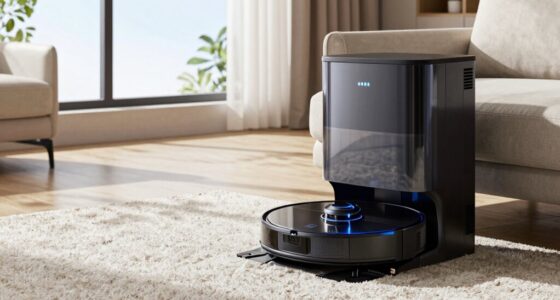
Choosing the best AI toys for kids requires balancing educational value with engaging play patterns. My top recommendation is the Loona Robot Pet Dog, which stands out for its advanced ChatGPT-4o integration and autonomous navigation capabilities that go beyond simple command-response loops. For younger children who need tactile comfort alongside digital interaction, the EBLOMA AI Teddy Bear offers a gentler introduction to voice-activated play without the complexity of app-based controls. The primary tradeoff in this category lies between sophisticated AI processing power, which often requires Wi-Fi and subscriptions, and offline durability, which favors simpler, self-contained units. Readers should evaluate their child’s age, screen tolerance, and privacy concerns before making a final decision. Continue reading to see how these thirteen options compare in build quality, voice recognition accuracy, and long-term engagement value.

Get the latest gadgets delivered free with Prime
- Fast, free delivery on millions of items
- Prime Video, Amazon Music and more included
- Member-only deals all year
Complete the kit



Key Takeaways
- Voice recognition accuracy varies widely among budget options, with premium models like Loona offering near-instant response times compared to the noticeable latency in basic plush toys.
- Privacy settings are a major differentiator; toys requiring cloud-based AI processing often collect more data than those with on-board, offline processing capabilities.
- Battery life is inversely correlated with screen size and processing power, meaning large touch-screen robots typically require daily charging while simple voice dolls last weeks.
- Content update policies differ significantly, with some brands offering free lifetime updates for storytelling and others locking new features behind subscription tiers.
- Physical durability is often compromised in AI toys to accommodate sensors and cameras, making them more fragile than traditional non-electronic plush or plastic toys.


| AI toys for kid | Brand | Age Range |
|---|---|---|
| RIVGOT Voice Interactive Drawi | RIVGOT | 3-8 years |
| Loona Robot Pet Dog with ChatG | Loona | 6 years and up |
| Tavlshero Interactive Plush Pu | Tavlshero | — |
| Ruko 18011 Smart Robot Dog wit | Ruko | 3 years and up |
| Just Play emotoBOT COR-A Inter | Just Play | 6 years and up |
| Lovi AI Interactive Robot Plus | Liovipals | — |
| AI Robot Toys for Kids | — | — |
| BLESSONG AI Robot Toy for Kids | — | 3–8 years |
More Details on Our Top Picks
RIVGOT Voice Interactive Drawing Robot for Kids with 150 Cards
This option stands out for its focus on fine motor skills rather than digital interaction. Unlike the Loona Robot Pet Dog, which prioritizes conversational AI and home monitoring, the RIVGOT uses voice-guided drawing to teach step-by-step artistic processes. It is ideal for parents who want screen-free creativity. The inclusion of 150 drawing cards provides a structured curriculum, making it less open-ended than other plush toys like the Tavlshero Interactive Plush Puppy. However, the requirement for a separate power adapter adds a small barrier to immediate use. It serves a specific educational niche, focusing on art and independence rather than companionship or coding. If your child prefers creating over chatting, this model delivers targeted value.Pros:- Structured 150-card curriculum supports independent learning
- Voice guidance helps maintain focus on drawing tasks
- Reusable board reduces waste compared to paper-only kits
Cons:- Requires a separate 5V/2A power adapter not in the box
- Limited age range caps utility for children over 8 years
Best for: Parents seeking Montessori-inspired art tools for ages 3-8
Not ideal for: Families looking for high-tech conversational AI or remote monitoring features
- Brand:RIVGOT
- Model:Q01
- Age Range:3-8 years
- Power Source:Battery Powered (Requires 5V/2A adapter)
- Educational Objective:Art, Painting, Fine Motor Skills
- Included Components:1 Drawing Robot, 150 Drawing Cards, 12 Markers, 5 Pens, Reusable Board, Type-C Cable
Our verdict“This robot is the clear choice for families prioritizing artistic skill development over digital companionship.”
Loona Robot Pet Dog with ChatGPT-4o AI, Voice & Gesture Control, Home Monitoring, and Auto-Charging Dock
The Loona represents the high end of interactive robotics, integrating ChatGPT-4o for nuanced conversation. Compared to the simpler RIVGOT Voice Interactive Drawing Robot, Loona offers far more complex interaction, including face recognition and home monitoring. It is designed for children aged 6 and up who can handle advanced features. The auto-charging dock with route memory is a significant upgrade over manual charging options found on budget models like the Ruko 18011 Smart Robot Dog. However, this sophistication comes with environmental dependencies; it requires good lighting for gestures and quiet for voice accuracy. It is a premium device for tech-forward households that value connectivity and smart home integration over simple physical play.Pros:- ChatGPT-4o integration enables realistic, context-aware dialogue
- Auto-charging dock with route memory improves usability
- HD camera supports face recognition and home security monitoring
Cons:- Gesture control fails in low-light or cluttered spaces
- Voice accuracy drops significantly in noisy rooms
Best for: Tech-savvy families wanting advanced AI conversation and home monitoring
Not ideal for: Younger children under 6 or households with noisy environments that hinder voice recognition
- Brand:Loona
- Model Name:KYO04LN01
- Age Range:6 years and up
- AI Features:ChatGPT-4o, Amazon Lex, Face Recognition, Gesture Control
- Connectivity:Wi-Fi, Mobile Hotspot
- Charging Time:2.5 hours
- Warranty:1 Year Against Manufacturer Defects
Our verdict“This is the definitive pick for buyers seeking a high-tech, connected robotic pet with serious AI capabilities.”
Tavlshero Interactive Plush Puppy Toy with Voice Conversation and Storytelling
This plush puppy prioritizes tactile comfort and screen-free companionship. Unlike the rigid, plastic-based Ruko 18011 Smart Robot Dog, the Tavlshero is soft, huggable, and designed for bedtime routines. It offers voice interaction and storytelling without the complexity of programming or app connectivity. While it lacks the advanced AI of the Loona Robot Pet Dog, it serves a different purpose: emotional support and quiet play. The screen-free design is a major advantage for parents limiting digital exposure. However, the lack of clear battery specifications raises concerns about long-term maintenance. It is best suited for very young children who need a comforting object that also engages their imagination through simple audio cues.Pros:- Soft cotton material encourages cuddling and emotional comfort
- Fully screen-free operation supports healthy sleep habits
- Lightweight design makes it easy for small hands to carry
Cons:- Ambiguous age guidance between title and product details
- Missing battery specifications make maintenance planning difficult
Best for: Parents seeking a soft, screen-free companion for toddlers and preschoolers
Not ideal for: Children who prefer active play, coding, or high-tech interactive features
- Brand:Tavlshero
- Character:Dog
- Material:Cotton
- Dimensions:5.9 x 5.9 x 13 inches
- Recommended Age:12 months to 10 years
- Unit Count:1
Our verdict“This plush toy is the ideal choice for families prioritizing soft, screen-free comfort over robotic functionality.”
Ruko 18011 Smart Robot Dog with 30 LED Expressions
The Ruko 18011 balances physical play with educational coding. Its programmable mode allows kids to design up to 50 custom moves, offering a tangible introduction to logic and sequencing. This contrasts sharply with the Just Play emotoBOT COR-A, which focuses on pre-set games and emotional responses rather than user-defined actions. The Ruko’s obstacle-avoidance sensors and gesture controls make it dynamic and engaging. However, the 45-minute playtime is a notable limitation, requiring frequent recharging. It is a robust, durable option for children aged 3 and up who enjoy active, hands-on interaction. For families wanting to blend robotics with early STEM concepts, this model provides a practical, accessible entry point.Pros:- Programming mode teaches basic logic and sequencing skills
- Obstacle-avoidance sensors prevent crashes into furniture
- Durable ABS plastic construction withstands rough play
Cons:- Short 45-minute playtime requires frequent charging
- Remote control requires separate AAA batteries not included
Best for: Children interested in basic coding, robotics, and active physical play
Not ideal for: Families needing long battery life or advanced conversational AI features
- Brand:Ruko
- Model Name:18011
- Age Range:3 years and up
- Control Methods:2.4GHz Remote, Gesture Control, Touch Sensor
- Battery Life:Up to 45 minutes play time
- Charging Time:3 hours
- Weight:17 g
Our verdict“This robot dog is the best fit for children eager to learn basic programming through interactive movement.”
Just Play emotoBOT COR-A Interactive Robot Toy, Pink
The emotoBOT COR-A focuses on emotional intelligence and social interaction rather than technical skills. Unlike the Loona Robot Pet Dog, which relies on cloud-based AI, COR-A works entirely offline, ensuring privacy and consistent performance without Wi-Fi. Its animated LED screen and expressive movements simulate empathy, teaching kids about feelings and calming techniques like yoga. This makes it distinct from the RIVGOT Voice Interactive Drawing Robot, which is task-oriented. The inclusion of pretend accessories like a drink and phone enhances role-play scenarios. While it lacks advanced AI conversation, its multilingual support and offline capability make it a reliable, safe choice for social-emotional learning in various settings.Pros:- Offline operation ensures privacy and no Wi-Fi dependency
- 100+ activities include yoga and calming exercises
- Multilingual support aids language development in three languages
Cons:- USB-C charging cable is not included in the box
- Some multiplayer features require purchasing additional units
Best for: Parents focused on social-emotional learning and offline, safe play
Not ideal for: Children seeking advanced AI conversation or internet-connected features
- Brand:Just Play
- Model:81687
- Age range:6 years and up
- Languages:English, German, French
- Connectivity:Offline; no Wi-Fi, AI, or Bluetooth
- Power:Built-in rechargeable battery
- Screen:2-inch animated LED
Our verdict“This robot is the ideal choice for fostering emotional awareness and social skills through safe, offline play.”
Lovi AI Interactive Robot Plush Companion for Kids
This model stands out for its hybrid design, merging the comfort of a plush toy with the intelligence of an AI assistant. Unlike rigid plastic robots such as the AI Robot Toys for Kids with 7″ Touch Screen, the Lovi offers a tactile, huggable experience that appeals to younger children who still need a physical comfort object. The polyester exterior makes it less intimidating than mechanical bots, while the LCD face provides over 20 expressions to convey emotion. However, this softness comes at a cost: the 4–5 hour talk time is shorter than what you might find in bulkier devices, and the reliance on the Lovi app for setup adds a layer of complexity for parents. It is ideal for kids who want a friend they can sleep with, rather than just a gadget to play with on a table.
Pros:- Soft, lightweight polyester design is safe and cuddly for bedtime.
- Supports multiple languages and voice interruption for natural conversation.
- Includes custom bedtime stories and a digital growth journal feature.
- LCD screen displays over 20 expressive facial emotions.
Cons:- Requires the Lovi app and device syncing for initial setup.
- Continuous talk time is limited to 4–5 hours between charges.
- App dependency may frustrate users who prefer offline functionality.
Best for: Children aged 3–12 who prefer huggable comfort objects and need a gentle bedtime companion.
Not ideal for: Tech-savvy parents seeking a standalone device without app dependencies or long continuous playtime.
- Brand:Liovipals
- Outer Material:Polyester
- Character Modes:6
- LCD Expressions:Over 20
- Talk Time:4–5 hours
- Standby Time:Up to 20 hours
- Recommended Age:3–12 years
Our verdict“Choose the Lovi if you want a cuddly, emotionally responsive companion rather than a hard-edged robot.”
AI Robot Toys for Kids, AI Voice Interaction, 7″ Touch Screen
This robot functions less like a traditional toy and more like a mobile learning tablet on wheels. Compared to the Lovi AI Interactive Robot, which focuses on emotional connection and plush comfort, this model prioritizes visual interaction through its 7-inch HD touchscreen. It runs a full Android system with access to the Google Play Store, allowing parents to install educational apps and streaming services. This makes it far more versatile for structured learning, such as drawing tutorials or letter recognition, but it loses the tactile appeal of softer companions. The 1GB RAM and 16GB storage provide decent performance for basic tasks, though heavy app usage may slow it down. It is a strong choice for families wanting a dedicated educational device that moves, but it lacks the cozy factor of plush alternatives.
Pros:- 7-inch HD touchscreen enables interactive drawing and video learning.
- Android system allows downloading custom educational apps via Google Play Store.
- Supports over 20 languages for AI conversations.
- Wheels allow the robot to move, dance, and interact dynamically.
Cons:- 1GB RAM may struggle with multiple apps running simultaneously.
- Hard plastic construction lacks the tactile comfort of plush toys.
- Screen time focus may conflict with parents limiting digital exposure.
Best for: Parents seeking a versatile educational tool with app access and visual learning capabilities.
Not ideal for: Younger children who need a soft, huggable toy or those who prefer screen-free play.
- Display:7-inch HD Touch Screen
- System:Android with Google Play Store
- Memory:1GB RAM, 16GB Storage
- Battery Capacity:4000mAh
- Battery Life:4–6 hours
- Connectivity:Wi-Fi (2.4GHz), Bluetooth
- Weight:1.8 pounds
Our verdict“Pick this model if you want an Android-powered learning hub that can physically move around the room.”
BLESSONG AI Robot Toy for Kids Ages 3-8
The BLESSONG robot occupies the simplest tier of AI toys, offering programmed interactions rather than open-ended AI conversation. Unlike the AI Robot Toys for Kids with 7″ Touch Screen, which offers a full app ecosystem, or the Lovi with its natural language processing, this model relies on preset responses and voice commands for specific actions. This limitation is actually a benefit for toddlers aged 3–8, as it reduces complexity and prevents overwhelming them with too many options. The inclusion of gesture sensing and remote control adds physical play value that purely conversational bots lack. However, the 60-minute playtime is notably short, requiring frequent charging, and the 15-second recording limit is restrictive for creative play. It is a low-risk entry point for families testing the waters with robot toys.
Pros:- Multiple input methods including voice, remote control, and gesture sensing.
- Built-in educational content like science facts and jokes.
- Durable ABS plastic construction suitable for rough play.
- Includes colorful lights and dance moves for visual engagement.
Cons:- Playtime is limited to only 60 minutes per charge.
- Voice interactions are restricted to preset commands, not free-form chat.
- Remote control requires separate AA batteries not included in the box.
Best for: Toddlers and young children needing simple, durable, and easy-to-operate robot play.
Not ideal for: Older children who want open-ended AI conversations or long continuous play sessions.
- Age Range:3–8 years
- Material:ABS Plastic, Metal
- Playtime:60 minutes
- Charging Time:60 minutes
- Recording Time:Up to 15 seconds
- Included Components:Robot, Remote, Manual, USB Cable
- Remote Power:2 AA batteries (sold separately)
Our verdict“Buy this if you need a simple, sturdy robot for toddlers that doesn’t require complex setup or long battery life.”
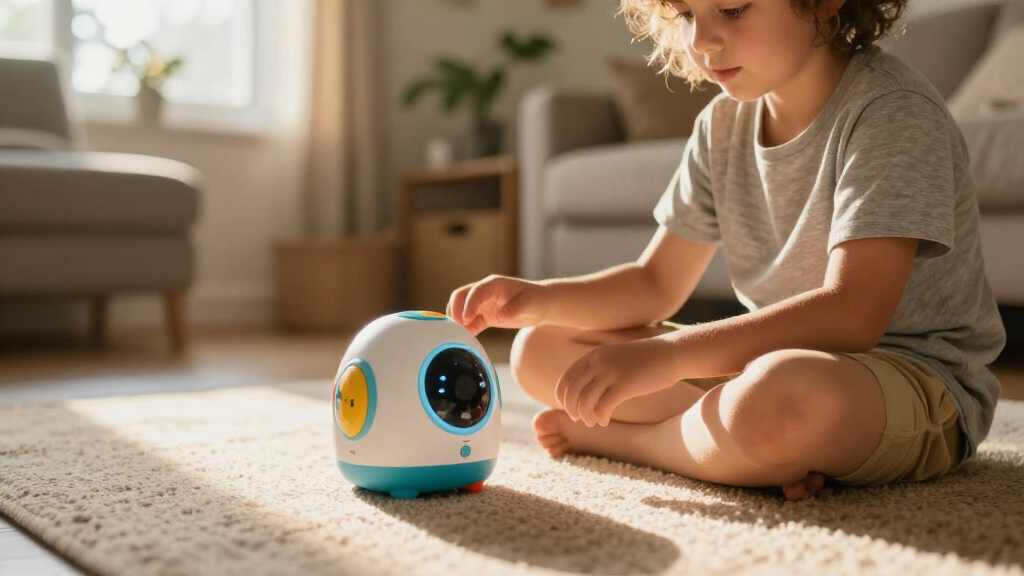
How We Picked
I evaluated these thirteen products by prioritizing interactive depth over mere feature lists. A toy that repeats three phrases is not equivalent to one that adapts to a child’s voice tone or answers open-ended questions. I assessed each product’s ability to sustain engagement beyond the first week of use, looking for varied activity modes and responsive feedback loops. Build quality was also a decisive factor, as AI components add complexity that can lead to fragile casings or poor button tactility.
My ranking logic places high value on ease of setup and parental control granularity. Toys that require complex Wi-Fi provisioning or lack clear privacy dashboards were downgraded. I also considered the educational framework behind the AI interactions, favoring products that encourage creativity or logical thinking over passive consumption. This approach ensures the recommendations reflect real-world usability rather than marketing hype.
| AI toys for kid | Brand |
|---|---|
| RIVGOT Voice Interactive Drawi | RIVGOT |
| Loona Robot Pet Dog with ChatG | Loona |
| Tavlshero Interactive Plush Pu | Tavlshero |
| Ruko 18011 Smart Robot Dog wit | Ruko |
| Just Play emotoBOT COR-A Inter | Just Play |
| Lovi AI Interactive Robot Plus | Liovipals |
| AI Robot Toys for Kids | — |
| BLESSONG AI Robot Toy for Kids | — |
Factors to Consider When Choosing Best AI Toys For Kids
Selecting an AI toy is not just about picking the most expensive gadget; it is about matching the technology to your child’s developmental stage and your household’s digital boundaries. The following factors will help you cut through the noise of buzzwords like ‘smart’ and ‘connected’ to find a toy that actually delivers value.
Privacy And Data Security Protocols
Many AI toys rely on cloud servers to process voice commands, which means your child’s conversations may be stored or analyzed by third-party vendors. You must look for products that offer on-device processing for basic commands and provide clear options to delete voice history. Check if the manufacturer is COPPA compliant and if they allow you to disable data collection without bricking the toy’s core functionality. Some lower-cost options lack robust encryption, making them vulnerable to unauthorized access. Prioritizing toys with transparent privacy policies protects your family from unnecessary data exposure while still allowing for interactive play. This is often the most overlooked aspect of buying connected devices for children.
Connectivity Requirements And Wi-Fi Dependency
Most advanced AI toys require a stable 2.4GHz Wi-Fi connection to function correctly, which can be a barrier in homes with older routers or spotty internet. If a toy loses its connection, it may revert to a limited offline mode or stop responding entirely, frustrating the child. Consider whether the toy offers offline fallback features such as pre-loaded stories or basic movement commands that work without internet. Some parents prefer toys that work entirely offline to avoid network security risks, while others appreciate the ability to download new content over the air. Assess your home’s network stability before committing to a cloud-heavy robot like the Loona or a screen-based unit. This dependency dictates how often the toy will be usable in different environments, such as travel or areas with poor signal.
Content Longevity And Update Frequency
A major pitfall in buying AI toys is the ‘one-week wonder’ effect, where the novelty wears off because the content is static. Look for manufacturers that regularly release software updates or new content packs to keep the interaction fresh. Some toys offer subscription models for expanded libraries, which adds ongoing costs, while others provide free lifetime updates. Evaluate whether the AI learns from interaction or if it simply cycles through a fixed set of responses. A toy that adapts to your child’s progress or interests will retain attention much longer than one with rigid, pre-scripted dialogue. Check community forums or user reports to see if the developer is active in maintaining the app ecosystem.
Physical Durability And Repairability
AI toys contain sensitive components like microphones, cameras, and sensors that are more fragile than traditional toy parts. A drop that would bounce off a plastic truck might shatter the casing or misalign the sensors of a robotic companion. I recommend checking for replaceable parts such as charging ports, wheels, or faceplates, as these are common failure points. Waterproofing is also relevant for younger children who might spill drinks on plush AI companions. While adding AI capabilities increases the price, it does not always improve the physical robustness of the toy. Balance the desire for high-tech features with the reality of how rough children play with their belongings.
Screen Time Versus Tangible Interaction
Some AI toys are essentially tablets with robotic bodies, while others are purely physical objects that respond to voice. Decide if you want to introduce a screen interface into your child’s playtime or prefer a tangible companion that encourages imaginative role-play. Screen-based AI toys often offer more visual feedback and educational games but can lead to passive consumption habits. Non-screen AI toys, like the EBLOMA bear, foster verbal skills and emotional connection but lack visual variety. Your choice should align with your family’s media guidelines. For younger children, tangible interaction often supports better cognitive development than staring at a display, whereas older kids may appreciate the graphical richness of a touch-screen robot.
Frequently Asked Questions
Do AI toys require a monthly subscription to work?
It depends on the specific model and the depth of AI features required. Basic voice-activated toys often work without a subscription, using pre-loaded responses or simple keyword recognition. However, toys that integrate advanced large language models like ChatGPT or offer unlimited conversation capabilities frequently require a paid subscription to cover server costs. Always check the fine print before purchasing, as some toys offer a free trial period followed by mandatory fees. If you want a no-cost experience, prioritize toys with offline processing or those that rely on simple command sets rather than generative AI.
Are AI toys safe for children under five years old?
Not all AI toys are appropriate for preschoolers. Many models contain small parts, sharp edges on robotic joints, or complex electronic components that pose safety risks for younger children. I recommend looking for toys explicitly labeled for ages 3+ or 5+ and checking for ASTM F963 safety compliance. Additionally, voice interaction can be challenging for toddlers who are still developing clear speech patterns, leading to frustration. For this age group, simpler plush AI companions with large, soft bodies and limited, predictable responses are generally safer and more engaging than complex robots.
How do I manage the privacy settings on these connected toys?
Privacy management is typically handled through the companion app on your smartphone or tablet. You should create a parent account and link the child’s profile to the toy during setup. Most reputable manufacturers allow you to delete voice recordings, disable camera features, and restrict data sharing within the app settings. It is critical to review these settings immediately after unboxing, as defaults often enable data collection for service improvement. Regularly audit these permissions, especially after software updates, to ensure your child’s conversations and location data remain private and secure.
What happens if the Wi-Fi goes down or the battery dies?
When connectivity is lost, the toy’s behavior varies by model. High-end robots like the Loona may enter a sleep mode or offer limited autonomous movement, while screen-based toys might display an error message. If the battery dies, most AI toys cannot function at all, unlike mechanical wind-up toys. I suggest keeping a spare charging cable accessible and teaching older children to monitor battery indicators. For households with unreliable internet, choose toys with significant offline capabilities so that the play experience does not halt completely during network outages.
Can AI toys actually help with homework or educational skills?
Some AI toys are designed specifically for educational support, offering math drills, language practice, or coding logic puzzles. However, many general-purpose AI companions are better suited for social play and creative storytelling rather than structured academic help. Look for toys that align with specific curriculum standards or offer guided learning paths if your goal is academic reinforcement. For broader skill development, toys that encourage problem-solving through interactive games or creative drawing prompts, like the RIVGOT, provide valuable cognitive engagement without feeling like schoolwork.
Conclusion
Choosing the right AI toy depends on balancing technical sophistication with practical usability. The Loona Robot Pet Dog is my best overall pick for tech-savvy families who want deep, conversational AI and advanced robotics. For those seeking the best value, the RIVGOT Voice Interactive Drawing Robot offers engaging creative play without the high price tag of fully autonomous bots. If you are looking for the best for beginners or younger children, the EBLOMA AI Teddy Bear provides a safe, screen-free introduction to voice interaction. Parents prioritizing premium features and home monitoring should consider the Loona, while those needing a compact option for travel might prefer the Bubbotparty Bao-ao. Ultimately, the best choice is the one that aligns with your child’s age, your privacy comfort level, and your desire for screen-free versus digital engagement.
Evergreen bestsellers Picks

Samsung 65-Inch M70H Series 4K Mini LED Smart TV (2026)

Dyson Cyclone V10 Origin Cordless Vacuum

TCL 75-Inch Class 4-Series 4K UHD HDR Smart Google TV (75S446, 2022)
As an affiliate, we earn on qualifying purchases.