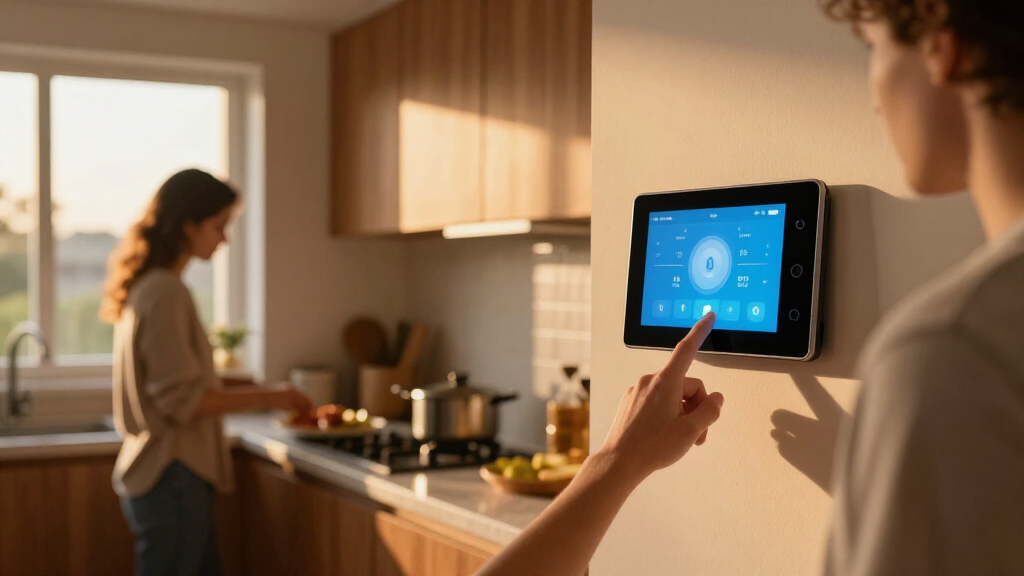

The best smart home tablets combine an easy-to-read screen with dependable access to the controls and apps your household uses most. My best overall pick is the 10.1-inch Android 14 Smart Home Control Tablet with PoE, 8GB RAM, and 64GB storage, which pairs wired power and network access with the strongest listed memory and storage among the Android panels. The Google Nest Hub Max is a simpler choice for households already invested in Google Assistant, while the 15.6-inch Android PoE panel favors a large, fixed control surface. The main tradeoffs are wall-mounted installation versus a portable tablet, open Android flexibility versus an appliance-like assistant display, and screen size versus fit and cost. Read on for how the eight options compare and which one best fits your home.

Get the latest gadgets delivered free with Prime
- Fast, free delivery on millions of items
- Prime Video, Amazon Music and more included
- Member-only deals all year
Complete the kit



Key Takeaways
- The amazon.com/dp/B0GWMZKSLZ?tag=gadgetfee-20&ascsubtag=dc-1201153″ target=”_blank” rel=”nofollow sponsored noopener”>10.1-inch Android 14 PoE panel with 8GB RAM and 64GB storage stands out on listed hardware: among the Android panels, it offers the most memory and storage specified, though compatibility and software support still need checking.
- PoE is a wired-installation choice, not an automatic upgrade: it can supply power and network through one cable, but requires suitable cabling and network equipment.
- The 15.6-inch panel serves a different purpose from the 10.1-inch models: it suits a prominent fixed dashboard, while smaller screens are easier to place in tighter spaces.
- Alexa and Google Nest Hub Max prioritize voice-assistant ecosystems: they may suit households seeking familiar assistant-led interaction, while Android panels offer a different, more configurable control-panel approach.
- Product titles do not settle the most important fit questions: confirm smart-home platform compatibility, mounting details, software updates, and whether the panel works with the apps and automations you rely on.
| JEESTON 10.1-Inch Android 14 Smart Home Touch Panel with Proximity Sensor |  | Best for Wired Integration | Operating system: Android 14 | Display: 10.1-inch capacitive touchscreen | Resolution: 1280 × 800 pixels | VIEW LATEST PRICE | See Our Full Breakdown |
| 10.1-Inch Android Smart Home Control Panel with PoE and Proximity Sensor |  | Best for Flexible Wall Placement | Operating system: Android 14 | Processor: Rockchip RK3576S octa-core, up to 2.2 GHz | Display: 10.1-inch capacitive touchscreen, 1280 × 800 | VIEW LATEST PRICE | See Our Full Breakdown |
| 10.1-Inch Android 14 Smart Home Control Tablet with PoE, 8GB RAM, and 64GB Storage | | Best for Multitasking Headroom | Operating system: Android 14 | Processor: Rockchip RK3576S octa-core, up to 2.2 GHz | Display: 10.1-inch touchscreen; 1280 × 800; 60 Hz; 250 nits | VIEW LATEST PRICE | See Our Full Breakdown |
| 10.1-Inch Android 14 PoE Smart Home Control Panel, 4GB RAM, 64GB Storage |  | Best for Orientation Choice | Operating system: Android 14 | Processor: Rockchip RK3576 octa-core, up to 2.2 GHz | Display: 10.1-inch touchscreen, 1280 × 800 | VIEW LATEST PRICE | See Our Full Breakdown |
| Amazon Alexa Tablet 11, 128GB, Graphite |  | Best for Portable Smart-Home Use | Display: 11-inch 2.5K resolution, 90 Hz | Processor and memory: 8-core chip; 8 GB RAM | Storage: 128 GB | VIEW LATEST PRICE | See Our Full Breakdown |
| Google Nest Hub Max 10-Inch Smart Display with Google Assistant, Chalk |  | Best for Video Calls and Shared Rooms | Display: 10-inch LCD touchscreen | Resolution: 1280 × 800 pixels | Camera: 6.5 MP; 1080p video capture | VIEW LATEST PRICE | See Our Full Breakdown |
| 15.6-Inch Android 14 PoE Smart Home Control Panel |  | Best for a Large Permanent Control Station | Display: 15.6-inch capacitive touchscreen | Resolution: 1920 × 1080 | Operating system: Android 14 | VIEW LATEST PRICE | See Our Full Breakdown |
| 10.1-Inch Wall-Mounted Android Smart Home Tablet with PoE and MQTT |  | Best for MQTT-Based Wall Control | Display: 10.1 inches; resolution not specified | Operating system: Android 14 | Processor: RK3576, 8-core | VIEW LATEST PRICE | See Our Full Breakdown |
| smart home tablet | Display | Operating system | Memory and storage | Connectivity |
|---|---|---|---|---|
| JEESTON 10.1-Inch Android 14 S | 10.1-inch capacitive touchscreen | Android 14 | 4 GB RAM; 64 GB storage | — |
| 10.1-Inch Android Smart Home C | 10.1-inch capacitive touchscreen, 1280 × 800 | Android 14 | 4 GB RAM; 64 GB storage | Wi-Fi 6, 10/100/1000 Ethernet, Bluetooth 5.3 |
| 10.1-Inch Android 14 Smart Hom | 10.1-inch touchscreen; 1280 × 800; 60 Hz; 250 nits | Android 14 | 8 GB RAM; 64 GB storage | Wi-Fi 802.11ax, Bluetooth, and Ethernet |
| 10.1-Inch Android 14 PoE Smart | 10.1-inch touchscreen, 1280 × 800 | Android 14 | 4 GB RAM; 64 GB storage | Wi-Fi 6, 100/1000M Ethernet, BLE 5.3 |
| Amazon Alexa Tablet 11 | 11-inch 2.5K resolution, 90 Hz | — | — | Wi-Fi 6 |
| Google Nest Hub Max 10-Inch Sm | 10-inch LCD touchscreen | Android | 4 GB RAM; 4 GB storage | Bluetooth |
| 15.6-Inch Android 14 PoE Smart | 15.6-inch capacitive touchscreen | Android 14 | 4 GB RAM; 64 GB ROM | Wi-Fi 6, Bluetooth 5.3, RJ45 PoE (IEEE 802.3at, 25.5 W) |
| 10.1-Inch Wall-Mounted Android | 10.1 inches; resolution not specified | Android 14 | 4 GB RAM; 64 GB storage | Ethernet, USB, Wi-Fi, Bluetooth |
More Details on Our Top Picks
JEESTON 10.1-Inch Android 14 Smart Home Touch Panel with Proximity Sensor
The JEESTON is the strongest fit here for a home built around wired control systems, not just app-based devices. Alongside PoE and Gigabit Ethernet, it provides RS-232, RS-485, IR, and I/O, giving installers several ways to connect equipment that a regular tablet cannot. Its proximity sensor can wake the 10.1-inch screen as someone approaches, while light, temperature, and humidity sensors add useful context for a wall-mounted control point. Compared with the similarly sized Android 14 panel from product 2, this model specifies Wi-Fi 6E rather than Wi-Fi 6 and lists a broader set of sensors. The tradeoff is uncertainty: camera support is absent, and the software update timeline is unspecified, so I would favor it for a fixed installation only when its Android support meets the buyer’s needs.
Pros:- PoE and Gigabit Ethernet can simplify power and network wiring at a permanent mounting location.
- RS-232, RS-485, IR, and I/O support a wide range of wired smart-home and AV integrations.
- Proximity, light, temperature, and humidity sensors add useful automation inputs.
- Wi-Fi 6E and Bluetooth 5.3 provide modern wireless connectivity.
Cons:- No camera for video calls or visual monitoring.
- Software update support duration is unspecified.
- Its wall-mounted design is less useful than the Amazon Alexa Tablet 11 for portable, general-purpose use.
Best for: Homeowners or installers integrating a wall panel with wired AV, serial-control, or IR equipment alongside Wi-Fi devices.
Not ideal for: Buyers who need a camera, a portable tablet, or clear information about the duration of future software updates.
- Operating system:Android 14
- Display:10.1-inch capacitive touchscreen
- Resolution:1280 × 800 pixels
- Processor:RK3576
- Memory and storage:4 GB RAM; 64 GB storage
- Wireless:Wi-Fi 6E; Bluetooth 5.3
- Wired connectivity and interfaces:Gigabit Ethernet with PoE; RS-232, RS-485, IR, and I/O
- Sensors:Proximity, light, temperature, and humidity
Our verdict“Choose the JEESTON when wired system integration and built-in environmental sensors matter more than portability or a camera.”
10.1-Inch Android Smart Home Control Panel with PoE and Proximity Sensor
This panel earns its place for households that want a fixed smart-home screen but need freedom over how it sits on the wall. Its display supports both portrait and landscape orientation, a practical difference from panels whose listed specs do not specify orientation. PoE, MQTT, and serial interfaces make it suited to a more involved setup, while proximity wake helps the screen feel ready without leaving it lit all day. Compared with the JEESTON panel, it offers a similar 10.1-inch, 1280 × 800 display and the same broad RS-232/RS-485/IR/I/O approach, but lists Wi-Fi 6 rather than Wi-Fi 6E. It also includes stereo speakers. The main limitation is that its 4 GB RAM is not expandable; buyers seeking more headroom may prefer product 3’s 8 GB, while anyone needing video calls should look elsewhere because this panel has no camera.
Pros:- Portrait and landscape display support gives more flexibility when planning wall placement.
- PoE, MQTT, and serial interfaces suit smart-home installations beyond basic app control.
- Proximity sensing can wake the screen when someone approaches.
- Temperature and humidity sensors and stereo speakers are built in.
Cons:- No camera for calls or video-based features.
- The 4 GB of RAM is not expandable.
- Wi-Fi 6 is specified, while the JEESTON panel lists Wi-Fi 6E.
Best for: Homeowners planning a permanent dashboard who want portrait-or-landscape mounting, PoE, and MQTT support.
Not ideal for: Buyers who want a camera, expandable memory, or the higher listed RAM capacity of product 3.
- Operating system:Android 14
- Processor:Rockchip RK3576S octa-core, up to 2.2 GHz
- Display:10.1-inch capacitive touchscreen, 1280 × 800
- Memory and storage:4 GB RAM; 64 GB storage
- Connectivity:Wi-Fi 6, 10/100/1000 Ethernet, Bluetooth 5.3
- Power and interfaces:PoE; I/O, IR, RS-232, and RS-485
- Smart-home features:MQTT support; proximity, temperature, and humidity sensors
- Other features:Portrait or landscape mounting; stereo speakers; no camera
Our verdict“Pick this panel if mounting orientation and MQTT matter more than expandable memory or a camera.”
10.1-Inch Android 14 Smart Home Control Tablet with PoE, 8GB RAM, and 64GB Storage
Among these fixed-installation panels, this model stands out for 8 GB of RAM, double the memory listed for the JEESTON and product 2 panels. That extra capacity makes it the more appealing choice for a dashboard expected to keep several control or monitoring functions available, though the supplied specs do not establish how any particular app will perform. It pairs that memory with built-in MQTT and kiosk mode, which help orient it toward a dedicated smart-home interface rather than a general-purpose tablet. Like product 2, it supports PoE, but its listed feature set does not include the temperature and humidity sensors found on that panel or the JEESTON. The display is 1280 × 800 at 250 nits, so it prioritizes practical control over sharpness or brightness; its lack of a camera also rules out video calls.
Pros:- 8 GB RAM is more than the 4 GB listed for the JEESTON and product 2 panels.
- Built-in MQTT and kiosk mode are aimed at dedicated smart-home control.
- PoE and Ethernet support a permanent wired installation.
- Touchscreen supports stylus input.
Cons:- The 1280 × 800 resolution is modest for an 10.1-inch display.
- No camera is included.
- Unlike product 2 and the JEESTON, its listed sensors do not include temperature or humidity.
Best for: Households or integrators building a dedicated kiosk dashboard and preferring 8 GB RAM for more memory headroom.
Not ideal for: Buyers who need built-in temperature or humidity sensing, a camera, or a high-resolution, bright display.
- Operating system:Android 14
- Processor:Rockchip RK3576S octa-core, up to 2.2 GHz
- Display:10.1-inch touchscreen; 1280 × 800; 60 Hz; 250 nits
- Memory and storage:8 GB RAM; 64 GB storage
- Connectivity:Wi-Fi 802.11ax, Bluetooth, and Ethernet
- Power and ports:PoE; one USB port
- Smart-home features:Built-in MQTT and kiosk mode
- Installation and input:Wall mount; touchscreen with stylus support
Our verdict“Choose this panel for a PoE-powered kiosk where 8 GB RAM and MQTT matter more than sensor breadth or display sharpness.”
10.1-Inch Android 14 PoE Smart Home Control Panel, 4GB RAM, 64GB Storage
This panel is a sensible pick when the wall layout, rather than extra memory, drives the decision. Its 10.1-inch screen can be mounted in portrait or landscape, and proximity sensing can wake it as someone approaches. The combination of PoE, Wi-Fi 6, BLE 5.3, and wired interfaces gives it options for connecting to different parts of a smart-home setup; a relay port is specifically listed here, unlike the interface list for the JEESTON panel. It also includes temperature and humidity sensors and four LED light bars. Compared with product 3, it has half the RAM and no listed MQTT or kiosk mode, so I would not choose it for a dashboard that prioritizes those features. It has no battery and must remain powered, making it a permanent control point rather than a tablet to carry around.
Pros:- Portrait or landscape mounting adapts to different wall locations and dashboard layouts.
- PoE or standard power connection supports a fixed installation.
- Includes I/O, IR, RS-232, RS-485, and a relay port.
- Proximity, temperature, and humidity sensors support more than touch-based control.
Cons:- No built-in battery, so it requires continuous power.
- No camera for calls or video features.
- Its 4 GB RAM is lower than product 3’s 8 GB, and MQTT is not listed.
Best for: Homeowners who need portrait-or-landscape mounting, proximity wake, and a relay connection in a continuously powered wall panel.
Not ideal for: Buyers seeking a portable screen, 8 GB RAM, or the listed MQTT and kiosk features of product 3.
- Operating system:Android 14
- Processor:Rockchip RK3576 octa-core, up to 2.2 GHz
- Display:10.1-inch touchscreen, 1280 × 800
- Memory and storage:4 GB RAM; 64 GB storage
- Connectivity:Wi-Fi 6, 100/1000M Ethernet, BLE 5.3
- Power:PoE or standard power connection; no built-in battery
- Interfaces:I/O, IR, RS-232, RS-485, and relay port
- Sensors and lighting:Proximity, temperature, and humidity sensors; four LED light bars
Our verdict“Choose this panel for a permanently powered dashboard where flexible orientation and a relay port are priorities.”
Amazon Alexa Tablet 11, 128GB, Graphite
Unlike the other picks here, the Amazon Alexa Tablet 11 is a portable everyday tablet that can also serve as a smart-home screen. Its 11-inch 2.5K display is sharper than the 1280 × 800 panels on the JEESTON and other wall-mounted options, while the 90 Hz refresh rate and up-to-15-hour video playback suit reading and entertainment between control tasks. Wi-Fi 6 and access to Google Play and Amazon apps broaden its use beyond a fixed dashboard; front and rear cameras also give it a capability the wall panels lack. The tradeoff is installation: it does not list PoE, Ethernet, serial ports, or proximity-based screen wake, so it is less suited to permanent system integration than product 2. Alexa+ features and some Prime benefits require a Prime membership.
Pros:- Sharper 11-inch 2.5K display and 90 Hz refresh rate than the 1280 × 800 fixed panels.
- Up to 15 hours of video playback supports portable use around the home.
- Access to Google Play and Amazon apps makes it more versatile than a dedicated wall controller.
- Front and rear 8 MP cameras and Dolby Atmos speakers support calls and entertainment.
Cons:- No listed PoE, Ethernet, or serial interfaces for permanent wired integration.
- Does not list the proximity, temperature, or humidity sensors offered by several wall panels.
- Alexa+ features and some Prime benefits require a Prime membership.
Best for: People who want one portable tablet for Alexa access, streaming, reading, video calls, and everyday apps.
Not ideal for: Installers or homeowners who need a PoE-powered wall panel with Ethernet, serial interfaces, or built-in environmental sensors.
- Display:11-inch 2.5K resolution, 90 Hz
- Processor and memory:8-core chip; 8 GB RAM
- Storage:128 GB
- Battery life:Up to 15 hours of video playback
- Connectivity:Wi-Fi 6
- Cameras:8 MP front and rear
- Audio:Dual speakers with Dolby Atmos
- Build and color:Aluminum unibody; Graphite
Our verdict“Choose the Amazon Alexa Tablet 11 if portability and everyday media use matter more than a wired, wall-mounted control installation.”
Google Nest Hub Max 10-Inch Smart Display with Google Assistant, Chalk
The Google Nest Hub Max is the most living-room-friendly pick here: its 10-inch screen, built-in camera, and substantial stereo audio make it more useful for calls and shared entertainment than the camera-free 10.1-Inch Wall-Mounted Android Smart Home Tablet with PoE and MQTT. The 6.5 MP Nest Cam also adds a monitoring function that the dedicated wall panels in this batch do not list. That versatility comes with a different emphasis: this is a countertop smart display, not a purpose-built, permanently powered control panel with PoE and wired interfaces like the 15.6-Inch Android 14 PoE Smart Home Control Panel. Its 1280 × 800 resolution is also lower than that panel’s Full HD screen. I would choose the Nest Hub Max for voice-led household use and calls, but skip it if you need Android 14, MQTT, or a fixed wall installation.
Pros:- 10-inch touchscreen suits shared viewing and everyday controls
- Built-in 6.5 MP camera supports video calls and monitoring
- Stereo speakers with a 30 W subwoofer provide fuller audio than a basic control panel
- Bluetooth connectivity adds a wireless connection option
Cons:- No battery-life or portability details are provided, so it is not a clearly defined mobile tablet
- 1280 × 800 resolution is lower than the 15.6-inch PoE panel’s Full HD display
- Software update support date is unknown
Best for: Households seeking a shared Google Assistant display for video calls, camera monitoring, and room-filling audio.
Not ideal for: Buyers building a fixed Android control station who need PoE, MQTT, documented wall-mount installation, or a higher-resolution screen.
- Display:10-inch LCD touchscreen
- Resolution:1280 × 800 pixels
- Camera:6.5 MP; 1080p video capture
- Audio:Stereo speakers with 30 W subwoofer; 50 W total output
- Connectivity:Bluetooth
- Operating system:Android
- Memory and storage:4 GB RAM; 4 GB storage
- Weight:450 g
- Color and model:Chalk; GA00474-DE
Our verdict“Choose the Nest Hub Max for a shared smart display with calls, monitoring, and strong audio; choose a PoE panel for dedicated wall control.”
15.6-Inch Android 14 PoE Smart Home Control Panel
For a central household dashboard, this panel’s 15.6-inch Full HD touchscreen gives controls and app interfaces more room than the 10.1-inch Google Nest Hub Max or the 10.1-Inch Wall-Mounted Android Smart Home Tablet with PoE and MQTT. Its defining advantage is installation flexibility: PoE, RS-232, RS-485, I/O, and IR make it a stronger fit for homes integrating wired equipment, while Android 14 and Google Play support a broader app-based setup. Built-in temperature, humidity, and light sensors plus LED light bars add information and illumination at the installation point. The tradeoff is that this is a fixed panel, not a tablet to carry around; it has no battery. Its 4 GB RAM is also modest beside the 10.1-Inch Android 14 Smart Home Control Tablet with PoE, 8GB RAM, and 64GB Storage, so buyers planning heavier multitasking may prefer that alternative.
Pros:- Large 15.6-inch Full HD touchscreen provides ample room for dashboards
- PoE and RS-232, RS-485, I/O, and IR support wired integration
- Android 14 with Google Play access supports a range of smart home apps
- Built-in light, temperature, and humidity sensors and four LED light bars
Cons:- No built-in battery means it depends on a fixed powered installation
- 4 GB RAM may constrain heavier app use compared with the listed 8 GB panel
- Large screen requires more wall space than the 10.1-inch alternatives
Best for: Homeowners installing a large, fixed control panel who want PoE, wired integration ports, and onboard environmental sensors.
Not ideal for: People who want a portable tablet or plan to run many demanding apps at once; it has no battery and only 4 GB RAM.
- Display:15.6-inch capacitive touchscreen
- Resolution:1920 × 1080
- Operating system:Android 14
- Processor:Rockchip RK3576S octa-core, up to 2.2 GHz
- Memory and storage:4 GB RAM; 64 GB ROM
- Connectivity:Wi-Fi 6, Bluetooth 5.3, RJ45 PoE (IEEE 802.3at, 25.5 W)
- Ports:USB-C, RS-232, RS-485, I/O, IR
- Sensors and lighting:Light, temperature, and humidity sensors; four LED light bars
- Installation and power:Wall-mount or embedded; horizontal or vertical; no built-in battery
Our verdict“Pick this panel when a large, permanently installed display and wired integrations matter more than portability or extra memory.”
10.1-Inch Wall-Mounted Android Smart Home Tablet with PoE and MQTT
This 10.1-inch panel earns its place through MQTT support and a focused wall-control setup, making it a more natural match for MQTT-based automations than the Google Nest Hub Max, which is oriented toward Assistant features, calls, and shared-room media. Android 14, Google Play, and kiosk mode let buyers build an app-centered dashboard and keep it presented as a dedicated control screen. Its temperature and humidity sensors and integrated LED lighting add useful room-level feedback without needing a larger installation like the 15.6-Inch Android 14 PoE Smart Home Control Panel. The smaller footprint is easier to place, but the screen has no stated resolution, and the device has no battery or camera. Kiosk mode may also require a password to exit, which could frustrate households that want quick access to general tablet use.
Pros:- MQTT support suits users building automation dashboards around that protocol
- Android 14, Google Play, and kiosk mode support an app-based dedicated display
- Temperature and humidity sensors and integrated LED ambient lighting add room-level utility
- Ethernet, Wi-Fi, Bluetooth, and USB provide several connection options
Cons:- No built-in battery, so it is intended for a fixed installation
- No camera for video calls or monitoring
- Kiosk mode may require a password to exit, and display resolution is not specified
Best for: Smart home owners using MQTT who want a compact, fixed Android dashboard with kiosk mode and built-in room sensors.
Not ideal for: Buyers needing a portable device, video calls, or a large Full HD interface; this panel has no battery or camera, and its resolution is not specified.
- Display:10.1 inches; resolution not specified
- Operating system:Android 14
- Processor:RK3576, 8-core
- Memory and storage:4 GB RAM; 64 GB storage
- Connectivity:Ethernet, USB, Wi-Fi, Bluetooth
- Wireless standard:802.11ax
- Smart home features:MQTT support, LED ambient lighting, temperature and humidity sensors, kiosk mode
- Mounting and power:Wall-mounted; no built-in battery
- Camera and model:No camera; SMT1019; Black
Our verdict“Choose this panel for a compact MQTT-focused wall dashboard, but choose the Nest Hub Max for calls or the 15.6-inch panel for a larger interface.”
How We Picked
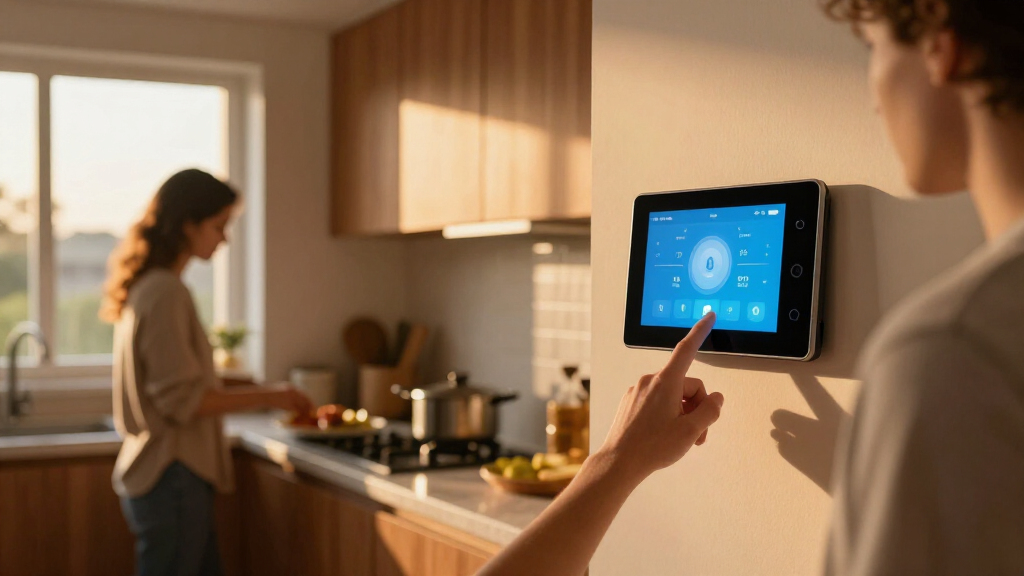
I ranked these products by how well their stated features serve the main smart-home-tablet jobs: displaying household controls, providing practical everyday interaction, and fitting the intended installation. I gave weight to screen size, listed memory and storage, PoE support, proximity sensing, and the distinct Alexa or Google Assistant experience. I also separated fixed wall panels from assistant displays rather than treating them as interchangeable; a device can be capable in one setup and a poor fit in another.
The 10.1-inch Android 14 panel listing 8GB RAM and 64GB storage leads on its published hardware combination, while other Android panels earn consideration for their specific PoE, sensing, or MQTT features. The larger 15.6-inch model ranks as a specialized choice rather than a universal winner. Alexa Tablet 11 and Nest Hub Max bring recognizable assistant ecosystems, but their value depends on how well those ecosystems match a buyer’s devices and routines. Since the supplied product details do not establish app compatibility, update commitments, mounting hardware, or network requirements, I treat those as checks buyers should make before choosing.
| smart home tablet | Operating system | Processor |
|---|---|---|
| JEESTON 10.1-Inch Android 14 S | Android 14 | RK3576 |
| 10.1-Inch Android Smart Home C | Android 14 | Rockchip RK3576S octa-core, up to 2.2 GHz |
| 10.1-Inch Android 14 Smart Hom | Android 14 | Rockchip RK3576S octa-core, up to 2.2 GHz |
| 10.1-Inch Android 14 PoE Smart | Android 14 | Rockchip RK3576 octa-core, up to 2.2 GHz |
| Amazon Alexa Tablet 11 | — | — |
| Google Nest Hub Max 10-Inch Sm | Android | — |
| 15.6-Inch Android 14 PoE Smart | Android 14 | Rockchip RK3576S octa-core, up to 2.2 GHz |
| 10.1-Inch Wall-Mounted Android | Android 14 | RK3576, 8-core |
Factors to Consider When Choosing Best Smart Home Tablets
Before choosing a smart home tablet, decide what role it will play: a permanently mounted dashboard, a voice-first household display, or a more flexible Android device. The right choice depends as much on your home’s network, platform, and installation plans as on screen size.
Choose the installation before the screen
A wall-mounted panel becomes part of the room, so placement and wiring deserve attention before you settle on a model. PoE can carry power and network over one Ethernet cable, which can reduce visible wiring, but only if the installation has a suitable cable run and compatible network equipment. A plug-in tablet avoids some network work but may leave a charger in view and depend on a nearby outlet. Check whether the product includes a mount, how the cable exits, and whether the screen can be removed for service. A common mistake is buying a PoE panel first and discovering the planned location has no Ethernet. If you rent or expect to move the display, a less permanent setup may be the more practical choice.
Treat compatibility as a first-order requirement
A control panel is useful only when it can reach the devices and routines you want to operate. Check support for your smart-home platform, device brands, control apps, and any local or cloud services your setup depends on. Android gives a different kind of flexibility from a dedicated assistant display, but the Android label alone does not confirm access to every app or automation. Likewise, an Alexa- or Google-centered product may fit smoothly into its own ecosystem while being less suited to a mixed-platform home. Make a short list of your essential controls—such as lighting, climate, locks, and cameras—and verify each one before buying. This avoids choosing by screen specifications only, then finding that the panel cannot show a key device or routine.
Match screen size to viewing distance and room
A larger display can make dashboards easier to read from across a room, but it also takes up more wall space and can dominate a narrow hallway or kitchen. Smaller panels are easier to place discreetly, yet dense dashboards may require more scrolling or larger touch targets. Consider who will use the screen and from how far away: a shared family control point has different needs from a panel beside a desk. Check the screen dimensions and mounting orientation rather than relying on the diagonal measurement alone. Another frequent mistake is filling a display with too many controls; a clear home screen with a few common actions can work better than a packed dashboard. Choose for the room and the task, not simply the largest available panel.
Read hardware specifications in context
Memory and storage can matter when an Android panel runs several apps or keeps a more involved dashboard available, but the numbers are not a substitute for knowing how the device performs with your software. Compare listed RAM and storage as part of the decision, then check the operating system version, update policy, and app support. A model with more listed memory may offer more headroom, while a simpler display could still suit a focused voice-control role. Do not assume that two panels with the same screen size and Android version have equivalent software or long-term support. Look for clear documentation on updates and whether the interface can be configured for always-on use. Pay for added hardware when your planned setup can make use of it.
Decide whether proximity sensing and MQTT matter
Proximity sensing can make a fixed display feel more responsive by waking or changing its screen behavior as someone approaches, but confirm what the sensor actually triggers and whether those settings are adjustable. It may be less useful in a busy passage where frequent wake-ups become distracting. MQTT support can matter to technically confident buyers who use MQTT-based devices or automations, but the label does not explain setup complexity or the exact integration available. Ask whether the function works directly on the panel, requires a separate app, or depends on a particular server or broker. Buyers who want a ready-made assistant experience may not benefit from either feature. Choose these capabilities to solve a real need, not because they appear on a specification list.
Plan for maintenance and household use
A permanently available control screen needs sensible power management, a stable network connection, and a way to recover if an app or dashboard stops responding. Before installing one, find out how the device restarts, receives software updates, and handles account or network changes. Think about whether children, guests, or other household members need simple access without seeing administrative settings. A wall panel that depends on one person’s phone account can become inconvenient when that account changes or loses access. For a voice-first display, check which services and commands your household already uses rather than assuming the assistant will control every device. A little planning around ownership and upkeep can matter more than a small specification difference.
Frequently Asked Questions
Is a PoE smart home tablet worth choosing over a plug-in model?
PoE is a strong fit when you want a fixed panel with one cable carrying power and network, and your home already has suitable Ethernet at the mounting location. It can reduce visible wiring and provide a wired network connection, but it depends on compatible networking equipment and an installation that can route the cable. A plug-in option may be easier to place without adding cabling, especially in a rental or a room without Ethernet. Check whether the exact panel supports the network setup you have; the word PoE in a title does not answer every installation question. Choose based on the room and wiring plan, not on the assumption that PoE is always better.
Should I choose an Android control panel or an Alexa or Google display?
Start with the ecosystem and interaction style your household already uses. The Alexa Tablet 11 and Google Nest Hub Max center their appeal on their respective assistant environments, while the Android panels are presented as dedicated control-panel devices with varied hardware and installation features. Android may suit buyers who want to configure a dashboard around their own apps, but support for particular apps and services should be verified for the specific model. An assistant display can be a simpler choice when your routines and compatible devices already live in that assistant’s ecosystem. Neither category is automatically the more capable option for every mixed-device home.
Do I need 8GB of RAM and 64GB of storage for a smart home panel?
Not every fixed dashboard needs that much listed memory or storage, particularly if its job is limited to a small number of controls. The 10.1-inch Android panel with 8GB RAM and 64GB storage has the most substantial stated memory and storage combination among the Android options here, which may appeal to buyers planning broader app use. Those figures do not confirm speed, app compatibility, or update support, so they should not be the only deciding factors. Check what software you plan to run and whether the manufacturer documents ongoing support. If you want a voice-led display for familiar assistant tasks, extra Android storage may not address your main need.
Will an Android smart home panel work with every smart device I own?
No. Android as an operating system does not guarantee that a panel supports every device brand, control service, or automation platform. Before purchasing, verify that the panel can run the specific apps or dashboards you depend on and that those apps support the device’s version of Android. Check whether essential controls work locally or need an internet connection, especially if you expect the screen to remain useful during an outage. For MQTT-based setups, confirm how MQTT is supported and what configuration is required rather than relying on the feature name alone. A list of your must-have devices is a useful compatibility checklist.
Is a 15.6-inch panel a better choice than a 10.1-inch panel?
A 15.6-inch screen is better suited to a prominent fixed dashboard where people need to read controls from farther away or view more information at once. A 10.1-inch panel is easier to fit into a kitchen, hallway, or other area where wall space is limited. The larger screen is not automatically easier to use if it sits in a cramped location or requires awkward reach. Compare the full device dimensions and mounting requirements, not just screen diagonal. Choose the larger panel for shared visibility and the smaller one when placement flexibility matters more.
Conclusion
My best overall pick is the 10.1-inch Android 14 PoE control tablet with 8GB RAM and 64GB storage for buyers who want a fixed Android panel and value its strongest listed memory-and-storage combination. For best value, compare the 10.1-inch PoE panels by the features you will actually use; the 4GB RAM, 64GB model may be enough for a focused dashboard, while the simpler PoE panel with proximity sensing may suit a more basic installation. The best premium-style choice for a large shared dashboard is the 15.6-inch Android PoE panel, provided the room and mounting plan suit its size. For beginners, the Google Nest Hub Max or Alexa Tablet 11 may feel more approachable if the household already uses that assistant. For specific needs, consider the JEESTON panel or other proximity-sensor listings for a fixed screen that responds to nearby presence, and the MQTT panel if your setup relies on MQTT and its implementation checks out. Confirm compatibility, update support, and installation details before making the final choice.
Halloween Picks
halloween
As an affiliate, we earn on qualifying purchases.