If you’re looking for the best 12-bay NAS units of 2026 for large-scale storage and top performance, I recommend considering options like Synology’s DS2422+ and RS2423RP+, which offer powerful processors, expandability, and fast networking. The DS3622xs+ is great for demanding workloads with high speeds, while devices like the Seagate DX517 and QNAP’s TVS-h874 offer additional scalability and features. Keep exploring to find the perfect fit for your storage needs.
Key Takeaways
- High-capacity 12-bay NAS units support scalable storage with expansion options up to 24 drives.
- Enterprise-grade processors and high-speed network interfaces deliver top-tier performance for demanding workloads.
- Advanced data protection features include RAID configurations, encryption, snapshots, and redundant power supplies.
- Compatibility with NVMe SSD caching and real-time transcoding optimize speed and media handling.
- Suitable for large enterprise, video editing, VM hosting, and surveillance environments requiring reliable, high-performance storage.
| Synology 12-Bay DiskStation DS2422+ (Diskless) | 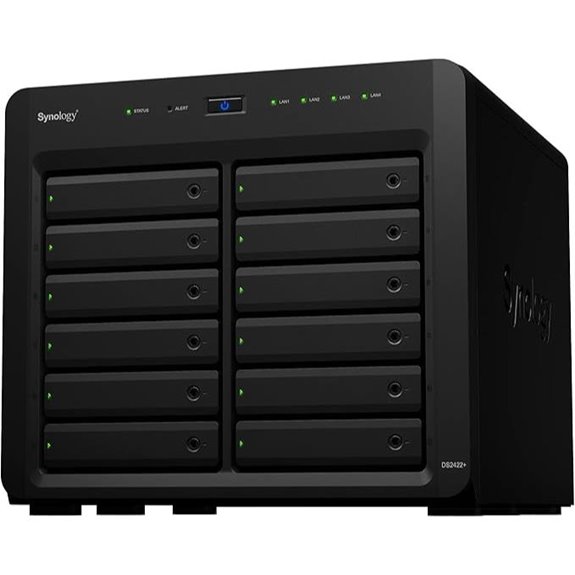 | Enterprise Powerhouse | Storage Capacity: 12 bays (expandable to 24) | Expandability: Supports expansion to 24 drives with DX1222 | Processor Type: Quad-core ARM or x86 (Intel) | VIEW LATEST PRICE | See Our Full Breakdown |
| Synology 12-Bay RackStation RS2423RP+ (Diskless) | 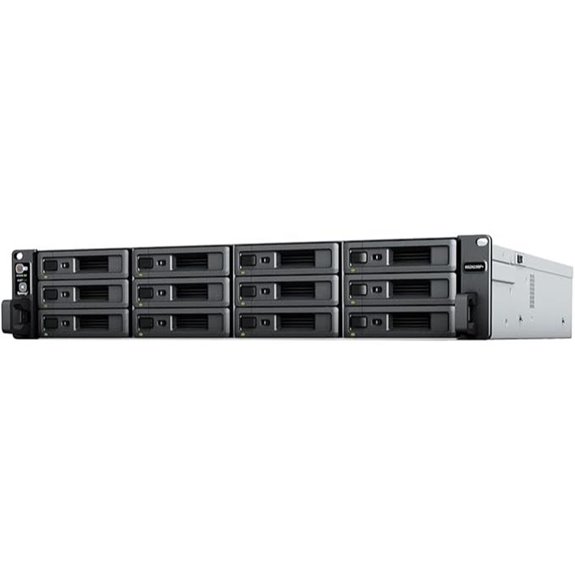 | High-Availability Leader | Storage Capacity: 12 bays (expandable to 24) | Expandability: Supports expansion to 24 drives with RX1223RP | Processor Type: ARM-based (not specified) | VIEW LATEST PRICE | See Our Full Breakdown |
| Synology 12-Bay RackStation RS2423+ (Diskless) | 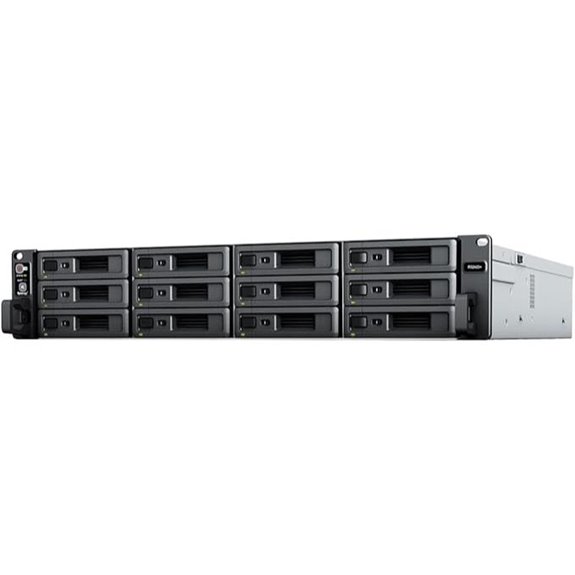 | Scalable Server | Storage Capacity: 12 bays (expandable to 24) | Expandability: Supports expansion to 24 drives with RX1223RP | Processor Type: Not specified (enterprise focus) | VIEW LATEST PRICE | See Our Full Breakdown |
| Synology 12 Bay DiskStation DS3622xs+ (Diskless) | 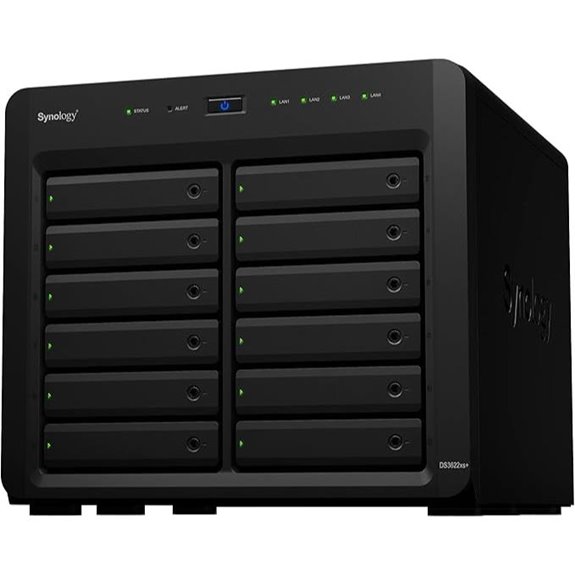 | Performance Champion | Storage Capacity: 12 bays (expandable to 36) | Expandability: Supports expansion to 36 drives with DX1222 units | Processor Type: Intel Xeon 6-core | VIEW LATEST PRICE | See Our Full Breakdown |
| Seagate DX517 5-Bay NAS Expansion with IronWolf Drives | 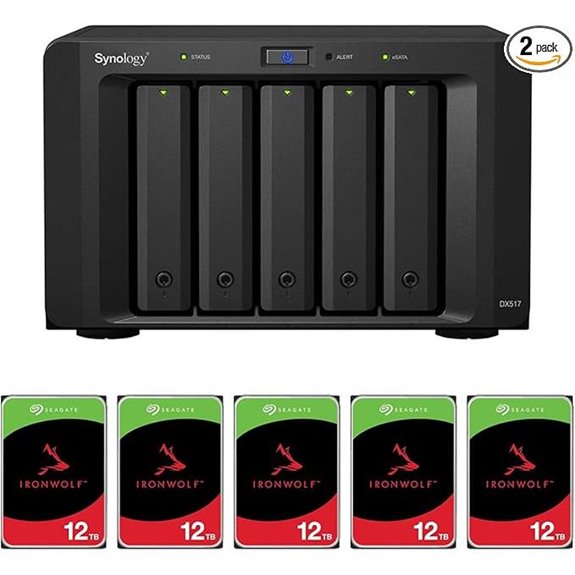 | Expansion Ready | Storage Capacity: 5 bays (expandable with additional units) | Expandability: Supports additional drives via RAID and expansion | Processor Type: Not specified (NAS drives included) | VIEW LATEST PRICE | See Our Full Breakdown |
| QNAP TVS-h874-i5 NAS with 32GB RAM and PCIe Slots | 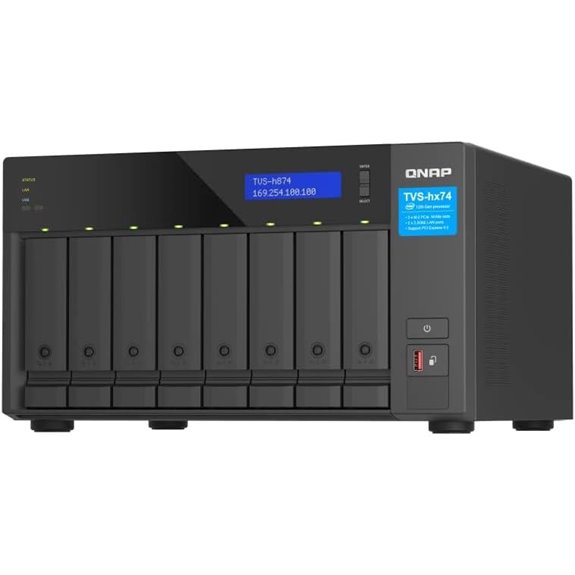 | Multimedia Optimized | Storage Capacity: 8 bays (supports expansion via PCIe and other options) | Expandability: Supports expansion via PCIe slots and M.2 SSDs | Processor Type: Intel Core i5-12400 | VIEW LATEST PRICE | See Our Full Breakdown |
More Details on Our Top Picks
Synology 12-Bay DiskStation DS2422+ (Diskless)
Looking for a powerful NAS that can handle large-scale data and multiuser environments? The Synology 12-Bay DiskStation DS2422+ (Diskless) is an excellent choice. It features a robust quad-core CPU, 4GB of RAM (expandable to 32GB), and supports NVMe SSD caching. With 10/25GbE networking, it offers read speeds up to 2,201 MB/s and write speeds up to 1,383 MB/s. You can scale it to 24 drives using the DX1222 expansion, making it perfect for demanding applications like video storage, VM hosting, and surveillance. Its high performance and expandability make it ideal for enterprise environments.
- Storage Capacity:12 bays (expandable to 24)
- Expandability:Supports expansion to 24 drives with DX1222
- Processor Type:Quad-core ARM or x86 (Intel)
- RAM Capacity:4GB (expandable to 32GB)
- Network Support:10/25GbE (high-speed networking)
- Software Ecosystem:Synology DiskStation Manager (DSM)
- Additional Feature:Supports NVMe SSD cache
- Additional Feature:10/25GbE networking
- Additional Feature:Expandable to 24 drives
Synology 12-Bay RackStation RS2423RP+ (Diskless)
The Synology RackStation RS2423RP+ (diskless) is an ideal choice for IT professionals and small to medium businesses seeking a reliable, scalable NAS solution. It’s a 2U, 12-bay model designed for central data storage, sharing, backup, and recovery. With support for up to 24 drives using the RX1223RP expansion, it offers flexible growth. Features like hot-swappable drives, online volume expansion, dual power supplies, and high-availability clustering ensure maximum uptime and data protection. Suitable for protecting infrastructure, managing surveillance, and supporting business applications, this NAS combines performance with advanced redundancy, making it a versatile addition to any enterprise storage environment.
- Storage Capacity:12 bays (expandable to 24)
- Expandability:Supports expansion to 24 drives with RX1223RP
- Processor Type:ARM-based (not specified)
- RAM Capacity:32GB (expandable to 64GB)
- Network Support:Standard Ethernet, no specific high-speed mention
- Software Ecosystem:Synology DSM
- Additional Feature:Dual power supplies
- Additional Feature:High-availability clustering
- Additional Feature:Supports online volume expansion
Synology 12-Bay RackStation RS2423+ (Diskless)
For enterprises seeking scalable, high-availability storage solutions, the Synology 12-Bay RackStation RS2423+ (Diskless) stands out as an excellent choice. It supports up to 24 drives when combined with the RX1223RP Expansion Unit, offering flexible growth. Hot-swappable drives make maintenance easy, while online volume expansion guarantees capacity increases without downtime. The device includes license-free tools for backup, replication, and recovery, enhancing data protection. Its high-availability clustering assures service uptime, safeguarding critical infrastructure. Designed for demanding enterprise environments, this NAS provides reliable, scalable storage that adapts to evolving needs, making it a top contender for large-scale storage solutions.
- Storage Capacity:12 bays (expandable to 24)
- Expandability:Supports expansion to 24 drives with RX1223RP
- Processor Type:Not specified (enterprise focus)
- RAM Capacity:Not specified
- Network Support:Standard Ethernet
- Software Ecosystem:Synology DSM
- Additional Feature:License-free backup solutions
- Additional Feature:Hot-swappable drives
- Additional Feature:Enterprise-grade scalability
Synology 12 Bay DiskStation DS3622xs+ (Diskless)
If you’re managing large-scale business storage, the Synology DiskStation DS3622xs+ stands out as a top choice thanks to its robust scalability and enterprise-grade performance. This 12-bay NAS features a powerful 6-core Intel Xeon processor, supporting demanding workloads like surveillance, virtual machines, and video editing. It can expand to 36 drives with two DX1222 units, offering over 260,000 4K random read IOPS and speeds up to 4,700 MB/s read and 2,400 MB/s write. Supporting up to 48 GB of RAM and advanced networking options like 10/25GbE, it’s designed for high throughput, flexibility, and future growth, making it ideal for enterprise environments.
- Storage Capacity:12 bays (expandable to 36)
- Expandability:Supports expansion to 36 drives with DX1222 units
- Processor Type:Intel Xeon 6-core
- RAM Capacity:48GB
- Network Support:10/25GbE, Fibre Channel
- Software Ecosystem:Synology DSM
- Additional Feature:6-core Intel Xeon CPU
- Additional Feature:Fibre Channel support
- Additional Feature:Over 260,000 4K IOPS
Seagate DX517 5-Bay NAS Expansion with IronWolf Drives
Seagate DX517 5-Bay NAS Expansion is an ideal solution for users seeking to seamlessly expand their existing Synology NAS capacity without sacrificing performance. It comes with five 12TB IronWolf drives, offering a total of 60TB of additional storage. The unit supports both 2.5” and 3.5” SATA drives, providing flexible scalability. With fast data transfer via eSATA and RAID management through Synology DSM, it ensures reliable, protected storage. Designed for 24/7 operation, it features dual 80mm fans for cooling and hot-swappable drives, minimizing downtime and maximizing uptime. This expansion is perfect for demanding data workloads and large-scale storage needs.
- Storage Capacity:5 bays (expandable with additional units)
- Expandability:Supports additional drives via RAID and expansion
- Processor Type:Not specified (NAS drives included)
- RAM Capacity:Not specified
- Network Support:Not specified
- Software Ecosystem:Synology DSM
- Additional Feature:5-bay expansion
- Additional Feature:Includes 12TB IronWolf drives
- Additional Feature:Equipped with dual 80mm fans
QNAP TVS-h874-i5 NAS with 32GB RAM and PCIe Slots
The QNAP TVS-h874-i5 NAS stands out for those seeking high-performance storage with versatile expansion options, thanks to its powerful Intel Core i5-12400 processor and PCIe Gen 4 slots. With 32GB of DDR4 RAM, expandable to 64GB, it handles demanding workloads effortlessly. Its 8 drive bays support diskless setups, while dual M.2 NVMe slots enable cache acceleration or additional storage. Network connectivity is enhanced with dual 2.5GbE ports and PCIe options for 10GbE or 25GbE upgrades. Designed for multimedia and business use, it supports 4K media playback, real-time transcoding, and all-encompassing data backup, making it a flexible, enterprise-grade NAS solution.
- Storage Capacity:8 bays (supports expansion via PCIe and other options)
- Expandability:Supports expansion via PCIe slots and M.2 SSDs
- Processor Type:Intel Core i5-12400
- RAM Capacity:32GB (expandable to 64GB)
- Network Support:Dual 2.5GbE, PCIe expansion for 10/25GbE
- Software Ecosystem:QNAP QTS (QNAP ecosystem)
- Additional Feature:PCIe Gen 4 slots
- Additional Feature:HDMI 1.4b output
- Additional Feature:Supports real-time transcoding
Factors to Consider When Choosing 12-Bay NAS Units

When selecting a 12-bay NAS, I focus on your storage capacity needs and how the device will perform under your workload. It’s also important to evaluate scalability options and network features to future-proof your setup. Finally, don’t forget about data protection measures to keep your information safe and secure.
Storage Capacity Needs
Understanding your current data storage needs and anticipating future growth are essential steps when selecting a 12-bay NAS unit. I recommend evaluating how much storage you require now and projecting your needs for the coming years. Check the maximum supported drive bays to confirm your planned expansion is feasible. It’s also important to contemplate whether the NAS supports different drive sizes and types, such as HDDs or SSDs, to optimize both capacity and performance. Keep in mind that RAID configurations can impact usable storage space and provide data redundancy. Lastly, appraise the NAS’s scalability options—making sure it can accommodate upgrades seamlessly without needing a complete replacement. Proper planning ensures your investment is future-proof and meets your long-term storage requirements.
Performance Requirements
Choosing a 12-bay NAS unit isn’t just about capacity; performance factors play a vital role in ensuring the system meets your workload demands. The processor type, core count, and clock speed directly impact how well the NAS can handle multiple tasks simultaneously, from large file transfers to virtualization. Adequate RAM capacity and speed are essential for smooth operation during intensive data workflows, such as media editing. Support for high-speed networking options like 10GbE or 25GbE can dramatically improve transfer rates in multi-user environments. Additionally, features like NVMe SSD caching can boost read/write speeds, reducing latency and enhancing responsiveness. Finally, consider the system’s scalability and compatibility with expansion units and cache drives, ensuring your NAS can grow with your performance needs over time.
Scalability Options
Scalability options are vital to guarantee your 12-bay NAS can grow with your storage needs. Many models support expansion units, which can increase capacity from 12 to 24 or more bays, ensuring future growth. Online volume expansion is another key feature, allowing capacity upgrades without system downtime, keeping productivity uninterrupted. Compatibility with expansion modules like DX1222 or RX1223RP is crucial for seamless scalability in enterprise environments. The ability to add drives or expansion units depends on the NAS’s maximum supported bays and hardware compatibility, so it’s essential to verify these limits. Additionally, consider whether the NAS supports scalable networking options, such as 10 or 25GbE, to handle increased data throughput as storage demands expand. These features ensure your investment remains flexible and future-proof.
Network Connectivity Features
When selecting a 12-bay NAS, network connectivity features play a key role in guaranteeing smooth data transfer and reliable performance. I look for units that support high-speed interfaces like 10GbE or 25GbE, which drastically reduce transfer times. Multiple network ports are necessary for link aggregation, load balancing, and redundancy, keeping the system resilient. Compatibility with advanced features such as VLANs, QoS, and network bonding helps optimize network traffic and performance. I also check if the NAS offers PCIe expansion cards to add extra network interfaces or higher-speed options if needed. Finally, seamless integration with existing network infrastructure and support for standard protocols are essential for maintaining compatibility and simplifying setup. These features guarantee efficient, reliable connectivity tailored to large-scale storage needs.
Data Protection Measures
Data protection is essential when selecting a 12-bay NAS, as it safeguards your valuable data against hardware failures and security threats. Implementing RAID configurations like RAID 5 or RAID 6 helps defend against drive failures, ensuring data remains accessible. Regularly updating firmware and software patches security vulnerabilities, keeping your system safe. Backup solutions such as snapshots and replication add extra layers of security by creating restore points and off-site copies. Encryption of stored data and network traffic prevents unauthorized access and data breaches. Redundant power supplies and UPS integration help maintain data integrity during power outages or hardware failures. These measures work together to ensure your data remains secure, available, and protected against a wide range of potential threats.
Budget Considerations
Choosing the right 12-bay NAS involves careful budget planning, as prices can vary considerably depending on features and performance. Basic models start around a few hundred dollars, while enterprise-grade options can cost several thousand. It’s important to take into account not just the initial purchase but also the costs of hard drives, expansion units, and accessories. Lower-cost NAS units often have limited RAM, slower processors, and fewer features, which could impact performance and scalability. Spending a bit more upfront can offer better future-proofing, such as higher RAM capacity or faster networking options. Always compare the total cost of ownership, including warranty, support, and potential upgrade expenses, to ensure the NAS fits comfortably within your budget and long-term needs.
Frequently Asked Questions
How Do 12-Bay NAS Units Impact Energy Consumption and Heat Output?
I find that 12-bay NAS units tend to consume more energy and generate more heat due to their larger size and increased hardware components. I make sure to choose models with efficient power management features and good cooling systems. Proper ventilation and regular maintenance help me manage heat output, ensuring these powerful devices run smoothly without overheating or wasting excessive energy.
Can 12-Bay NAS Systems Support Virtualization and Multiple OS Environments?
Imagine a bustling control center—12-bay NAS systems can support virtualization and multiple OS environments, just like that center manages various operations smoothly. I’ve seen these units run multiple virtual machines and different OS types with ease, thanks to their powerful processors and ample RAM. They’re perfect for businesses needing flexible, large-scale storage solutions that don’t compromise on virtualization capabilities, making complex workflows efficient and streamlined.
What Are the Best Backup and Disaster Recovery Options for Large-Scale NAS?
For large-scale NAS, I recommend combining regular scheduled backups to offsite locations or cloud services like Backblaze or Amazon S3. I also use snapshot features for quick recovery and RAID configurations for redundancy. Automated disaster recovery plans ensure minimal downtime, and testing backups periodically guarantees data integrity. These strategies give me peace of mind knowing my data is protected against hardware failures or unforeseen disasters.
How Often Should Firmware and Software Updates Be Performed on 12-Bay NAS?
Think of your NAS as a trusted ship sailing the digital seas. I update its firmware and software regularly, ideally once a month or whenever new patches are released. This keeps my system secure and running smoothly, much like sailors checking their equipment before a voyage. Staying current helps prevent vulnerabilities and guarantees peak performance, so I never skip updates — it’s essential for safe, reliable navigation.
Are There Specific Security Features to Protect Sensitive Data on 12-Bay NAS Units?
Yes, there are specific security features I rely on to protect sensitive data on my 12-bay NAS. These include encryption for data at rest and in transit, multi-factor authentication, and robust access controls. I also enable firewall settings, regularly update firmware, and use VPNs for remote access. These measures help guarantee my data stays secure, even in large-scale storage environments.
Conclusion
So, if you’re serious about conquering storage chaos and unbridling unstoppable performance, these 12-bay NAS units are your secret weapons. They’ll turn your data nightmare into a smooth-sailing dream, making your storage needs seem tiny by comparison. Trust me, choosing one of these is like giving your data a first-class VIP pass—nothing else comes close. Get ready to dominate your storage game and leave chaos in the dust!