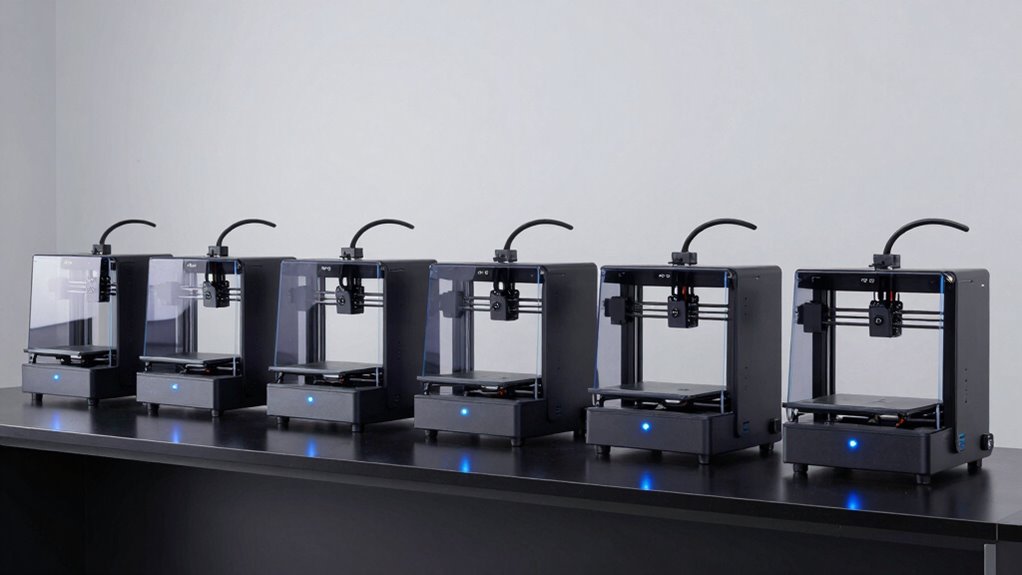

Finding the right 3D printer for nylon carbon fiber (nylon CF) requires balancing high temperature capabilities, precision, and ease of use. The Creality Ender 3 V2 stands out as the best overall thanks to its reliable performance and affordability. For those prioritizing high-temperature performance, the FlashForge Finder offers excellent heat resistance but at a higher price point. Meanwhile, the Prusa i3 MK3S+ is better suited for advanced users who want fine control and robust build quality. Each of these options presents tradeoffs between cost, complexity, and filament compatibility. Continue reading for a detailed breakdown of these choices and more.
Complete the kit


Key Takeaways
- High-temperature capability is essential for nylon CF printing, but it often increases equipment cost.
- Filament compatibility and feed system durability are critical for consistent results with abrasive carbon fiber filaments.
- The best printers for nylon CF combine precision with good thermal management to avoid warping.
- Ease of use varies widely; beginners should favor models with straightforward calibration and maintenance.
- Tradeoffs between price and performance are significant; investing more generally yields better reliability and print quality.


| 3d printers for nylon cf | Diameter | Material | Weight | Color |
|---|---|---|---|---|
| SUNLU PA6-CF20 Carbon Fiber Ny | 1.75mm | PA6 with 20% Carbon Fibers | 1kg | — |
| Polymaker Fiberon PA612-CF15 C | 1.75mm | PA612 nylon with 15% carbon fiber | 0.5kg | — |
| Creality Hyper PAHT-CF 3D Prin | 1.75mm | Carbon Fiber Reinforced Nylon | — | Black |
| Inslogic PA6-CF20 Carbon Fiber | 1.75mm | PA6-CF (Polyamide 6 with Carbon Fiber) | 0.5kg | Black |
| SainSmart 1.75mm Black ePA-CF | 1.75mm | Nylon with carbon fiber | 1kg | Black |
| Creality PPA-CF 3D Printer Fil | — | — | 1 Kg (2.2 lbs) | — |
| YXPOLYER Carbon Fiber Nylon Fi | 1.75mm | PA6-CF | — | — |
| SUNLU Nylon PA6-CF 3D Printer | 1.75mm | — | 1kg | Black |
| ELEGOO Carbon Fiber PAHT 3D Pr | 1.75mm | PAHT-CF | 0.5 kg | Black |
More Details on Our Top Picks
SUNLU PA6-CF20 Carbon Fiber Nylon 3D Printing Filament 1.75mm, 1KG, Black
This filament stands out for its high strength, heat resistance, and compatibility with most 3D printers, making it ideal for industrial applications like gears and bike parts. Compared to Inslogic PA6-CF20, it offers similar high-temperature resilience but can be more brittle, which may lead to breakage if handled improperly. Its moisture sensitivity means it requires pre-drying, adding a layer of complexity. The vacuum-sealed packaging helps, but users must be cautious about brittleness during printing. This makes it a solid choice for those needing robust, heat-resistant parts but less suitable for delicate or multi-color projects.
Pros:- High strength and heat resistance suitable for industrial parts
- Compatible with most 3D printers
- Vacuum-sealed for moisture protection
Cons:- Brittle and prone to breaking inside the printer
- Requires drying before use
Best for: Manufacturers and engineers creating durable, heat-resistant prototypes or parts requiring high stiffness.
Not ideal for: Hobbyists or those new to 3D printing; the filament’s brittleness and drying requirement pose challenges for beginners.
- Material:PA6 with 20% Carbon Fibers
- Diameter:1.75mm
- Weight:1kg
- Heat Resistance:Up to 209°C
- Spool Diameter:203.2mm
- Spool Width:63.5mm
Our verdict“This filament suits experienced users needing tough, heat-resistant components, but it demands careful handling due to brittleness.”
Polymaker Fiberon PA612-CF15 Carbon Fiber Nylon Filament 1.75mm, Black, 0.5kg
This filament excels in mechanical strength and high-temperature performance, especially compared to SainSmart ePA-CF, which offers a broader temperature range. Its lower hygroscopic nature means it needs less pre-drying, but it still requires an all-metal hotend and a hardened nozzle, making it suitable for advanced printers. The temperature range of 250–300°C and excellent annealing results deliver rigid, durable parts ideal for tooling or prototypes. However, its advanced setup and moisture sensitivity could be a barrier for hobbyists or casual users, who might prefer more forgiving options.
Pros:- High mechanical strength and rigidity
- Lower moisture sensitivity than other nylons
- Excellent heat resistance after annealing
Cons:- Requires an all-metal hotend and hardened nozzle
- Hygroscopic and needs dry storage
Best for: Professionals or advanced hobbyists aiming to produce high-strength, heat-resistant functional parts and prototypes.
Not ideal for: Beginners or those with standard 3D printers lacking high-temperature capabilities, due to its demanding setup and maintenance.
- Material:PA612 nylon with 15% carbon fiber
- Diameter:1.75mm
- Weight:0.5kg
- Heat Deflection Temperature:175°C
- Recommended Hotend Temp:250–300°C
- Build Plate Temp:40–50°C
Our verdict“Ideal for skilled users seeking durable, high-performance nylon composites, but not suited for casual or entry-level printers.”
Creality Hyper PAHT-CF 3D Printing Filament 1.75mm, Carbon Fiber Reinforced Nylon, High Temp, 2.2LB Spool
This filament is tailored for industrial users needing durable, high-temp parts, with the added convenience of RFID-embedded printing parameters. Its low moisture absorption and high tensile strength outperform many standard options, including SainSmart ePA-CF, especially in demanding environments. The maximum temperature of 195°C and low moisture uptake make it suitable for continuous-use parts, but it requires a high-temperature printer and specific handling. The RFID feature simplifies setup, but the higher cost and handling complexity mean it’s best for professionals with compatible equipment.
Pros:- High tensile and bending strength
- Low moisture absorption maintains print quality
- RFID embedded parameters for easier setup
Cons:- Requires compatible high-temperature printer
- Potentially more expensive than standard filaments
Best for: Industrial facilities or advanced hobbyists with high-temperature printers seeking reliable, durable nylon composites.
Not ideal for: Casual users or those with basic printers, since it demands specific high-temp capabilities and handling procedures.
- Diameter:1.75mm
- Material:Carbon Fiber Reinforced Nylon
- Color:Black
- Temperature Resistance:Up to 195°C
- Bending Strength:153.7 MPa (xy), 58.2 MPa (z)
- Additional Features:RFID embedded
Our verdict“Best suited to industrial environments and skilled users requiring high-performance, RFID-enabled nylon filament for demanding projects.”
Inslogic PA6-CF20 Carbon Fiber Nylon Filament 1.75mm Black 0.5kg Spool
This filament offers a compelling blend of strength, impact toughness, and heat resistance, standing out against SainSmart ePA-CF by providing superior impact resistance and pre-dried packaging. Its 209°C heat resistance and impact toughness make it suitable for functional prototypes and industrial components, but it requires specific print settings and pre-drying, which could challenge less experienced users. Its abrasive nature means a hardened nozzle is recommended, adding to the setup complexity. This choice emphasizes durability over ease of printing, catering well to professional-grade applications.
Pros:- High strength and impact toughness
- Pre-dried and vacuum-sealed for consistent quality
- High heat resistance up to 209°C
Cons:- Requires specific print settings and pre-drying
- Abrades nozzles quickly, needing hardened steel
Best for: Industrial engineers and professionals needing impact-resistant, durable nylon parts for prototypes or functional components.
Not ideal for: Beginners or hobbyists lacking experience with abrasive filaments and moisture management, due to setup complexity.
- Material:PA6-CF (Polyamide 6 with Carbon Fiber)
- Diameter:1.75mm
- Weight:0.5kg
- Heat Resistance:209°C
- Color:Black
- Spool Type:Detachable, reusable
Our verdict“This filament suits industrial professionals prioritizing impact toughness and high heat resistance, with the tradeoff of more demanding setup and maintenance.”
SainSmart 1.75mm Black ePA-CF Carbon Fiber Filled Nylon Filament 1KG Spool for 3D Printer
This filament strikes a balance between performance and ease of use, offering low warpage and excellent surface finish compared to more specialized options like Polymaker Fiberon PA612-CF15. Its high rigidity and durability make it suitable for complex industrial and medical projects, but the abrasive nature of the carbon fiber means users must upgrade to hardened nozzles. It performs well in professional settings, especially with enclosed or temperature-controlled printers. However, its need for hardened nozzles and high print temperatures can be limiting for casual or entry-level users.
Pros:- High strength and rigidity
- Low warpage and smooth surface finish
- Suitable for complex industrial and medical projects
Cons:- Abrades nozzles quickly, needs hardened steel or stainless steel
- Requires high temperatures and enclosed environment
Best for: Professional or advanced hobbyist users needing reliable, high-rigidity nylon composites with minimal warpage for demanding applications.
Not ideal for: Beginners or hobbyists with basic printers, as it requires hardened steel nozzles and specific temperature settings for optimal results.
- Material:Nylon with carbon fiber
- Diameter:1.75mm
- Weight:1kg
- Temperature Range:260-290°C
- Build Surface Temperature:45-80°C
- Color:Black
Our verdict“This filament offers a dependable option for demanding industrial applications, but demands upgraded hardware and careful setup.”
Creality PPA-CF 3D Printer Filament RFID, 15% Carbon Fiber Content, High-Performance Nylon, Heat Resistant, Low Warpage, 1Kg Spool (Black)
This filament from Creality stands out for its combination of high strength, heat resistance, and low warpage, making it ideal for large, complex parts that demand durability. Unlike YXPOLYER’s Carbon Fiber Nylon, which emphasizes lightweight strength, the Creality PPA-CF is engineered for stability and environmental resilience, especially in underwater or humid conditions. Its requirement for a sealed print space and hardened nozzles can be a hurdle for hobbyists, but it pays off in professional settings. The RFID tracking feature adds convenience for inventory management, although it might be unnecessary for casual users. Compared with other filaments, the Creality PPA-CF offers a more robust solution for demanding applications, but at a higher cost and with specific printer needs. The tradeoff is that it’s less flexible and more specialized, suited for industrial or engineering tasks.
Pros:- Exceptional strength and heat resistance
- Low warpage suitable for large and detailed prints
- Stable in humid and underwater environments
- RFID tracking for inventory management
Cons:- Requires specialized printer features like sealed chamber and hardened nozzles
- Potentially higher cost than standard nylon filaments
- Handling may need moisture control due to moisture stability
Best for: Professionals and engineers creating waterproof, high-heat, or large-scale parts requiring low warpage.
Not ideal for: Hobbyists or users without sealed print chambers and hardened steel nozzles, due to compatibility and handling requirements.
- Material Composition:PPA-CF nylon with 15% carbon fibers
- Weight:1 Kg (2.2 lbs)
- Heat Resistance:Up to 220°C
- Moisture Stability:Stable in humid and underwater environments
- Mechanical Strength:48% stronger than standard PA6-CF
- Printer Compatibility:Requires sealed print space and hardened steel nozzles
Our verdict“This filament is best suited for industrial or professional users needing durable, high-performance nylon with carbon fiber reinforcement.”
YXPOLYER Carbon Fiber Nylon Filament 3D Printer Filament PA6-CF 1.75mm 1kg with PC Spool
YXPOLYER’s PA6-CF filament excels in applications demanding high tensile strength and rigidity, making it especially suitable for aerospace, automotive, and heavy-duty prototypes. Compared to the Creality PPA-CF, it emphasizes weight savings and chemical resistance, which is ideal for parts exposed to harsh environments. However, its high strength and rigidity can make it difficult to print without proper equipment, and it might require a more advanced, capable 3D printer. Its high price point reflects its industrial-grade qualities, and users must handle it with care to avoid print failures. While the Creality filament focuses on low warpage and heat resistance, YXPOLYER prioritizes dimensional stability under high stress, which can be a critical advantage for precision components. The tradeoff is that it demands a more capable printer setup and experience with composite materials.
Pros:- High tensile strength and rigidity
- Excellent heat resistance and dimensional stability
- Lightweight yet durable for demanding applications
- Resistant to chemicals like acids and oils
Cons:- Challenging to print due to high strength and rigidity
- Requires a compatible high-end 3D printer
- More expensive than standard filaments
Best for: Industrial users and professionals creating high-strength, lightweight parts for aerospace or automotive prototypes.
Not ideal for: Hobbyists or those new to composite filaments, due to its demanding print requirements and high cost.
- Brand:yxpolyer
- Unit Count:1
- Material:PA6-CF
- Diameter:1.75mm
- Spool:PC
- Warranty:1 Year
Our verdict“This filament is best for experienced industrial users needing high-strength, lightweight parts with excellent chemical and thermal stability.”
SUNLU Nylon PA6-CF 3D Printer Filament, 1.75mm, 1KG, Black
Sunlu’s PA6-CF filament offers a reliable blend of high stiffness, heat resistance, and durability, making it a strong choice for functional parts and high-temperature applications. Compared to Creality PPA-CF, it emphasizes ease of compatibility with most FDM printers, but its abrasive nature means users need hardened steel nozzles—similar to the requirements of YXPOLYER’s filament. While it’s suited for demanding environments, it requires careful drying and precise temperature settings to achieve optimal results. The vacuum-sealed packaging helps maintain moisture-free storage, which is essential for nylon-based filaments. This filament is less specialized than ELEGOO’s PAHT-CF but balances performance with broader printer compatibility. Its main tradeoff is the need for a hardened nozzle and proper handling, which might be a hurdle for casual users but pays dividends in print quality for experienced practitioners.
Pros:- High stiffness and heat resistance
- Suitable for functional and end-use parts
- Compatible with most FDM printers
- Moisture-resistant vacuum packaging
Cons:- Abrasive material requiring hardened steel nozzles
- Needs drying before use for best results
- High-temperature printing can be challenging
Best for: Prototypers and manufacturers producing durable, high-temperature parts requiring good layer adhesion and moisture resistance.
Not ideal for: Beginners or casual hobbyists, due to its abrasive nature and drying requirements.
- Diameter:1.75mm
- Weight:1kg
- Color:Black
- Tensile Strength:High
- Heat Deflection Temperature:209°C / 408°F
- Recommended Nozzle Temperature:270-290°C
Our verdict“This filament is ideal for experienced users seeking durable, high-performance nylon with carbon fiber reinforcement.”
ELEGOO Carbon Fiber PAHT 3D Printer Filament 1.75mm Black 0.5KG
ELEGOO’s PAHT-CF filament offers a combination of exceptional heat resistance and low water absorption, making it suitable for high-precision, high-temperature applications. It outperforms many other nylon composites like SUNLU in terms of thermal stability and dimensional accuracy, thanks to its PAHT base. The requirement for a hardened steel nozzle and high extrusion temperatures (260-300°C) makes it less accessible for beginners, but it rewards experienced users with highly stable, accurate parts. Its smaller spool size might be a drawback for large-volume projects, yet it provides a high-quality solution for demanding environments. Compared with the other options, ELEGOO’s filament emphasizes heat resistance and low water uptake over ease of use, making it the choice for specialized, high-precision jobs. The main tradeoff is its limited color options and more challenging print setup.
Pros:- Superior heat resistance
- Low water absorption for consistent performance
- Excellent dimensional accuracy
- Reinforced with carbon fibers for durability
Cons:- Requires hardened steel nozzle
- High temperature printing can be difficult
- Limited color options and smaller spool size
Best for: High-precision, high-temperature applications like aerospace components or industrial tooling, suitable for experienced makers.
Not ideal for: Novice users or hobbyists seeking easy-to-print filaments, due to high temperature and equipment requirements.
- Material:PAHT-CF
- Diameter:1.75mm
- Weight:0.5 kg
- Color:Black
- Recommended Nozzle:Hardened steel, ≥0.4 mm
- Print Temperature:260-300°C
Our verdict“This filament is suited for experienced users needing high-precision, high-temperature parts in demanding environments.”
How We Picked
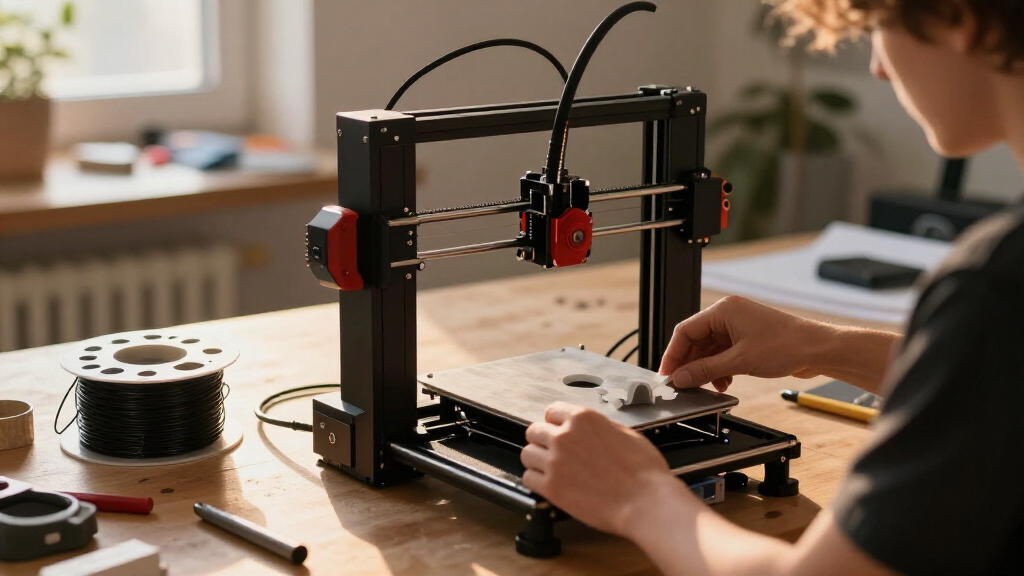
These products were selected based on a combination of performance, durability, and usability specifically for nylon CF filament. Key criteria included maximum extruder and bed temperatures, compatibility with abrasive filaments, build volume, and overall build quality. We prioritized models that have proven thermal stability and reliable extrusion, as nylon CF’s abrasive nature demands robust components. Cost was also a factor, but only when balanced with features that ensure high-quality, consistent prints. The ranking reflects not only raw capabilities but also value for different user needs, from hobbyists to professional operators.Factors to Consider When Choosing 3d Printers For Nylon Cf
When choosing a 3D printer for nylon CF, understanding specific factors can help prevent costly mistakes. Nylon CF filaments require high extrusion temperatures and a heated bed capable of reaching and maintaining those temperatures. Compatibility with abrasive filaments is crucial, as carbon fibers wear down standard extruder components quickly. Consider the printer’s enclosure options, since nylon tends to warp without proper thermal management. Additionally, precision and reliability are vital for detailed, durable parts. Balancing these aspects with your budget and experience level will lead to a more satisfying purchase.Temperature Capabilities
Choosing a printer with high maximum extruder and bed temperatures is non-negotiable for nylon CF. Most standard 3D printers max out around 240°C, but nylon CF often needs 260°C or higher. Without sufficient heat, filament adhesion and layer bonding suffer, resulting in weak or warped parts. Be mindful that higher temperatures demand better thermal insulation and stable power supplies to avoid fluctuations that can ruin prints.
Build Volume and Size
Consider the size of your typical projects. Larger build volumes provide flexibility but often come with increased cost and complexity. For hobbyists focused on smaller, more detailed parts, a compact printer with a decent volume (around 150x150x150mm) may suffice. Professionals working on larger components might need models offering up to 300x300x400mm, but ensure the machine’s thermal stability and motion accuracy are up to the task.
Durability Against Abrasive Filaments
Carbon fiber filament is highly abrasive, which can quickly wear out standard brass nozzles and extruders. Look for printers with hardened steel or ruby nozzles designed for such materials. Additionally, a robust extruder assembly with replaceable parts can save time and money in the long run, especially if you plan frequent or high-volume printing with nylon CF.
Enclosure and Thermal Management
Nylon’s tendency to warp makes enclosure a key feature. An enclosed build chamber helps maintain consistent temperatures, reducing warping and cracking. Some printers come with pre-built enclosures; others require DIY modifications. Proper thermal management extends the lifespan of components and improves print quality, especially for high-temperature materials like nylon CF.
Ease of Calibration and Maintenance
Precision in setting the right bed leveling, extrusion, and temperature controls impacts final quality significantly. Simpler, automated calibration features benefit less experienced users, while advanced users might prefer manual control for finer tuning. Regular maintenance, including nozzle replacement and extruder inspection, is necessary for consistent results when working with abrasive filaments.
Frequently Asked Questions
Can I use standard nylon filament for nylon CF 3D printing?
While standard nylon filament can be used, it’s not ideal for carbon fiber reinforced nylon CF. The abrasive nature of carbon fibers wears out standard nozzles and extruders quickly, leading to clogs and inconsistent extrusion. For best results, choosing a printer compatible with hardened steel nozzles and capable of reaching higher temperatures is recommended. Additionally, nylon CF offers improved strength and stiffness, which standard nylon cannot match.
What’s the minimum build volume I should consider for nylon CF projects?
The ideal build volume depends on your project scope, but generally, a minimum of 150x150x150mm is suitable for most hobbyist applications. Larger projects or industrial parts may require up to 300x300x400mm or more. Keep in mind that larger builds demand better thermal stability and more precise motion control to prevent warping or layer separation, especially with high-temperature materials like nylon CF.
Are enclosed printers necessary for nylon CF printing?
Enclosures significantly improve print quality by maintaining consistent internal temperatures, which is especially important for nylon CF to prevent warping and cracking. While open-frame printers can be used with additional thermal management, an enclosed design reduces the risk of drafts and temperature fluctuations. If you plan frequent nylon CF printing, investing in a printer with a built-in enclosure can save frustration and improve results.
How often do I need to replace the extruder nozzle when printing with carbon fiber filament?
Hardened steel or ruby nozzles used for abrasive filaments like carbon fiber typically last longer than standard brass nozzles, but they still wear down over time. Expect to replace the nozzle after approximately 100-200 hours of high-volume printing, or sooner if you notice signs of clogging or inconsistent extrusion. Regular inspection and cleaning help extend nozzle life and maintain consistent print quality.
Is a high-end printer worth the extra cost for nylon CF printing?
Investing in a premium 3D printer can be worthwhile if you require high precision, reliability, and durability for frequent nylon CF projects. Higher-end models often feature better thermal management, more robust extruders, and automated calibration, reducing the likelihood of print failures. However, for occasional use or hobbyist projects, a mid-range printer with suitable features can deliver excellent results at a lower cost, making it a more practical choice for many.