
If you’re looking for top astronomy laptops with long battery life, I recommend the NIMO 15.6″ FHD model with 16GB RAM and 1TB SSD, offering excellent portability and power for extended stargazing. The ACEMAGIC 17.3″ FHD laptop provides a larger display and about five hours of battery life, perfect for immersive sessions. Additionally, the lightweight Celeron N5095 laptop with 12GB RAM and 512GB SSD balances performance with portability. If you want to learn more about each option, stay tuned for detailed insights.
Key Takeaways
- Look for laptops with high-capacity batteries and energy-efficient processors, such as Intel U-series or AMD Ryzen U-series.
- Prioritize models with adjustable or anti-glare displays to conserve power during outdoor stargazing.
- Consider lightweight, portable laptops like the ACEMAGIC 17.3″ model for extended outdoor use without fatigue.
- Check for multiple connectivity options (USB-C, HDMI, Wi-Fi 6) to connect telescopes and external devices easily.
- Select devices with durable build quality and weather resistance suited for outdoor research environments.

NIMO 17.3" FHD Gaming Laptop, 6-Core AMD Ryzen 5 6600H 32GB DDR5 RAM 1TB SSD (Beat i7-1165G7) Radeon 660M with 100W Fast PD Fingerprint Backlit Keyboard & Privacy Webcam for Student 2-Yr Warranty
【2-Year Warranty | 90-Day Returns】Official 2-year manufacturer warranty safeguards your laptop hardware long-term. We offer 90-day hassle-free returns...
As an affiliate, we earn on qualifying purchases.
NIMO 15.6″ FHD Laptop with 16GB RAM and 1TB SSD

Are you looking for a reliable, stylish laptop that can handle your astronomy software and multitasking needs? The NIMO 15.6″ FHD Laptop in Rose Gold is a great choice. It features 16GB of RAM and a 1TB SSD, providing fast performance and ample storage for your data and applications. The Full HD IPS display offers clear visuals, perfect for stargazing and research. Equipped with an Intel Pentium N100 Quad-Core processor, it handles multiple tasks smoothly. Plus, the backlit keyboard and fingerprint scanner add convenience and security. With a 2-year warranty and Windows 11 pre-installed, this laptop combines style, function, and reliability for any astronomy enthusiast.
Best For: students, astronomy enthusiasts, and professionals seeking a stylish, reliable laptop with ample storage and smooth multitasking capabilities.
Pros:
- Large 15.6″ Full HD IPS display for clear, vivid visuals
- 16GB RAM and 1TB SSD ensure fast performance and extensive storage
- Backlit keyboard and fingerprint scanner enhance usability and security
Cons:
- Powered by an Intel Pentium N100 processor, which may be less suitable for intensive tasks
- Rose Gold color may not appeal to all users’ preferences
- Slightly heavier than ultra-portable ultrabooks, affecting portability

ACEMAGIC 2024 Laptop,17.3-Inch FHD Display Laptop with Quad Core-12th Alder Lake N97(Up to 3.6GHz), 16GB RAM 512GB ROM Business Laptop Computer, 6000Mah Battery,Silver
【Powerful Capabilities】 ACEMAGIC AX17 Laptop computer powered by latest 12th generation Alder Lake N97 processor (4C/4T, 6MB Cache,12W,...
As an affiliate, we earn on qualifying purchases.
ACEMAGIC 2024 17.3-Inch FHD Business Laptop
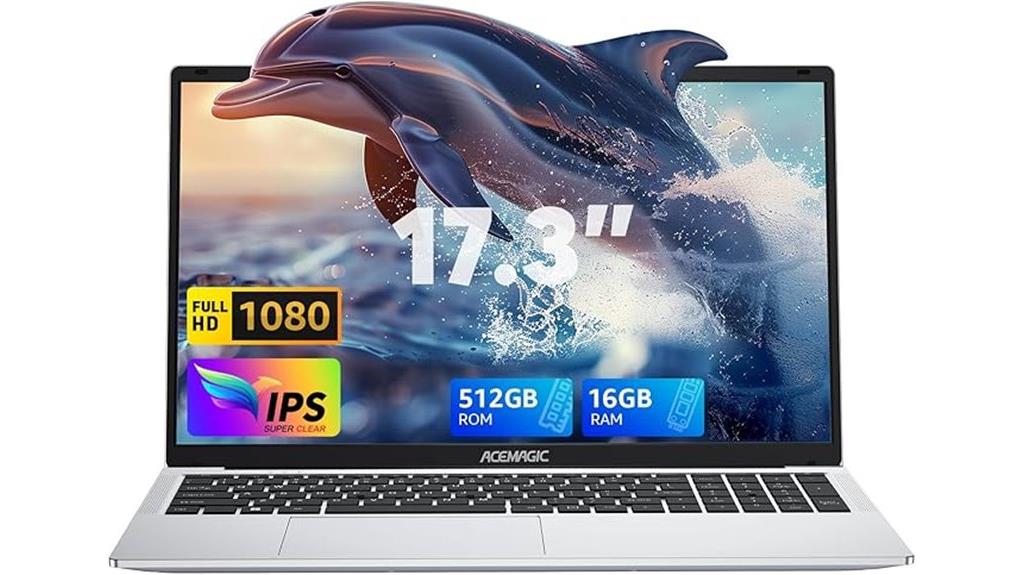
The ACEMAGIC 2024 17.3-Inch FHD Business Laptop stands out for its large, immersive display, making it an excellent choice for astronomy enthusiasts who need detailed visuals of celestial charts or star maps. Its 17.3-inch FHD IPS screen with thin bezels offers ample viewing space while maintaining a compact design. Powered by a 12th gen Intel Alder Lake processor, 16GB RAM, and a 512GB SSD, it delivers solid performance for multitasking and data analysis. Weighing just 4.4 pounds, it’s portable enough for stargazing trips. The battery lasts around five hours, and WiFi 802.11ac guarantees fast connectivity for research or streaming celestial events.
Best For: astronomy enthusiasts and stargazing hobbyists who need a portable, high-performance laptop with a large display for detailed celestial visuals.
Pros:
- Large 17.3-inch FHD IPS display with thin bezels for immersive viewing
- Powerful 12th gen Intel Alder Lake processor with 16GB RAM and 512GB SSD for smooth multitasking
- Lightweight and portable at 4.4 pounds, ideal for travel and outdoor observations
Cons:
- Battery life of approximately five hours may be limited for extended outdoor use
- Only supports data transfer via Type-C port, with no dedicated HDMI or SD card slots for expanded connectivity
- Rated 3.7 out of 5 stars from customer reviews, indicating some users may experience performance or build quality issues

CFVOCUY Laptop Computer, 15.6'' FHD IPS Student Laptops, Celeron N5095 4-Core Processor, 12GB RAM + 512GB SSD up to Expandable 1TB, 2.4G+5G WiFi, 2 Years Warranty, Long Battery Life
【Jasper Lake N5095 Processor】Powered by the robust Jasper Lake N5095 processor, up to 2.8 GHz). Powerful Student Laptop...
As an affiliate, we earn on qualifying purchases.
Laptop Computer with 15.6″ FHD IPS Screen, Celeron N5095, 12GB RAM, 512GB SSD, WiFi 2.4G+5G, 2-Year Warranty

Looking for a reliable laptop that balances performance and portability for astronomy enthusiasts? This 15.6-inch FHD IPS laptop features a Celeron N5095 processor with up to 2.8 GHz, 12GB RAM, and a 512GB SSD, ensuring smooth multitasking and quick data access. Its vivid display offers immersive visuals with reduced eye strain, perfect for long stargazing sessions or research. Weighing around 3 pounds, it’s lightweight and easy to carry, with Wi-Fi 2.4G+5G for fast connectivity. The 2-year warranty and long battery life make this an excellent choice for extended use in the field or at home.
Best For: astronomy enthusiasts and field researchers seeking a lightweight, reliable laptop with strong performance and long battery life for extended outdoor use.
Pros:
- Powerful Intel Celeron N5095 processor with up to 2.8 GHz for smooth multitasking
- Bright 15.6-inch FHD IPS display with reduced eye strain for long viewing sessions
- Lightweight design (~3 pounds) with long battery life and fast connectivity options
Cons:
- Limited to integrated graphics, not ideal for high-end gaming or intensive graphic design
- Expandable storage is up to 1TB, which may be insufficient for extremely large data sets
- May lack some higher-end features found in premium laptops, such as higher refresh rates or advanced GPU options
Factors to Consider When Choosing Astronomy Laptops With High Battery Life
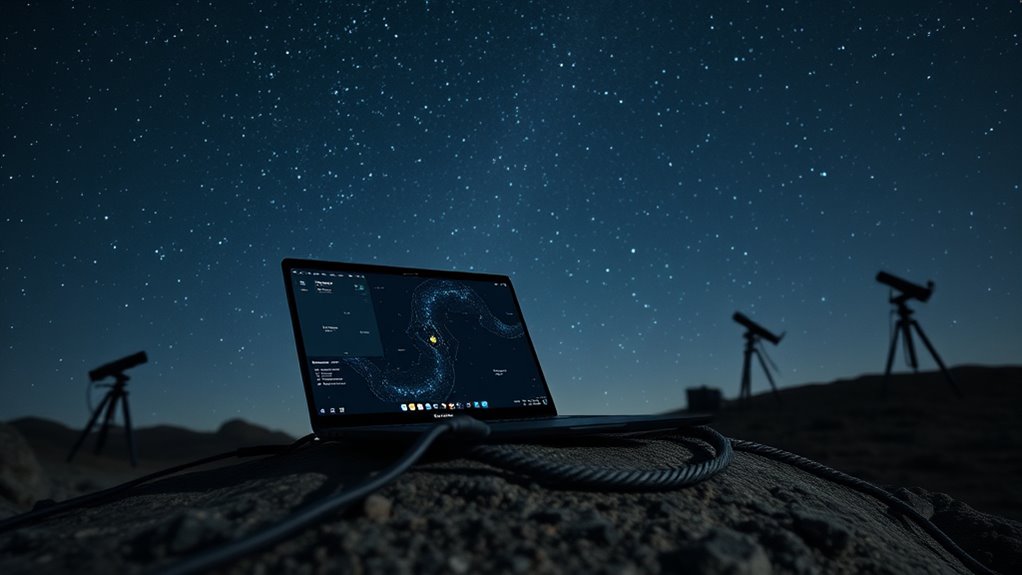
When choosing an astronomy laptop with high battery life, I consider how long I need it to last during extended stargazing sessions. I look for energy-efficient features and bright displays that save power without sacrificing visibility. Balancing processing power and portability is key to selecting a device that’s both powerful and easy to carry around.
Battery Longevity Expectations
Choosing an astronomy laptop with high battery life is essential for ensuring you can enjoy extended observation sessions without constantly searching for power sources. The expected battery longevity depends heavily on usage; some models can last up to 12-15 hours during lightweight tasks, which is ideal for fieldwork. Keep in mind that battery performance may degrade over time, so opting for larger capacity batteries or fast-charging features can help maintain reliable power during long sessions. Real-world battery life is also affected by factors like screen brightness, wireless connectivity, and background processes. Understanding these expectations helps you plan effectively, ensuring you’re not caught short during remote stargazing or research activities. Choosing a laptop with solid battery longevity means fewer interruptions and more time spent exploring the night sky.
Power Efficiency Features
To maximize battery life during long astronomy sessions, focusing on power efficiency features built into modern laptops is essential. Many laptops use low-voltage processors like Intel U-series or AMD Ryzen U-series, which consume less energy while still handling astronomy apps effectively. Integrated graphics and energy-saving display technologies, such as IPS panels with optimized modes, help reduce overall power use. Advanced power management settings allow me to fine-tune CPU and display activity, extending battery life during extended observations. Using solid-state drives (SSDs) instead of traditional HDDs markedly cuts power consumption. Additionally, larger capacity batteries, efficient power adapters, and software that minimizes background processes and adjusts screen brightness further enhance power efficiency, ensuring my laptop lasts through those long stargazing sessions without interruption.
Display Brightness Levels
Adjusting display brightness is essential for balancing visibility and power efficiency during long astronomy sessions. Higher brightness levels, around 300 nits or more, improve visibility in bright outdoor conditions, making it easier to see star maps and data. However, brighter screens consume more power, reducing battery life. Many laptops offer adjustable brightness settings, allowing me to find a sweet spot that preserves battery while maintaining clear visibility. Some models even feature automatic brightness adjustment based on ambient light, which helps conserve power without sacrificing screen clarity. Maintaining moderate brightness levels can markedly extend battery life, especially during extended stargazing or research sessions. Ultimately, choosing a laptop with flexible brightness controls ensures I can optimize both eye comfort and battery performance for any environment.
Processing Power Needs
When considering laptops for astronomy, processing power plays a key role in handling complex simulations, data analysis, and real-time calculations. A high-performance processor, like the latest Intel Alder Lake or similar, allows for faster rendering of astronomical images and smoother operation of demanding software. Multi-core processors with higher clock speeds enable me to multitask efficiently, running star mapping, planetarium, and telescope control programs simultaneously without lag. Processing power directly impacts the ability to perform detailed data analysis and run simulations quickly, which is essential for research and stargazing. However, I also have to balance this need with battery life, ensuring that I can complete high-performance tasks in the field without frequent recharging. An ideal mix of power and efficiency is vital.
Portability and Weight
Since portability is essential for fieldwork and travel, choosing a lightweight and slim laptop makes a significant difference. Laptops with long battery life are often designed with this in mind, featuring materials like aluminum or magnesium alloys that reduce weight without sacrificing durability. A lower wattage processor and minimal power-hungry components help extend battery life and make the laptop easier to carry. Smaller screens, such as 15.6 inches instead of 17.3 inches, also contribute to lighter weight and increased portability. Battery capacity, measured in milliampere-hours or watt-hours, directly impacts how long you can operate without recharging while keeping the device manageable to transport. Overall, a balance of lightweight design and high-capacity batteries ensures convenience during outdoor stargazing or research sessions.
Software Optimization
Choosing astronomy laptops with optimized software is essential for maximizing battery life during extended observational sessions. Efficient software reduces unnecessary background processes and manages system resources effectively, ensuring minimal power drain. Properly optimized applications can lower CPU and GPU usage, which directly extends battery longevity during long stargazing or data analysis periods. Regular updates and patches often include power-saving improvements that enhance overall software efficiency, making your laptop more energy-conscious. Compatibility with power management settings allows astronomy applications to adjust their performance based on battery levels, conserving energy when needed most. Additionally, lightweight and streamlined software reduces system load, further preserving battery life during remote observations or fieldwork. Prioritizing software optimization helps you get the most out of your laptop’s battery during critical observation times.
Connectivity Options
To guarantee seamless data transfer and device connectivity during extended astronomy sessions, it’s essential to select a laptop with robust connectivity options. Ensure it supports Wi-Fi 6 (802.11ax) or higher for faster, more reliable wireless connections, especially when streaming star maps or transferring large datasets. Multiple USB ports, including USB-C and USB 3.2, are vital for connecting external telescopes, cameras, and drives efficiently. HDMI or DisplayPort outputs allow you to connect to larger screens or projectors for detailed star maps and data visualization. Built-in Bluetooth 5.0 or higher enables wirelessly connecting peripherals like sensors or remote controls. Additionally, a dedicated Ethernet port or high-speed adapters are valuable for stable wired internet in remote or low-interference environments.
Build Durability
When selecting a laptop for astronomy, durability often takes center stage because it guarantees your device can handle the rigors of outdoor use and extended field sessions. I look for laptops with sturdy chassis materials like metal or reinforced plastics to resist daily transport and environmental stress. High-quality hinges and secure keyboard assemblies are essential to prevent damage from repeated opening and closing. I also prioritize models tested to meet military-grade standards or similar certifications for shock, vibration, and temperature resistance, ensuring they can withstand outdoor conditions. Reinforced screens with protective coatings help prevent scratches and cracks during observations. Additionally, spill-resistant keyboards and sealed ports protect internal components from accidental liquid exposure, making the laptop reliable in unpredictable outdoor environments.
Frequently Asked Questions
How Does Screen Size Affect Battery Longevity During Stargazing?
A larger screen size typically drains the battery faster during stargazing because it requires more power to illuminate a bigger display. I’ve noticed that when I use a smaller, more energy-efficient screen, my laptop lasts longer, giving me more time to observe the night sky. So, if you want extended battery life, opting for a smaller or more power-efficient display can make a noticeable difference during long stargazing sessions.
Are There Specific Processor Types That Conserve Battery Better?
I find that processors like Intel’s U-series and AMD’s Ryzen mobile chips tend to conserve battery better, especially during long stargazing sessions. These processors are designed for efficiency, balancing performance with power savings. I recommend opting for laptops with these chipsets if you want extended battery life. They handle astronomy software smoothly while keeping energy consumption low, letting you explore the stars longer without constantly searching for an outlet.
What Software Optimizations Help Extend Battery Life for Astronomy Tasks?
Imagine you’re observing the stars, and your laptop’s battery suddenly drains. To prevent that, I optimize software by enabling power-saving modes and adjusting display brightness. For instance, reducing screen refresh rates and limiting background processes can markedly extend battery life. Disabling unnecessary notifications and closing unused applications also help. These tweaks make sure you get the most out of your astronomy laptop during long stargazing sessions or research.
Can External Accessories Impact the Laptop’s Battery Performance?
External accessories can definitely impact my laptop’s battery performance. When I connect devices like external drives, webcams, or high-powered displays, they draw additional power, which drains the battery faster. Using accessories with their own power sources helps conserve my laptop’s battery. I also make a habit of disconnecting unnecessary peripherals when not in use to extend my battery life during long stargazing or research sessions.
How Important Is Battery Health Management for Long-Term Use?
Honestly, battery health management is the secret sauce for long-term use—without it, your laptop’s lifespan could be cut short faster than a shooting star. I make sure to avoid full discharges and keep the battery cool, which surprisingly makes my device last longer. It’s ironic how something so simple can preserve your investment and keep you stargazing well into the future. Don’t overlook this small but mighty habit!
Conclusion
Choosing the right astronomy laptop isn’t just about specs—it’s about finding a reliable companion for those long nights under the stars. With great battery life, a clear display, and solid performance, these options can make your stargazing and research more enjoyable. Remember, a good tool is worth its weight in gold, so pick wisely. After all, the early bird catches the worm, but the prepared astronomer catches the best sights.