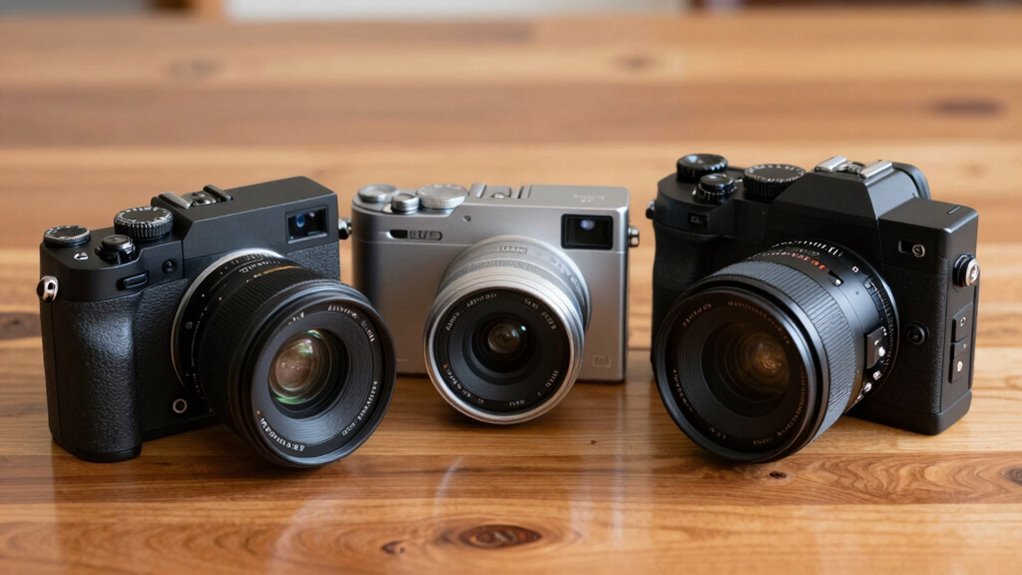

In 2026, I recommend the Sony FX2 Compact Cinema Camera Bundle, the full-frame Sony Alpha FX3, and the Sony Cinema Line FX30 Super 35 for professional filmmaking. These models offer a great balance of image quality, low-light performance, and portability, making them ideal for various shooting scenarios. Each camera provides versatile recording formats and robust build quality, ensuring long-term value. Keep exploring to discover more details that can help you choose the perfect fit.
Key Takeaways
- Look for models offering full-frame sensors with excellent low-light performance and high dynamic range for professional-quality footage.
- Prioritize cameras with versatile recording formats like ProRes, X-OCN, and RAW for flexible post-production workflows.
- Choose compact, lightweight designs with robust connectivity options (HDMI, SDI, Wi-Fi) for seamless multi-camera setups.
- Evaluate battery life, hot-swappable power options, and durability to support long shooting sessions and demanding environments.
- Opt for models that balance advanced features with affordability, ensuring long-term value and compatibility with professional accessories.
| Sony FX2 Compact Cinema Camera Bundle |  | Creative Powerhouse | Sensor Type: Full-frame 10.2MP Exmor R sensor | Video Resolution: 4K up to 60p | Recording Formats: Internal ProRes | VIEW LATEST PRICE | See Our Full Breakdown |
| Sony Alpha FX3 | ILME-FX3A | Full-Frame Cinema Line Camera | 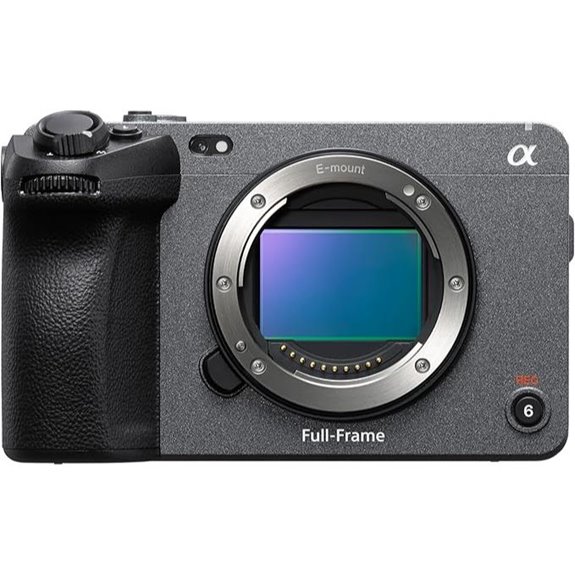 | Professional Versatility | Sensor Type: Full-frame 15+ stop dynamic range sensor | Video Resolution: 4K up to 120p | Recording Formats: 10-bit 4:2:2 | VIEW LATEST PRICE | See Our Full Breakdown |
| SONY Cinema Line FX30 Super 35 Camera |  | Cinematic Flexibility | Sensor Type: Super 35mm 20.1MP Exmor R APS-C sensor | Video Resolution: 4K | Recording Formats: Embedded LUTs and flexible modes | VIEW LATEST PRICE | See Our Full Breakdown |
More Details on Our Top Picks
Sony FX2 Compact Cinema Camera Bundle
Are you a filmmaker looking for a compact camera that doesn’t compromise on quality? The Sony FX2 Compact Cinema Camera Bundle is precisely that. It features a 10.2MP full-frame Exmor R sensor, delivering stunning 4K at 120fps with internal ProRes recording. Its 33MP sensor provides cinematic clarity and excellent low-light performance, thanks to back-illumination and dual ISO (800/4000). The camera supports oversampled 4K60p from 7K and 120fps in Full HD for slow-motion. Compact and lightweight, it includes professional accessories like a versatile lens, high-speed SD card, and a cooling system for hours of reliable shooting. It’s perfect for on-the-move filmmaking.
- Sensor Type:Full-frame 10.2MP Exmor R sensor
- Video Resolution:4K up to 60p
- Recording Formats:Internal ProRes
- Color Profiles:S-Log3, S-Cinetone
- Cooling System:Built-in silent cooling system
- Connectivity/Build:Professional autofocus, internal ND, versatile ports
- Additional Feature:Built-in cooling system
- Additional Feature:Advanced autofocus system
- Additional Feature:Versatile connectivity options
Sony Alpha FX3 | ILME-FX3A | Full-Frame Cinema Line Camera
The Sony Alpha FX3 stands out as an ideal choice for professional filmmakers who need a compact, yet powerful cinema camera. Its cage-free design with multiple mounting points and an XLR top handle makes it versatile and easy to rig. The full-frame 4K sensor delivers stunning image quality with over 15 stops of dynamic range and high sensitivity, perfect for challenging lighting conditions. It supports up to 4K 120p recording in 10-bit 4:2:2, with full pixel readout in all modes. An in-body cooling fan ensures uninterrupted recording, while S-Cinetone colorimetry provides a cinematic look inspired by VENICE.
- Sensor Type:Full-frame 15+ stop dynamic range sensor
- Video Resolution:4K up to 120p
- Recording Formats:10-bit 4:2:2
- Color Profiles:S-Cinetone
- Cooling System:In-body cooling fan
- Connectivity/Build:XLR top handle, compact cage-free design
- Additional Feature:Compact cage-free design
- Additional Feature:XLR top handle
- Additional Feature:High sensitivity sensor
SONY Cinema Line FX30 Super 35 Camera
If you’re looking for a compact cinema camera that delivers professional-grade image quality, the Sony Cinema Line FX30 Super 35 stands out with its 20.1 MP Exmor R APS-C sensor. It offers a wide dynamic range for detailed images and dual Base ISO with a 14+ stop range, enhancing low-light performance and latitude. The camera features S-Cinetone for a cinematic look straight out of the box, along with flexible modes like Cine EI, Quick, and Log, enabling tailored shooting styles. Its support for user LUTs on LCD, HDMI, and embedded clips provides great post-production flexibility. Designed for professional filmmaking, the FX30 combines high resolution, versatile controls, and impressive color science.
- Sensor Type:Super 35mm 20.1MP Exmor R APS-C sensor
- Video Resolution:4K
- Recording Formats:Embedded LUTs and flexible modes
- Color Profiles:S-Cinetone, user LUTs
- Cooling System:Designed for professional use, assumed cooling
- Connectivity/Build:Multiple modes, flexible output options
- Additional Feature:Super 35mm sensor
- Additional Feature:Multiple shooting modes
- Additional Feature:User LUT support
Factors to Consider When Choosing Compact Cinema Cameras
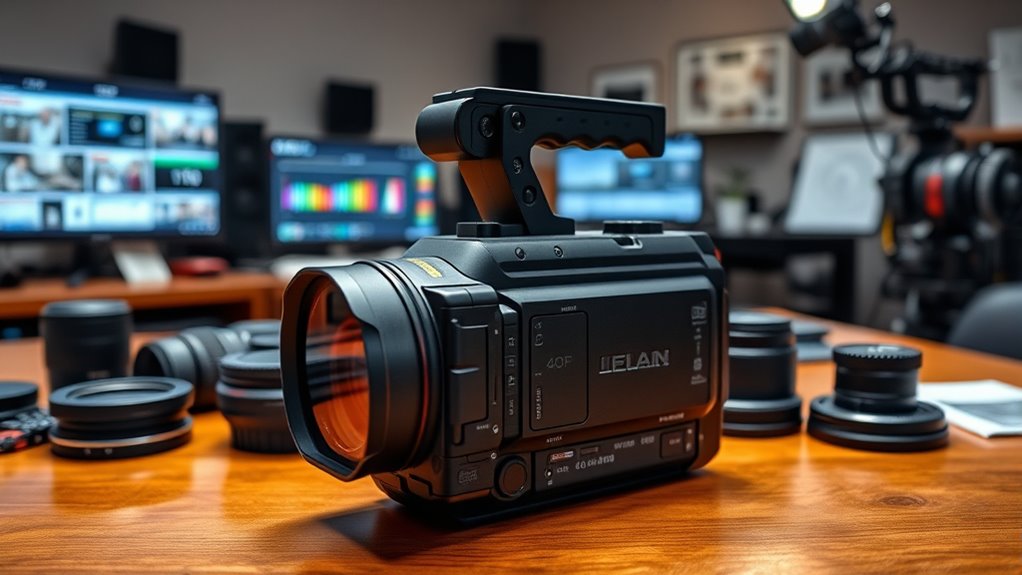
When choosing a compact cinema camera, I focus on image quality, low-light performance, and recording formats to match my project needs. Size and portability matter for on-the-go shoots, while battery life influences how long I can film without interruptions. Considering these factors helps me select a camera that balances performance and practicality for my work.
Image Quality Capabilities
Choosing a compact cinema camera with excellent image quality hinges on understanding key factors that influence visual output. Sensor size plays a major role; full-frame sensors typically deliver better depth of field and low-light performance compared to smaller formats. A higher resolution sensor, such as 20.1 MP or 33 MP, provides detailed images and flexibility for cropping and scaling in post-production. Dynamic range, often exceeding 14 stops in professional models, ensures you retain detail in both shadows and highlights, making grading more cinematic. Advanced color science, including profiles like S-Cinetone or S-Log, allows for rich tones straight from the camera with extensive grading options. Dual ISO capabilities further improve image quality by reducing noise across varied lighting conditions, ensuring cleaner, more professional-looking footage.
Low-Light Performance
Have you ever struggled to get clear footage in dim lighting? That’s where low-light performance really matters. In compact cinema cameras, sensor size plays a key role—larger sensors capture more light, producing cleaner images in darkness. Dual ISO capabilities help optimize sensitivity, reducing noise across various lighting conditions. Back-illuminated sensors further boost performance by allowing more light to reach each pixel, resulting in clearer images even when it’s dark. High ISO settings, like ISO 102,400, enable shooting in near-dark environments while maintaining acceptable quality. Additionally, advanced noise reduction and cinematic profiles such as S-Log3 and S-Cinetone help retain detail and color fidelity. These features combined ensure you can capture professional-quality footage, even in challenging low-light scenarios.
Recording Formats Options
Selecting the right recording format is essential because it directly affects your footage’s quality, compatibility, and post-production workflow. Many cinema cameras offer options like ProRes, RAW, and H.264 or H.265, giving you versatile choices. Internal formats such as ProRes and X-OCN enable you to record high-quality, edit-ready footage right from the camera, eliminating the need for external recorders. However, higher-quality codecs like RAW and ProRes demand more storage space, so you’ll need larger drives or faster cards. Some cameras support dual-format recording, allowing you to capture both a high-quality and compressed version simultaneously—perfect for quick reviews or backups. Advanced models often provide multiple formats and resolutions, giving you the flexibility to tailor your workflow to your project’s specific needs.
Size and Portability
When considering recording formats, it’s important to remember that size and portability also play a key role in the overall filmmaking experience. Compact cinema cameras are designed to be lightweight and easy to carry, making them perfect for on-the-go shooting and quick setups. Their smaller size simplifies transportation and storage, often eliminating the need for bulky cases. This form factor also allows filmmakers to access tight or tricky spaces where larger cameras would be unwieldy. Plus, their portability makes handheld shooting and dynamic camera movements more practical, giving filmmakers greater creative freedom. Despite their compact design, many of these cameras pack advanced features that deliver professional-quality footage, proving that size doesn’t compromise performance.
Battery and Power
Ever wondered how long your compact cinema camera can keep filming without needing a break? Battery life varies based on sensor size, recording settings, and power management, typically lasting between 1 to 3 hours of continuous shooting. Many models feature hot-swappable batteries, so you can swap out power sources without stopping your shoot, which is essential for extended sessions. External power options like DC inputs or V-mount/B-mount batteries offer even longer filming times. Efficient power consumption helps maintain stable performance, especially outdoors or in remote locations. Battery management features such as low-battery indicators, automatic shutoff, and power-saving modes protect your equipment and prevent unexpected shutdowns, ensuring your shoot stays on track without interruptions.
Connectivity Features
Choosing the right connectivity features is crucial for ensuring your compact cinema camera integrates smoothly with your workflow. I look for models with multiple options like HDMI, SDI, and USB ports, so I can connect external monitors, recorders, or other devices seamlessly. Built-in Wi-Fi and Ethernet are essential for quick wireless file transfers and remote camera control, saving time on set. Professional audio integration matters too, so I check for XLR or 3.5mm inputs to support high-quality microphones. Synchronization features like timecode and genlock ports are critical when working with multiple cameras or professional gear, ensuring perfect sync. Additionally, proprietary or open-standard apps for remote monitoring via smartphones or tablets streamline operations, giving me better control and real-time feedback during shoots.
Price and Value
The price of compact cinema cameras varies widely, so it’s essential to contemplate how much you’re willing to invest and what features you need. High-end models can cost several thousand dollars, so balancing your budget with desired capabilities is key. When evaluating value, compare features and performance relative to cost to guarantee the camera fits your filmmaking needs. Investing in models with versatile recording formats and rich color profiles offers better long-term value, especially for professional projects. However, more affordable options may lack advanced features but still produce satisfactory image quality for entry-level or hobbyist work. Also, consider durability, battery life, and accessory compatibility, as these factors influence overall value and how well the camera will serve your filmmaking goals over time.
Frequently Asked Questions
How Do Compact Cinema Cameras Compare to Traditional Cinema Cameras?
Compact cinema cameras are more portable and versatile than traditional cinema cameras, making them ideal for quick setups and on-the-go shooting. While traditional models often offer higher image quality and advanced features, compact cameras still deliver excellent footage with modern technology. I find them perfect for tight spaces or when I need to move fast, without sacrificing too much on quality. They’re a game-changer for many professional projects today.
What Is the Typical Battery Life for These Compact Models?
The battery life on these compact cinema cameras is astonishing—often lasting up to 3 hours of continuous shooting, which feels like an eternity compared to traditional models. I’ve been amazed at how they pack such stamina into a tiny body, making long shoot days more manageable. While some models might dip slightly below that, I find most offer enough juice for entire filming sessions without constant recharging, keeping my workflow smooth.
Are There Any Notable Accessories Compatible With These Cameras?
I’ve found that many of these compact cinema cameras support a range of useful accessories like external microphones, portable lights, and wireless transmitters. I love adding follow-focus systems and high-capacity batteries to extend shooting time. Most models are compatible with standard rigs and mounts, making it easy to customize setups. Just double-check specific models for compatibility, but overall, the accessory ecosystem is robust and very helpful for professional filmmaking.
How Do Compact Cameras Perform in Low-Light Filming Conditions?
I find that compact cinema cameras perform quite well in low-light conditions, especially newer models equipped with larger sensors and advanced noise reduction. They often feature fast lenses that help gather more light, which is essential in dim settings. I recommend using high ISO settings carefully and stabilizing your shot to minimize grain. Overall, these cameras deliver impressive results when filming in challenging lighting, making them versatile tools for professional filmmakers.
What Are the Storage Options and Data Management Features?
I look for cameras with versatile storage options like SD cards, CFast, or SSD slots, so I can choose the best for my workflow. I also prioritize cameras with dual card slots for seamless redundancy and faster data transfer. Data management features like built-in software for file organization, quick transfer, and backup options help me stay efficient on set, ensuring my footage stays safe and easily accessible.
Conclusion
Choosing the right compact cinema camera can truly elevate your filmmaking. Imagine capturing stunning, cinematic shots effortlessly, like a professional filmmaker on a set. Whether it’s the Sony FX2’s versatility, the FX3’s full-frame excellence, or the FX30’s super 35 power, each offers unique advantages. I’ve seen indie filmmakers turn small projects into big-screen experiences with these tools. Trust your needs, and you’ll find a camera that transforms your creative vision into reality.