In 2025, the top cooled CMOS astro cameras for deep sky imaging are the Astromania SGCMOS Series and the SVBONY SV605CC. The Astromania offers excellent thermal management and high sensitivity, while the SVBONY provides a high-resolution sensor with impressive cooling and low noise. Both deliver stellar image quality and compatibility for serious astrophotographers. Keep exploring to discover detailed features and how these models could elevate your deep sky captures.
Key Takeaways
- The Astromania SGCMOS Series offers high sensitivity and advanced thermal management for precise deep sky imaging.
- The SVBONY SV605CC features a 9MP IMX533 sensor with over 80% QE, ideal for detailed long-exposure astrophotography.
- Both cameras support versatile connectivity, including USB 3.0 and Wi-Fi, for flexible remote operation and software integration.
- Their cooling systems significantly reduce thermal noise, enhancing image clarity during extended exposures of faint celestial objects.
- Top-rated models in 2025 emphasize sensor quality, cooling efficiency, and compatibility with astrophotography software for optimal results.
Astromania SGCMOS Series Telescope CMOS Camera
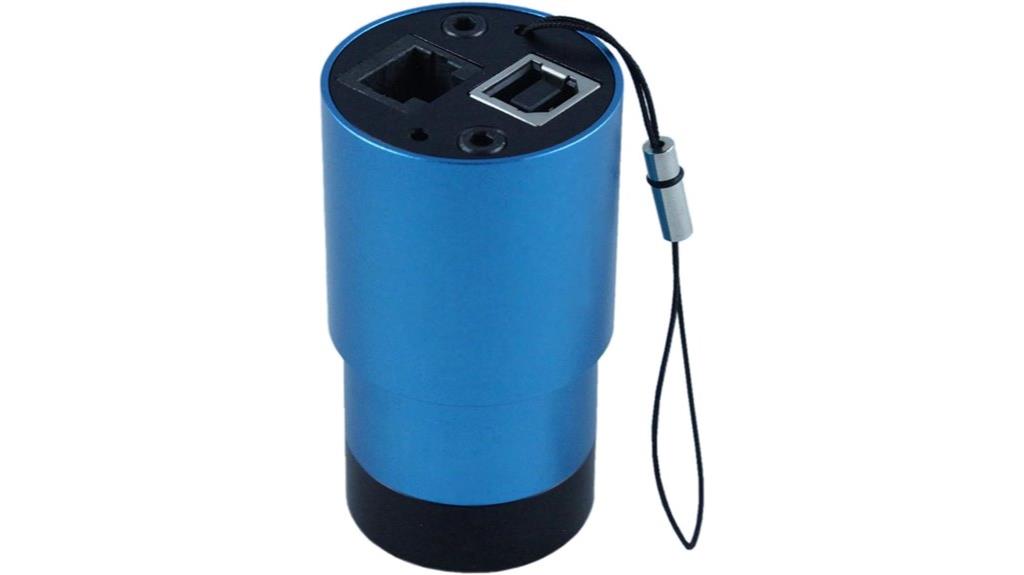
If you’re serious about astrophotography, the Astromania SGCMOS Series Telescope CMOS Camera is an excellent choice because it combines high sensitivity with fast frame rates and long exposure capabilities. Its carefully selected sensor captures multicolor images, making it versatile for various astrophotography types. The aluminum CNC housing with a thermal design ensures efficient heat dissipation, maintaining ideal performance. Its 1.25-inch nosepiece allows precise focusing and compatibility with filters. Plus, it features a built-in ST4 auto guider port and supports multiple drivers like ASCOM, making integration seamless. Overall, it’s a powerful, user-friendly camera perfect for capturing stunning deep-sky images.
Best For: amateur and professional astrophotographers seeking a versatile, high-performance camera capable of capturing detailed multicolor deep-sky images with easy integration into existing setups.
Pros:
- High sensitivity and fast frame rate for capturing dynamic astrophotography scenes
- Compatible with 1.25-inch filters and standard industrial lenses, offering flexibility
- Built-in ST4 auto guider port and seamless driver support (ASCOM/WDM) for easy operation
Cons:
- Slightly heavier packaging weight may require sturdy mounts
- May involve a learning curve for beginners unfamiliar with astrophotography software
- Limited to USB 2.0 connectivity, which might be slower compared to newer interfaces
SVBONY SV605CC Cooled Astronomy Camera

The SVBONY SV605CC cooled astronomy camera stands out for its high-resolution 9MP IMX533 CMOS sensor, making it ideal for deep sky imaging enthusiasts who demand detailed and high-quality captures. Its 1-inch square frame with 3008×3008 resolution and 80% quantum efficiency guarantee sharp, vibrant images. The double-layer refrigeration cools the sensor to 30°C below ambient, reducing noise and CMOS glow for clearer results. Compact and lightweight, it connects via USB 3.0 and supports Wi-Fi for wireless control. Perfect for astrophotographers seeking precise small-target observations, the SV605CC offers versatile applications from deep space to meteor monitoring.
Best For: amateur and professional astronomers seeking high-resolution, low-noise deep sky images with versatile astrophotography capabilities.
Pros:
- High-resolution 9MP IMX533 CMOS sensor delivers detailed, vibrant images.
- Effective double-layer refrigeration reduces noise and CMOS glow for clearer astrophotography.
- Supports wireless control via Wi-Fi and connects seamlessly through USB 3.0 for versatile operation.
Cons:
- Manual focus may require additional adjustments for optimal clarity.
- IP54 rating provides limited dust and water resistance, suitable mainly for outdoor use in moderate conditions.
- Customer rating of 3.9 stars indicates mixed reviews regarding ease of use and performance.
Factors to Consider When Choosing Cooled CMOS Astro Cameras for Deep Sky Imaging
When selecting a cooled CMOS astro camera, I focus on key factors like sensor sensitivity and quantum efficiency to guarantee I capture faint details. I also consider cooling performance to minimize noise and improve image quality, along with resolution and pixel size for sharp, detailed shots. Additionally, I check compatibility with my setup and software options to streamline my imaging process effectively.
Sensor Sensitivity and QE
Sensor sensitivity plays a vital role in deep sky imaging because it determines how well a cooled CMOS astro camera can detect faint light from distant celestial objects. High sensitivity allows the camera to gather more photons, revealing details that might otherwise stay hidden. Quantum Efficiency (QE) measures the percentage of incoming photons converted into electrical signals, directly affecting image brightness and clarity. Cameras with QE above 80% enable shorter exposures and improved image quality in low-light conditions. Cooled CMOS sensors further enhance sensitivity by reducing thermal noise, allowing for more accurate detection of dim objects. When combined, high sensitivity and QE empower astrophotographers to capture detailed, high-contrast images of faint deep sky targets, making these factors essential in selecting an ideal cooled CMOS camera.
Cooling Efficiency and Noise
Have you ever wondered how cooled CMOS astro cameras achieve such clear images of faint deep sky objects? The key is their effective cooling systems, which lower sensor temperatures to cut thermal noise and dark current. Double-layer semiconductor refrigeration can cool sensors up to 30°C below ambient, drastically reducing image noise during long exposures. Cooler sensors also help suppress CMOS glow, a common background noise source. The cooling efficiency directly affects the signal-to-noise ratio, allowing for more detailed captures of faint objects. Proper cooling management ensures consistent image quality by maintaining stable sensor temperatures throughout extended sessions. This stability is vital for deep sky imaging, where even minor temperature fluctuations can considerably impact noise levels and image clarity.
Resolution and Pixel Size
Selecting the right cooled CMOS astro camera involves balancing resolution and pixel size to achieve ideal image quality. Higher resolution cameras with more megapixels capture finer details of deep sky objects but often require longer processing times. Smaller pixel sizes, like 3.76μm, enable higher image resolution and better detail, which is ideal for capturing intricate structures. However, smaller pixels gather less light, potentially increasing noise in low-light conditions. Larger pixels, on the other hand, collect more light, improving the signal-to-noise ratio and sensitivity. Pixel size also affects the camera’s field of view and image scale, influencing how much sky you can capture in a single shot. Finding the right balance depends on your target objects and imaging preferences, ensuring optimal clarity and sensitivity.
Compatibility and Connectivity
Choosing the right cooled CMOS astro camera means guaranteeing it can easily connect with your existing gear. Look for compatible interfaces like USB 3.0, Wi-Fi, or USB 2.0 to ensure smooth data transfer and remote operation. Check that the camera supports standard connection types such as C-mount or 1.25-inch nosepieces, so it fits your telescope accessories. Confirm the presence of drivers like ASCOM or WDM, which are essential for seamless integration with software and auto-guiding systems. If you plan on auto-guiding, verify that an auto-guiding port (e.g., ST4) is available. Finally, consider whether the camera fits well within your mount and software ecosystem, as compatibility guarantees a hassle-free imaging process and reliable results.
Software Integration Options
Ensuring your cooled CMOS astro camera integrates smoothly with your preferred software is essential for efficient deep sky imaging. Look for cameras that support standard drivers like ASCOM, INDI, or native software, which enable seamless connection with popular imaging programs. Compatibility with third-party astrophotography software allows for remote control, automated imaging sequences, and advanced data processing, saving time and improving results. Support for SDKs and APIs empowers you to develop custom tools or integrate with specialized automation systems, enhancing flexibility. Wi-Fi connectivity offers wireless control and simplifies setup, especially in remote observatories. Additionally, compatibility with software that handles dark frame subtraction, image stacking, and raw data output provides greater post-processing control, ultimately leading to higher-quality images.
Size, Weight, and Mounting
The size and weight of cooled CMOS astro cameras play a significant role in how easily they can be integrated into your imaging setup. Compact models, around 6.5 x 6.3 x 8.5 inches, are more portable and easier to mount, ideal for those with limited space or traveling setups. Heavier cameras, over 3.5 pounds, require sturdy, compatible mounts to guarantee stability during long exposures. The camera’s physical dimensions also impact compatibility with various telescope focuser sizes and accessories. Proper mounting is essential; whether you choose an equatorial or altazimuth mount, it must support the camera’s weight securely for precise tracking. Considering size and weight helps prevent equipment strain and guarantees smooth, reliable operation during deep sky imaging sessions.
Price and Budget Factors
Price and budget considerations are essential when selecting a cooled CMOS astro camera for deep sky imaging, as they directly influence the features and performance you can access. Cooled CMOS cameras vary widely in cost, from budget-friendly options to high-end systems costing thousands. Lower-priced models often have simpler cooling technology, which may limit their ability to reduce noise during long exposures. Remember to factor in additional expenses like filters, adapters, and software, as these can considerably increase your total investment. Entry-level cameras are more affordable but offer fewer advanced features, potentially impacting image quality. Investing slightly more can open better cooling efficiency, higher resolution, and longer exposure capabilities—crucial for capturing faint deep sky objects with clarity and detail.
Frequently Asked Questions
How Do Cooled CMOS Cameras Compare to CCD Cameras for Deep Sky Imaging?
Cooled CMOS cameras generally offer better affordability, faster data readout, and lower power consumption compared to CCD cameras, making them ideal for deep sky imaging. While CCDs traditionally provided higher sensitivity and lower noise, recent advancements have narrowed this gap. I find cooled CMOS cameras perfect for hobbyists and enthusiasts because they deliver high-quality images without the hefty price tag, all while being easier to operate and maintain.
What Is the Typical Lifespan of Cooled CMOS Sensors in Astrophotography?
Think of a cooled CMOS sensor as a seasoned explorer, charting the depths of the cosmos. Typically, it lasts around 5 to 10 years with proper care, much like a reliable companion. Its longevity depends on factors like usage, environmental conditions, and maintenance. I’ve found that regular cleaning and avoiding extreme temperatures can extend its life, allowing me to capture the universe’s wonders for many years to come.
Are There Specific Software Compatibilities Needed for These Cameras?
Yes, specific software compatibilities matter for cooled CMOS astro cameras. I recommend checking if the camera supports popular astrophotography software like SharpCap, NebulaStudio, or PHD2 guiding. Most modern cameras are compatible with ASCOM drivers or direct SDKs, making integration easier. Before purchasing, I always verify the camera’s compatibility with my software setup to guarantee smooth operation and ideal image capturing.
How Much Does Temperature Stability Impact Image Quality in Cooled CMOS Cameras?
Temperature stability is like the steady heartbeat of my imaging process; it keeps noise at bay and guarantees clarity. When temperatures fluctuate, my images can become grainy or blurry, much like a painting smudged by inconsistent brushstrokes. Maintaining a stable temperature in my cooled CMOS camera minimizes these issues, allowing me to capture sharper, more detailed deep sky images. Consistent thermal control truly elevates my astrophotography game.
Can Cooled CMOS Cameras Be Used Effectively With Amateur Telescopes?
Absolutely, cooled CMOS cameras work great with amateur telescopes. I’ve used them myself and found they greatly improve image quality by reducing noise, especially during long exposures. They’re versatile and can be paired with various telescope types, from small refractors to larger Schmidt-Cassegrains. Just make certain your setup has proper adapters and power. With a little practice, you’ll enjoy stunning deep sky images right from your backyard!
Conclusion
If you’re serious about capturing the cosmos, these cooled CMOS cameras are game-changers—they’ll reveal details so stunning, they’ll blow your mind! Whether you choose the Astromania SGCMOS or the SVBONY SV605CC, you’re getting top-tier tech that transforms deep sky imaging into an awe-inspiring adventure. Don’t settle for less; your passion deserves the best gear out there. Trust me, upgrading today will make your astrophotography dreams come to life in ways you never imagined!