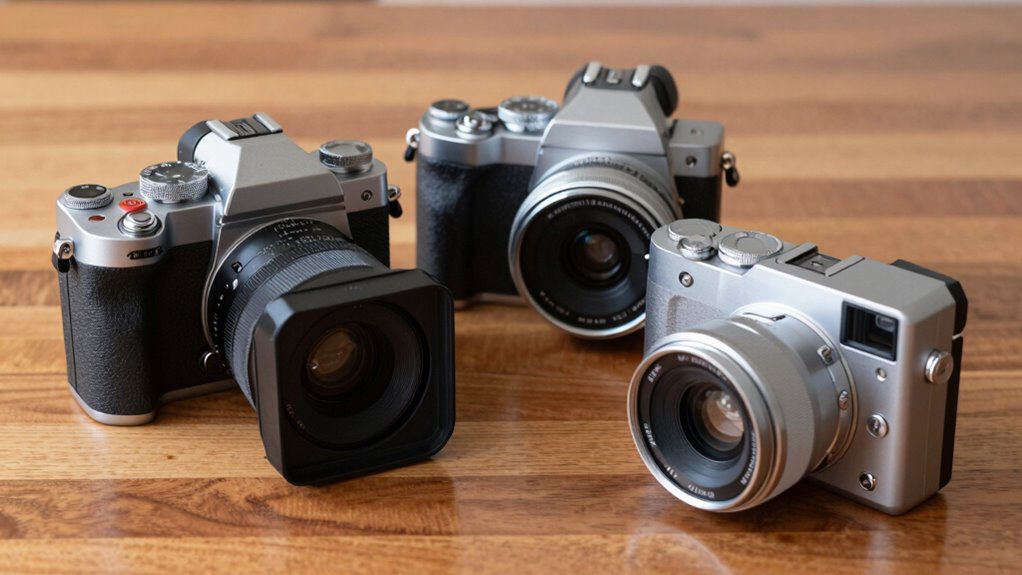

Medium format cameras are renowned for their exceptional image quality, larger sensors, and professional-grade performance. The Fujifilm GFX100 II stands out as the best overall choice, offering a balanced mix of resolution, speed, and usability. The Hasselblad X2D II 100C is an excellent premium option for those prioritizing build quality and color depth, while the Fujifilm GFX100S provides impressive value for serious enthusiasts. Buyers face a tradeoff between cost, size, and feature set, making it essential to understand what each camera offers. Continue reading for a detailed breakdown of these top picks and what makes each unique.

Get the latest gadgets delivered free — and shop member deals
- Fast, free delivery on millions of items
- Access to Prime Big Deal Days deals on October 6–7
- Prime Video, Amazon Music and more included
Complete the kit



Key Takeaways
- The top-ranked cameras balance high resolution with reliable autofocus, crucial for professional work.
- Price varies significantly, with premium models offering superior build quality and color science, but at a higher cost.
- Sensor size and resolution are key differentiators, impacting image detail and post-processing flexibility.
- Many models now feature advanced video capabilities, appealing to hybrid shooters.
- Choosing the right medium format camera depends heavily on intended use, whether studio, landscape, or commercial photography.
| Fujifilm GFX100RF Medium Format Camera – Black |  | Best Overall for Versatile Medium Format Photography | Compatible Mountings: Fujifilm G | Sensor Type: BSI CMOS | Image Stabilization: Sensor-shift | VIEW ON AMAZON | See Our Full Breakdown |
| Hasselblad X2D II 100C Medium Format Mirrorless Camera |  | Best for Professional-Grade Color and Autofocus | Compatible Mountings: Hasselblad XCD | Sensor Type: CMOS | Image Stabilization: Sensor-shift | VIEW ON AMAZON | See Our Full Breakdown |
| Fujifilm GFX 100S Body – Black |  | Best for All-Around High-Resolution Performance | Sensor: 102MP large format CMOS | Processor: X-Processor 4 | Image Stabilization: In-Body Image Stabilization (IBIS) | VIEW ON AMAZON | See Our Full Breakdown |
| Fujifilm GFX100RF Medium Format Camera – Silver |  | Best for Classic Rangefinder Style with Modern Features | Compatible Mountings: Fujifilm G | Sensor Type: CMOS | Internal ND Filter: Yes | VIEW ON AMAZON | See Our Full Breakdown |
| Hasselblad X2D 100C 100MP Medium Format Mirrorless Camera |  | Best for High-End Studio and Commercial Use | Sensor: 100MP medium format BSI CMOS | Dynamic Range: 15 stops | Image Stabilization: 5-axis, 7-stop IBIS | VIEW ON AMAZON | See Our Full Breakdown |
| Fujifilm GFX100 II Mirrorless Medium Format Camera Body |  | Best for Professional Image Quality and Versatile Video | Sensor: 102MP medium format (55mm diagonal) | Video Recording: 4K/60p, 8K/30p RAW | Viewfinder: 9.44M dot EVF at 120fps | VIEW ON AMAZON | See Our Full Breakdown |
| medium format camera | Image Stabilization | Compatible Mountings | Sensor Type | Photo Sensor Resolution |
|---|---|---|---|---|
| Fujifilm GFX100RF Medium Forma | Sensor-shift | Fujifilm G | BSI CMOS | 100 mp |
| Hasselblad X2D II 100C Medium | Sensor-shift | Hasselblad XCD | CMOS | 100 MP |
| Fujifilm GFX 100S Body | In-Body Image Stabilization (IBIS) | — | — | — |
| Fujifilm GFX100RF Medium Forma | — | Fujifilm G | CMOS | 102 mp |
| Hasselblad X2D 100C 100MP Medi | 5-axis, 7-stop IBIS | — | — | — |
| Fujifilm GFX100 II Mirrorless | up to 8 stops (IBIS) | — | — | — |
More Details on Our Top Picks
Fujifilm GFX100RF Medium Format Camera – Black
The Fujifilm GFX100RF stands out for its combination of high resolution, portability, and unique rangefinder style. With a 102MP sensor, it delivers exceptional detail that surpasses many competitors like the Hasselblad X2D II, especially in size and weight. Its compact form makes it easier to carry during long shoots, but the relatively heavy weight (2.9 pounds) can be tiring over extended handheld use. The fixed 35mm lens with teleconverter options adds versatility, yet limits lens options compared to interchangeable systems. Its film simulations and adjustable aspect ratio appeal to both professionals and enthusiasts, though its premium price might deter casual users. This model is ideal for photographers seeking high resolution in a portable package with classic styling, but those on a tight budget or requiring extensive lens flexibility may find it restrictive.
Pros:- High-res 102MP sensor delivers stunning detail
- Compact, lightweight design enhances portability
- Versatile film simulation modes and adjustable aspect ratio
- Includes high-quality fixed 35mm lens with teleconverter options
Cons:- Relatively heavy for prolonged handheld shooting
- Premium price may be prohibitive for casual users
- Limited lens compatibility outside Fujifilm G mount
Best for: Professional photographers and advanced enthusiasts who prioritize high image quality and portability in medium format gear
Not ideal for: Casual shooters or those needing a wide range of lens options, due to its fixed lens and premium cost
- Compatible Mountings:Fujifilm G
- Sensor Type:BSI CMOS
- Image Stabilization:Sensor-shift
- Photo Sensor Resolution:100 mp
- Sensor Size:Medium Format (>35mm)
- Video Resolution:4320p
Our verdict“This camera offers exceptional resolution and style for serious photographers willing to invest in a portable medium format system.”
Hasselblad X2D II 100C Medium Format Mirrorless Camera
The Hasselblad X2D II 100C excels at producing true-to-life colors and detailed images thanks to its 100MP CMOS sensor. Its advanced autofocus with subject detection and LiDAR sets it apart from the Fujifilm GFX100RF, which focuses more on resolution and portability. However, its larger size and weight make it less suitable for extended handheld sessions, and its high cost positions it firmly in the professional domain. The inclusion of HDR and sophisticated autofocus features means it’s geared toward studio and high-end commercial work, but those seeking a budget-friendly or lighter system might find it overwhelming. Overall, this camera is an excellent choice for photographers who need ultimate image fidelity and autofocus precision, despite its learning curve and price.
Pros:- Exceptional 100MP sensor captures immense detail
- Advanced autofocus with subject detection and LiDAR
- Excellent color reproduction with HDR capabilities
- Effective 5-axis image stabilization for handheld shooting
Cons:- High cost limits accessibility for amateurs
- Large and heavy, less portable
- Complex settings may require a learning curve
Best for: High-end professionals demanding superb autofocus, color accuracy, and detailed imaging for commercial or fine art work
Not ideal for: Photographers seeking a lightweight, more affordable medium format option or casual hobbyists
- Compatible Mountings:Hasselblad XCD
- Sensor Type:CMOS
- Image Stabilization:Sensor-shift
- Photo Sensor Resolution:100 MP
- Sensor Size:Medium Format (>35mm)
Our verdict“This camera is tailored for professionals requiring top-tier autofocus and color fidelity, with a significant investment in size and price.”
Fujifilm GFX 100S Body – Black
The Fujifilm GFX 100S offers a compelling balance of high resolution, weather-sealed durability, and advanced autofocus, making it suitable for a wide range of professional scenarios. Its 102MP sensor produces detailed images comparable to the GFX100RF but in a lighter, more weather-resistant body. While it doesn’t include a fixed lens, its compatibility with Fujifilm’s extensive G-mount lenses offers greater flexibility. The in-body stabilization with 6 stops correction helps maintain sharpness in handheld shots, although the high sensor resolution requires fast storage and capable processing. Compared to the Hasselblad X2D II, it’s more portable and cost-effective, yet slightly less specialized in color reproduction. This camera is a versatile choice for photographers who need high resolution, durability, and a broad lens selection.
Pros:- Exceptional 102MP resolution for detailed imagery
- Weather-resistant, durable body suitable for outdoor work
- In-body stabilization with 6 stops correction
- Wide lens compatibility for versatile shooting
Cons:- High-resolution sensor demands fast storage and powerful processing
- Premium price may stretch budgets
- Limited video features compared to dedicated video cameras
Best for: Photographers seeking a high-resolution, weather-sealed medium format camera with flexible lens options for diverse environments
Not ideal for: Beginners or those needing a dedicated video camera, as its video features are limited and controls complex
- Sensor:102MP large format CMOS
- Processor:X-Processor 4
- Image Stabilization:In-Body Image Stabilization (IBIS)
- Autofocus:Phase detection with 0.18 sec speed
- Continuous Shooting:5 fps
- Video Recording:4K/30p
Our verdict“This camera offers high-resolution versatility with rugged durability, perfect for professionals working in outdoor or demanding conditions.”
Fujifilm GFX100RF Medium Format Camera – Silver
The Fujifilm GFX100RF Silver combines a classic rangefinder aesthetic with advanced digital features, offering a 102MP sensor and versatile controls. Its internal 4-stop ND filter and leaf shutter enable creative control, especially for studio and landscape work. Compared to the black version, the silver model’s design appeals to those who appreciate vintage styling, but both share similar core capabilities and constraints. Its compact form and film simulation modes make it attractive for enthusiasts and pros alike, though the high price and complex controls can be intimidating for beginners. The fixed lens with digital teleconverter is versatile but limits lens choices. This model suits photographers seeking a stylish, capable medium format camera with a vintage feel and modern tech.
Pros:- High-resolution 102MP sensor offers superb detail
- Stylish vintage rangefinder design
- Internal ND filter and leaf shutter for creative flexibility
- Excellent film simulation modes for varied aesthetics
Cons:- High price limits accessibility for casual users
- Complex controls may require a learning curve
- Limited lens options compared to more adaptable systems
Best for: Enthusiasts and professionals who value classic design combined with high-resolution image quality and creative features
Not ideal for: Beginners or users needing a broad lens ecosystem or straightforward operation
- Compatible Mountings:Fujifilm G
- Sensor Type:CMOS
- Internal ND Filter:Yes
- Maximum Shutter Speed:3600 seconds
- Photo Sensor Resolution:102 mp
- Form Factor:Rangefinder-style
Our verdict“This camera balances classic style with high-end image quality, ideal for photographers who appreciate vintage aesthetics and advanced features.”
Hasselblad X2D 100C 100MP Medium Format Mirrorless Camera
The Hasselblad X2D 100C exemplifies ultimate image quality with its 100MP medium format BSI CMOS sensor and rich color reproduction. Its 15-stop dynamic range and 7-stop IBIS make it a favorite for studio shoots where detail and color depth are paramount. When compared to the Fujifilm GFX100S, it offers superior color science and a more refined build, but at a hefty weight and price, it’s less suited for on-location work. Its compatibility with Hasselblad XCD lenses provides excellent versatility, yet the complexity of its features might be overwhelming for newcomers. For those who demand top-tier image fidelity, especially in commercial and fine art photography, this camera is a compelling choice despite its size and cost.
Pros:- Exceptional 100MP sensor with high dynamic range
- Superior color accuracy with Hasselblad Natural Color Solution
- Robust build quality and extensive lens compatibility
- Strong in-body stabilization for sharp handheld images
Cons:- Very high price limits accessibility
- Heavy and bulky design reduces portability
- Complex features require significant technical knowledge
Best for: Professional photographers needing maximum image quality, dynamic range, and color fidelity for studio or commercial projects
Not ideal for: Travel or outdoor photographers seeking a lighter, more portable option or those with limited budgets
- Sensor:100MP medium format BSI CMOS
- Dynamic Range:15 stops
- Image Stabilization:5-axis, 7-stop IBIS
- Built-in Storage:1TB SSD
- Native ISO:64
- Color Depth:16-bit
Our verdict“This camera is designed for professionals who prioritize ultimate image quality and color fidelity, accepting the tradeoff of size and cost.”
Fujifilm GFX100 II Mirrorless Medium Format Camera Body
The Fujifilm GFX100 II stands out for its exceptional 102MP medium format sensor, delivering incredibly detailed images that surpass the resolution of many competitors like the Hasselblad X2D II 100C. Its advanced autofocus and in-body stabilization make it reliable for both studio and on-location shoots, while its video capabilities—including 8K RAW and 4K/60p—add versatility that appeals to professional filmmakers. Compared to the GFX 100S, this model offers improved stabilization and faster autofocus, but its complexity and weight could be challenging for those used to more portable systems. The extensive connectivity options, including Wi-Fi and Frame.io, facilitate seamless workflows, making it ideal for high-end professional work. However, the high price and large size may deter casual or hobbyist photographers, who might find the GFX 100S or smaller models more practical. Overall, this camera is best suited for professionals who need ultimate resolution, advanced features, and are prepared for a learning curve.
Pros:- Incredible 102MP medium format sensor for ultra-detailed images
- Advanced autofocus with object priority for reliable focus tracking
- Exceptional 8-stop IBIS for sharp handheld shots in challenging conditions
- Comprehensive connectivity including Wi-Fi and Frame.io integration
Cons:- High price makes it inaccessible for casual or hobbyist users
- Large and heavy design reduces portability and adds to setup time
- Complex feature set may require extensive learning for optimal use
Best for: Professional photographers and filmmakers seeking top-tier resolution and robust video features
Not ideal for: Casual shooters or those prioritizing portability and ease of use due to its size and complexity
- Sensor:102MP medium format (55mm diagonal)
- Video Recording:4K/60p, 8K/30p RAW
- Viewfinder:9.44M dot EVF at 120fps
- Continuous Shooting:up to 5.3fps
- Image Stabilization:up to 8 stops (IBIS)
- Connectivity:Wi-Fi, Ethernet, Frame.io
- Color Modes:Fujifilm film simulations including REALA ACE
- Compatibility:Supports cinema lenses with GF to PL adapter
- Other Features:Object priority AF, waveform monitoring, direct-to-SSD recording, ACES support
Our verdict“This camera makes the most sense for seasoned professionals who need maximum image quality and are comfortable with its complexity and size.”
How We Picked
The cameras were evaluated based on sensor quality, image resolution, autofocus performance, build durability, and overall usability. We prioritized models that balance professional-grade image quality with manageable size and weight, recognizing that portability can be a concern for some users. Price was also a factor, with a focus on delivering options that provide clear value at different budget levels. The ranking reflects a combination of performance, versatility, and user feedback to help buyers find the best fit for their needs.| medium format camera | Compatible Mountings | Sensor Type |
|---|---|---|
| Fujifilm GFX100RF Medium Forma | Fujifilm G | BSI CMOS |
| Hasselblad X2D II 100C Medium | Hasselblad XCD | CMOS |
| Fujifilm GFX 100S Body | — | — |
| Fujifilm GFX100RF Medium Forma | Fujifilm G | CMOS |
| Hasselblad X2D 100C 100MP Medi | — | — |
| Fujifilm GFX100 II Mirrorless | — | — |
Factors to Consider When Choosing Medium Format Cameras
Choosing a medium format camera involves weighing several factors that directly impact your workflow and results. Sensor size and resolution determine image detail and cropping flexibility, but also influence size and weight. Autofocus speed and reliability matter if you plan to shoot moving subjects or in dynamic environments. Build quality and weather sealing are crucial for durability in outdoor or demanding settings. Additionally, consider whether you need video capabilities, as some models now support high-quality 4K or 6K recording. Lastly, think about your budget and whether investing in premium features aligns with your professional or personal goals.Sensor Size and Resolution
Sensor size and resolution are the foundation of image quality in medium format cameras. Larger sensors capture more detail and allow for greater cropping flexibility, which is vital for large prints or commercial work. However, higher resolution sensors can also mean larger files and increased processing demands. Balancing resolution with your storage capacity and editing workflow is key. Keep in mind that more megapixels don’t automatically translate to better images if other factors like lens quality or sensor technology are lacking.
Autofocus and Speed
While medium format cameras historically lagged behind in autofocus speed, recent models have made significant improvements. If you plan to shoot fast-moving subjects or require quick, accurate focusing, prioritize cameras with advanced AF systems and good tracking capabilities. However, this often means a tradeoff with size and complexity, as some high-resolution models sacrifice speed. Consider your typical shooting scenarios carefully before prioritizing autofocus over resolution or build quality.
Build Quality and Weather Resistance
Durability matters, especially for outdoor or travel photography. Premium models tend to feature robust magnesium bodies, weather sealing, and high-quality controls that withstand challenging conditions. Cheaper or more compact options might sacrifice some durability for portability, which could be a drawback if you shoot in unpredictable environments. Assess your typical shooting conditions to determine whether investing in a rugged build is worth the extra cost.
Size, Weight, and Ergonomics
Medium format cameras are generally larger and heavier than full-frame or APS-C models, which can impact portability and comfort during long shoots. Ergonomics and weight distribution become important if you plan to shoot handheld extensively. Some models optimize for lighter weight without sacrificing too much in features, making them better suited for travel or location work. Always consider how the camera feels in your hands and whether you’ll be able to carry it comfortably over extended periods.
Video Capabilities
While traditionally focused on stills, many medium format cameras now include advanced video features, appealing to hybrid shooters. If you require high-resolution video, look for models with 4K or 6K recording, reliable autofocus during video, and good thermal management. Keep in mind that video features can add to the camera’s size, weight, and cost, and may not be as refined as dedicated cinema cameras. Decide if video is a priority, as it influences your choice significantly.
Frequently Asked Questions
Is a medium format camera worth the extra cost compared to full-frame cameras?
Medium format cameras offer larger sensors, which translate into higher image quality, improved detail, and superior color rendition. They are designed for professional use where print size, detail, and dynamic range are critical. However, they also come with higher prices, larger sizes, and sometimes slower operation. If your work demands maximum resolution and image fidelity, the investment can be justified. For most hobbyists or casual shooters, high-end full-frame cameras often deliver excellent results at a more manageable price and size.
How important is sensor resolution in medium format cameras?
Sensor resolution directly affects the level of detail and flexibility in post-processing. High-resolution sensors enable large prints and detailed cropping, which is beneficial for commercial, landscape, and studio work. However, very high megapixel counts can lead to larger files, longer processing times, and potentially slower autofocus. Balancing resolution with your workflow and storage capacity is essential. For most professional applications, a resolution of around 50-100MP is sufficient, but some users prefer even higher megapixels for specialized needs.
Are medium format cameras suitable for outdoor or travel photography?
While some medium format cameras are built with durability in mind, their size and weight can be a drawback for travel or outdoor shooting. Many models are quite bulky and require sturdy carrying solutions. However, lighter variants like the Fujifilm GFX100S are more travel-friendly without sacrificing too much in quality. If portability is a priority, consider models specifically optimized for lighter weight, but be prepared for potential compromises in features or durability. Ultimately, it depends on your willingness to carry heavier gear versus the benefits of superior image quality.
Should I prioritize autofocus performance in a medium format camera?
Autofocus has become increasingly important even in medium format cameras, especially for dynamic or on-the-move shooting situations. While traditional medium format systems were slower, modern models now feature sophisticated AF systems that allow for sharper images of moving subjects. If you shoot events, sports, or wildlife, autofocus speed and accuracy become critical. For studio or landscape work, where subjects are static, autofocus is less of a concern, and other factors like resolution and build quality might take precedence.
What should I consider if I want a medium format camera for video?
Video capabilities in medium format cameras are improving, but they are generally not on par with dedicated cinema or mirrorless video cameras. Look for models with high-resolution recording (4K or higher), good autofocus during video, and effective heat management to avoid overheating during extended shoots. Be aware that including video features can increase the camera’s size, weight, and cost. If video is a primary need, consider whether a hybrid medium format camera can meet your requirements or if a dedicated camera might be more suitable.
Conclusion
For those seeking the best overall performance, the Fujifilm GFX100 II offers a compelling blend of resolution, speed, and usability, making it ideal for professional photographers. Budget-conscious buyers will find the Fujifilm GFX100S to be a solid choice that delivers high quality without the premium price. For enthusiasts prioritizing ultimate image quality and color science, the Hasselblad X2D II 100C shines as a premium pick. Beginners or those looking for a lighter, more portable option might consider models with simpler controls and smaller form factors. Ultimately, matching your specific needs and budget will ensure you select the medium format camera that best supports your creative goals.
Halloween Picks
halloween
As an affiliate, we earn on qualifying purchases.