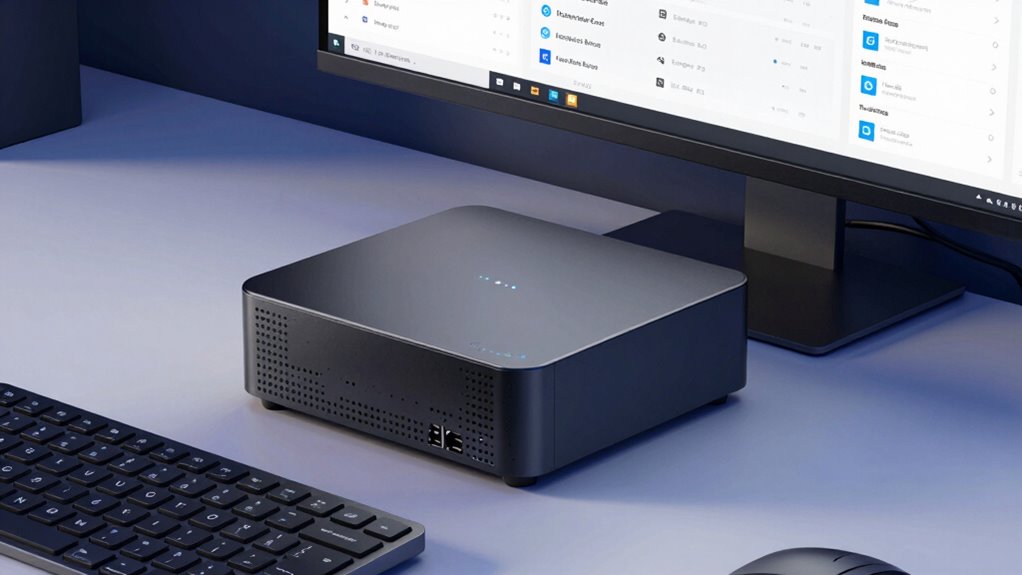

Finding the right mini PC for Kubernetes can be a challenge, especially when balancing performance, size, and budget. The best options deliver enough CPU and RAM for container orchestration while fitting into compact spaces. The top picks vary from high-end workstations to budget-friendly models, with tradeoffs often involving raw power versus energy efficiency or expandability. If you’re setting up a small-scale or edge Kubernetes environment, choosing the right hardware makes all the difference. Continue reading for a detailed breakdown of the best mini PCs suited for Kubernetes workloads in 2026.

Get the latest gadgets delivered free with Prime
- Fast, free delivery on millions of items
- Prime Video, Amazon Music and more included
- Member-only deals all year
Complete the kit



Key Takeaways
- High-core count CPUs like Intel i5/i7 or AMD Ryzen offer better multi-threaded performance for Kubernetes nodes.
- Expandable RAM and storage options matter for future-proofing and scaling container clusters.
- Networking features such as dual 2.5G or 10G ports improve cluster communication and data transfer speeds.
- Barebone models provide customization but require more technical knowledge, while pre-built options deliver plug-and-play simplicity.
- Size and power consumption are key considerations for edge deployments, balancing performance with operational costs.
| DreamQuest Mini Plus Mini PC with Windows 11 Pro, Intel N95, 12GB DDR5, 512GB SSD, 4K Support |  | Best Overall for Versatility and Portability | Processor: Intel N95 (Up to 3.4GHz) | RAM: 12GB DDR5 | Storage: 512GB SSD | VIEW ON AMAZON | See Our Full Breakdown |
| ASUS NUC 14 Pro Mini Desktop Computer with Linux Mint, Intel Core Ultra 7 155H, 64GB DDR5 RAM, 2TB SSD, VESA Mount, WiFi 6E, Thunderbolt 4 |  | Best for Developers and Open-Source Enthusiasts | Processor: Intel Core Ultra 7 155H (16C/22T, up to 4.8GHz) | RAM: 64GB DDR5 (expandable up to 96GB) | Storage: 2TB PCIe SSD | VIEW ON AMAZON | See Our Full Breakdown |
| GMKtec M8 Mini PC AMD Ryzen PRO 6650H |  | Best for High-Performance Desktop-Class Tasks | Processor: AMD Ryzen 5 PRO 6650H (6C/12T, up to 4.5GHz) | Graphics: Radeon 660M integrated | Memory: 16GB LPDDR5 6400 MT/s | VIEW ON AMAZON | See Our Full Breakdown |
| KAMRUI AK1PLUS Mini PC Computer, Intel N5030, 12GB RAM, 256GB SSD, Dual 4K HDMI, Support SSD Expansion, WiFi, Bluetooth, Ethernet |  | Best Budget-Friendly for Basic Kubernetes and Office Use | Processor: Intel N5030 (up to 3.1GHz) | RAM: 12GB LPDDR4 | Storage: 256GB SSD, expandable up to 4TB | VIEW ON AMAZON | See Our Full Breakdown |
| Beelink ME Mini PC, Desktop NAS with Intel N95, 12GB LPDDR5, 64GB eMMC |  | Best for Large Storage and Network-Intensive Use | Processor: Intel N95, 4 cores/4 threads | RAM: 12GB LPDDR5, 4800 MHz | Storage: 64GB eMMC, supports six M.2 NVMe SSDs up to 4TB each | VIEW ON AMAZON | See Our Full Breakdown |
| Beelink ME Mini PC, Intel N95, 12GB LPDDR5, 64GB eMMC, Dual 2.5G LAN, WiFi 6 |  | Best Compact and Expandable Mini PC for Kubernetes | Processor: Intel Alder Lake N95 (4 Cores/4 Threads, 3.4GHz max turbo) | RAM: 12GB LPDDR5 4800MT/S | Storage: 64GB eMMC, 6 M.2 PCIe3.0 slots (up to 4TB SSD each) | VIEW ON AMAZON | See Our Full Breakdown |
| MINISFORUM MS-01-S1260 Mini PC Barebone with Intel Core i5-12600H, vPro Support, Dual 10Gbps SFP+ LAN, Dual 2.5Gbps RJ45, USB4, HDMI, PCIe 4.0, M.2 NVMe SSD, U.2 NVMe SSD, No OS/RAM/SSD |  | Best High-Performance Barebone for Enterprise Kubernetes Nodes | Processor: Intel Core i5-12600H | Generation: 12th | Cores/Threads: 12/16 | VIEW ON AMAZON | See Our Full Breakdown |
| MINISFORUM MS-02 Ultra Workstation Mini PC, Intel Core Ultra 5 235HX, Barebone, No RAM/SSD/OS |  | Best Workstation-Grade Mini PC for Kubernetes with Heavy Workloads | Processor: Intel Core Ultra 5 235HX, 14 cores/14 threads | Max Frequency: up to 5.1 GHz | Memory: Supports up to 256GB DDR5 | VIEW ON AMAZON | See Our Full Breakdown |
| Qotom Q10932H6 Mini PC 1U Rack, i3-N305, 2x 10G + 4x 2.5G LAN, Barebone DDR5 |  | Best Rackmount Network-Focused Mini PC for Kubernetes | Form Factor: 1U Rackmount | Processor: Intel Core i3-N305 | Cores/Threads: 8/8 | VIEW ON AMAZON | See Our Full Breakdown |
| BOSGAME E5 Mini PC with Ryzen 5300U Processor |  | Best Budget Compact Mini PC for Kubernetes with Decent Performance | VIEW ON AMAZON | See Our Full Breakdown |
| mini pc for kubernete | Processor | Storage | RAM |
|---|---|---|---|
| DreamQuest Mini Plus Mini PC w | Intel N95 (Up to 3.4GHz) | 512GB SSD | 12GB DDR5 |
| ASUS NUC 14 Pro Mini Desktop C | Intel Core Ultra 7 155H (16C/22T, up to 4.8GHz) | 2TB PCIe SSD | 64GB DDR5 (expandable up to 96GB) |
| GMKtec M8 Mini PC AMD Ryzen PR | AMD Ryzen 5 PRO 6650H (6C/12T, up to 4.5GHz) | 512GB NVMe SSD, supports up to 8TB | — |
| KAMRUI AK1PLUS Mini PC Compute | Intel N5030 (up to 3.1GHz) | 256GB SSD, expandable up to 4TB | 12GB LPDDR4 |
| Beelink ME Mini PC | Intel N95, 4 cores/4 threads | 64GB eMMC, supports six M.2 NVMe SSDs up to 4TB each | 12GB LPDDR5, 4800 MHz |
| Beelink ME Mini PC | Intel Alder Lake N95 (4 Cores/4 Threads, 3.4GHz max turbo) | 64GB eMMC, 6 M.2 PCIe3.0 slots (up to 4TB SSD each) | 12GB LPDDR5 4800MT/S |
| MINISFORUM MS-01-S1260 Mini PC | Intel Core i5-12600H | — | — |
| MINISFORUM MS-02 Ultra Worksta | Intel Core Ultra 5 235HX, 14 cores/14 threads | Dual M.2 PCIe 4.0, up to 16TB | — |
| Qotom Q10932H6 Mini PC 1U Rack | Intel Core i3-N305 | — | — |
| BOSGAME E5 Mini PC with Ryzen | — | — | — |
More Details on Our Top Picks
DreamQuest Mini Plus Mini PC with Windows 11 Pro, Intel N95, 12GB DDR5, 512GB SSD, 4K Support
The DreamQuest Mini Plus stands out for its combination of power and portability, making it a top choice for Kubernetes deployments that require a compact yet capable machine. Its Intel N95 processor offers solid performance for container orchestration, especially compared to less powerful options like the KAMRUI AK1PLUS. The support for 4K output at 60Hz ensures smooth visualization of dashboards or logs, while its versatile connectivity with dual USB-C and multiple USB 3.2 ports caters to diverse network and peripheral needs. However, its upgradeability is limited, and warranty details are sparse, which could be a drawback for long-term deployments. Overall, this pick is ideal for users seeking a portable, all-in-one mini PC that can handle lightweight Kubernetes workloads without fuss.
Pros:- Powerful Intel N95 processor with efficient performance
- Supports 4K video output at 60Hz for clear visualization
- Multiple connectivity options including dual USB-C ports
- Compact and lightweight design for portability
Cons:- Limited options for hardware upgrade or expansion
- Minimal warranty information available
Best for: Developers or small teams needing portable Kubernetes nodes with decent processing power and display flexibility.
Not ideal for: Enterprise data centers or heavy-duty workloads requiring server-grade hardware and extensive expandability.
- Processor:Intel N95 (Up to 3.4GHz)
- RAM:12GB DDR5
- Storage:512GB SSD
- Operating System:Windows 11 Pro
- Connectivity:2 USB-C, 2 HDMI, 4 USB 3.2, LAN, WiFi 6, Bluetooth 5.3
- Support:4K 60Hz
Our verdict“This mini PC is best suited for portable Kubernetes setups that prioritize size and decent processing capability over extensive expansion.”
ASUS NUC 14 Pro Mini Desktop Computer with Linux Mint, Intel Core Ultra 7 155H, 64GB DDR5 RAM, 2TB SSD, VESA Mount, WiFi 6E, Thunderbolt 4
The ASUS NUC 14 Pro excels as a compact, high-performance mini PC ideal for users deploying Kubernetes in development or testing environments. Its Intel Core Ultra 7 155H processor offers a significant boost in multi-threaded performance compared to the Intel N95, making it better suited for demanding container workloads. The pre-installed Linux Mint provides a secure, open-source environment, which is advantageous over Windows-based options like the DreamQuest Mini Plus for Linux-centric workflows. Its support for multiple high-resolution displays and advanced connectivity enables complex multi-node setups. A key tradeoff is that it runs only Linux, limiting Windows-native application support, and the price may be higher without included peripherals. This model is perfect for developers needing a powerful, space-saving Linux workstation for Kubernetes cluster management.
Pros:- High-performance Intel Core Ultra 7 processor
- Pre-installed with Linux Mint for secure, open-source use
- Supports multiple displays and fast connectivity options
- Compact size with VESA mount for flexible deployment
Cons:- Limited to Linux OS, not suitable for Windows-only workflows
- Price and peripheral inclusion are unspecified
Best for: Open-source developers and sysadmins deploying Kubernetes clusters on Linux with high performance requirements.
Not ideal for: Users needing Windows-based applications or simpler setup for non-technical users.
- Processor:Intel Core Ultra 7 155H (16C/22T, up to 4.8GHz)
- RAM:64GB DDR5 (expandable up to 96GB)
- Storage:2TB PCIe SSD
- Graphics:Intel Arc GPU
- Operating System:Linux Mint
- Connectivity:WiFi 6E, Thunderbolt 4, 2.5G Ethernet
Our verdict“This mini PC is ideal for Linux-focused Kubernetes users seeking high performance in a compact form factor.”
GMKtec M8 Mini PC AMD Ryzen PRO 6650H
The GMKtec M8 offers robust performance with its AMD Ryzen PRO 6650H processor, making it a compelling choice for Kubernetes nodes that require more CPU muscle than typical mini PCs. Its 6-core, 12-thread Ryzen chip provides better multi-threaded performance compared to the Intel N95, especially for container orchestration and small-scale data processing. The inclusion of LPDDR5 memory and support for extensive storage up to 8TB makes it highly expandable for future needs. The dual-fan cooling system ensures reliable operation during extended workloads. However, its limited RAM capacity out-of-the-box and lack of a dedicated GPU restrict high-end gaming or GPU-intensive workloads. This model fits well for users needing a desktop-class mini PC that balances performance with efficiency for Kubernetes clusters.
Pros:- Powerful AMD Ryzen PRO 6650H processor
- Supports multiple high-resolution displays
- High-speed LPDDR5 memory and large storage options
- Efficient dual-fan cooling system
Cons:- Limited to 16GB RAM initially, upgrade beyond requires effort
- No dedicated GPU, not suitable for GPU-intensive tasks
Best for: Power users deploying Kubernetes nodes that require strong CPU performance and high storage capacity.
Not ideal for: Users needing extensive RAM upgrades beyond 16GB or GPU-accelerated workloads.
- Processor:AMD Ryzen 5 PRO 6650H (6C/12T, up to 4.5GHz)
- Graphics:Radeon 660M integrated
- Memory:16GB LPDDR5 6400 MT/s
- Storage:512GB NVMe SSD, supports up to 8TB
- Networking:Dual 2.5GbE LAN, WiFi 6E
- Cooling System:Dual-fan 360° with copper heat pipes
Our verdict“This mini PC is suited for demanding Kubernetes nodes that benefit from strong CPU and high storage capacity without extensive GPU needs.”
KAMRUI AK1PLUS Mini PC Computer, Intel N5030, 12GB RAM, 256GB SSD, Dual 4K HDMI, Support SSD Expansion, WiFi, Bluetooth, Ethernet
The KAMRUI AK1PLUS offers a budget-friendly option for light Kubernetes deployments or small test environments. Its Intel N5030 processor is suitable for basic container workloads and general tasks, but falls short against more powerful options like the GMKtec or ASUS NUC for demanding clusters. The 12GB RAM and dual 4K HDMI outputs support multitasking and visualization, though performance limits are evident for larger or more resource-intensive containers. Its expandable storage to 4TB is a plus, but the absence of a dedicated GPU restricts heavy graphics workloads. This device makes sense for small-scale or hobbyist Kubernetes setups, but not for production-level clusters.
Pros:- Affordable price point
- Supports dual 4K displays for multitasking
- Expandable storage up to 4TB
- Multiple connectivity options including USB and HDMI
Cons:- Limited CPU performance for demanding workloads
- No dedicated GPU for graphics-intensive tasks
- Performance may lag with larger containers
Best for: Home lab users or small teams running lightweight Kubernetes clusters with basic needs.
Not ideal for: Enterprise or production environments requiring high performance or extensive resource scalability.
- Processor:Intel N5030 (up to 3.1GHz)
- RAM:12GB LPDDR4
- Storage:256GB SSD, expandable up to 4TB
- Graphics:Intel UHD Graphics
- Display Outputs:2× HDMI 2.0 (supports 4K@60Hz)
- Connectivity:WiFi, Bluetooth, Gigabit Ethernet
Our verdict“This mini PC suits small-scale Kubernetes or home lab environments where budget constraints outweigh performance needs.”
Beelink ME Mini PC, Desktop NAS with Intel N95, 12GB LPDDR5, 64GB eMMC
The Beelink ME is tailored for network storage and large media libraries, making it a strong candidate for Kubernetes nodes that prioritize storage and network throughput. Equipped with an Intel N95 processor, it offers enough performance for container orchestration, but falls behind the ASUS NUC or GMKtec in raw power. Its standout feature is the support for up to 24TB of storage via six M.2 NVMe slots, ideal for hosting persistent storage or media servers within a Kubernetes cluster. The device operates quietly, thanks to its effective cooling, and supports multiple OS options like UNRAID or TrueNAS, adding flexibility. The main limitation is the lack of detailed physical dimensions and peripherals, requiring technical setup skills, which might not suit all users.
Pros:- Supports up to 24TB of high-speed SSD storage
- Quiet operation with efficient heat management
- Versatile OS support including UNRAID and TrueNAS
- Dual 2.5G LAN, WiFi 6 for fast network connectivity
Cons:- Limited physical size and detailed specs info
- Requires technical expertise for setup
- No bundled peripherals
Best for: Kubernetes nodes focused on storage, media sharing, or network-intensive workloads in a small or home environment.
Not ideal for: High-performance compute tasks or environments demanding GPU acceleration.
- Processor:Intel N95, 4 cores/4 threads
- RAM:12GB LPDDR5, 4800 MHz
- Storage:64GB eMMC, supports six M.2 NVMe SSDs up to 4TB each
- Networking:Dual 2.5G LAN, WiFi 6
- Video Output:HDMI, DisplayPort
- Cooling:Vertical airflow with silent fan
Our verdict“This mini PC is best for storage-heavy Kubernetes nodes and NAS applications in network-centric setups.”
Beelink ME Mini PC, Intel N95, 12GB LPDDR5, 64GB eMMC, Dual 2.5G LAN, WiFi 6
The Beelink ME Mini PC stands out for its small footprint combined with robust networking and extensive storage options, making it ideal for lightweight Kubernetes nodes or edge deployments. Compared with the BOSGAME E5, it offers better networking (dual 2.5G LAN vs. Wi-Fi 5), but its 64GB eMMC storage can be limiting without additional SSDs. Its support for multiple operating systems, including Linux, appeals to those managing containerized workloads. However, the device’s limited onboard storage and lack of a dedicated GPU mean it’s better suited for network-focused tasks rather than heavy compute. This pick makes sense for users who prioritize space efficiency and flexible storage expansion over raw processing power.
Pros:- Compact, space-saving design fits small environments
- Dual 2.5G LAN and WiFi 6 for fast, reliable networking
- Supports extensive storage expansion with six M.2 slots
- Multiple OS support including Linux and Windows
Cons:- Limited 64GB eMMC storage may require additional SSDs
- No dedicated GPU, unsuitable for graphics-intensive tasks
- Requires technical skill for NAS setup and expansion
Best for: Small offices or edge environments where space is tight but reliable connectivity and storage flexibility are needed.
Not ideal for: Heavy-duty Kubernetes workloads requiring high CPU or GPU performance or large onboard storage capacity.
- Processor:Intel Alder Lake N95 (4 Cores/4 Threads, 3.4GHz max turbo)
- RAM:12GB LPDDR5 4800MT/S
- Storage:64GB eMMC, 6 M.2 PCIe3.0 slots (up to 4TB SSD each)
- Network:Dual 2.5G LAN, WiFi 6, Bluetooth 5.2
- Dimensions:99x99x99mm
- Power Supply:45W built-in PSU (12V=3.75A)
Our verdict“This is a solid choice for edge or small-scale Kubernetes nodes where size and networking matter most.”
MINISFORUM MS-01-S1260 Mini PC Barebone with Intel Core i5-12600H, vPro Support, Dual 10Gbps SFP+ LAN, Dual 2.5Gbps RJ45, USB4, HDMI, PCIe 4.0, M.2 NVMe SSD, U.2 NVMe SSD, No OS/RAM/SSD
The MINISFORUM MS-01-S1260 offers a formidable platform for demanding Kubernetes deployments, especially for those needing high-speed networking and maximum customization. Its powerful Intel Core i5-12600H processor and support for up to 96GB DDR5 RAM make it ideal for container orchestration and heavy workloads. Compared to the Qotom Q10932H6, which is more focused on enterprise networking, the MS-01 provides a richer set of expansion options, including PCIe 4.0 and multiple NVMe slots, but requires users to install their OS, RAM, and SSDs. This makes it less beginner-friendly but highly flexible for advanced users. It’s best suited for environments with technical expertise seeking maximum performance and expandability.
Pros:- Powerful 12th Gen Intel Core i5-12600H with high multi-thread performance
- Supports up to 96GB DDR5 RAM and extensive storage options
- Dual 10Gbps SFP+ ports for ultra-fast networking
- Supports PCIe 4.0 for high-performance external devices
Cons:- Requires installation of OS, RAM, and SSDs, not an out-of-the-box solution
- Complex setup may be daunting for non-technical users
- No pre-installed operating system
Best for: Enterprise or advanced home lab users needing high throughput, extensive customization, and virtualization support for Kubernetes.
Not ideal for: Users seeking a plug-and-play solution or with limited hardware assembly experience.
- Processor:Intel Core i5-12600H
- Generation:12th
- Cores/Threads:12/16
- Max Frequency:4.5GHz
- Memory Support:up to 96GB DDR5
- Storage Support:Up to 3 M.2 NVMe SSDs, U.2 NVMe SSD
- Network Ports:2x 10Gbps SFP+ LAN, 2x 2.5Gbps Ethernet
- Expansion Slots:PCIe 4.0 x16, PCIe 4.0 x8
Our verdict“Ideal for users who need high-end hardware customization and enterprise-grade networking for Kubernetes environments.”
MINISFORUM MS-02 Ultra Workstation Mini PC, Intel Core Ultra 5 235HX, Barebone, No RAM/SSD/OS
The MINISFORUM MS-02 Ultra is tailored for demanding workloads, including AI and engineering tasks, but also suits Kubernetes environments needing high performance. Its Intel Core Ultra 5 235HX processor, with 14 cores and 14 threads, combined with support for up to 256GB DDR5 RAM, provides exceptional multitasking capacity. While the MINISFORUM MS-02 shares expandability with PCIe and dual M.2 slots, it demands a more complex setup since it arrives as a barebone, requiring users to install RAM, SSD, and OS. Compared to the Beelink ME, it offers far more raw power and expandability but at the cost of increased setup complexity. This choice suits tech-savvy users building a versatile, high-performance Kubernetes node for heavy workloads.
Pros:- High-core count with 14 cores/14 threads for heavy multitasking
- Supports up to 256GB DDR5 RAM for extensive container workloads
- Multiple high-speed I/O options including USB4 v2 and triple 8K display support
- Advanced networking with Wi-Fi 7 and dual 2.5GbE ports
Cons:- Requires assembling RAM, SSD, and OS, not an out-of-the-box solution
- Potentially complex setup for non-technical users
- No included components or pre-installed software
Best for: Technical professionals deploying high-performance Kubernetes nodes for AI, data processing, or intensive container workloads.
Not ideal for: Users seeking a simple, ready-to-run mini PC without extensive assembly or configuration.
- Processor:Intel Core Ultra 5 235HX, 14 cores/14 threads
- Max Frequency:up to 5.1 GHz
- Memory:Supports up to 256GB DDR5
- Storage:Dual M.2 PCIe 4.0, up to 16TB
- Networking:Wi-Fi 7, 10GbE LAN, 2.5GbE
- Video Output:HDMI 2.1, USB-C supporting three 8K displays
Our verdict“Best suited for advanced users needing a flexible, high-performance mini workstation for complex Kubernetes deployments.”
Qotom Q10932H6 Mini PC 1U Rack, i3-N305, 2x 10G + 4x 2.5G LAN, Barebone DDR5
The Qotom Q10932H6 is designed primarily for network-focused Kubernetes nodes, especially in enterprise or data center settings. Its 1U rackmount form factor makes it ideal for deployment in server racks, and its multiple high-speed network ports—2x 10G and 4x 2.5G LAN—support demanding network workloads. Compared to the MINISFORUM MS-01, which emphasizes performance and expandability, the Qotom emphasizes network throughput and rack compatibility. Its barebone design offers flexibility, but users must purchase and install RAM and storage, adding complexity. It’s best for those prioritizing networking performance and compact rack deployment over raw compute power.
Pros:- Compact 1U rackmount chassis fits standard server racks
- High-speed 10G and 2.5G LAN ports support demanding network traffic
- Supports DDR5 RAM and NVMe SSD for fast data access
- Customizable, barebone system for specific configurations
Cons:- Requires purchasing and installing RAM and SSD separately
- Limited to certain operating systems and drivers
- No pre-installed OS or storage
Best for: Enterprise or data center environments needing high-speed networking and rack-mountable hardware for Kubernetes or virtualization.
Not ideal for: Home users or small-scale setups that don’t require enterprise-grade networking or rackmount form factors.
- Form Factor:1U Rackmount
- Processor:Intel Core i3-N305
- Cores/Threads:8/8
- Network Ports:2x 10G RJ45, 4x 2.5G RJ45
- Memory Support:Up to 48GB DDR5
- Storage Support:M.2 NVMe PCIe SSD
Our verdict“Ideal for network-heavy Kubernetes nodes in enterprise settings where rack deployment and high-speed connectivity are priorities.”
BOSGAME E5 Mini PC with Ryzen 5300U Processor
The BOSGAME E5 offers a balanced mix of performance and affordability for Kubernetes users needing a capable but straightforward mini PC. Its Ryzen 5300U processor provides solid performance for container management, and the 16GB RAM out of the box supports multitasking. Compared to the Beelink ME, it lacks extensive storage options—initially capped at 512GB SSD—but the ability to upgrade to 2TB makes it flexible. Its triple 4K display support is a plus for visualization or multi-monitor setups, but it doesn’t include a dedicated GPU, limiting graphics-intensive workloads. This makes it well-suited for small-scale or testing environments where budget and space are considerations.
Pros:- Compact size with powerful Ryzen 5300U processor
- Supports up to 64GB RAM and 2TB SSD upgrades
- Triple 4K display support for multitasking
- Includes VESA mount for flexible placement
Cons:- Limited initial storage (512GB) without upgrade
- No dedicated GPU for graphics-intensive workloads
- Requires technical knowledge for upgrades
Best for: Small teams or developers needing a budget-friendly, space-efficient Kubernetes node with decent multimedia output.
Not ideal for: Heavy compute or GPU-accelerated workloads, or environments requiring enterprise-grade networking.
Our verdict“A good value choice for small-scale Kubernetes deployments where budget and space are limited, and moderate performance suffices.”

How We Picked
These mini PCs were evaluated primarily on their processing power, RAM capacity, expandability, network connectivity, and overall build quality. Performance benchmarks relevant to container workloads, such as CPU core counts and network throughput, played a significant role. Ease of setup and maintenance, including pre-installed operating systems or barebone flexibility, influenced ranking. Value was also considered, weighing features against price. Ultimately, the list aims to highlight options suitable for various Kubernetes deployment scales—from small labs to edge data centers—based on real-world performance and versatility.Factors to Consider When Choosing Mini Pc For Kubernetes
Selecting the right mini PC for Kubernetes requires balancing several factors. Beyond raw specs, consider how the system’s expandability, network capabilities, and power efficiency will impact your cluster’s reliability and scalability. Understanding these elements helps avoid common pitfalls like underpowered hardware or insufficient network throughput, which can bottleneck container performance. Here are key considerations to keep in mind when choosing the best mini PC for your Kubernetes needs.Processor Power and Core Count
For Kubernetes nodes, CPU performance directly influences cluster responsiveness and scalability. Opt for models with at least four cores, but higher core counts, such as six or eight, better support multiple containers and microservices. AMD Ryzen or Intel i5/i7 processors tend to deliver more robust multi-threaded performance, especially important for resource-intensive workloads. However, higher-performance chips may come with increased power consumption and cost, so match your choice to your workload demands.
Memory Capacity and Expandability
RAM is critical for running multiple containers smoothly. Look for mini PCs offering a minimum of 8GB, with 16GB or more preferable for larger clusters. Models with upgradeable RAM provide future-proofing, enabling you to scale as your workload grows without replacing the entire system. Avoid barebones units with limited RAM slots unless you plan to upgrade immediately, as this can limit your cluster’s growth.
Networking Capabilities
Fast, reliable network connectivity is essential for Kubernetes clusters, especially if nodes communicate over LAN or WAN. Dual 2.5G or 10G Ethernet ports significantly improve data transfer rates, reducing bottlenecks. Wi-Fi 6 support adds flexibility but shouldn’t be relied on solely for cluster communication. When deploying at scale or in edge environments, prioritize models with multiple network interfaces for redundancy and performance.
Storage Options and Expandability
Persistent storage is vital for stateful workloads. Choose mini PCs with M.2 NVMe slots or support for SSD expansion to ensure high I/O performance. Some models include pre-installed SSDs, but others are barebone, requiring you to add storage. Consider your expected data volume and whether local storage or network-attached storage (NAS) will serve your needs better, especially for data-intensive containers.
Size, Power, and Operating Environment
Mini PCs vary in size from compact stick-sized devices to small desktop units. Smaller form factors save space but may limit upgrade options. Power efficiency impacts operational costs, especially in edge deployments or 24/7 operation. Choose a system that balances size, power consumption, and cooling to match your environment—whether a home lab, office, or remote site.
Frequently Asked Questions
Can I run a full Kubernetes cluster on a mini PC with 16GB RAM?
Yes, a mini PC with 16GB RAM can support a small to medium Kubernetes cluster, especially if workloads are lightweight or containerized services are optimized. For production environments with multiple nodes and heavy workloads, consider models with expandable RAM and multiple cores. Proper network setup and storage are also crucial to ensure cluster stability and performance at this scale.
Is a barebone mini PC suitable for Kubernetes, or should I choose a pre-built?
Barebone mini PCs offer customization and potentially better value but require technical expertise to install RAM, storage, and OS. They are ideal if you want specific hardware configurations or plan to upgrade components over time. Pre-built models are more straightforward, with everything ready to deploy, making them better suited for users seeking simplicity and quick setup.
How important is network throughput for a mini PC acting as a Kubernetes node?
Network throughput is vital, especially in clusters where nodes exchange large amounts of data. High-speed Ethernet ports, such as 2.5G or 10G, reduce latency and prevent bottlenecks, ensuring containers communicate efficiently. For edge or remote deployments, robust network capabilities help maintain cluster responsiveness and reliability.
What is the advantage of using a mini PC with dual Ethernet ports for Kubernetes?
Dual Ethernet ports provide redundancy and increased bandwidth, which can be critical for high-availability clusters or data-intensive workloads. They allow for network segmentation, load balancing, or failover setups, enhancing overall cluster resilience. When deploying Kubernetes at scale or in critical environments, this feature helps maintain continuous operation even if one network link fails.
Should I prioritize size or performance when choosing a mini PC for Kubernetes?
The choice depends on your deployment environment and workload demands. Smaller systems save space and energy but might have limited expansion options and lower performance. Larger compact models often offer better CPU options, more RAM slots, and better cooling, supporting more demanding workloads. Balance your space constraints with performance needs to find the best fit.
Conclusion
For small-scale labs or hobbyist setups, the DreamQuest Mini Plus offers a balanced mix of performance and ease of use. If you need a high-performance workstation for edge deployments, the MINISFORUM MS-01-S1260 with its powerful Intel Core i5 and extensive networking features is ideal. Beginners will appreciate the KAMRUI AK1PLUS for straightforward setup, while enterprise users or those with specific networking needs should consider the Qotom Q10932H6 for its dual 10G LAN ports. Ultimately, choosing the right mini PC depends on your workload scale, technical skills, and deployment environment.
Halloween Picks
halloween
As an affiliate, we earn on qualifying purchases.