For anyone seeking reliable and flexible RAID enclosures with USB C, the options in 2026 are more diverse than ever. The MAIWO Dual Bay RAID Enclosure stands out as the best overall for its multiple RAID modes and high capacity, while the CENMATE Aluminum 2 Bay Enclosure offers excellent value with quick hot-swappable drives. Choosing the right RAID enclosure involves balancing performance, expandability, ease of use, and cost. Higher-end models deliver faster speeds and more RAID options but come with a higher price tag, whereas simpler enclosures focus on plug-and-play convenience. Keep reading for a detailed breakdown to find the perfect fit for your needs.

Get the latest gadgets delivered free with Prime
- Fast, free delivery on millions of items
- Prime Video, Amazon Music and more included
- Member-only deals all year
Complete the kit


Key Takeaways
- The top-ranked RAID enclosures combine fast USB C interfaces with flexible RAID options for varied use cases.
- Build quality and cooling features significantly impact device longevity, especially in high-capacity or high-performance models.
- Drive compatibility varies: some enclosures support only SATA, while others include M.2 NVMe support for versatile storage needs.
- Hot-swappable drives and tool-free design are key for ease of maintenance and upgrades, especially for non-technical users.
- Price often correlates with features like capacity, RAID modes, and speed, so define your needs to avoid overspending or underbuying.




More Details on Our Top Picks
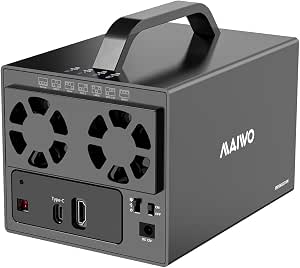
MAIWO Dual Bay RAID Enclosure for SATA 3.5″ HDD with Cooling Fan, USB 3.1 Type-C, 4 RAID Modes, Supports 48TB
This MAIWO dual bay RAID enclosure stands out for supporting up to 48TB total storage, making it ideal for users needing substantial data capacity. Compared with the Mediasonic 4 Bay, it offers more RAID modes and a more compact form factor, but it trades off maximum transfer speed—limited to 6Gbps due to HDD mechanical constraints. Its aluminum body and cooling fan ensure effective heat dissipation, which benefits long-term drive health. The inclusion of multiple RAID modes provides flexibility for different data management strategies. However, the bulky power supply can detract from portability, and users should be aware that transfer speeds are capped by HDD limitations rather than interface capabilities. Overall, this enclosure is well-rounded for those who prioritize capacity and flexible RAID options over raw speed and portability.
Pros:- Supports up to 48TB total storage with dual drives
- Offers four RAID modes for flexible data management
- High-speed data transfer of 10Gbps with USB 3.1 Gen2
Cons:- Maximum transfer speed limited to 6Gbps due to HDD mechanical limits
- Requires a separate bracket for 2.5-inch drives
- Power supply adds bulk, reducing portability
Best for: Creators or professionals managing large media libraries needing reliable, flexible RAID configurations on a desktop.
Not ideal for: Travelers or mobile users who need lightweight, portable storage due to its bulky power supply and size.
- Hardware Interface:USB Type C
- Hardware Platform:PC, Windows
- Memory Storage Capacity:44 TB
- Supported Devices:PC, Phone (OTG), Router, TV
- Hard Disk Form Factor:3.5 inches
- Data Transfer Rate:1000 megabytes_per_second
Our verdict“This enclosure fits users who prioritize high capacity and RAID versatility over raw transfer speed and portability.”
CENMATE Aluminum 2 Bay 10Gbps Hard Drive Enclosure with Cooling Fan for 2.5“/3.5″ SATA HDD/SSD with USB A/C 3.2 Gen 2, Support Hot Swappable, Tool-Free HDD Enclosure, DAS(NO RAID/NAS)
This CENMATE enclosure is designed for rapid data transfer, supporting up to 10Gbps via USB 3.2 Gen 2, making it a strong choice for quick backups or media transfers. Its hot-swappable feature distinguishes it from models like the Mediasonic 4 Bay, which lacks this convenience. Built with aluminum and a 2-inch fan, it offers effective heat dissipation during extended use, though noise levels around 40-50 decibels may be noticeable for sensitive environments. The enclosure supports both 2.5″ and 3.5″ drives, but note that it requires an additional bracket for 2.5-inch drives, unlike the Mediasonic’s straightforward design. The maximum capacity per drive is 20TB, suitable for most individual users. Overall, this enclosure is ideal for users prioritizing speed and drive flexibility with easy hot-swapping.
Pros:- Supports up to 10Gbps transfer speed with USB 3.2 Gen 2
- Supports hot swapping of drives for convenience
- Built-in cooling fan and aluminum shell for heat management
Cons:- Requires additional bracket for 2.5-inch drives
- Maximum capacity limited to 20TB per drive
- Fan noise could be disruptive in quiet environments
Best for: Content creators or IT professionals needing rapid, flexible external storage with quick drive swapping.
Not ideal for: Quiet office settings or users needing large-capacity storage, as noise levels may be a concern.
- Compatibility:2.5″/3.5″ SATA HDD/SSD
- Interface:USB 3.2 Gen 2
- Data Transfer Speed:10Gbps
- Maximum Capacity:20TB per drive
- Cooling:Built-in fan, aluminum shell
Our verdict“This enclosure is best for users who need fast, flexible external storage with easy hot-swapping features.”
Mediasonic 4 Bay 3.5″ SATA Hard Drive Enclosure DAS – USB 3.2 Gen 2, 10Gbps, USB Type-C, Supports 30TB per Drive
The Mediasonic 4 Bay enclosure supports large drives up to 30TB each, making it suitable for extensive data backups and media collections. Its USB 3.2 Gen 2 interface delivers impressive speeds up to 10Gbps, comparable to the CENMATE but with a focus on RAID configurations. The built-in RAID controller offers RAID 0 and 1 modes, but lacks hot-swapping, unlike the CENMATE model, which could be a limitation for users needing quick drive swaps. Its tool-free installation is a plus, though some might find the process less intuitive. The enclosure’s robust metal construction ensures durability, but the absence of hot swap may limit responsiveness during maintenance. Overall, this model best suits those who need large-capacity drives with reliable RAID support and high transfer speeds.
Pros:- Supports drives up to 30TB each
- Fast transfer speeds up to 10Gbps
- Built-in hardware RAID controller with simple operation
Cons:- No hot-swapping support
- Requires additional bracket for 2.5-inch drives
- Limited to RAID 0 and 1 modes
Best for: Data archivists or small business users seeking high-capacity RAID storage with speed and durability.
Not ideal for: Users needing frequent drive replacement or hot-swapping, due to lack of this feature.
- Hardware Interface:USB 3.2 Gen 2, USB Type C
- Memory Storage Capacity:30 TB per drive
- Supported Devices:Desktop, Laptop
- Hard Disk Form Factor:3.5 inches
- Data Transfer Rate:10Gbps
Our verdict“This enclosure offers high-capacity RAID storage with fast speeds, ideal for backups but less suited for frequent drive swaps.”
MAIWO Dual Bay RAID Enclosure for M.2 NVMe and SATA SSDs with Cloning and RAID Modes, USB C 3.2 GEN2x2 20Gbps, Cooling Fan, Aluminum
This MAIWO enclosure targets high-speed SSD users, supporting both M.2 NVMe and SATA drives with transfer speeds up to 20Gbps. Its support for RAID 0 and 1, along with cloning capabilities, makes it particularly suitable for demanding workflows like video editing or data backup. Compared with the CENMATE NVMe/SATA model, it offers faster transfer speeds and additional features like cloning, but it requires compatible drives and systems to reach its full potential. The aluminum shell and built-in fan help maintain optimal temperatures during intensive tasks. However, it only recognizes source drives with specific protocols, which could limit ease of use for some users. This enclosure is best for users who need rapid SSD performance, RAID flexibility, and data cloning in a compact form.
Pros:- Supports NVMe and SATA SSDs for maximum flexibility
- Transfer speeds up to 20Gbps with USB 3.2 GEN2x2
- Includes cloning and multiple RAID modes for data security
Cons:- Limited recognition if drives don’t meet protocol requirements
- Maximum capacity capped at 16TB
- Requires compatible high-speed drives for full performance
Best for: Power users or professionals working with high-speed SSDs and requiring cloning features.
Not ideal for: Casual users or those with only HDDs, as they won’t benefit from the SSD-focused speeds and features.
- Compatibility:M.2 NVMe M Key and SATA B+M Key SSD
- Interface:USB 3.2 GEN2x2, USB-C
- Data Transfer Speed:Up to 20Gbps
- Supported Protocols:UASP, Trim
- Maximum Capacity:16TB
Our verdict“This enclosure excels for SSD power users needing fast speeds, RAID options, and cloning features in a compact setup.”
CENMATE Aluminum 3 Bay 10Gbps Hard Drive Enclosure with Cooling Fan for 2.5“/3.5″ SATA HDD/SSD with USB A/C 3.2 Gen 2, Support Hot Swappable, Tool-Free HDD Enclosure, DAS(NO RAID/NAS)
This CENMATE 3-bay enclosure offers significant flexibility for users needing to run multiple drives simultaneously, supporting up to 20TB per drive. Its 10Gbps USB 3.2 Gen 2 interface delivers fast transfers, comparable to other high-speed enclosures like the CENMATE 2-bay. The hot-swappable, tool-free design simplifies drive management, making it easier to swap drives without shutting down. The aluminum shell and cooling fan keep temps in check during intensive operations. However, since it does not support RAID configurations, users seeking redundancy or performance improvements through RAID may find it limiting. The maximum capacity per drive is 20TB, which meets most high-capacity needs but isn’t as scalable as some RAID solutions. Overall, it’s best for flexible, multi-drive setups without the need for RAID functionality.
Pros:- Supports 3 drives simultaneously with hot-swappable design
- Supports drives up to 20TB each
- Fast transfer speeds of 10Gbps with USB 3.2 Gen 2
Cons:- No RAID support, limiting redundancy options
- Maximum capacity of 20TB per drive
- Fan noise may be noticeable in quiet environments
Best for: Data analysts or users needing multiple independent drives accessible simultaneously, without RAID complexity.
Not ideal for: Users seeking RAID redundancy or performance boost, as this model does not support RAID modes.
Our verdict“This enclosure offers a flexible multi-drive solution for those who prioritize easy access and hot-swapping over RAID features.”
MAIWO USB-C 4 Bay HDD RAID Enclosure for 2.5″ and 3.5″ SATA Drives with Cooling Fan and 96TB Capacity
This MAIWO enclosure stands out for supporting an impressive 96TB of total storage, making it ideal for professional settings where large data volumes are routine. Its multiple RAID modes, including RAID 5 and 10, provide flexible data protection options, surpassing the simpler RAID support found in the TERRAMASTER D4-320. The dual cooling fans and aluminum body help keep drives cool during intensive tasks, extending their lifespan. While the setup involves an external power supply and can be complex for newcomers, its broad OS compatibility and HDMI output add to its versatility. Compared to the D2-320 or the CENMATE 4-bay, this unit offers higher capacity and more RAID options but sacrifices portability and ease of use for the average user.
Pros:- Supports a massive total capacity of 96TB with multiple RAID modes
- Fast transfer speeds up to 5Gbps via USB-C
- Effective dual fan cooling system prolongs drive life
- Compatible with Windows, Linux, Mac, plus HDMI output for multimedia
Cons:- Requires an external power supply, reducing portability
- RAID setup can be complex for beginners
- Larger and less portable than simpler enclosures
Best for: Professionals or small businesses needing large, reliable storage with multiple RAID configurations
Not ideal for: Casual users or those seeking a portable, all-in-one solution due to its size and setup complexity
- Drive Bays:4
- Supported Drive Sizes:2.5″ and 3.5″ SATA HDD/SSD
- Maximum Capacity:96TB
- RAID Modes:Normal, 0, 3, 5, 1/10, Clone, Large (JBOD)
- Transfer Speed:up to 5Gbps
- Cooling:Dual fan with aluminum-alloy body
Our verdict“This enclosure is best suited for professionals demanding large, flexible storage solutions with advanced features.”
TERRAMASTER D4-320 External Hard Drive Enclosure 4-Bay USB 3.2 Gen2 Type-C
The TERRAMASTER D4-320 offers a compelling balance of speed and capacity, supporting up to 120TB across four drives with individual capacities up to 30TB. Its USB 3.2 Gen2 interface delivers blazing-fast transfer speeds up to 10Gbps, making it suitable for data-intensive workflows. Unlike the MAIWO model, it doesn’t support RAID, which could be a drawback for those needing data redundancy; however, its hot-swappable drives and tool-free design make maintenance straightforward. Compared to the CENMATE 4-bay, the D4-320 provides higher transfer speeds and larger capacity, though it lacks RAID support for data protection. This enclosure is ideal for users prioritizing raw speed and capacity over advanced RAID features.
Pros:- Supports up to 120TB total capacity with 30TB per drive
- High-speed transfer up to 10Gbps via USB 3.2 Gen2
- Hot-swappable and tool-free drive installation
- Supports multiple operating systems including Mac, Windows, Linux
Cons:- No RAID support, limiting data redundancy options
- Requires external power supply, reducing portability
- Limited to individual drive management without RAID functionality
Best for: Users needing large capacity storage with fast data transfer, but without RAID support
Not ideal for: Those requiring RAID for redundancy or enterprise-level data protection
- Interface:USB 3.2 Gen2 Type-C
- Max Speed:10Gbps
- Supported Drives:3.5-inch SATA HDD, 2.5-inch SATA HDD, 2.5-inch SATA SSD
- Max Capacity per Drive:30TB
- Total Capacity:120TB
- Hot Swappable:Yes
Our verdict“This enclosure excels for high-capacity, fast data transfer needs where RAID isn’t essential.”
TERRAMASTER D2-320 USB RAID Enclosure 2-Bay, USB 3.2 Gen 2, Supports RAID 0, 1, JBOD, Single (Diskless)
The TERRAMASTER D2-320 offers a straightforward, versatile solution for users who want flexible RAID options in a compact 2-bay enclosure. Its support for RAID 0 and 1 makes it suitable for those prioritizing performance or redundancy without the complexity of larger systems like the four-bay models. The high-speed 10Gbps transfer rate is a plus, especially when compared with less capable USB 3.0 options. Its tool-free design simplifies drive swapping, but the plastic enclosure and external power requirement may be drawbacks for durability and portability. Compared to the larger D4-320, this unit is more suited for users with limited space or those needing a simple yet fast RAID setup for smaller data sets.
Pros:- Supports RAID 0, 1, JBOD, and single disk modes for flexibility
- High-speed data transfer up to 10Gbps
- Tool-free drive installation with push-lock design
- Supports large drives up to 22TB per bay
Cons:- Requires external power, reducing portability
- Plastic enclosure may impact durability
- Limited to direct-attached storage, no network access
Best for: Small offices or home users needing reliable RAID 0/1 with a compact footprint
Not ideal for: Power users requiring large storage capacity or complex RAID configurations
- Hardware Interface:USB 3.2 Gen 2
- Supported Devices:Hard Disk, SSD
- Hard Disk Form Factor:3.5 inches
- Maximum Storage Capacity:22TB per drive
- Data Transfer Rate:10 Gbps
- Supported RAID Modes:0, 1, JBOD, Single
Our verdict“This enclosure is ideal for users needing a compact, high-speed RAID solution with flexible configurations.”
CENMATE Aluminum 4 Bay Hard Drive RAID Enclosure with Cooling Fan for 2.5/3.5″ SATA HDD/SSD, Supports 80TB, 8 RAID Modes, USB 3.0 + eSATA
The CENMATE aluminum 4-bay enclosure offers robust cooling and support for up to 80TB across four drives, making it suitable for demanding environments. Its eight RAID modes, including RAID 5 and 6, cater to users needing flexible data management and redundancy. The dual connectivity options—USB 3.0 and eSATA—provide compatibility with a range of systems, and the aluminum chassis helps dissipate heat effectively. Compared to the MAIWO unit, the CENMATE provides more RAID options but has a bulkier, noisier fan that might bother sensitive users. Its higher capacity and durable build make it well-suited for both personal use and small enterprise applications.
Pros:- Supports up to 80TB total storage with 8 RAID modes
- Effective cooling with built-in fans prevents overheating
- Dual connectivity via USB 3.0 and eSATA for broad compatibility
- Aluminum chassis enhances durability and heat dissipation
Cons:- Fan noise around 40-50 decibels may be disruptive
- Bulkier design due to four bays
- RAID mode switching carries some risk of data loss if not managed carefully
Best for: Power users requiring multiple RAID configurations and strong cooling in a durable enclosure
Not ideal for: Casual users or those prioritizing a quieter or more portable setup
- Hardware Interface:USB 3.0, eSATA
- Hardware Platform:Windows, Mac, Linux
- Memory Storage Capacity:80 TB
- Supported Devices:4 x SATA HDD/SSD
- Supported RAID Modes:8 modes including RAID 5/6
- Enclosure Material:Aluminum
Our verdict“This enclosure is best for users needing flexible RAID options and a sturdy, well-cooled system for demanding storage needs.”

How We Picked
To determine the best RAID enclosures with USB C in 2026, I evaluated each product based on performance metrics such as data transfer speeds and RAID options, build quality, cooling efficiency, and ease of installation. Compatibility with various drive types and capacities was also crucial, alongside features like hot-swappable bays and tool-free access. Cost-effectiveness played a role, but I prioritized devices offering the best balance of features and durability for different user needs. The ranking reflects how well each enclosure meets these criteria, aiming to help users find a reliable, versatile solution for their storage demands.Factors to Consider When Choosing Raid Enclosures Usb C
Choosing the right RAID enclosure with USB C requires understanding several critical factors that influence performance, usability, and longevity. Not all enclosures are equal, and a mismatch can lead to slower speeds, drive failures, or difficulty in maintenance. By considering these factors, you can select a device that truly matches your data management needs, whether for professional workflows or personal projects. Here are the key considerations to keep in mind.Performance and Speed
Look for enclosures supporting the latest USB C standards, such as USB 3.2 Gen 2 or Gen 2×2, for maximum data transfer rates. This is especially important if you work with large files or need quick backups. Keep in mind that actual performance also depends on the drives used and RAID configuration. Higher speeds often come with increased cost, but sacrificing speed can bottleneck productivity in demanding scenarios.
Drive Compatibility and Expandability
Some enclosures support only 3.5-inch SATA drives, while others include M.2 NVMe support, offering more versatility. Hot-swappable bays simplify swapping or upgrading drives without system shutdown, saving time and reducing risk of data loss. Be sure to verify capacity limits—some enclosures support up to 80TB or more—so you won’t outgrow your device prematurely.
RAID Options and Flexibility
The variety of RAID modes—such as 0, 1, 5, or JBOD—determines how your data is protected and accessed. More advanced setups provide better redundancy or performance but tend to increase complexity and cost. Assess your storage needs carefully; for critical data, investing in a model with multiple RAID options is worthwhile. Simpler devices with no RAID support are better suited for straightforward backups or primary storage.
Build Quality and Cooling
Enclosures with robust construction and effective cooling features tend to last longer, especially when running high-capacity drives continuously. Aluminum cases and integrated cooling fans reduce heat buildup, which can degrade drives over time. On the other hand, heavy or bulky enclosures might be less portable, so consider your mobility needs alongside thermal management.
Ease of Use and Maintenance
Features like tool-free drive bays and straightforward interface controls make maintenance less frustrating, particularly for less experienced users. Hot-swappable drives save time during upgrades or troubleshooting. However, over-complicated setups with many buttons or settings may require a steep learning curve, so match complexity to your technical comfort level.
Frequently Asked Questions
Can I use a RAID enclosure with different sizes of drives?
Using drives of different sizes in a RAID enclosure depends on the RAID mode. Some configurations, like RAID 0 or JBOD, will allow mixing sizes, but this can lead to wasted space, as the array will only use capacity equivalent to the smallest drive. For optimal capacity and performance, matching drive sizes is recommended. Always check the enclosure’s maximum supported drive size and RAID compatibility before mixing drives.
Is USB C enough for high-speed data transfer in RAID enclosures?
USB C support, particularly USB 3.2 Gen 2 or higher, can deliver very high transfer speeds, making it suitable for demanding tasks. However, actual performance also depends on the drive speeds and RAID configuration. To maximize throughput, ensure your computer’s USB C port supports the same standards and that you’re using quality cables. For the fastest speeds, some users might prefer Thunderbolt options, but USB C remains a highly versatile and widely compatible choice.
Should I prioritize RAID flexibility or simple plug-and-play in my enclosure?
This depends on your technical comfort and storage needs. RAID flexibility offers options for redundancy and performance, which is vital for professional environments. However, simple plug-and-play models are more user-friendly, especially for casual users or those new to RAID. If you need frequent drive swaps or data protection, investing in a RAID-capable enclosure makes sense; otherwise, a basic model may suffice.
What are the risks of using a RAID enclosure with no cooling features?
Without proper cooling, drives in the enclosure may overheat, leading to reduced lifespan, increased failure risk, and potential data corruption. High-capacity or high-performance drives generate significant heat during operation, making thermal management essential. Choosing an enclosure with built-in fans or good airflow can prevent overheating, ensuring your drives stay reliable over time.
How do I decide between a 2-bay and 4-bay RAID enclosure?
The number of bays directly impacts storage capacity, expandability, and cost. A 2-bay enclosure is typically more affordable and easier to manage, suitable for basic backups or small workspaces. A 4-bay provides more storage, better redundancy options, and higher performance potential, ideal for demanding workflows or larger data sets. Consider your current and future storage needs to choose the right size.
Conclusion
For general users seeking reliable performance, the MAIWO Dual Bay RAID Enclosure offers a balanced mix of speed, RAID options, and capacity, making it the best overall choice. Those prioritizing value should consider the CENMATE Aluminum 2 Bay Enclosure, which delivers solid features at a lower price point. Professionals or power users with high data demands may prefer the MAIWO 4 Bay RAID Enclosure for its larger capacity and advanced RAID modes. Beginners or casual users will find simple, tool-free models easier to operate, while those needing extensive storage should look at enclosures supporting higher capacities and multiple bays—such as the TERRAMASTER D4-320. Ultimately, your choice hinges on balancing speed, capacity, ease of use, and budget to match your specific data management needs.
As an affiliate, we earn on qualifying purchases.Halloween Picks
halloween