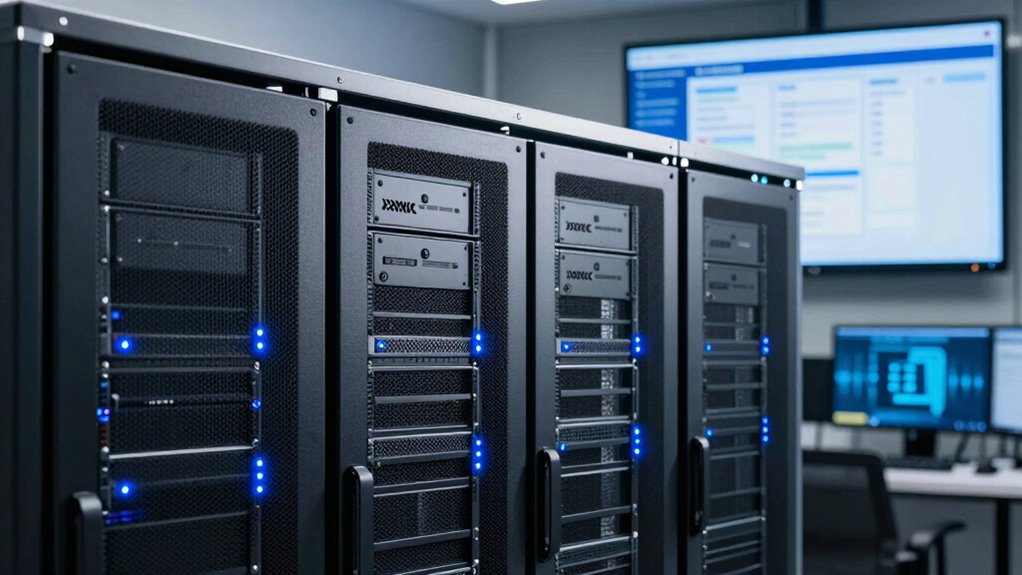

Finding the right virtualization server for Proxmox can be a game-changer for setting up a private cloud, lab environment, or home server. The best options balance performance, ease of use, and expandability, but often involve tradeoffs between cost, power, and complexity. The Proxmox Home Server for Beginners stands out as an accessible entry point, while the TK Node Mini PC with AMD R2514 offers a compact yet capable hardware choice. Larger enterprise-grade servers provide more power but come with higher costs and setup complexity. Continue reading for a detailed breakdown of these options and what suits your needs best.

Get the latest gadgets delivered free with Prime
- Fast, free delivery on millions of items
- Prime Video, Amazon Music and more included
- Member-only deals all year
Complete the kit



Key Takeaways
- The top-ranked options combine ease of setup with reliable performance for diverse workloads.
- Mini PCs like the TK Node series deliver good value for small-scale or home use but may lack expansion options.
- High-end servers excel in performance but often involve complex configuration and higher investment.
- Built-in storage and network flexibility are critical factors influencing long-term usability.
- Price varies widely; balancing budget with future-proofing is key to selecting the right server.


More Details on Our Top Picks
Proxmox Home Server for Beginners: Build Your Own Private Cloud on Old Hardware
This guide excels at helping newcomers get started with Proxmox by focusing on repurposing existing hardware for a private cloud. Compared with more technical books like Mastering Proxmox, it offers a gentle introduction without overwhelming complexity. While it supports virtualization and containers effectively, it doesn’t specify hardware requirements, which could lead to compatibility issues for some users. Its strength lies in simplicity, making it ideal for those new to virtualization, but it may fall short for advanced users needing detailed configuration guidance or performance tuning. Supports virtualization and containerization, easy-to-follow instructions, leverages existing hardware. Limited hardware guidance; lacks advanced features for power users.
Pros:- Very accessible for users new to virtualization
- Supports both VMs and containers, covering common needs
- Makes use of existing hardware, reducing costs
Cons:- Lacks detailed hardware specifications and compatibility guidance
- No information on performance optimization or scalability
Best for: Beginners building their first home server or experimenting with virtual machines on old hardware.
Not ideal for: Advanced users or IT professionals seeking detailed hardware compatibility or enterprise features.
- Target Audience:Beginners, home lab enthusiasts
- Hardware Requirements:Not specified
- Focus:Building and managing private cloud on existing hardware
Our verdict“This guide makes sense for beginners interested in simple, hardware-reusing Proxmox setups, but it falls short for advanced configurations.”
Introduction to Proxmox VE Server Virtualization: Easy and Convenient Virtual Machine Construction and Operation (Japanese Edition)
This book offers a straightforward introduction to Proxmox VE, emphasizing practical virtual machine management, making it comparable to the beginner-oriented Proxmox VE for Beginners. Its clear instructions are suitable for those new to virtualization but are limited to Japanese speakers, restricting accessibility. Unlike Mastering Proxmox, which covers more advanced features, this edition stays focused on the basics, ideal for users just starting out. It’s less suitable for non-Japanese speakers or those seeking deeper technical insights. Accessible, beginner-friendly guide, practical focus, tailored to Japanese readers. Limited language accessibility; basic scope.
Pros:- Clear, easy-to-understand instructions
- Focuses on practical VM setup and management
- Good starting point for new users
Cons:- Restricted to Japanese language, limiting global accessibility
- Limited coverage of advanced features or enterprise scenarios
Best for: Japanese-speaking beginners interested in learning Proxmox VE for simple VM management.
Not ideal for: Non-Japanese speakers or users seeking advanced features and comprehensive environment setup.
- Language:Japanese
- Focus:Basic VM setup and management
- Intended Audience:Beginners, Japanese speakers
Our verdict“Ideal for Japanese beginners seeking a straightforward introduction to Proxmox VE, but not suited for those who do not speak Japanese or want advanced details.”
Mastering Proxmox – Third Edition: Build Virtualized Environments Using the Proxmox VE Hypervisor
This comprehensive book dives into advanced features of Proxmox VE, making it a strong choice for users who have outgrown basic guides like Proxmox Home Server for Beginners. It covers installation, configuration, and optimization with practical examples, but it assumes some prior knowledge of virtualization concepts. Unlike Introduction to Proxmox VE Server Virtualization, which is more beginner-focused, this edition targets those looking to refine and scale their setups. It’s less suitable for absolute beginners due to its depth and the lack of digital resources. In-depth technical coverage, practical examples, suitable for experienced users. No digital resources; requires foundational knowledge.
Pros:- Thorough coverage of advanced features and best practices
- Suitable for both beginners with some experience and seasoned admins
- Includes practical tips for optimizing virtualization environments
Cons:- No accompanying digital or online resources
- Requires prior understanding of virtualization basics
Best for: Intermediate users or IT professionals seeking detailed guidance to optimize and scale Proxmox environments.
Not ideal for: Complete beginners or users who prefer visual or digital learning aids.
- Coverage:Installation, configuration, optimization
- Audience:Intermediate to advanced users
- Format:Print book only
Our verdict“This book is best suited for those with some virtualization experience aiming to deepen their Proxmox expertise and scalability skills.”
TK Node Mini PC – Proxmox + Home Assistant, i3-1215U, 16GB RAM, 256GB SSD
The TK Node Mini PC combines compact size with solid hardware, making it a compelling choice for small-scale Proxmox deployments, especially when paired with user-friendly features like preinstalled Proxmox and Home Assistant. Compared with bulkier or more powerful mini PCs like those with AMD R2514, this model emphasizes ease of setup and versatility over raw performance. Its support for multiple 4K displays and upgradeable RAM and storage make it adaptable for various home automation and light server roles. However, its limited storage capacity and lack of dedicated GPU restrict high-demand workloads. This mini PC suits those seeking a straightforward, space-saving virtualization solution with automation features. Preconfigured, versatile, compact.
Pros:- Preinstalled with Proxmox and Home Assistant, reducing setup time
- Supports multiple 4K displays, ideal for multimedia or automation dashboards
- Small footprint with upgrade options for RAM and storage
Cons:- Limited storage capacity with only 256GB SSD preinstalled
- Requires some technical knowledge for initial setup and configuration
- No dedicated GPU for graphics-intensive tasks
Not ideal for: Power users or those needing extensive storage or high-performance graphics for intensive workloads.
- Processor:Intel Core i3-1215U
- RAM:16GB (expandable to 64GB)
- Storage:256GB SSD (up to 4TB NVMe support)
- Display Support:Up to three 4K displays
- Connectivity:Gigabit Ethernet, WiFi, Bluetooth
- Dimensions:5″ x 5″ x 1.7″
Our verdict“This mini PC offers a balanced, space-efficient platform for light virtualization and automation, perfect for home or small office use.”
Your Proxmox Home Server: Build a Personal Cloud with VMs, Docker, Pi-hole, Jellyfin, and Home Assistant on Any Mini PC
This guide emphasizes flexibility, showing how to deploy Proxmox on any mini PC to run multiple services like Pi-hole, Jellyfin, and Home Assistant, similar in intent to the Proxmox Home Server for Beginners. It’s ideal for tech-savvy users comfortable with setup complexities, unlike the straightforward approach of the beginner guide. Compared to the Mastering Proxmox book, this guide is less focused on advanced configurations and more on broad service deployment. Its lack of specific hardware details and high setup complexity make it less suitable for those without technical skills. It offers maximum flexibility but demands a higher skill level. Supports multiple services and hardware options, highly customizable, suitable for DIY projects. Requires technical expertise; no hardware specs provided.
Pros:- Highly versatile, supports VMs, Docker, and home automation
- Compatible with any mini PC, offering broad hardware flexibility
- Enables a custom, multi-service environment tailored to user needs
Cons:- High setup complexity requiring technical knowledge
- No detailed hardware specifications, which can lead to compatibility issues
Best for: Experienced DIYers who want to create a personalized cloud with multiple services on any mini PC.
Not ideal for: Beginners or those seeking a simple, turnkey home server solution.
- Supported Services:VMs, Docker, Pi-hole, Jellyfin, Home Assistant
- Hardware Compatibility:Any mini PC
- Setup Complexity:High
Our verdict“This guide is well-suited for experienced makers seeking a customizable, multi-service home server on diverse hardware, but not for beginners.”
Proxmox VE 9 Hands-On Labs: Build, Break, and Fix Real-World Virtualization, HA, and Storage Systems
This book stands out for its focus on real-world troubleshooting and configuration of Proxmox VE 9, making it ideal for IT professionals looking to deepen their practical understanding. Unlike more theoretical guides like Proxmox VE: From Zero to Private Cloud, it emphasizes building, breaking, and fixing systems, which can accelerate mastery but may be overwhelming for complete beginners. Its strength lies in the hands-on approach, covering virtualization, high availability, and storage. However, the lack of detailed technical specs and potentially complex content mean it’s less suited for those seeking quick setup instructions or a beginner-friendly introduction.
Pros:- Practical, hands-on approach to virtualization, HA, and storage
- Deep coverage of troubleshooting and system maintenance
- Ideal for IT pros aiming to improve real-world skills
Cons:- No detailed technical specifications provided
- Content can be quite technical and intimidating for novices
Best for: IT professionals seeking in-depth, practical experience with Proxmox VE in real-world environments
Not ideal for: Beginners or hobbyists looking for straightforward setup guides or a non-technical overview
Our verdict“This book is best suited for experienced IT professionals who want a practical, scenario-based understanding of Proxmox VE 9.”
Proxmox VE: From Zero to Private Cloud: Build Your Own Virtualization Server with VMs, Containers, Backups, and Off-Grid Control
This book makes the most sense for users who want to set up a complete private cloud using Proxmox VE, covering virtual machines, containers, backups, and remote control. Compared with the hands-on labs, it offers a broader overview suitable for those starting from scratch, including both beginners and more advanced users. The guide’s comprehensive approach helps users understand both virtualization and backup strategies, but its lack of specific technical specs and potentially advanced content may challenge complete newcomers or those seeking quick results.
Pros:- Comprehensive guide for creating private clouds with Proxmox VE
- Covers virtualization, containers, and backup management
- Suitable for a range of skill levels from beginners to experienced users
Cons:- No specific technical specs provided
- Content may be too advanced for absolute novices
Best for: Enthusiasts or small businesses aiming to build their own private cloud with Proxmox VE
Not ideal for: Complete beginners with no technical background or those seeking quick, simple solutions
Our verdict“This book is ideal for those wanting to go beyond basics and build a full private cloud with Proxmox VE.”
Proxmox VE for Beginners: Build a Home Server with Virtual Machines, Linux Containers, Docker, Storage, Networking, Backups, and Self-Hosted Apps
This guide is tailored for newcomers, offering step-by-step instructions to set up a home server with a wide array of features including VMs, containers, Docker, and self-hosted apps. It contrasts with the more technical books by simplifying complex concepts, making it accessible for users with limited experience. While its comprehensive coverage is a plus, the lack of detailed prerequisites and the basic level of instruction might leave advanced users wanting more depth or customization options.
Pros:- Beginner-friendly, with clear, step-by-step guidance
- Covers a broad spectrum of home server topics
- Accessible for users with limited technical knowledge
Cons:- No specific technical prerequisites mentioned
- Content may be too basic for advanced users
Best for: Home users or hobbyists new to virtualization wanting an easy entry point into Proxmox VE
Not ideal for: Experienced sysadmins or users seeking advanced customization and performance tuning
Our verdict“This book makes the most sense for newcomers wanting a straightforward, all-in-one guide to building a home server with Proxmox VE.”
TK Node Mini PC – Proxmox + Home Assistant, AMD R2514, 16GB RAM, 512GB SSD
The TK Node Mini PC with AMD R2514 is an excellent choice for those needing a small, ready-to-go virtualization device, especially compared to larger or more complex setups like the book-based options. Its preinstalled Proxmox VE and Home Assistant make deployment straightforward, but the base configuration’s 16GB RAM might limit more demanding workloads unless upgraded. Its compact size and multiple display outputs suit deployments in small spaces or edge environments, yet it requires some technical skill for setup and expansion, particularly if more RAM or storage is needed.
Pros:- Preinstalled with Proxmox VE and Home Assistant for quick deployment
- Compact size suitable for various environments
- Supports up to 64GB RAM and 4TB NVMe storage for future scalability
- Multiple display outputs for versatile use
Cons:- Limited to 16GB RAM in the initial setup, which may restrict performance
- Requires technical expertise to configure and upgrade
Best for: Small offices or advanced home users seeking a plug-and-play virtualization device with automation capabilities
Not ideal for: Users without technical knowledge or those needing higher base RAM without upgrades
- Processor:AMD R2514
- Processor Speed:2.1 GHz
- Processor Max Speed:3.7 GHz
- RAM:16GB
- Maximum RAM:64GB
- Storage:512GB SSD
- Storage Expandability:Up to 4TB NVMe
Our verdict“This mini PC is perfect for tech-savvy users wanting a reliable, space-saving virtualization and automation device with room to grow.”
TK Node Mini PC – Proxmox + Home Assistant, Intel Core i3-1215U, 16GB RAM, 512GB SSD
This mini PC offers a balanced mix of performance and reliability, built in the USA, and preloaded with Proxmox VE and Home Assistant. It compares well to the AMD-based model by offering a different processor, which may appeal to users familiar with Intel platforms. Its support for up to 64GB RAM and 4TB storage provides room for growth, but the base 16GB RAM might limit demanding virtual environments initially. Its compact form factors and multiple display options make it suitable for professional setups, though some users may find the setup process requires technical proficiency.
Pros:- Preinstalled with Proxmox VE and Home Assistant for streamlined deployment
- Manufactured in the USA, supporting quality and reliability
- Supports up to 64GB RAM and 4TB storage for demanding workloads
- Multiple display outputs facilitate complex setups
Cons:- Limited to 16GB RAM in the default configuration, requiring upgrades for heavy use
- Requires some technical knowledge for optimal configuration
Best for: Professionals and small businesses needing a reliable, US-built virtualization server with automation features
Not ideal for: Users seeking a plug-and-play device with minimal setup or those needing more than 16GB RAM immediately
- Processor:Intel Core i3-1215U
- RAM:16GB
- Storage:512GB SSD
- Maximum RAM:64GB
- Ports:7 USB, HDMI, DisplayPort, USB-C
- Network Connectivity:Gigabit Ethernet, WiFi, Bluetooth
Our verdict“This mini PC is suited for professionals seeking a high-quality, US-designed virtualization platform with room for expansion.”
Proxmox VE Virtualization Server OS Bootable USB Flash Drive (All 4 in 1)
This bootable USB drive offers a straightforward way to deploy a full Proxmox VE environment without complex hardware setup, making it ideal for those who need mobility and quick deployment. Unlike the TK Node Mini PCs, which are fixed hardware solutions, this USB-based approach provides a flexible, lightweight alternative that can run directly from any compatible system. Its support for both VMs and Linux containers from a single interface simplifies management, especially for users familiar with Debian Linux. The native storage options like ZFS and Ceph mean advanced storage configurations are accessible without additional hardware, but this flexibility comes with the need for users to understand virtualization concepts. Compared to dedicated mini PCs, this option is less plug-and-play but offers unmatched portability and ease of customization.
Pros:- Supports virtualization of both VMs and Linux containers from a single platform
- Easy to install and run directly from USB without intricate hardware setup
- Native support for advanced storage options like ZFS, LVM, Ceph, NFS
- All-in-One virtualization platform combining multiple features in a compact form
Cons:- Requires familiarity with virtualization concepts for effective use
- Limited to users comfortable with booting and operating from USB drives
- Performance may be constrained by USB interface speed
Best for: IT professionals, developers, or home lab enthusiasts who want a portable, all-in-one virtualization solution that can be easily moved or reconfigured.
Not ideal for: Beginners or users unfamiliar with virtualization or Linux, as optimal use requires some technical knowledge and comfort with booting from USB drives.
- Platform:Proxmox VE
- Type:Bootable USB Flash Drive
- Features:All-in-One Virtualization, Web-Based Management, ZFS & Storage Integration, Debian-Based
- Use Cases:Home Labs, Developers, IT Pros
- Supported Storage:ZFS, LVM, Ceph, NFS
- Ease of Use:Plug-and-play from USB
- Compatibility:Compatible with systems supporting boot from USB
- Management:Web-based interface
- Target User:Experienced virtualization users
Our verdict“This USB-based Proxmox VE solution suits tech-savvy users who need portable, flexible virtualization without investing in dedicated hardware.”

How We Picked
Products were evaluated based on their hardware capabilities, compatibility with Proxmox, ease of setup, expandability, and overall value. We prioritized systems that are well-documented and proven reliable in running virtual environments. The ranking also considers user flexibility, power efficiency, and how well each option suits different user types—from beginners to advanced deployers. Our goal was to identify options that deliver consistent performance without overwhelming the user or requiring extensive technical expertise.
Factors to Consider When Choosing Virtualization Server For Proxmox
Choosing the right virtualization server for Proxmox involves assessing your specific needs and understanding the tradeoffs involved. While high-powered servers offer more performance, they often come with increased complexity and cost. Conversely, mini PCs or DIY builds may be more accessible but limit future expandability. Consider these key factors to make a well-informed decision that balances your current requirements with potential growth.Performance and Hardware Specs
Look for a server with a multi-core processor, ample RAM, and fast storage options. These specs directly impact the ability to run multiple virtual machines smoothly. For home or small business use, a quad-core CPU with 16GB of RAM often suffices, but larger workloads may demand more. Remember, hardware bottlenecks can limit your ability to scale or run demanding applications efficiently.
Expandability and Future-Proofing
Consider whether the server allows for upgrades in RAM, storage, and network interfaces. Systems with accessible slots or modular components are better long-term investments. Avoid overly restrictive designs if you anticipate expanding your virtual environment later. The ability to add SSDs, NICs, or more memory can extend the server’s lifespan significantly.
Form Factor and Power Consumption
Mini PCs and small form factor servers offer space savings and lower power bills but may compromise on expandability or raw power. Larger tower servers provide more room for upgrades but consume more energy and require dedicated space. Balance your available space and energy considerations with your performance needs to find the best fit.
Compatibility and Ecosystem Support
Ensure the server hardware is compatible with Proxmox and popular virtualization features. Well-supported hardware simplifies troubleshooting and reduces setup time. Check for active user communities and manufacturer support, especially if you plan to deploy advanced features like high-availability clusters or GPU passthrough.
Cost and Total Cost of Ownership
Initial purchase price is just one aspect; consider ongoing costs such as electricity, maintenance, and potential upgrades. Cheaper systems might save money upfront but could lead to higher expenses later if they lack expandability or reliability. Investing slightly more upfront often provides better performance and longevity, especially for critical workloads.
Frequently Asked Questions
Can I use a standard desktop PC as a virtualization server for Proxmox?
Yes, many users repurpose desktop PCs as virtualization servers for Proxmox, especially when they have spare hardware. The key is ensuring the hardware supports virtualization extensions (Intel VT-x or AMD-V) and has enough RAM and storage. However, desktop PCs may lack enterprise features like ECC memory or multiple network ports, which could impact reliability or scalability for more demanding setups.
Is it better to buy a prebuilt server or build my own for Proxmox?
Building your own server offers customization and potential cost savings, but requires technical knowledge and time. Prebuilt servers or mini PCs come tested and ready to deploy, reducing setup complexity. The choice depends on your comfort level, budget, and whether you need specific features like remote management or enterprise-grade hardware. For beginners, prebuilt options often provide a smoother experience.
What hardware specs are essential for running multiple VMs on Proxmox?
At minimum, a quad-core processor, 16GB of RAM, and SSD storage are recommended for running several VMs simultaneously. More demanding environments—such as those with high-traffic web servers or resource-intensive applications—benefit from even more CPU cores, additional RAM, and faster NVMe storage. Ensuring your hardware supports virtualization extensions improves stability and performance.
How important is the network interface in a virtualization server?
The network interface is critical for managing multiple VMs, especially if you plan to use features like VLANs, bridge networking, or high-throughput workloads. Servers with multiple gigabit or 10-gigabit NICs provide better flexibility and performance. Avoid systems with limited or integrated NICs if you anticipate network-intensive tasks or complex networking setups.
Should I prioritize energy efficiency when choosing a server for Proxmox?
Energy efficiency matters if you plan to run your server 24/7 or have strict power constraints. Mini PCs and low-power hardware can significantly reduce electricity bills and heat output, making them suitable for home labs or small offices. However, they might sacrifice some performance or expandability. Balance your workload demands with the operational costs to find the right hardware balance.
Conclusion
If you’re new to virtualization or building a home lab, the Proxmox Home Server for Beginners offers a simple, cost-effective starting point. For those prioritizing performance and future growth, a dedicated mini PC like the TK Node AMD R2514 combines compact size with strong specs. The Proxmox VE Virtualization Server OS Bootable USB suits tech-savvy users wanting a flexible, customizable setup. Overall, choose based on your budget, technical skill, and scalability needs—each option serves a different type of user best.
Halloween Picks

MGparty 14.5FT Halloween Inflatable Walk-in Pumpkin House with LED Lights

Halloween Inflatable Haunted House Maze – 20×20 ft with Removable Roof and Blower

8.5 Foot Halloween Inflatable Haunted House Castle with Skeleton, Ghost & Skulls
As an affiliate, we earn on qualifying purchases.