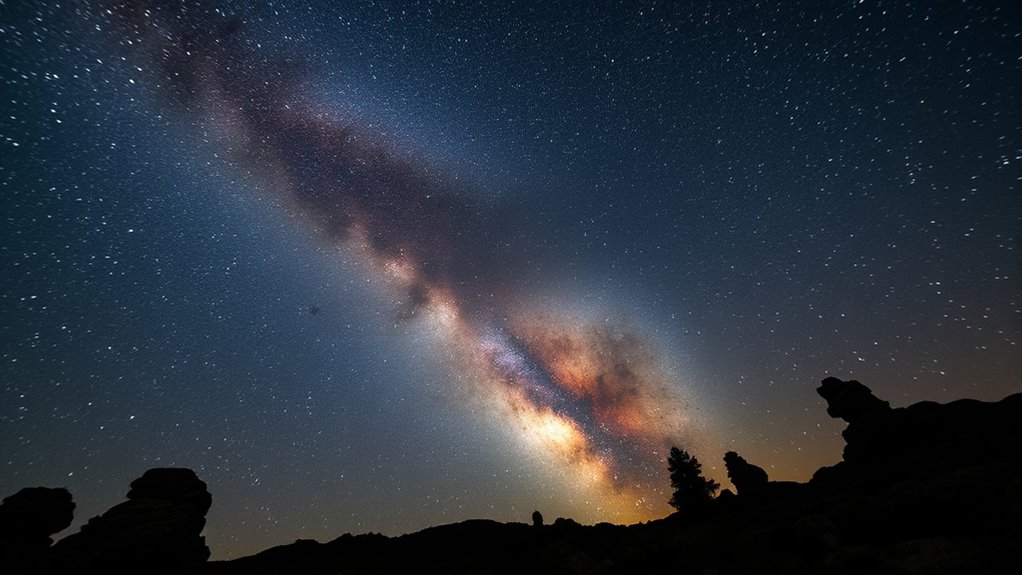

If you’re aiming to capture stunning Milky Way shots in 2025, I recommend checking out the Sony E 16mm F2.8 for its compact size and sharp, wide view, the AstrHori 6mm F2.8 fisheye for immersive, creative shots, and the VILTROX 75mm f/1.2 for detailed, low-light images. Each lens offers durability, excellent optics, and outdoor readiness. Keep exploring, and you’ll find ways to elevate your night sky photography even further.
Key Takeaways
- Ultra-wide lenses like 14mm to 16mm are ideal for capturing expansive night sky views and the Milky Way.
- Bright apertures (f/1.2 to f/2.8) maximize light intake for clearer, more detailed astrophotography.
- Compact, weather-sealed designs ensure durability and portability during outdoor night shoots.
- Notable options include Sony E 16mm F2.8, AstrHori 6mm F2.8 fisheye, and VILTROX 75mm f/1.2 for versatile Milky Way captures.
- Compatibility with popular mirrorless mounts and manual focus capabilities are crucial for precise astrophotography results.

Sony E 16mm F2.8 Wide-Angle Prime Lens (SEL16F28) | Compact Pancake Design, Lightweight Travel |Filter Kit, Cap Keeper, Cleaning Kit, and More
Sony USA Authorized. Sony E 16mm f/2.8 Lens (Silver) with 49mm 3-piece filter kit, cleaning kit, and lens...
As an affiliate, we earn on qualifying purchases.
Sony E 16mm F2.8 Wide-Angle Prime Lens (SEL16F28)
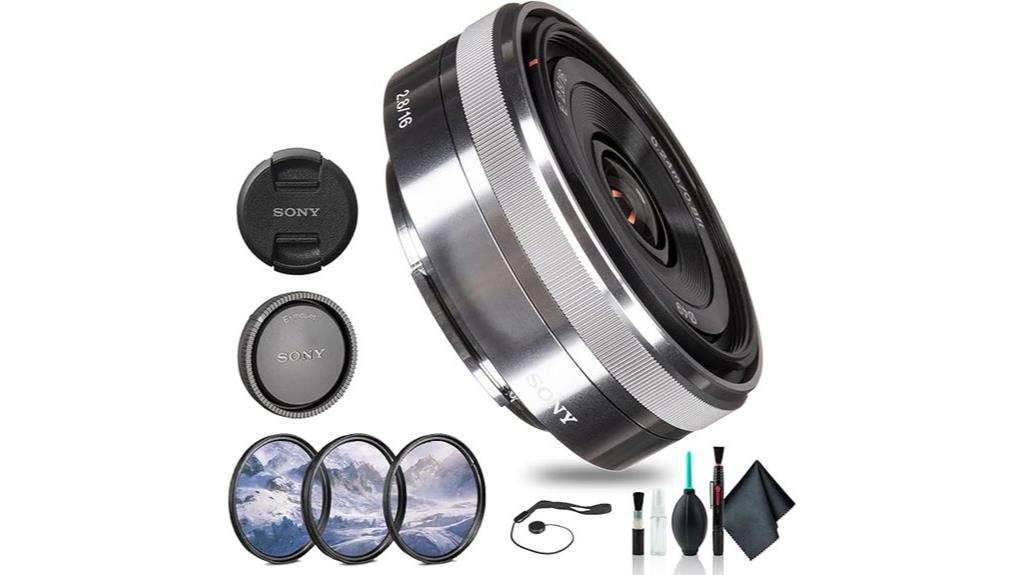
If you’re looking for a compact, lightweight lens that delivers sharp wide-angle shots for Milky Way photography, the Sony E 16mm F2.8 (SEL16F28) is an excellent choice. Its pancake design makes it highly portable, weighing just 67 grams and measuring only 22.5mm long—perfect for travel. With a bright F2.8 aperture, it performs well in low light, capturing the night sky with clarity and smooth background blur. The lens features aspherical elements to reduce distortion and spherical aberrations, ensuring sharp images. Its quiet autofocus motor is ideal for both photos and videos, making it a versatile tool for night sky enthusiasts.
Best For: photography enthusiasts seeking a compact, low-light capable wide-angle lens ideal for travel, street, landscape, and astrophotography.
Pros:
- Ultra-compact and lightweight design, perfect for portability and travel.
- Bright F2.8 aperture suitable for low-light conditions and artistic background blur.
- Incorporates aspherical elements to minimize distortion and spherical aberrations, ensuring sharp images.
Cons:
- Limited to a 24mm equivalent focal length, which may not suit all portrait or telephoto needs.
- Slightly higher price point for a prime lens of this size and aperture.
- Fixed focal length reduces versatility compared to zoom lenses.

AstrHori 6mm F2.8 Circular Fisheye Lens for Nikon Z Mount, 220° Ultra-Wide Full Frame Manual Lens for Astronomy, Night Sky & Milky Way Photography, Landscape, Architecture and Creative Shots
【Extraordinary 220° Field of View】Capture an ultra-wide perspective beyond the human eye. With a massive 220° angle of...
As an affiliate, we earn on qualifying purchases.
AstrHori 6mm F2.8 Circular Fisheye Lens for Nikon Z Mount
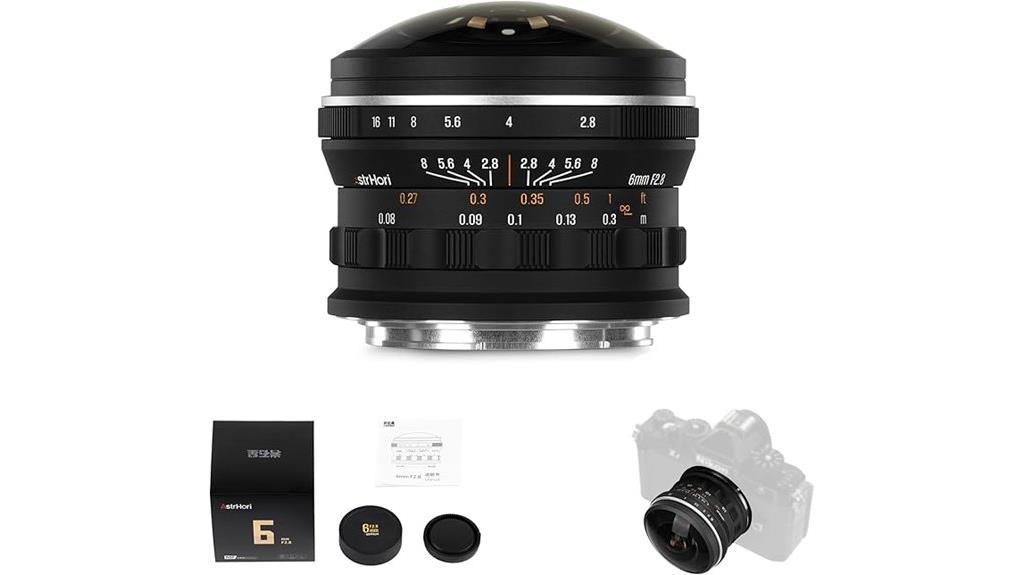
The AstrHori 6mm F2.8 Circular Fisheye Lens for Nikon Z Mount stands out as an exceptional choice for astrophotographers seeking a dramatic, immersive view of the night sky. With a 220° ultra-wide field of view, it captures the entire sky in a circular image, creating bold, spherical effects perfect for Milky Way shots and creative landscapes. Its large F2.8 aperture guarantees sharp images in low-light conditions, while the compact, all-metal build makes it travel-friendly. Manual focus offers precise control, making it ideal for artistic storytelling and night sky photography. This lens truly transforms your astrophotography with its unique perspective.
Best For: astrophotographers, landscape artists, and creative videographers seeking immersive, spherical visuals in low-light conditions.
Pros:
- Ultra-wide 220° field of view captures entire sky or scene in a circular image
- Large F2.8 aperture ensures sharp, detailed images in challenging lighting environments
- Compact all-metal design makes it portable and durable for outdoor use
Cons:
- Manual focus may require practice to perfect for specific shots
- Fixed focal length limits versatility compared to zoom lenses
- Suitable primarily for specialized creative and astrophotography projects

VILTROX 75mm f/1.2 F1.2 EF PRO EF Lens for Sony E-Mount Ultra Wide Angle APS-C Auto Focus Prime Lens Compatible with Sony E-Mount Mirrorless Cameras A7M/R/S Series A7Cc A9 A1 A6x00 Fs5
F1.2 Super Large Aperture: VILTROX 75mm F1.2 EF lens is equipped with bright f/1.2 maximum aperture suits that...
As an affiliate, we earn on qualifying purchases.
VILTROX 75mm f/1.2 EF PRO Lens for Sony E-Mount
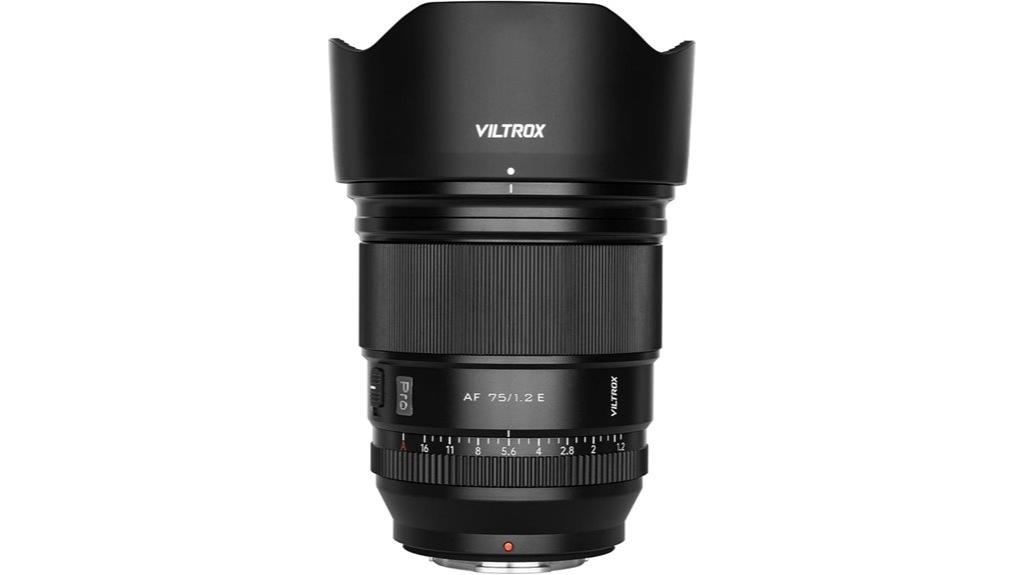
Photographers seeking exceptional low-light performance will find the VILTROX 75mm f/1.2 EF PRO lens an excellent choice, especially for capturing the Milky Way. Designed for Sony E-mount cameras like the A7 series and A1, it offers an ultra-wide perspective with a bright f/1.2 aperture that gathers ample light in dark conditions. The advanced STM autofocus system ensures quick, accurate focusing, while manual override provides control when needed. Its optical design with 16 elements in 11 groups delivers sharp, detailed images with minimal aberration. Perfect for astrophotography and videos, this lens combines versatility and high-quality performance for night sky enthusiasts.
Best For: astrophotographers and videographers using Sony E-mount cameras who need exceptional low-light performance and sharp, detailed images in night sky or dark conditions.
Pros:
- Large f/1.2 aperture allows for excellent light gathering in low-light environments.
- Fast and accurate autofocus with manual override for versatile shooting.
- High optical quality with minimal aberration, ensuring crisp, detailed images.
Cons:
- Relatively heavy and bulky due to wide aperture and optical design.
- Higher price point compared to standard prime lenses.
- Limited to Sony E-mount cameras, restricting compatibility with other systems.
Factors to Consider When Choosing Wide-Field Lenses for Milky Way Photography

When selecting a wide-field lens for Milky Way photography, I consider factors like focal length and aperture size to guarantee I capture enough sky with clarity. I also pay attention to the lens’s size and compatibility with my camera, along with build quality for durability during outdoor shoots. Understanding these points helps me choose a lens that balances performance, portability, and reliability.
Focal Length Range
Choosing the right focal length range is essential for capturing stunning Milky Way shots, as it determines how much of the night sky and foreground you’ll include in your frame. Wide-field lenses typically range from 14mm to 35mm, offering a variety of perspectives. Ultra-wide lenses (below 20mm) provide an immersive view, emphasizing the vastness of the Milky Way and allowing you to capture large portions of the sky. Longer focal lengths (above 24mm) can help isolate specific features or details within the galaxy but limit the overall scene. Your choice depends on your goals—whether to showcase the entire galaxy or focus on particular celestial highlights. Balancing focal length with your desired composition is key to achieving stunning astrophotography results.
Aperture Size Importance
Have you ever wondered why a large aperture is so vital for Milky Way photography? It’s because a bigger aperture, like f/1.4 or f/2.8, lets in more light, capturing the faint details of the night sky more effectively. This allows for shorter exposure times, which helps prevent star trails caused by Earth’s rotation. Plus, a wide aperture improves low-light performance, resulting in clearer images with less ISO noise. I recommend an aperture of at least f/2.8 to balance light intake and sharpness. A large aperture also creates a shallower depth of field, adding a beautiful background blur that makes your Milky Way photos more dramatic and mesmerizing. In short, aperture size plays a vital role in capturing stunning night sky images.
Size and Portability
A wide-field lens that’s compact and lightweight makes a significant difference during long nights under the stars. It’s easier to carry and set up in remote outdoor locations, reducing fatigue during extended shoots. Smaller lenses with minimal bulk let me move quickly, framing new shots without hassle—crucial when capturing dynamic celestial scenes. Their portability also helps minimize vibrations and camera shake, especially when shooting handheld or with minimal stabilization. Plus, lightweight designs make packing and traveling a breeze, fitting comfortably into backpacks or camera bags. This ease of transport means I can focus more on the sky and less on bulky gear, making my astrophotography sessions more enjoyable and efficient. Overall, size and portability are key factors that enhance the entire Milky Way photography experience.
Compatibility With Cameras
To guarantee your wide-field lens performs flawlessly for Milky Way photography, verifying that the lens mount matches your camera’s mount type, such as Sony E-mount or Nikon Z-mount, is essential. Compatibility begins here; a mismatch means the lens won’t attach at all. Next, confirm the lens suits your camera’s sensor size—full-frame or APS-C—as this impacts field of view and image quality. Support for manual focus is also critical, as precise adjustments are often necessary in astrophotography. Additionally, check if your camera’s firmware is compatible with the lens’s electronic features to ensure seamless communication. Finally, consider the lens’s size and weight relative to your camera body to maintain comfortable handling during outdoor shoots. Proper compatibility guarantees peak performance and better astrophotography results.
Build and Durability
When selecting a wide-field lens for Milky Way photography, durability and build quality are essential because you’ll often shoot in challenging outdoor conditions. A robust, weather-sealed construction protects against moisture, dust, and temperature fluctuations, ensuring reliable performance. Materials like metal or reinforced plastics improve impact resistance and longevity, especially during travel or outdoor shoots. A compact, lightweight design makes handling easier and reduces fatigue during long exposures. The lens mount and internal components should resist corrosion from humidity and dust, maintaining smooth operation over time. High-quality build standards not only safeguard the lens but also help maintain consistent optical performance, even after exposure to tough field conditions. Prioritizing these factors guarantees your gear stays reliable, allowing you to focus on capturing stunning night sky images.
Frequently Asked Questions
How Do Lens Coatings Affect Astrophotography Clarity?
Lens coatings play a vital role in astrophotography clarity by reducing reflections and glare that can cause image flare. They also help minimize chromatic aberrations and increase light transmission, allowing more starlight to reach the sensor. When I choose a lens, I look for high-quality coatings because they guarantee sharper, clearer images of the night sky, especially in low-light conditions, giving my astrophotos that professional edge.
What Is the Best Aperture for Capturing Star Details?
The best aperture for capturing star details is typically f/2.8 or wider. I prefer using an aperture like f/2.8 because it lets in more light, revealing more stars and Milky Way details. If your lens has a wider aperture, say f/1.4 or f/1.8, you can gather even more light, which is great for low-light astrophotography. Just remember, wider apertures often mean more lens aberrations, so find a good balance.
How Does Lens Distortion Impact Milky Way Images?
Lens distortion can be a real thorn in the side when capturing the Milky Way, warping star shapes and creating unwanted curves. It’s like looking through a funhouse mirror—your night sky becomes less authentic and more distracting. To get crisp, true-to-life images, I recommend using lenses with minimal distortion and correcting any issues in post-processing. That way, your photos stay as breathtaking and natural as the night sky itself.
Are Manual Focus Lenses Better for Night Sky Photography?
I find manual focus lenses are better for night sky photography because they give me more control over focusing precisely on distant stars. Autofocus struggles in low light, making it unreliable, while manual focus allows me to fine-tune until everything’s sharp. Plus, many manual lenses have a focus ring with a smooth, precise feel that helps me achieve the perfect focus, essential for capturing clear, stunning Milky Way shots.
What Lens Size Is Optimal for Portable Astrophotography Setups?
I find that a lens around 14 to 24mm is ideal for portable astrophotography setups. It strikes a great balance between wide coverage and manageable size, making it easy to carry around. I prefer fast apertures like f/2.8 or wider to gather more light in dark skies. This setup lets me capture stunning Milky Way images without lugging heavy gear, keeping my shoots spontaneous and enjoyable.
Conclusion
Choosing the right wide-field lens can truly elevate your Milky Way shots. Did you know that over 80% of amateur astrophotographers report better results with prime lenses due to their sharpness? Whether you prefer the versatility of the Sony E 16mm, the unique fisheye perspective of the AstrHori, or the bright aperture of the VILTROX, selecting the right lens makes all the difference. Ready to capture the night sky like a pro? Your perfect shot awaits!