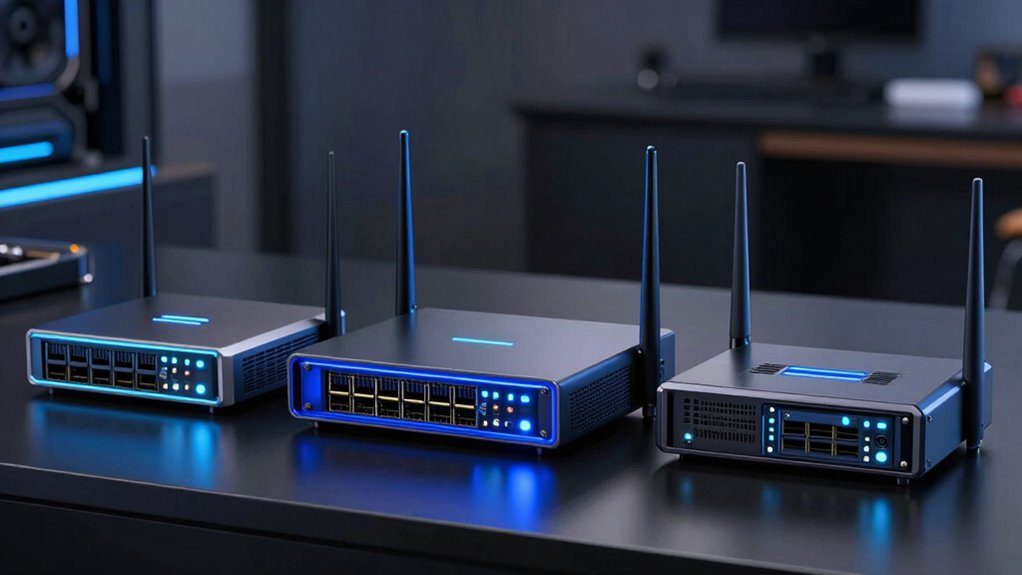

For those seeking high-performance networking, multi gig routers with 10GBe WAN ports stand out as essential tools. The NETGEAR 10G/Multi-Gigabit Dual WAN Pro Router (PR60X) makes a strong case as the best overall thanks to its versatile management and reliable throughput. The NEGEAR Nighthawk WiFi 7 Router (BE9300) offers cutting-edge Wi-Fi 7 speeds for demanding households, while the TP-Link Archer BE600 combines tri-band Wi-Fi 7 with a 10G port for a balanced mix of speed and connectivity. Buyers often face tradeoffs between raw speed, ease of setup, and future-proofing, making it essential to understand what suits your specific environment. Continue reading for the full breakdown of these top contenders and what makes each one unique.

Get the latest gadgets delivered free with Prime
- Fast, free delivery on millions of items
- Prime Video, Amazon Music and more included
- Member-only deals all year
Complete the kit


Key Takeaways
- The best routers balance multi-gig WAN ports with user-friendly management features.
- Wi-Fi 7 models generally offer faster wireless speeds but may come at a higher cost and complexity.
- Unmanaged switches like the TP-Link TL-SX105 are ideal for expanding wired connectivity without complexity.
- Premium options deliver maximum throughput but often require more technical know-how to configure properly.
- Value-focused models tend to prioritize essential features over advanced management, suitable for smaller setups.
| Cudy Gigabit Multi-WAN VPN Router R700 |  | Best for Small Business with VPN and Load Balancing | WAN Ports: 1 Gigabit WAN, 3 Gigabit WAN/LAN, 1 Gigabit LAN | VPN Support: PPTP, L2TP, OpenVPN, WireGuard, IPsec | Load Balancing: Yes | VIEW ON AMAZON | See Our Full Breakdown |
| NETGEAR 10G/Multi-Gigabit Dual WAN Pro Router with Insight Cloud Management (PR60X) |  | Best for Medium-Sized Business with Cloud Management | Hardware Ports: 1 x 10G/Multi-Gigabit LAN/WAN, 1 x 2.5G WAN, 3 x 2.5G LAN, 1 x 10G SFP+ | Failover Protection: Yes | VLAN Support: Up to 32 VLANs | VIEW ON AMAZON | See Our Full Breakdown |
| TP-Link Tri-Band WiFi 7 Router (Archer BE600) with 10G Port and HomeShield Security |  | Best for Large Homes and High-Speed Wireless Needs | WiFi Technology: WiFi 7 | Max Speed: up to 5,765 Mbps | Coverage: up to 2,600 sq. ft. | VIEW ON AMAZON | See Our Full Breakdown |
| TP-Link TL-SX105 5-Port 10G/Multi-Gig Unmanaged Ethernet Switch |  | Best for High-Speed Network Expansion in Small Environments | Ports: 5 x 10-Gigabit ports | Speed: Auto-negotiates between 100Mb/1G/2.5G/5G/10G | Design: Fanless, metal casing, desktop/wall mountable | VIEW ON AMAZON | See Our Full Breakdown |
| NETGEAR Nighthawk WiFi 7 Router (BE9300) |  | Best for Gaming and Streaming with WiFi 7 | Wireless Speed: 9.3Gbps | Coverage: 2,500 sq. ft. | Device Support: up to 100 devices | VIEW ON AMAZON | See Our Full Breakdown |
| TP-Link Tri-Band BE11000 Wi-Fi 7 Gaming Router Archer GE650 |  | Best Overall for High-Speed Gaming and Streaming | Wi-Fi Standard: Wi-Fi 7 | Speed: 11 Gbps | Bands: Tri-band (6 GHz, 5 GHz, 2.4 GHz) | VIEW ON AMAZON | See Our Full Breakdown |
| ASUS ExpertWiFi EBG15 Gigabit VPN Wired Router |  | Best for Business Security and Stability | Ethernet Ports: Up to 3 WAN, 1 USB WAN | Security: IPS, VPN, VLAN | Management: Remote via web or app | VIEW ON AMAZON | See Our Full Breakdown |
| NETGEAR WiFi 6 Router (R6700AX) – AX1800 Wireless Speed, Dual-Band |  | Best for Small Homes and Multi-Device Streaming | Wireless Speed: Up to 1.8 Gbps | Bands: Dual-Band (2.4 GHz and 5 GHz) | Coverage: Up to 1500 sq ft | VIEW ON AMAZON | See Our Full Breakdown |
| TP-Link ER605 V2 Wired Gigabit VPN Router with Multi-WAN and Omada SDN |  | Best for SMBs Needing Managed Multi-WAN Connectivity | Number of Ports: 5 | WAN Ports: 3 Ethernet + 1 USB | Maximum Data Transfer Rate: 4000 Mbps | VIEW ON AMAZON | See Our Full Breakdown |
More Details on Our Top Picks
Cudy Gigabit Multi-WAN VPN Router R700
The Cudy R700 stands out for its robust support of multiple VPN protocols like OpenVPN, WireGuard, and IPsec, making it ideal for small businesses needing secure remote access. Compared with the NETGEAR PR60X, it offers a more compact, desktop form factor but lacks multi-gigabit WAN ports and extensive VLAN support, limiting its scalability. Its load balancing feature helps optimize bandwidth across multiple WAN connections, though setup complexity could challenge less technical users. The device’s sturdy metal casing and lightning protection add reliability in varied environments, but its limited number of LAN ports may restrict larger networks. This pick makes the most sense for small businesses prioritizing VPN flexibility and a durable design over sheer port quantity or advanced management.
Pros:- Supports multiple VPN protocols for versatile secure connections
- Load balancing optimizes bandwidth across multiple WAN links
- Compact, durable metal casing suitable for various environments
Cons:- Limited number of LAN ports for bigger networks
- Setup can be complex for users without technical expertise
- No Wi-Fi capabilities included
Best for: Small business owners needing flexible VPN options and reliable load balancing in a compact device
Not ideal for: Larger enterprises requiring extensive LAN ports and advanced network management features
- WAN Ports:1 Gigabit WAN, 3 Gigabit WAN/LAN, 1 Gigabit LAN
- VPN Support:PPTP, L2TP, OpenVPN, WireGuard, IPsec
- Load Balancing:Yes
- Design:Desktop, metal casing
- Lightning Protection:Yes
- Additional Features:Supports multiple VPN protocols, compact and durable
Our verdict“This router suits small businesses seeking VPN flexibility and reliable multi-WAN support in a compact form.”
NETGEAR 10G/Multi-Gigabit Dual WAN Pro Router with Insight Cloud Management (PR60X)
The NETGEAR PR60X delivers high-speed connectivity with 10G and multi-gig ports, making it a clear choice for small to medium enterprises that require fast data transfer and dual WAN failover. Compared with the Cudy R700, its advanced features like VLAN support and cloud management via Insight set it apart, though this makes it more complex to configure. The dual WAN failover provides seamless connectivity, and the 10G ports future-proof the network infrastructure, but its focus on business users means it may be overkill for casual or home setups. The rackmount design ensures it fits into professional environments, while its higher price reflects its enterprise-grade capabilities. This device is best for organizations that value reliability and remote management over simplicity.
Pros:- High-speed 10G/Multi-Gigabit ports for rapid data transfer
- Dual WAN failover ensures uninterrupted connectivity
- Cloud management via Insight simplifies remote configuration
- Supports multiple VPN protocols for secure remote access
Cons:- Designed primarily for business, may be too complex for casual users
- Higher cost compared to simpler routers
- Requires familiarity with network management to optimize
Best for: IT managers of small-to-medium businesses needing high-speed, managed, and remotely accessible networks
Not ideal for: Home users or small offices without dedicated IT staff due to complexity and cost
- Hardware Ports:1 x 10G/Multi-Gigabit LAN/WAN, 1 x 2.5G WAN, 3 x 2.5G LAN, 1 x 10G SFP+
- Failover Protection:Yes
- VLAN Support:Up to 32 VLANs
- VPN Support:IPSec, OpenVPN, WireGuard
- Management:NETGEAR Insight Cloud
- Form Factor:Rackmount
Our verdict“This router is ideal for businesses seeking high-speed, managed dual WAN solutions with remote oversight.”
TP-Link Tri-Band WiFi 7 Router (Archer BE600) with 10G Port and HomeShield Security
The TP-Link Archer BE600 offers blazing WiFi 7 speeds combined with multi-gig ports, making it suitable for large households with many devices demanding fast wireless and wired connections. Compared to the NETGEAR Nighthawk BE9300, it provides a higher maximum wireless speed (up to 5,765 Mbps) and broader coverage, ideal for multi-user environments. Its six antennas with Beamforming enhance wireless stability, and the easy setup via the Tether app suits users who prefer straightforward installation. However, its premium price and complex feature set might overwhelm users only seeking basic internet access. The inclusion of security features like HomeShield adds value for safety-conscious users, yet its high cost makes it less appealing for budget-conscious households.
Pros:- WiFi 7 technology delivers exceptional wireless speeds
- Extensive coverage up to 2,600 sq. ft. for large homes
- Multi-gig ports for fast wired connections
- Advanced security with HomeShield
Cons:- Premium price point may be high for some users
- Features can be overwhelming for basic users
- Requires compatible devices to fully utilize WiFi 7 speeds
Best for: Homeowners with large properties and demanding wireless needs who want high-speed internet for multiple devices
Not ideal for: Basic users or small apartments where such advanced features are unnecessary and cost-prohibitive
- WiFi Technology:WiFi 7
- Max Speed:up to 5,765 Mbps
- Coverage:up to 2,600 sq. ft.
- Devices Supported:up to 120
- Ports:1x 10 Gbps WAN/LAN, 1x 2.5 Gbps WAN/LAN, 3x 2.5 Gbps LAN
- Security:HomeShield Security
Our verdict“This router is best for large households seeking top-tier WiFi 7 performance and extensive coverage with security features.”
TP-Link TL-SX105 5-Port 10G/Multi-Gig Unmanaged Ethernet Switch
The TP-Link TL-SX105 provides a simple, reliable way to add high-speed 10G connectivity with minimal fuss. Its unmanaged design makes it ideal for quick setups and environments where advanced management isn’t necessary, such as small offices or home labs. Compared with the NETGEAR PR60X, it doesn’t support VLANs or remote management, but its plug-and-play nature and sturdy metal casing make it highly dependable for expanding wired networks. The auto-negotiation feature ensures compatibility across devices, and its fanless, durable build guarantees quiet operation. A clear tradeoff is the absence of management features, which might limit its integration into more complex networks. This switch is best suited for users who need robust, high-speed ports without extra configuration hassle.
Pros:- Five 10-Gigabit ports for high-speed data transfer
- Fanless design ensures quiet operation
- Durable metal casing and versatile mounting options
- Plug-and-play setup for quick deployment
Cons:- Lacks management features for traffic control or VLANs
- Unmanaged design limits scalability in complex networks
Best for: Small offices or home setups needing quick, reliable 10G connections without management complexity
Not ideal for: Large networks requiring VLANs, traffic management, or centralized control
- Ports:5 x 10-Gigabit ports
- Speed:Auto-negotiates between 100Mb/1G/2.5G/5G/10G
- Design:Fanless, metal casing, desktop/wall mountable
- Warranty:3 years
- Additional Features:Plug-and-play, durable build
Our verdict“This unmanaged switch is perfect for expanding high-speed wired connectivity with minimal setup effort in small environments.”
NETGEAR Nighthawk WiFi 7 Router (BE9300)
The NETGEAR Nighthawk BE9300 excels with its impressive 9.3Gbps WiFi 7 speeds, making it ideal for gaming, streaming, and large device support in a home environment. Compared to the TP-Link Archer BE600, it offers a slightly lower maximum wireless speed but benefits from a user-friendly design and a more compact size. Its wide coverage of 2,500 sq. ft. and support for up to 100 devices cater well to busy households. The inclusion of a 2.5 Gigabit Ethernet port ensures fast multi-gig wired connections. However, it requires a separate modem, and its limited regional availability might restrict some users. This router prioritizes high-speed wireless performance and ease of use for entertainment-focused households.
Pros:- Very fast WiFi 7 speeds ideal for gaming and streaming
- Wide coverage area suitable for medium-sized homes
- Supports multiple devices simultaneously
- Includes a 2.5 Gigabit Ethernet port for fast wired connections
Cons:- Requires a separate modem, adding to setup complexity
- Limited regional availability might restrict access
- No integrated modem included
Best for: Home users seeking fast WiFi 7 speeds for gaming and streaming in medium-sized spaces
Not ideal for: Users with existing modems or those needing extensive network management features
- Wireless Speed:9.3Gbps
- Coverage:2,500 sq. ft.
- Device Support:up to 100 devices
- Internet Port:2.5 Gigabit
- WiFi Standard:WiFi 7
- Size:4″ W x 5.9″ D x 9.8″ H
Our verdict“This router fits households looking for high-speed WiFi 7 with broad coverage and easy setup for entertainment needs.”
TP-Link Tri-Band BE11000 Wi-Fi 7 Gaming Router Archer GE650
The TP-Link Archer GE650 stands out for its exceptional Wi-Fi 7 speeds, topping out at 11 Gbps, making it ideal for intense gaming, 4K streaming, and smart home setups. Compared with the NETGEAR AX1800 (R6700AX), it offers far higher wireless capacity and multi-gig wired options, but at a significantly higher price and size. Its tri-band design ensures multiple devices can operate simultaneously without congestion, and game acceleration features help reduce lag. However, the complex feature set and premium cost might overwhelm casual users, and its large footprint could be restrictive in smaller spaces. This pick makes the most sense for power users who need maximum throughput and are comfortable managing advanced features.
Pros:- Extremely fast Wi-Fi 7 speeds exceeding 10 Gbps for gaming and streaming
- Multiple gigabit ports support high-bandwidth wired connections
- Game acceleration features reduce lag and ping
Cons:- Complex feature set may be overwhelming for casual users
- Premium price point may be prohibitive for budget-conscious buyers
- Large size could be problematic in compact spaces
Best for: Gamers, streamers, and tech enthusiasts seeking top-tier wireless speeds and wired flexibility.
Not ideal for: Casual users or those with limited space who prefer simple setups without RGB lighting or high complexity.
- Wi-Fi Standard:Wi-Fi 7
- Speed:11 Gbps
- Bands:Tri-band (6 GHz, 5 GHz, 2.4 GHz)
- Ports:2×5G WAN, 3×2.5G LAN, USB 3.0
- Processor:1.5 GHz quad-core CPU
- Supported Devices:Up to 100
Our verdict“This router suits tech-savvy users who prioritize maximum speed and wired connectivity, even at a higher price and size.”
ASUS ExpertWiFi EBG15 Gigabit VPN Wired Router
The ASUS ExpertWiFi EBG15 is designed for enterprise reliability, offering three WAN ports with load balancing, advanced security features like IPS and VPN, and remote management. It excels in environments where stability and security outweigh wireless features—unlike the TP-Link GE650, which emphasizes Wi-Fi speeds. Its multiple WAN ports provide redundancy and load balancing, making it suitable for small businesses or remote offices needing continuous, secure internet. However, the absence of Wi-Fi capabilities limits its use to wired setups, and its complexity is less suited for casual users. This device makes the most sense for SMBs requiring stable, secure, and manageable wired connections.
Pros:- Multiple WAN ports with load balancing for stable connectivity
- Advanced security features including IPS, VPN, and VLAN
- Remote management via web or mobile app simplifies control
Cons:- Designed primarily for wired networks, lacking Wi-Fi
- Setup complexity may challenge beginners
- No integrated wireless capabilities
Best for: Small businesses or remote offices needing dependable, secure wired internet with VPN support.
Not ideal for: Home users seeking wireless coverage or simple plug-and-play setups, as it lacks Wi-Fi functionality.
- Ethernet Ports:Up to 3 WAN, 1 USB WAN
- Security:IPS, VPN, VLAN
- Management:Remote via web or app
- Maximum Data Rate:4000 Mbps
- Wi-Fi Generation:None
- Supported VPN Protocols:IPsec, OpenVPN, L2TP, PPTP
Our verdict“Ideal for security-conscious SMBs needing reliable, multi-WAN wired connections with centralized management.”
NETGEAR WiFi 6 Router (R6700AX) – AX1800 Wireless Speed, Dual-Band
The NETGEAR R6700AX delivers solid Wi-Fi 6 speeds with AX1800 bandwidth, supporting up to 20 devices simultaneously. Compared with the TP-Link GE650’s wired gigabit ports, it prioritizes wireless flexibility for typical home use, with coverage up to 1500 sq ft. Its dual-band design ensures decent performance in multi-device environments, but it doesn’t support multi-gig wired speeds or Wi-Fi 7, limiting future-proofing for ultra-high-speed needs. Setup is straightforward via the app, and security features like WPA3 add peace of mind. However, in larger or multi-story homes, coverage could fall short without additional extenders. It suits households needing reliable Wi-Fi for streaming and gaming without expensive tech or complex configurations.
Pros:- Fast Wi-Fi 6 speeds supporting many devices
- Supports up to 20 devices simultaneously
- Easy setup via app or web interface
Cons:- Requires a separate modem for internet connectivity
- Limited coverage in larger or multi-story homes
- No support for multi-gig wired connections
Best for: Families or small apartments that want reliable Wi-Fi 6 coverage for multiple devices.
Not ideal for: Environments demanding multi-gig wired speeds or Wi-Fi 7 capabilities, as it’s limited to Wi-Fi 6 and standard gigabit ports.
- Wireless Speed:Up to 1.8 Gbps
- Bands:Dual-Band (2.4 GHz and 5 GHz)
- Coverage:Up to 1500 sq ft
- Device Support:Up to 20 devices
- Ethernet Ports:4 Gigabit LAN
- Security:WPA3 encryption
Our verdict“Best suited for small households needing dependable Wi-Fi 6 coverage without high complexity or cost.”
TP-Link ER605 V2 Wired Gigabit VPN Router with Multi-WAN and Omada SDN
The TP-Link ER605 V2 excels in supporting multi-WAN configurations with three Ethernet and one USB port for backup, making it a strong choice for SMB networks that demand reliable, secure internet. Unlike the ASUS EBG15, which focuses on security and remote management, the ER605 emphasizes load balancing and Omada SDN integration, streamlining network management for larger or more complex setups. Its VPN support and security features provide a robust shield against threats, but its lack of Wi-Fi means it needs additional access points for wireless coverage. The setup can be daunting for beginners, yet it offers serious value for those who need flexible, secure wired connections with centralized control.
Pros:- Supports multiple WAN connections for load balancing and backup
- Advanced security with SPI firewall and VPN protocols
- Omada SDN integration simplifies centralized network management
Cons:- No built-in Wi-Fi, requiring additional access points
- Setup complexity may challenge less experienced users
- Limited to wired connectivity only
Best for: SMBs or remote offices seeking managed, multi-WAN wired solutions with VPN and security features.
Not ideal for: Home users or environments needing integrated Wi-Fi, as it is purely wired and more complex to configure.
- Number of Ports:5
- WAN Ports:3 Ethernet + 1 USB
- Maximum Data Transfer Rate:4000 Mbps
- Security Features:SPI Firewall, DoS Defense, VPN
- Supported VPN Protocols:IPsec, OpenVPN, L2TP, PPTP
- Wi-Fi Generation:None
Our verdict“Perfect for SMBs needing flexible, secure wired multi-WAN connections with centralized management, despite setup complexity.”
How We Picked
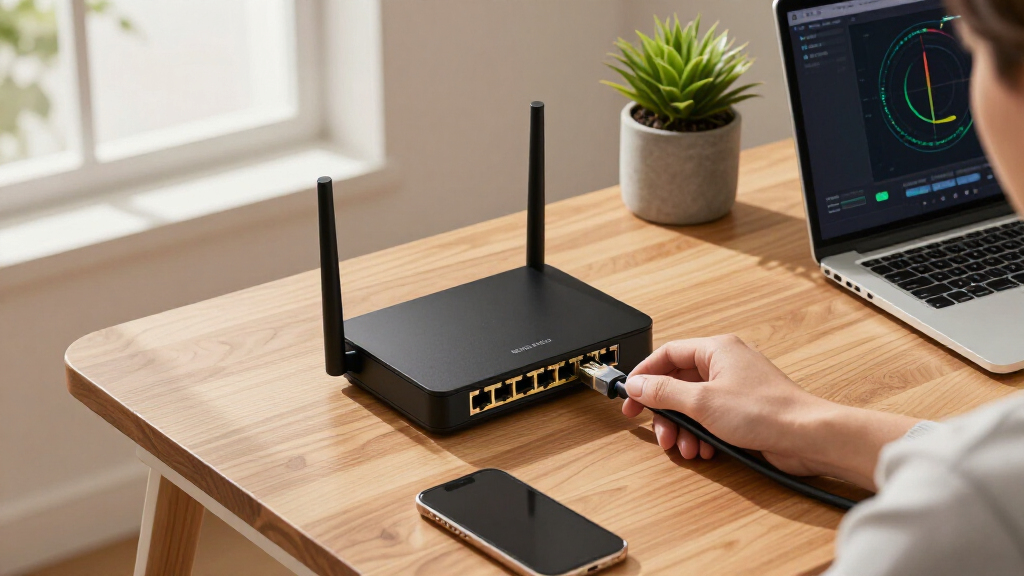
To evaluate these multi gig routers with 10GBe WAN ports, I focused on performance, ease of use, build quality, and future-proofing. Speed benchmarks, especially on WAN and Wi-Fi, were critical to identifying models capable of handling high-bandwidth tasks. I also considered management features and security, since enterprise and prosumer users require reliable control and protection. Cost was a factor, but not at the expense of essential capabilities—premium features justified higher prices. The ranking reflects a balance of raw speed, usability, and scalability, ensuring each product fills a specific niche in high-speed networking.Factors to Consider When Choosing Multi Gig Routers 10gbe Wan
Choosing the right multi gig router with a 10GBe WAN port requires assessing both your current needs and future plans. While high bandwidth capabilities are appealing, they must be paired with features that match your technical skill level and network complexity. Cost, compatibility, and expandability also play critical roles. Below are key factors to consider to make an informed decision that aligns with your networking environment.Performance and Speed Capabilities
Speed isn’t just about the WAN port—look for routers that can deliver high throughput on both wired and wireless connections. Consider your internet plan’s maximum speed and whether the router can match or exceed it. For demanding environments, multi-gig ports combined with Wi-Fi 6 or Wi-Fi 7 support ensure you benefit from the latest standards, reducing bottlenecks and future-proofing your setup.
Ease of Management and Setup
Advanced features often come with a steeper learning curve. If you’re not a networking expert, prioritize models with intuitive management interfaces, guided setup processes, and integrated security tools. Some routers include cloud management, allowing remote configuration and monitoring, which can save time and reduce frustration during initial setup and ongoing maintenance.
Build Quality and Reliability
High-quality components reduce the risk of failures and ensure stable connections over time. Look for routers with solid construction, good heat dissipation, and proven firmware stability. Reliable hardware is especially important for critical applications like business connectivity or streaming high-resolution content without interruptions.
Expandability and Compatibility
Consider whether the router supports additional wired or wireless devices seamlessly. Unmanaged switches or additional access points can extend wired network capacity, while compatibility with existing Wi-Fi standards ensures smooth integration. For future scalability, check for multi-gig ports and support for standards like Wi-Fi 7, which promise better performance and longevity.
Cost and Value
While premium models offer top-tier performance, they also come with higher prices. Smaller setups or less demanding environments might find better value in more affordable options that still provide multi-gig WAN ports. Be mindful of features you actually need versus those that add unnecessary expense, and consider long-term savings in reliability and scalability.
Frequently Asked Questions
Is a multi-gig WAN port necessary for my home network?
If your internet plan exceeds 1Gbps, a multi-gig WAN port can prevent bottlenecks and ensure you get the maximum speed your connection offers. For most typical residential users with plans under 1Gbps, a standard gigabit port suffices, but future upgrades or streaming, gaming, and large data transfers benefit from multi-gig support. Assess your current plan and future needs before investing in a multi-gig port.
Do I need Wi-Fi 7 support on my router?
Wi-Fi 7 delivers improved speed, lower latency, and better performance in dense environments. However, since client devices also need to support Wi-Fi 7 to benefit fully, the technology is still emerging. If you prioritize wireless performance and have compatible devices, investing in Wi-Fi 7 makes sense, but for now, Wi-Fi 6 still offers excellent speed and stability at a lower cost.
Can I use a regular switch with my router to expand wired connections?
Yes, unmanaged switches like the TP-Link TL-SX105 are simple, cost-effective ways to extend wired connectivity. They do not require configuration and work seamlessly with most routers. However, for more advanced network management or security, consider managed switches, especially if you plan to scale or need VLAN support.
How much should I expect to pay for a high-end multi gig router with 10GBe WAN?
Premium models with advanced features, Wi-Fi 7, and multiple multi-gig ports can range from $500 to over $1000. Mid-range options with solid performance typically cost between $300 and $500. Budget models might provide basic multi-gig support but may lack the scalability or advanced security features that high-end routers offer, so consider your specific needs carefully when budgeting.
Are multi-gig routers suitable for small offices or business use?
Absolutely, especially models designed with enterprise features like VPN support, advanced management, and reliable throughput. For small offices, these routers can handle multiple users, high data loads, and secure remote access. However, the complexity of setup and maintenance may require IT expertise, so evaluate your technical capacity before choosing a high-end multi-gig router for business use.