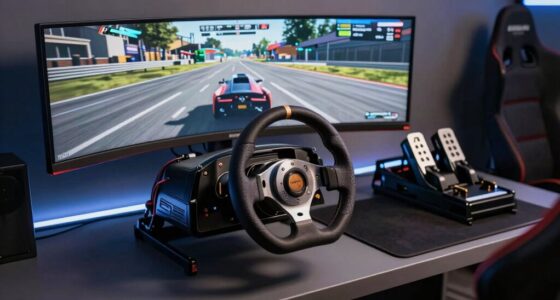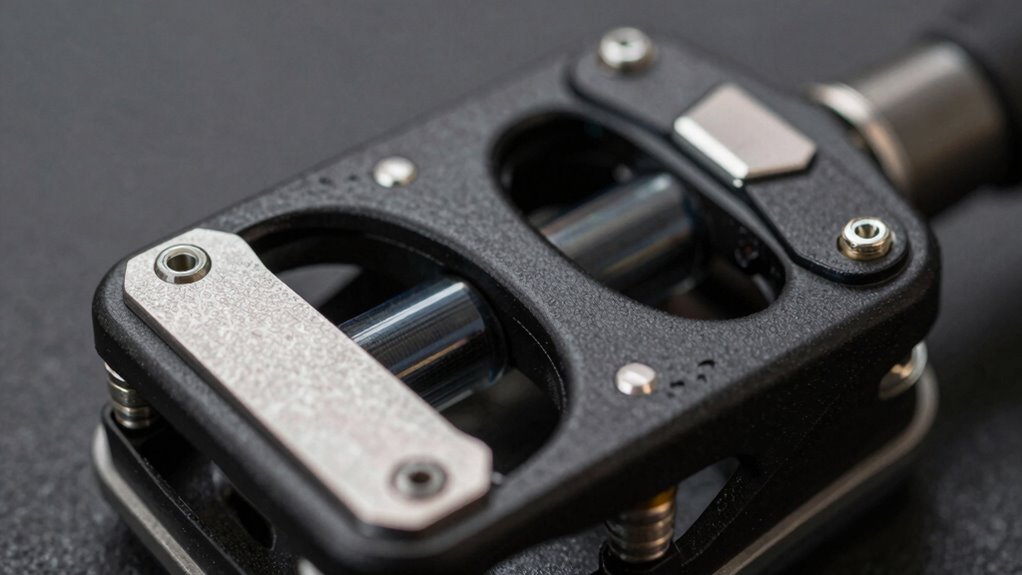
Load cell pedals feel different because they measure force directly using strain gauge sensors, offering a more natural and accurate feedback compared to traditional spring-based pedals. You’ll notice a consistent resistance that responds dynamically to how hard you press, mimicking real pedal behavior more closely. This nuanced response enhances control and immersion. As a result, you’ll experience a more realistic pedal feel. If you want to understand what else makes them stand out, keep exploring further.

Get the latest gadgets delivered free with Prime
- Fast, free delivery on millions of items
- Prime Video, Amazon Music and more included
- Member-only deals all year
Key Takeaways
- Load cell pedals measure force directly through strain gauges, providing a more natural resistance feel.
- Resistance varies with applied pressure, unlike fixed spring tension in traditional pedals.
- Calibration accuracy impacts how realistic and consistent the pedal response feels.
- Environmental factors like temperature can influence sensor performance and pedal feel.
- The dynamic resistance offers nuanced feedback, enhancing control and immersion during driving.
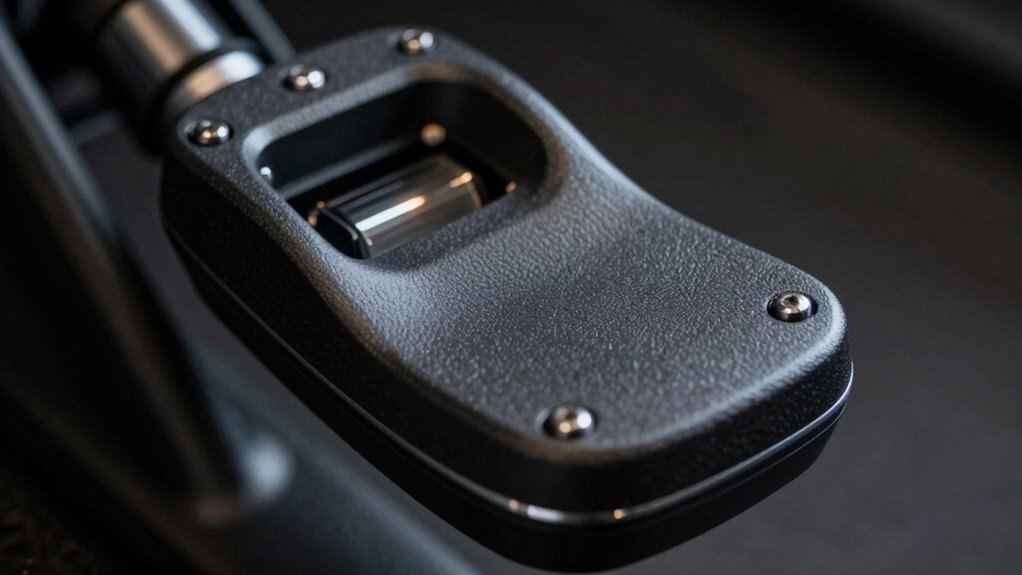
If you’ve recently switched to load cell pedals, you might notice that they feel different from traditional pedals. This change can be surprising at first, but understanding what causes these differences can make the transition smoother. One key factor is sensor calibration. Load cell pedals rely on strain gauge sensors to measure pedal input precisely. These sensors need proper calibration to ensure the pedal responds accurately to your pressure. If the sensor isn’t calibrated correctly, the pedal might feel inconsistent or overly sensitive. Proper sensor calibration ensures that your pedal’s response matches your input, providing a more natural and predictable feel. It’s essential to regularly check and calibrate the sensors, especially after installing new hardware or updating firmware, to maintain optimal performance. Additionally, the importance of requirements traceability in maintaining consistent calibration practices helps ensure ongoing accuracy and reliability. Achieving consistent calibration results often depends on following standardized procedures and documenting calibration data carefully. Consistent calibration also supports sensor longevity, ensuring the sensors continue to perform well over time. Proper calibration procedures can be supported by environmental conditions, as temperature and humidity can influence sensor accuracy. Another aspect that influences how load cell pedals feel is pedal resistance. Unlike traditional pedals, which often use springs or mechanical components to simulate resistance, load cell pedals measure force directly. This means the resistance you feel is more about the force applied to the sensor rather than a set spring tension. As a result, pedal resistance can feel more dynamic and nuanced, closely mimicking real-world pedal behavior. You might notice that the resistance varies depending on how hard you press, offering a more realistic experience. Adjusting the pedal’s resistance settings, if available, allows you to fine-tune how much force is needed to activate it. This customization helps you tailor the feel to your preferences and driving style, enhancing control and immersion. Proper calibration and performance fluids can also play a role in maintaining sensor accuracy and durability over time.
As an affiliate, we earn on qualifying purchases.
Frequently Asked Questions
How Does Pedal Placement Affect Load Cell Pedal Feel?
Pedal placement greatly influences load cell pedal feel by impacting pedal ergonomics and driver comfort. When pedals are positioned correctly, you’ll find it easier to apply consistent pressure, enhancing your control and responsiveness. Poor placement can cause discomfort, fatigue, and inconsistent pedal feel, making driving less intuitive. Adjusting pedal height and distance ensures ideal ergonomics, so you can maintain comfort during long sessions and enjoy precise, confident control over your vehicle.
Can Software Settings Change the Tactile Response of Load Cell Pedals?
Yes, software settings can dramatically change how load cell pedals feel. By adjusting sensor calibration and firmware updates, you fine-tune tactile responses, making your pedal feel as precise as a master’s touch. Firmware updates improve overall responsiveness, while calibration guarantees accurate pressure detection. These tweaks personalize your experience, turning your pedal into an extension of your mind and skill, creating an almost supernatural control feel.
Do Load Cell Pedals Require Different Maintenance Than Other Pedals?
Yes, load cell pedals require different maintenance than other pedals. You need to regularly perform calibration procedures to guarantee accurate responses, as load cells can drift over time. Additionally, keep an eye on wear and tear, especially on the load cell components and contact points. Proper cleaning and occasional recalibration help maintain their precise tactile feel and performance, preventing issues caused by dirt, dust, or mechanical stress.
How Do Load Cell Pedals Perform Under Different Driving Conditions?
You’ll find load cell pedals perform reliably under various driving conditions because they rely on sensor calibration to maintain accuracy. They handle different pressures well, providing consistent feedback whether you’re racing on smooth tracks or bumpy roads. Plus, their hardware durability ensures they withstand intense use over time, so you don’t have to worry about performance dips. Proper sensor calibration and robust hardware make load cell pedals a dependable choice for diverse driving environments.
Are Load Cell Pedals Compatible With All Racing Simulators?
No, load cell pedals aren’t compatible with all racing simulators. You’ll need to guarantee sensor calibration matches your setup for ideal pedal responsiveness. If your simulator’s hardware or software isn’t designed for load cell technology, you might find yourself twisting knobs and recalibrating just to get a decent feel—because nothing says “plug and play” quite like a calibration nightmare. So, check compatibility before you invest in these fancy pedals.
As an affiliate, we earn on qualifying purchases.
Conclusion
Understanding what makes load cell pedals feel different helps you choose the perfect setup for your driving experience. Like a finely tuned instrument, each pedal offers a unique harmony of sensitivity and resistance, shaping your control over the road. When you grasp these nuances, you’ll feel more connected and confident behind the wheel. So, embrace the variety—think of it as finding the right key to release your full driving potential.
As an affiliate, we earn on qualifying purchases.
racing simulator pedal calibration kit
As an affiliate, we earn on qualifying purchases.
As an affiliate, we earn on qualifying purchases.
Halloween Picks
halloween
As an affiliate, we earn on qualifying purchases.