TL;DR

Get the latest gadgets delivered free — and shop member deals
- Fast, free delivery on millions of items
- Access to Prime Big Deal Days deals on October 6–7
- Prime Video, Amazon Music and more included
In 2026, six AI camera lenses are setting new standards in photography, offering enhanced image quality, versatility, and AI-driven features. This report highlights these lenses, their confirmed strengths, and what remains to be seen.
Six AI-enabled camera lenses have been recognized as the leading options in 2026 photography, offering significant advances in image quality, autofocus, and scene recognition. For a detailed overview, see the original analysis. These lenses are shaping the future of visual capture, making professional-grade features more accessible and intelligent. Learn more about versatile camera lenses in our comprehensive guide.
The six lenses include models from Sony, Canon, and other major manufacturers, each integrating artificial intelligence to optimize focus, exposure, and scene analysis in real-time. Check out our top picks for smartphone camera lenses for more options. Confirmed features include AI-driven autofocus, scene recognition, and adaptive stabilization, which collectively improve image sharpness and composition.
Among these, the Sony FE 24-70mm F/2.8 GM II is highlighted for its balanced versatility, combining a broad focal range with AI-enhanced autofocus. Canon’s RF 28-70mm F2 L USM is noted for its superior low-light AI capabilities, though it remains a premium, heavier option. The Canon RF 24-105mm f/4L IS USM offers extended reach with AI-based scene optimization, while the RF100-400mm F5.6-8 IS USM is distinguished for its long zoom range suited for wildlife and sports photography.
Industry experts, including Thorsten Meyer, emphasize that these lenses’ AI integrations are designed to assist photographers in achieving sharper, more accurate images with less manual adjustment, especially in challenging lighting or fast-moving scenes.
The 6 picks
- 1
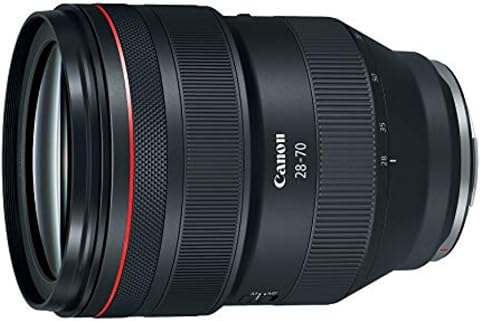 Canon RF28-70mm F2 L USM Lens, Zoom Lens for EOS R Series, BlackView on Amazon →
 - 2
 Sony FE 24-70mm F/2.8 GM II Full Frame E-Mount Standard Zoom LensView on Amazon →
 - 3
 Canon RF 24-70mm F2.8L IS USM Lens for Canon EOS R Series Mirrorless CamerasView on Amazon →
 - 4
 Canon RF 24-105mm f/4L IS USM Zoom Lens for EOS R SeriesView on Amazon →
 - 5
 Canon RF100-400mm F5.6-8 IS USM Telephoto Lens for EOS R Series CamerasView on Amazon →
 - 6
 Canon EF 50mm f/1.8 STM Lens for Canon EOS DSLR CamerasView on Amazon →
Impact of AI-Enhanced Lenses on Photography
This development signifies a major step forward in camera technology, making advanced photography features more accessible to both professionals and enthusiasts. AI-driven lenses reduce the need for manual adjustments, increase shot success rates, and enable new creative possibilities.
For consumers, these lenses promise improved image quality, faster autofocus, and smarter scene adaptation, which can be crucial for dynamic environments like sports, wildlife, and event photography. For manufacturers, integrating AI into lenses creates a competitive edge and accelerates innovation in the camera industry.
Evolution of AI in Camera Lenses
Over the past few years, camera manufacturers have increasingly incorporated AI technology into their products, initially in sensors and software, then extending into lenses. In 2026, this trend has culminated in the release of several flagship lenses featuring embedded AI processors and scene analysis capabilities.
Leading brands such as Sony and Canon have announced new models that leverage AI for autofocus accuracy, subject tracking, and exposure optimization. These innovations build on earlier developments, where AI was primarily used for post-processing or software-based scene recognition.
The market response indicates a strong demand for smarter lenses that simplify complex photography tasks and enhance image results in real-time.
“The integration of AI into camera lenses is transforming how photographers approach composition and focus, making professional-grade results more achievable for all levels.”
— Thorsten Meyer, AI camera expert
Remaining Questions About AI Lens Adoption
While the confirmed benefits of AI-enhanced lenses are clear, questions remain about their long-term reliability, compatibility across different camera systems, and the extent to which AI will continue to evolve in this space. It is also uncertain how much these features will influence overall camera sales versus traditional lenses.
Additionally, some experts caution that reliance on AI might reduce manual skill development among photographers, though this remains a subject for ongoing debate.
Future Developments and Market Adoption of AI Lenses
Manufacturers are expected to release more AI-integrated lenses in the coming year, expanding features and compatibility. Ongoing software updates and AI improvements are likely to enhance performance further. Industry analysts predict that AI-driven lenses will become standard in high-end and mid-range camera systems by 2027, shaping the next phase of photographic technology.
Photographers and consumers should watch for new models, software updates, and broader adoption trends to understand how AI will redefine image capture in the near future.
Key Questions
What are the main advantages of AI camera lenses in 2026?
They offer improved autofocus accuracy, real-time scene recognition, adaptive stabilization, and better image quality in challenging conditions, making photography easier and more reliable.
Are AI camera lenses compatible with all camera brands?
Compatibility depends on the lens mount and camera system. Currently, most AI lenses are designed for specific mounts like Sony E-mount or Canon RF, with some adapters available for others.
Will AI features replace manual control in photography?
AI aims to assist rather than replace manual skills, helping photographers achieve better results faster. However, reliance on AI could influence skill development, a topic still under discussion.
Are AI camera lenses more expensive than traditional lenses?
Typically, yes. The integration of AI technology adds to manufacturing costs, making these lenses generally more expensive, especially in high-end models.
Source: ThorstenMeyerAI.com
Fall Picks
fall essentials
As an affiliate, we earn on qualifying purchases.