
TL;DR
By 2026, virtual reality has diversified into several key types, transforming industries like entertainment, education, and healthcare. This article explores these developments, their confirmed impacts, and what remains uncertain.
Virtual reality in 2026 now encompasses several distinct types, each with unique applications that are reshaping multiple sectors. These developments are confirmed through industry reports and technological advancements, highlighting the evolving landscape of VR and its societal impact. Learn more about future tech trends.
Recent industry analyses indicate that VR technology has expanded into three primary types: immersive VR, augmented VR, and mixed reality. Immersive VR offers fully virtual environments, primarily used in entertainment and training applications. Augmented VR overlays digital content onto real-world views, increasingly used in retail, navigation, and remote work. Mixed reality combines elements of both, enabling complex interactions in real and virtual spaces, notably in healthcare and design sectors.
Major tech companies and startups have introduced new hardware and software solutions aligned with these categories, confirming a significant shift in VR adoption and integration. Discover the future of AI and tech. For example, recent product launches include advanced headsets with higher resolution, better tracking, and more comfortable designs, tailored to each VR type. These innovations have been reported by industry sources and are driving widespread use across industries.
The Future of VR: Key Types and How They’re Changing Our World
Virtual reality has split into three distinct experience models. Together, they are reshaping entertainment, education, healthcare, design, manufacturing, retail and remote collaboration—while raising unresolved questions about privacy, health and access.
Three realities, three ways to interact
VR in 2026 is no longer one uniform category. The defining difference is how much of the physical world remains visible—and how deeply virtual objects can respond to people and places.
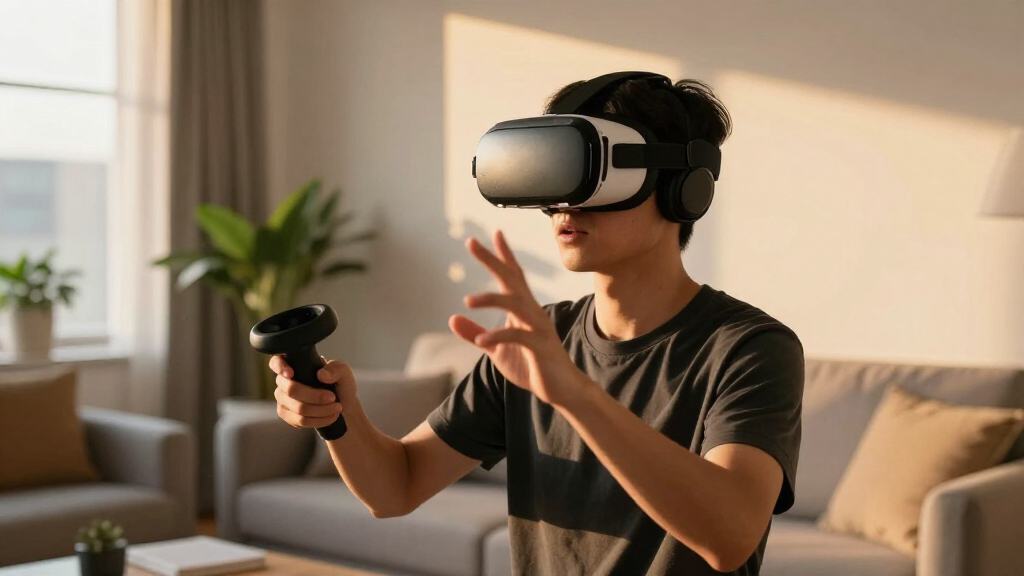
Immersive VR
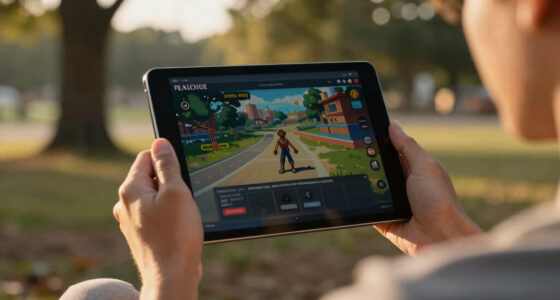
Replaces the user’s surroundings with a computer-generated environment, prioritizing presence, focus and simulation.
Augmented VR
Adds digital information to a live view of the real world, keeping physical context visible and useful.
Mixed Reality
Anchors interactive digital objects inside physical spaces, allowing real and virtual elements to influence one another.
immersive VR headset 2026
As an affiliate, we earn on qualifying purchases.
As an affiliate, we earn on qualifying purchases.
From better hardware to real-world impact
The transformation is cumulative: improvements in displays, tracking, comfort, haptics and AI unlock better experiences, which in turn make broader adoption practical.
The critical shift is convergence: hardware and software are becoming capable enough to move VR beyond isolated demonstrations and into repeatable everyday workflows.
augmented reality glasses for retail
As an affiliate, we earn on qualifying purchases.
As an affiliate, we earn on qualifying purchases.
Where each type fits best
No single format wins every use case. Immersive VR maximizes presence, augmented VR preserves situational awareness, and mixed reality supports the richest interaction between physical and digital objects.
| Capability | Immersive VR | Augmented VR | Mixed Reality |
|---|---|---|---|
| Physical world remains visible | ✗ No | ✓ Yes | ✓ Yes |
| Complete environmental replacement | ✓ Strong | ✗ Limited | ~ Partial |
| Digital objects understand physical space | ~ Variable | ~ Basic | ✓ Advanced |
| Best-established use | Gaming and simulation | Retail and navigation | Healthcare and design |
| Primary advantage | Deep presence | Real-world context | Spatial interaction |
| Key limitation | Isolation and comfort | Overlay precision | Complexity and cost |
Current application breadth
Relative signal based on the range of documented sector use cases—not market-share data.
Adoption pressure points
Markers show the relative importance indicated by the 2026 outlook.
mixed reality headsets healthcare
As an affiliate, we earn on qualifying purchases.
As an affiliate, we earn on qualifying purchases.
What is established—and what is not
The direction of travel is visible, but adoption forecasts should not be confused with confirmed outcomes. Several technical and social limits remain unresolved.
Documented in 2026
Questions without final answers
“We are seeing a convergence of hardware and software that makes VR more accessible, versatile, and impactful across sectors.”Tech industry spokesperson
VR training simulation equipment
As an affiliate, we earn on qualifying purchases.
As an affiliate, we earn on qualifying purchases.
The road from novelty to infrastructure
Progress now depends less on a single breakthrough and more on several systems maturing together: hardware, haptics, intelligent content, safety standards and viable economics.
Better ergonomics
Lighter, more comfortable devices reduce friction during longer sessions.
Realistic haptics
More convincing touch feedback improves training and spatial interaction.
AI personalization
Adaptive environments and content make experiences more responsive.
Rules and standards
Privacy, safety, accessibility and ethical guidance become adoption prerequisites.
Bottom line for 2026
VR is becoming a family of purpose-built technologies rather than a single entertainment medium. Its confirmed value lies in engagement, visualization, training and collaboration. Its ultimate reach will depend on cost, comfort, content, infrastructure and public trust.
How VR Types Are Transforming Society and Industry
The diversification of VR types in 2026 signifies a broad societal shift, affecting how people work, learn, and socialize. Fully immersive environments are enhancing training and entertainment, while augmented and mixed reality are improving productivity and remote collaboration. These changes have implications for education, healthcare, manufacturing, and retail sectors, with confirmed benefits like increased engagement and efficiency. However, concerns about privacy, data security, and accessibility remain under discussion, with no definitive resolutions yet.
Evolution of VR Technologies and Market Adoption
VR technology has evolved rapidly since its initial consumer launch, with industry reports noting a significant increase in hardware capabilities and software applications over the past five years. By 2026, the market is characterized by a variety of VR types tailored to specific use cases, driven by advancements in display technology, haptic feedback, and artificial intelligence integration. Major players have invested heavily in R&D, resulting in a broader ecosystem of VR solutions. Prior developments included the rise of standalone headsets and the integration of VR into enterprise workflows, setting the stage for the current diversification.
“We are seeing a convergence of hardware and software that makes VR more accessible, versatile, and impactful across sectors.”
— tech industry spokesperson
Remaining Questions About VR’s Societal and Technical Limits
While the expansion of VR types is well-documented, several aspects remain unclear. It is not yet confirmed how widespread adoption will be in less developed regions or how privacy and security concerns will be addressed at scale. Additionally, the long-term health effects of prolonged VR use are still under study, and the pace of technological innovation may introduce new challenges or opportunities that are not yet fully understood.
Upcoming Developments and Regulatory Considerations for VR
Next steps include further technological refinement, such as improved haptic feedback and AI-driven personalization. Industry stakeholders are also expected to focus on establishing standards and regulations to address privacy, safety, and ethical concerns. Consumer adoption will likely depend on pricing, ease of use, and the development of compelling content. Experts anticipate that by late 2026 or early 2027, VR will become even more integrated into everyday life, with ongoing debates about regulation and societal impact.
Key Questions
What are the main types of VR in 2026?
The main types are immersive VR, augmented VR, and mixed reality, each serving different applications from entertainment to healthcare.
How is VR changing industries?
VR is enhancing training, remote collaboration, and customer engagement across sectors like education, healthcare, manufacturing, and retail.
Are there concerns about VR’s societal impact?
Yes, issues such as privacy, data security, and health effects are under discussion, with no final consensus yet.
What innovations are expected next for VR?
Future developments include more realistic haptic feedback, AI-driven content, and improved hardware ergonomics, with regulatory frameworks likely to evolve as well.
Will VR become accessible worldwide?
While adoption is growing rapidly in developed regions, it remains uncertain how quickly VR will expand into less developed areas due to economic and infrastructural factors.
Source: rss