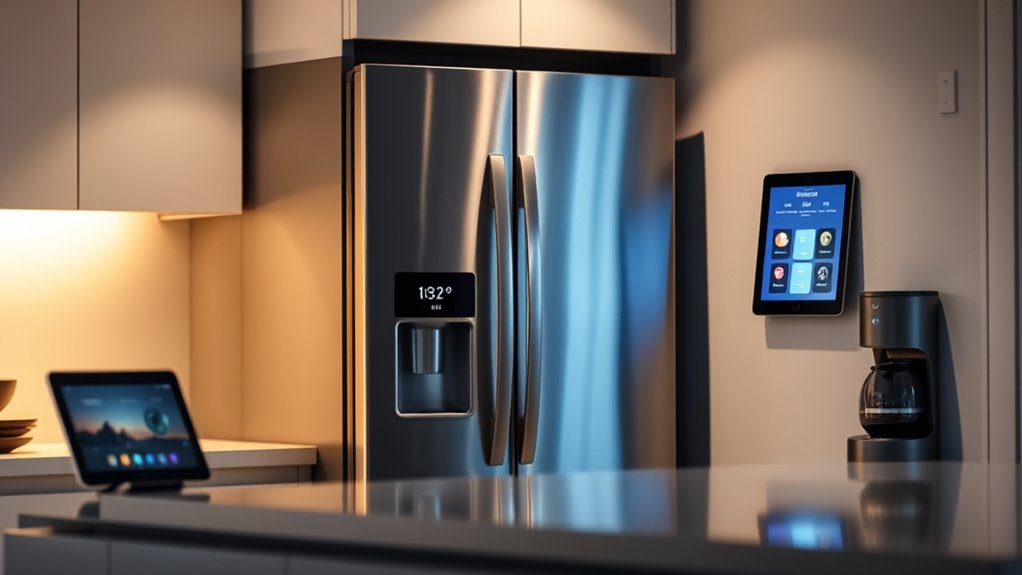

The Internet of Things (IoT) connects everyday objects like thermostats, fitness trackers, and security cameras to the internet, making them smart. These devices use sensors, internet connectivity, and cloud platforms to gather, share, and analyze data. As a result, they respond automatically to your needs, improving your convenience, health, and home security. If you want to understand how these objects became so intelligent, there’s more to explore below.
Key Takeaways
- IoT connects everyday objects to the internet, enabling data exchange and intelligent communication among devices.
- Smart devices like thermostats and security cameras use sensors and connectivity to automate responses.
- Cloud platforms analyze data from IoT devices, facilitating seamless environment and health management.
- Wearables collect health metrics and share data with users and healthcare providers for better monitoring.
- IoT relies on sensors, internet, and cloud processing to create adaptive, personalized, and smarter environments.
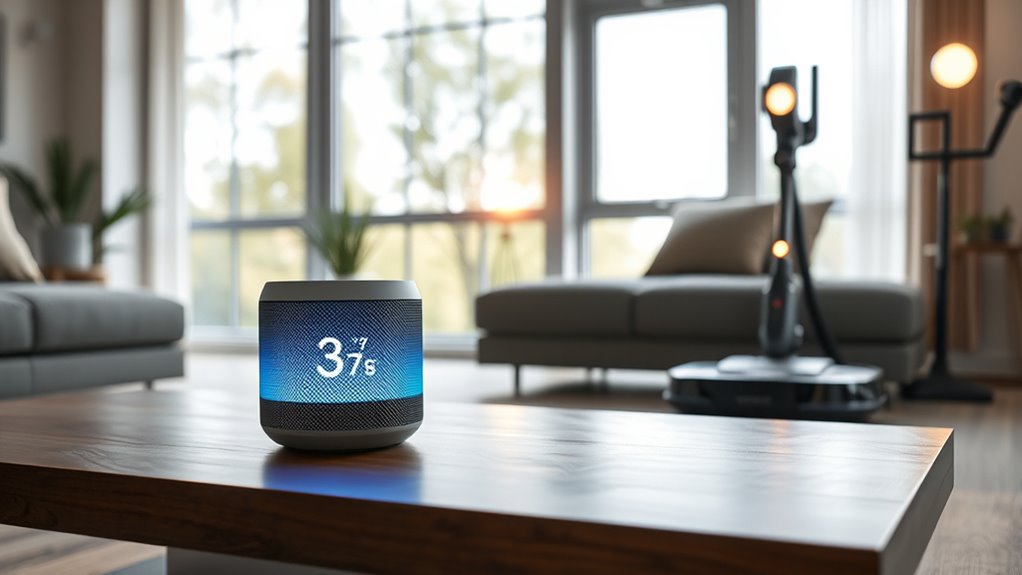
Have you ever wondered how your smart home devices communicate seamlessly or how wearable gadgets monitor your health? It’s all thanks to the Internet of Things, or IoT, a network that connects everyday objects to the internet, allowing them to send and receive data. This interconnected system transforms ordinary items into smart devices, making your life more convenient, efficient, and personalized. At the heart of this revolution are smart homes and wearable devices, which have become integral parts of our daily routines.
In a smart home, devices like thermostats, lights, security cameras, and even refrigerators are embedded with sensors and internet connectivity. These devices work together to create an ecosystem that responds to your needs automatically. For example, your smart thermostat learns your schedule and adjusts the temperature accordingly, saving energy and ensuring comfort. When you walk into a room, motion sensors detect your presence and turn on the lights. If a security camera spots unusual activity, it sends alerts straight to your phone. All these functions are possible because each device communicates over the internet, sharing data with each other and with cloud platforms that analyze and process this information. This seamless communication is the essence of a smart home, making it easier for you to manage your environment without lifting a finger. Additionally, Internet connectivity is the foundation that enables these devices to operate cohesively and efficiently.
Wearable devices take this connectivity a step further by monitoring your health and activity in real time. Fitness trackers, smartwatches, and health monitors are packed with sensors that collect data like heart rate, steps taken, sleep patterns, and even blood oxygen levels. They sync with your smartphone or cloud services, providing detailed insights and feedback. For instance, if your wearable detects irregular heart activity, it can alert you immediately and suggest seeking medical attention. These devices constantly communicate with their apps and cloud systems, allowing you to track progress, set goals, and receive personalized health advice. The data collected isn’t just for personal insights; it can also be shared with healthcare providers for more accurate diagnoses and treatment plans.
Both smart homes and wearable devices rely on the same fundamental technology: sensors, internet connectivity, and cloud processing. They exemplify how IoT makes everyday objects smarter by enabling them to communicate, analyze, and respond. This interconnected landscape is continually evolving, making it easier for you to stay connected, informed, and in control of your environment and health. As IoT advances, expect these devices to become even more intuitive, personalized, and integrated into your life, shaping a future where the line between digital and physical seamlessly blurs.

Amazon Smart Thermostat – Save money and energy – Works with Alexa and Ring – C-wire required
An Alexa thermostat – Amazon Smart Thermostat is an easy way to switch from a traditional thermostats for…
As an affiliate, we earn on qualifying purchases.
As an affiliate, we earn on qualifying purchases.
Frequently Asked Questions
How Secure Are Iot Devices From Hacking Attempts?
IoT devices can be vulnerable to hacking, but you can improve their security by ensuring device encryption is robust and up-to-date. Regular firmware updates are essential because they fix security flaws and protect your devices from new threats. By actively managing these aspects, you make it harder for hackers to access your devices, keeping your data safe and your smart home more secure.
What Are the Environmental Impacts of Iot Device Production?
Imagine your IoT devices as tiny eco-robots, each leaving a footprint on the planet. Their production impacts the environment through resource extraction and energy use, risking pollution and waste. To lessen this, sustainable manufacturing practices and responsible e-waste management are essential. By choosing eco-friendly materials and recycling old devices, you help reduce environmental harm, turning your smart gadgets into allies for a greener, cleaner future rather than environmental villains.
How Do Iot Devices Communicate Without Wi-Fi?
You can make IoT devices communicate without Wi-Fi by using mesh networks and low power protocols like Zigbee or Z-Wave. Mesh networks allow devices to connect directly to each other, creating a reliable and scalable communication system. Low power protocols guarantee these devices use minimal energy, extending battery life. This setup is ideal for smart homes and industrial applications where Wi-Fi isn’t practical or available, maintaining seamless connectivity.
Can Iot Technology Be Integrated Into Existing Homes Easily?
Yes, you can easily integrate IoT technology into your existing home with smart home upgrades. Many devices are designed for DIY installation, so you don’t need professional help. Simply choose compatible smart devices, follow the setup instructions, and connect them to your Wi-Fi. This way, you can upgrade your home’s smart features quickly and affordably, making your living space more convenient and efficient.
What Are the Privacy Implications of Widespread Iot Adoption?
Did you know that 81% of consumers worry about data privacy with IoT devices? Widespread IoT adoption raises significant privacy concerns, as personal data becomes more vulnerable to breaches. You might feel uneasy about how your information is used, which impacts consumer trust. To protect yourself, stay informed about security settings and choose devices with strong privacy protections, ensuring your data privacy remains a priority.

Blink Outdoor 4 – Wireless smart security camera, two-year battery life, 1080p HD day and infrared night live view, two-way talk. Sync Module Core included – 5 camera system
Outdoor 4 is our most affordable wireless smart security camera yet, offering up to two-year battery life for…
As an affiliate, we earn on qualifying purchases.
As an affiliate, we earn on qualifying purchases.
Conclusion
As you embrace the Internet of Things, think of your world transforming into a woven tapestry of interconnected threads, each device a vibrant color contributing to a bigger picture. These smart objects symbolize a future where convenience and innovation intertwine seamlessly, guiding you toward a smarter, more responsive life. Just as every stitch matters in a tapestry, each connected device plays an essential role in shaping your everyday experience—making the ordinary extraordinary.

Zeacool Fitness Tracker with 24/7 Heart Rate, Blood Oxygen Blood Pressure Sleep Monitor, Activity Trackers 5 ATM Waterproof,Step Calorie Counter Pedometer Health Smart Watch for Women Men (Black)
24/7 Heart Rate Monitor :This blood pressure watch supports real-time dynamic heart rate, blood oxygen, blood pressure ,Sleep…
As an affiliate, we earn on qualifying purchases.
As an affiliate, we earn on qualifying purchases.
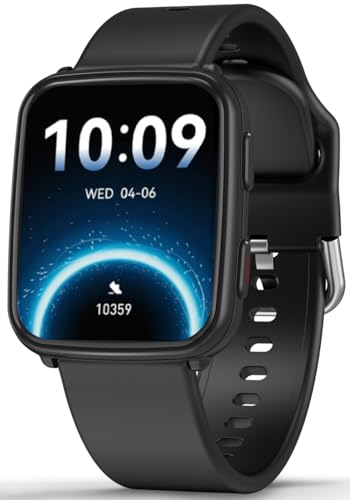
MorePro Fitness Tracker with 24/7 Heart Rate & Blood Pressure Monitor, Blood Oxygen & Sleep Tracker, Smart Watch with Step Calorie Counter, IP68 Waterproof Activity Tracker for Women Men Android iOS
【Advanced Health Fitness Tracker】-This fitness tracker offers 24/7 heart rate and blood pressure monitoring to help you stay…
As an affiliate, we earn on qualifying purchases.
As an affiliate, we earn on qualifying purchases.