
Smartwatches can handle some phone tasks like notifications, calls, and fitness tracking, but they rarely replace your phone entirely. Limited battery life, smaller screens, and fewer app options mean you’ll still need your smartphone for most tasks. They’re best as secondary devices for quick access and health monitoring. If you want to understand the real capabilities and limitations, keep exploring what wearables can and can’t do.
Key Takeaways
- Smartwatches excel at notifications, health tracking, and quick communication but cannot fully replace a smartphone’s features.
- Battery life limitations and display constraints make smartwatches impractical as primary devices for extended use.
- App support and compatibility are limited compared to smartphones, restricting multitasking and complex tasks.
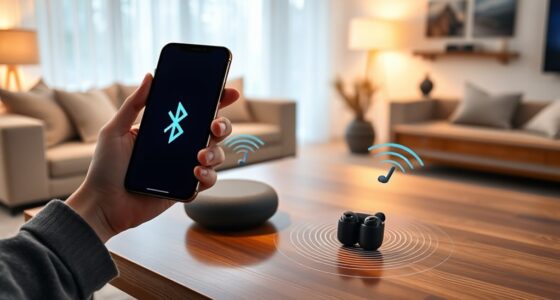
- Cellular-enabled smartwatches can handle calls and messaging independently but still rely on phones for many functions.
- Overall, smartwatches serve best as secondary devices, not complete replacements for smartphones.
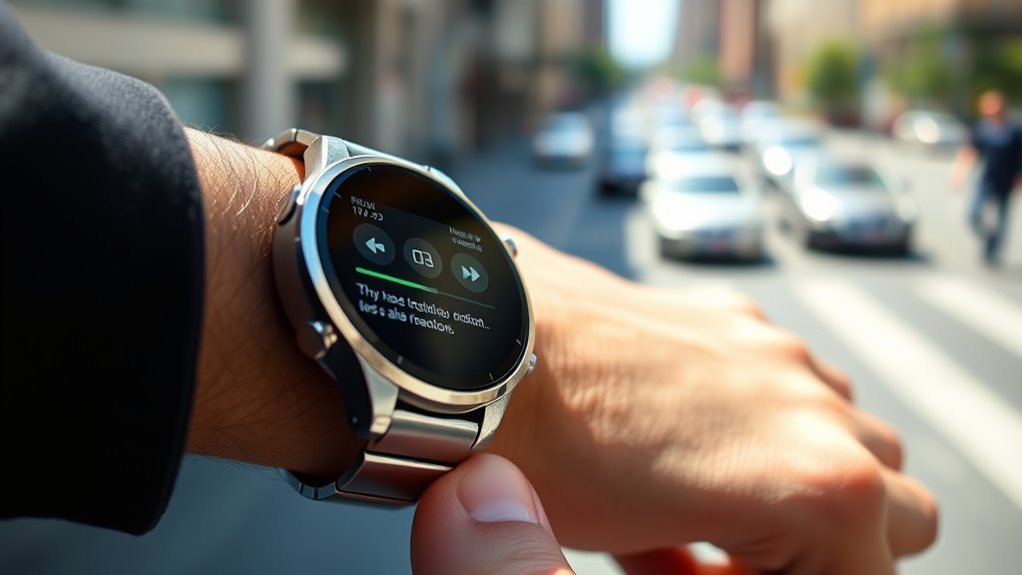
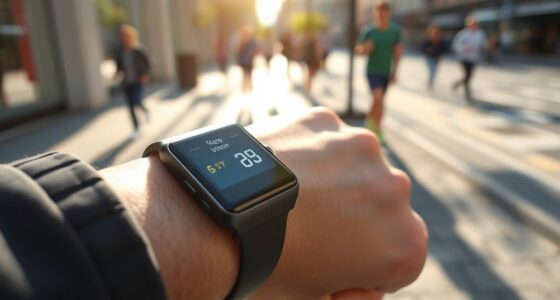
Smartwatches are increasingly stepping in as alternatives to smartphones, offering many of the essential features you rely on daily. However, whether they can fully replace your phone depends on your needs and the specific capabilities of the device you choose. One critical factor to consider is battery life. Unlike smartphones, which typically last a day or more on a single charge, many smartwatches struggle to keep up, especially if you use them extensively throughout the day. Heavy users might find themselves charging their smartwatch multiple times daily, which can be inconvenient if you’re used to the longer battery life of a phone. That said, some newer models boast improved battery performance, lasting up to two or three days, but these are often more expensive and may still fall short for heavy usage. Additionally, the contrast ratio of the display can impact readability in bright environments, which is an important consideration for outdoor use.
Another important aspect is app compatibility. While smartwatches have made significant strides in supporting a variety of apps, they still lag behind smartphones in terms of diversity and functionality. If you rely on specific apps for work, fitness, or entertainment, it’s essential to verify whether your smartwatch supports those apps. Many popular apps, like messaging platforms, fitness trackers, and navigation tools, are available on select smartwatch operating systems, but they may have limited features compared to their smartphone counterparts. For example, sending detailed emails or editing documents is often impractical on a smartwatch due to small screens and limited input options. Additionally, some apps may not be available on all operating systems, so if you’re invested in a particular ecosystem, your options might be restricted.
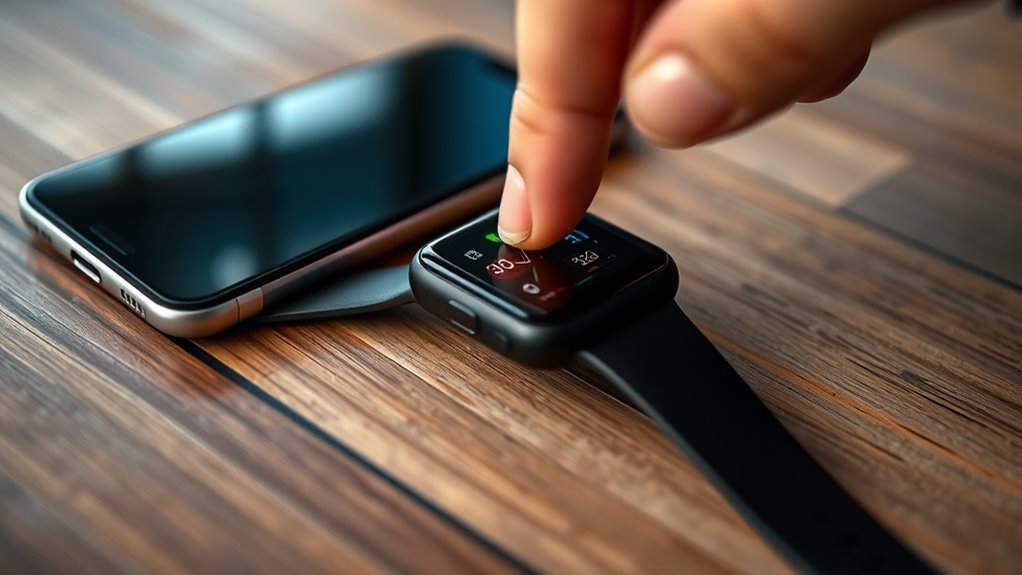
Despite these limitations, smartwatches excel at providing quick access to notifications, health monitoring, and basic communication functions. They’re excellent for checking messages, tracking your activity, and even making short calls if your device supports cellular connectivity. However, when it comes to multitasking, browsing the web extensively, or managing complex tasks, your phone still outperforms most smartwatches. The form factor and hardware limitations mean you’re unlikely to replace your phone entirely with a smartwatch, but they can serve as a handy supplement or a secondary device for specific tasks.

Smart Watch with Alexa Built-in, 1.83" HD Health Fitness Tracker, Bluetooth Calls/Notifications, 120+ Sports Modes, 24/7 Heart Rate/Sleep Tracking, IP68 Waterproof for iPhone and Android (Black)
Alexa Voice Control-Your Wrist Command Center: Control music, set reminders, or check traffic with just your voice—no phone…
As an affiliate, we earn on qualifying purchases.
As an affiliate, we earn on qualifying purchases.
Frequently Asked Questions
Can Smartwatches Handle Mobile Payments Independently?
Yes, smartwatches can handle contactless transactions independently, allowing you to make payments without your phone. They use NFC technology for quick, convenient payments. However, be aware of potential security vulnerabilities, such as hacking or unauthorized access. To stay safe, enable security features like PINs or biometrics and keep your device updated. While convenient, don’t rely solely on your smartwatch for sensitive transactions—use extra precautions.
What Are the Battery Life Limitations of Smartwatches?
Imagine a tiny superhero, constantly battling battery constraints—your smartwatch. Its limited battery life means you’ll need to recharge often, usually every one to two days, depending on usage. Frequent charging cycles can wear down the battery over time, reducing its efficiency. While innovative, smartwatches can’t last as long as phones between charges, so you must plan your day around their power, making you cherish each moment even more.
Are There Privacy Concerns With Wearable Devices?
Yes, there are privacy concerns with wearable devices. You should be aware that your data is often protected by data encryption, but some devices may still share information through user tracking. This means your activity, location, and health data could potentially be accessed or misused if not properly secured. Always review privacy settings and understand how your wearable collects and shares data to stay safe.
Can Smartwatches Replace Tablets or Laptops?
Smartwatches can’t replace tablets or laptops because of their limited screen size and hardware. You won’t get the same multitasking or productivity features, and the small display makes reading or typing cumbersome. While they’re great for notifications and quick responses, their hardware limitations prevent them from handling more demanding tasks. For now, you’ll need a tablet or laptop for work, browsing, or complex applications, as smartwatches just aren’t designed for that.
How Well Do Smartwatches Support Third-Party App Integration?
You might think smartwatches struggle with third-party app integration, but they actually support a surprisingly diverse app ecosystem. App compatibility varies by device and operating system, yet many smartwatches now let you install and run third-party apps smoothly. This expands their functionality beyond basic features, giving you more control and customization. So, yes, smartwatches support third-party app integration well, making them more versatile than you might expect.

Smart Watch(Answer/Make Call BT5.4), 2026 New Smartwatch for Men Women, 1.96" HD Touch Fitness Watch with 110+ Sport Modes/Heart Rate/Sleep Monitor/Pedometer, IP68 Waterproof Fitness Activity Tracker
New Smart Watch with Bluetooth Call/Intelligent Notifications: The smart watches for men adopts bluetooth 5.4 version for a…
As an affiliate, we earn on qualifying purchases.
As an affiliate, we earn on qualifying purchases.
Conclusion
While smartwatches pack impressive features, they can’t fully replace your phone. You get quick notifications, fitness tracking, and calls—yet, you still need your phone for complex tasks, apps, and browsing. It’s a helpful companion, but not a complete substitute. So, enjoy the convenience, but remember: for everything else, your phone still has your back. The watch keeps you connected, but your phone remains your ultimate device.

Military Smart Watch for Men, 2.01'' Fitness Tracker with 1200mAh Long Battery Life, Bluetooth Calls, Flashlight, IP68 Waterproof, Heart Rate/Sleep Tracking, 100+ Sports Modes for Android iPhone
【1200mAh Ultra-Long Battery & Military-Grade Durability】- The PODOEIL smartwatch features a 1200mAh pure cobalt high-capacity battery, delivering 5×…
As an affiliate, we earn on qualifying purchases.
As an affiliate, we earn on qualifying purchases.
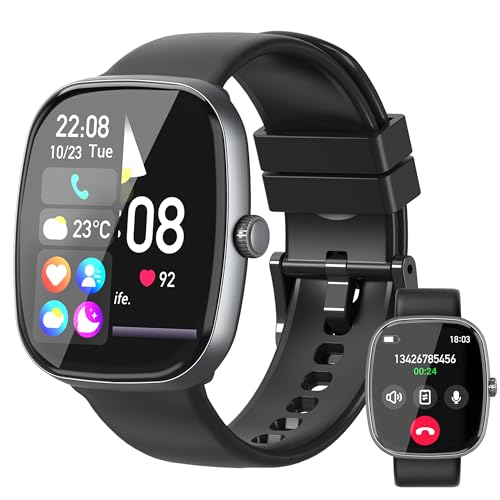
Smart Watch for Women Men, 1.85" HD Fitness Watch with 120 Sports Modes, 5.3 Bluetooth Call, 250+ Custom Dials, Heart Rate/Sleep Monitor Fitness Tracker, IP68 Waterproof Smartwatch for Android iOS
Bluetooth HD Calling & Smart Notifications: This smart watch adopts a Bluetooth 5.3 chip to connect to your…
As an affiliate, we earn on qualifying purchases.
As an affiliate, we earn on qualifying purchases.