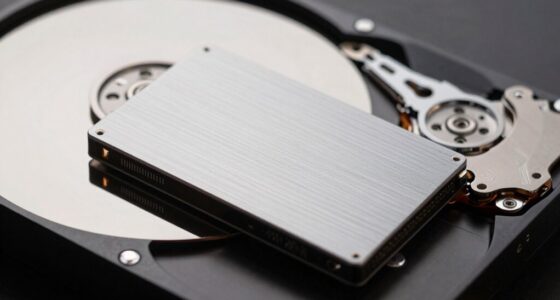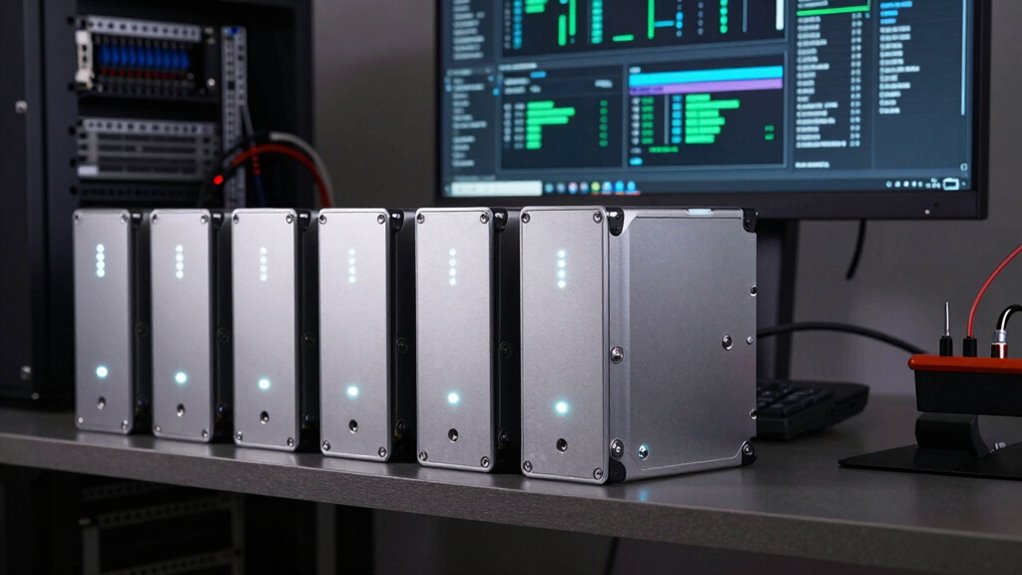

Choosing enterprise hard drives for your home lab gives you reliable, durable storage that can handle continuous operation and demanding workloads. They prioritize data protection, featuring redundancy and advanced error recovery to keep your data safe during failures. Plus, their energy efficiency and thermal management reduce costs and improve longevity. If you want your setup to stay stable and dependable over time, these drives are worth considering—keep exploring to see why their features truly stand out.

Get the latest gadgets delivered free with Prime
- Fast, free delivery on millions of items
- Prime Video, Amazon Music and more included
- Member-only deals all year
Key Takeaways
- Enterprise drives offer higher reliability and longer lifespan, minimizing downtime in home lab environments.
- They feature advanced data protection and error recovery to safeguard critical data during failures.
- Designed for continuous operation, ensuring consistent performance under demanding workloads.
- Their efficient thermal management and power usage reduce operational costs and extend hardware longevity.
- Durable components and higher MTBF make them ideal for scalable, professional-grade home lab setups.
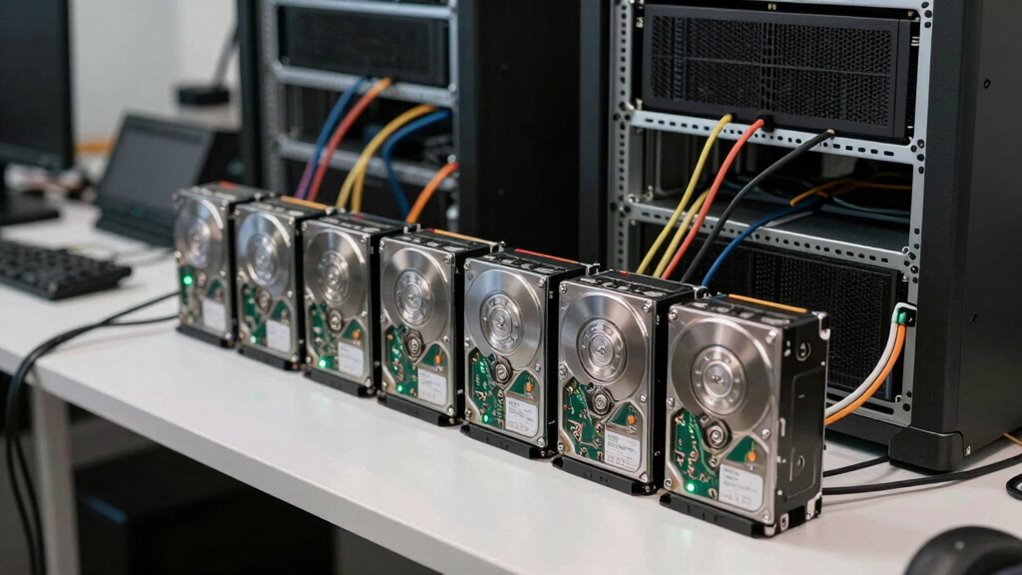
Are enterprise hard drives worth considering for your home lab? If you’re serious about setting up a reliable, high-performance environment, they might just be. Unlike consumer-grade drives, enterprise hard drives are designed for continuous operation and demanding workloads. They prioritize data redundancy, meaning they’re built to minimize data loss even if a drive fails. This is vital if you’re running a home server or storage array where losing important files isn’t an option. Enterprise drives often include features like dual-plane recording and enhanced error recovery, which help guarantee your data stays safe and accessible. While they might seem like overkill for a casual setup, these drives can provide peace of mind, especially when your home lab handles sensitive or critical data. Additionally, they are engineered with robust hardware components, which enhances their durability and longevity under constant use. These components often undergo rigorous testing to meet industry standards, ensuring consistent performance over time. Moreover, they are typically designed with enterprise-grade firmware, which further improves stability and error management during prolonged operation. Understanding hardware durability is crucial when evaluating these drives’ long-term value, as it directly impacts their lifespan and reliability. To further support their reliability, enterprise drives also often feature advanced cooling solutions, helping maintain optimal operating temperatures and prevent overheating during continuous workloads.
Enterprise hard drives offer enhanced reliability and data protection for serious home lab setups.
Power consumption is another factor that makes enterprise hard drives appealing. You might think that because they’re more robust, they’d consume more energy, but that’s not always the case. Many enterprise models are engineered to be energy-efficient, helping you keep operational costs down. They often include features like low-power states and optimized firmware that reduce power draw during idle periods. This efficiency is beneficial if you’re running multiple drives or a large storage environment, as it can considerably cut down on electricity bills. Plus, lower power consumption means less heat generated, which reduces the need for extensive cooling and prolongs the lifespan of your hardware.
Furthermore, enterprise drives tend to have a higher mean time between failures (MTBF), which means they’re built to last longer under continuous stress. This durability translates into fewer failures and less maintenance, allowing your home lab to run smoothly without constant troubleshooting. Their higher reliability makes them ideal for applications where uptime is critical, like hosting virtual machines, media servers, or backup systems. Although they come at a higher initial cost, their longevity and reliability often justify the investment, especially if you’re scaling your home lab or aiming for a professional-grade setup.
In essence, choosing enterprise hard drives for your home lab isn’t just about raw speed or capacity. It’s about creating a resilient, efficient environment that safeguards your data and minimizes downtime. While they require a larger upfront investment, the benefits of data redundancy, lower power consumption, and increased reliability can make them a worthwhile addition, particularly if your home lab’s purpose is more than just experimentation — it’s about building a dependable, scalable system.
enterprise hard drives for home lab
As an affiliate, we earn on qualifying purchases.
As an affiliate, we earn on qualifying purchases.
Frequently Asked Questions
Are Enterprise Hard Drives Compatible With Consumer Hardware?
Yes, enterprise hard drives can be compatible with consumer hardware, but you should check enterprise compatibility first. Many enterprise drives use standard interfaces like SATA or SAS, which are common in consumer systems. However, some might need specific controllers or enclosures. Be aware that enterprise drives are designed for continuous operation and higher workloads, so verify your hardware can support their features for peak performance and longevity.
What Are the Long-Term Cost Implications of Using Enterprise Drives?
Using enterprise drives can be cost-effective long-term because they reduce downtime through reliable operation, lowering expenses associated with data recovery and repairs. They often come with more robust firmware updates, ensuring your data stays protected and drives perform efficiently over time. Although initial costs are higher, their durability and advanced features help you avoid frequent replacements, making them a smart investment for maintaining a stable, secure home lab environment.
Do Enterprise Hard Drives Require Special Cooling Solutions?
Enterprise hard drives generally don’t require special cooling solutions beyond standard server or data center setups. However, their cooling requirements are higher due to increased thermal output, so effective thermal management is essential. You should guarantee proper airflow and possibly add dedicated cooling solutions if the drives operate in high-temperature environments. Maintaining ideal temperatures helps prolong drive lifespan and ensures reliable performance, especially in demanding home lab scenarios.
How Do Enterprise Drives Perform in Power Outages?
When power outages strike, enterprise drives stand firm like reliable anchors, ensuring data recovery remains smooth and uninterrupted. They’re built for power stability, with features that help protect your data during sudden shutdowns. While they handle outages better than consumer drives, it’s still wise to have backup solutions in place. Overall, enterprise drives provide resilience, giving you peace of mind through unpredictable power hiccups.
Are There Warranty Differences Between Enterprise and Consumer Drives?
Yes, enterprise drives often come with longer warranties compared to consumer drives, reflecting their higher firmware reliability and robust data security features. These extended warranties mean you’re better protected against failures, especially critical for home labs where data integrity matters. You benefit from more thorough testing, better build quality, and support services, giving you peace of mind knowing your investment is safeguarded against potential hardware issues over a longer period.
As an affiliate, we earn on qualifying purchases.
Conclusion
Think of your home lab as a fortress, and enterprise hard drives as the steadfast guardians. They’re built to withstand the storms of heavy use, just like vigilant sentinels defending their domain. When you choose enterprise drives, you’re arming your fortress with resilience and reliability, ensuring your data stays safe through any challenge. In the end, investing in these drives is like forging unbreakable shields—protecting your digital kingdom for the long haul.
As an affiliate, we earn on qualifying purchases.
energy efficient enterprise hard drives
As an affiliate, we earn on qualifying purchases.
As an affiliate, we earn on qualifying purchases.
Fall Picks
fall essentials
As an affiliate, we earn on qualifying purchases.