

The future of wearables will likely blend seamlessly into your daily life with smart clothes, AR glasses, and embedded sensors. You’ll get real-time health insights without interrupting your routine, thanks to skin-based sensors, biometric tattoos, and implantable devices. These innovations will provide continuous monitoring, early alerts, and personalized care, all while remaining discreet and comfortable. Stay with us to discover how these advancements could transform your health management and everyday experiences.
Key Takeaways
- Wearables will increasingly integrate into smart clothing and biometric tattoos for seamless, continuous health and activity monitoring.
- Augmented reality (AR) glasses will evolve into lightweight, stylish devices providing immersive, hands-free digital experiences.
- Implantable sensors and skin-based devices will enable real-time health data collection, enhancing personalized medical care.
- AI-powered data analysis will offer proactive health insights, alerts, and emergency responses from wearable tech.
- Future wearables will prioritize security, data privacy, and interoperability within integrated, body-centric health ecosystems.
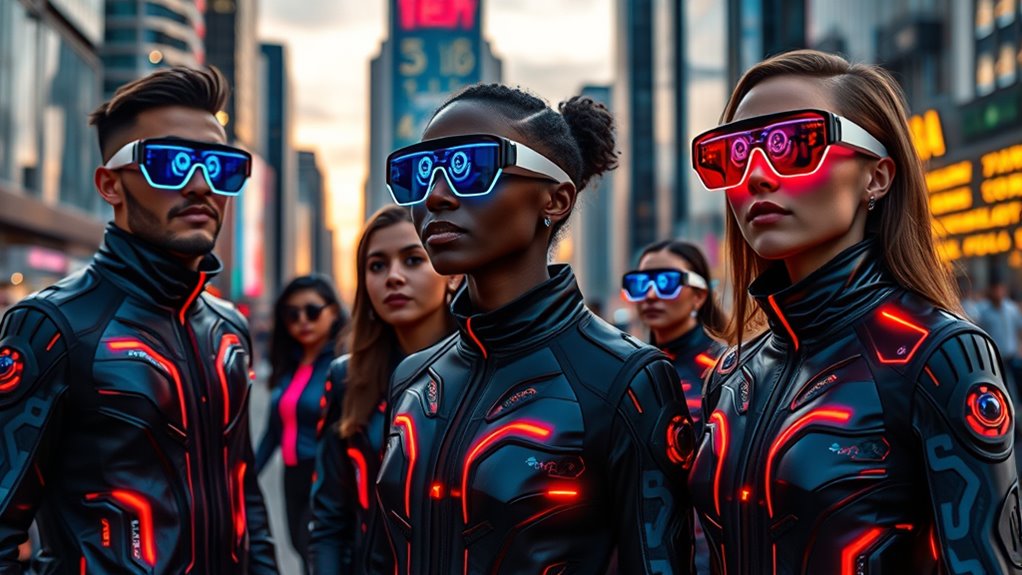
Have you ever wondered what the future holds for wearables? The landscape is evolving quickly, and new technologies are poised to transform how you monitor health, stay connected, and enhance daily life. One exciting development involves implantable sensors that can be integrated seamlessly into your body. These tiny devices can continuously track essential signs like glucose levels, heart rate, and hydration, providing real-time data without the need for bulky gadgets. Imagine a future where a small sensor beneath your skin alerts you to health issues before symptoms even appear. These implantable sensors are becoming more sophisticated, with some designed to communicate directly with your smartphone or medical provider, ensuring you have immediate access to critical health information.
Future wearables include seamless implantable sensors that monitor health metrics in real time for proactive care.
Alongside these, biometric tattoos are gaining popularity as a non-invasive alternative for health monitoring. These temporary or semi-permanent skin markings are embedded with conductive inks or nano-materials that can detect changes in your body, such as dehydration, stress, or muscle activity. Unlike traditional wearables that you wear on your wrist or arm, biometric tattoos conform to your skin, offering a more discreet, comfortable, and aesthetically pleasing way to track your health metrics. As technology advances, these tattoos could also incorporate sensors capable of transmitting data wirelessly, making it easier than ever to keep tabs on your well-being throughout the day.
Looking further ahead, the integration of implantable sensors and biometric tattoos into your daily routine will likely become more seamless. Wearables will no longer be just external devices but part of your body or skin, providing continuous, passive monitoring. This shift means fewer interruptions to your day, with sensors working silently in the background. For example, if you’re engaged in a workout, your biometric tattoo could monitor your exertion levels and hydration status without needing to wear a separate device. The data collected can then be analyzed by AI algorithms, offering personalized insights and recommendations to optimize your health and performance.
This future also promises enhanced safety features. Implantable sensors could detect abnormal heart rhythms or blood sugar fluctuations instantly, alerting you or your healthcare provider immediately. This proactive approach can prevent emergencies and enable personalized treatments. As these technologies mature, they’ll become more affordable and accessible, making advanced health monitoring part of everyday life. The convergence of implantable sensors, biometric tattoos, and other wearable tech will reshape how you interact with your body, offering a new level of awareness, control, and convenience that was once only imaginable. Additionally, the European cloud infrastructure supporting these devices will ensure secure and reliable data management as these innovations become more widespread.
smart biometric tattoos for health monitoring
As an affiliate, we earn on qualifying purchases.
As an affiliate, we earn on qualifying purchases.
Frequently Asked Questions
How Will Privacy Concerns Evolve With Advanced Wearable Tech?
You’ll likely see privacy concerns grow as wearable tech advances, but you can protect yourself by insisting on strong data encryption and clear user consent. Manufacturers will need to prioritize secure data handling and transparent policies, so you’re aware of how your information is used. Staying informed and choosing devices that emphasize privacy will help you maintain control over your personal data in this evolving tech landscape.
What Materials Are Safest for Long-Term Wearable Device Use?
A stitch in time saves nine, so choosing safe materials matters. For long-term use, you should opt for biocompatible materials that won’t irritate your skin or cause allergic reactions. Durable textiles are essential for longevity, ensuring your device withstands daily wear. Look for hypoallergenic, breathable fabrics that are gentle and sturdy. These choices help protect your health while keeping your wearable tech reliable over time.
Will Wearables Replace Smartphones in the Future?
Wearables are unlikely to fully replace smartphones, but they’ll achieve wearable dominance by complementing them. You’ll still rely on your phone for extensive tasks, while wearables handle quick notifications, health tracking, and seamless connectivity. As technology advances, expect smarter, more integrated devices that make smartphone replacement unnecessary — instead, they’ll work together, enhancing your daily experience without entirely replacing the familiar smartphone.
How Accessible Will Smart Clothing Be for All Income Levels?
Smart clothing will become more accessible as manufacturers develop affordable options, making it easier for all income levels to adopt. You’ll find that mass market adoption increases as prices drop and technology improves, ensuring that smart clothes aren’t just for the wealthy. This trend will help bridge the gap, allowing more people to benefit from wearable tech, regardless of their financial situation.
What Are the Environmental Impacts of Widespread Wearable Device Production?
Widespread wearable device production is like filling a pond with pebbles, causing ripples across the environment. You’ll see increased electronic waste if sustainable manufacturing and effective electronic waste management aren’t prioritized. Manufacturing demands rare minerals and energy, which can harm ecosystems. To minimize impact, companies must adopt eco-friendly practices, recycle materials, and develop durable devices, ensuring your tech use doesn’t come at the planet’s expense.
AR glasses with immersive display
As an affiliate, we earn on qualifying purchases.
As an affiliate, we earn on qualifying purchases.
Conclusion
As you embrace the future of wearables, imagine slipping into smart clothes that monitor your health or AR glasses that keep you connected seamlessly. Picture a runner with a jacket that adjusts to your body’s needs, preventing injury before it happens. These innovations aren’t just gadgets—they’re personal assistants that empower you daily. The future is bright, and with every new development, you’ll find yourself more connected, healthier, and ready to take on whatever comes next.
implantable sensors for continuous health tracking
As an affiliate, we earn on qualifying purchases.
As an affiliate, we earn on qualifying purchases.
As an affiliate, we earn on qualifying purchases.