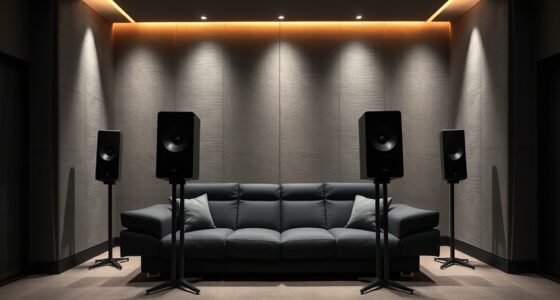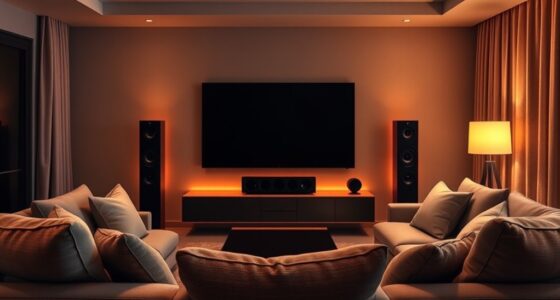

Dolby Atmos Music creates a 3D sound experience that surrounds you with immersive, spatial audio, making music feel more alive and dynamic. It places sounds all around, including above you, providing clearer depth and layered textures. If you have compatible devices and listen in the right environment, you’ll notice a more realistic and engaging sound compared to traditional formats. Keep going to discover how Atmos can transform your listening into a truly immersive journey.
Key Takeaways
- Dolby Atmos Music creates a 3D sound environment with sounds positioned above, below, and around the listener for immersive audio.
- It uses advanced spatial layering and specialized software to place instruments and effects in a three-dimensional space.
- Listeners can perceive clearer depth, layered textures, and sounds moving smoothly around and above them.
- Compatibility with Atmos-enabled devices and proper setup enhances the ability to hear the difference.
- Noticing the difference depends on quality content, equipment, and listening environment; many find Atmos more immersive and realistic.
Top picks for "dolby atmo music"
Open Amazon search results for this keyword.
As an affiliate, we earn on qualifying purchases.
Understanding Dolby Atmos Technology

Dolby Atmos technology transforms the way you experience sound by creating a three-dimensional audio environment. It uses spatial audio to place sounds precisely in a 3D space around you, making it feel like you’re inside the music. This is achieved through advanced sound layering, where multiple audio elements are layered and positioned independently. Instead of traditional stereo, Atmos delivers sound from all directions—above, below, and around you—adding depth and realism. As you listen, you notice how different instruments and effects seem to float and move in space, enhancing immersion. This layered approach makes your listening experience more dynamic, allowing you to hear details that might be lost with conventional audio formats. Additionally, the technology’s ability to deliver immersive audio experiences is revolutionizing how music is produced and enjoyed. By creating a more spatial sound environment, Dolby Atmos provides a truly engaging listening experience that can change your perception of music altogether. The technology also supports various audio formats, ensuring compatibility across different devices and platforms. Furthermore, sound layering techniques play a crucial role in achieving the three-dimensional effect, making the experience even more realistic. This innovative approach to audio design leverages advanced audio processing to enhance clarity and depth, ensuring a richer listening experience. Dolby Atmos truly elevates how you perceive music.
How Dolby Atmos Music Is Created
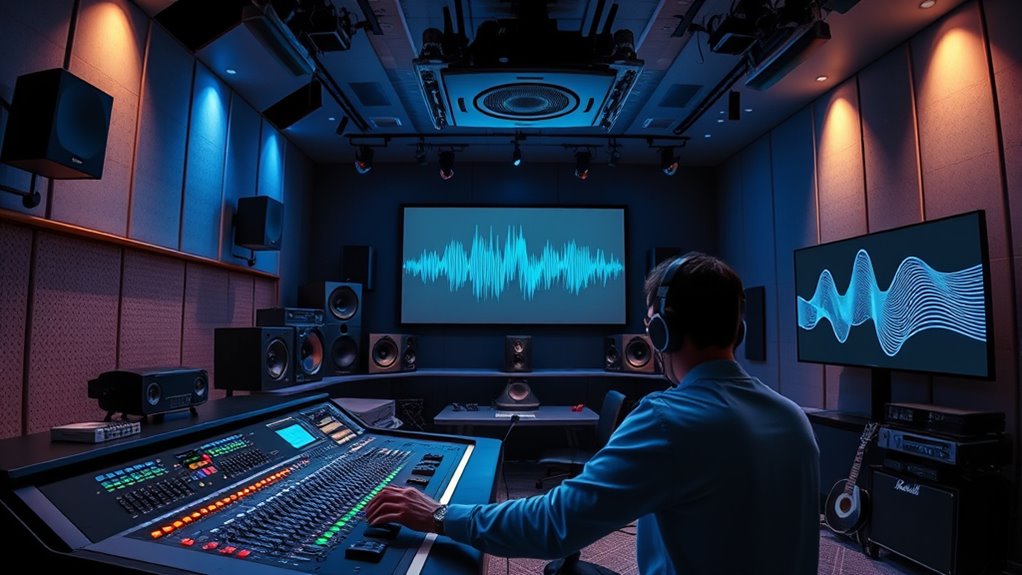
Creating Dolby Atmos music involves a meticulous process where sound engineers design each element to occupy a specific position in a 3D space. During music production, they carefully place sounds to create an immersive experience. Sound engineering plays a crucial role, as engineers use specialized tools to position audio elements both horizontally and vertically. This process allows you to feel fully immersed in the music.
Creating immersive Dolby Atmos music through precise 3D sound placement and expert engineering.
Here are three key steps:
- Recording and layering tracks to build a rich sonic foundation.
- Spatial placement of sounds using advanced software to position audio in 3D space.
- Mixing and mastering to ensure balance and clarity across all channels.
This detailed process transforms ordinary music into an engaging, multidimensional experience you can truly hear.
Differences Between Stereo, Surround, and Atmos

You’ll notice that stereo uses two channels to create a sense of space, while surround sound adds multiple speakers around you for a more immersive experience. Atmos takes this further by incorporating height channels, making sounds move in three dimensions. Your listening environment and equipment considerably influence how effectively you experience these audio configurations. Additionally, understanding passive voice detection can help you craft clearer and more engaging descriptions of these audio technologies. Recognizing the importance of spatial audio cues can enhance your appreciation of how Atmos creates a more realistic soundscape and a truly immersive listening experience. Incorporating connected audio technology into your setup can also optimize how you perceive these advanced sound formats and fully enjoy the benefits of Atmos. Moreover, the use of professional calibration can significantly improve the accuracy of sound placement and overall listening quality in Atmos-enabled systems.
Audio Channel Configurations
Understanding audio channel configurations is essential to appreciating how sound is delivered in music. Your experience depends on speaker placement and sound layering, shaping the overall atmosphere. With stereo, you mainly have two channels, creating a simple left-right feel. Surround sound adds more speakers around you, immersing you in a cocoon of sound. Dolby Atmos, however, introduces height channels, allowing sound to move above you, enhancing depth.
Here are key differences:
- Stereo focuses on front-left and front-right speakers for a basic soundstage.
- Surround expands this with rear and side speakers for an enveloping experience.
- Atmos adds upward channels, creating a dynamic, three-dimensional soundscape.
Immersive Sound Experience
Have you ever wondered how different sound systems make music feel more alive? When you switch from stereo to surround or Atmos, the experience changes dramatically. With headphone listening, Atmos creates a sense of space by placing sounds all around you, mimicking real venue acoustics. Unlike traditional stereo, which sends sound from two channels, Atmos adds height and depth, making it feel like you’re inside the music. Surround sound systems also expand the sound field, enveloping you from multiple directions. This immersive sound experience makes music more dynamic and engaging, pulling you into the performance. Whether through headphones or home theater setups, Atmos elevates your listening by recreating the richness of live venue acoustics and delivering a three-dimensional soundstage.
Listening Environment Impact
The type of listening environment greatly influences how immersive sound experiences like Atmos are perceived. Your room acoustics and listening position shape the clarity and depth of the audio. Poor acoustics can cause echoes or muffled sounds, diminishing Atmos’s immersive qualities. Conversely, a well-optimized space enhances spatial precision, making you feel enveloped in the music. Consider these factors:
- Proper room acoustics improve sound clarity and reduce echo, heightening Atmos’s effects.
- The ideal listening position places you centrally, where sound is balanced from all directions.
- Adjusting furniture and speaker placement can maximize the sense of space, making Atmos truly immersive.
- Room treatment techniques can further optimize your environment, ensuring the full potential of Dolby Atmos music is realized.
- Incorporating smart home audio solutions can help tailor your listening environment for optimal Atmos performance by automating speaker calibration and room tuning. Additionally, room acoustics play a crucial role in how immersive the sound feels, making professional adjustments worthwhile.
- Enhancing your environment with acoustic panels can significantly improve sound quality by absorbing unwanted reflections and echo. Recognizing how sound reflection impacts audio clarity can guide you in making better treatment choices.
Your environment either enables or limits the full potential of Dolby Atmos music’s three-dimensional sound.
Devices and Platforms Compatible With Atmos

Many devices now support Dolby Atmos Music, so you can enjoy immersive sound on your favorite gadgets. Platforms like streaming services and music apps also offer Atmos-compatible content, making it easier to access. Knowing which devices and platforms are compatible helps you get the best listening experience. Additionally, understanding audio format compatibility ensures you maximize the potential of your high-quality sound system. Familiarity with home audio setup can also improve your overall listening enjoyment by optimizing speaker placement and system configuration. To fully appreciate Atmos, proper speaker placement plays a critical role in creating a truly immersive experience, and being aware of room acoustics can further enhance sound quality. Staying informed about nanotechnology advances can also influence the development of innovative audio equipment in the future.
Device Compatibility
To enjoy Dolby Atmos Music, your device must support Atmos technology or be connected to compatible hardware. Ensuring your device setup includes the proper audio format is essential for immersive sound. Many modern smartphones, smart TVs, and streaming devices now support Atmos, but double-check compatibility. Additionally, consider the air quality in your environment, as clear air can enhance your overall listening experience by preventing additional audio distractions. Just like in deep-sky imaging where proper equipment and environment are crucial, a suitable audio setup significantly impacts sound quality and immersion. Proper calibration techniques can further optimize your listening experience for the best possible immersion. It’s also important to be aware of wave and wind factors that might influence your audio environment, especially in outdoor or open spaces. Here are 3 key points to consider: 1. Verify your device’s support for Atmos in its specifications. 2. Use compatible hardware like soundbars or AV receivers to enhance the experience. 3. When setting up, select the Atmos audio format in your device settings for optimal sound. Remember that audio calibration can also help optimize your listening experience for the best possible immersion. With the right device setup, you’ll unlock a new level of audio clarity and depth, making every song feel more alive.
Platform Availability
Wondering if your device supports Dolby Atmos Music? The good news is that platform availability is expanding across popular music streaming services and devices. Major platforms like Apple Music, Amazon Music HD, Tidal, and Spotify offer Atmos-compatible streams, but you’ll need specific hardware and subscriptions. For example, Apple devices like the iPhone, iPad, and Apple TV support Atmos playback through their respective apps. Many smart speakers, soundbars, and AV receivers also enable Atmos music streaming. Keep in mind that not all devices or platforms support Atmos music natively, so check compatibility first. Streaming in Atmos can greatly enhance your listening experience, but it’s crucial to ensure your chosen platform and device are compatible to enjoy Dolby Atmos Music fully.
Recognizing the Sound Quality in Atmos Tracks

Recognizing the sound quality in Atmos tracks involves paying close attention to how spatial elements are rendered. You’ll notice enhanced spatial perception, where sounds seem to originate from every direction, creating a more immersive experience. Auditory depth becomes clearer, with layers of music feeling richer and more textured. To identify this, listen for these key cues:
Immerse yourself in spatial depth, with sounds moving around and above you for a richer, more textured listening experience.
- Sounds moving smoothly around you, not just from left and right, but above and below.
- A sense of space and distance, where instruments and vocals seem to sit at different depths.
- Distinct separation between layers, making individual elements easier to pinpoint.
These details reveal Atmos’s ability to craft a three-dimensional soundstage, elevating your listening experience.
Is Dolby Atmos Worth It for Listeners?

Dolby Atmos can considerably enhance your listening experience, but whether it’s worth it depends on your preferences and setup. If you enjoy headphone listening, Atmos offers immersive details that traditional stereo can’t match, making it feel like the artist is right there with you. For those craving a live concert experience at home, Atmos can create a sense of space and depth that amplifies the music’s realism. However, to truly benefit, you need compatible equipment and content mastered in Atmos. If you’re satisfied with standard sound quality or don’t want to invest in new gear, it might not be worth the extra cost. Ultimately, if immersive sound matters to you, Dolby Atmos can be a game-changer.
Tips for Experiencing Dolby Atmos Music at Home

To fully enjoy Dolby Atmos music at home, setting up your space and equipment properly is key. Your listener experience depends on the right environment and gear. First, invest in quality speakers or headphones designed for Atmos, ensuring immersive sound. Second, optimize your room acoustics by reducing echo and background noise—soft furnishings help. Third, use a compatible device or sound system that supports Atmos music formats and streaming services. Keep in mind, great music production enhances the spatial effects, so choose tracks mixed specifically for Dolby Atmos. When your setup is right, you’ll feel like you’re inside the music, with sounds moving around you in three dimensions. This setup transforms your space into a personal concert hall, elevating your listener experience to new heights.
Frequently Asked Questions
Can Older Audio Equipment Support Dolby Atmos Music Playback?
Older audio equipment, or legacy devices, generally can’t support Dolby Atmos music directly due to compatibility issues. These devices lack the necessary hardware and processing capabilities required for Atmos’s immersive sound experience. To enjoy Atmos music, you’ll need compatible newer hardware, such as an AV receiver or soundbar supporting Dolby Atmos. Upgrading your equipment is the best way to guarantee you can fully experience Dolby Atmos music’s spatial effects.
How Does Dolby Atmos Impact Music Production Costs?
Like a ripple in a pond, Dolby Atmos transforms music production, impacting your costs and complexity. It raises the bar by requiring advanced equipment, spatial mixing, and additional tracks, increasing production costs. The added layers demand more time and expertise, making the process more intricate. While it elevates sound quality, be prepared for higher cost implications and increased production complexity, which can influence your overall music creation budget.
Is Dolby Atmos Music Available on Free Streaming Services?
Yes, Dolby Atmos music is available on some free streaming services, but the audio quality may vary. Platforms like YouTube and certain apps offer Atmos-enabled tracks without extra cost, allowing you to experience immersive sound. Keep in mind, though, that to fully enjoy the enhanced audio quality, you’ll need compatible equipment like Atmos-capable headphones or speakers. Free options can give you a taste, but premium services often deliver better Atmos experiences.
Do All Genres Benefit Equally From Atmos Technology?
Not all music genres benefit equally from Atmos technology because of music genre compatibility. For example, genres like electronic, pop, and orchestral music often see significant improvements in auditory experience differences, with immersive soundscapes enhancing your listening. In contrast, some genres like acoustic or folk may not experience as dramatic a difference. Ultimately, your enjoyment depends on how well the genre integrates with Atmos’s spatial audio capabilities.
How Does Dolby Atmos Compare to Other Immersive Audio Formats?
You might think Dolby Atmos is just another surround sound format, but it actually offers superior spatial perception. Unlike traditional surround sound, Atmos creates a three-dimensional audio environment, making you feel like you’re inside the music. While other immersive formats like DTS:X or Auro-3D also deliver surround sound, Atmos’s object-based technology provides more precise placement of sounds, leading to a richer, more realistic listening experience.
Conclusion
So, after all this talk about Dolby Atmos and its mind-blowing sound, you might wonder if it’s really worth the fuss. Honestly, with all those speakers floating above and around you, you could almost forget you’re just relaxing at home. But hey, if you love feeling like you’re front and center at a concert or in a movie theater, Atmos promises to turn your listening room into a true auditory adventure—who knew headphones could be so jealous?